Militärhistorisches Museum
(Military History Museum)
Gatow, Berlin
February 2026
|
Constructed in 1934 and 1935 by the Luftwaffe, the airfield began life as Luftkriegsschule 2 Berlin-Gatow, a staff and technical college. In late April 1945, as World War Two in Europe drew to a close, it was occupied by the advancing Red Army. After Berlin was divided into four sectors, Soviet forces ceded part of the airfield and its access routes.
From 1945 to 1994, it operated as RAF Gatow, notable as the site of the only known operational use of flying boats in central Europe. It later supported photographic reconnaissance missions flown by de Havilland Canada DHC-1 Chipmunks over East Germany.
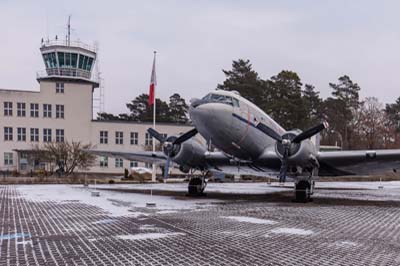
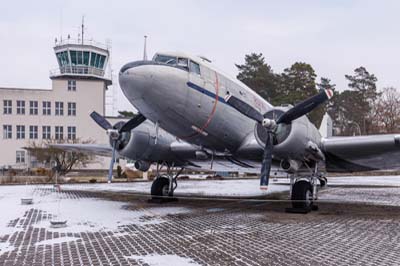
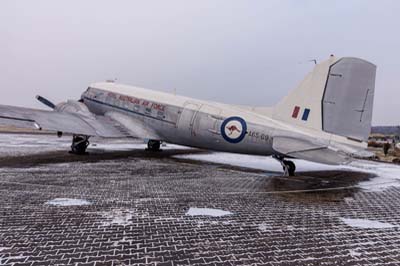
The station entered a new era in 1947 with the addition of a 2,000-yard concrete runway. Together with Tempelhof Airport and Tegel Airport, RAF Gatow became a lifeline during the Berlin Airlift of 1948. In the early stages, around 150 Douglas Dakotas and 40 Avro Yorks delivered vital supplies. By July 18, 1948, RAF crews were flying in 995 tons of provisions each day, sustaining a city under blockade.
The museum began in 1957 exhibiting Wehrmacht memorabilia at Uetersen Airfield. Between 1995 and 1996, the museum was relocated to the former RAF Gatow airbase. |
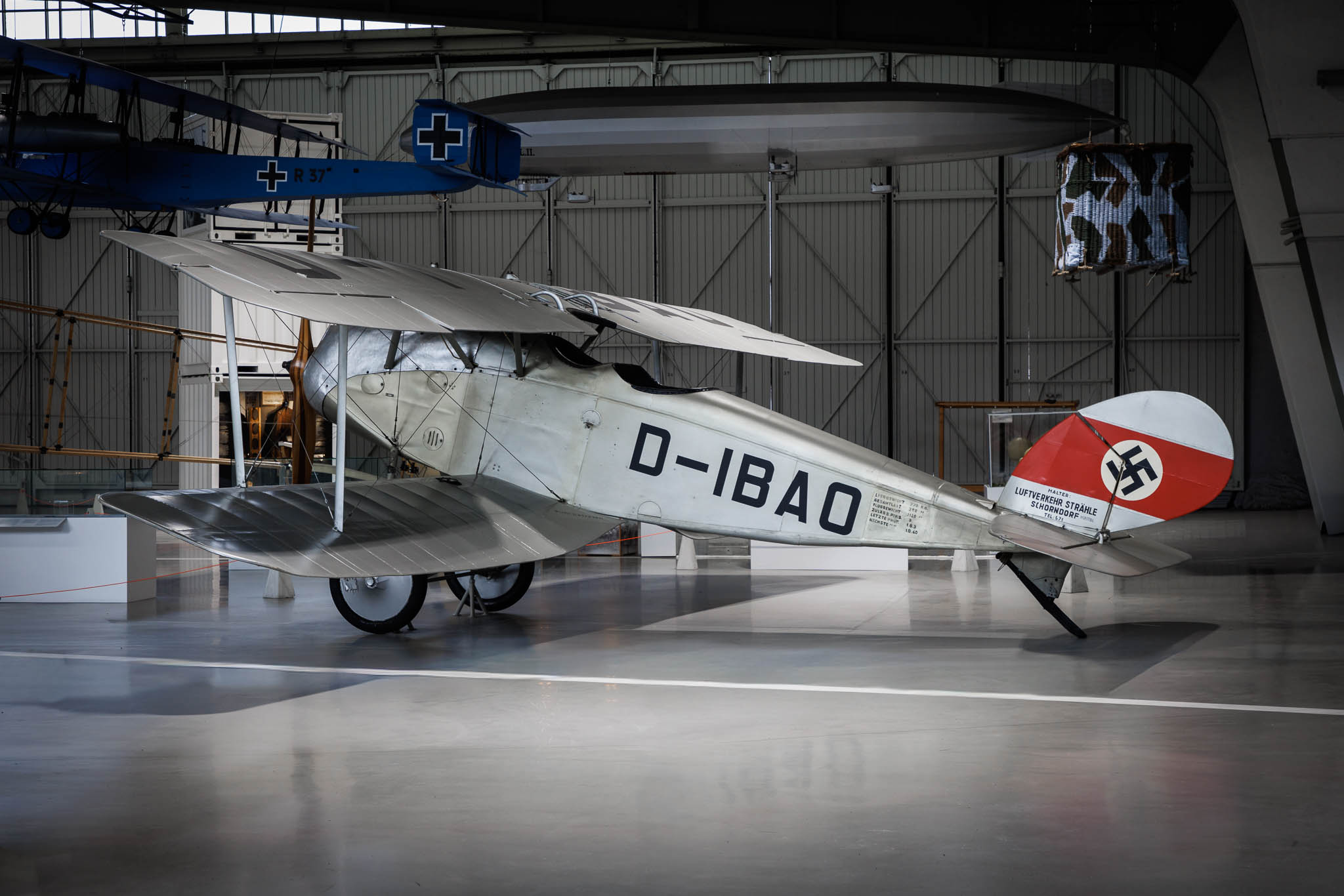 |
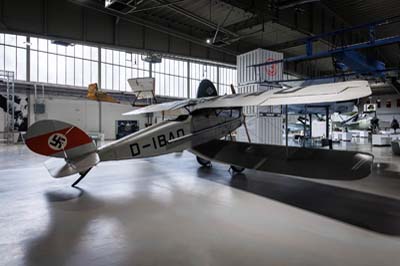
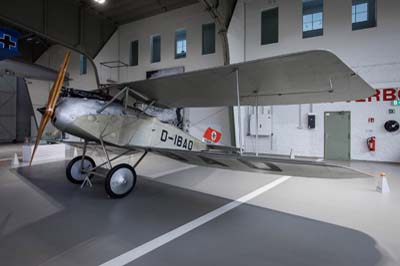
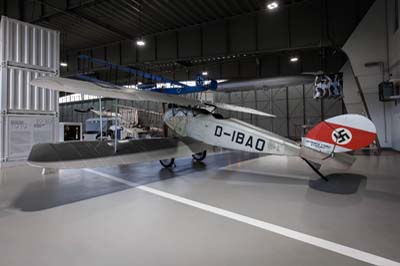
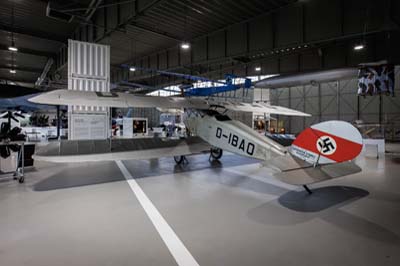
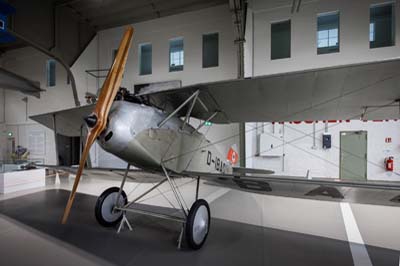
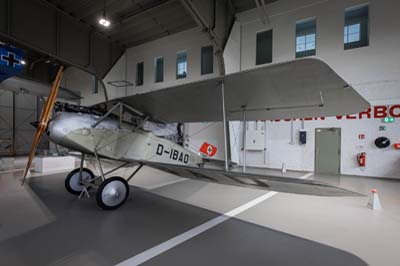
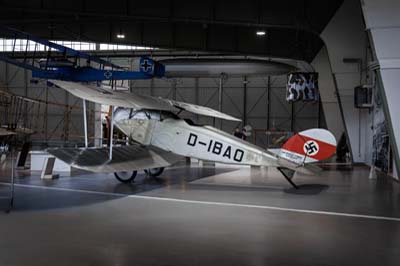
Left to right: Halberstadt CL.IV (4205/18 registered D-IBAO) built in 1918. On loan from German Museum of Technology, it is thought to be oldest existing German commercial aircraft. It was used for passenger and mail flights in 1921.
Following its service with the Imperial German Air Service in World War One it was one of three complete Halberstadt CL.IVs acquired from the Reparation Commission in 1920 by Paul Strähle (German aviation pioneer, fighter pilot and aerial photographer), it originally flew as a photo plane until September 25, 1938. Paul Strähle's archive of 40,000 aerial photos still exists today, along with the additional spare parts and three extra Halberstadt fuselages he saved that enabled four of these aircraft to survive, two in Berlin and two in the United States. |
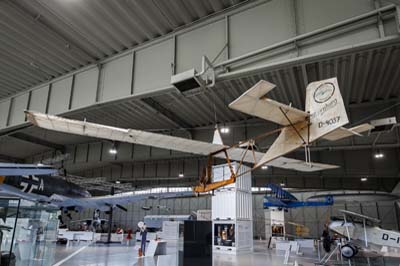
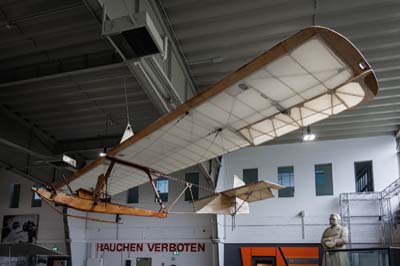
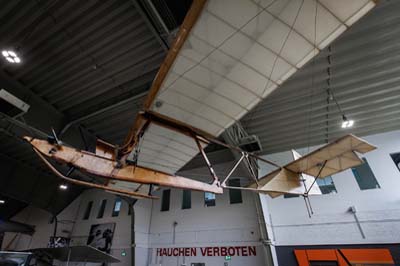
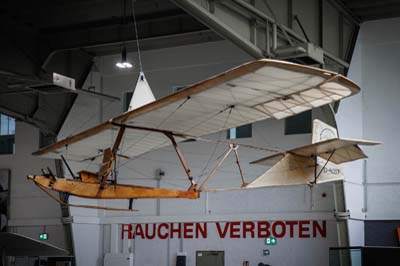
| Left to right: SG 38 Schulgleiter (D-4037) 'Dornburg'. The SG 38 training glider was designed by Schneider, Rehberg and Hofmann at Schneider Flugzeugbau in Grunau in 1938. It became one of the most widely used aircraft for solo flight training in the 1940s. Development had begun in 1936, and from 1938 the glider was produced in large numbers by both amateur builders and industrial manufacturers, including the Deutsche Forschungsanstalt für Segelflug (DFS). |
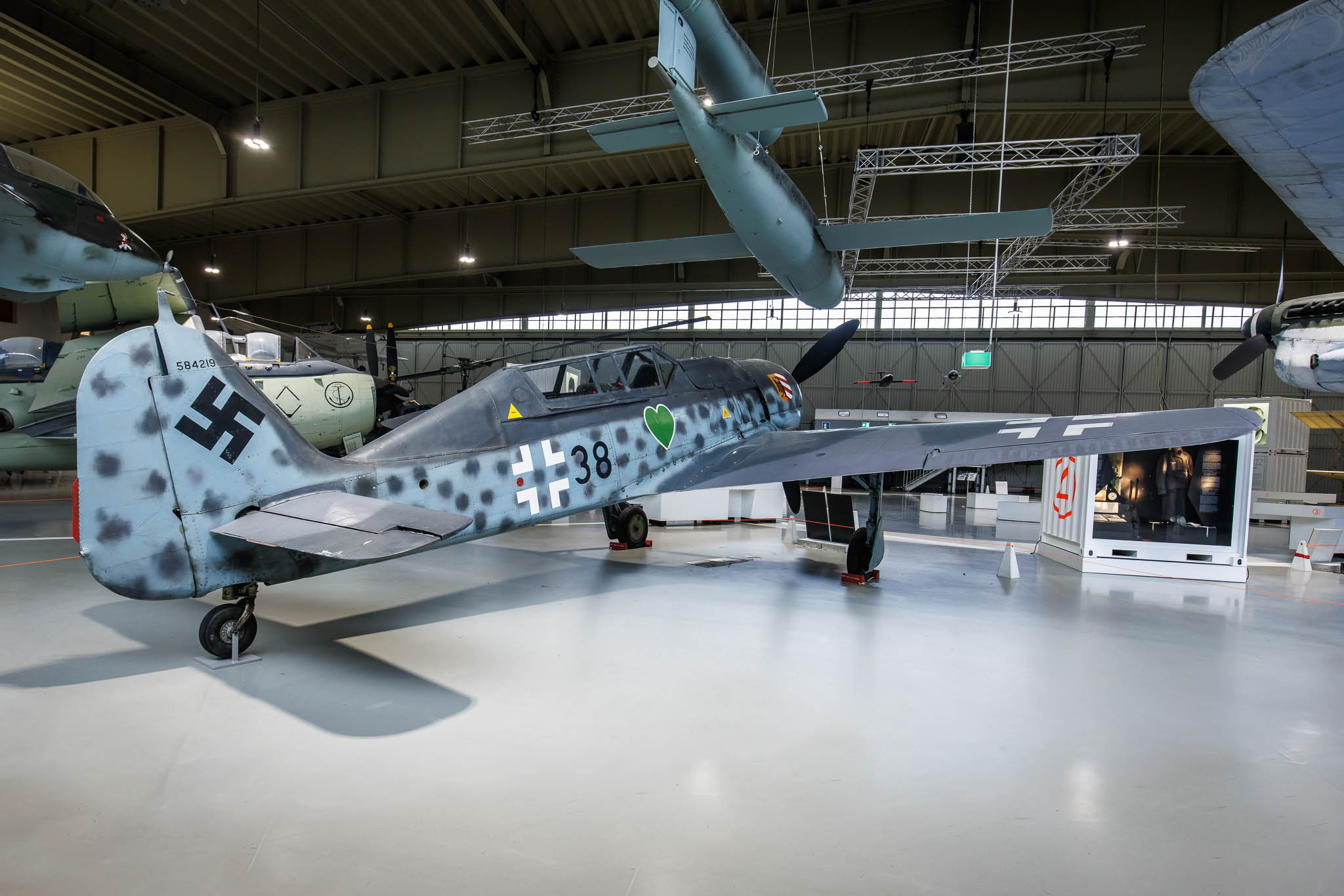 |
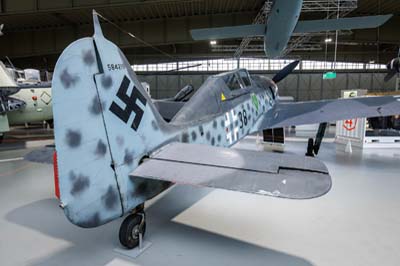
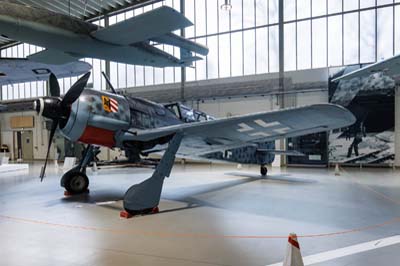
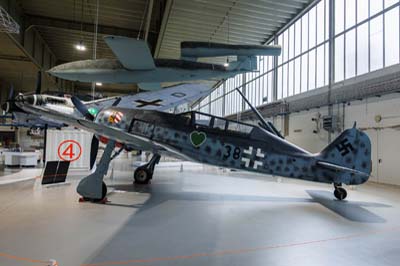
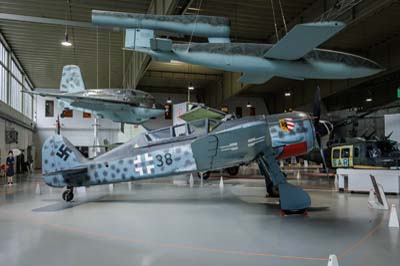
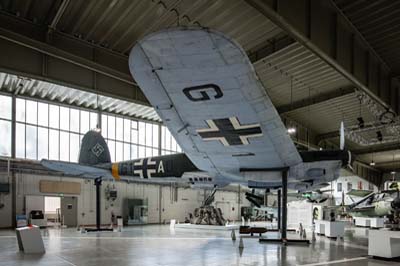
Focke-Wulf Fw 190A-8/U1 (584219 '38' later 8470M). The Fw 190 operated very successfully from its introduction in 1941 and throughout the war, as a day fighter alongside the Messerschmitt Bf 109. Built in 1944 as a standard single seater F-8/U1, in late 1944 she was converted to two-seat trainer. It was at one time with the Air Fighting School 103. It was found in Northern Germany and flown to the Royal Aircraft Establishment at Farnborough for evaluation at the end of the war. Selected for preservation by the Air Historical Branch, from 1946-1970 she would spend time in storage or placed on static display at various RAF base open days. In 1970 it was moved to RAF St Athan to join the Historic Aircraft Collection and by 1984 her BMW 801 D-2 was restored to ground running condition. In 1989 it was placed on static display in the RAF Museum, Hendon.
Dismantled in March 2022 ready for long-term loan here with the Militärhistorisches Museum der Bundeswehr. |
| Left to right: Messerschmitt Bf 108B-1 "Taifun" (2126) ex Luftwaffe. |
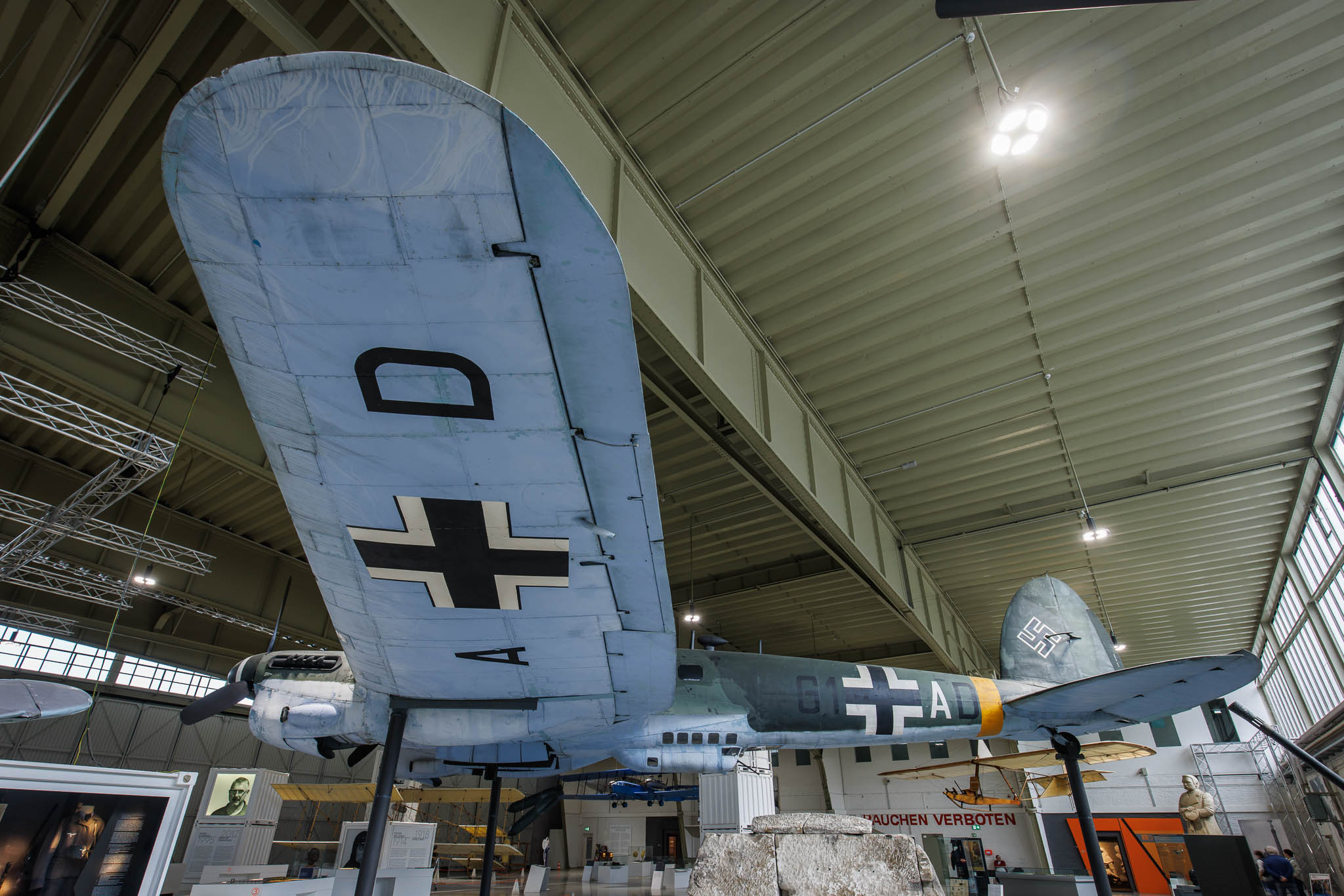
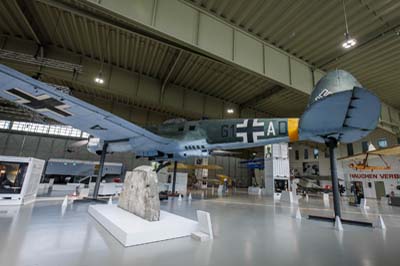
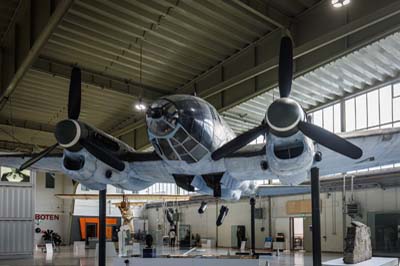
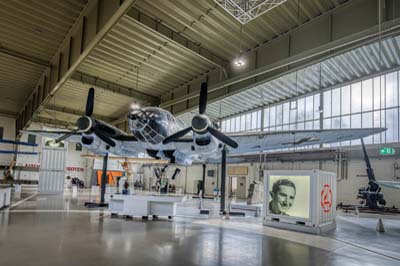
Left to right: CASA 2-111B (B.2I-117 marked G1+AD) ex Spanish Air Force (Ejército del Aire, or EdA). This aircraft is a post war Spanish variant fitted with Rolls Royce Merlin engines, easily recognised by its larger engine nacelles compared with the original German versions. It is painted to represent a wartime German Heinkel He 111 of KG 55. The current scheme was applied in the early 1970s, shortly after its retirement from Spanish Air Force service, and may have been connected with the production of the film The Battle of Britain in 1969.
After retirement it was displayed at the Luftwaffenmuseum at Uetersen Air Base near Hamburg until 1995, when the museum moved to its current site at the former RAF Gatow. In 2015 the aircraft was loaned to a museum in Rotterdam before returning to Gatow in 2017. The cockpit remains fully equipped, as the aircraft went directly from active service into museum preservation. |
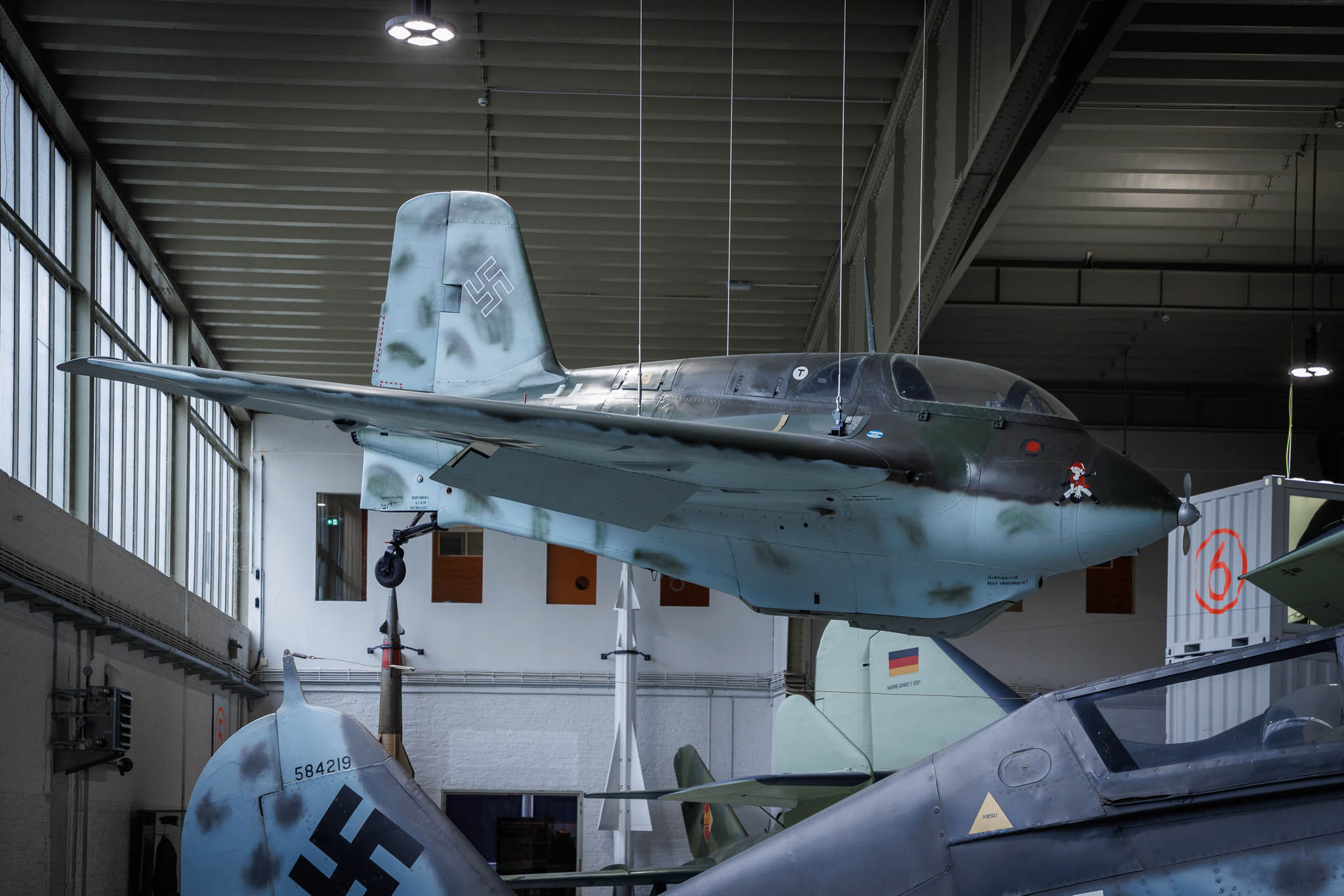 |
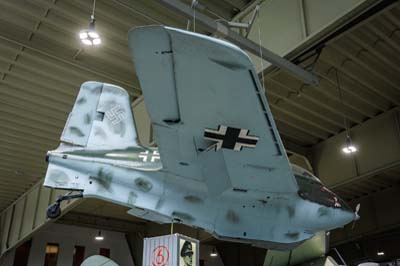
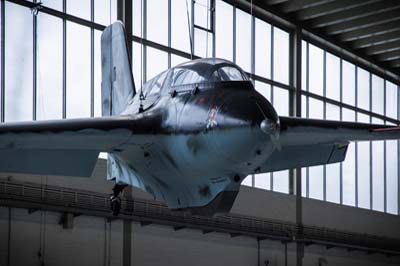
Left to right: Messerschmitt Me 163B-1a Komet (191904 'Yellow 25') is an original aircraft from the 1st Squadron of Jagdgeschwader 400 based at Husum. The squadron's emblem, depicting Baron Münchhausen's cannonball ride, is painted on the nose. JG 400 was formed on April 26, 1944, as a unit of the Luftwaffe during World War Two. It was the only Luftwaffe squadron equipped with the Messerschmitt Me 163, a Walter rocket-powered interceptor designed to defend ground installations. The Me 163 was the first aircraft capable of exceeding 1000 km/h, with the Me 163A-V4 reaching 1003.67 km/h on October 2, 1941.
Today, approximately 10 to 12 original Messerschmitt Me 163 Komet rocket fighters survive in museums worldwide, mostly those captured by British forces from JG 400 at Husum in 1945. By the end of the war, almost an entire squadron of around 48 Me 163B aircraft had been captured at Husum. At least 29 of these airframes were shipped out of Germany, with 24 going directly to England and the remainder distributed to Australia, Canada, and the United States.
Twenty-one of the aircraft captured by the British at Husum were assigned Air Ministry serial numbers AM200 to AM220. One aircraft, VF241 (191060), was test flown by Eric Winkle Brown as a glider, towed by a Spitfire, at the Royal Aircraft Establishment and was destroyed during landing at RAF Wittering on November 15, 1947.
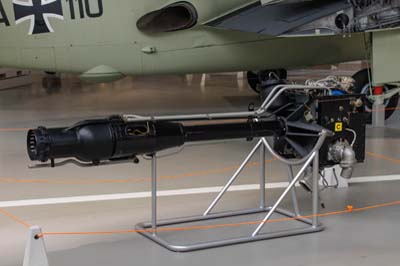
Walter HWK 109-509 A was a German liquid-fuel bipropellant rocket engine. Early versions of the Messerschmitt Me 163 Komet were equipped with a Walter HWK 109-509 engine. It was produced by Hellmuth Walter Kommanditgesellschaft (HWK) commencing in 1943, with licensed production by the Heinkel firm's facilities in Jenbach, Austria.
|
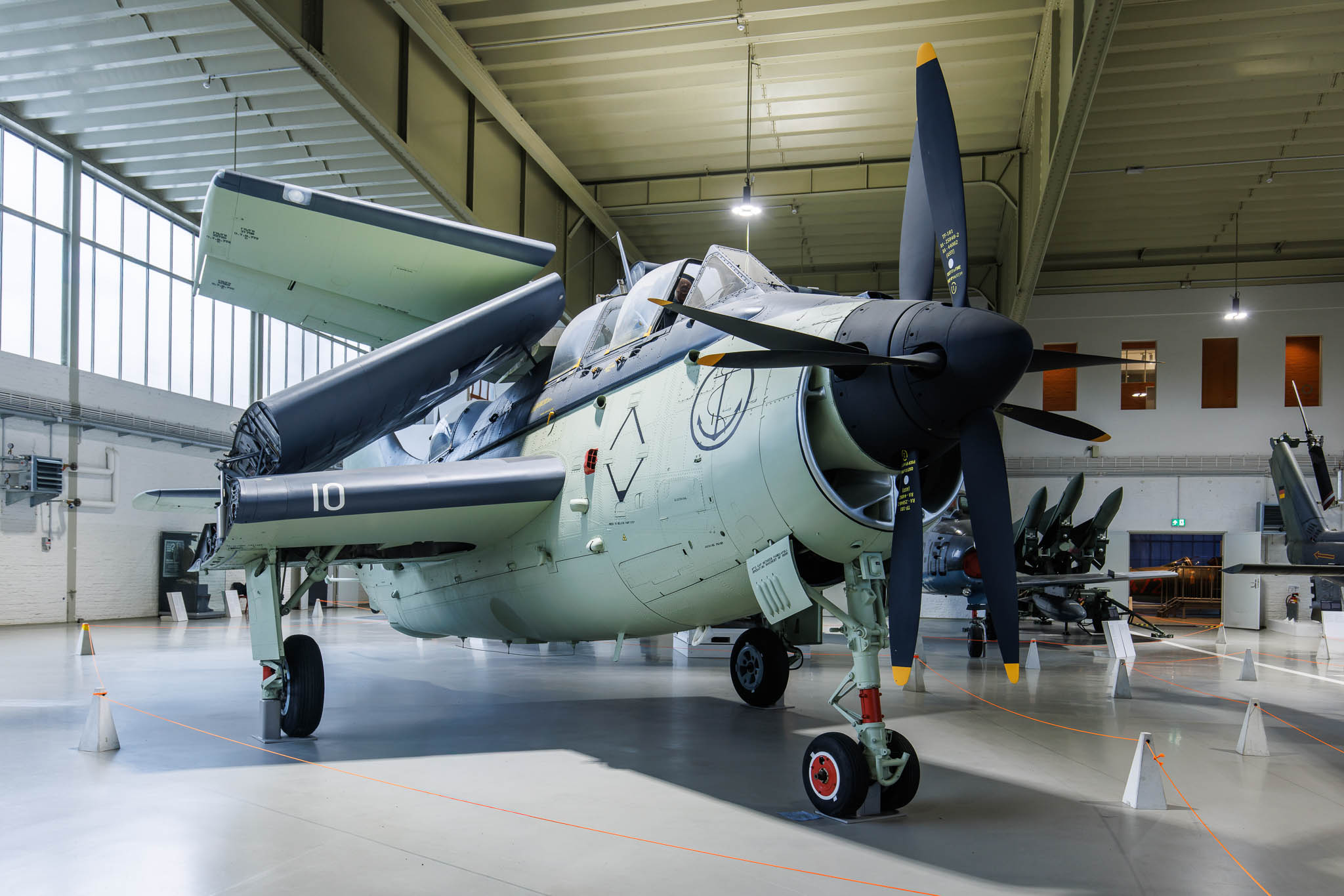 |
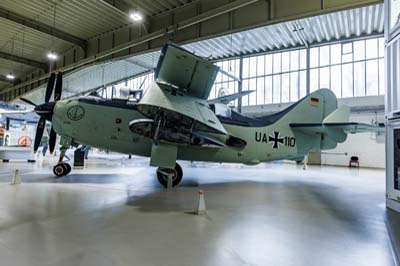
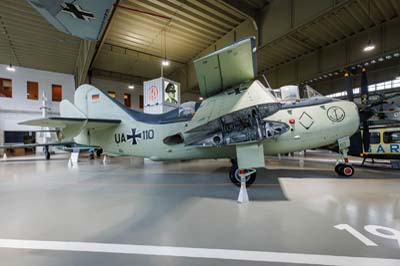
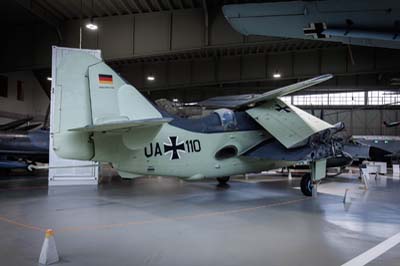
| Left to right: Fairey Gannet AS4 (UA+110 '10', XG849). |
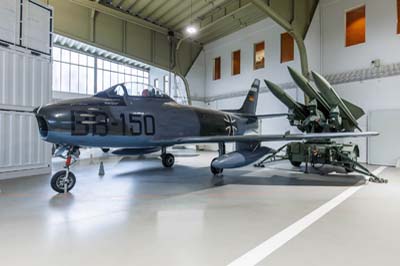
Left to right: Canadair CL-13A Sabre 5 (BB+250 marked BB+150) ex Luftwaffe.
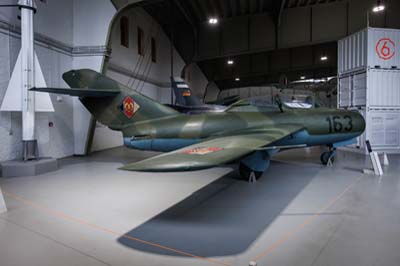
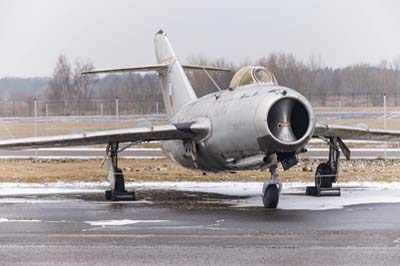
Mikoyan-Gurevich MiG-15TI (163). Former NVA aircraft (Nationale Volksarmee or National People's Army), otherwise known as the armed forces of the Deutsche Demokratische Republik (DDR) from 1956 to 1990.
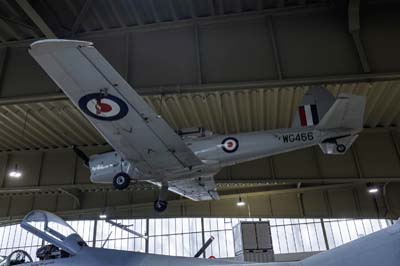
DHC Chipmunk T.10 (WG466). |
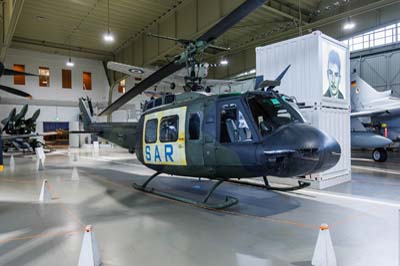
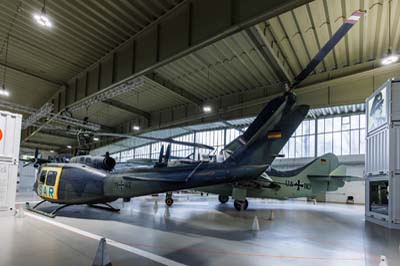
Left to right: Bell UH-1D Iroquois (71+42) ex Luftwaffe / SAR.
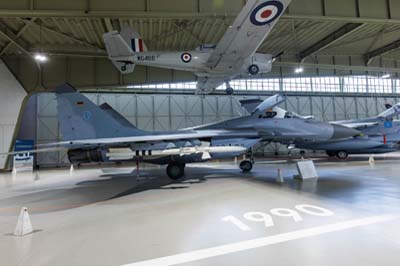
Mikoyan-Gurevich MiG-29G (29+03, 615) ex Luftwaffe and NVA.
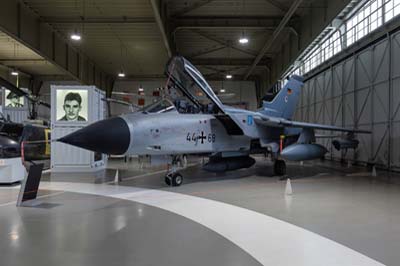
Panavia Tornado IDS (44+68) ex Luftwaffe. |
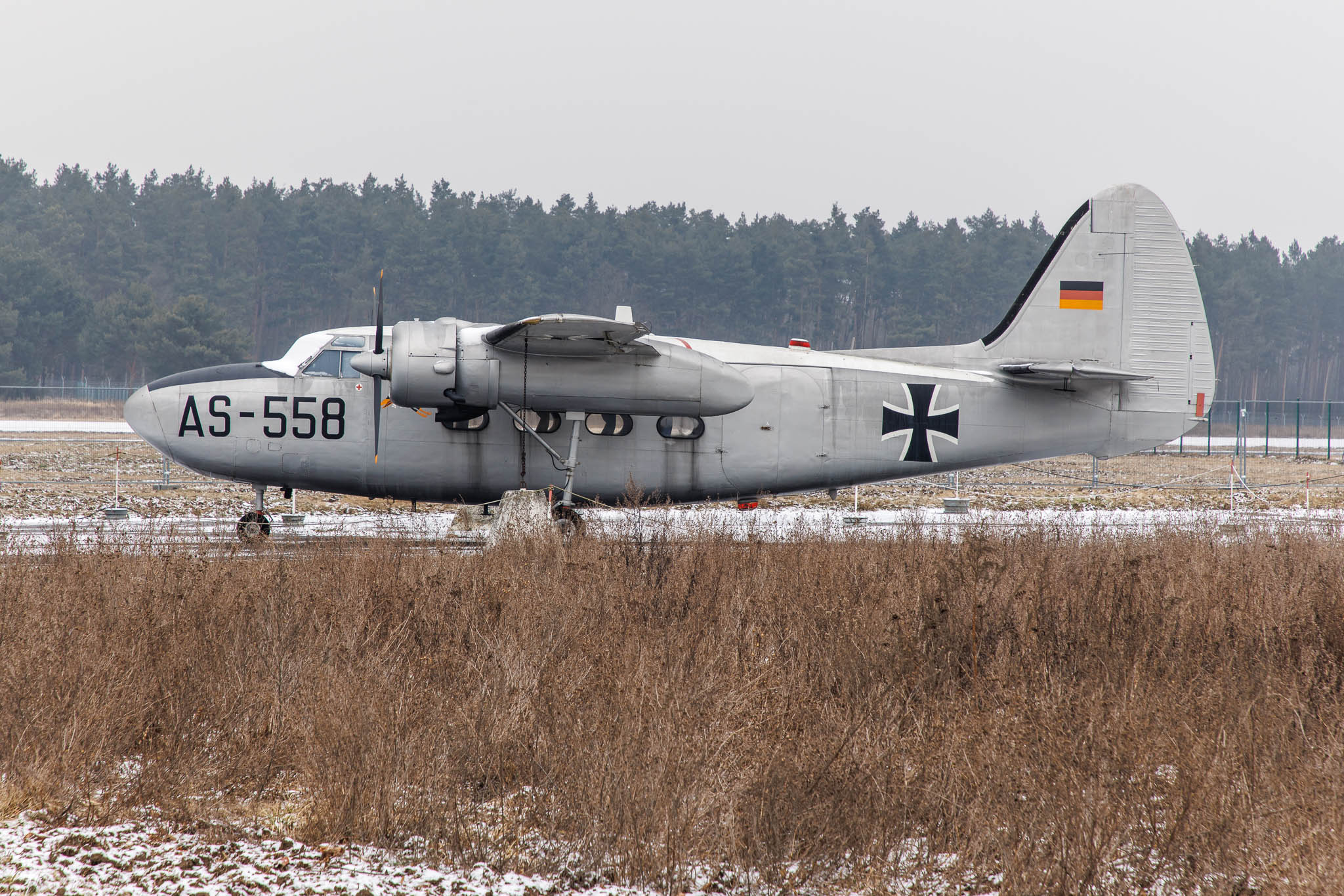
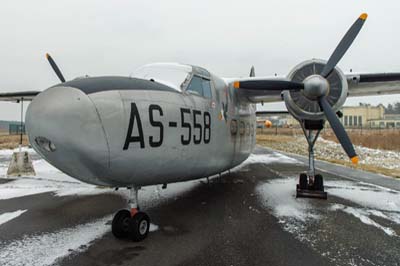
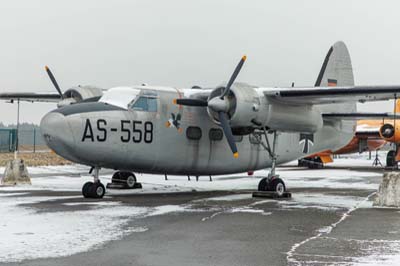
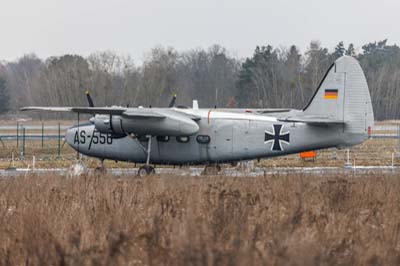
| Left to right: Percival Pembroke C54 (54+07, AS+558) ex West German Air Force. |
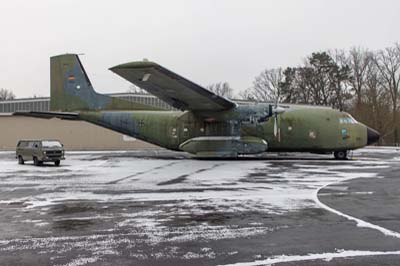
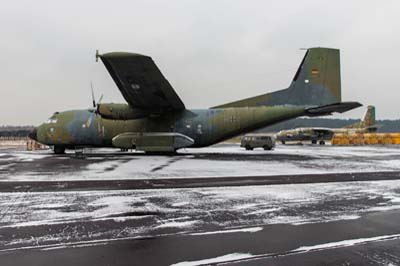
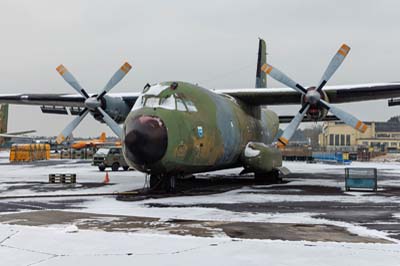
| Left to right: Transall C.160D (50+56). |
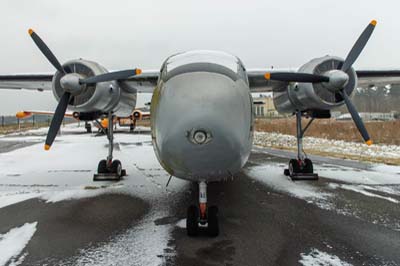
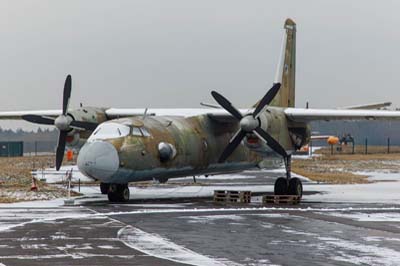
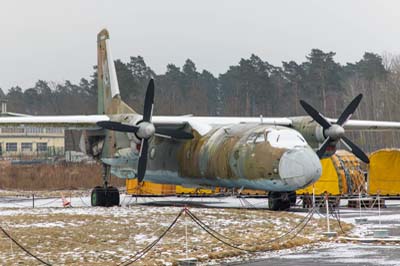
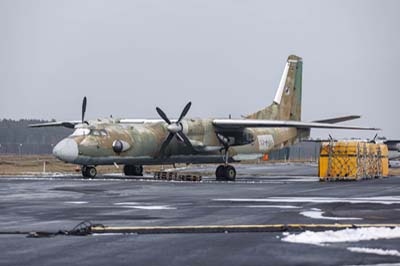
| Left to right: Antonov An-26SM (52+09, 369) ex WGAF, NVA. |
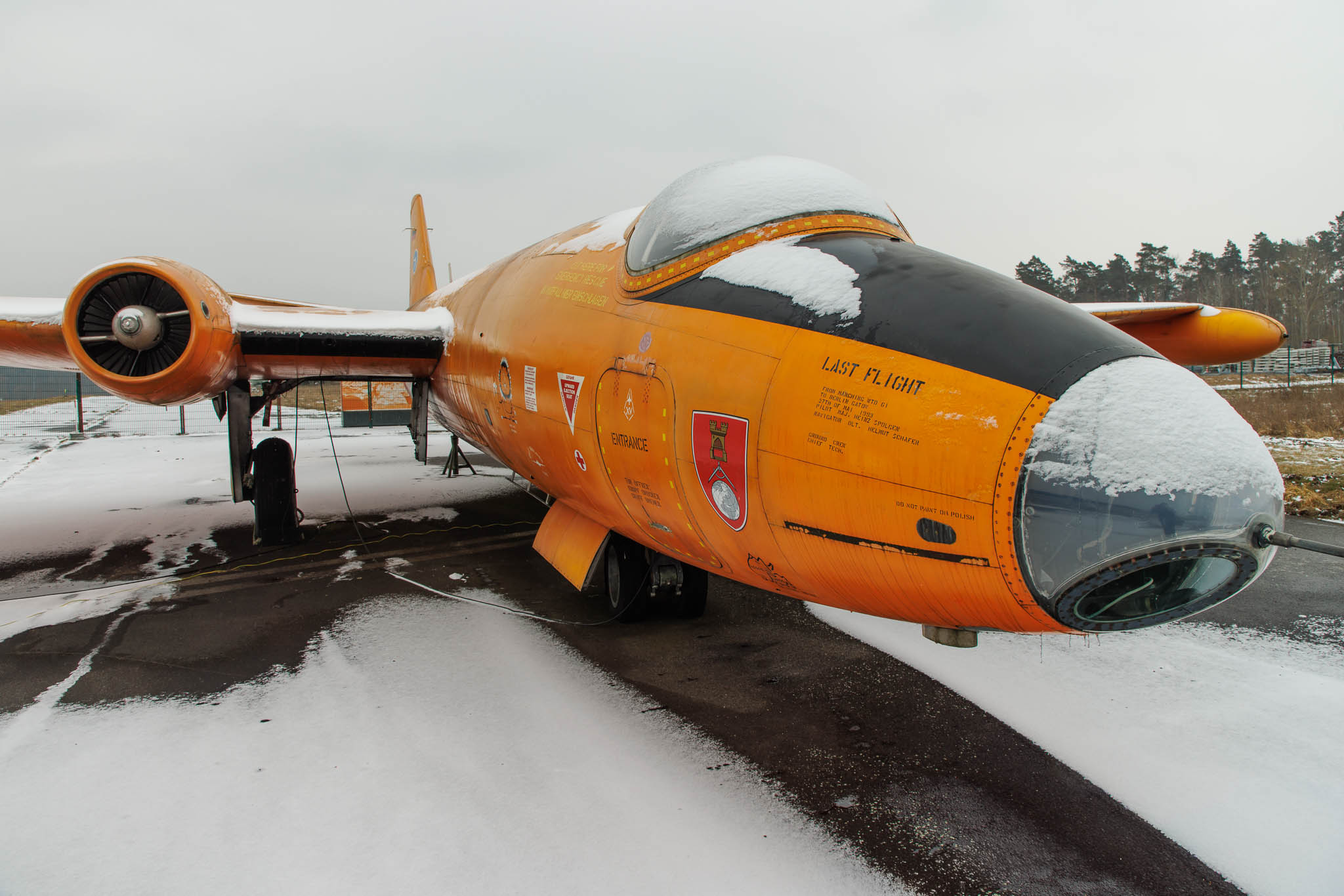
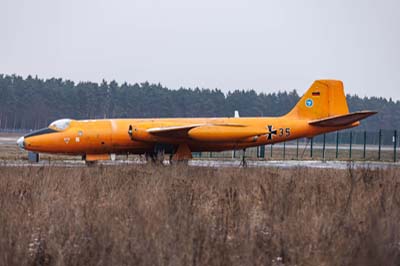
| Left to right: English Electric Canberra B2 (99+35, WK138) ex WGAF. |
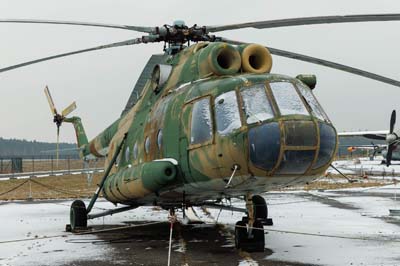
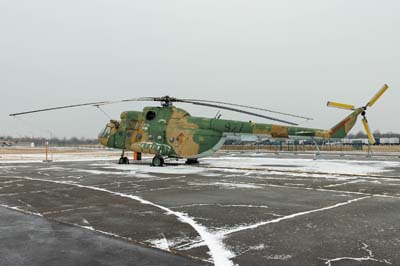
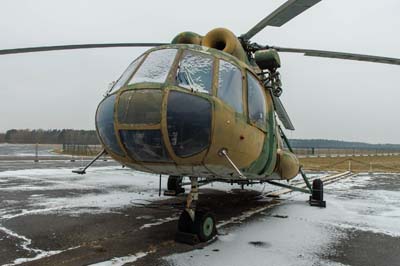
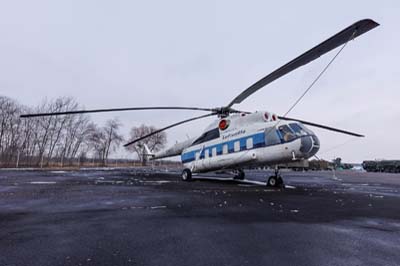
| Left to right: Mil Mi-8T (93+14, 927) ex WGAF, NVA. |
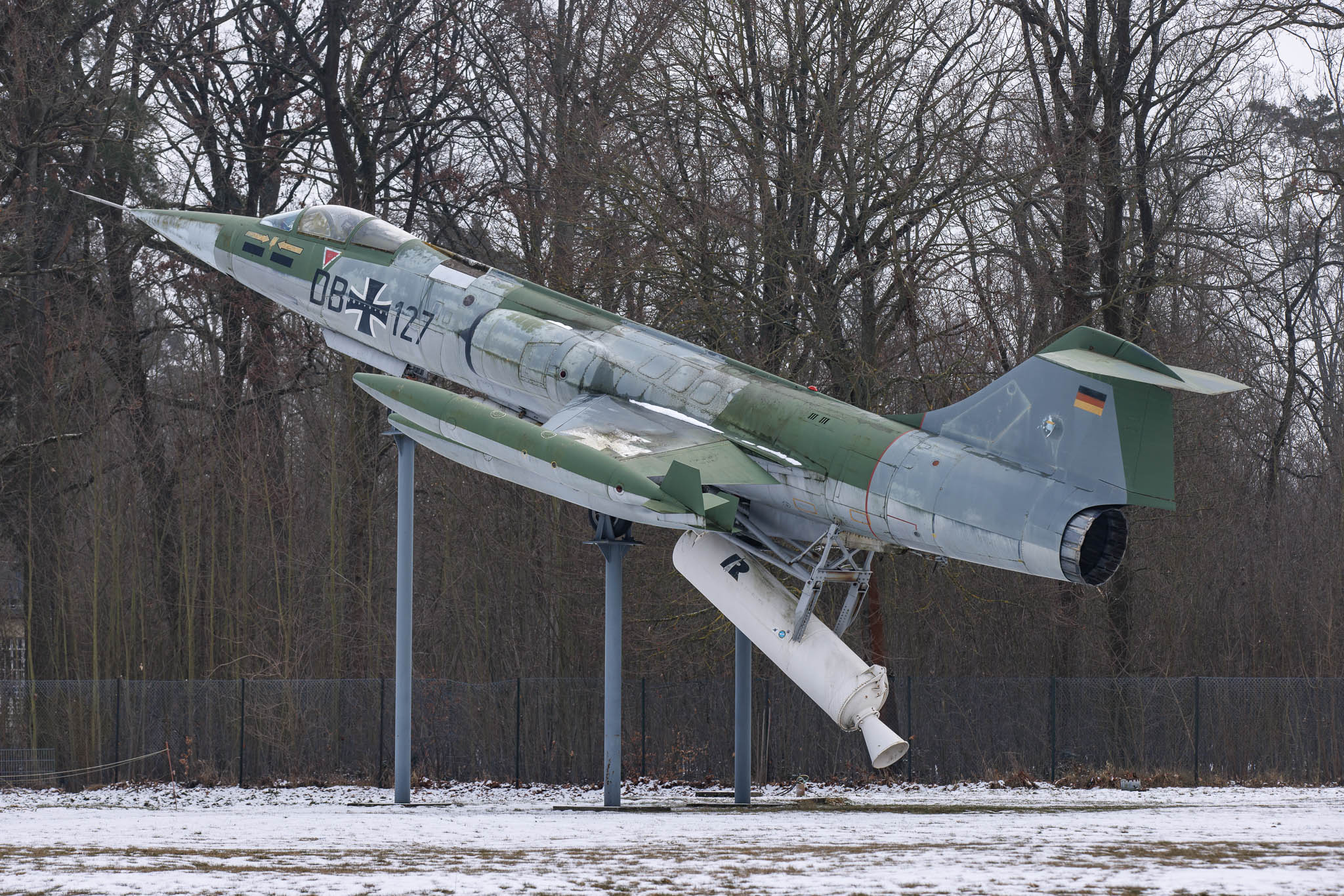 |
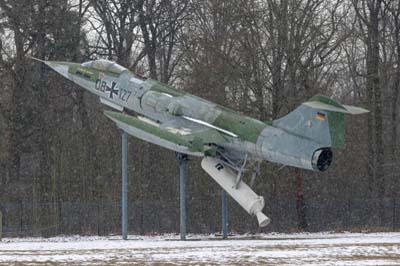
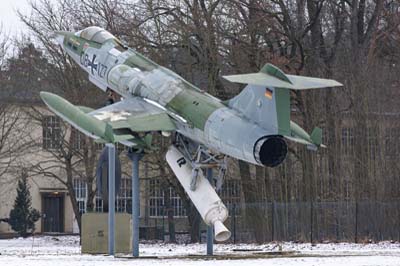
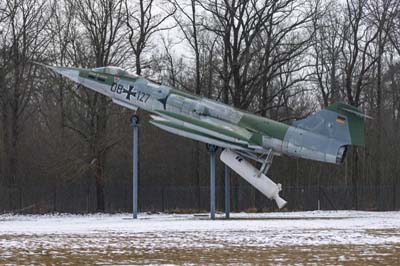
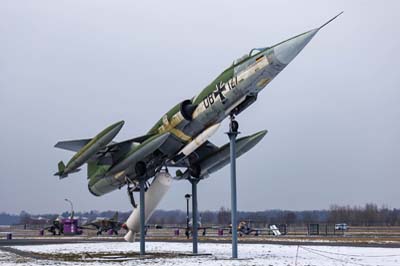
Left to right: Lockheed F-104G Starfighter (20+02, DB+127, DA+102) ex WGAF. This aircraft was used in the experimental Zero-Length Launch (ZELL) program. The program emerged from a Cold War concept: launch interceptors quickly from compact, mobile platforms should conventional airfields be destroyed in a nuclear attack. The ZELL system aimed to deliver a rapid, runway independent take off capability. Aircraft were mounted on a mobile launcher and propelled into the air by a large disposable solid fuel rocket booster, the Rocketdyne RS B 202.
The test aircraft, initially coded DA+102, completed eight successful ZELL launches at Edwards Air Force Base, California, in 1963. Later recoded DB+127 and finished in German camouflage, it carried out seven additional launches at Lechfeld Air Base, Germany, in 1966.
Although technically successful, the system proved prohibitively expensive and impractical for operational use. Changing NATO strategy and the high cost per launch led the Luftwaffe to cancel the program in 1966. |
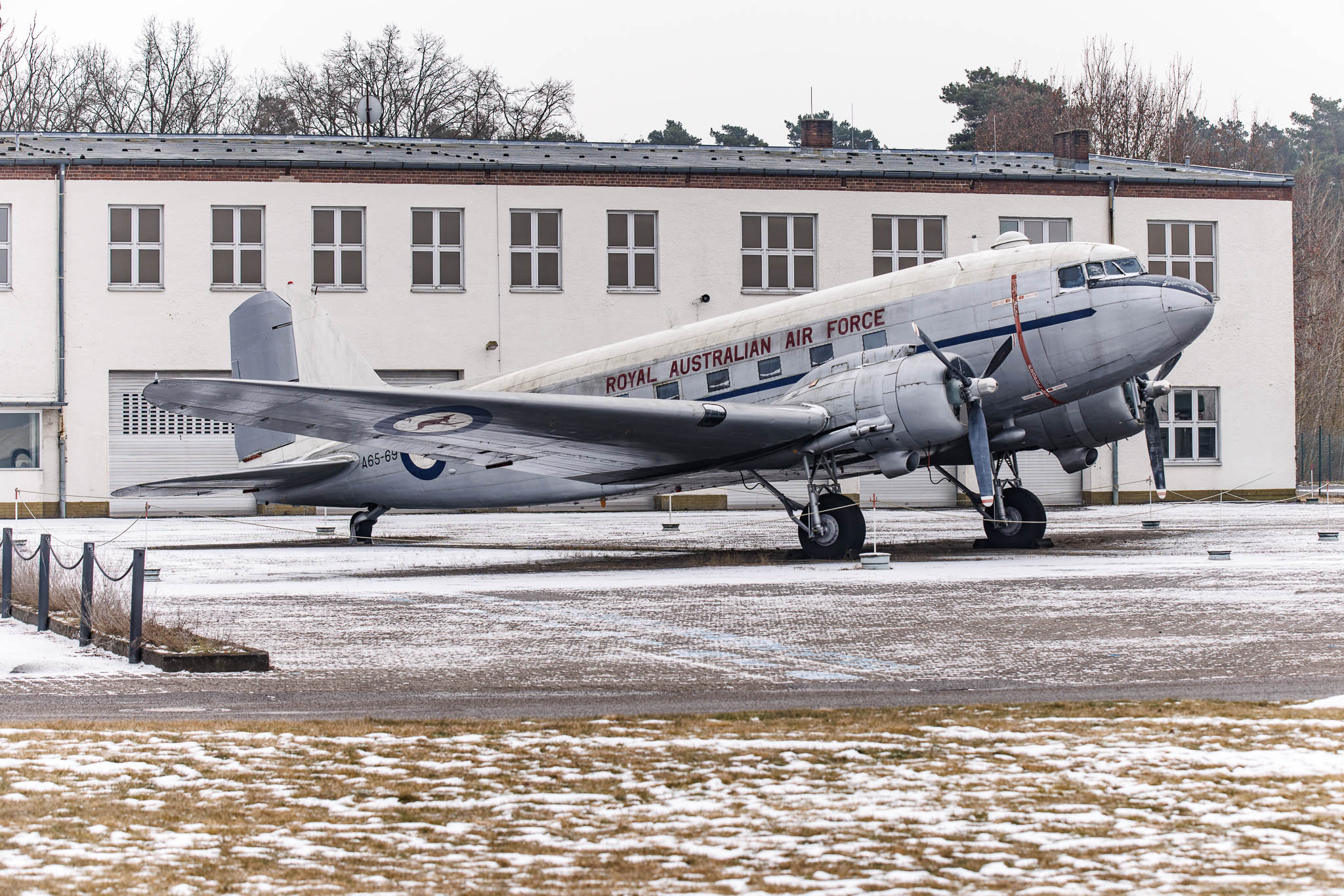 |
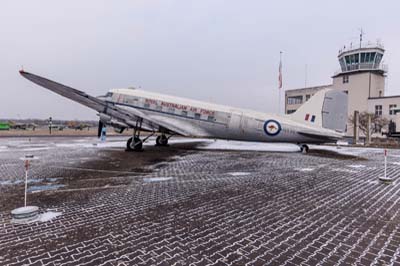
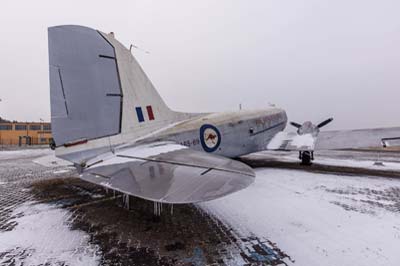
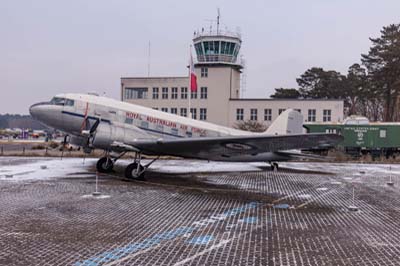
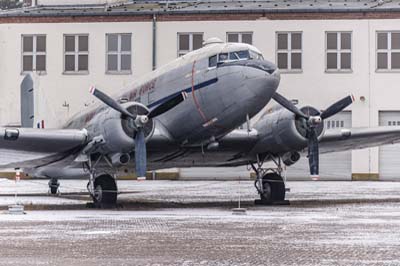
| Douglas DC-3 Dakota III (A65-69 later ZD215) Royal Australian Air Force. On June 20, 1980, the Royal Australian Air Force presented a Douglas Dakota to RAF Gatow in commemoration of its role in the Berlin Airlift. |
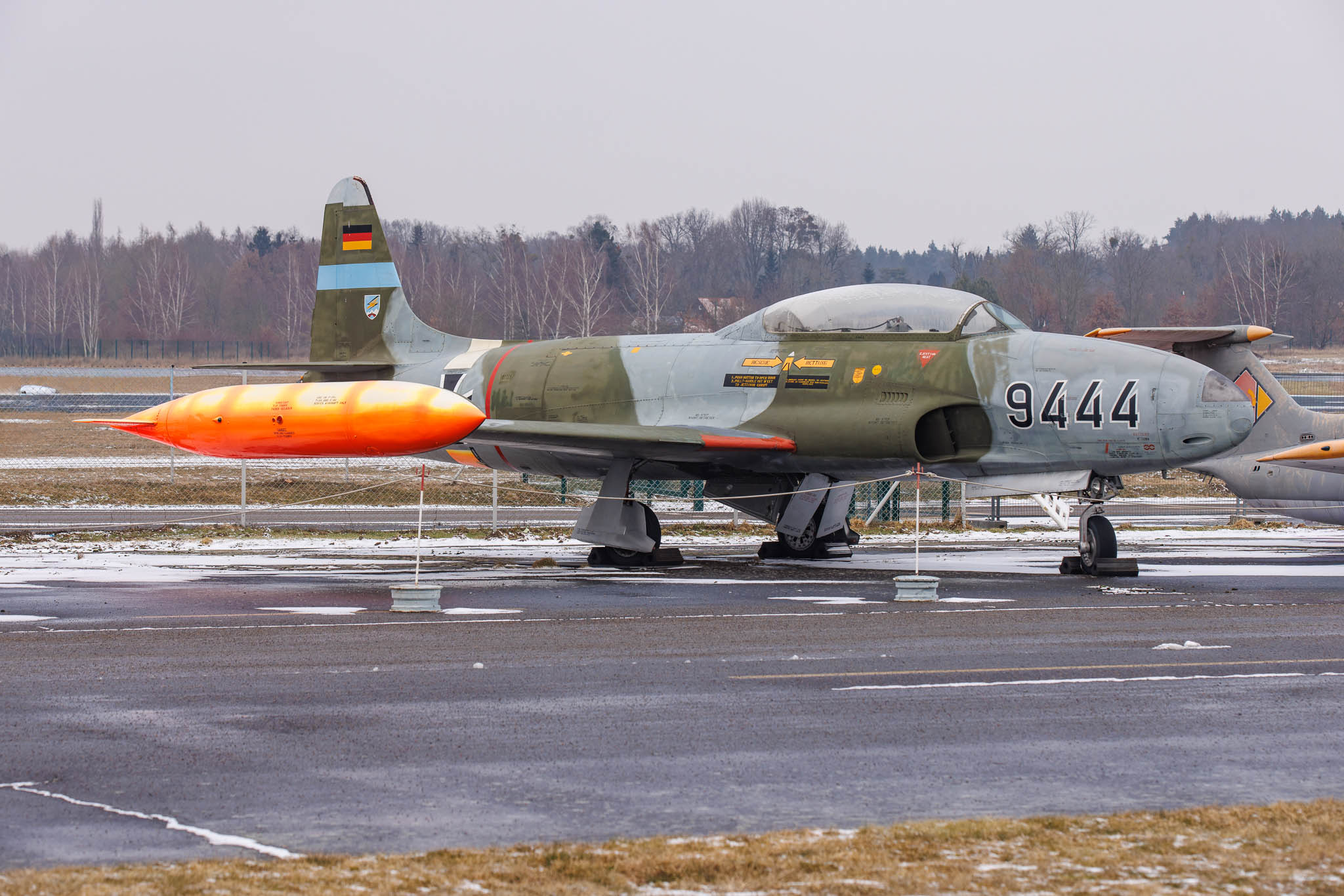
| Lockheed T-33A Shooting Star (9444) ex WGAF. |
Left to right: Aero L-29 Delfin (338) ex NVA.
Lockheed T-33A Shooting Star (9444) ex WGAF.
xxx |
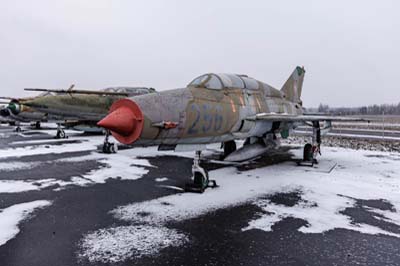
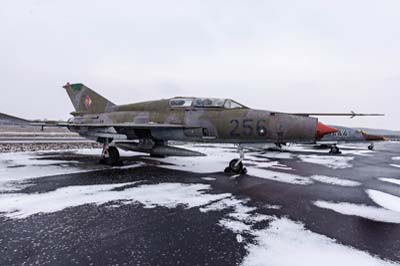
Left to right: Mikoyan-Gurevich MiG-21UM (256) ex NVA
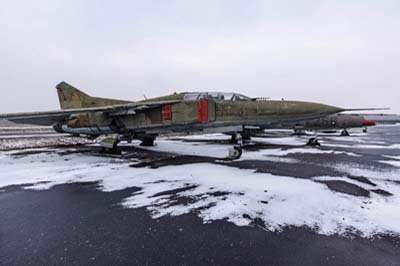
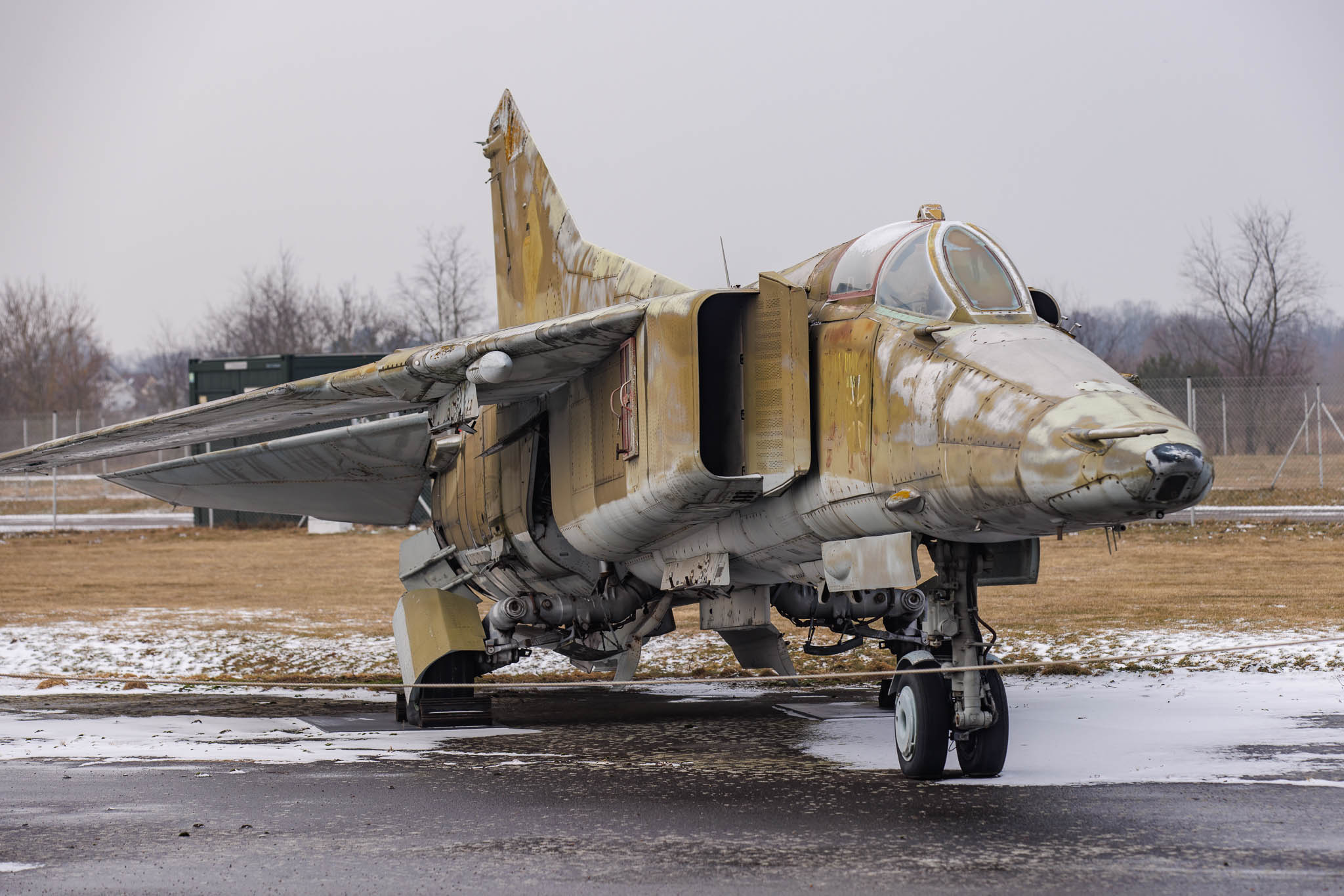
Mikoyan-Gurevich MiG-23UB (20+63, 105) ex German Air Force, NVA. |
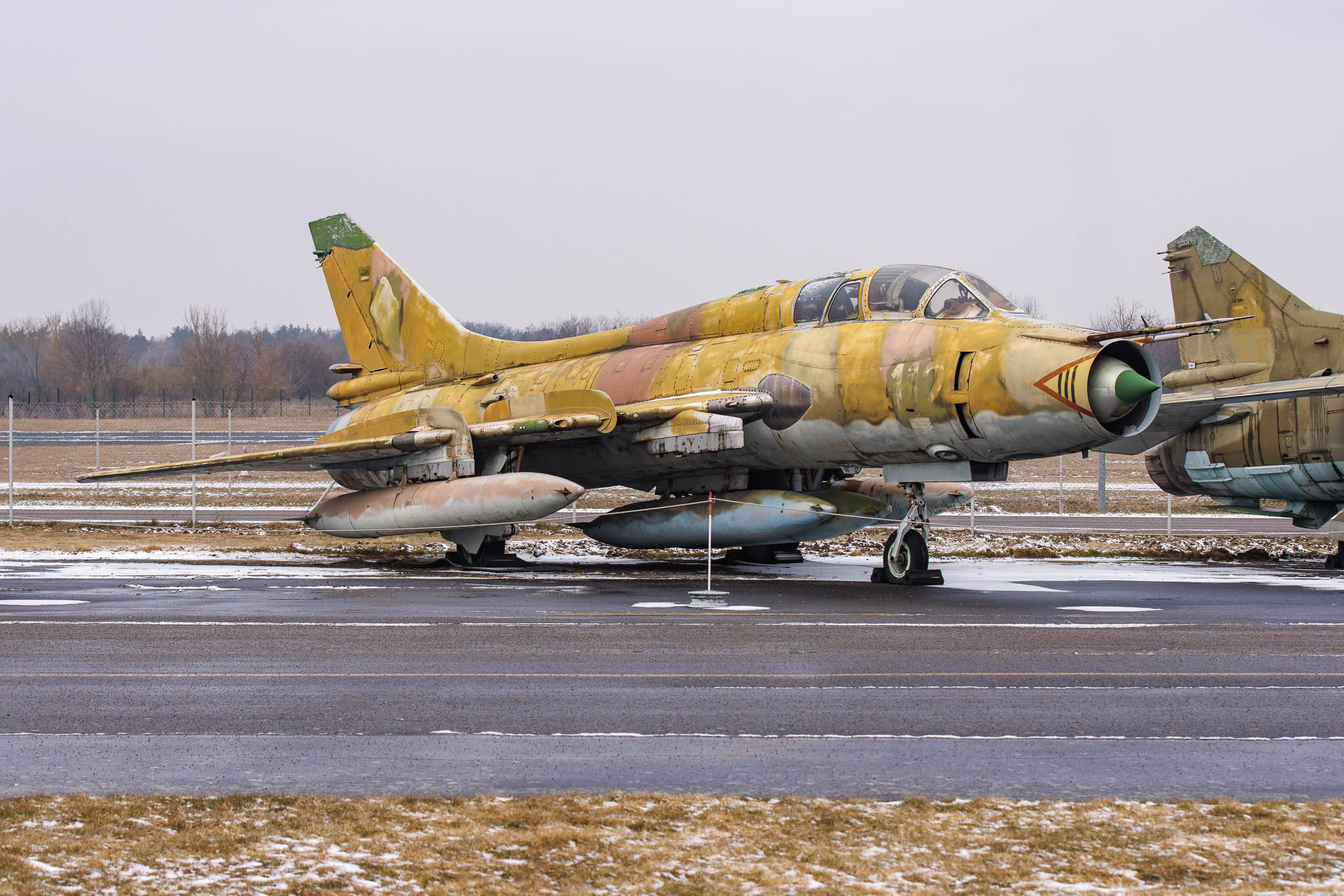
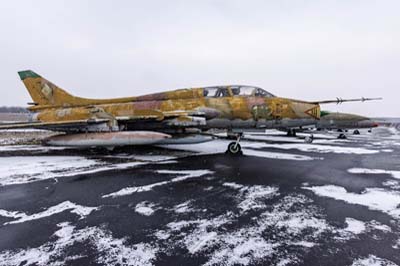
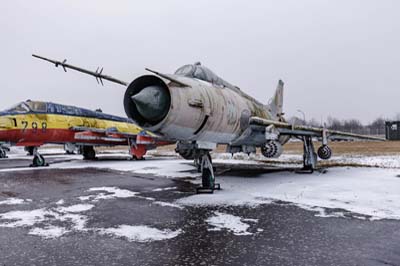
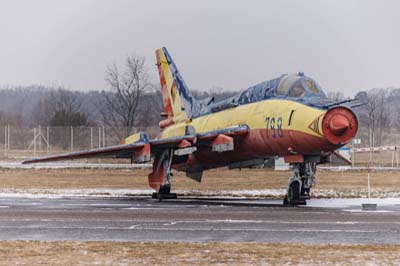
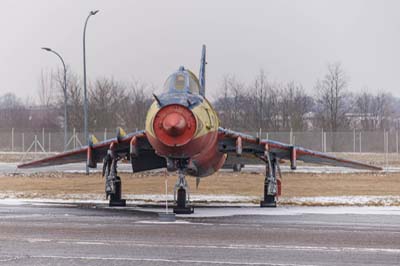
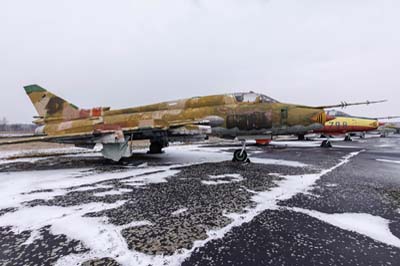
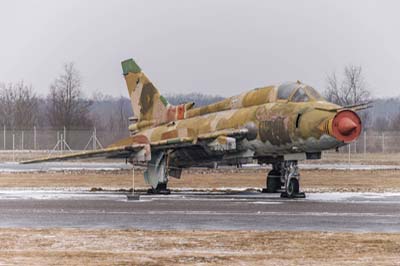
Left to right: Sukhoi Su-22UM-3K (25+52, 112) ex German Air Force, NVA.
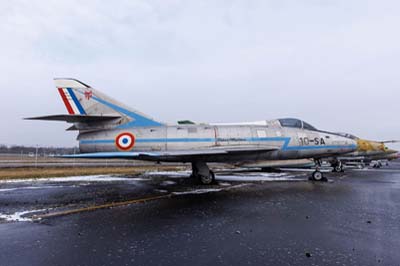
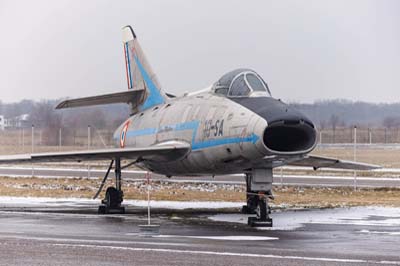
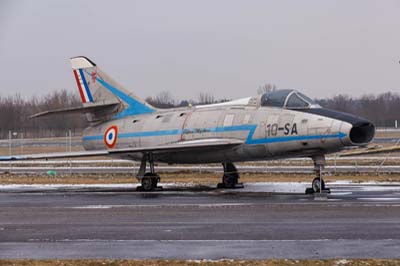
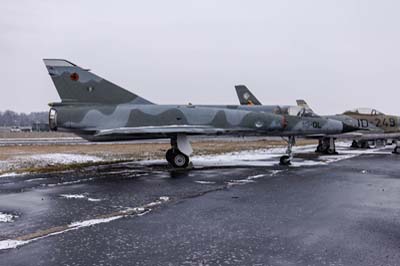
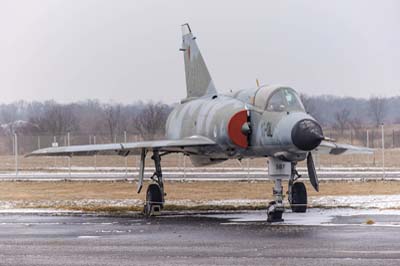
Dassault Super Mystere B2 (72 '10-SA') ex Armée de l'air. |
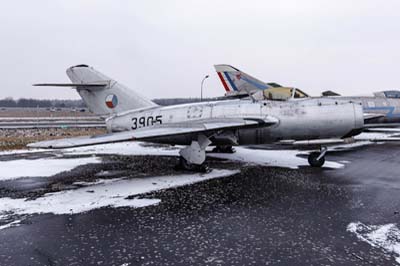
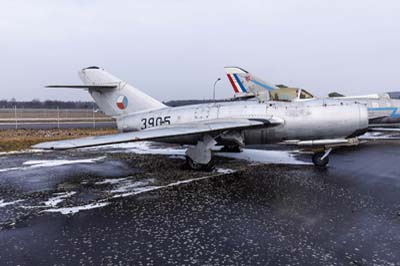
| Left to right: Mikoyan-Gurevich MiG-15bis (3905) ex Czech Air Force (Vzdušné síly Armády Ceské republiky). |
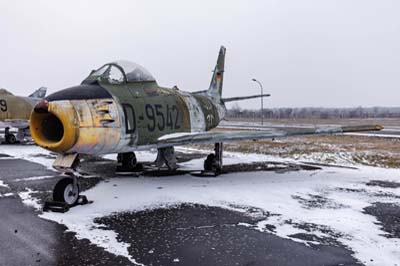
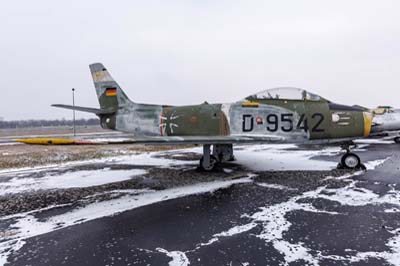
Left to right: Canadair Sabre Mk.6 (D-9542) ex WGAF.
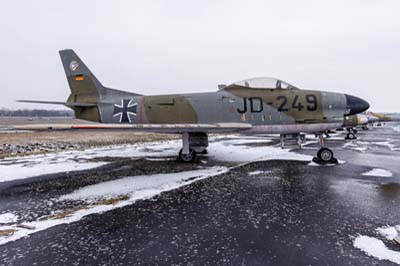
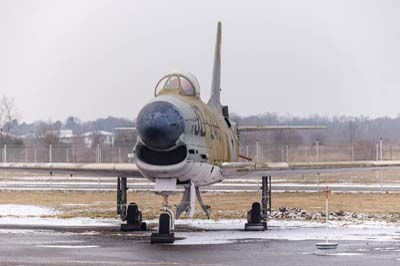
North American F-86K Sabre (55-4881 marked 'JD+249'). Assembled by Fiat of Italy with NAA-built components and transferred to the West German Air Force as a non-flying source of spare parts in November 1957. |
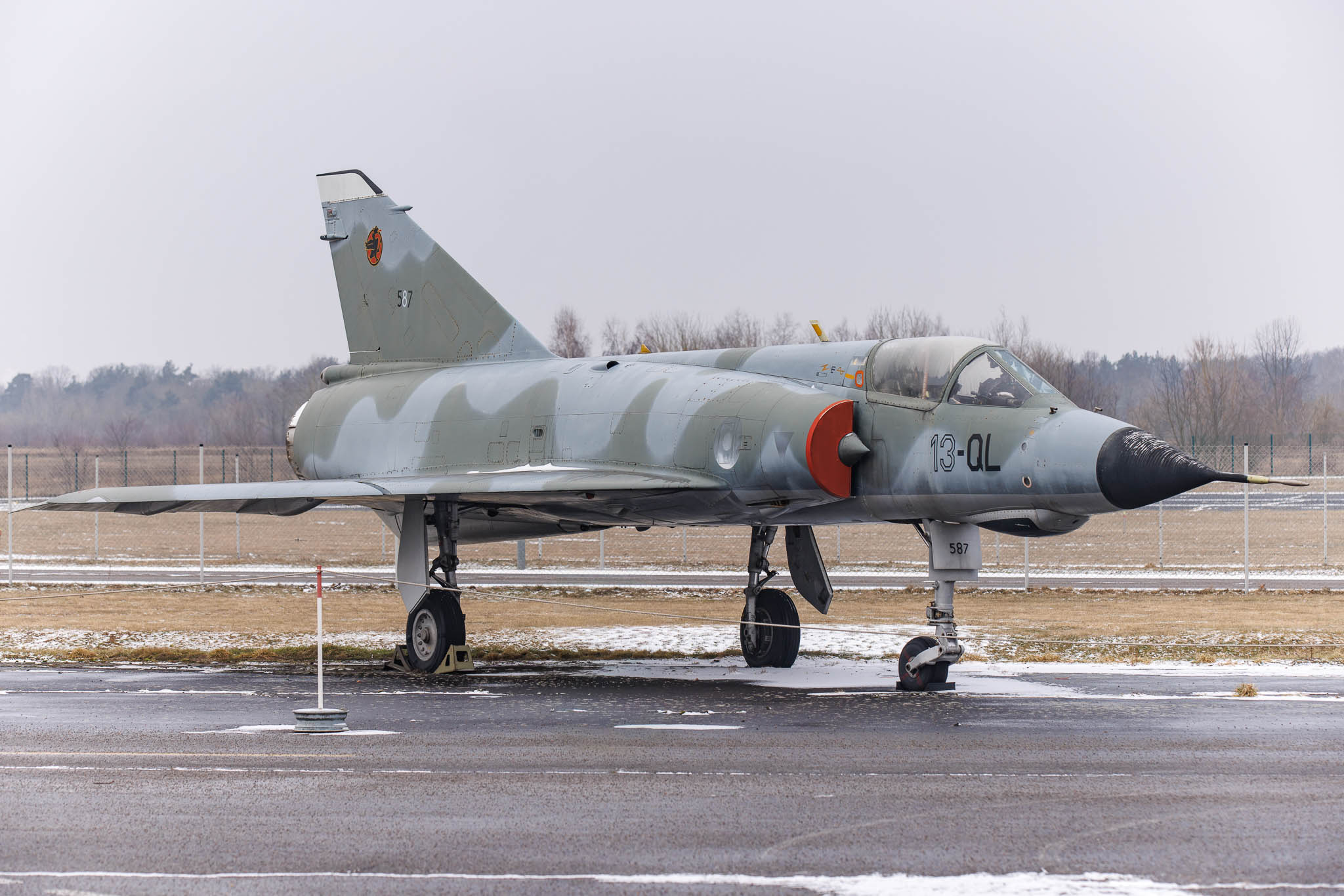
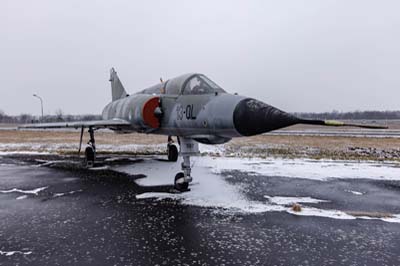
| Left to right: Dassault Mirage IIIE (587 '13-QL') ex Armée de l'air. |
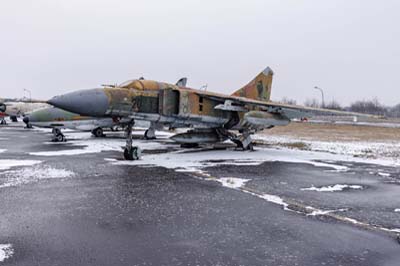
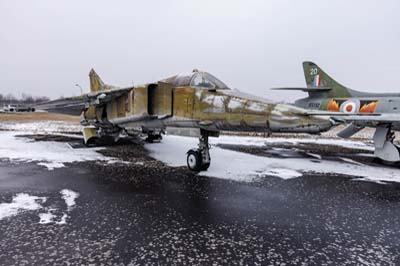
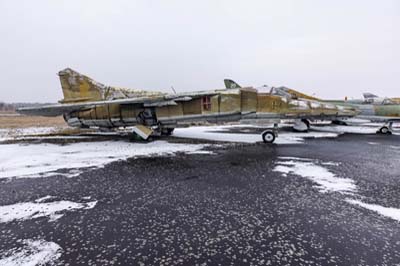
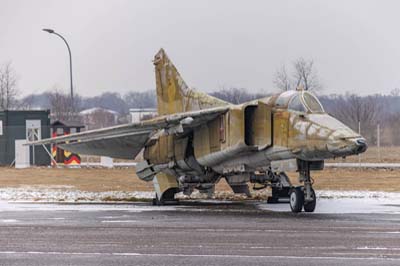
Left to right: Mikoyan-Gurevich MiG-23ML (20+13, 333) ex German Air Force, NVA.
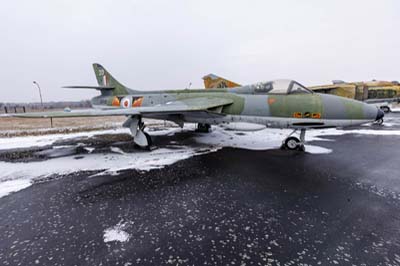
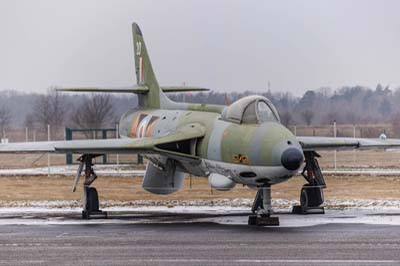
Hawker Hunter F6A (XG152 '20') ex 4 Squadron, Royal Air Force. |
| Left to right: Mikoyan-Gurevich MiG-23BN (20+51, 710) ex German Air Force, NVA. |
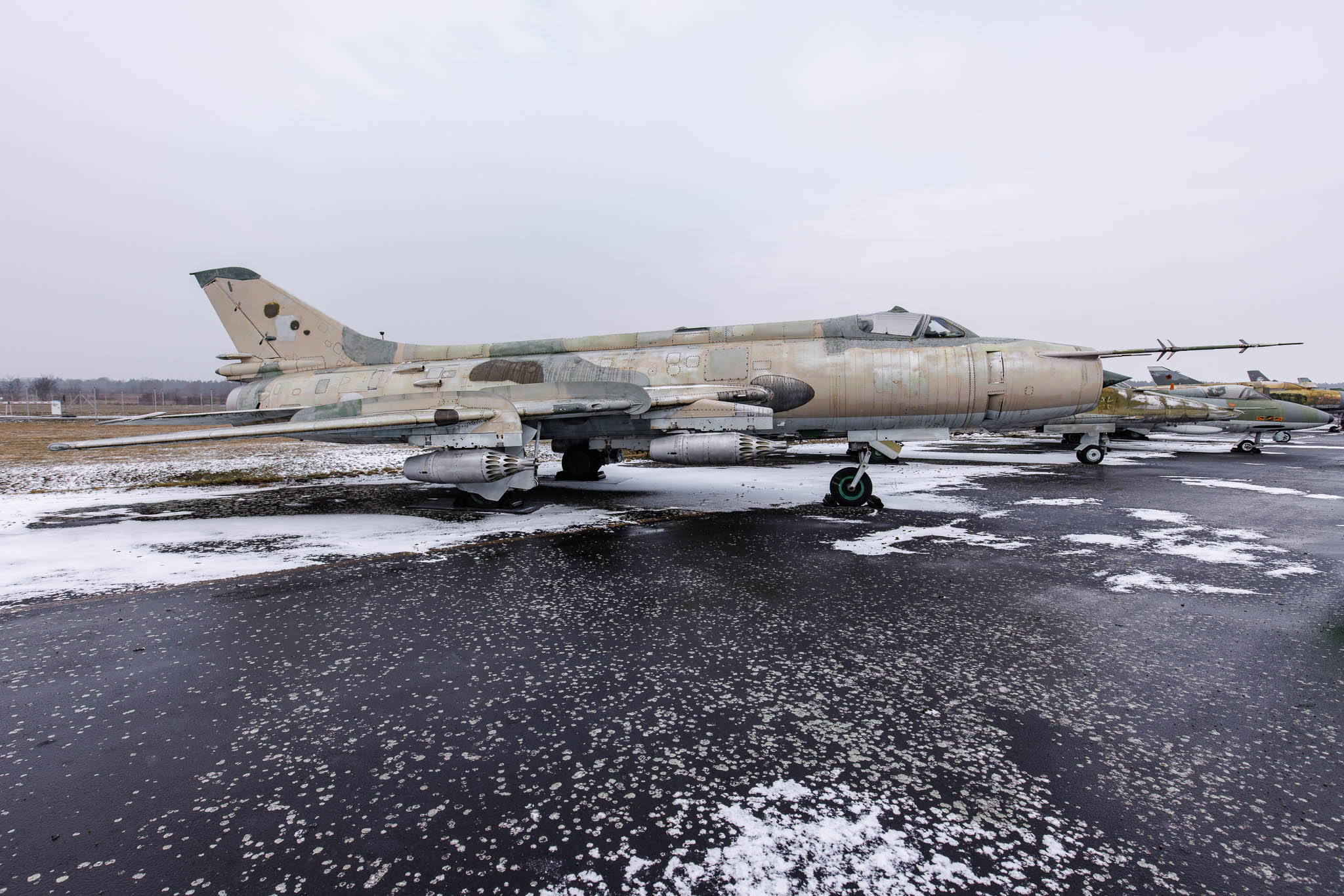
Left to right: Sukhoi Su-20R 'Fitter C' (98+61) ex German Air Force and Egypt Air Force. It was one of only two received by the West German Federal Intelligence Service from Egypt for performance evaluation in November 1984 and tested between 1985 and 1986 by Wehrtechnische Dienststelle 61 (WTD 61) at Manching. It arrived at the museum in 2001.
Sukhoi Su-22M-4K (25+44, 798) ex German Air Force, NVA. |
Left to right: Sukhoi Su-22M-4 (25+11, 613) ex German Air Force, NVA.
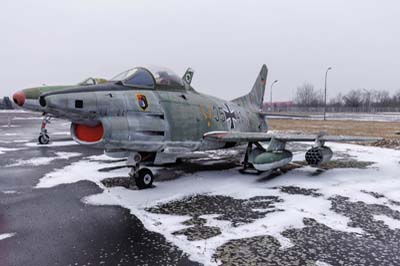
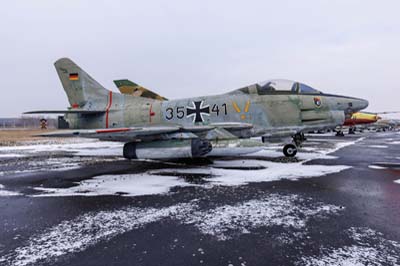
Fiat G-91R/4 (BR+239 marked '35+41') ex WGAF. |
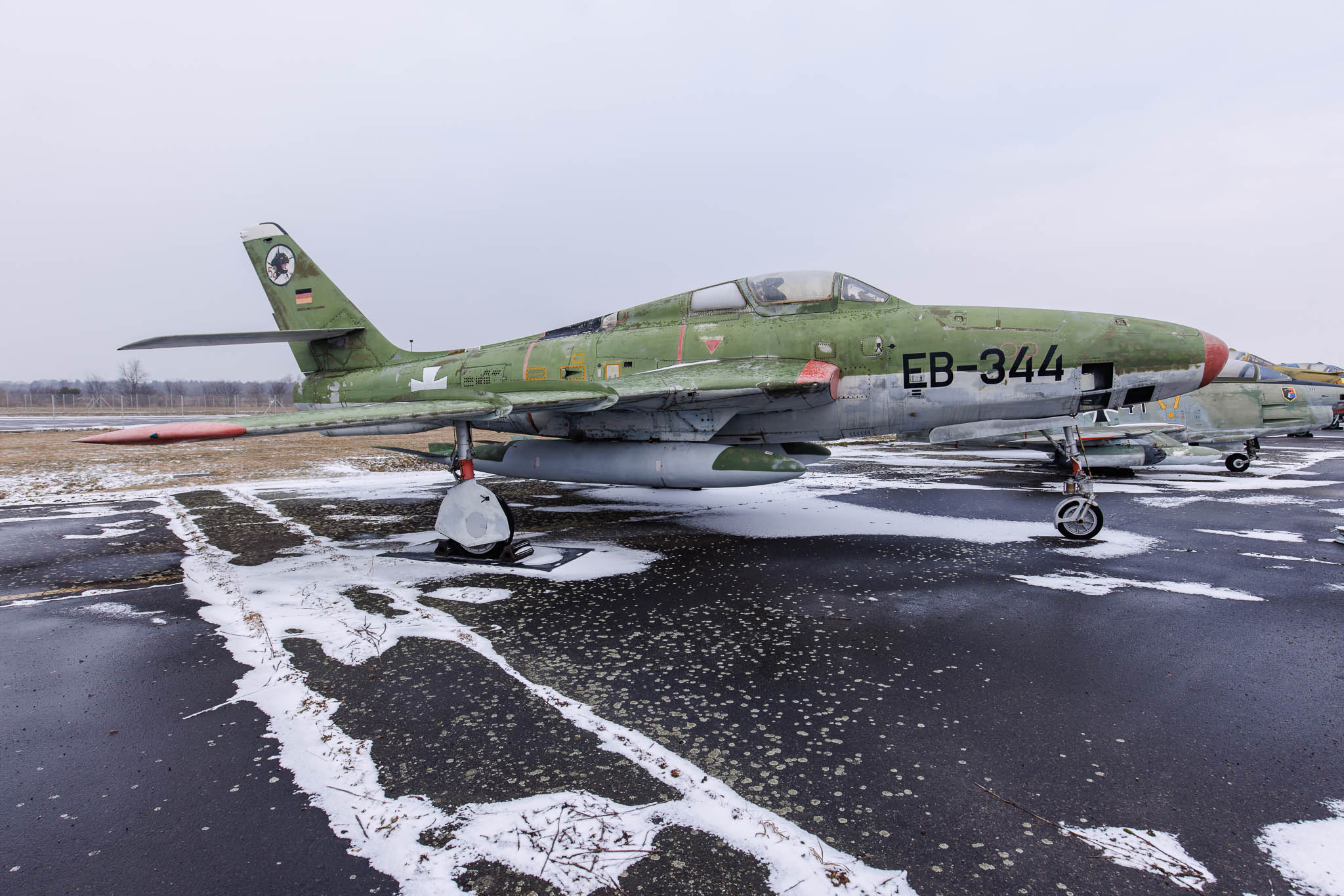
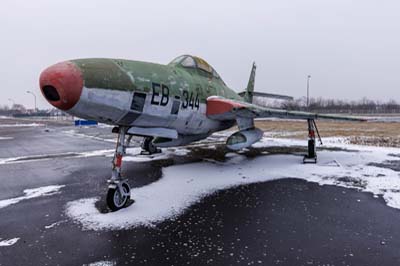
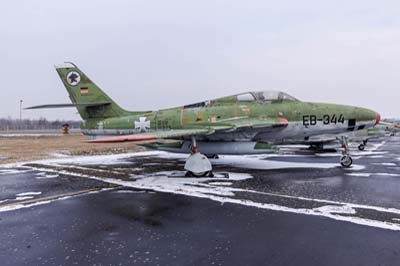
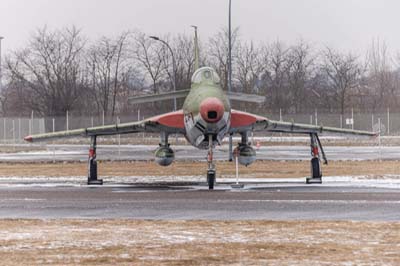
| Left to right: Republic RF-84F Thunderflash (EB-344) ex WGAF. |
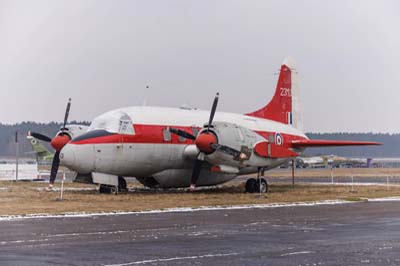
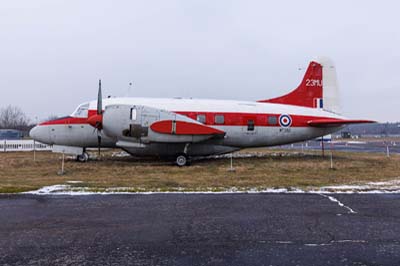
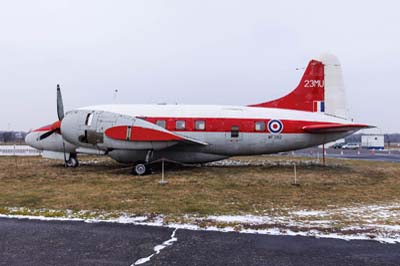
| Left to right: Vickers Varsity T1 (WF382 '23 MU'). |
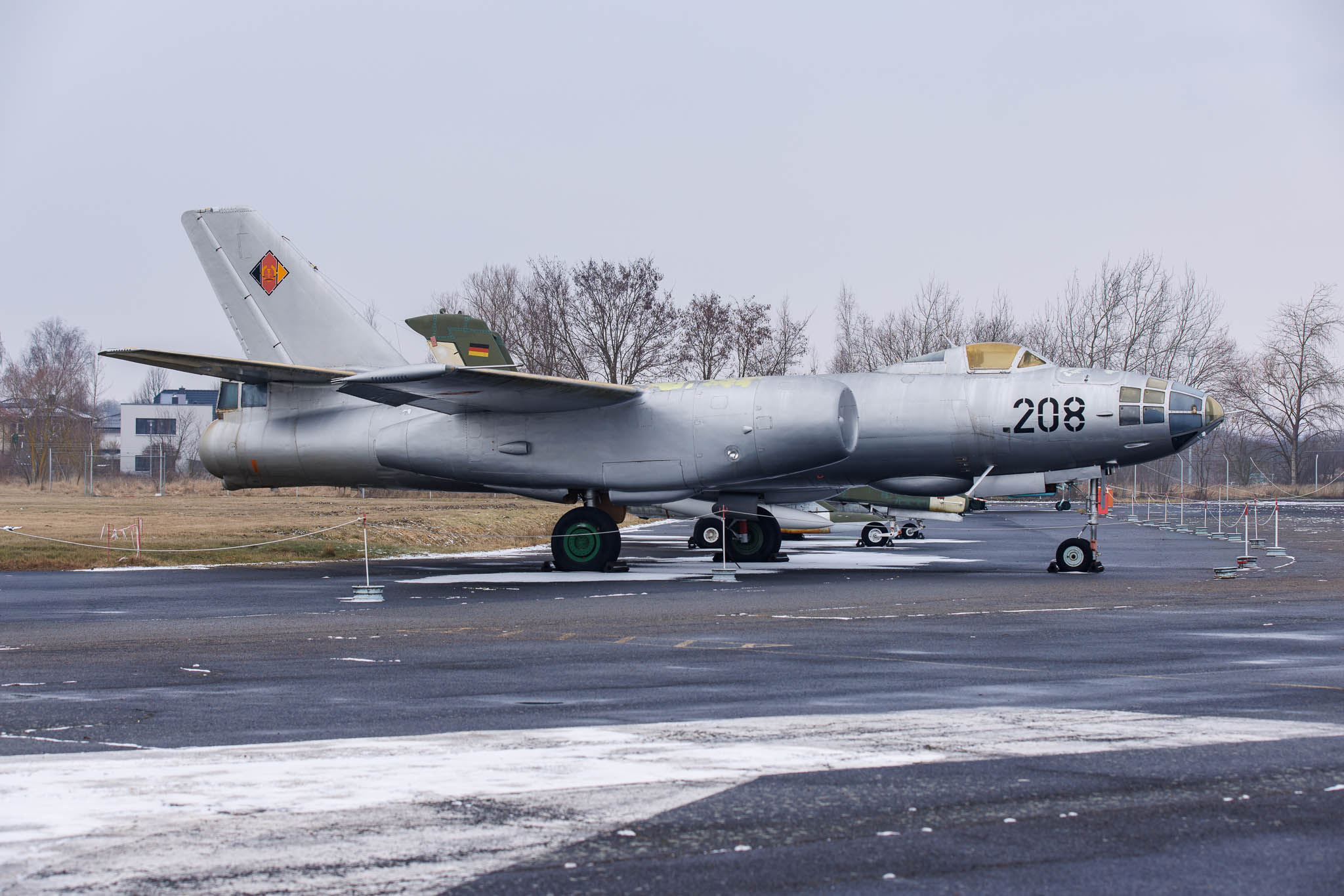
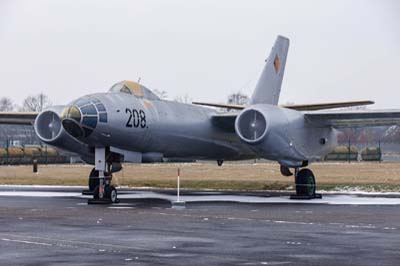
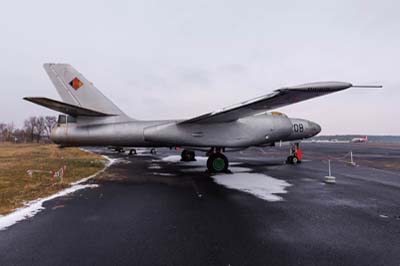
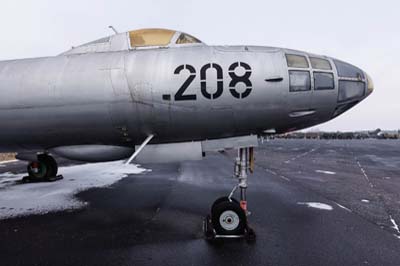
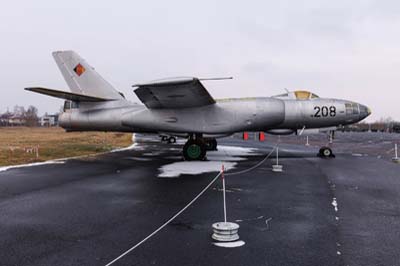
| Left to right: Ilyushin Il-28B (208). Former NVA aircraft (Nationale Volksarmee or National People's Army). |
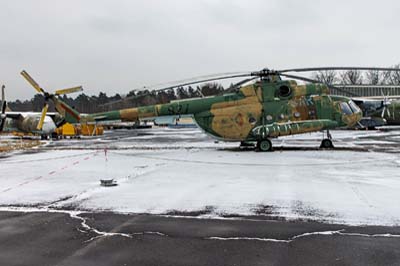
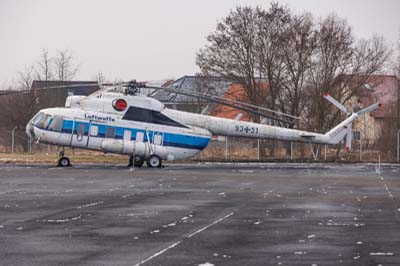
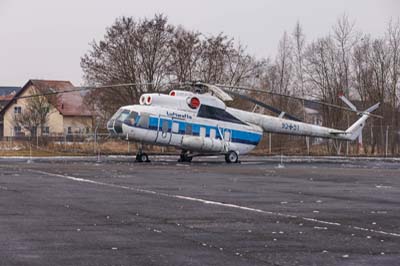
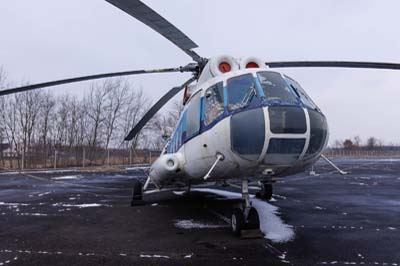
| Left to right: Mil Mi-8S (93+51, 914), ex WGAF, NVA. |
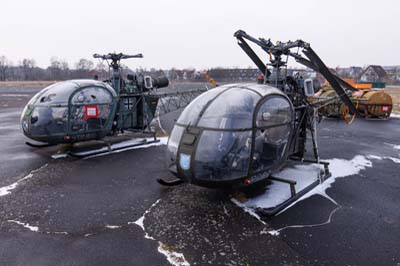
Left to right: Sud Aviation Alouette IIs (76+03 and 75+46) ex HEER.
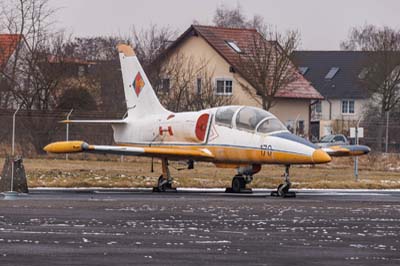
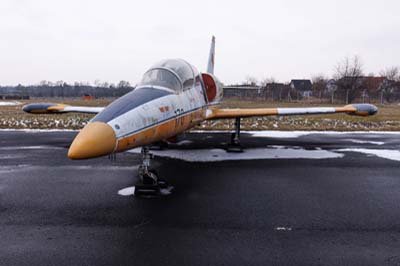
Aero Albatros L-39ZO (28+48, 170) ex German Air Force, NVA. |
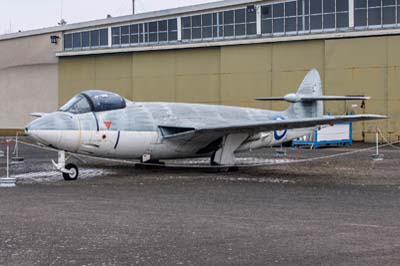
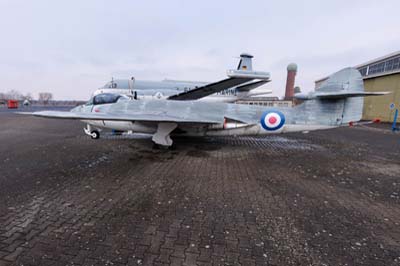
Left to right: Hawker Sea Hawk FGA6 (WV865) ex Royal Air Force (RAF).
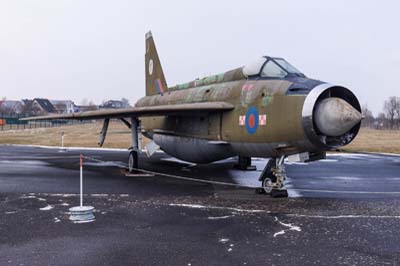
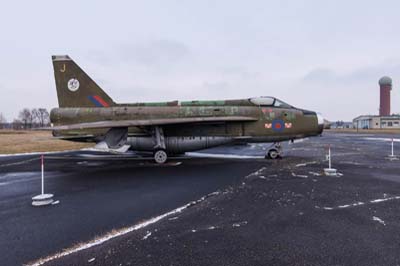
English Electric Lightning F2A (XN730 'J') ex RAF. |
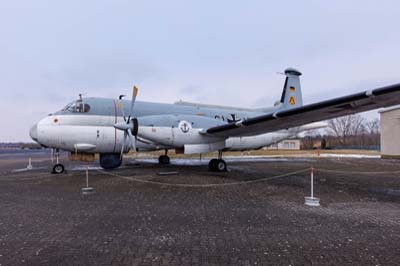
Left to right: Breguet Atlantic (61+17).
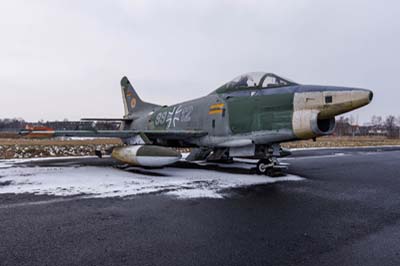
Fiat G-91R/3 (99+12) ex WGAF.
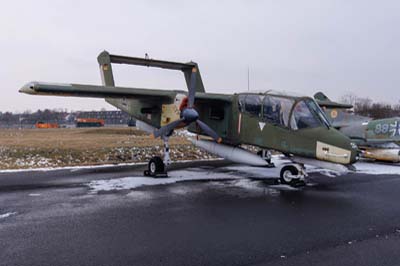
North American Rockwell OV-10B Bronco (99+33) ex WGAF. |
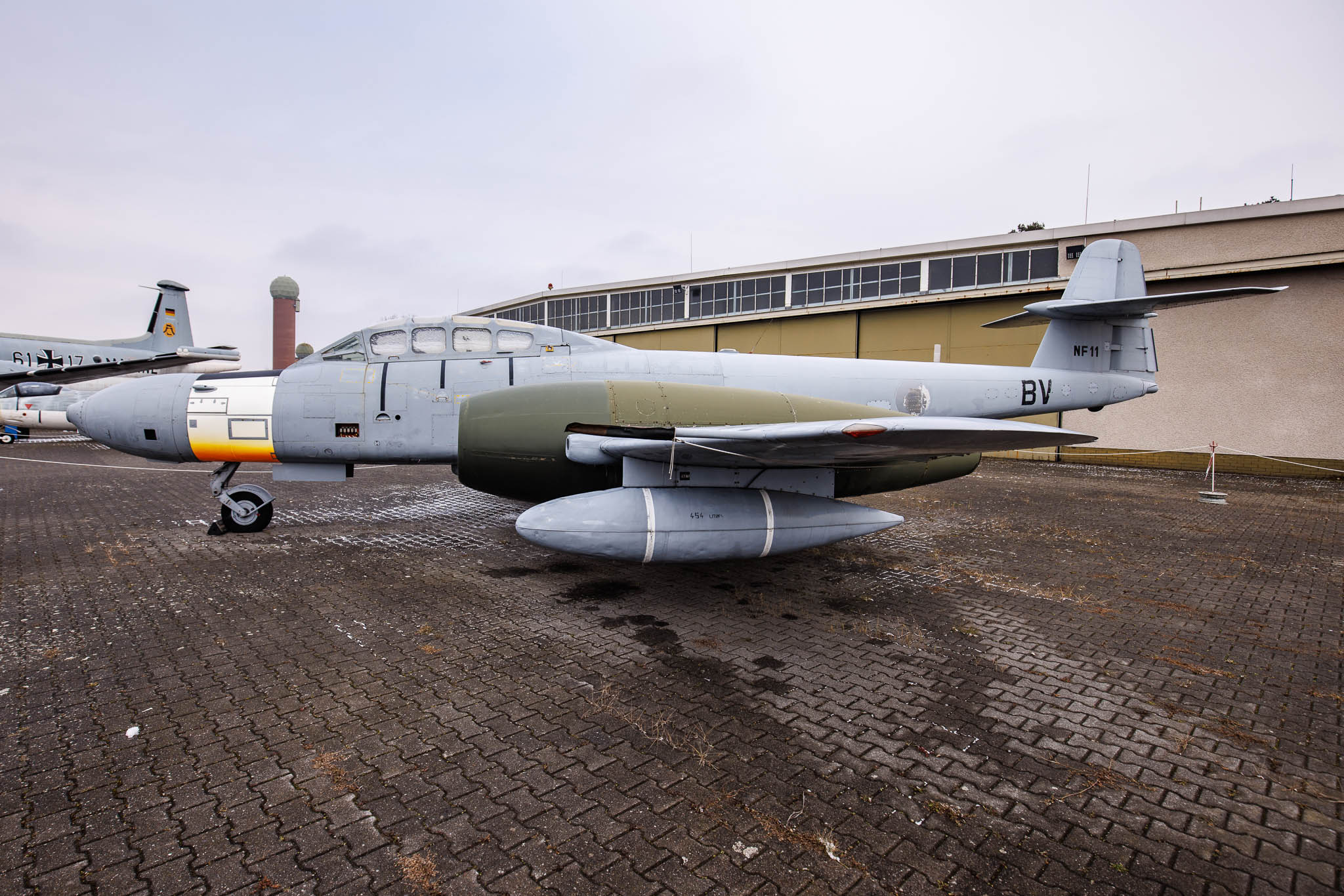
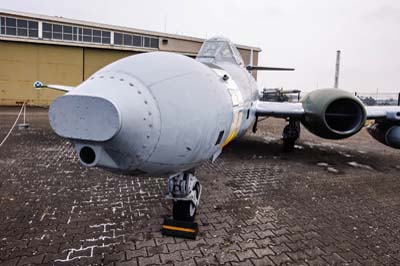
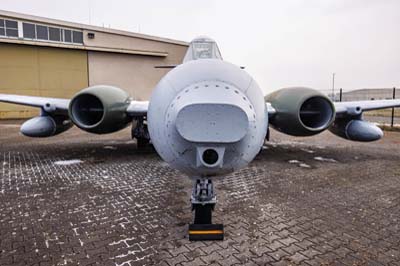
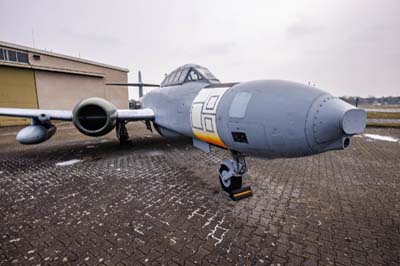
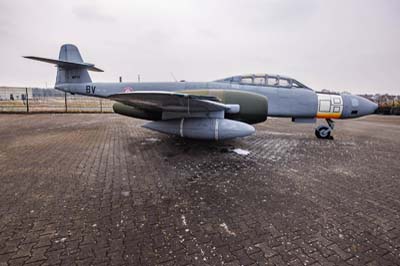
| Left to right: Armstrong Whitworth Meteor NF11 (NF.11-14 'BV', WM368) ex French Air Force and RAF. |