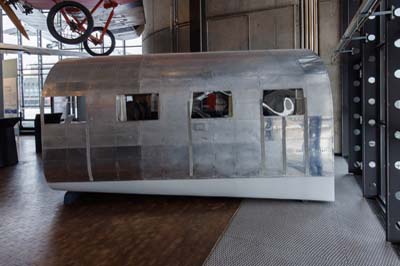
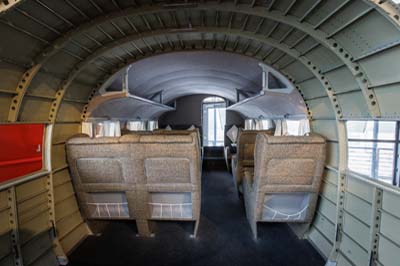
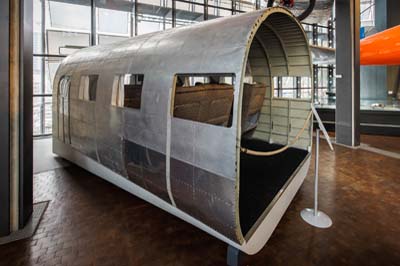
Hangar 7
Deutsches Technikmuseum
Tempelhof Airport, Berlin
February, 2026
|
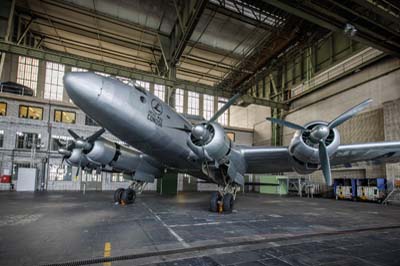
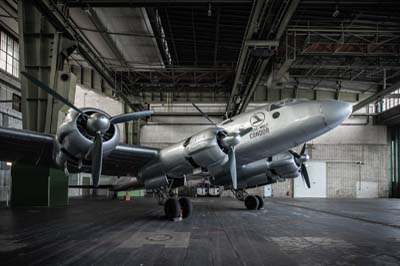
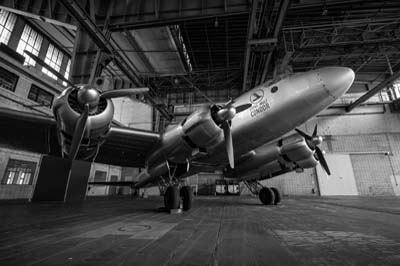
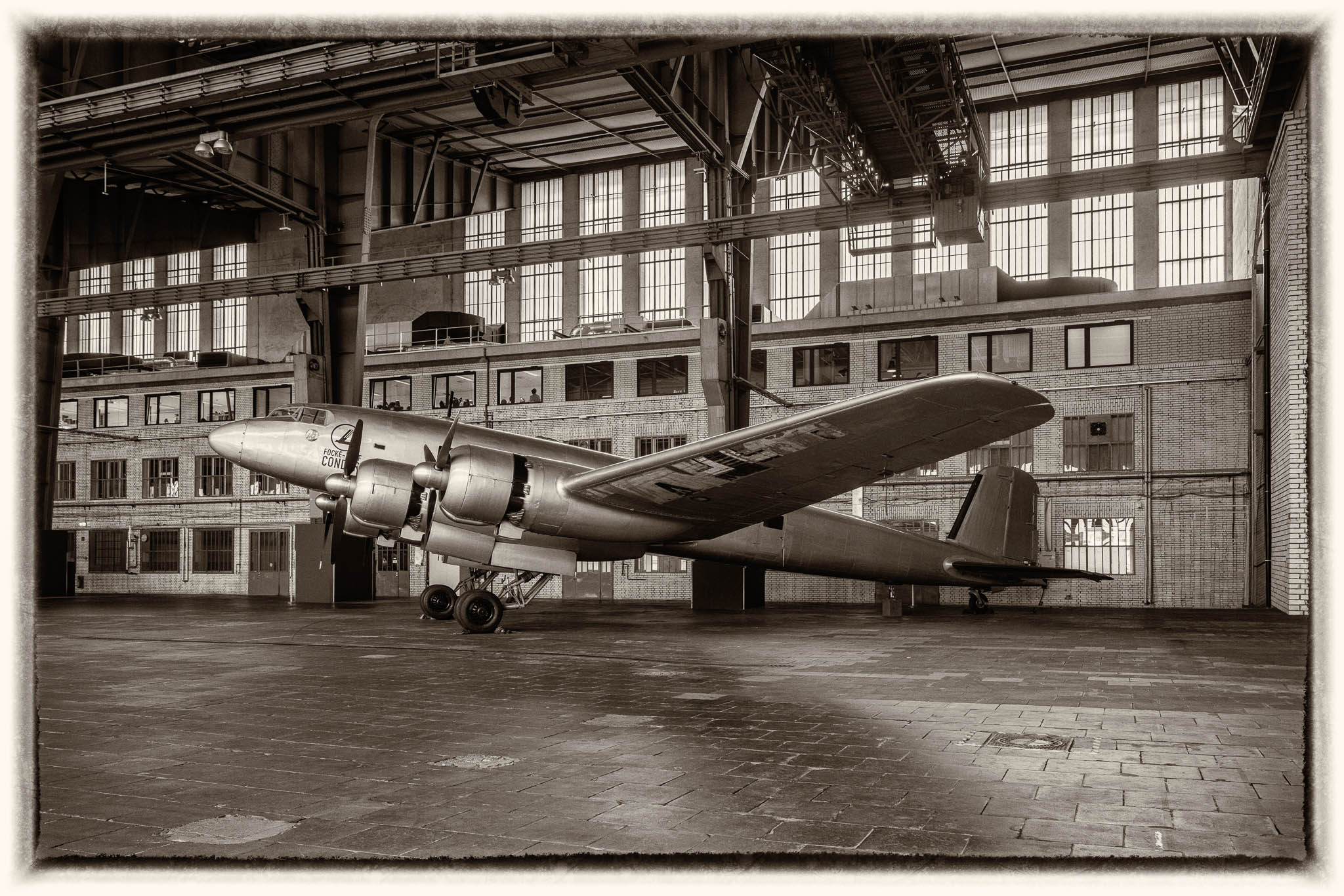
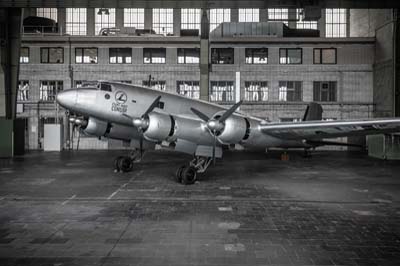
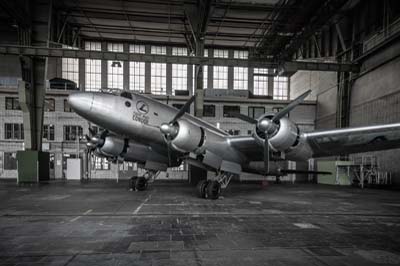
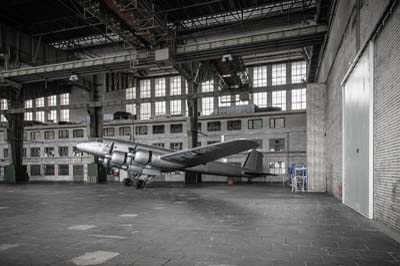
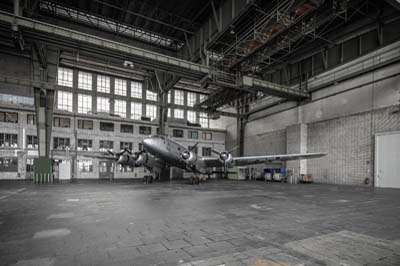
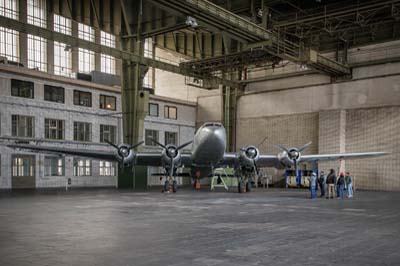
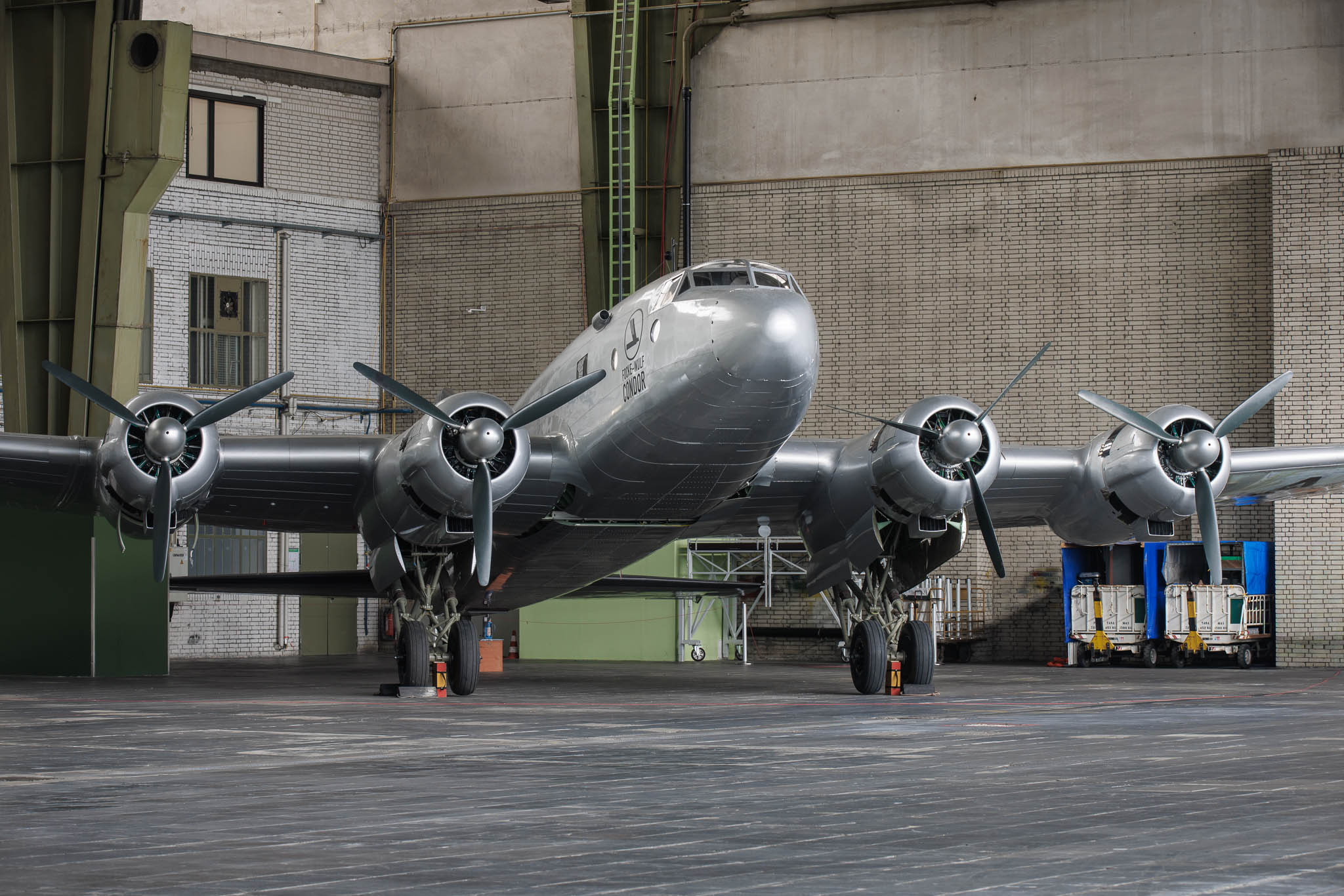
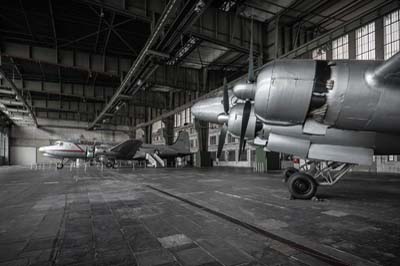
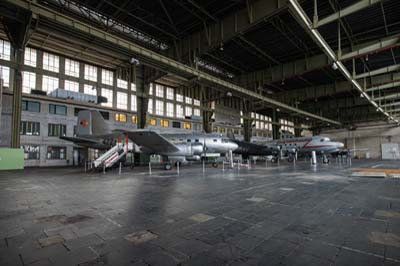
| Hangar 7 is part of the Deutsches Technikmuseum and currently hold three aircraft (Fw 200 Condor, C-54G Skymaster and (VEB) IL-14P) in Hangar 4, while Hangar 7 is being restored. These seven hagars were built at Tempelhof Airport between 1936 and 1941. During World War Two the large hangars complete with underground tunnels adjacent hangars were used for the production of the Focke-Wulf Fw 190. I was met by Günter who had the hangar keys and over the next three hours enabled me to these wonderful images. The first 30 minutes were spent removing the clutter from around the Fw 200. |
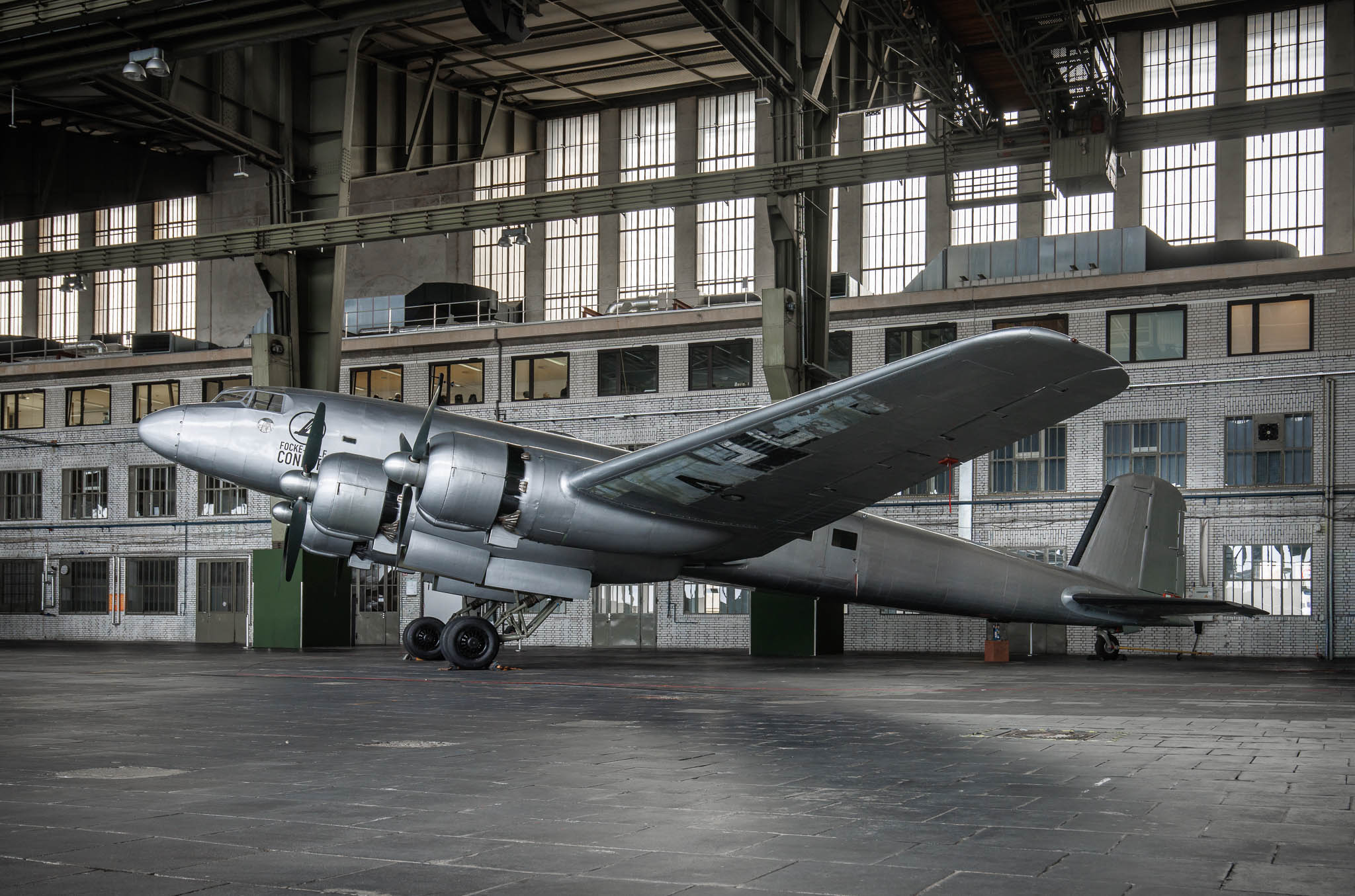
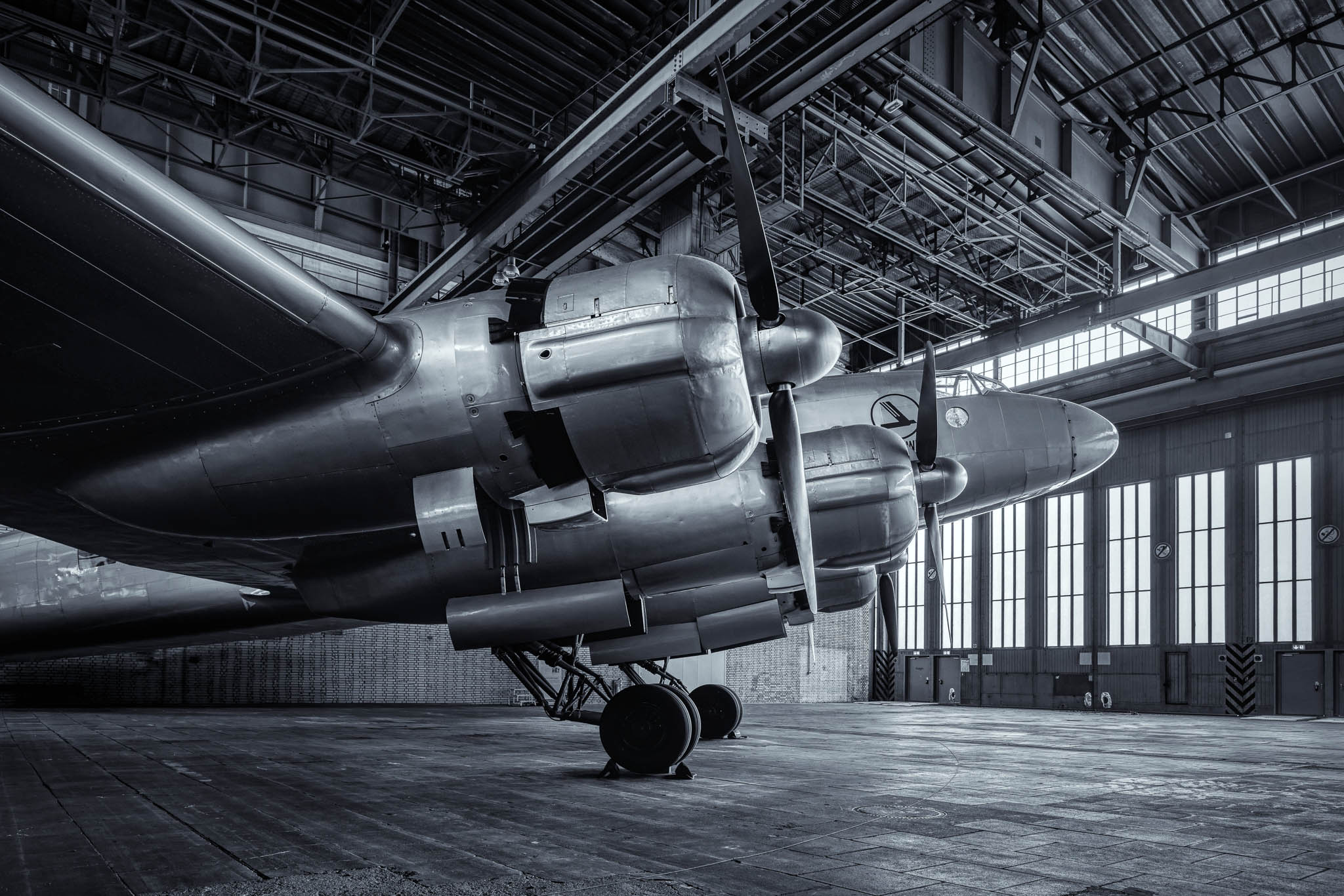
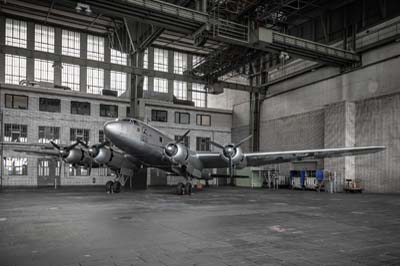
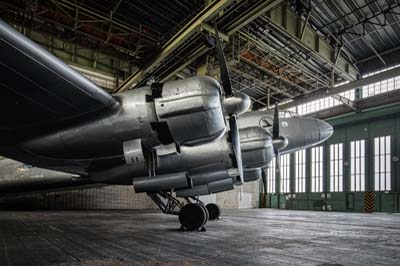
| The deliberately low viewpoint highlights the exposed portion of the original wing (ex Mount Kvitanosi), revealing faint remnants of former Luftwaffe markings. |
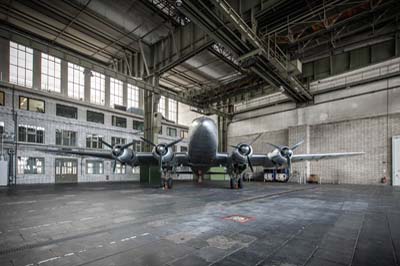
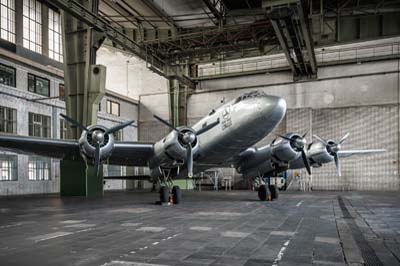
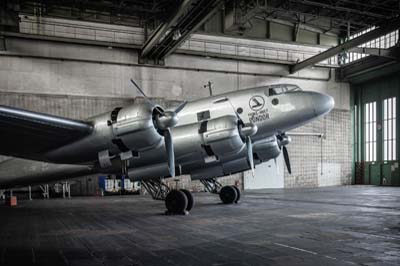
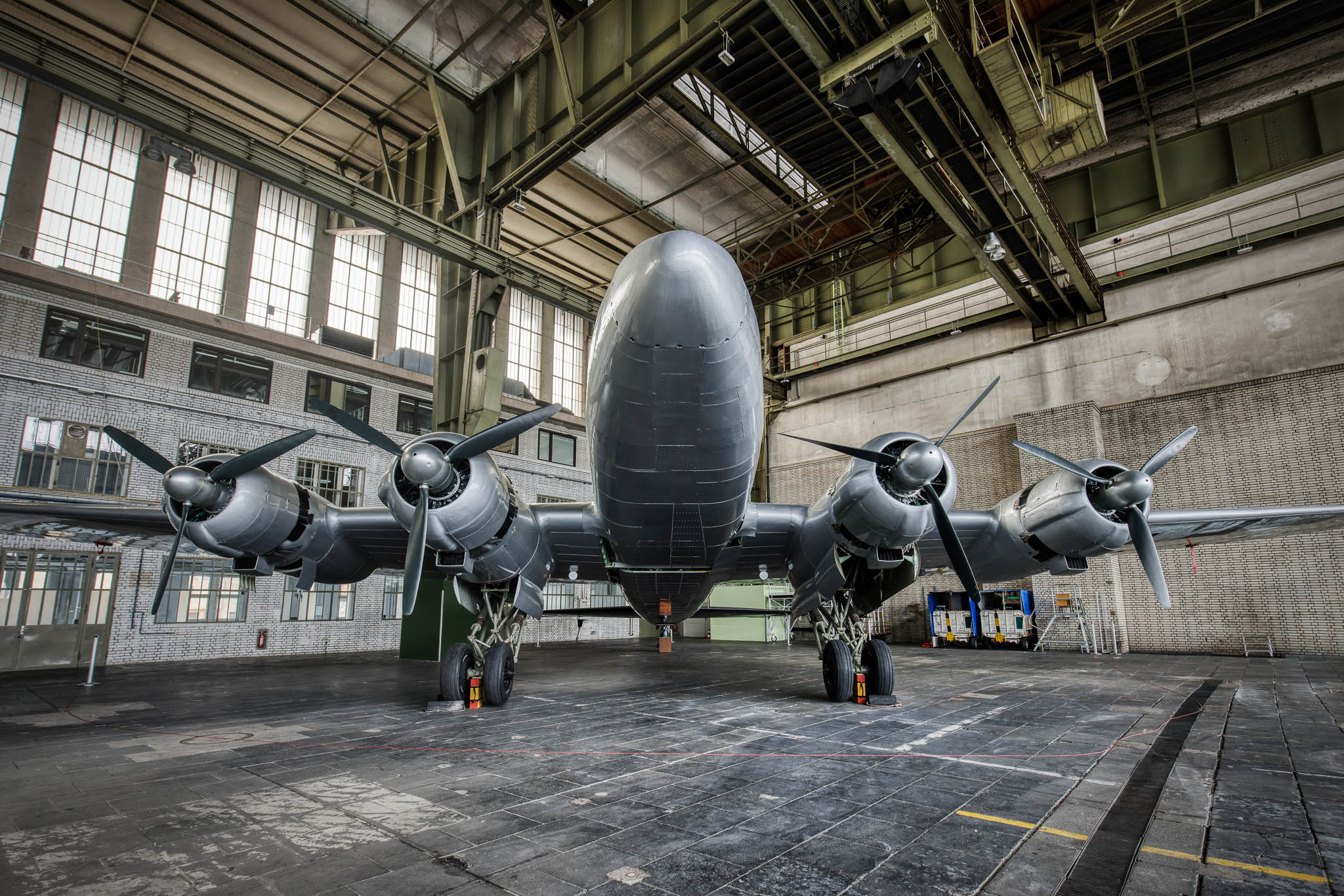
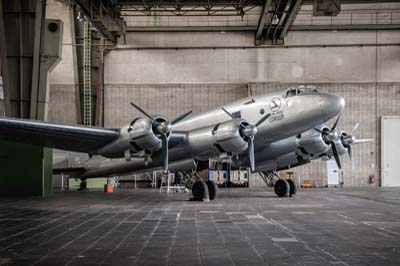
Focke-Wulf Fw 200 Condor (Werk No.0063 'F8+BR' registered D-ACON). Initially conceived by Focke-Wulf's chief designer Kurt Tank as a modern four-engine, long-range airliner, the Fw 200 Condor was designed for comfortable, non-stop transatlantic travel. In August 1938, the specially prepared Fw 200 S-1 named Brandenburg flew from Berlin to New York in 24 hours 56 minutes, setting a record. Later that year, another Condor completed the Berlin to Tokyo flight in just over 46 hours, demonstrating its remarkable range.
During World War Two, the Condor was adapted for military service with the Luftwaffe, notably KG 40. Operating over the Atlantic, it conducted long-range reconnaissance and anti-shipping strikes, locating Allied convoys and coordinating attacks with German U-boats.
Despite its effectiveness, the Fw 200 proved vulnerable. Designed originally as a civilian airliner, the airframe struggled with the stresses of combat operations and heavy loads, leading to structural weaknesses and high losses. Later variants improved defensive armament and added radar, while many aircraft were reassigned to transport roles, including supply missions.
A total of 276 Condors were built between 1937 and 1944. Today, only one relatively complete example survives, located in 1981, it was recovered from Norway's Trondheim Fjord in 1999 and restored after a 22-year effort.
The 22-Year Restoration Project
When the wreck was raised from Norway's Trondheim Fjord in 1999, decades underwater had left the aircraft so badly corroded that the structure collapsed during recovery. To enable the restoration, engineers sourced additional components from another Condor crash site on Kvitanosi mountain in Norway, a process that required lengthy negotiations as the site was regarded locally as a war memorial.
The immense restoration effort was shared across Germany. Airbus in Bremen reconstructed the fuselage, cockpit, and wings. Lufthansa Technik in Hamburg restored the landing gear and tail assembly. Rolls Royce in Oberursel painstakingly rebuilt the four radial engines. With almost no surviving technical drawings, many parts had to be reverse engineered from the fragile remains.
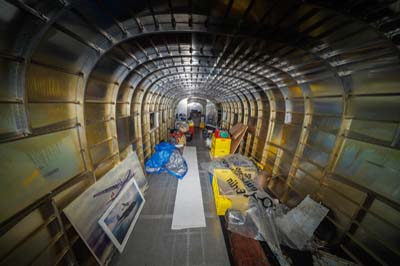
After 22 years of work, the restored Fw 200 was unveiled in June 2021 as a static exhibit and is not airworthy. However, my visit in 2026 revealed that the interior is still far from complete. The cockpit remains empty, and the fuselage lacks seating. The restoration team continues to meet weekly and plans to install cockpit instruments, nearly all of which have been acquired, along with an original seat and control column recovered from an Fw 200-C4 that crashed into Lavangen Fjord in 1944.
The original airport terminal building, with its façades of shell limestone, were built between 1936 and 1941. It forms three quarter mile long quadrant. Tempelhof Airport closed all operations on 30 October 2008. The terminal now forms Hangars 1 though 7. |
| Left to right: In December 1942, an Fw 200 crashed near Voss, Norway during a snow storm it flew too low and struck a high plateau on Mount Kvitanosi, two of the six man crew survived. The aircraft was salvaged for parts in 1942, the outer wings remained. Decades later, these surviving sections were recovered for the restoration. The left outer wing was left unpainted. |
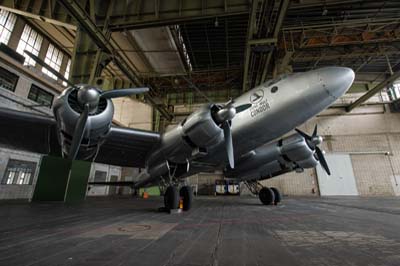
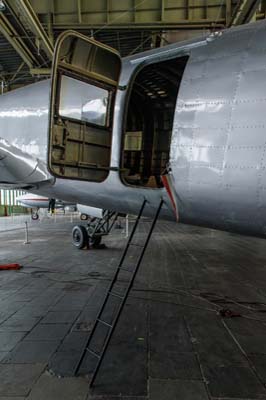
| The undercarriage is original, as it was manufactured from high quality steel it was not corroded. |
Left to right: Inside the Fw 200 Condor: On October 11, 1944, an Fw 200 C4 'F8+ES' departed carrying 51 people, far exceeding the aircraft's load capacity. The excessive weight placed extreme stress on the structure, leading to catastrophic failure. The aircraft broke apart in the air and fell into Lavangen Fjord. There were no survivors. In later years, from a depth of 15 metres, recovery teams retrieved important components used in the reconstruction of the cockpit section.
Original parts used in restoration:
Parts of the left wing (now visible) and right wing (not visible)
Parts of the airframe; (six metre long rear fuselage was recovered from a depth of 68 metres off the island of Dyrøya).
Under carriage made of high-quality steel
Aircraft engines with the propellers
Landing lights
Co-pilot seat and control column
The steel ladder |
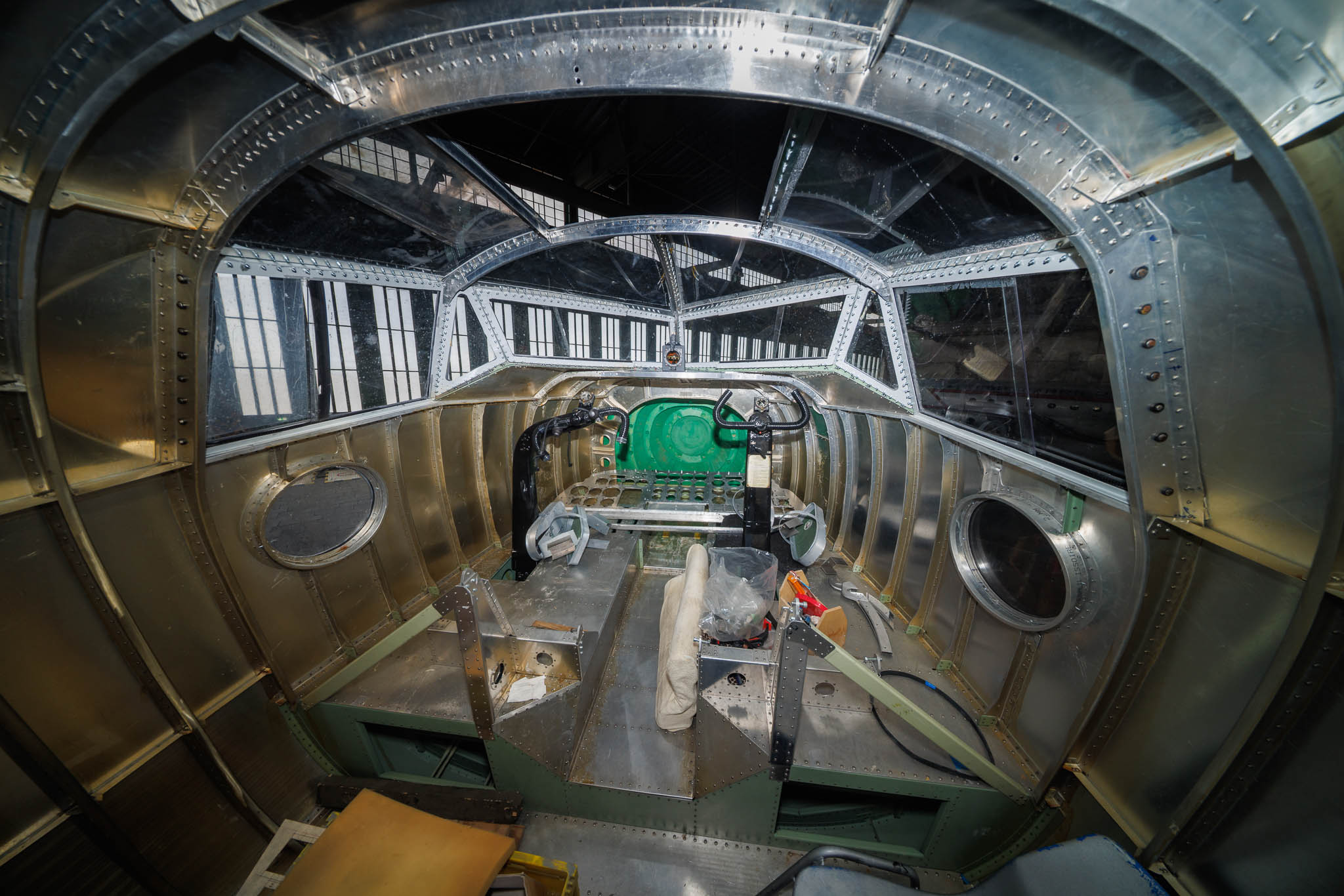 |
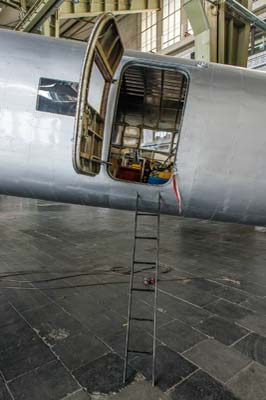
Left to right: Almost the entire aluminium skin is newly manufactured, the original having suffered extensive saltwater corrosion. In contrast, the steel ladder is original, salvaged from a Norwegian fjord together with the inner door ribs. The fuselage window frame has been reproduced using modern 3D-printing technology.
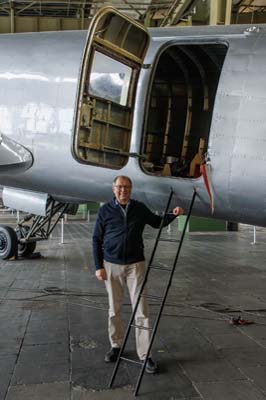
Günter a key member of the restoration team, a former Rolls-Royce engine technician, was responsible to working on the Condor's engines. He revealed to me that engine 4 is not complete, more of a cosmetic restoration. He is just one of over 100 volunteers in Bremen, Hamburg, Berlin and Oberursel who were involved in the reconstruction which started in around 2000. |
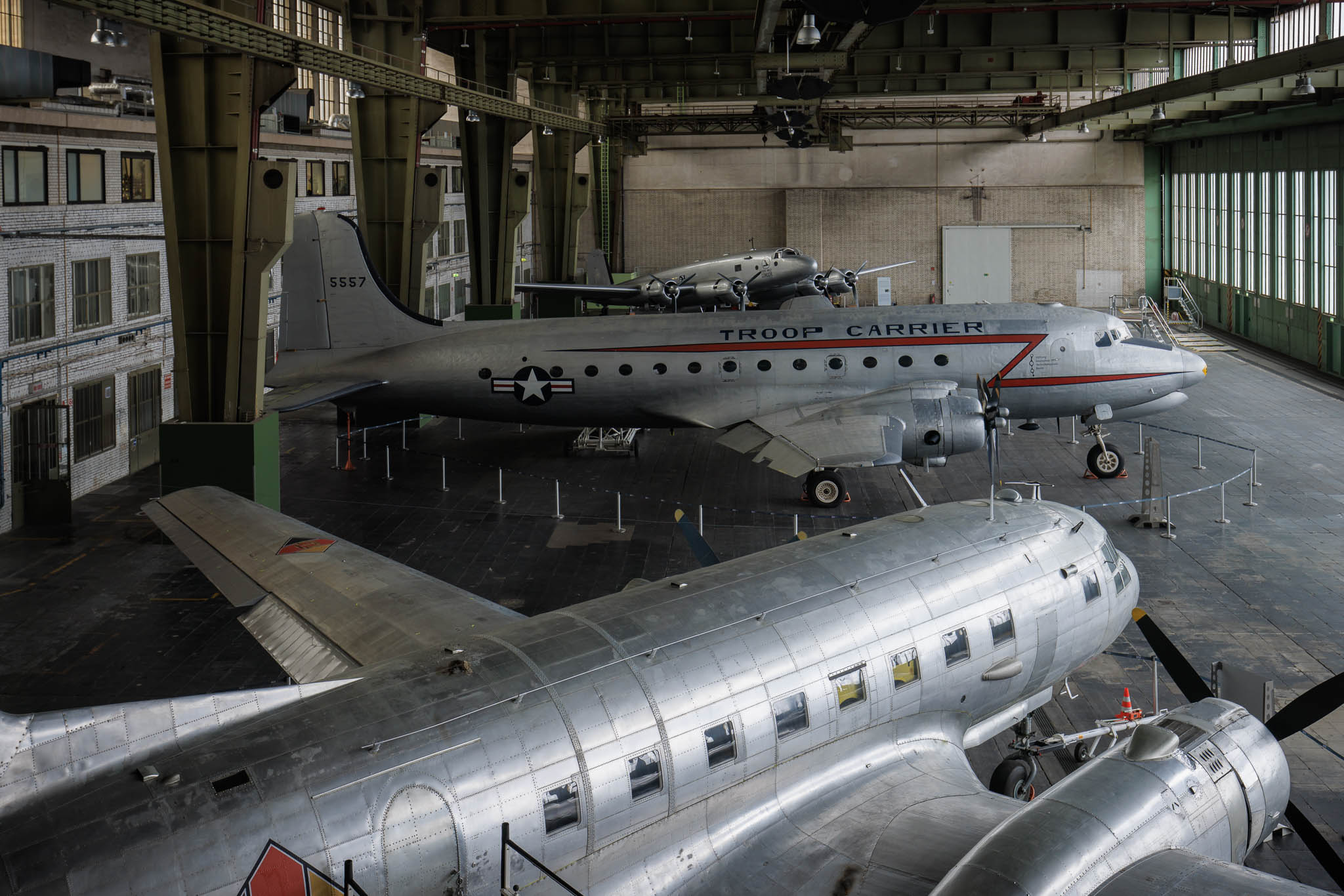 |
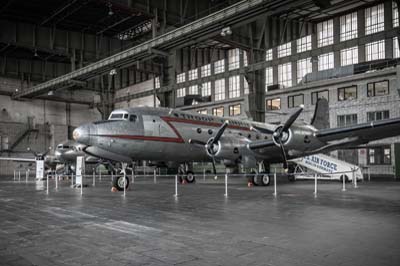
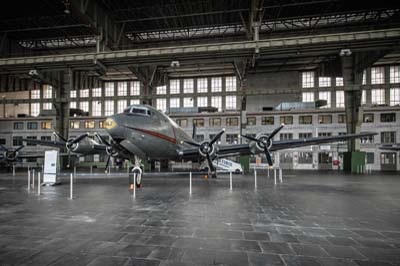
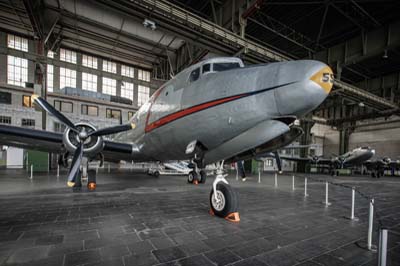
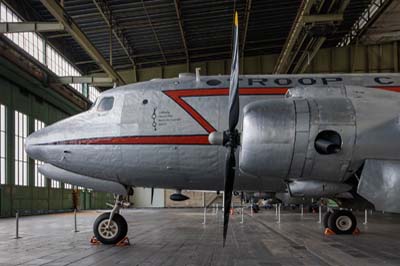
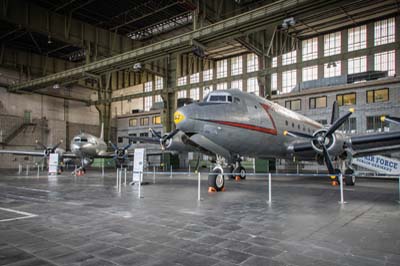
Left to right: Douglas C-54G Skymaster (45-0557). It is four-engined transport aircraft used by the United States Army Air Forces USAAF) in World War Two and the Korean War (renamed USAF in 1947). During the Berlin Airlift (from June 26, 1948 to September 30, 1949) C-54s and other Allied aircraft hauled coal and food supplies to West Berlin.
45-0557 was retired in 1945 and was placed with the National Museum of the United States Air Force Loan Program, Wright Field, Dayton, Ohio. On May 7, 1971 it was flown to Tempelhof Airport, Berlin for the Deutsches Technik Museum. |
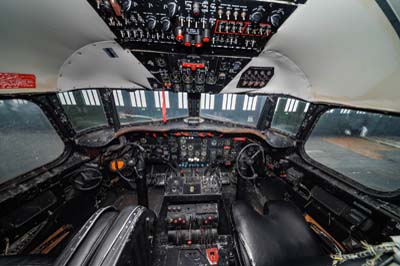
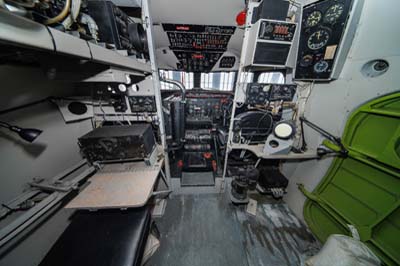
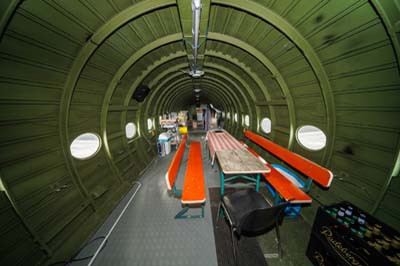
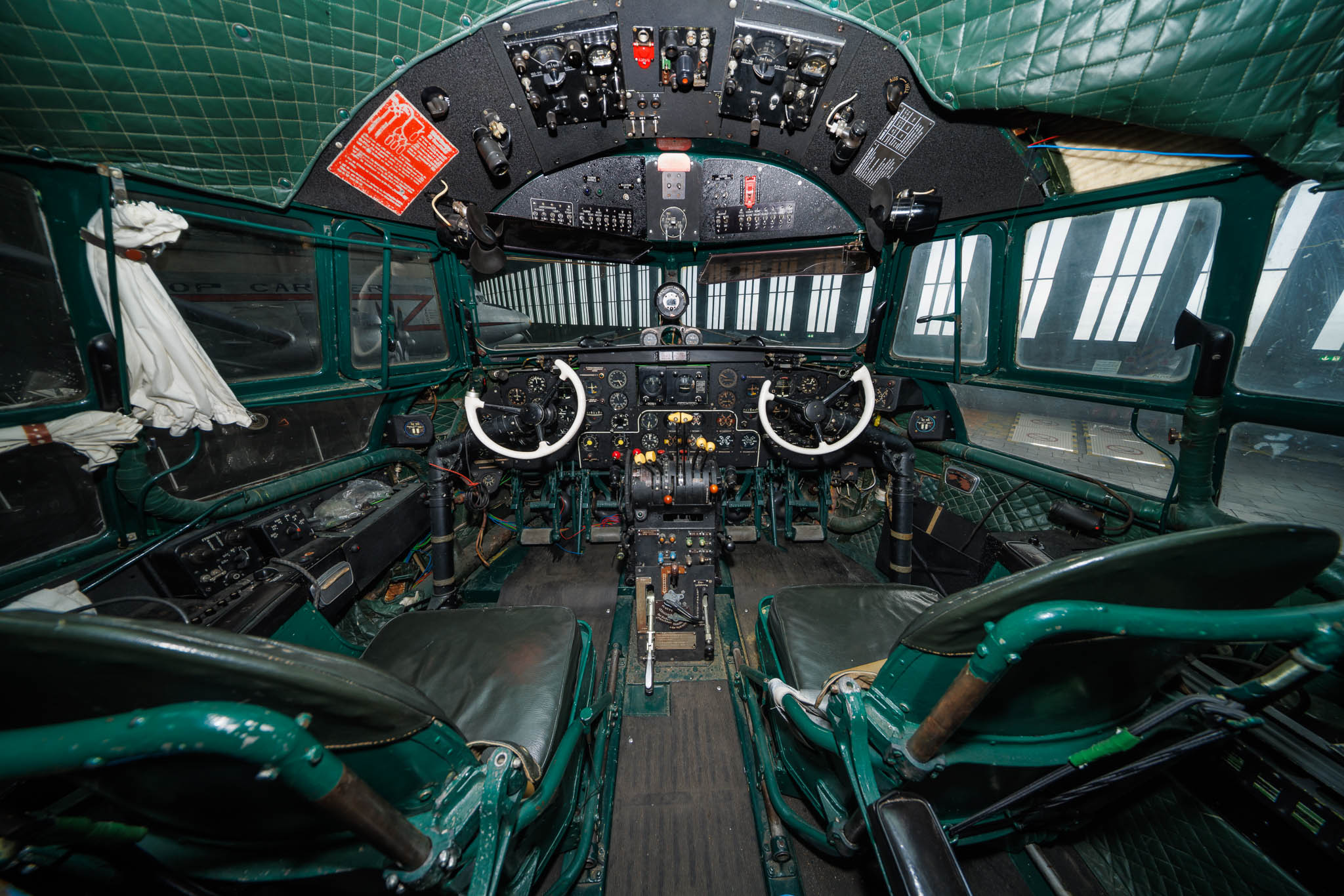
| Left to right: Douglas C-54G Skymaster (45-0557) from inside. |
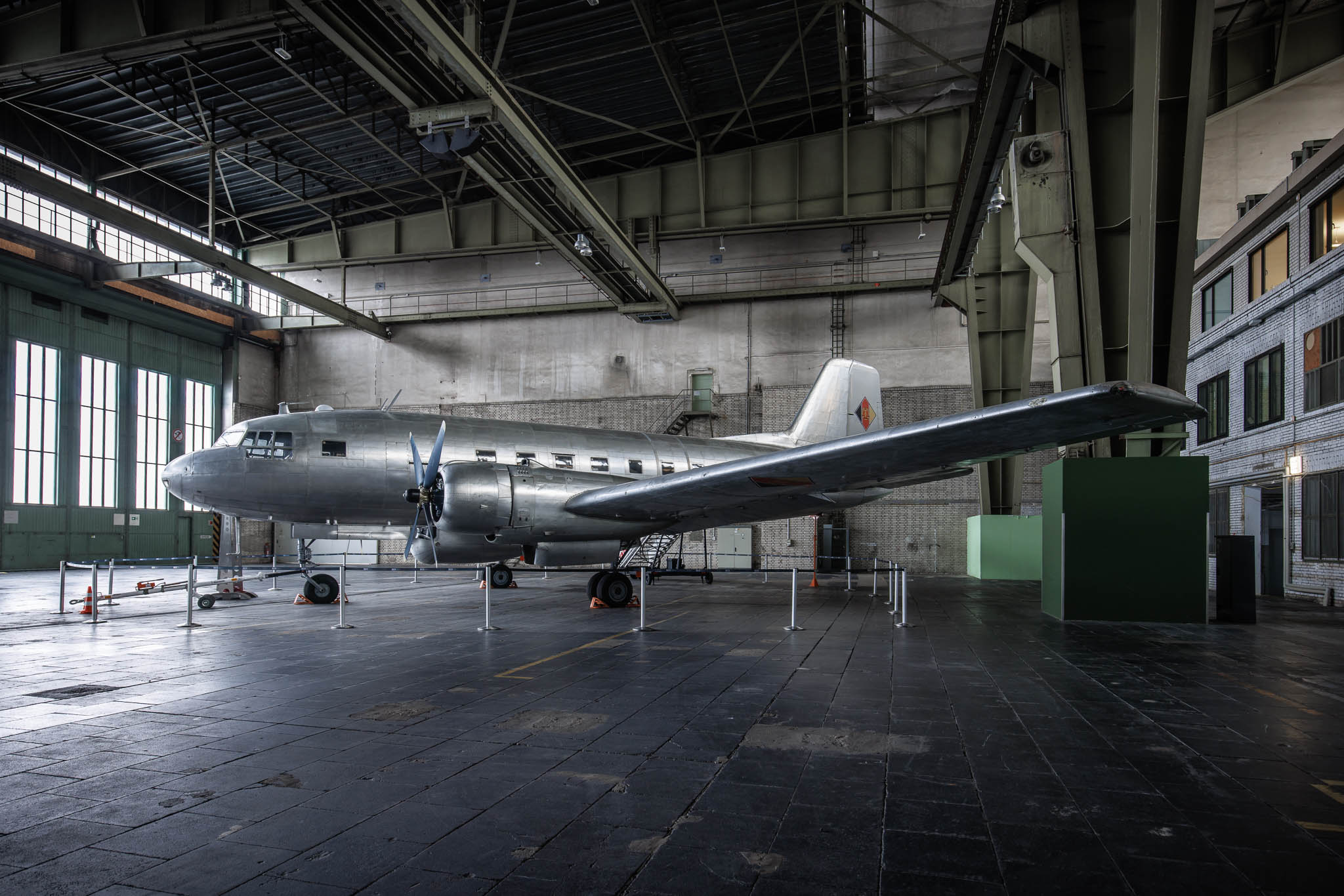
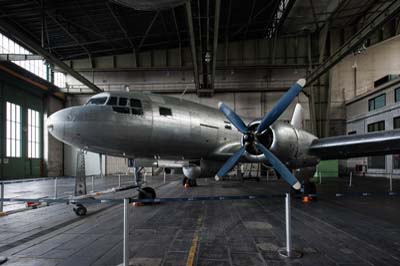
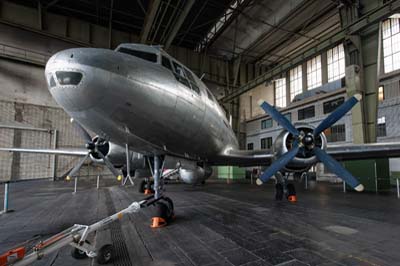
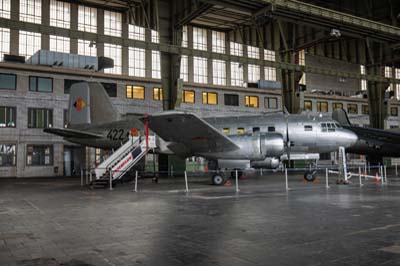
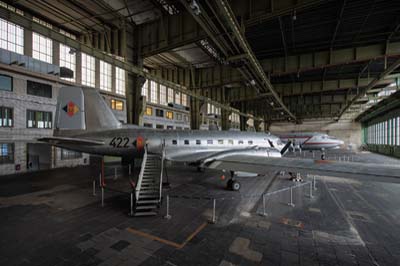
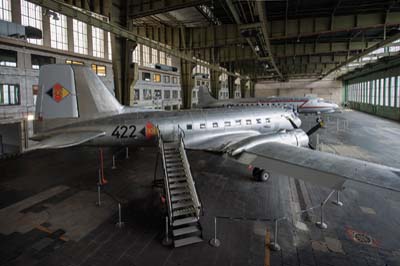
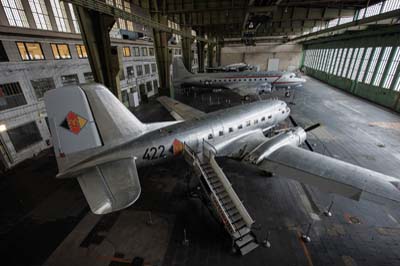
Left to right: (VEB) Ilyushin IL-14P 'Crate' (422). Former NVA aircraft (Nationale Volksarmee or National People's Army), otherwise known as the armed forces of the Deutsche Demokratische Republik (DDR) from 1956 to 1990. The Ilyushin IL-14 is a transport aircraft built under licence in East Germany by VEB Flugzeugwerke Dresden between 1956 and 1959. VEB (Volkseigener Betrieb or People Owned Enterprise), is the official designation for East German state-owned factories in the 1950s.
On December 17, 1982, 422 departed on its final flight as an NVA aircraft before being transferred to Interflug. On March 20, 1984, 422 made the last flight of an Interflug Il 14 in East Germany, marking the end of the type's service in the country. |
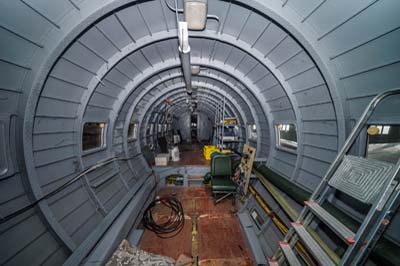
| Left to right: (VEB) Ilyushin IL-14P 'Crate' (422) from inside. |
| On display at the Deutsches Technikmuseum (German Museum of Technology) |
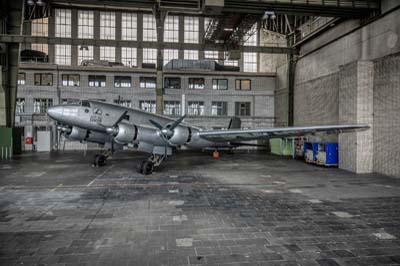
| Left to right: Focke-Wulf Fw 200C-3 Condor (unknown). The C-3 variant as structurally strengthened, fitted with Bramo 323 R-2 radial engines. |