Vickers Valetta VX573
Blackbushe Heritage Trust, Blackbushe Airport
June and July 2026
|
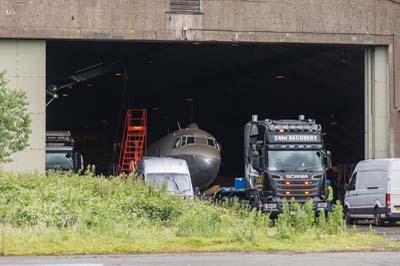
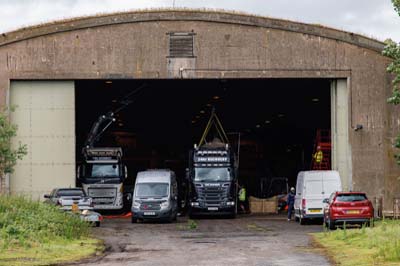
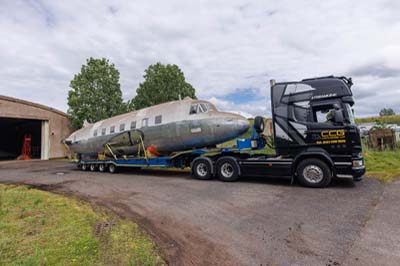
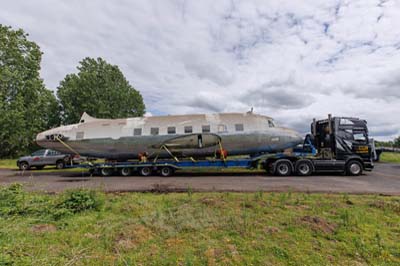
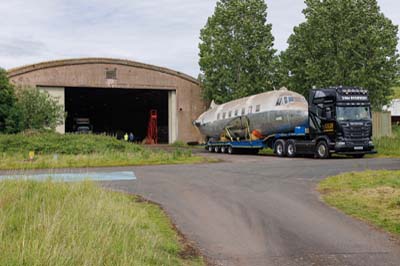
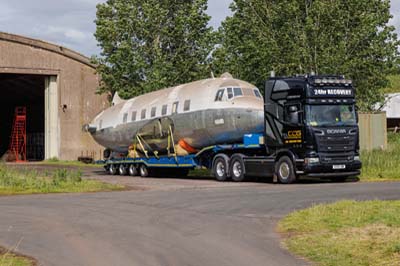
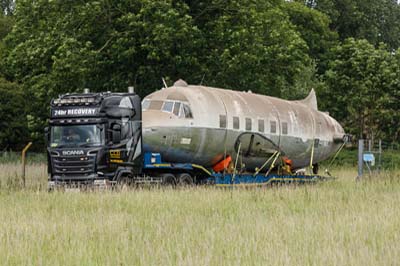
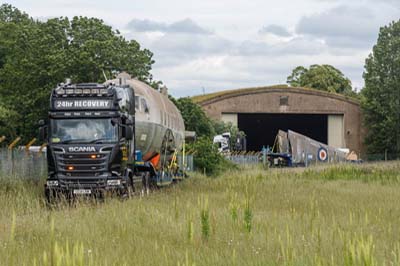
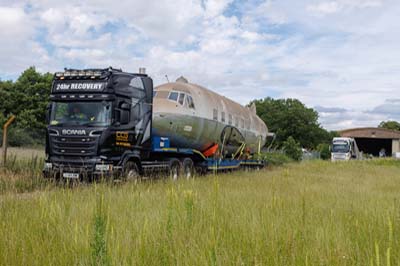
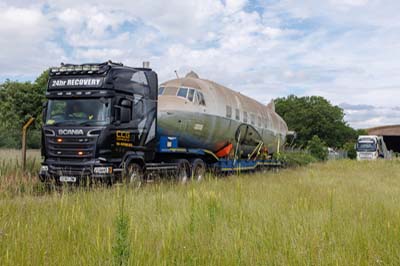
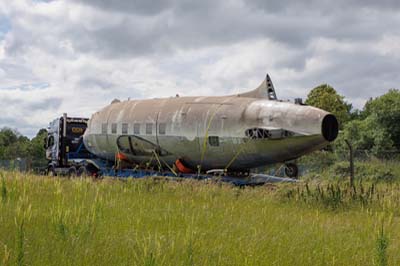
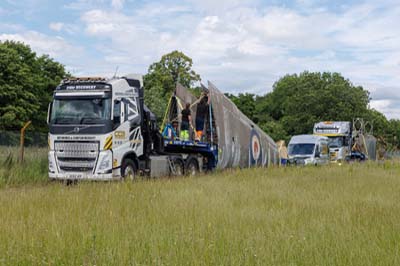
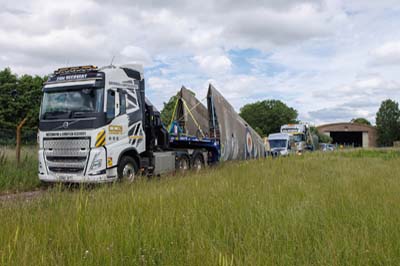
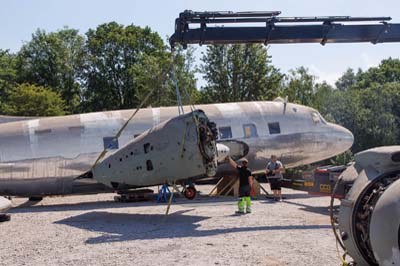
On June 18, 2026, members of the (BHT) collected Vickers Valetta C.2 VX573 from the somewhat secretive Lamela Hangar 9 at RAF Cosford. BHT had announced in November 2025 that it had acquired the Valetta after it was offered by the RAF Museum at Cosford.
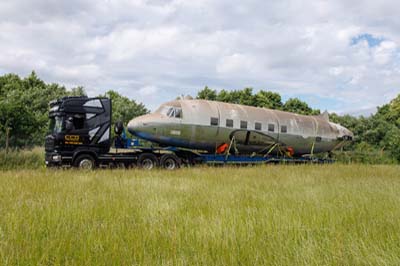
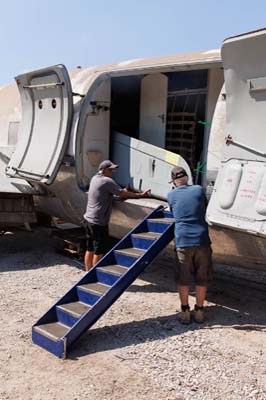
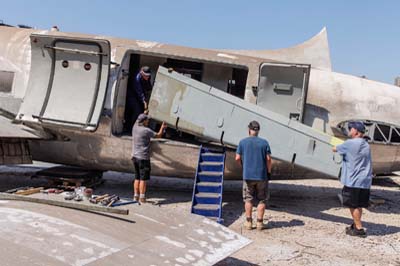
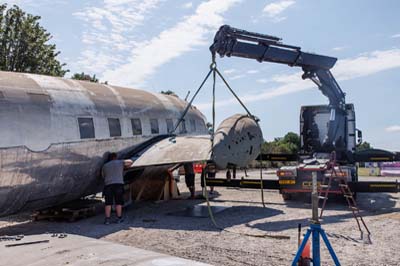
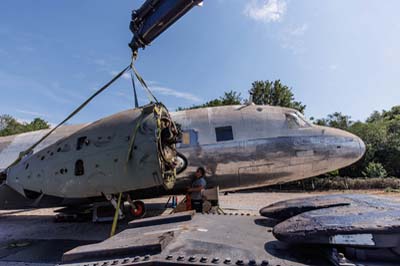
I was able to witness VX573 emerging from the hangar for the first time in more than 40 years. Over the following two days, the aircraft was dismantled further and loaded across three low-loaders for the journey to Blackbushe. I followed the convoy for the first part of its journey before meeting the BHT restoration team at Blackbushe Airport, where I documented the Valetta's reconstruction over the following several days.
|
| Outside Lamela Hangar 9, RAF Cosford, June 17 and 18, 2026 and onward to Blackbushe Airport |
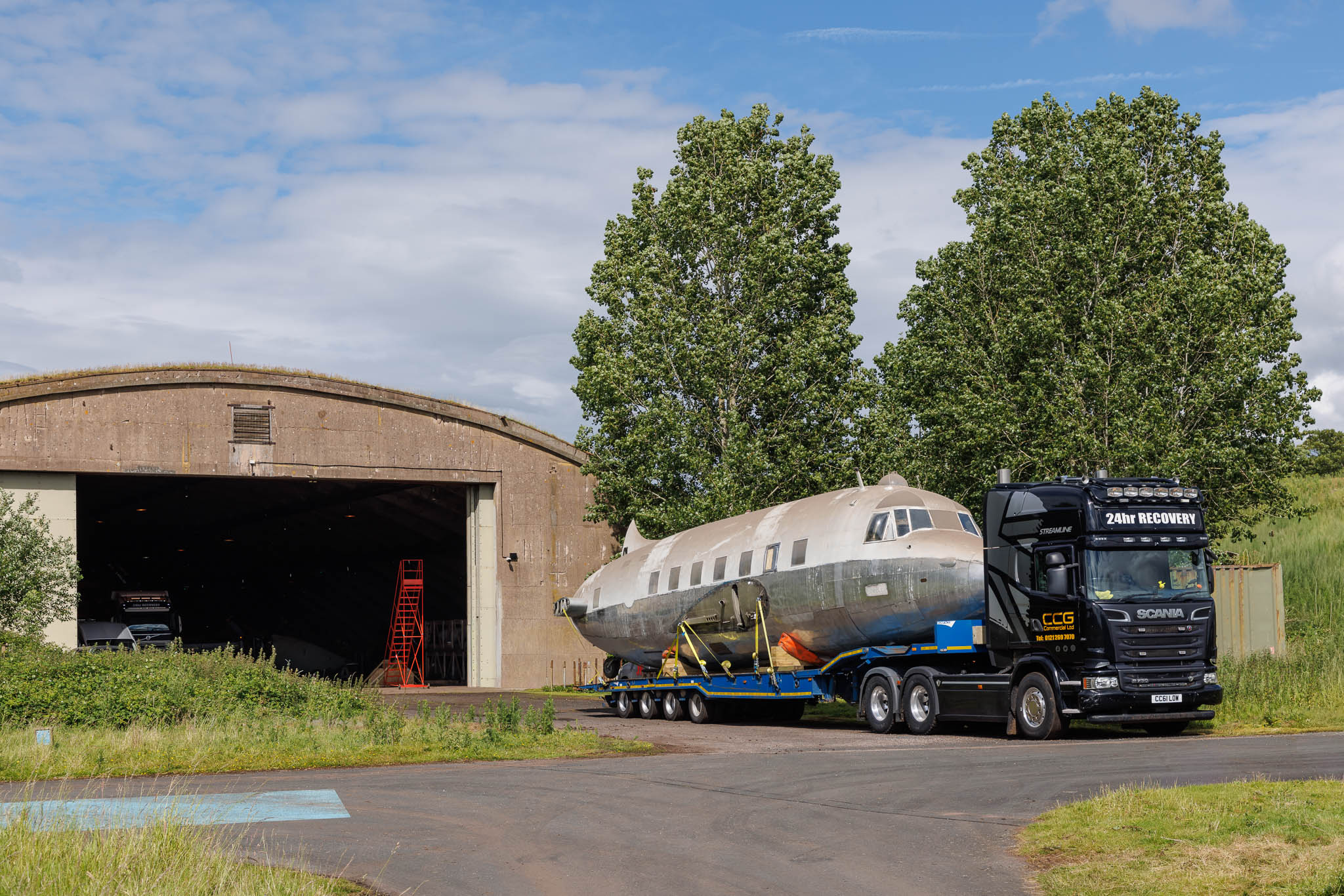 |
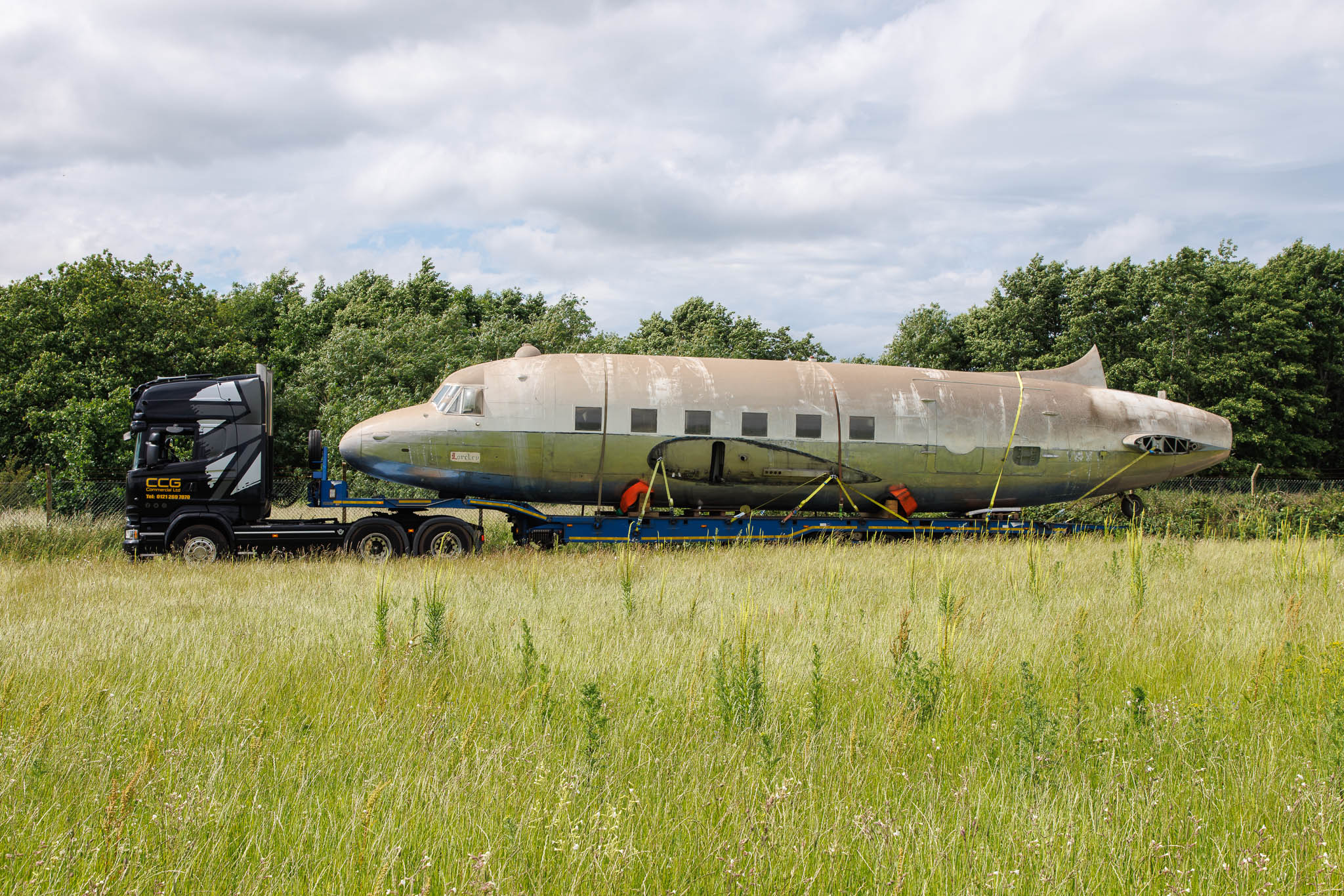
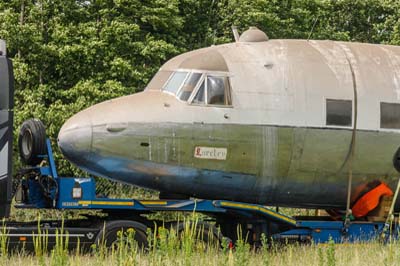
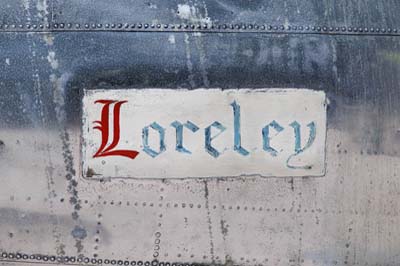
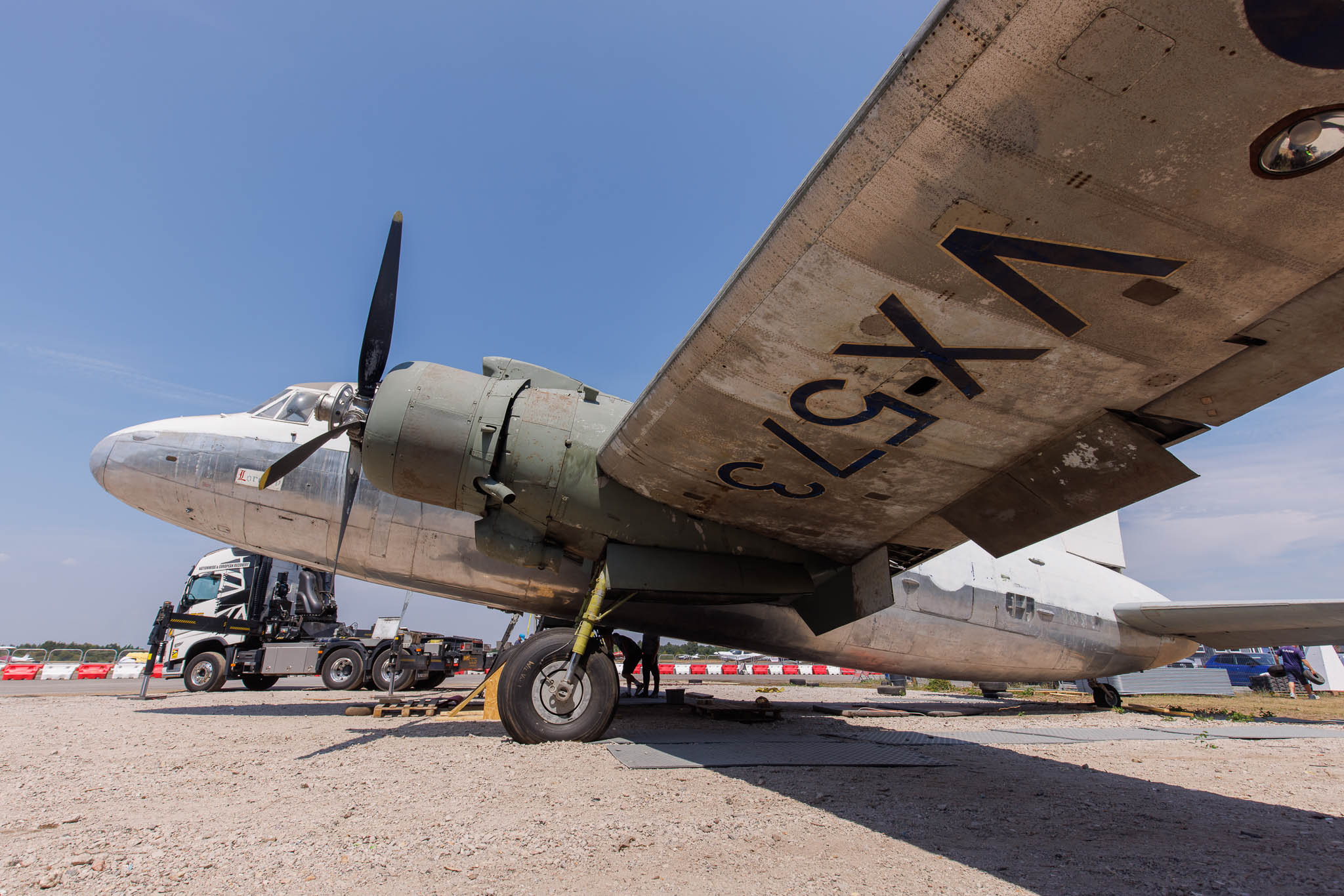
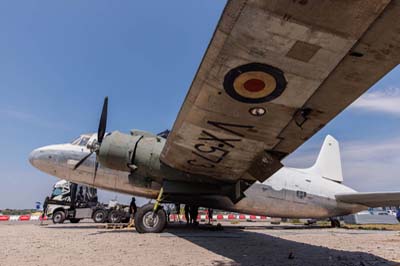
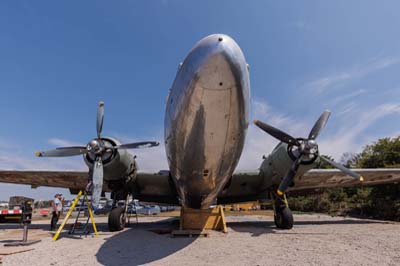
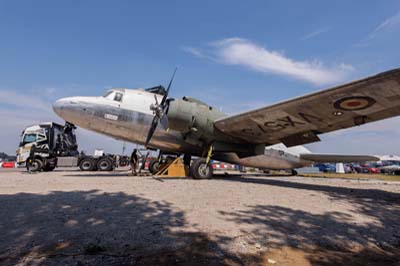
Vickers Valetta C.2 (VX573) named "Loreley" after a siren in German mythology. The Vickers Valetta was a British twin engine military transport aircraft developed from the Vickers Viking airliner. Designed as a versatile transport, it could be quickly adapted for troop carrying, cargo transport, air ambulance duties, parachute operations and glider towing.
The Valetta C.1 entered Royal Air Force service in 1948 and became an important transport aircraft throughout the 1950s and 1960s, taking part in operations including the Suez Crisis, Aden and the Malayan Emergency. A total of 263 Valetta aircraft were built. Today, only two complete examples survive, the other being VX580, a Valetta C.2 on static display at the Norfolk and Suffolk Aviation Museum, Flixton, UK.
The Valetta C.2 was a dedicated VIP transport with an extended range, and only 11 were built. VX573 was completed at Brooklands in 1950 and served with the 2nd Tactical Air Force, RAF Germany. Retired in July 1968, it was flown to RAF Henlow for decommissioning before being transferred to the RAF Museum at Cosford in 1984. After a short period on display, it was placed storage in the museum's Lamella Hangar 9.
VX573 served as the personal transport aircraft of the Commander-in-Chief of Royal Air Force Germany, based at Joint Headquarters Rheindahlen in Mönchengladbach. The Commander-in-Chief also held the NATO appointment of Commander, Second Allied Tactical Air Force (2ATAF). Although based at Joint Headquarters Rheindahlen, VX573 operated from nearby RAF Wildenrath, as the headquarters had no runway.
During the 1950s, the aircraft was a frequent visitor to Blackbushe Airport. It also operated regularly from key locations including RAF Odiham and Berlin-Tempelhof. |
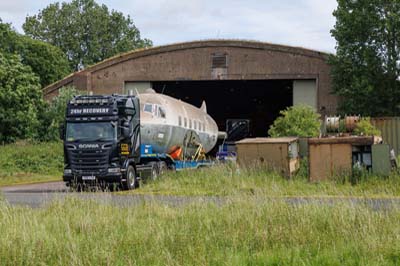
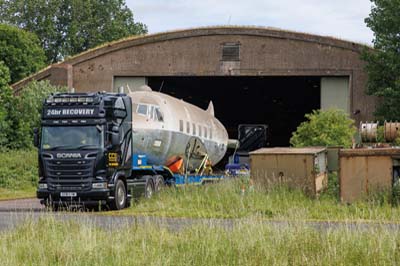
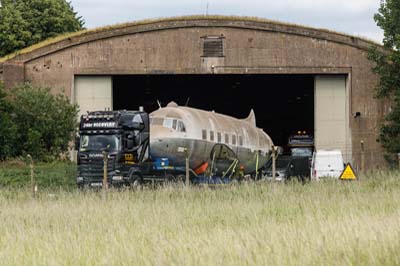
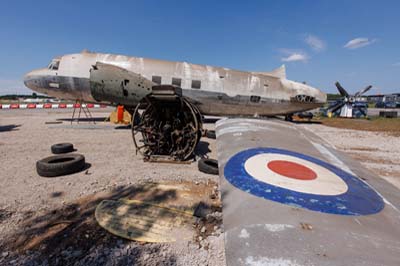
| Left to right: First sight of the Valetta. |
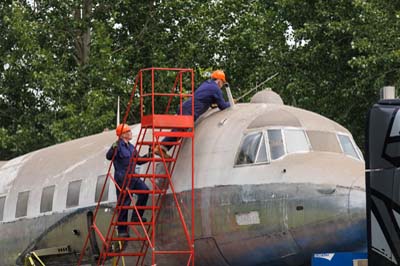
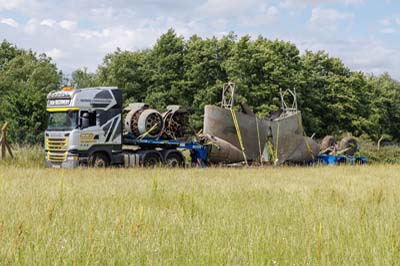
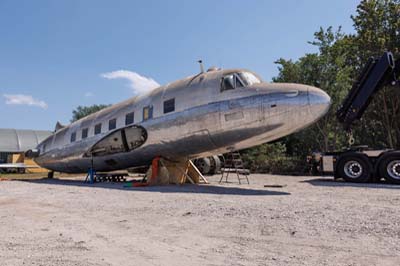
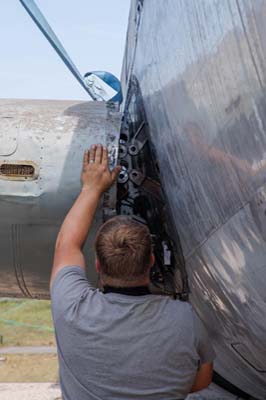
| Left to right: The Valetta's aerials had to be removed because they were too tall to clear the lowest bridges on the route south. The forward aerial, fitted with a bayonet mount, was removed with a quick twist. The rear aerial was also removed without difficulty, taking little more than a minute. |
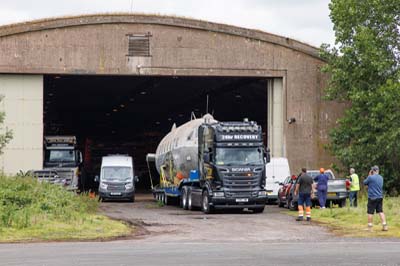
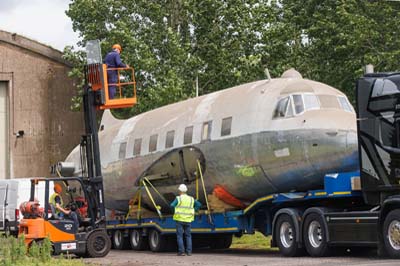
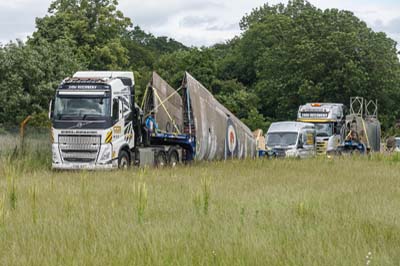
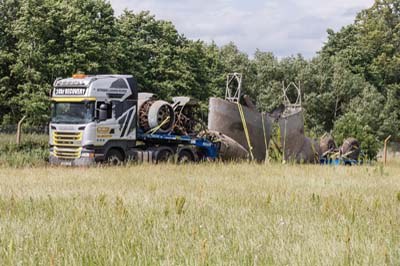
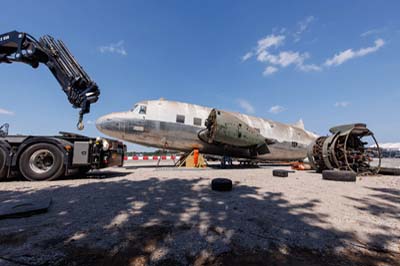
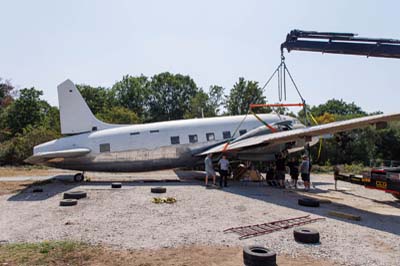
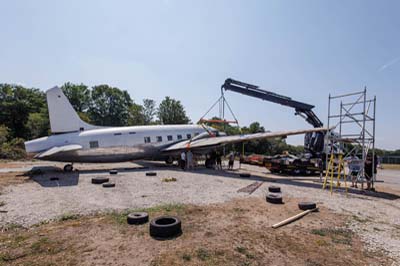
| Left to right: Still another two trailers to load, before the convoy can set off. |
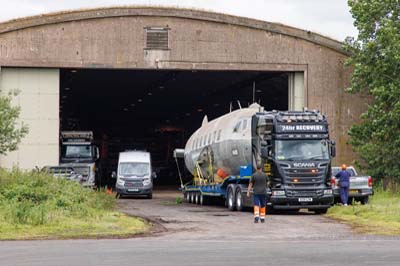
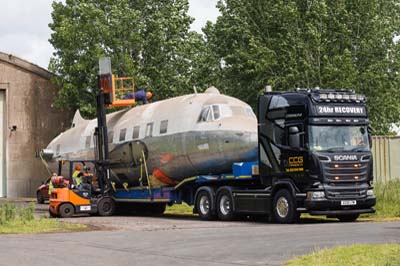
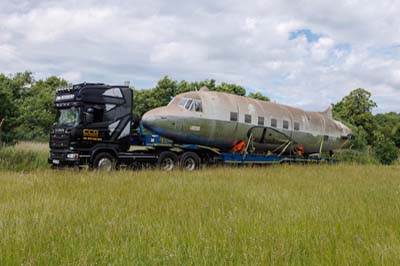
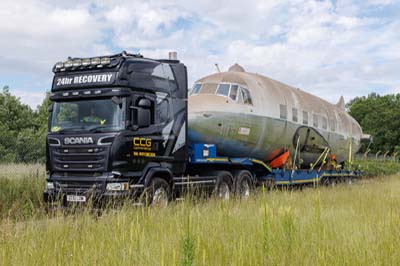
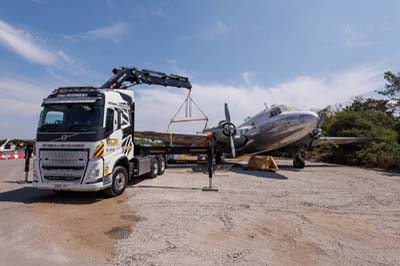
Left to right: Ownership officially transferred to the Blackbushe Heritage Trust once the aircraft passed through the gate. From that point, responsibility for transporting it by road passed to CCG Commercial Ltd. The company's lead driver said it was a privilege to be involved in delivering the Valetta to its new home.
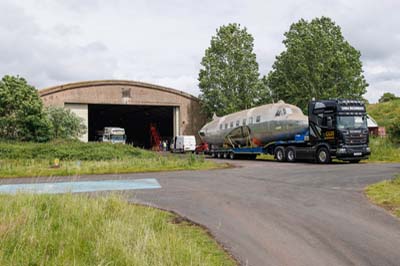
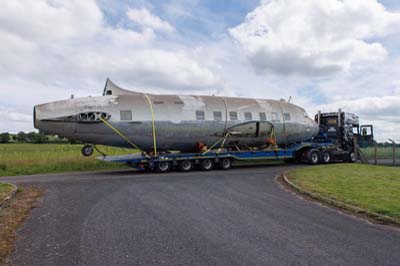
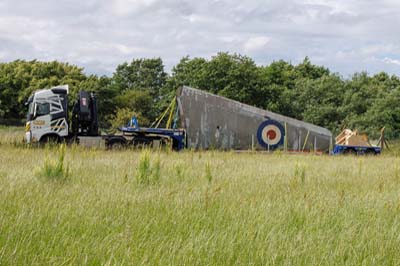
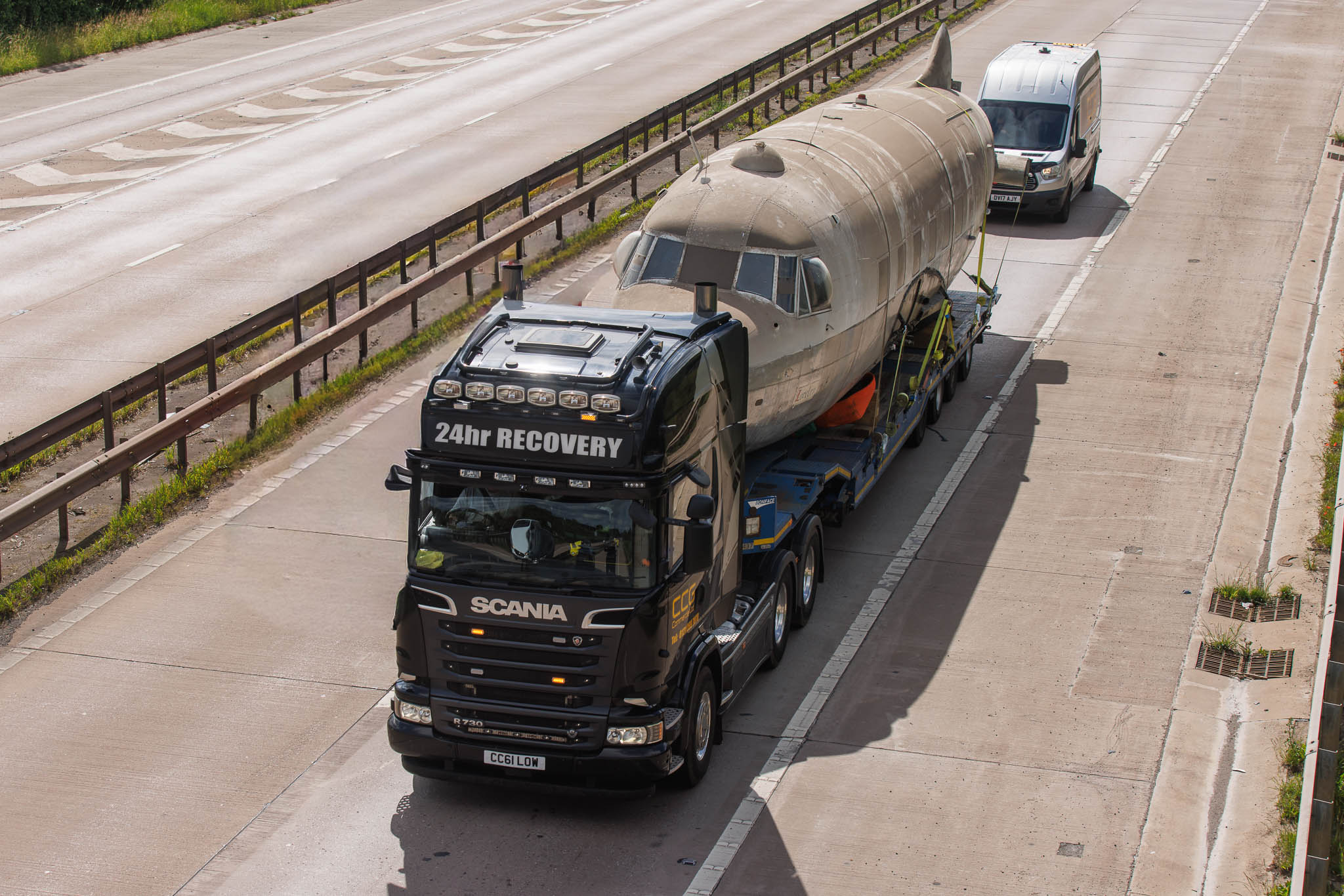
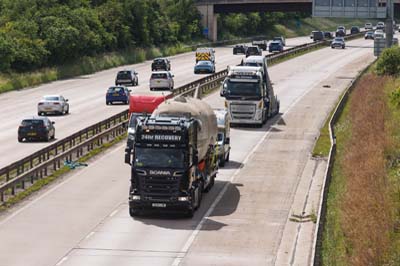
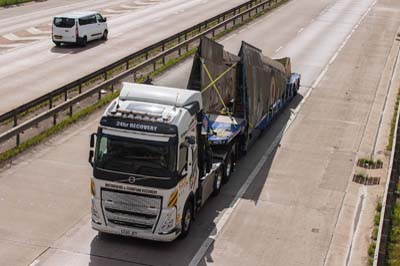
Departing Cosford at 3:45 pm, the three trailer convoy took four hours to cover the 150 mile journey to Blackbushe Airport. Unloading of the trailers was not completed until 3:00 am. |
| Left to right: Named "Loreley" referring, rather oddly, to a siren in German mythology who sits on a rock on the Rhine using her beauty and enchanting song to distract sailors and cause them to wreck their ships. |
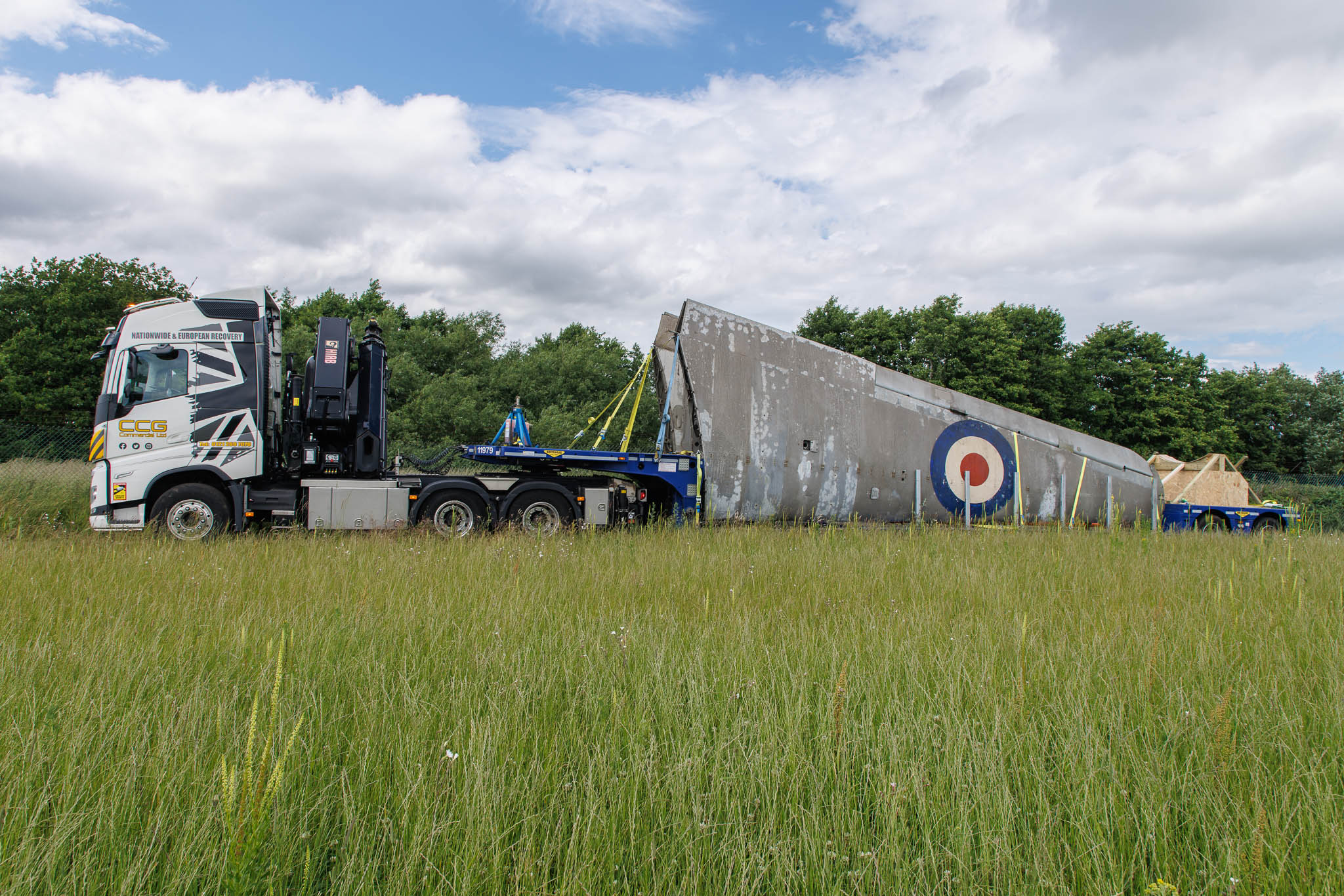
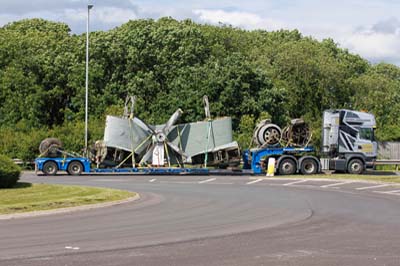
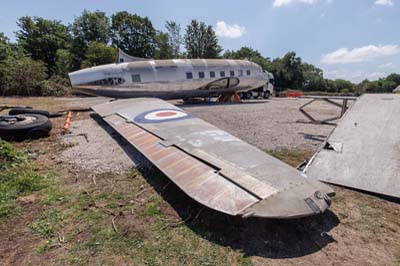
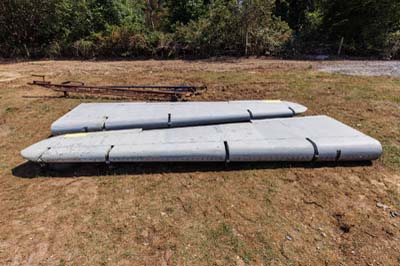
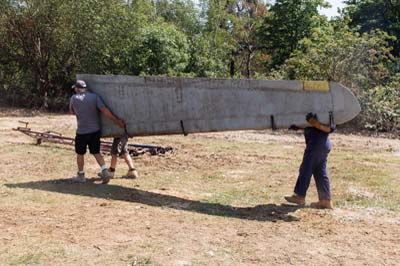
| Left to right: Trailer 2 has the Valetta's wings which have been detached since the aircraft arrived at Cosford in 1984. |
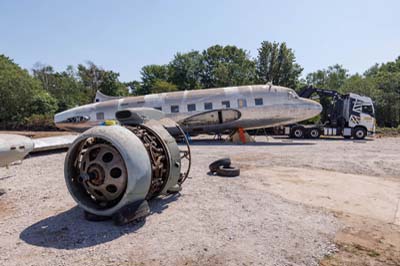
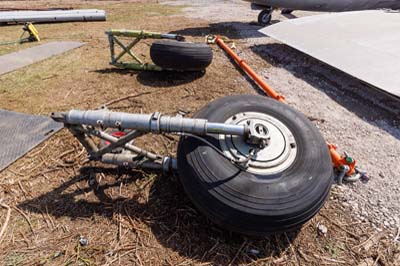
| Left to right: The third trailer carried the two Bristol Hercules engines, propellers, landing gear, engine nacelles and the remaining components. |
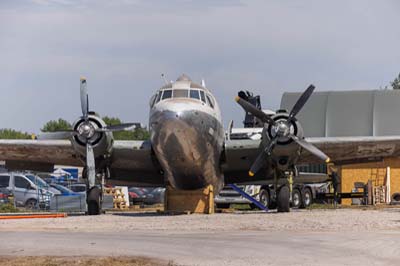
| Left to right: On the motorway heading south, the fuselage is coated in more than 40 years of accumulated brown dust. |
| Blackbushe Heritage Trust, Blackbushe Airport, June 19 and 22, 2026 |
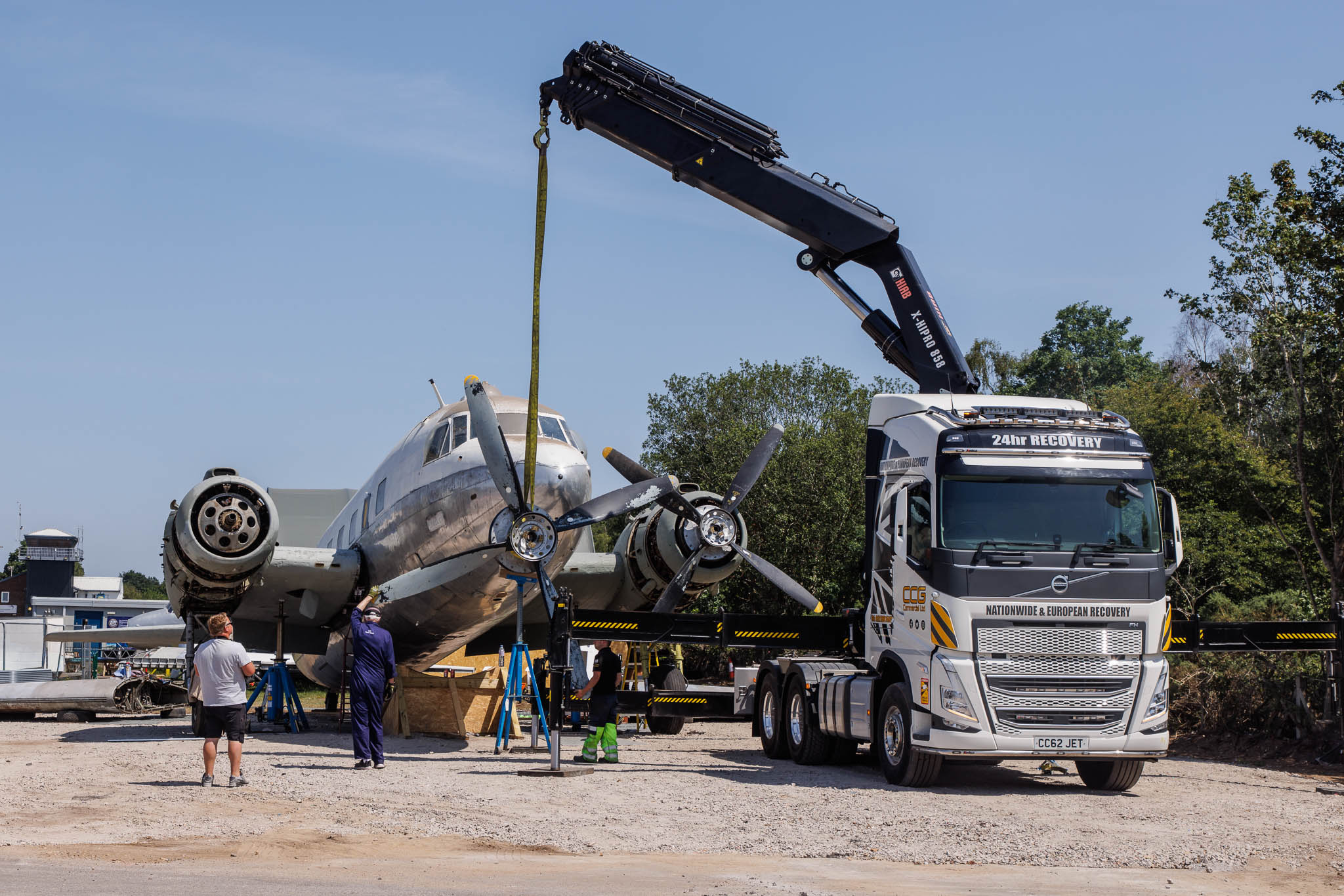
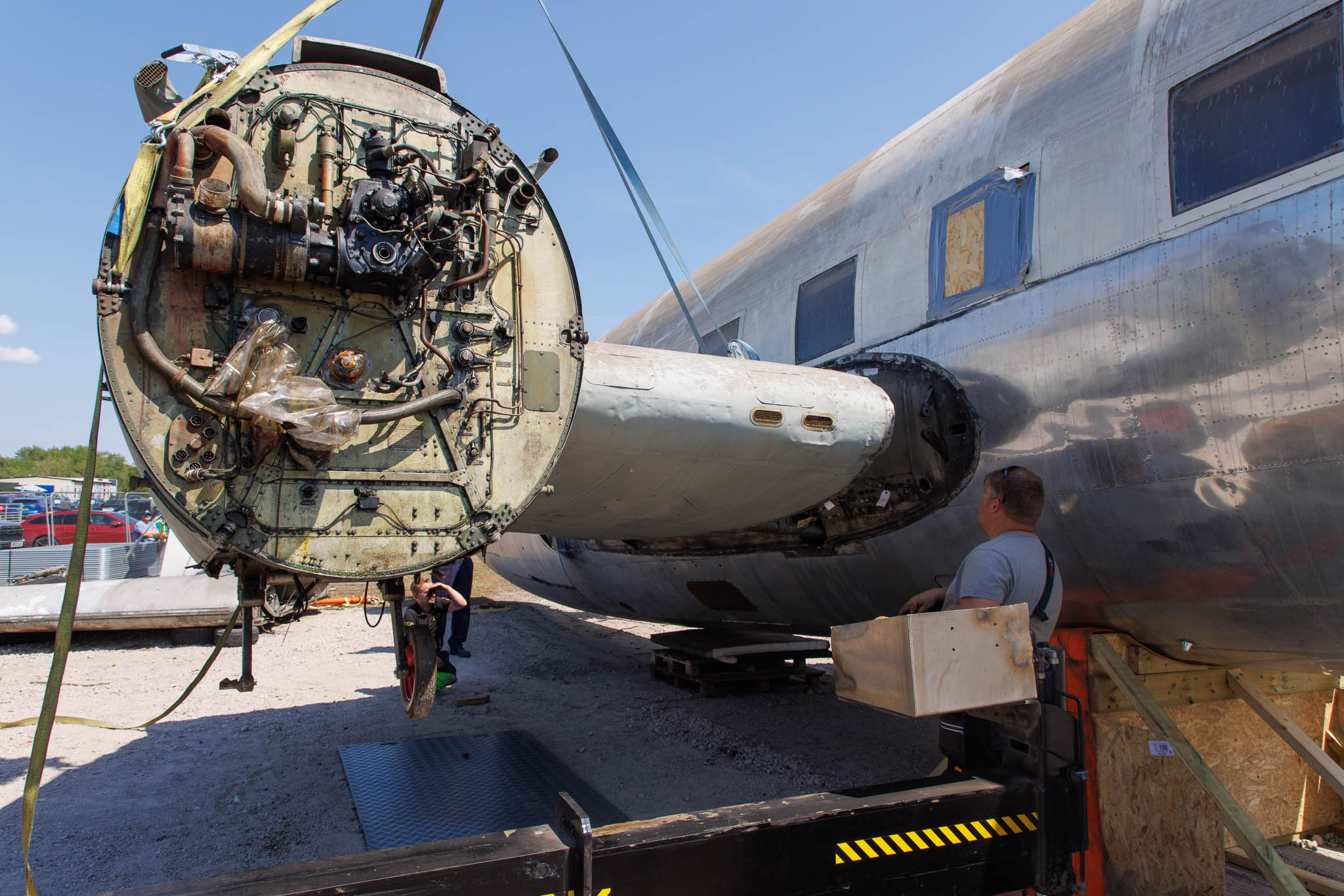
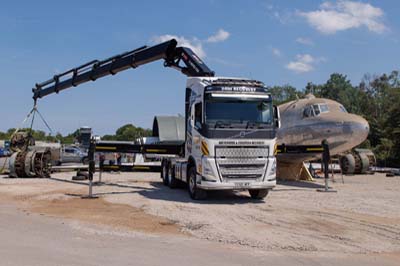
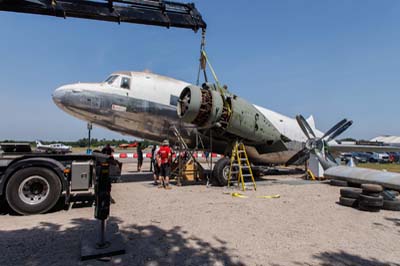
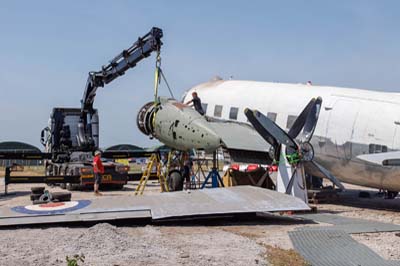
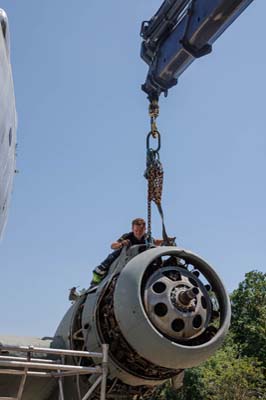
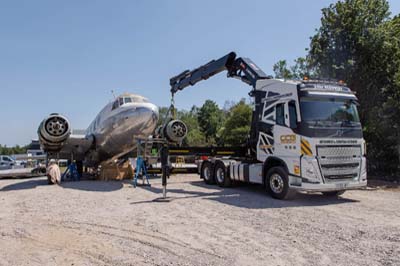
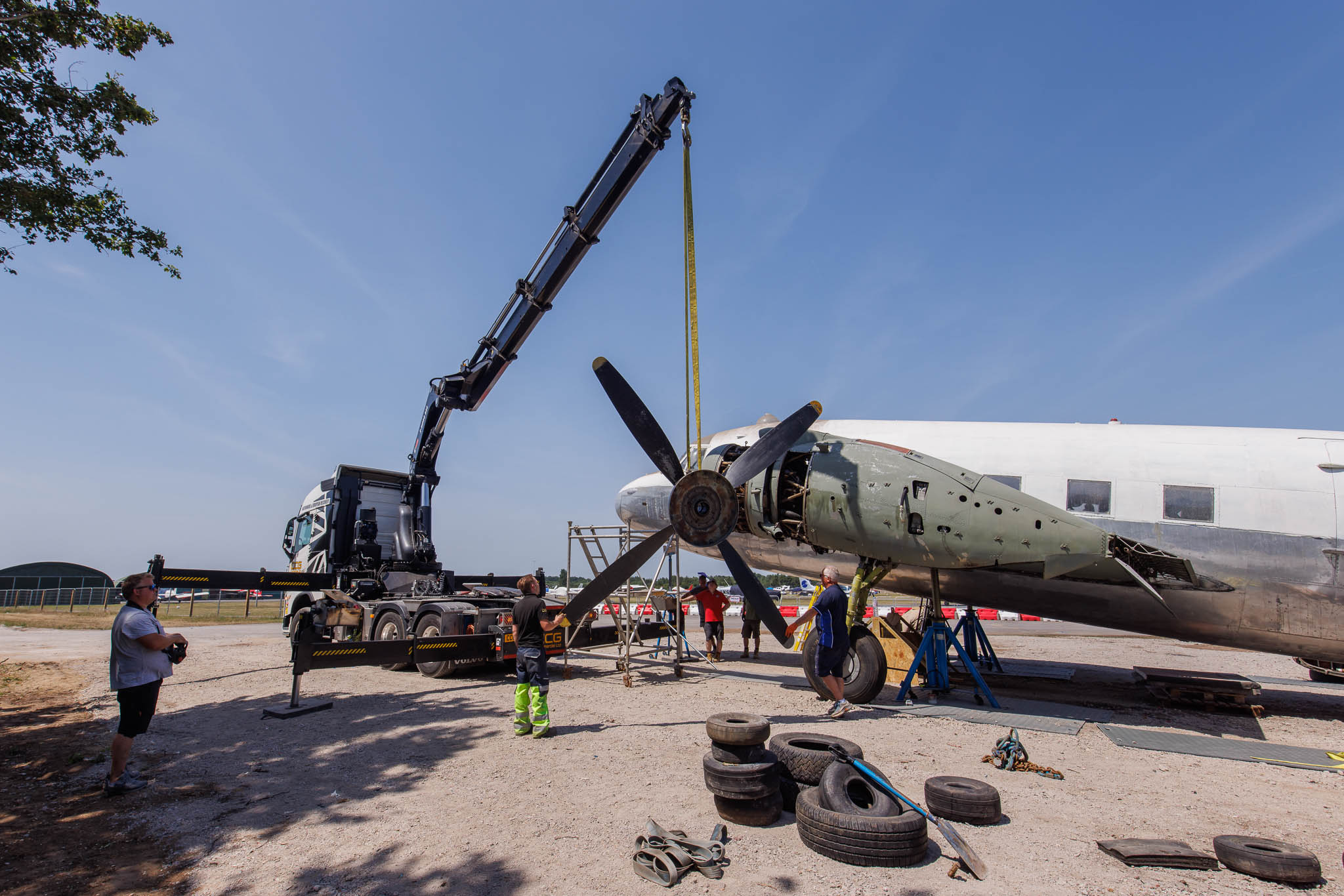
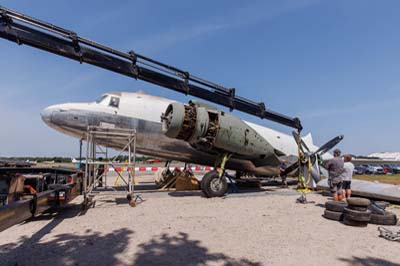
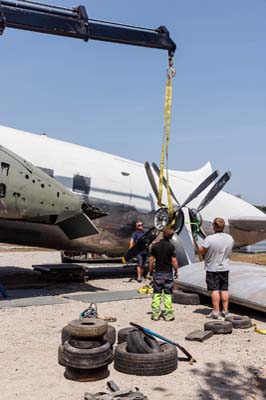
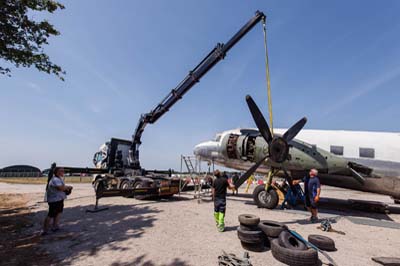
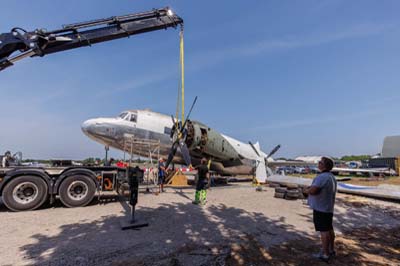
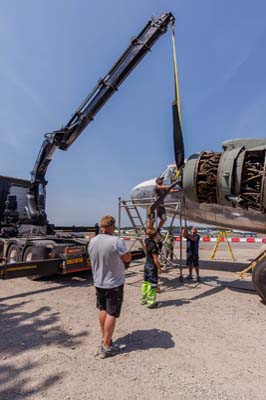
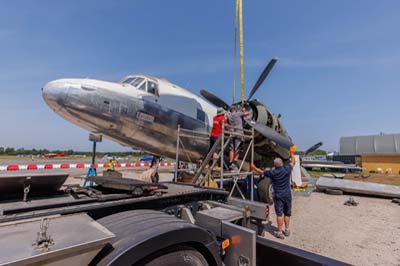
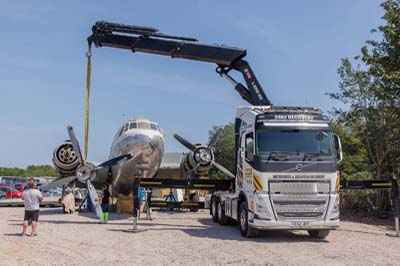
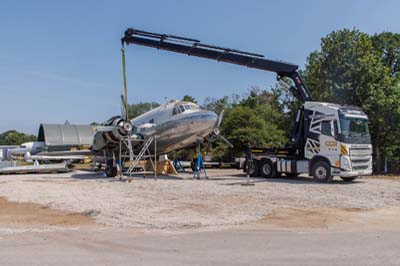
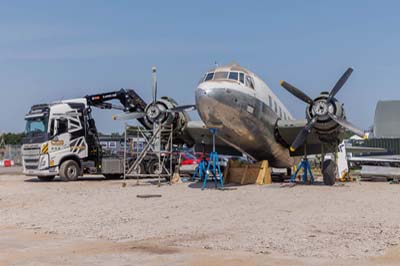
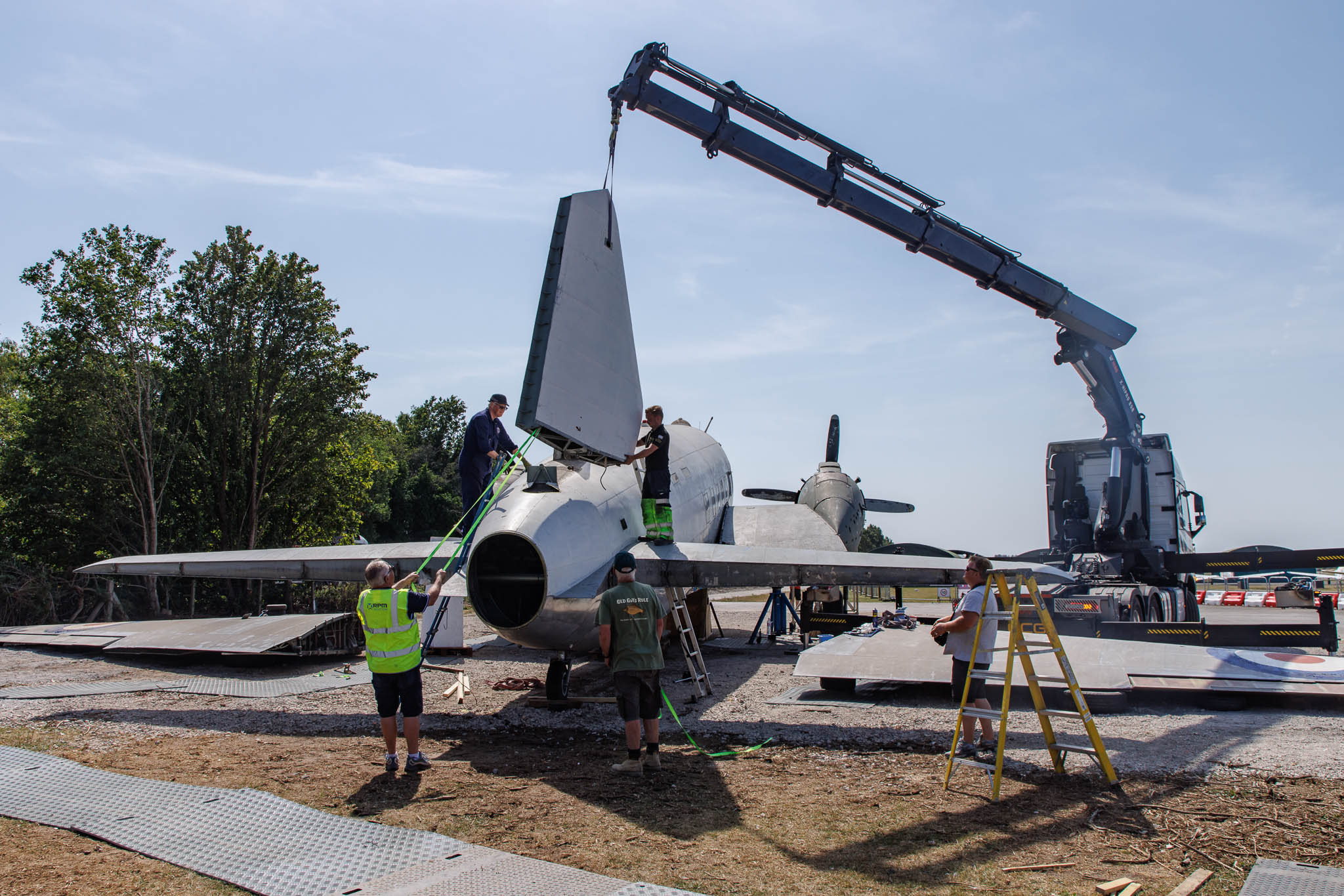
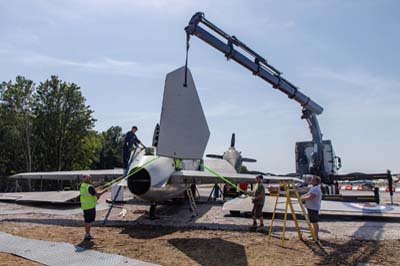
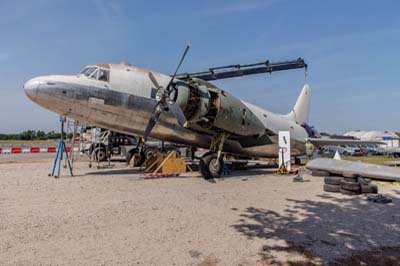
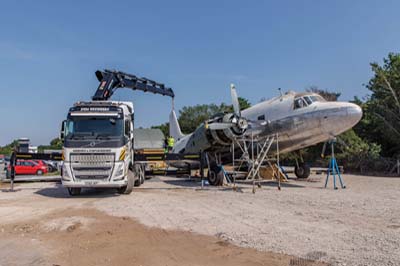
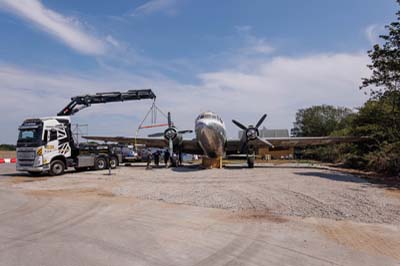
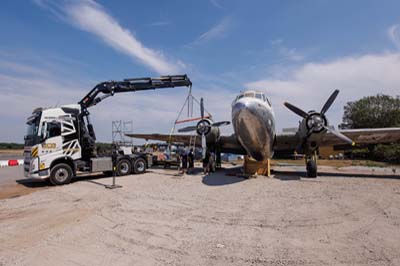
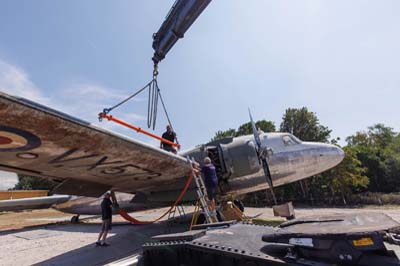
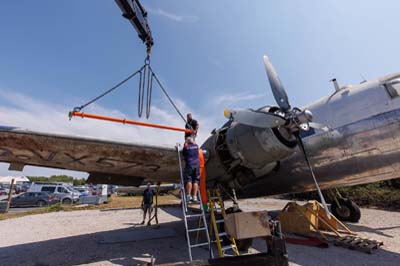
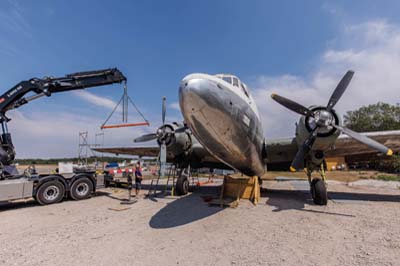
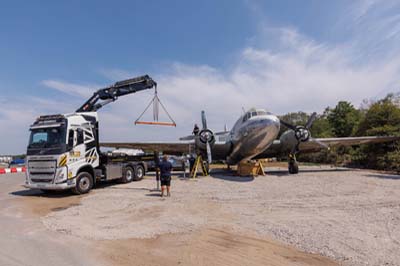
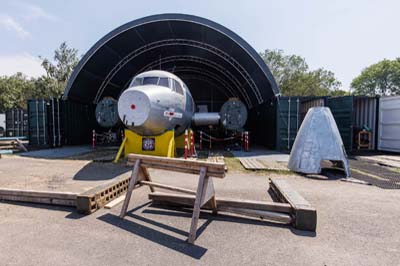
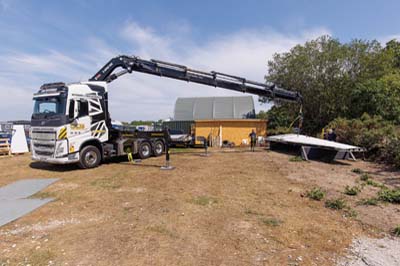
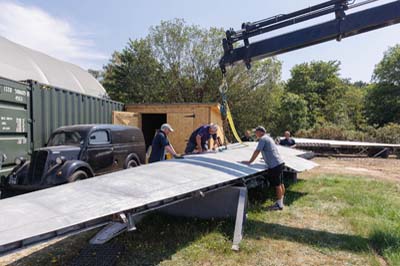
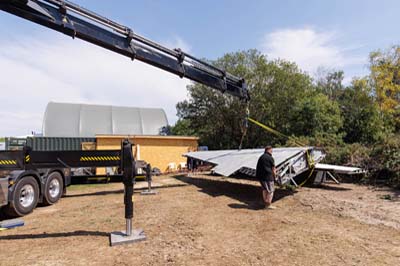
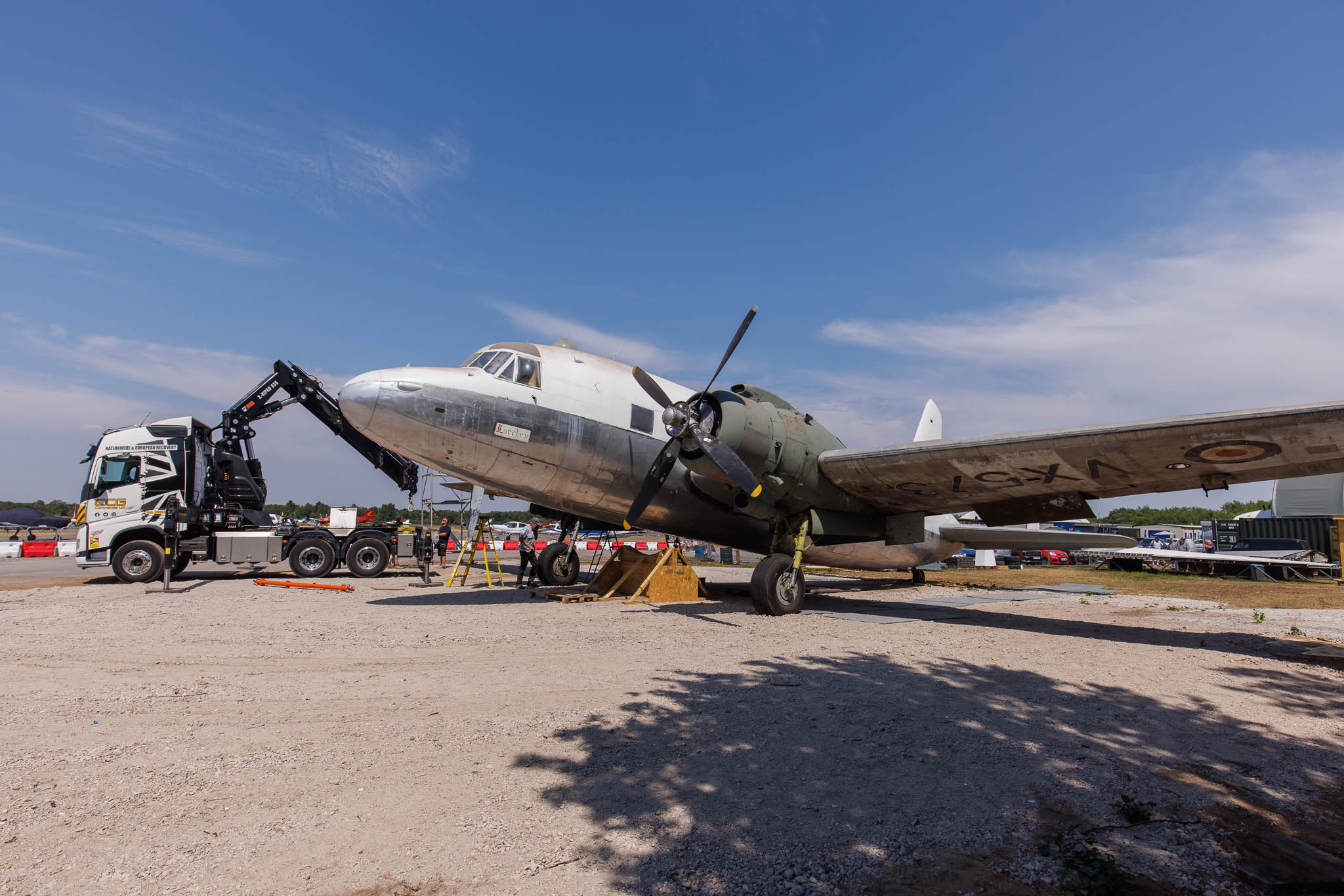
| They used a hydraulic lorry-mounted crane, commonly known as a HIAB after the Swedish manufacturer Hydrauliska Industri AB. The crane was supplied and operated by CCG Commercial Ltd. |
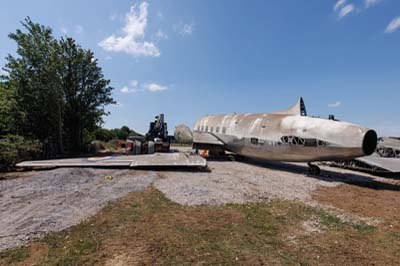
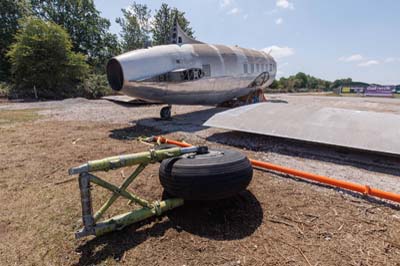
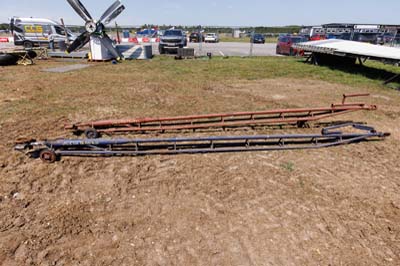
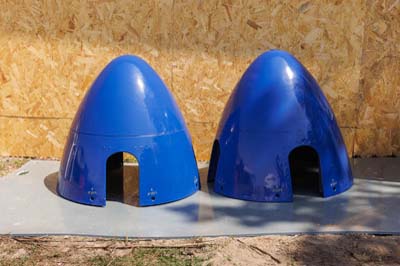
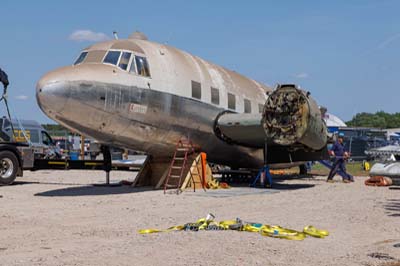
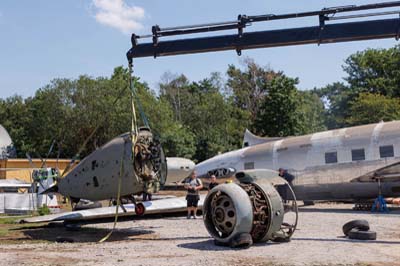
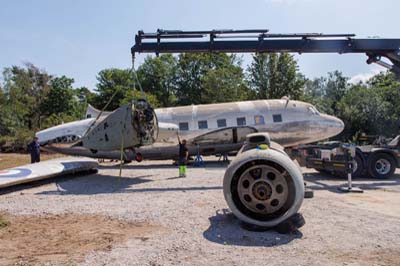
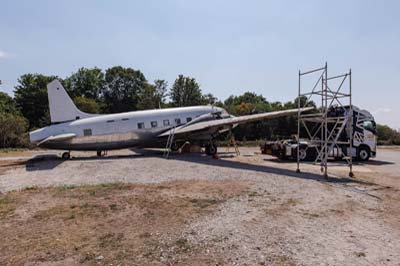
| Left to right: Departing Cosford at 3:45 pm, the three trailer convoy took four hours to cover the 150 mile journey to Blackbushe Airport. Unloading of the trailers was not completed until 3:00 am. The following day, the separate sections were spread around the site ready for reassembly. Two Valetta-specific tow bars were also recovered from Cosford. The two spinners looked impressive after being cleaned. |
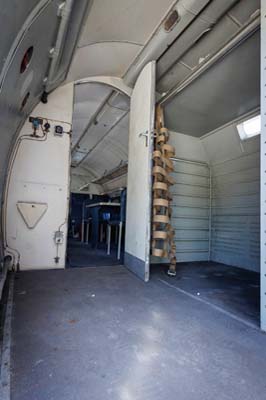
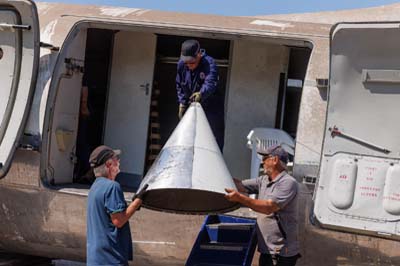
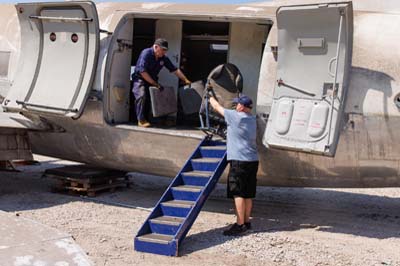
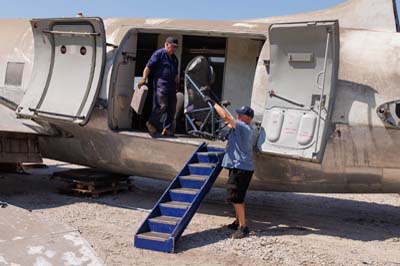
| Left to right: Inside the Valetta C.2. The horizontal stabilisers, tail cone and other components were packed inside the fuselage for the journey south from Cosford. |
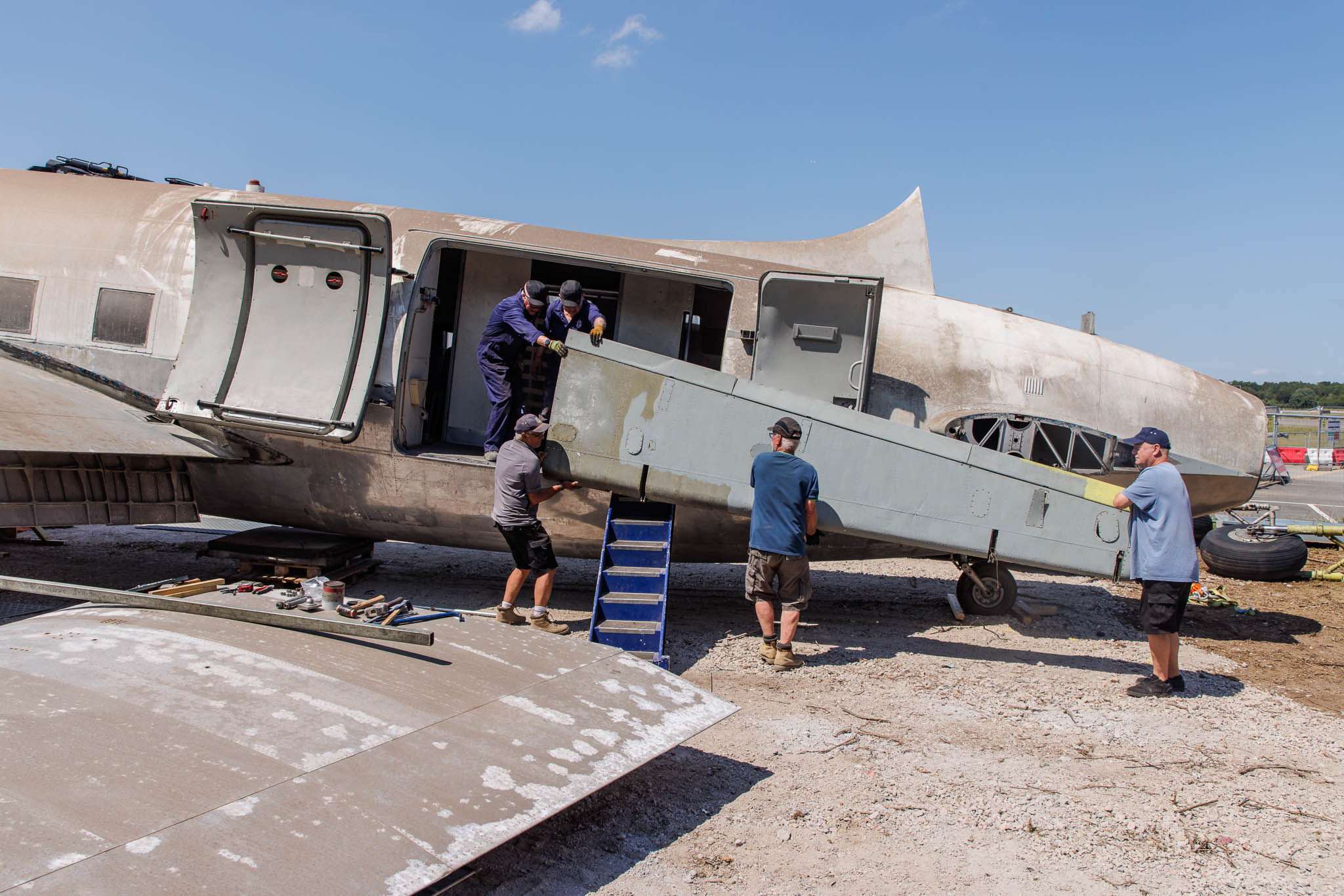
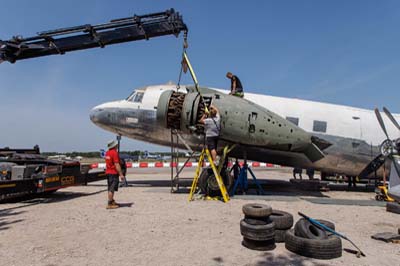
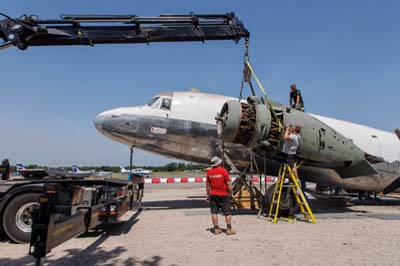
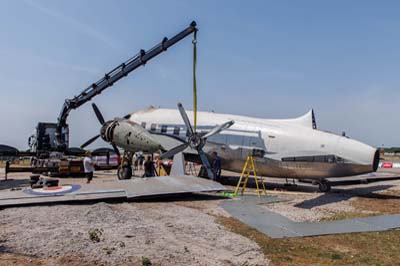
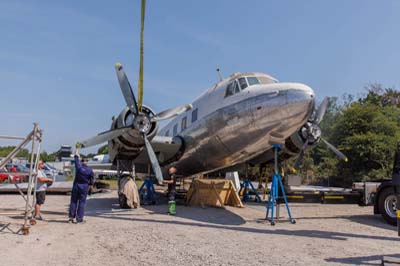
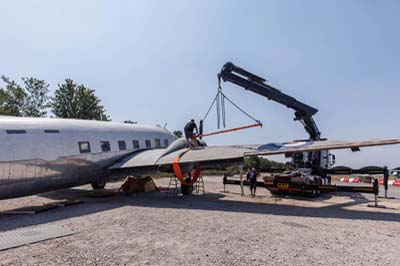
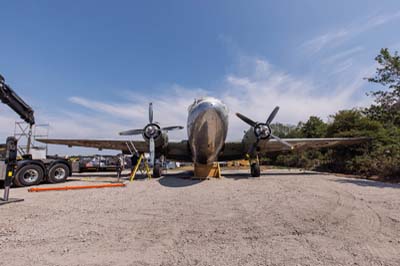
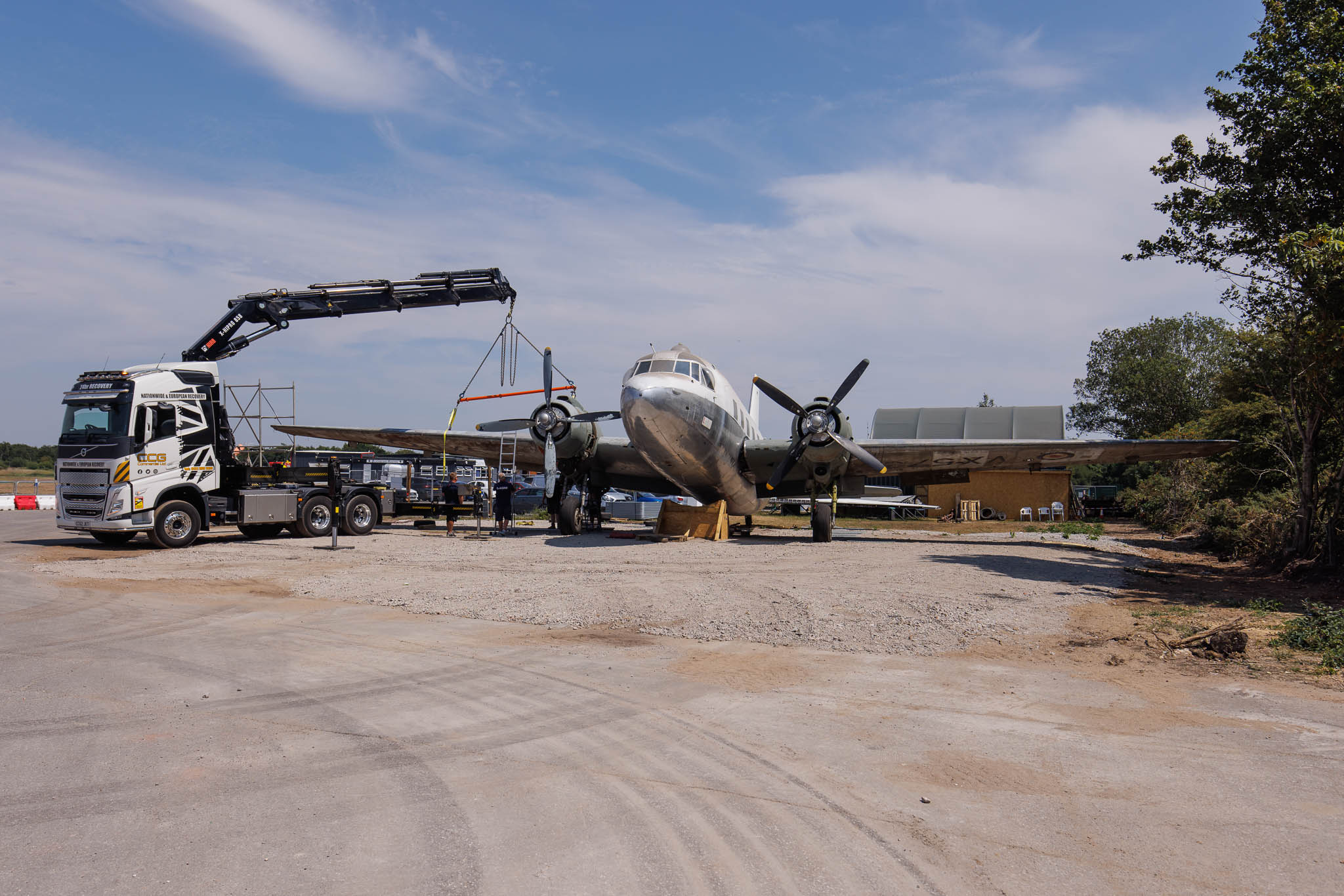
| Left to right: The starboard inner wing section and nacelle were carefully lifted and precisely aligned with the fuselage before the attachment bolts were inserted, a process that took many minutes to complete. |
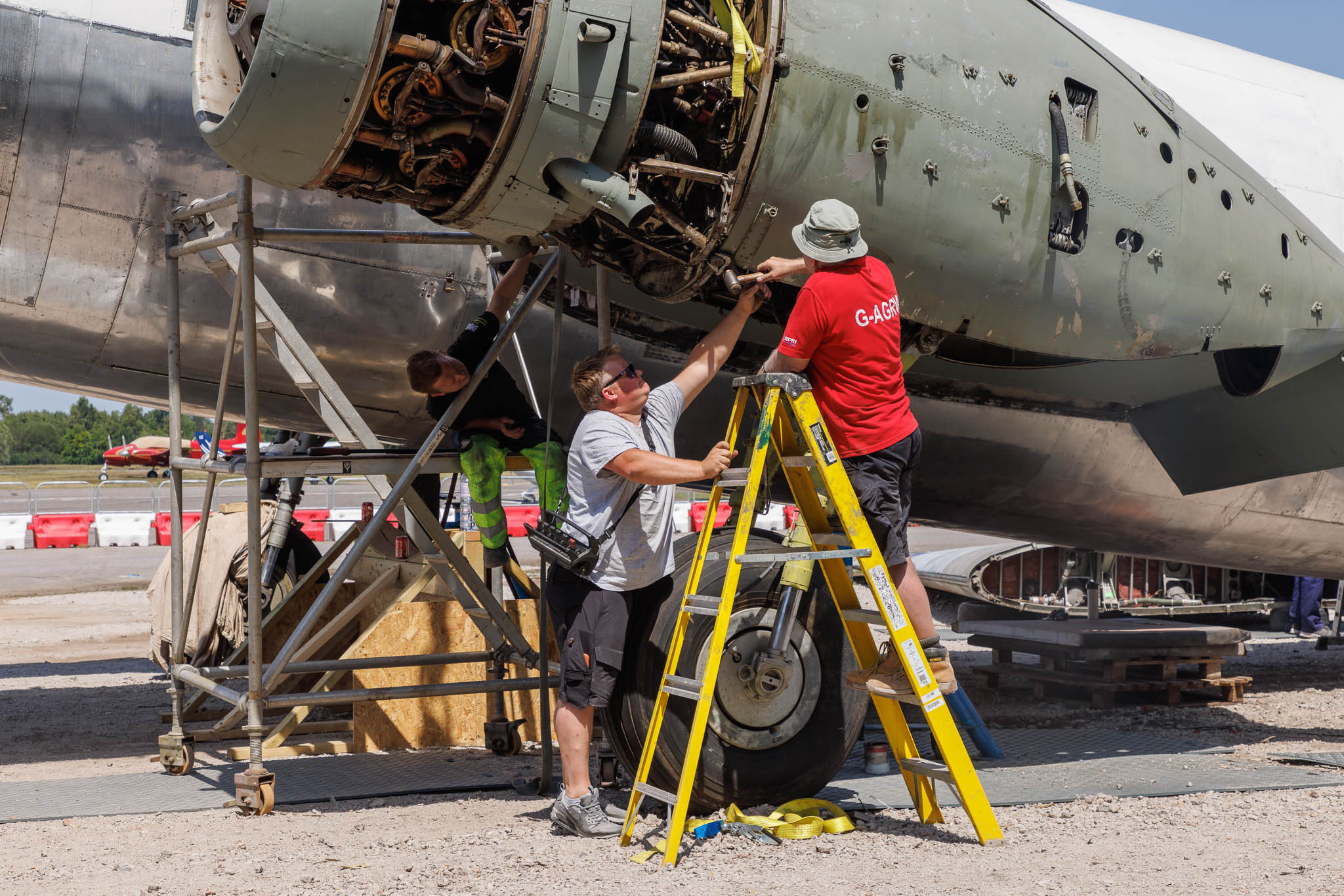
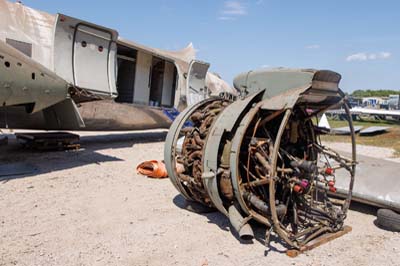
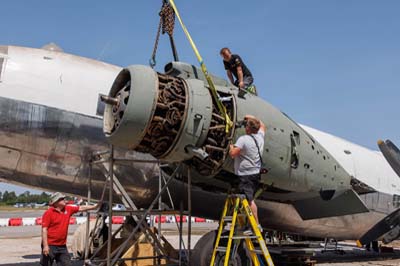
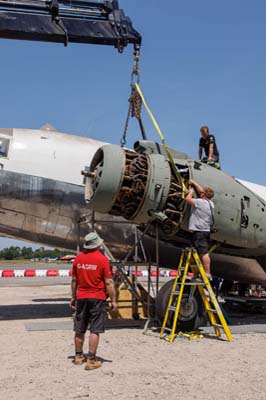
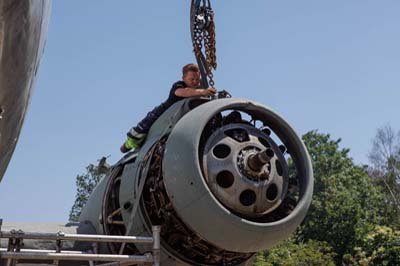
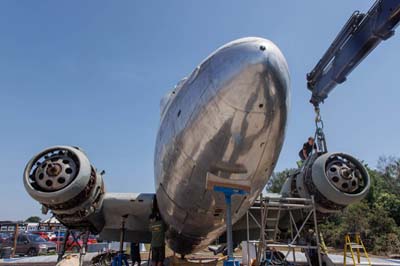
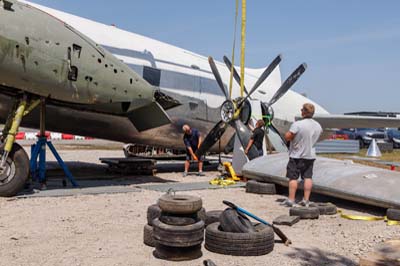
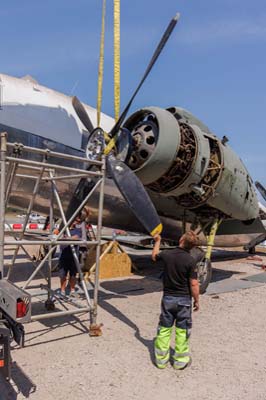
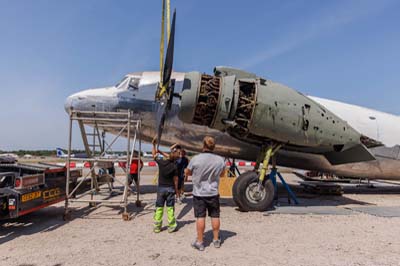
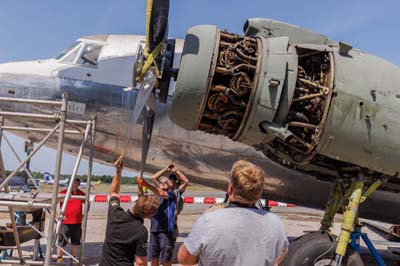
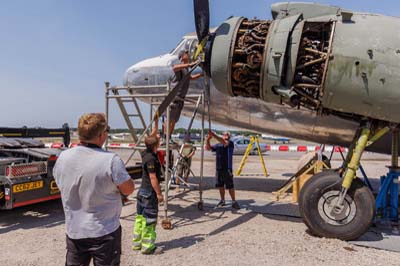
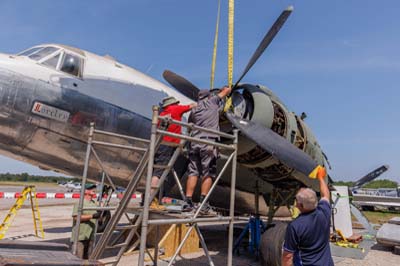
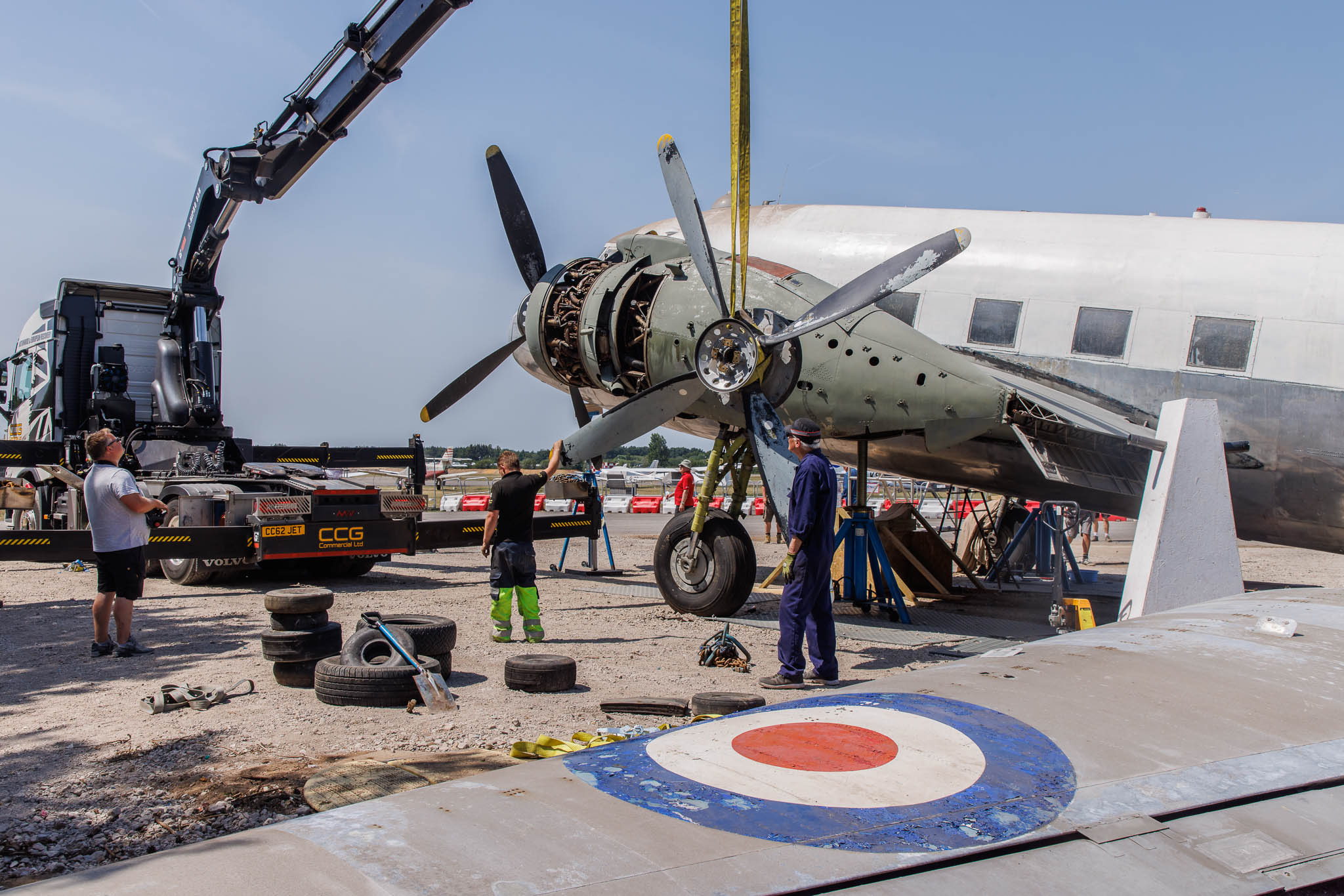
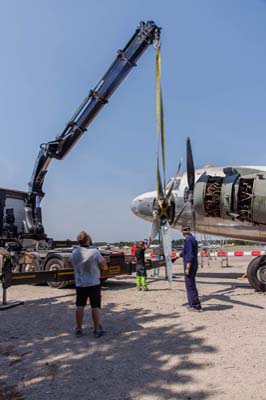
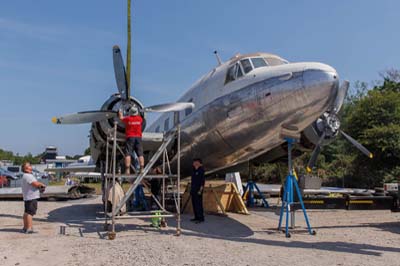
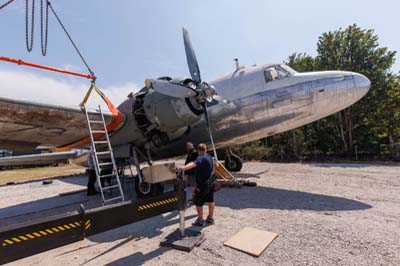
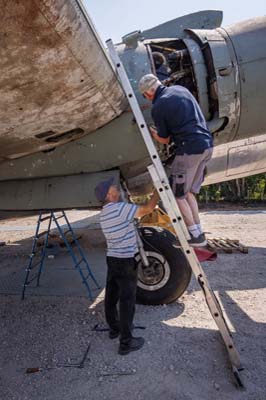
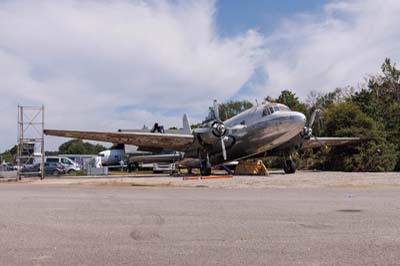
| Left to right: The Vickers Valetta C.2 is powered by two Bristol Hercules 230 14-cylinder, air-cooled radial piston engines. The port engine was the first to be mounted on its nacelle. |
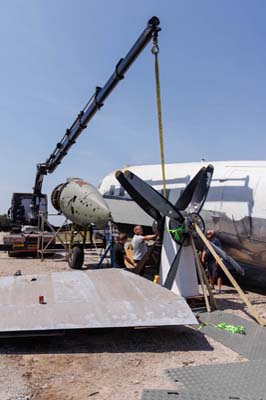
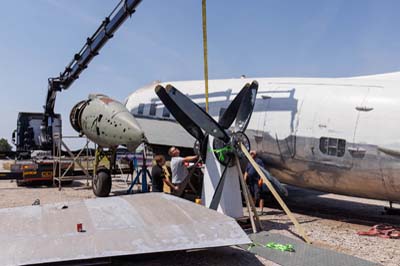
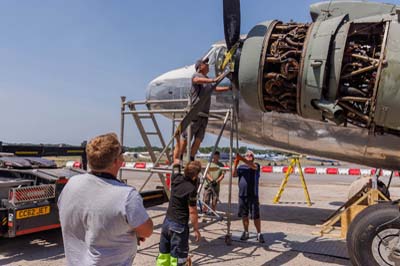
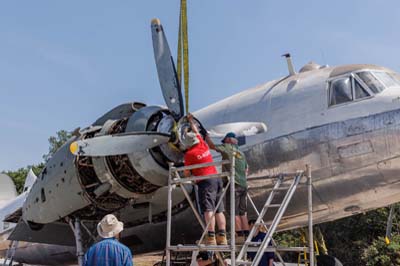
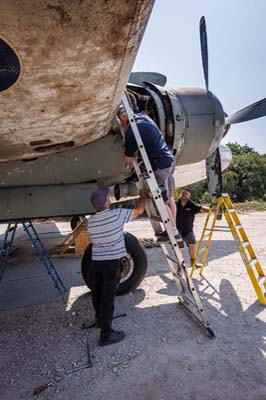
| Left to right: The port side propeller was carefully lifted into place and mounted on the propeller shaft. |
| Left to right: The starboard propeller was next to be lifted and mounted. |
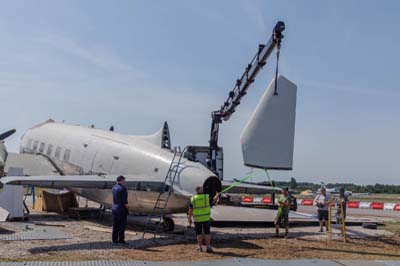
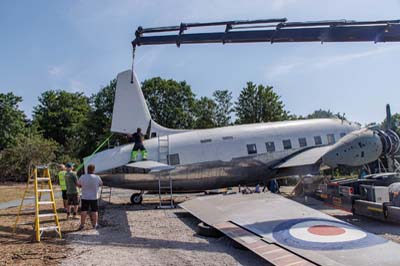
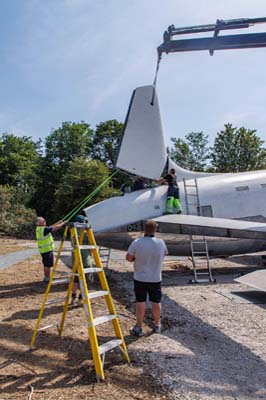
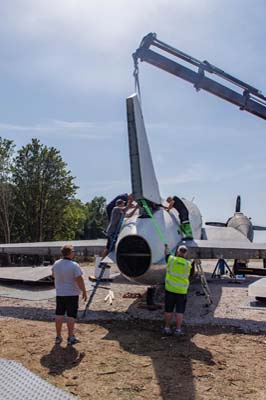
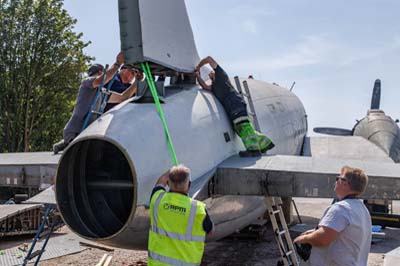
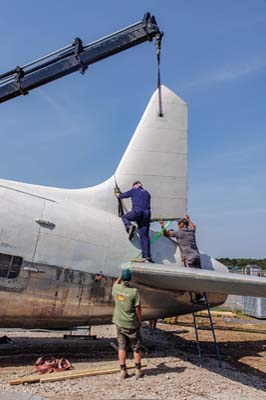
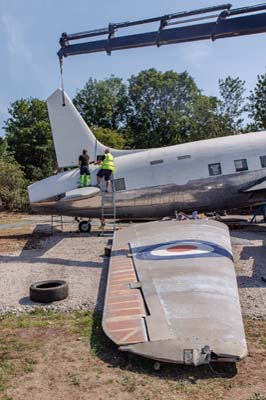
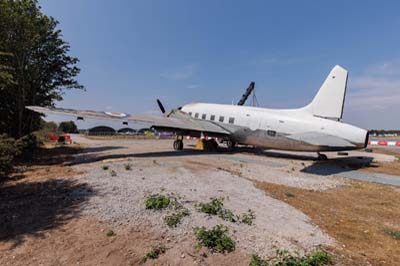
| Left to right: The tail fin was then attached. Aligning it precisely with the fuselage so the fixing bolts could be inserted proved to be another challenging task. |
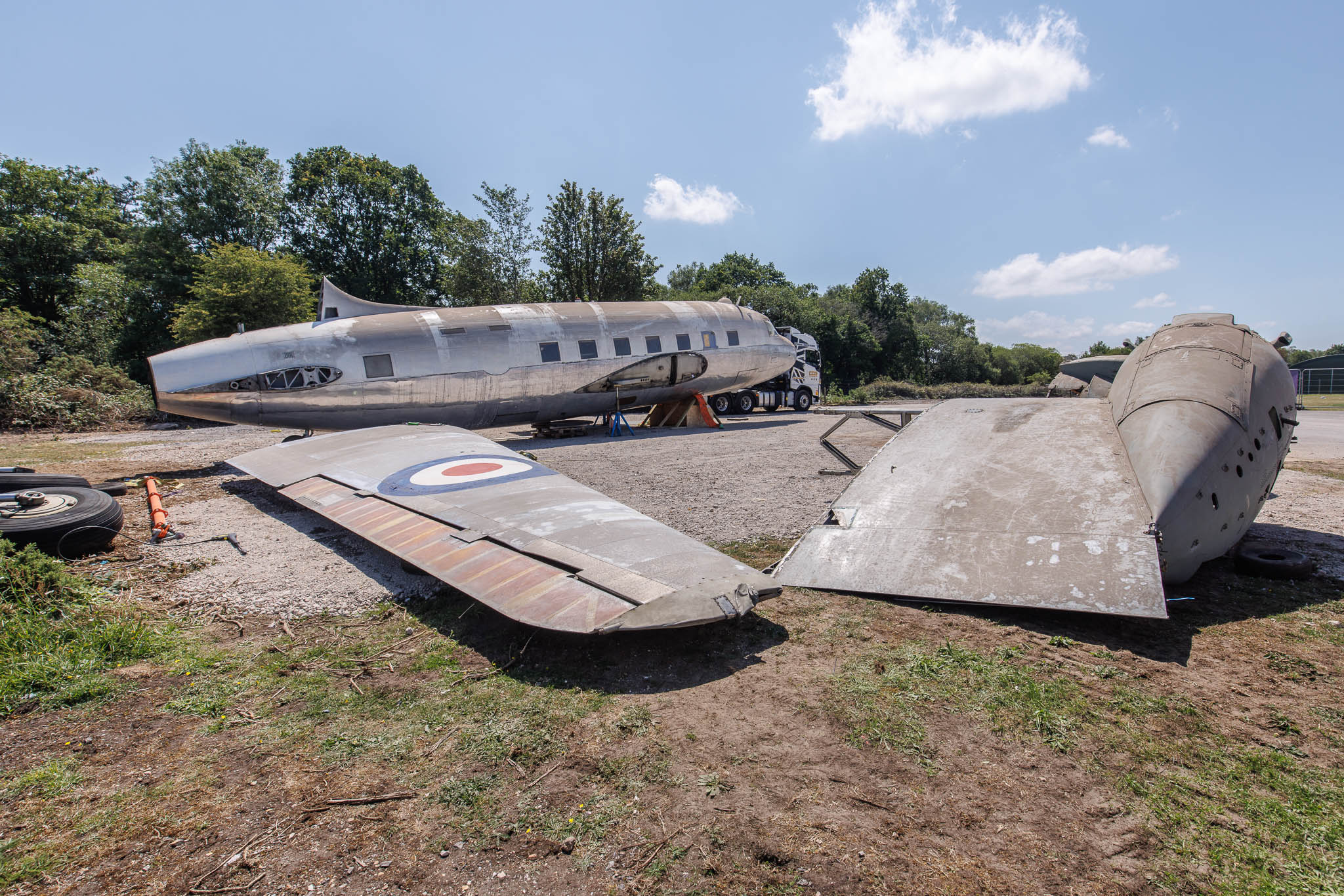
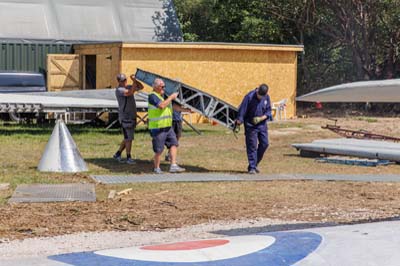
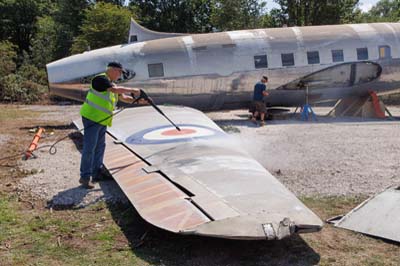
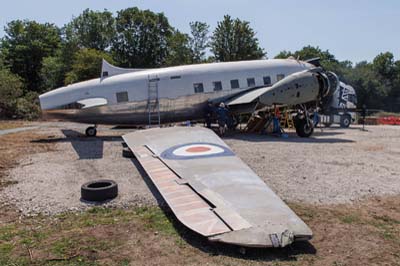
Left to right: The outer wings, detached before the aircraft left RAF Henlow for Cosford in 1984, could not be reattached because the spar bolts could not be found. The aircraft's logbook was also missing when VX573 was handed over to the Blackbushe Heritage Trust on June 17, 2026. As a result, the outer wings had to be left aside for the time being, apart from being spray washed.
The name "Loreley" refers to the siren of German mythology who sits on a rock overlooking the Rhine, using her beauty and enchanting song to distract sailors and lure them to wreck their ships. |
| Blackbushe Heritage Trust, Blackbushe Airport, July 10, 2026 |
 |
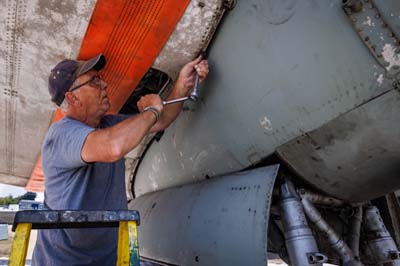 |
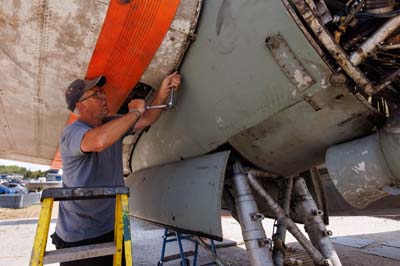
Paul Nichols tightening some screws under the starboard wing. |
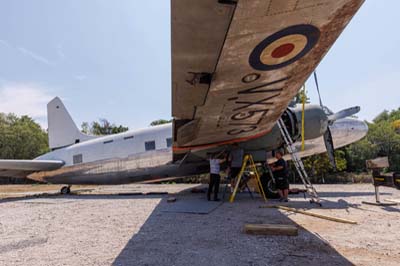
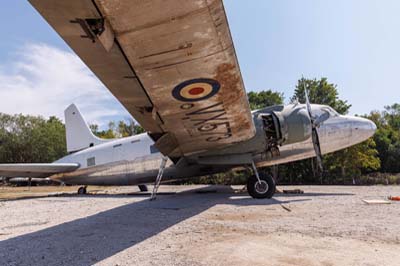
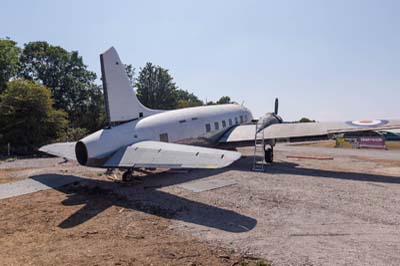
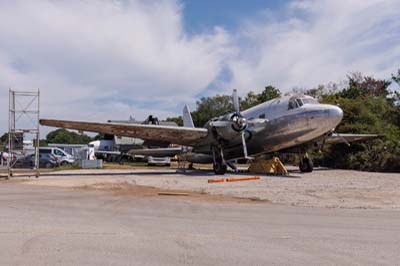
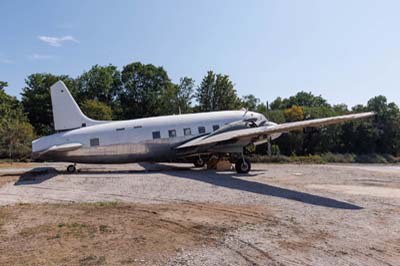
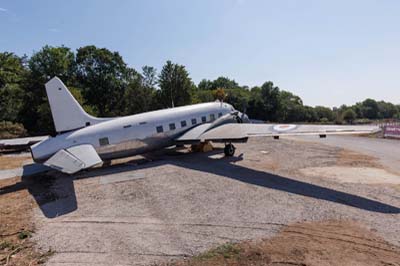
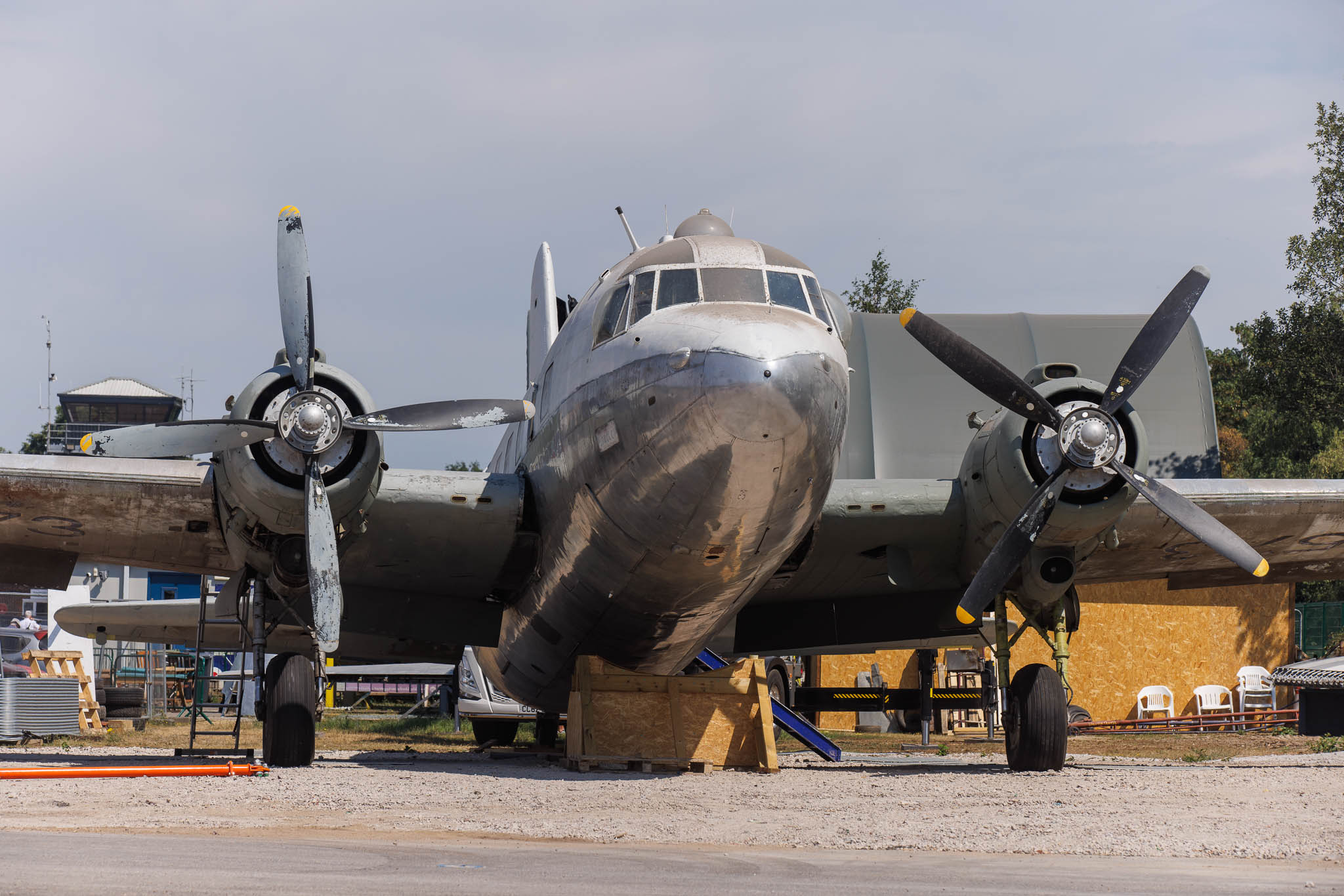
The wings, removed at RAF Henlow before the aircraft's move to the RAF Museum Cosford in 1984, were once again attached in just three hours on July 10, 2026. The Valetta had arrived at Blackbushe 20 days earlier, but without the vital spar bolts needed to secure the wings to the aircraft. As a result, replacement bolts had to be engineered by Blackbushe Heritage Trust volunteers. Still to be fitted are the blue engine spinners, tail cone, repaired rudder and the wing fillets.
Paul Nichols, a Blackbushe Heritage Trust trustee and experienced aircraft technician, said it is intended to leave the Valetta in its current weathered patina until 2027, when work is planned to restore the aircraft to its former appearance as an RAF VIP transport with a complete repaint. Delaying the repaint will allow the airframe to be monitored for leaks over the winter. Paul began his aviation career at Blackbushe with Doug Arnold's Warbirds of Great Britain in 1978 as an apprentice airframe fitter. During his apprenticeship, he worked on numerous historic aircraft, including the Spitfire, Mosquito, Sea Fury, Mustang, Thunderbolt and Lysander.
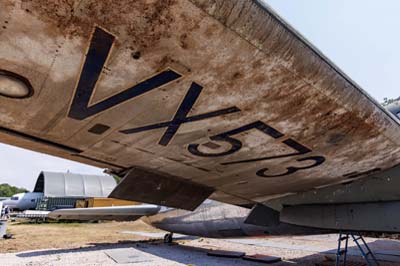
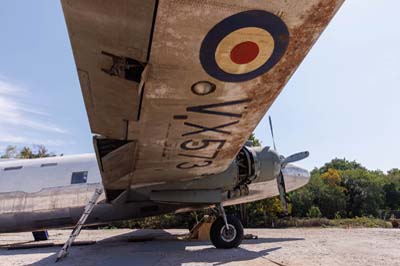
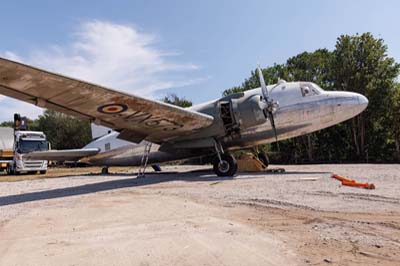
The external restoration will include polishing the aluminium fuselage and repainting the upper fuselage white, replacing the crude white paint applied by Air Cadets at Cosford, which obscured the original RAF markings. The wings are the only major components that still retain their original RAF markings. They will be repainted silver before the markings are carefully reinstated.
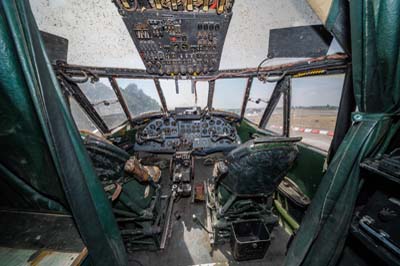
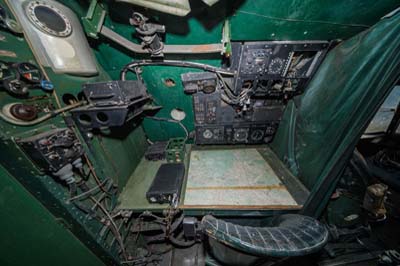
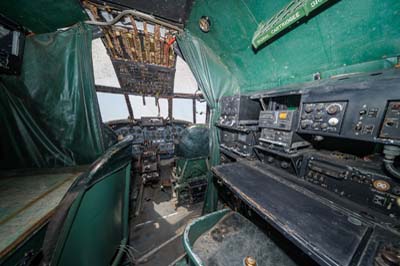
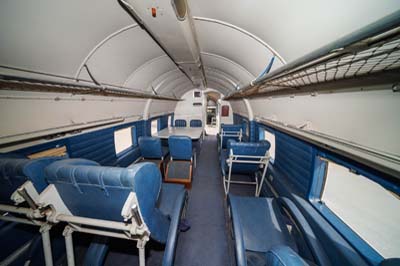
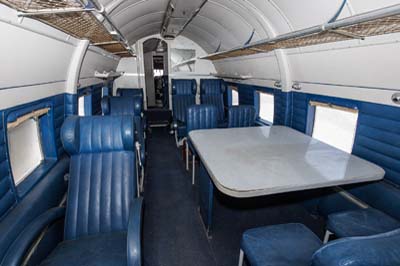
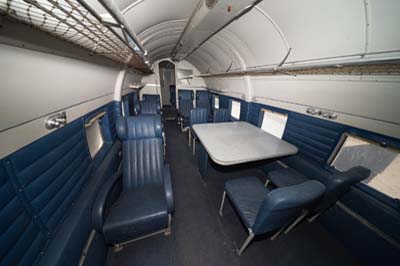
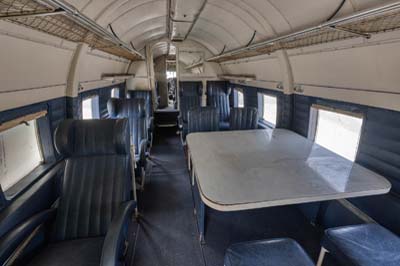
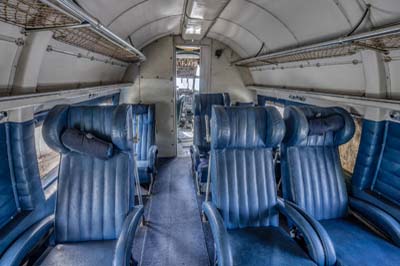
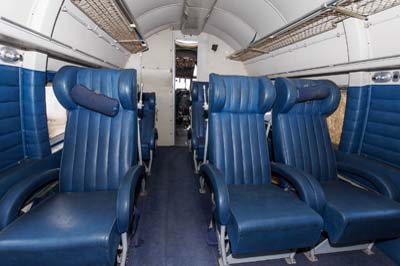
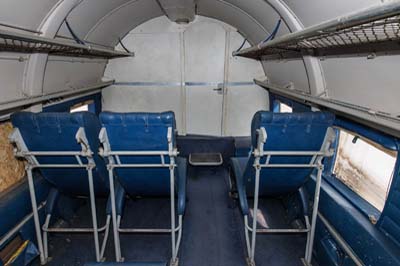
The interior of the aircraft is a time capsule from its retirement in the mid-1960s. The VIP cabin remains complete and is in remarkably good condition, as does the cockpit, where paper notes detailing flight procedures are still in place. However, some communications equipment considered sensitive at the time was removed as part of the aircraft's decommissioning.
|
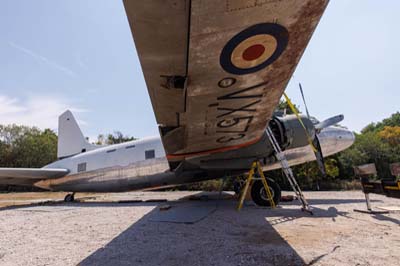
| Left to right: Both wings are finally attached. |
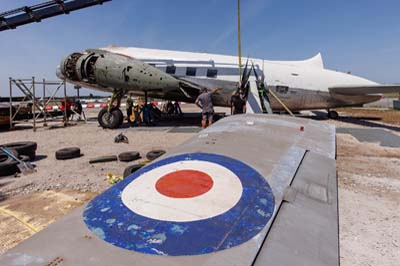
| Left to right: The original underwing markings, it was apparent if you looked closely as the paint had partly peeled off the serial that there was identical coat of paint underneath. |
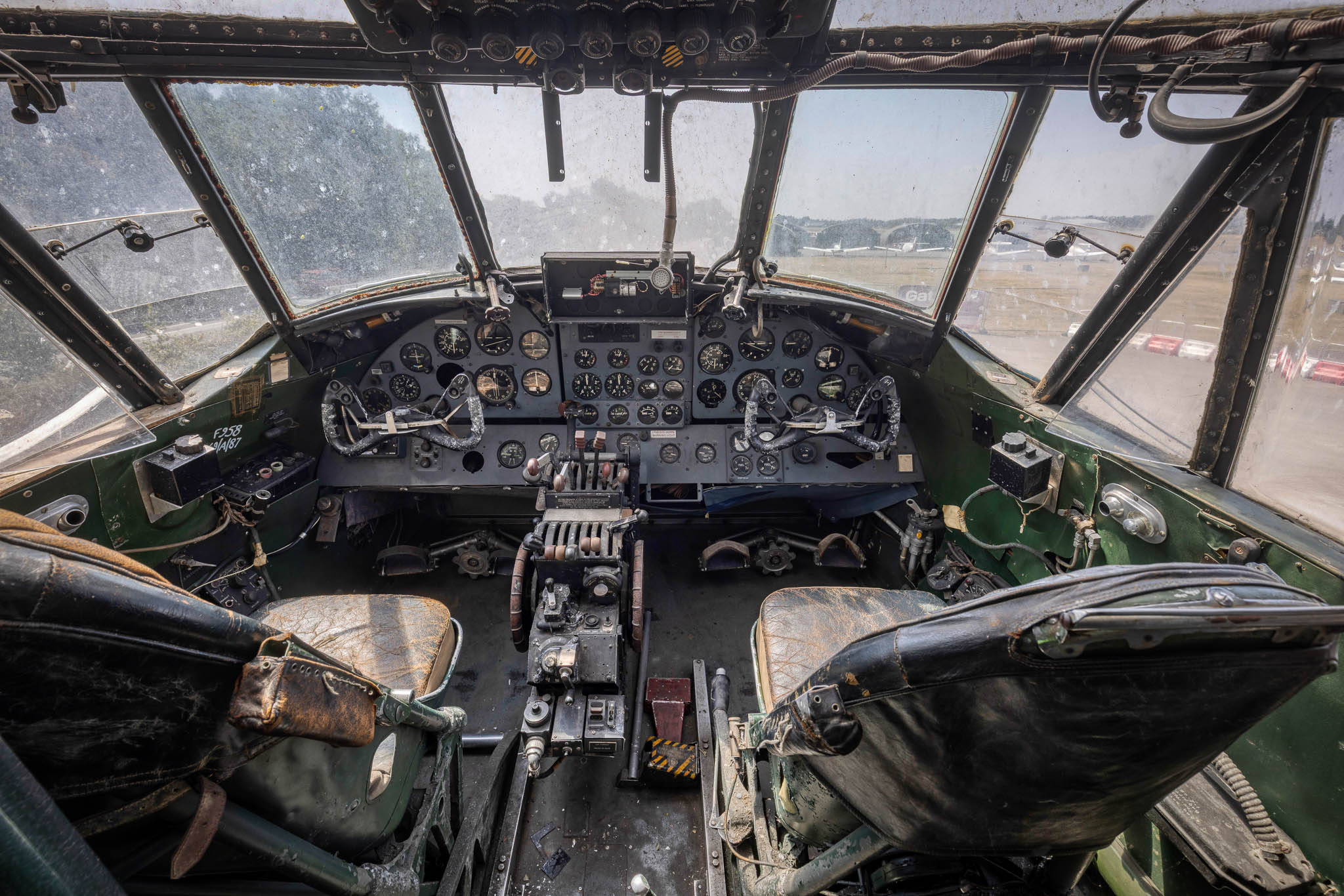 |
Left to right: Inside the Valetta, its frozen in time and in such good condition. The cockpit was designed for a crew of four, comprising the captain, co-pilot, navigator and radio operator. It features a comprehensive array of analogue flight and engine instruments, providing centralised monitoring of the twin Bristol Hercules radial engines, flight systems and early radio and navigation equipment. A large, multi-framed cockpit canopy, typical of post-World War Two British transport aircraft, provides excellent forward and side visibility. The cockpit layout is straightforward and functional, with conventional control yokes, a central throttle quadrant and floor-mounted trim wheels, reflecting the practical ergonomics of the period.As a military aircraft it is usual for the passenger seats face the rear.
Images taken using two lenses (9mm and 16mm) with flash and a tripod for HDR images. |
 |
 |
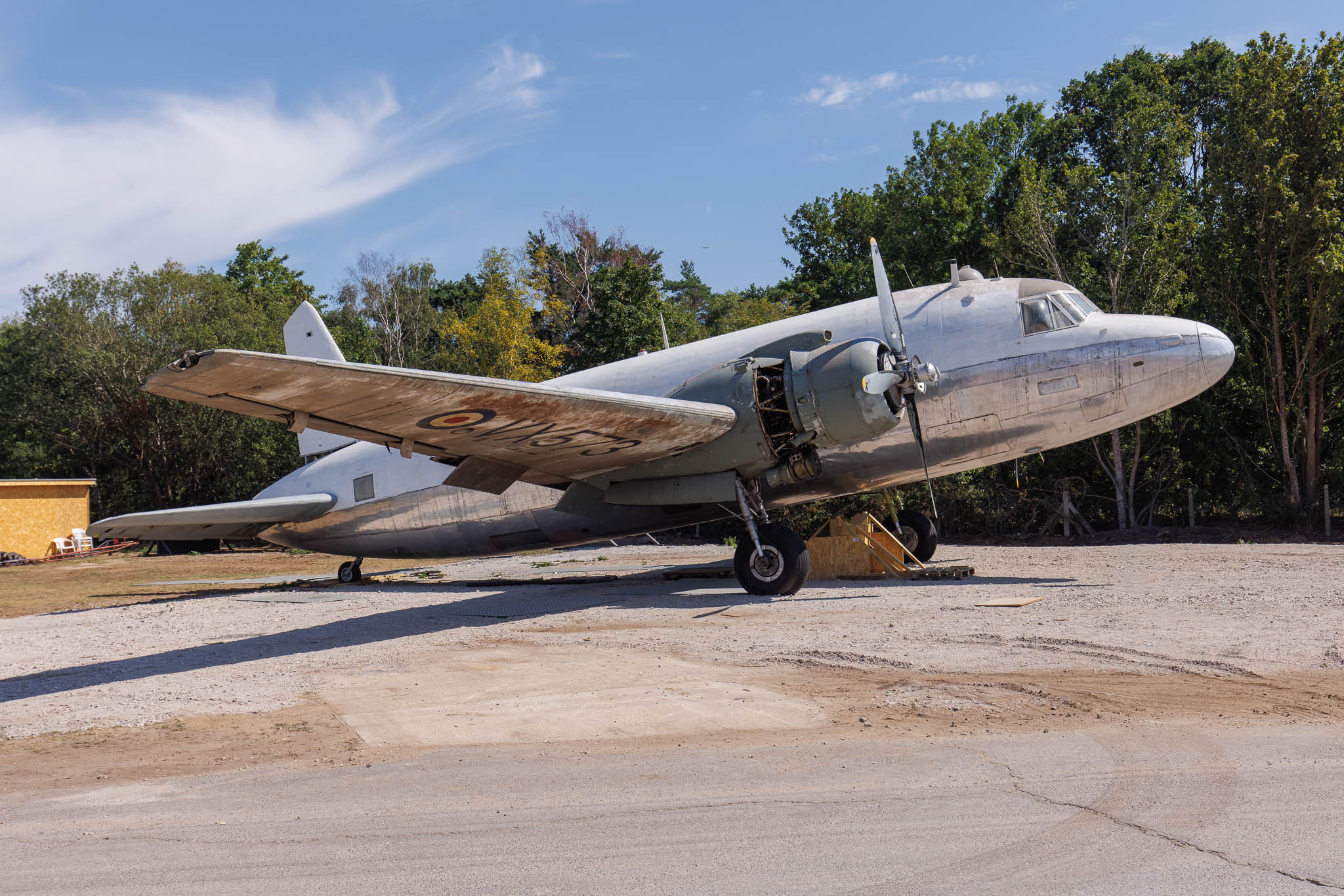 |
| Left to right: Still to be fitted are the blue engine spinners, tail cone, repaired rudder and the wing fillets. |
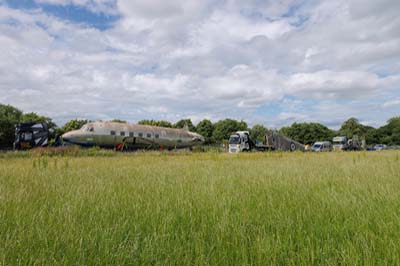
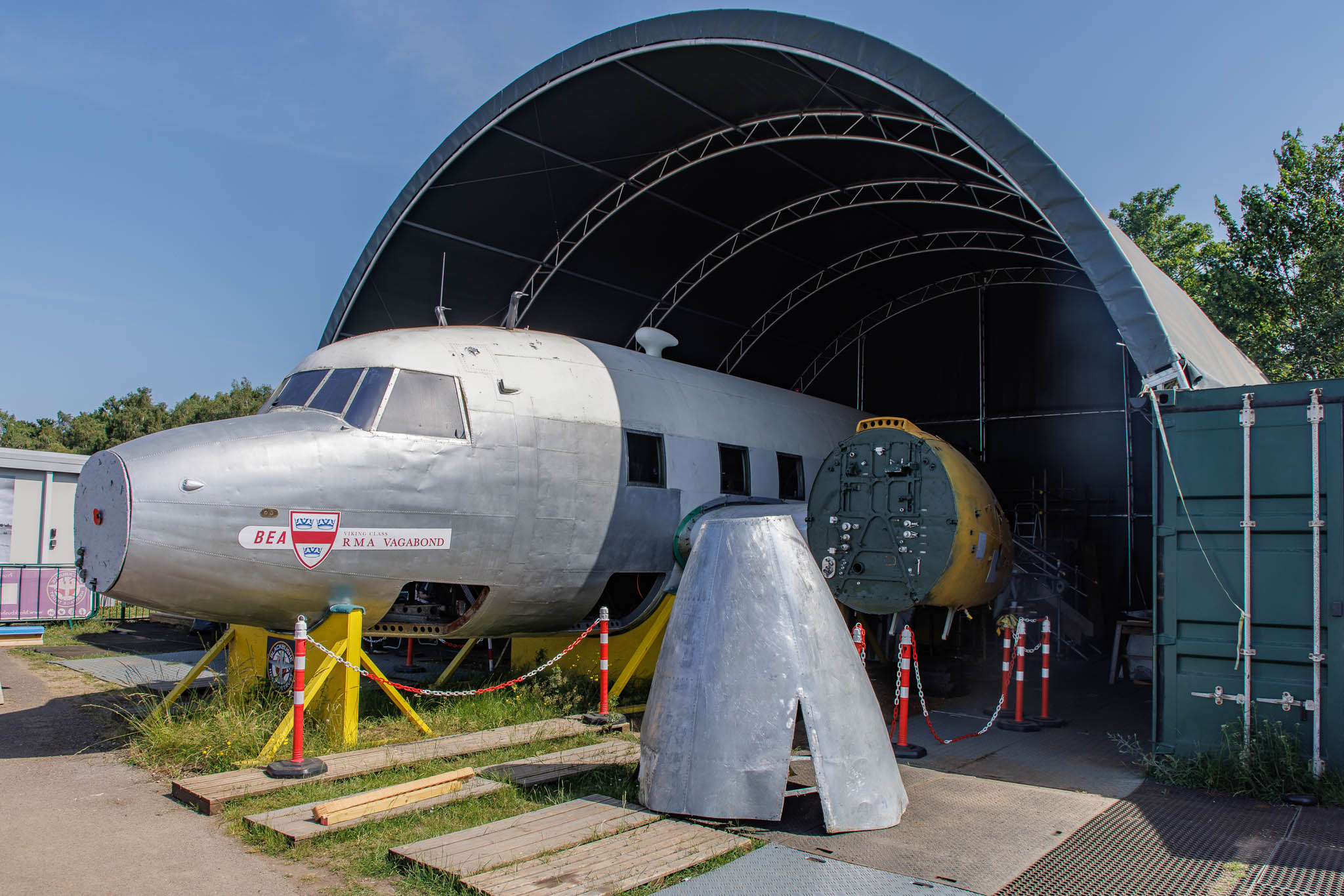
| Left to right: Vickers VC.1 Viking G-AGRW, formerly XF640 and named Vagabond, is the Blackbushe Heritage Trust's other major restoration project. It is one of just six surviving Vikings from the 163 built from 1945. A twin-engine short-range airliner derived from the Wellington bomber, the Viking was built by Vickers-Armstrongs Ltd at Brooklands. The prototype made its first flight from Vickers' airfield at Wisley, Surrey, on June 22, 1945. |
| Left to right: The Vikings were moved to a better location in July 2026. |