College Park Aviation Museum
College Park, Maryland
October 2025
|
| The Wright brothers made their first successful powered flight on December 17, 1903, in Kitty Hawk, North Carolina, though the US government didn't take interest until 1908. That year, they demonstrated their improved aircraft during Army flight trials at Fort Myer, Virginia, where the Wright Military Flyer met all requirements, leading to the training of two Army officers. In 1909, the government leased 160 acres in College Park, Maryland, to continue flight training, creating College Park Airport, the world's oldest continuously operating airport, now celebrated at the College Park Aviation Museum. |
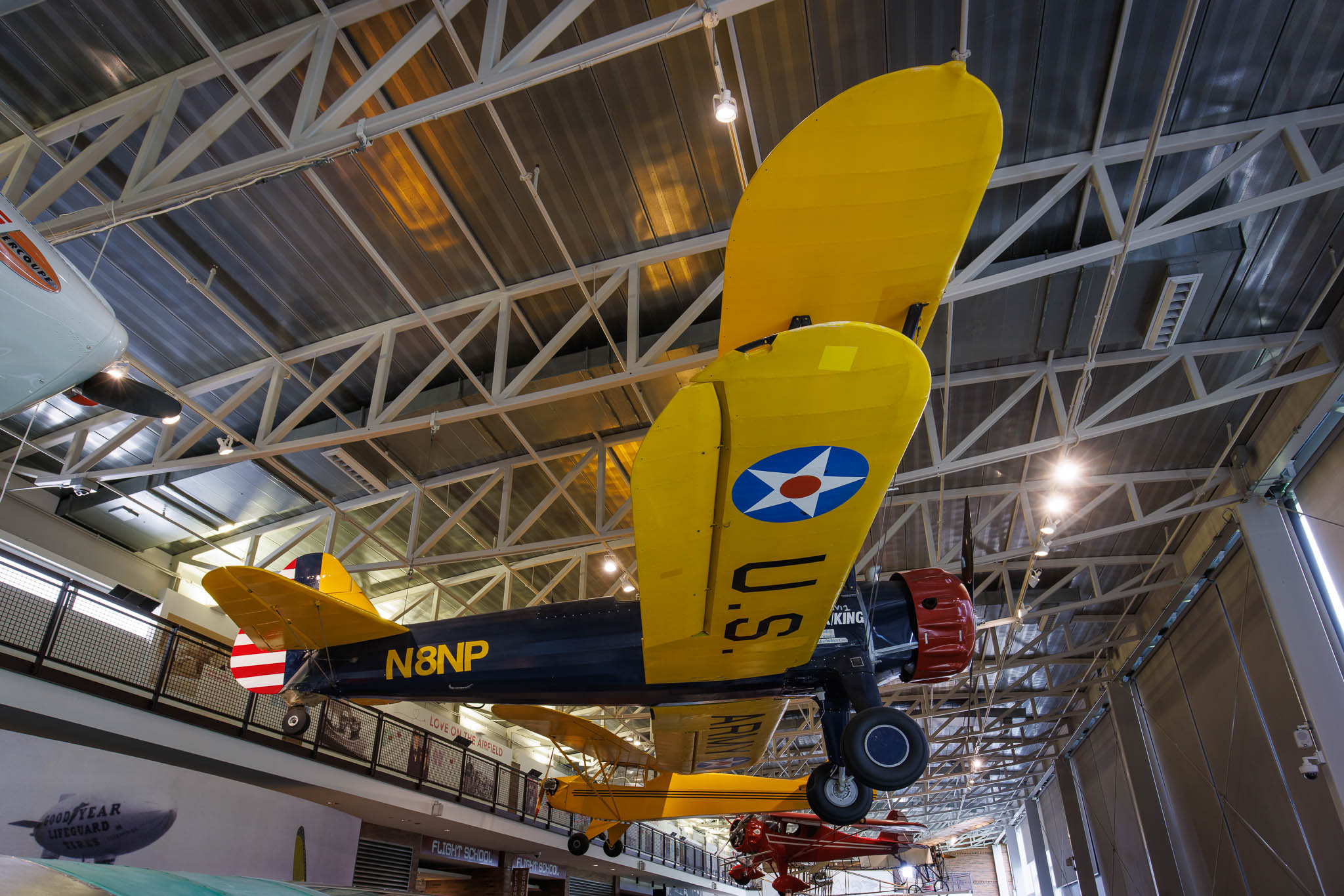
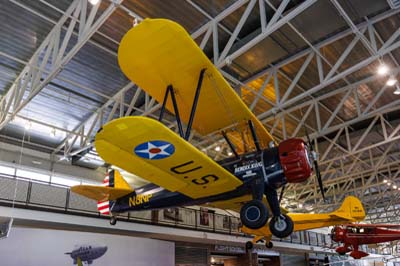
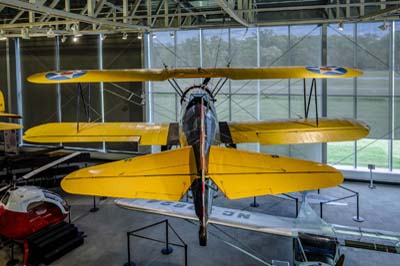
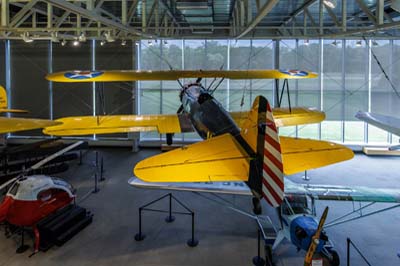
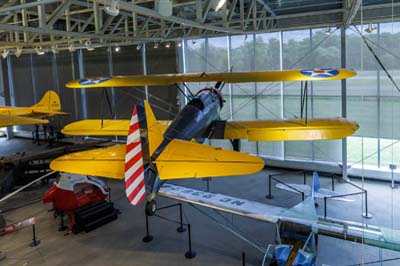
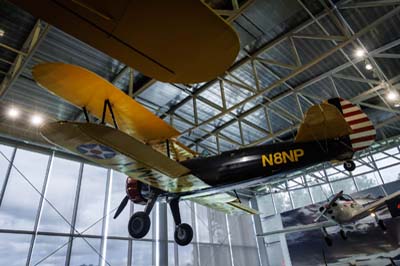
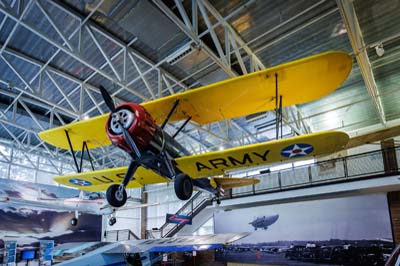
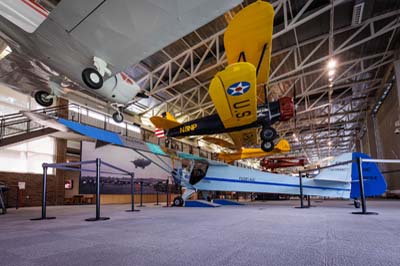
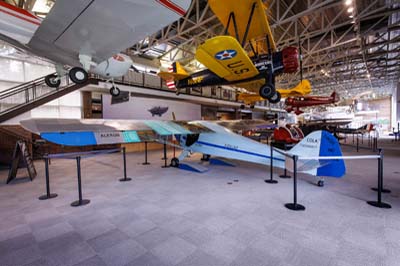
| Left to right: Boeing PT-17 Stearman Kaydet (N8NP) from 1941. The PT-17 first entered service in 1936. They were used by the USAAF and US Navy as the N2S, a total 6,110 of all variants of Stearman were built. |
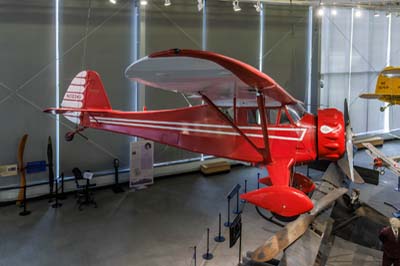
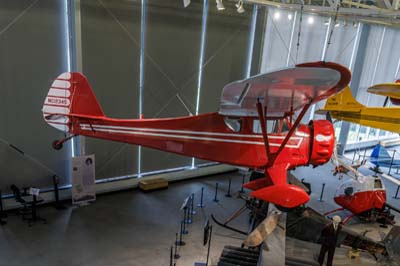
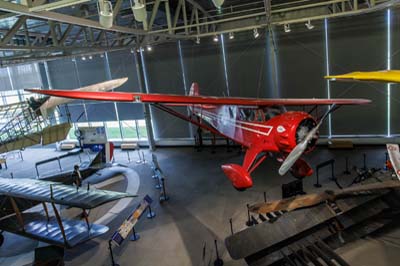
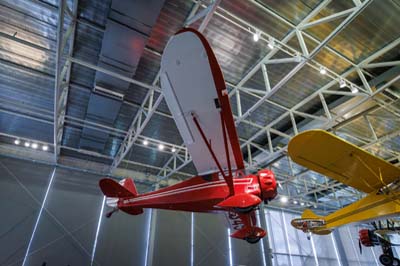
| Left to right: Monocoupe 110 (NC12345) from 1932. |
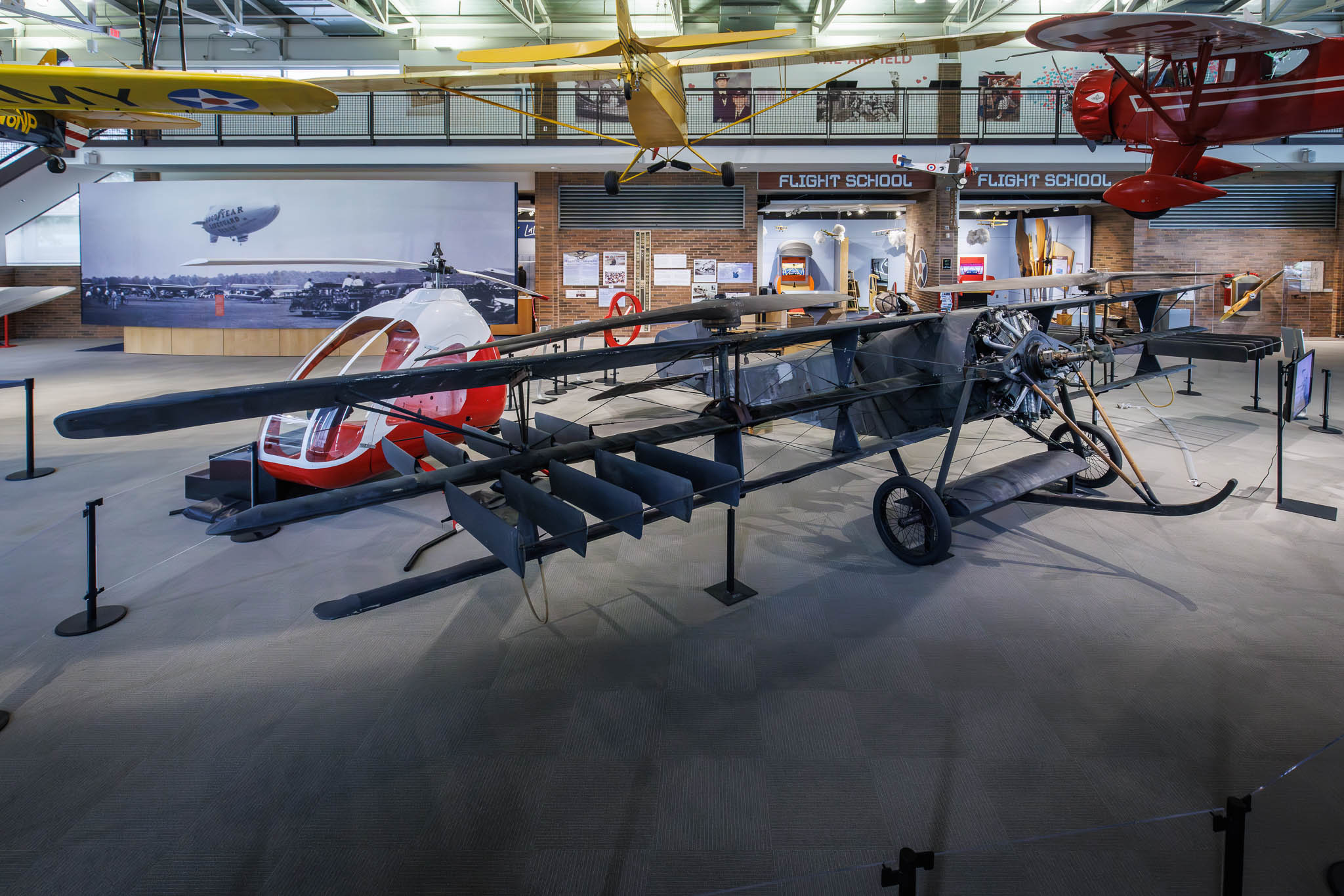 |
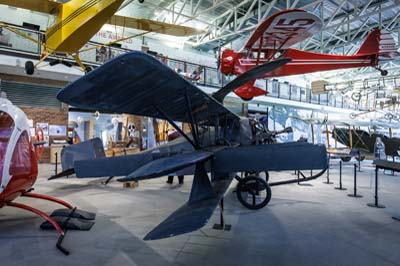
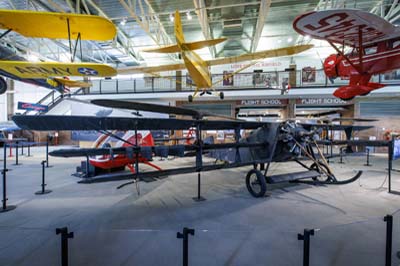
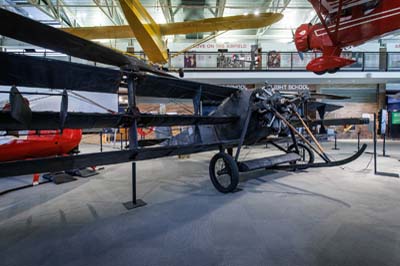
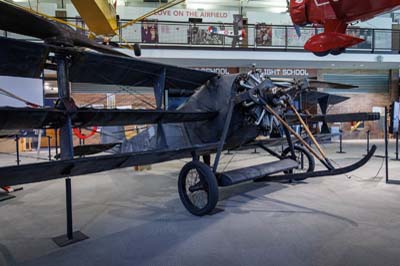
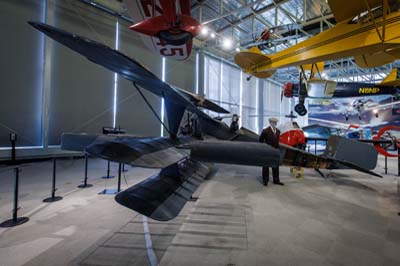
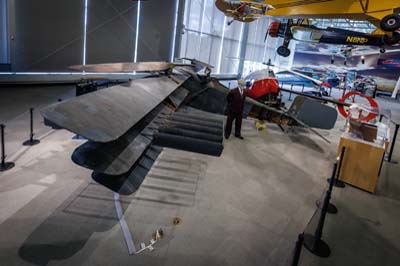
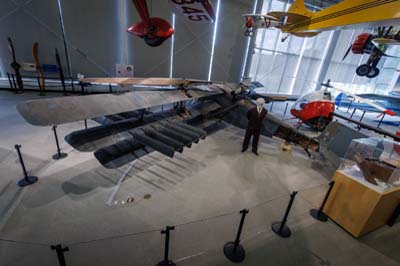
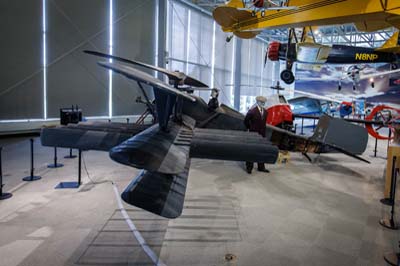
Left to right: Berliner Model C. Emile Berliner, already famous for inventing the gramophone and the telephone transmitter, began exploring helicopters in 1908. In 1912, he sponsored the Washington Aeroplane Company in College Park but continued developing his helicopter ideas at his home and factory in Washington DC. In 1919, his son Henry joined the project and later led most of the experimental work after they moved to College Park.
Their early helicopter had contra-rotating propellers, a four-wheeled chassis, vanes, a rudder, and a pilot seat. While it could lift off the ground, it required more power and control.
Supported by the US Navy, the Berliners tested design improvements between 1922 and 1924, including converting a biplane into a tri-plane to increase lift.
The Berliner Model C is on loan from the Smithsonian Air and Space Museum, it is the only surviving Berliner Helicopter. Towards the end of 1923, Henry Berliner added tri-wings to either side of the fuselage to address the problem of landing safely if the engine failed. The wings also helped the helicopter resist gusts of wind, though strong winds could still cause instability. The machine could reach speeds of around 40 mph but remained limited in altitude. The helicopter's best performance came on February 23, 1924 during a demonstration for US Navy officials. It reached 15 feet and remained airborne for 1 minute and 35 seconds, marking the first successfully controlled helicopter flight.
This milestone proved vertical-lift aircraft could be steered in multiple directions, laying the groundwork for Igor Sikorsky's first practical helicopter 15 years later. |
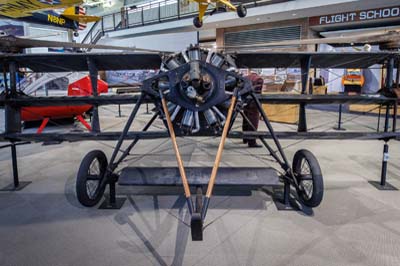
Left to right: Curtiss JN-4D 'Jenny' from 1916. This is an original aircraft discovered in pieces in San Antonio, Texas. It was restored by the Virginia Aviation and Machine Company using about 60% original parts, with the remainder built to original specifications during a 12,000-hour restoration. It was flown at College Park during the early days of airmail service.
The Jenny series was the most widely produced United States aircraft from 1917 through the 1920s. While it served as a primary trainer for the US Army Air Service during World War One, the Jenny became even more popular in the 1920s for barnstorming and carrying airmail. In 1918, the US Post Office launched the nation's first airmail service from College Park, using Jennys to transport mail between cities and across states.
The JN-4D model, on display, was the definitive version of the Curtiss JN series. Introduced in 1917, shortly after the United States entered World War One, it was one of several improvements Curtiss made to his aircraft design. Notably, the JN-4D replaced the earlier control wheel with a control stick to operate the ailerons, which were now located only on the upper wings.
Around 35 Curtis Jennys survive today from a total of 6,813 built. |
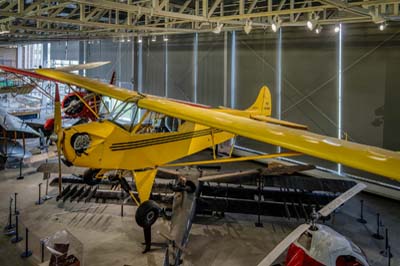
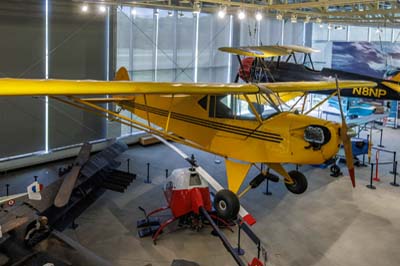
Left to right: Taylor J-2 Cub (NC16769) from 1936. It was originally designed and built starting in 1935 by the Taylor Aircraft Company. When Clarence Gilbert Taylor left in 1935 to form what became Taylorcraft, William T. Piper bought Taylor's shares and renamed the company Piper Aircraft Company in November 1937. The aircraft then continued production as the Piper Cub, becoming one of the most famous light aircraft in history.
Taylorcraft BL-65 (NC23624) from 1939. It won the Grand Champion Antique Trophy at EAA AirVenture Oshkosh in 1994. |
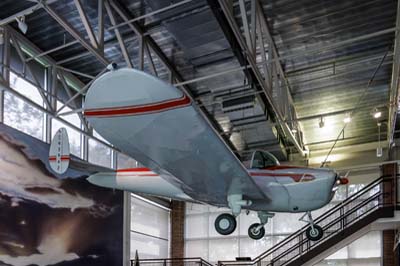
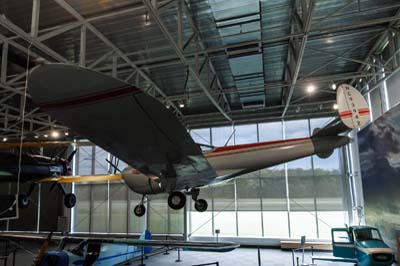
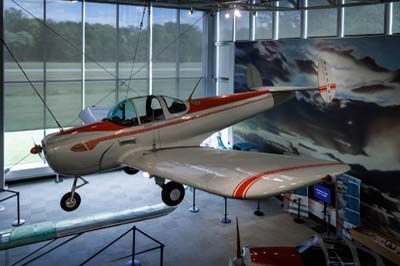
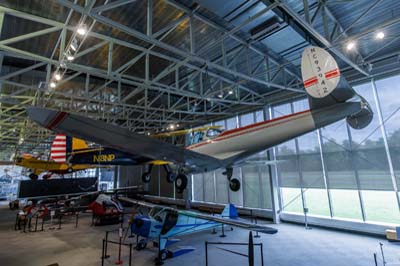
| Left to right: ERCO Ercoupe 415D (NC93942 c/n 1265) from 1947. The ERCO Ercoupe is an American low-wing monoplane that first flew in 1937. Originally built by the Engineering and Research Corporation (ERCO) just before World War II, production continued after the war under several other manufacturers. The final model, the Mooney M-10, first flew in 1968, with production ending in 1970. |