Technikmuseum Hugo Junkers
(Hugo Junkers Technical Museum)
Dessau-Rosslau, Germany
February, 2026
|
 |
The museum, located on the site of the former second Junkers airfield, showcases the life and work of the pioneering inventor, engineer, and entrepreneur Hugo Junkers. The association supporting the Technikmuseum "Hugo Junkers" in Dessau was founded in 1992.
The airfield, was established in 1925 with a grass runway and expanded in 1927 with concrete surfaces, the Dessau airfield became a centre of early aviation achievement. Junkers aircraft set 39 records here in 1927 to 1928, and the groundbreaking Junkers G38 made its first flight in 1929, later serving on major European routes.
The airfield was part of Germany's domestic network from 1930 to 1932 before being redeveloped as a major Junkers factory airfield between 1934 and 1944.
After the war, it was used by Soviet forces, East German police and military units, and as a training facility. Since 1994, part of the site has been restored as the "Hugo Junkers" regional airfield in Dessau.
The building, was constructed in 1933 at the Dessau aircraft factory, this experimental steel house used the self supporting Junkers panel construction method. Restored and placed on display in 2002, it is the only surviving example of a Junkers steel lamella roof construction. |
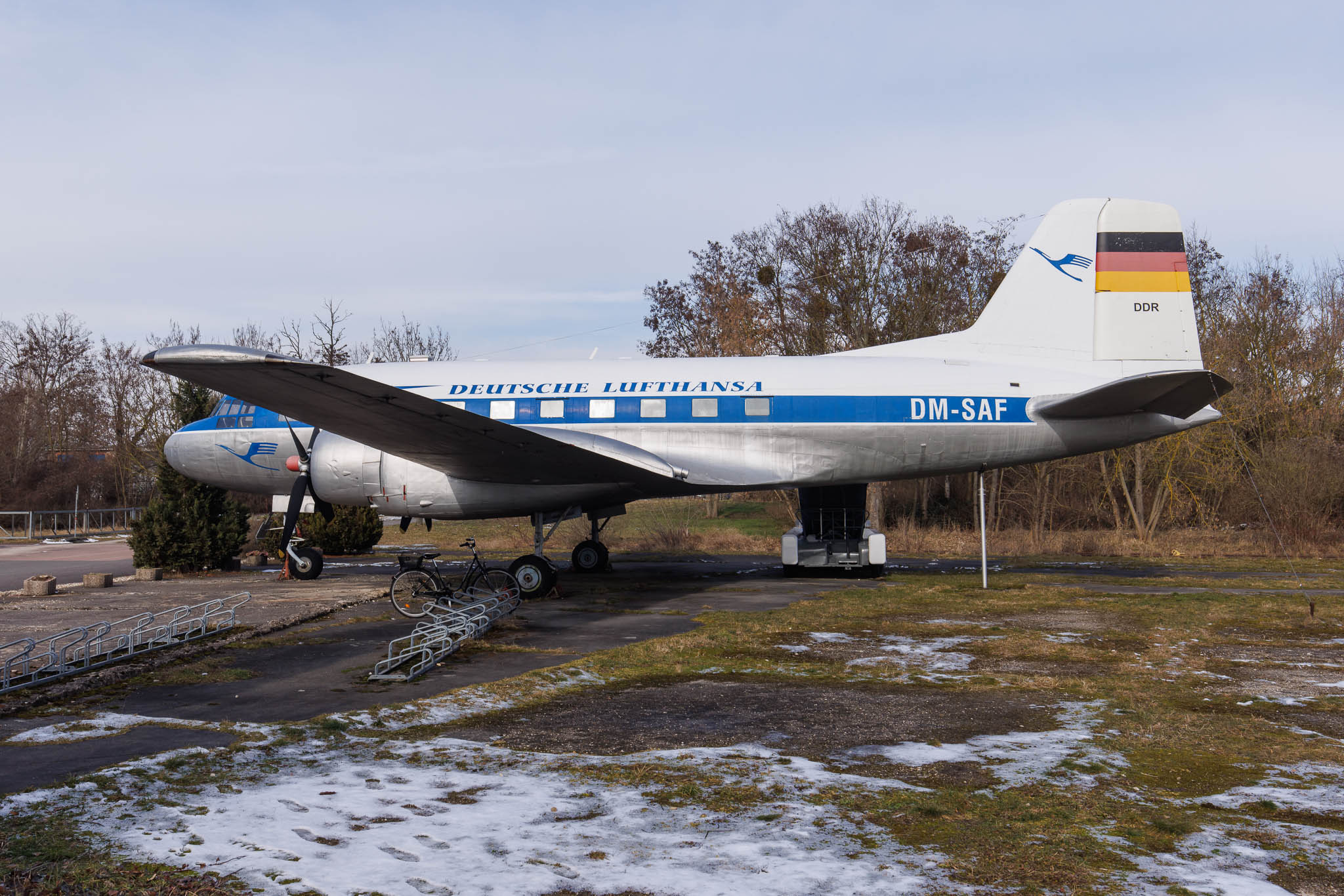 |
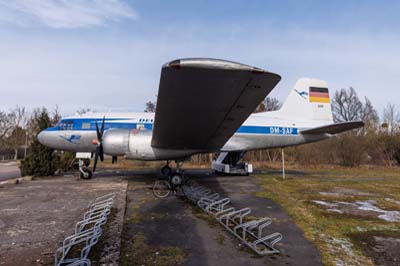
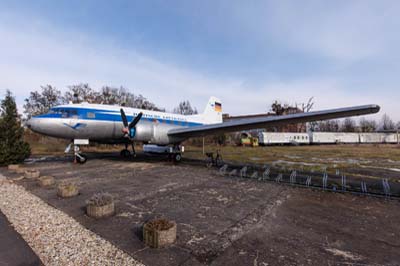
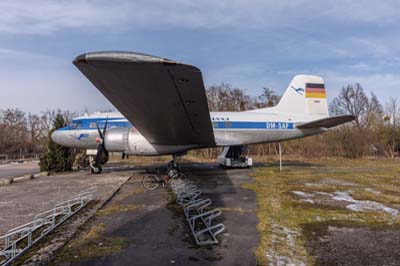
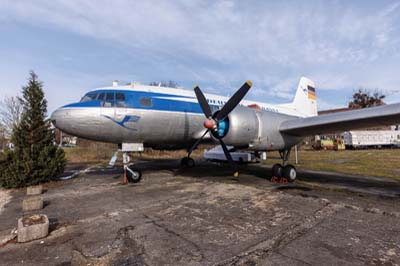
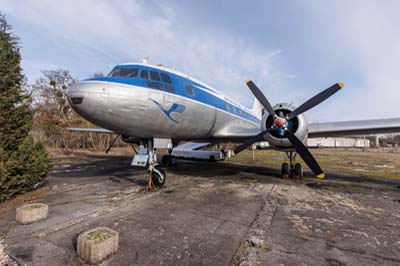
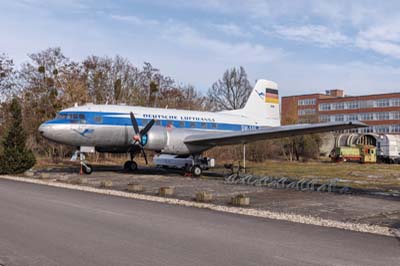
Left to right: VEB Il-14P (DM-SAF) painted in its original Deutsche Lufthansa markings. The Ilyushin IL-14 is a transport aircraft built under licence in East Germany by VEB Flugzeugwerke Dresden between 1956 and 1959. VEB (Volkseigener Betrieb or People Owned Enterprise), is the official designation for East German state-owned factories in the 1950s.
Built in 1957 as DM-SAF for Deutsche Lufthansa (East Germany), the aircraft was transferred to Interflug in 1963. It was damaged beyond repair during a hard landing on a training flight at Leipzig-Mockau on November 17, 1967.
The aircraft was placed on display in the city of Halle the following year. After German reunification, it was dismantled and passed through several owners before being rescued by the Junkers Museum in Dessau, where it underwent a complete restoration. |
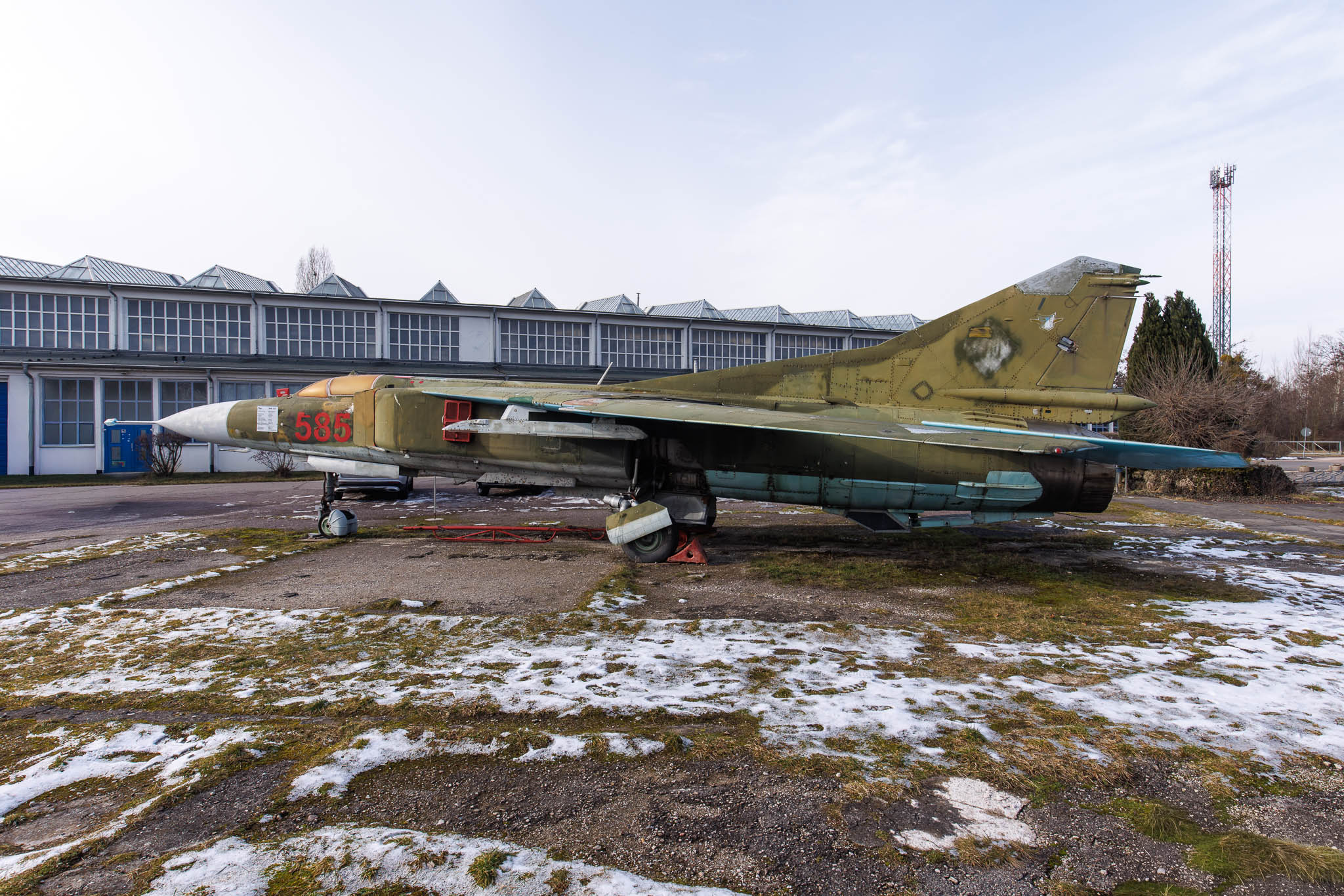 |
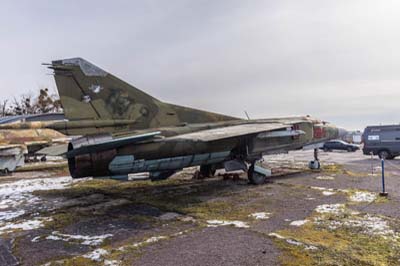
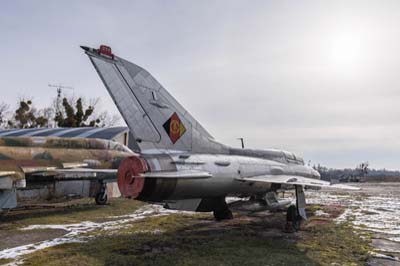
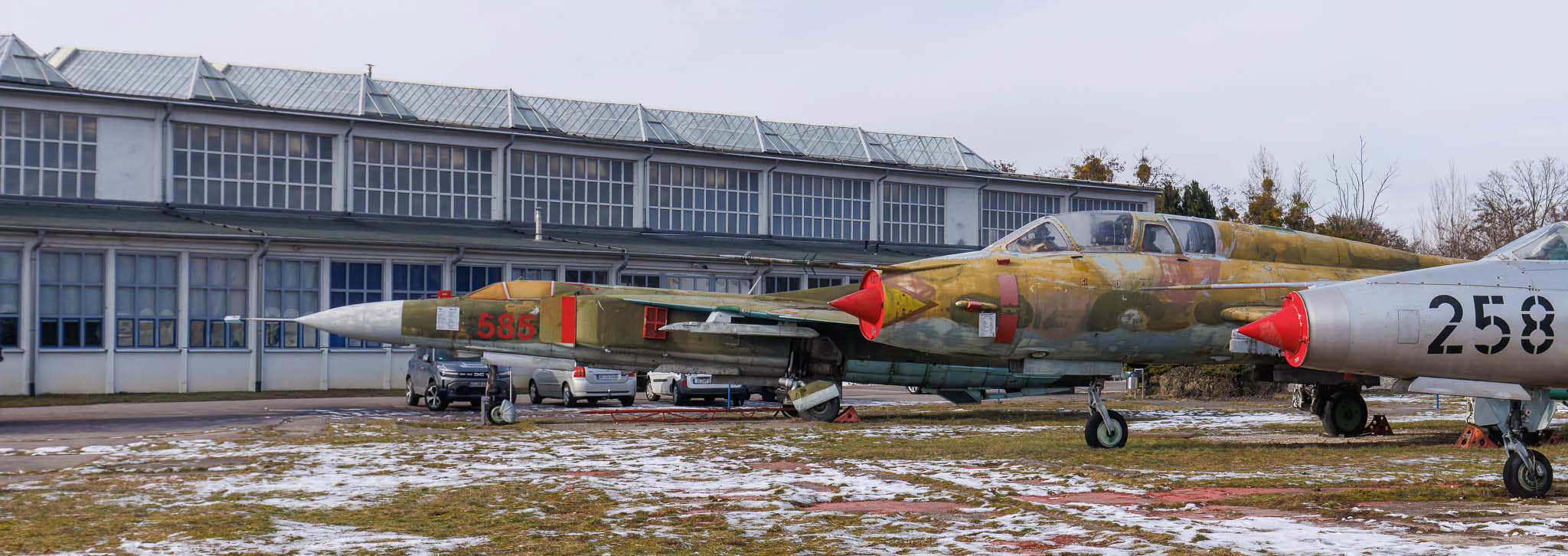
Left to right: Mikoyan-Gurevich MiG-23MF (20+05, 585) ex German Air Force, NVA (Nationale Volksarmee or National People's Army).
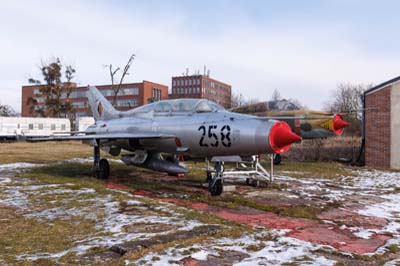
Mikoyan-Gurevich MiG-21U-400 (23+89, 258) ex German Air Force, NVA (Nationale Volksarmee or National People's Army). |
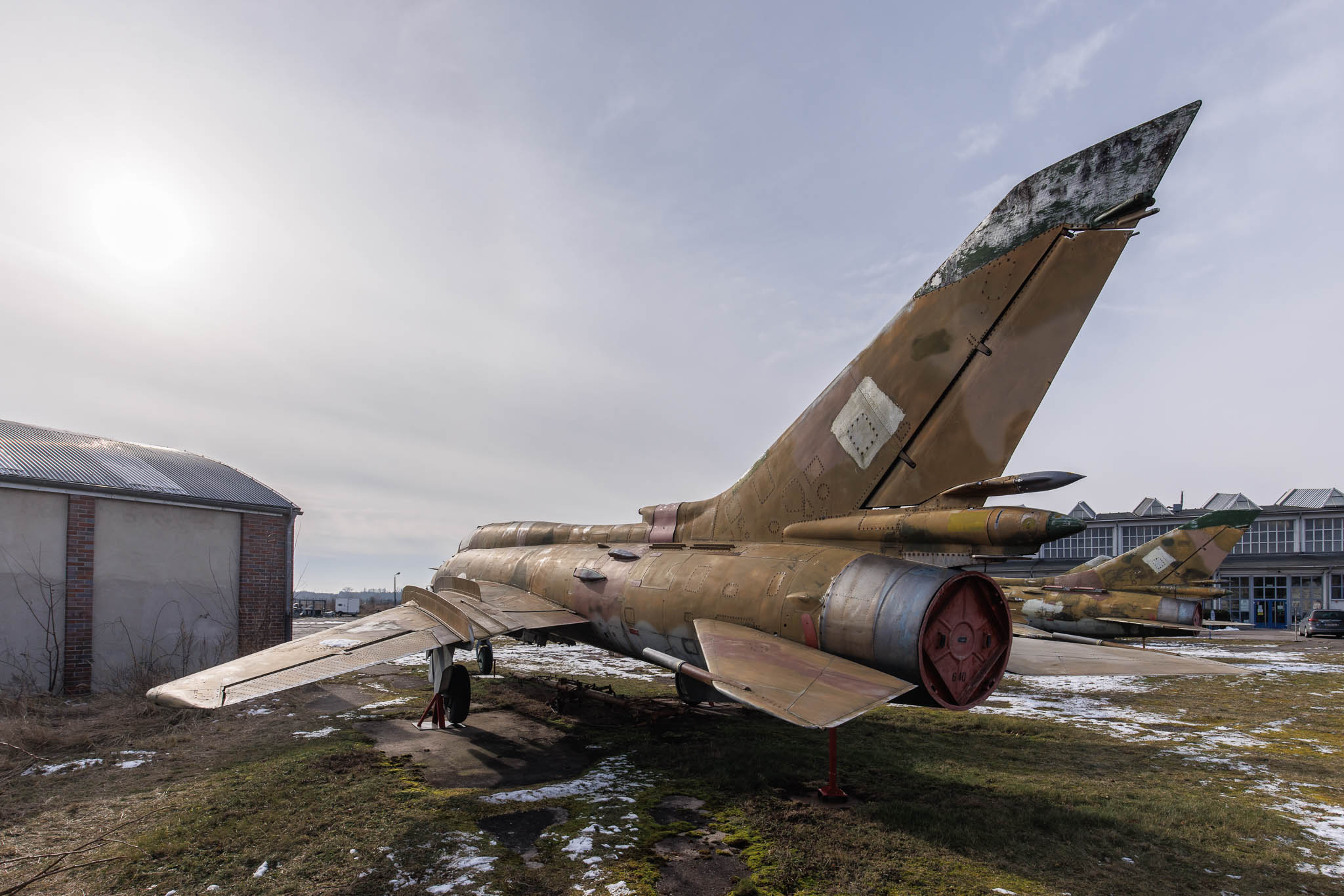
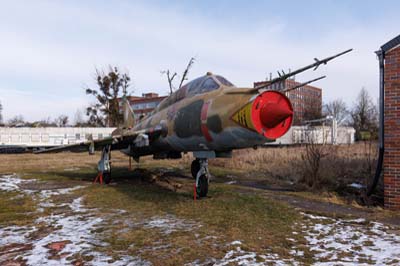
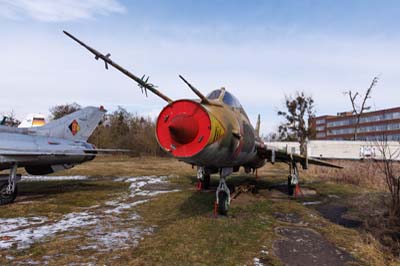
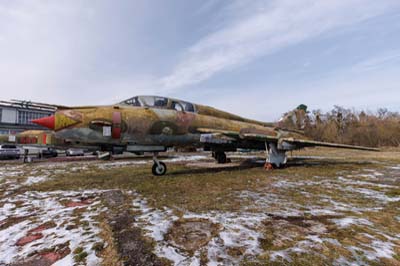
| Left to right: Sukhoi Su-22M-4 (25+09, 600) ex German Air Force, NVA (Nationale Volksarmee or National People's Army). |
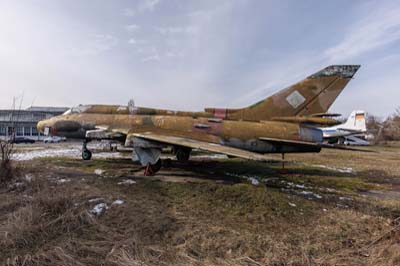
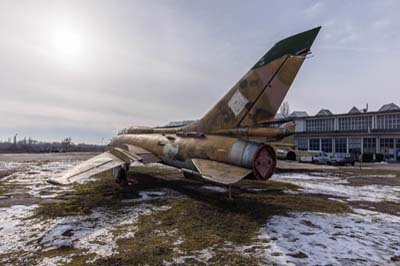
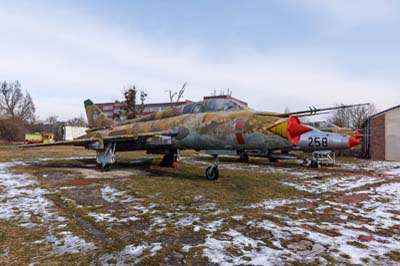
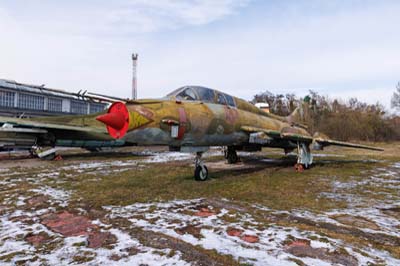
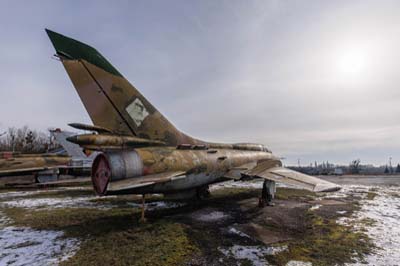
| Left to right: Sukhoi Su-22UM-3K (25+49, 127) ex German Air Force, NVA (Nationale Volksarmee or National People's Army). |
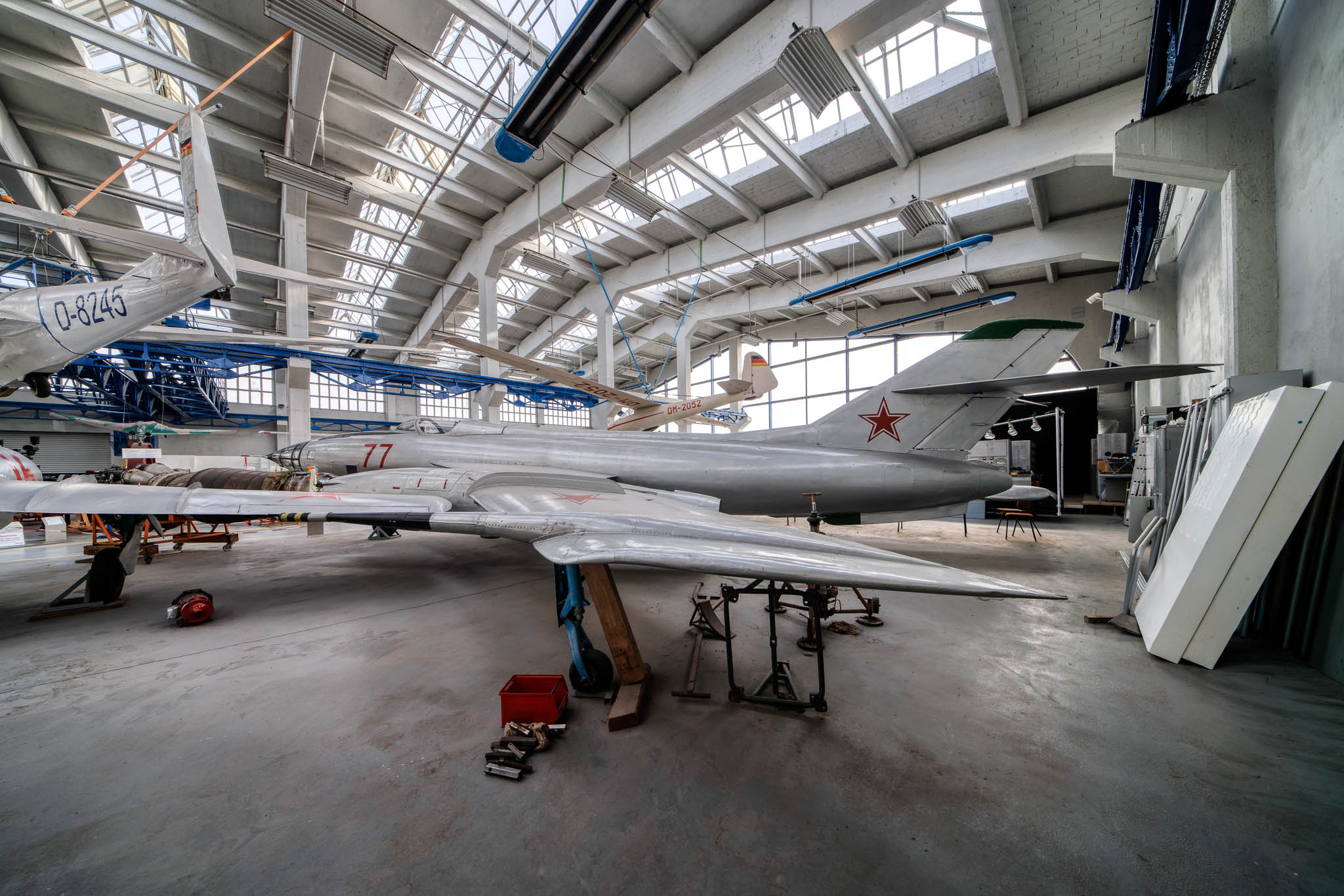
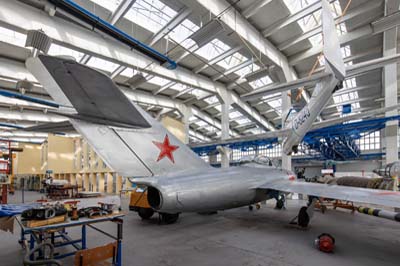
Left to right: Yakovlev Yak-27R (708 'Red 77') ex Soviet Air Force.
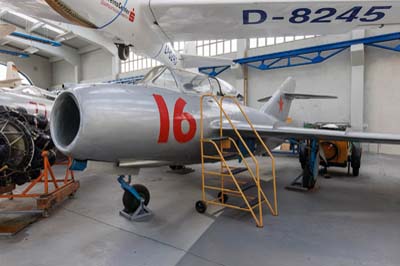
Mikoyan-Gurevich MiG-15UTI (461810, 'Red 16') ex Soviet Air Force. |
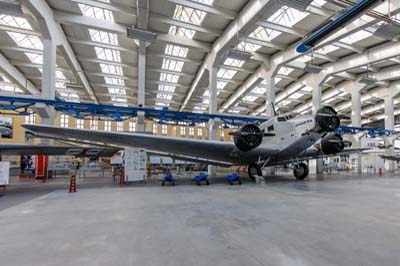
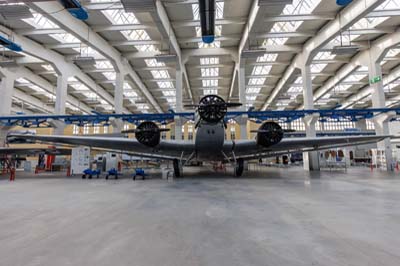
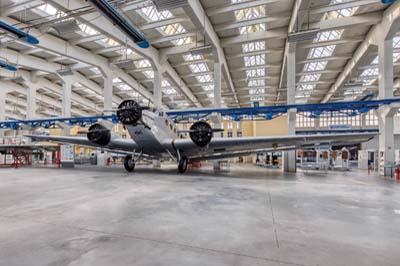
Left to right: Junkers Ju 52/3mg4e (6134 '1Z+BY'). This former Luftwaffe transport aircraft took part in the German invasion of Norway. On April 13, 1940, it was one of 13 Ju 52s from the 3rd Squadron, Special Purpose Bomber Wing 102 (3/KGzbV 102) tasked with transporting troops, artillery, and supplies to the frozen Lake Hartvikvatnet near Narvik, which was being used as an improvised airfield.
The operation proved extremely hazardous. Two aircraft failed to locate the landing site, while most of the others were damaged on landing or unable to take off due to poor ice conditions. Over the following days, Allied air attacks caused further damage, and the aircraft were eventually lost when the ice melted during the spring thaw.
In 1986, this aircraft, '1Z+BY', along with another Ju 52, 'CO+EI', was recovered from the lake by the Norwegian Air Force. '1Z+BY' was restored using components from 'CO+EI', repainted in a Deutsche Lufthansa scheme, and returned to Dessau in 1995. |
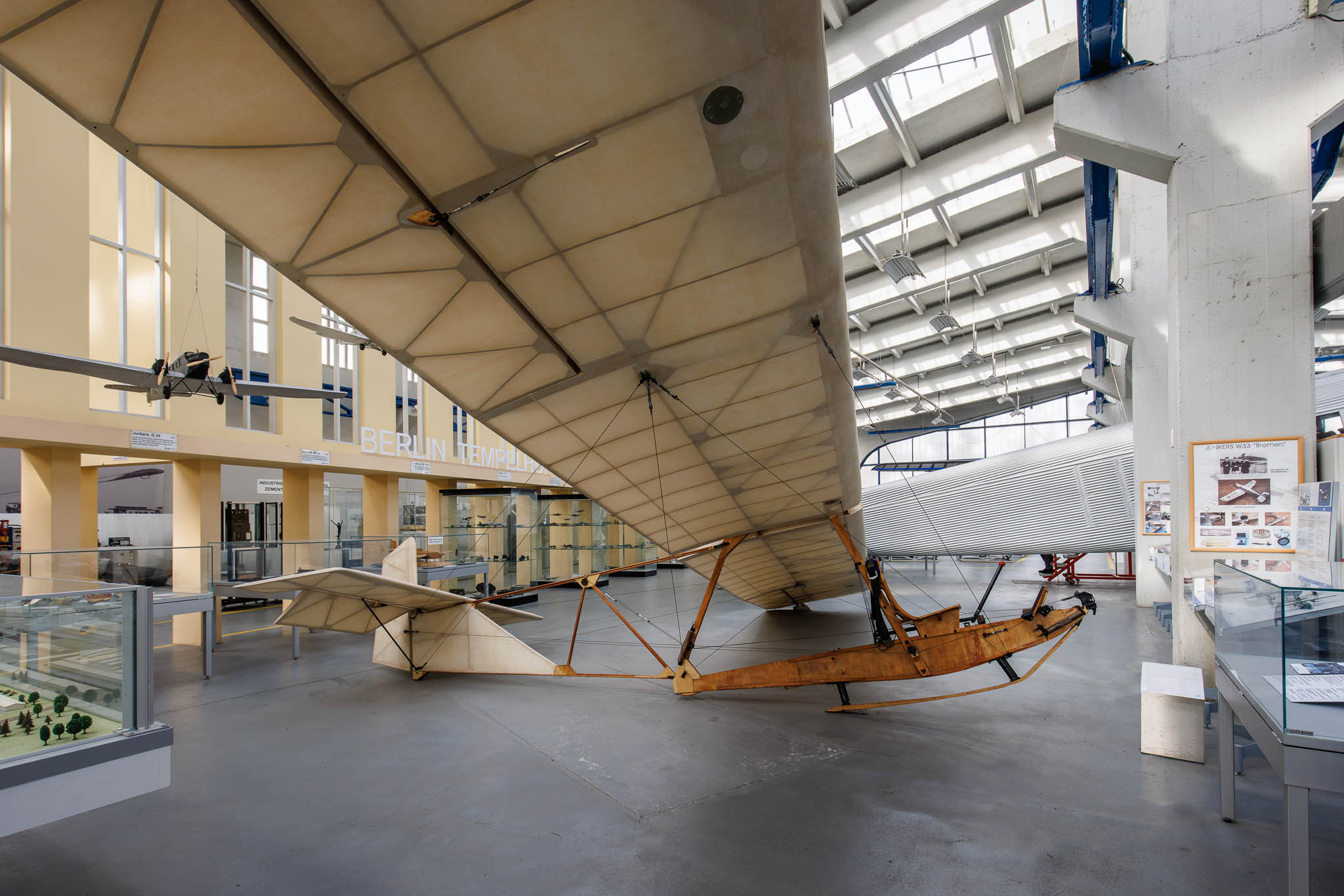 |
| DFS SG 38 Schulgleiter (-). The SG 38 training glider was designed by Schneider, Rehberg and Hofmann at Schneider Flugzeugbau in Grunau in 1938. It became one of the most widely used aircraft for solo flight training in the 1940s. Development had begun in 1936, and from 1938 the glider was produced in large numbers by both amateur builders and industrial manufacturers, including the Deutsche Forschungsanstalt für Segelflug (DFS). |
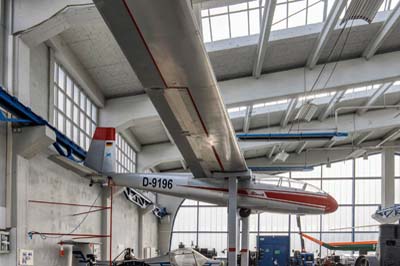
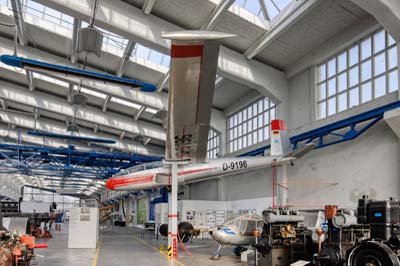
Left to right: Let L-13 Blanik (D-9196).
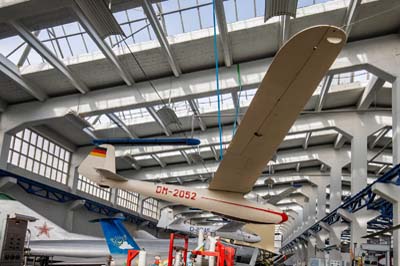
Jacobs DFS 108-70 Meise (DM-2052).
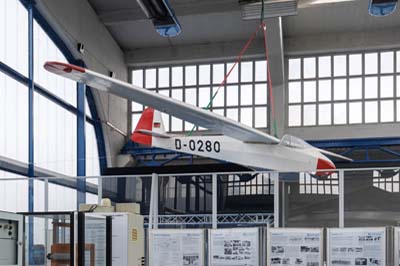
Spaltz A (D-0280). |
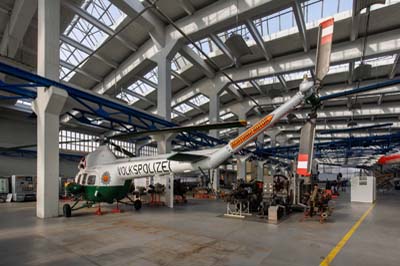
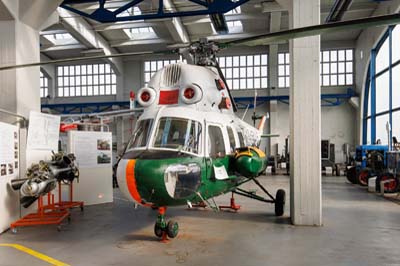
Left to right: PZL-Swidnick Mil Mi-2 (DDR-VPJ registered D-HZPE c/n 539811066) Volkspolizei.
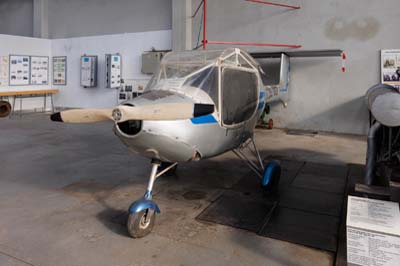
Jora Jora (OK-ZUU 007). |
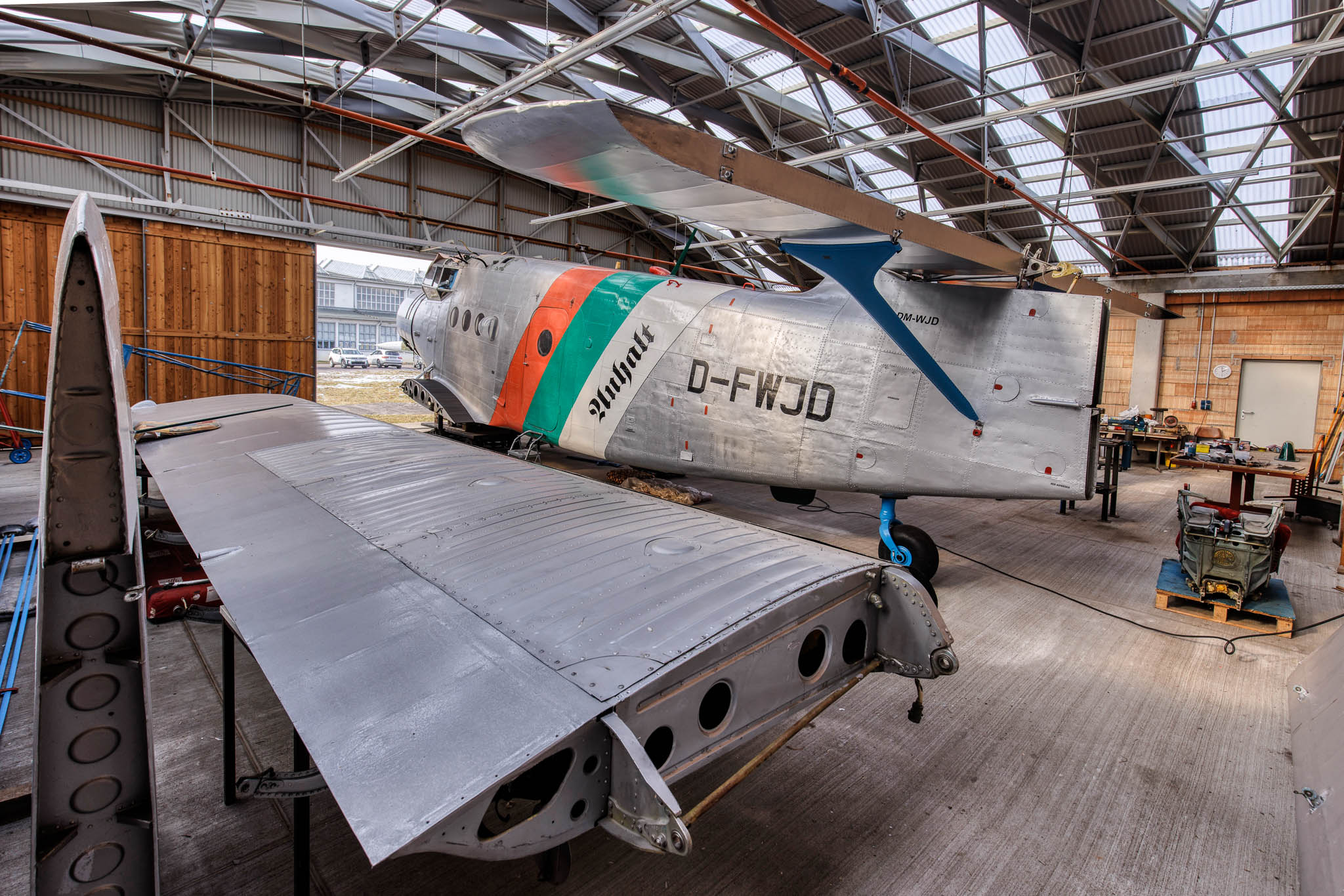
| Left to right: PZL-Mielec An-2T (DM-WJD registered D-FWJD c/n 1G98-51). |
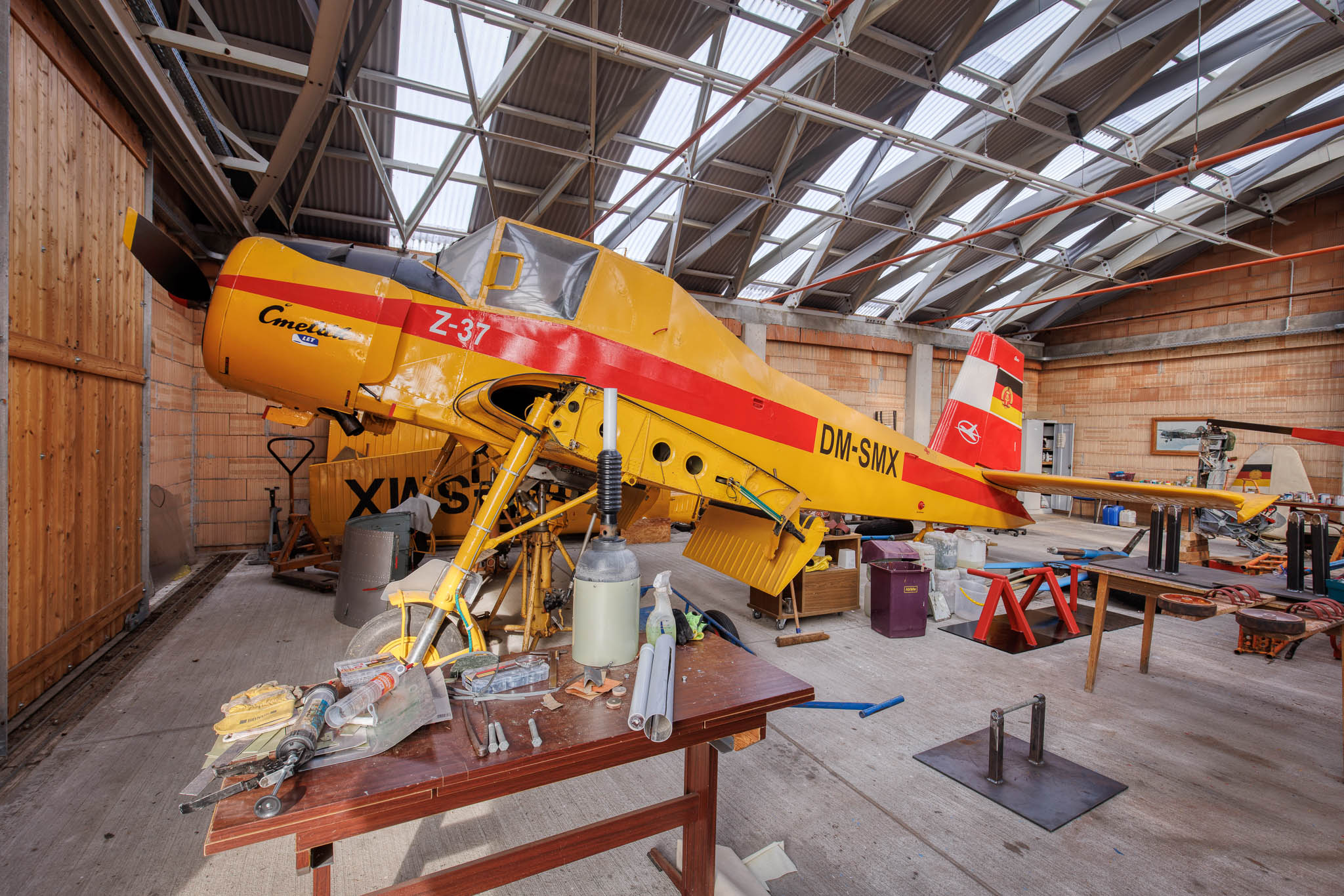
| Zlin Z-37 Cmelak (DM-SMX registered D-ESMX). |