|
|
|
|
| Aerospace Bristol Filton, Bristol December 2025 |
| Filton has been at the heart of British aviation since 1910, when Sir George White's British & Colonial Aeroplane Company—later Bristol Aeroplane Company—began production. Over more than a century, mergers and evolution created BAE Systems, Rolls-Royce and Airbus. From pioneering flight and supersonic travel to world-leading aero engines and advanced composites, the region remains a centre of aerospace innovation. Aeroplane production at Filton began in 1910, less than two years after Britain's first recorded powered flight. The British and Colonial Aeroplane Company was founded by Sir George White, an entrepreneur and electric tram pioneer. Two sheds atop Filton Hill became the nation's first commercially run aeroplane factory. Aerospace Bristol, supported by the Bristol Aero Collection Trust established in 1992, houses a modest collection of aircraft across four buildings. The main display is in an original British Aerospace building, while Concorde is showcased in a purpose-built hangar completed in 2017. Housed in a restored Grade II listed World War One hangar dating from around 1915, Aerospace Bristol's latest addition offers visitors an up-close look at ongoing conservation projects. Current restorations are a Bristol Bolingbroke and Bristol Freighter. In 2021, the museum opened the Conservation in Action Workshop, where volunteers preserve and restore artefacts important to Bristol's aerospace heritage. Another building is dedicated to a wide range of aero engines. |
 |
 |
 |
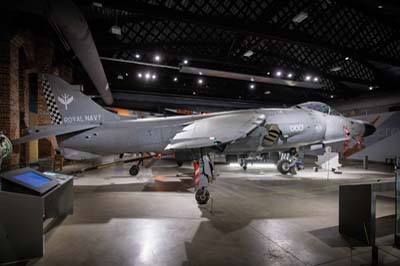 |
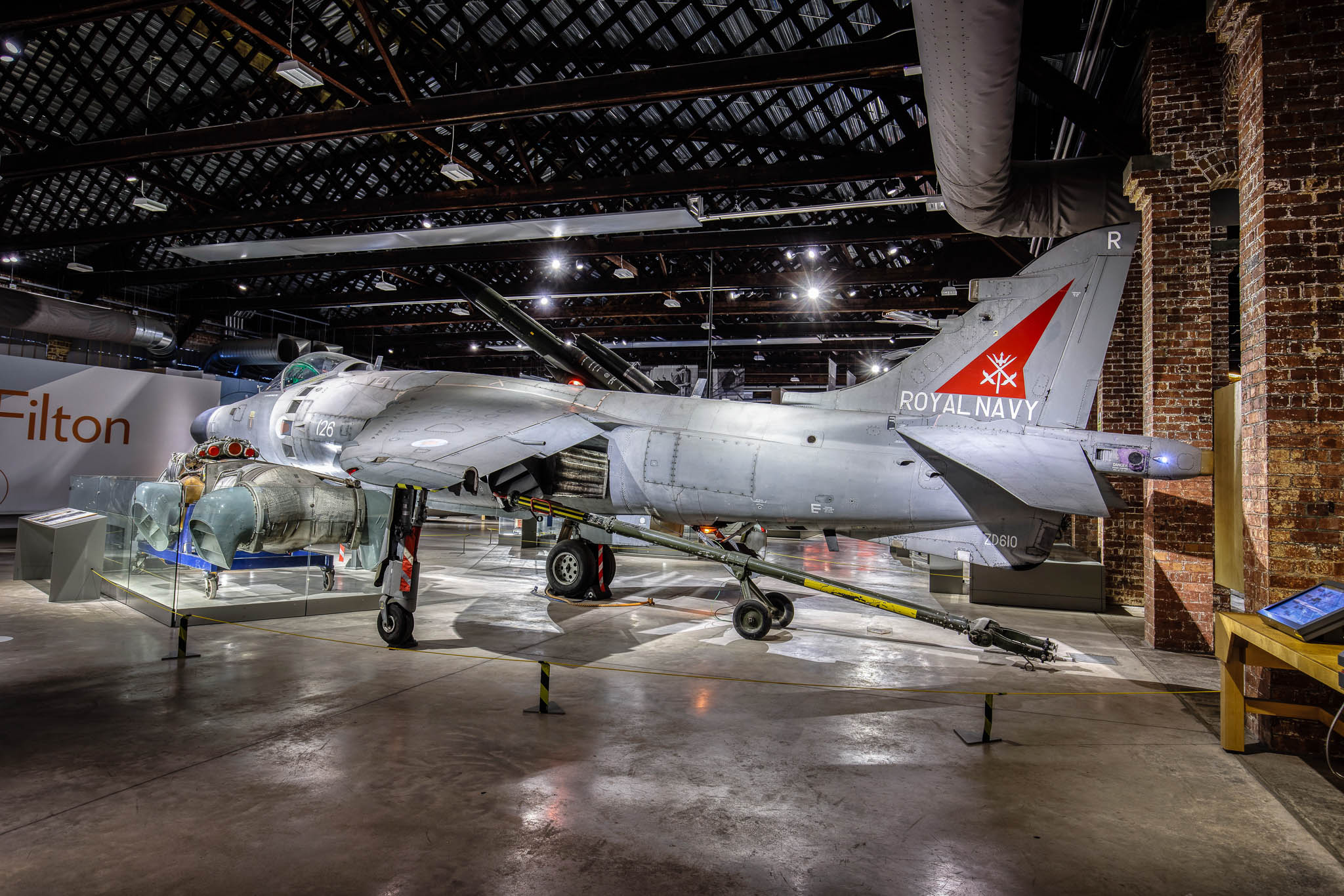
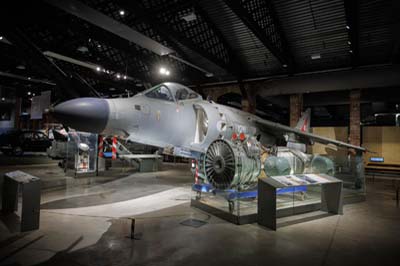
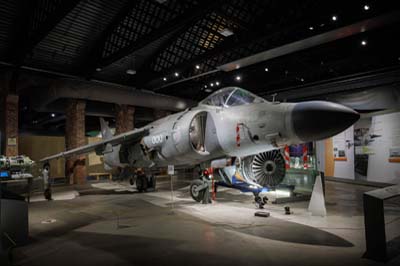
| Left to right: British Aerospace Sea Harrier FA.2 (ZD610). A pioneering V/STOL (Vertical/Short Take-Off and Landing) fighter, the British Aerospace Sea Harrier FRS.1 transformed naval aviation. It first flew on 20 August 1978 and entered service with the Royal Navy in 1980. The later FA.2 upgrade introduced a distinctive enlarged nose housing the Blue Vixen radar, an exceptionally capable system that later formed the basis of the Eurofighter Typhoon's radar. Unlike RAF Harriers, Sea Harriers were specially treated to withstand the corrosive salt-spray environment of carrier operations. During the 1982 Falklands War, Sea Harriers achieved 20–23 air-to-air victories with no losses in air-to-air combat. The Sea Harrier also served in the Balkans, and Sierra Leone. It was withdrawn from Royal Navy service in 2006, and continued flying with the Indian Navy until 2016. |
 |
 |
 |
| Left to right: Bristol Sycamore HR.14 (XL824). The Sycamore was the first British-designed helicopter to enter full production and service in 1947 and was notable for its rotor blades, which were made entirely of wood. Developed in the years following the World War One era of rotary-wing experimentation, this versatile five-seat aircraft went on to pioneer roles such as air-sea rescue, troop transport and emergency services during the 1950s. It holds the distinction of being the first British helicopter to receive a certificate of airworthiness and the first British-designed helicopter to be serve with the Royal Air Force. 88 HR.14s were built, 85 of which served with the RAF. |
 |
 |
 |
 |
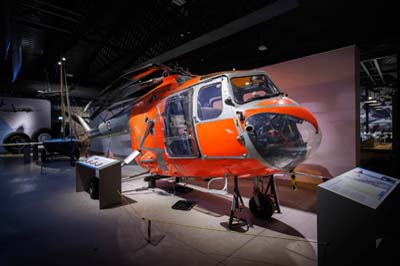
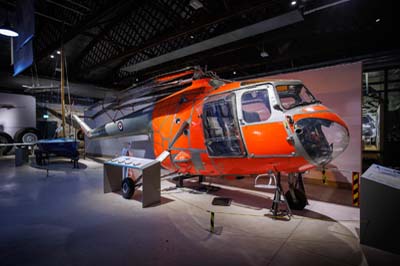
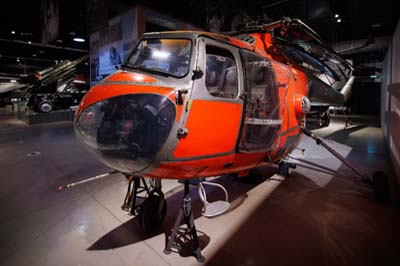
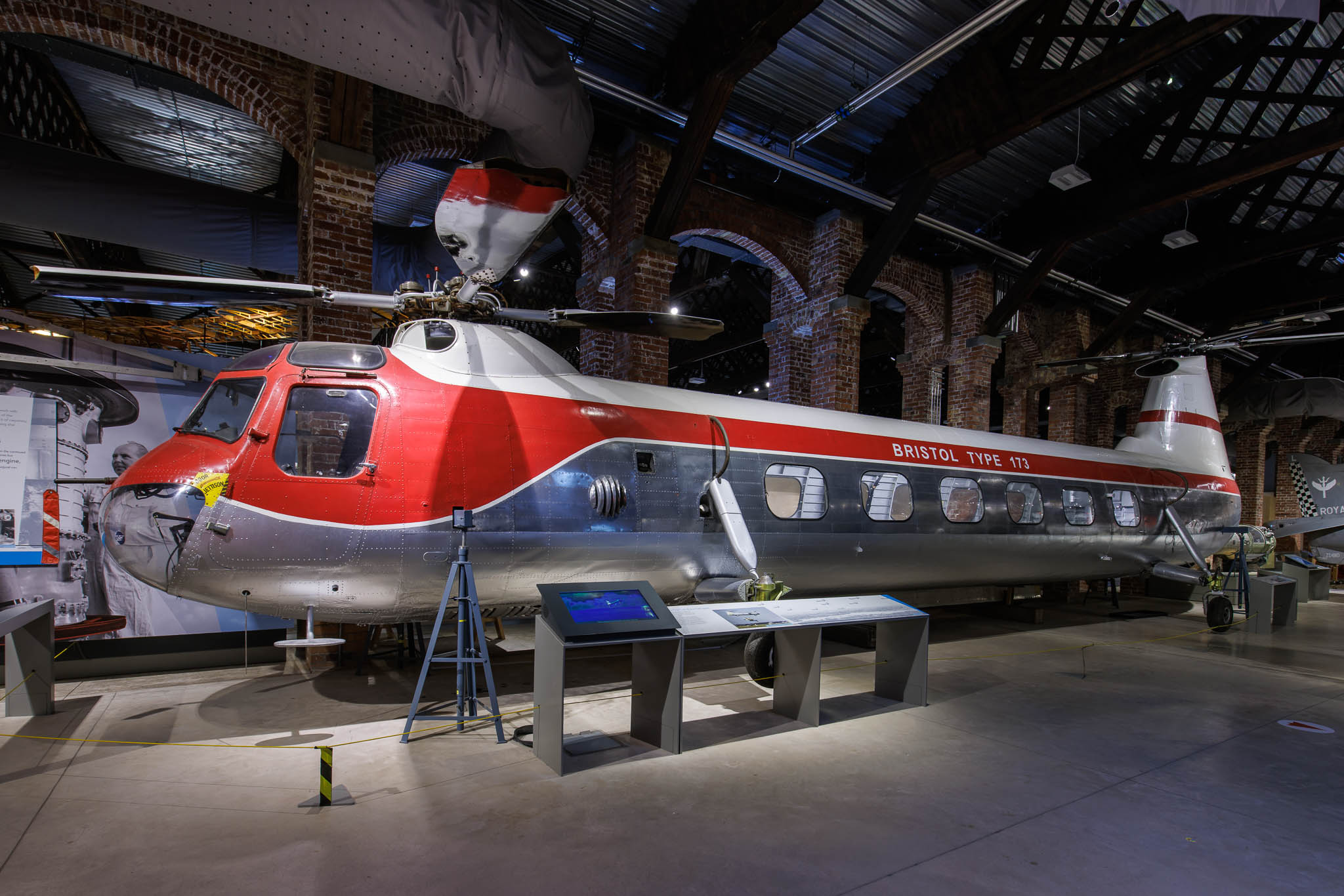
| Left to right: The Bristol Type 173 (XF785) was a British twin-engine, tandem-rotor transport helicopter developed by the Bristol Aeroplane Company. Originally designed for civilian use, it attracted military interest but did not enter production, instead forming the basis for the Bristol Belvedere, which served with the Royal Air Force from 1961 to 1969. The first Type 173 Mk 1, registered G-ALBN, made its initial hovering flight on 3 January 1952, though early tests revealed stability issues that required modification. The first full flight out of the hover took place on 24 August 1952. Prototype XF785 was later preserved, being stored at the RAF Museum Cosford until 2002, displayed at the Bristol Aero Collection at Kemble until 2012, and subsequently transferred to Aerospace Bristol. |
 |
 |
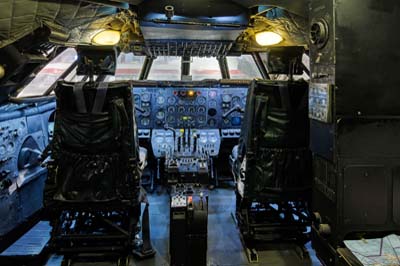 |
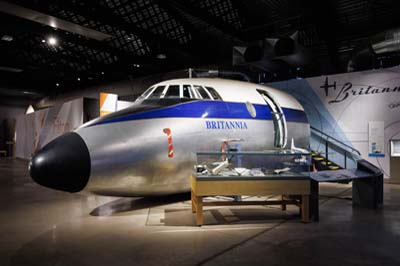
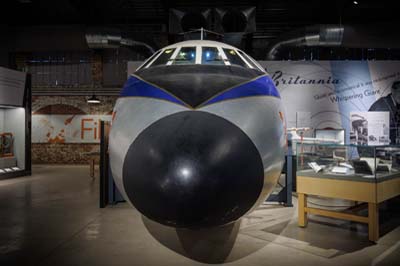
| Left to right: Bristol Britannia 101 (G-ALRX) forward fuselage. On February 4, 1954, G-ALRX the second Britannia prototype, crashed during a test flight at Severn Beach, Gloucestershire. A loss of oil pressure led the crew to shut down number three engine, which was later restarted, but it caught fire. number four engine was also shut down as a precaution. Approaching Filton Airport, pilot William Pegg decided to make an emergency landing on the Severn Estuary mudflats amid fears the fire could compromise the main spar. Remarkably, there were no fatalities. |
 |
 |
 |
 |
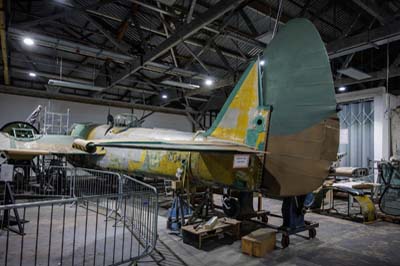 |
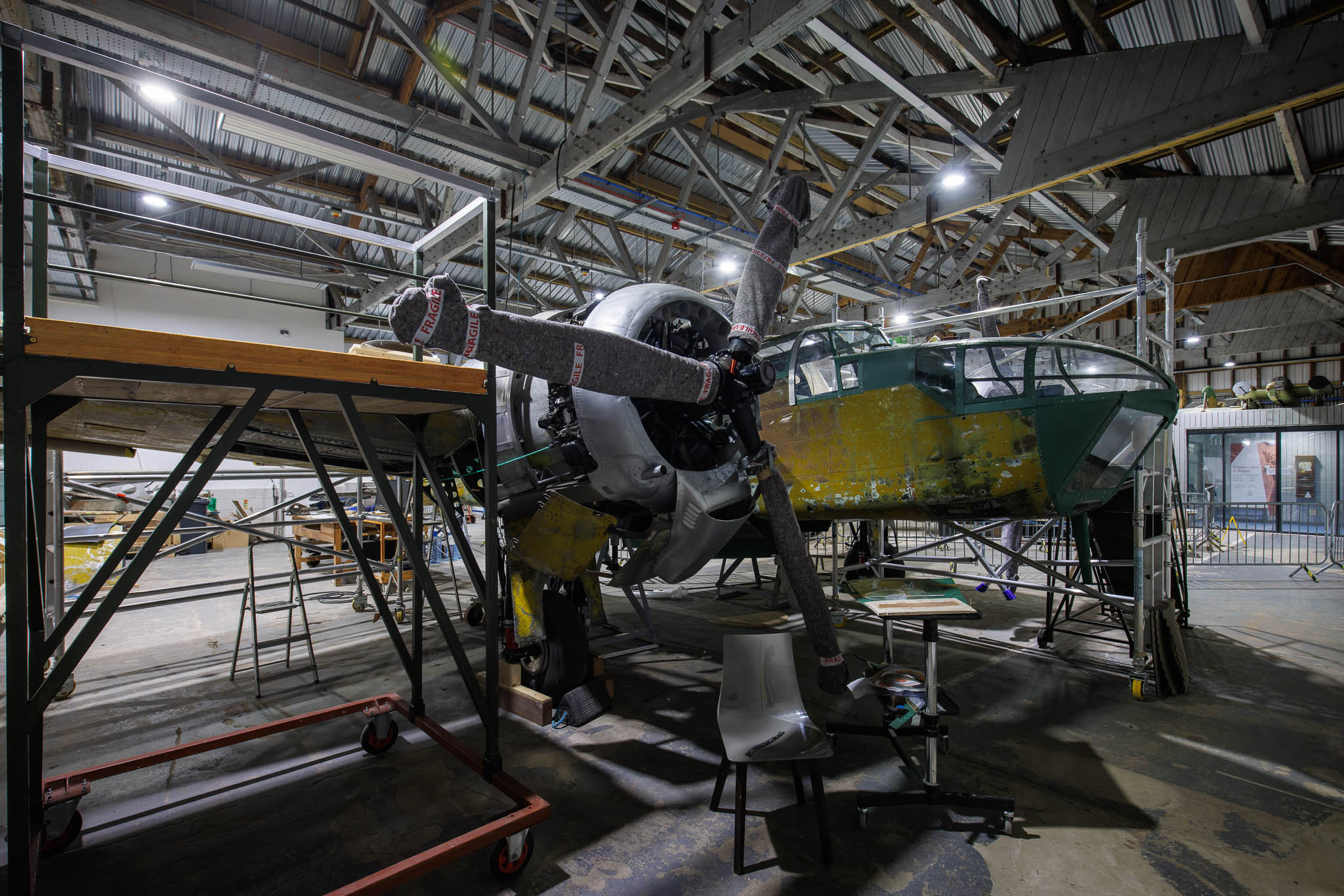
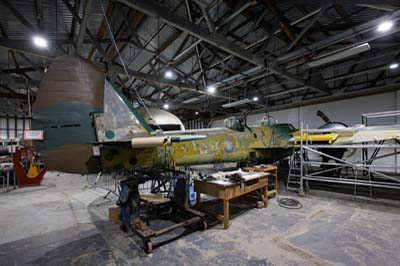
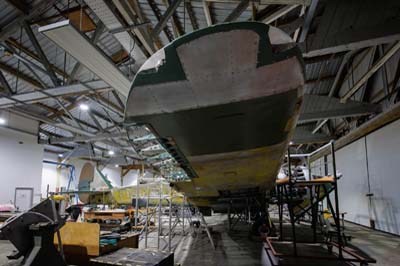
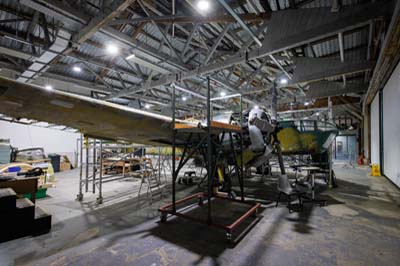
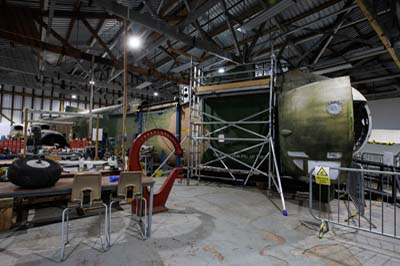
| Left to right: Bristol Bolingbroke Mk IV (9048). The Bristol Blenheim was developed in 1936 as a light bomber and quickly became one of the Royal Air Force's most modern aircraft. The initial Blenheim I was replaced in 1938 by the Blenheim IV, distinguished by its longer nose and improved capability. These aircraft carried out day and night bombing raids against occupied ports until 1941. Some were adapted as night fighters, though with limited success, as they lacked both speed and sufficient armament. Remarkably, in 1937 the Blenheim was faster than any other fighter then in RAF service. Blenheim IVs also saw active service in North Africa and the Far East. The Bristol Bolingbroke was the Canadian-built, licence-manufactured version of the Blenheim IV. Rescued from the United States, the Bolingbroke 9048 is a Canadian-built version of the Bristol Blenheim bomber, which flew with the Royal Canadian Air Force until retirement. In late 2022, the Conservation team fitted the right wing, replicating the ribs and leading edge from the left side. By June 2023, the left wing was attached, followed by the tail cone in January 2024. The tailplane was added in June 2024, and the fin, a component meticulously restored with one key part made from scratch, was fitted in August 2024. |
 |
 |
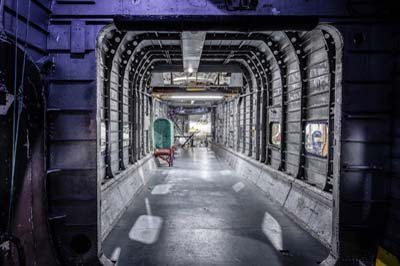 |
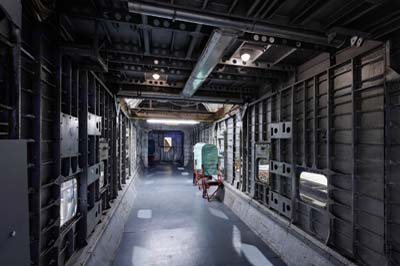
| Left to right: Bristol Freighter Type 170 Mk.31M (NZ5911) Designed and built by the Bristol Aeroplane Company as both a freighter and airliner. Its best known use was as an air ferry to carry cars and their passengers over relatively short distances. A total of 214 Freighters and their passenger variant, the Wayfarer, were operated by airlines and air forces worldwide. Sixty-eight of the 214 Freighters built were destroyed or damaged beyond economical repair in accidents. At least 45 of these were fatal, resulting in the deaths of at least 385 passengers and crew. This Freighter was rescued from New Zealand in 2018 and is one of only 11 remaining worldwide, now the sole example in Europe. It is housed in the new Conservation in Action Workshop, where volunteers and apprentices work to preserve the aircraft. |
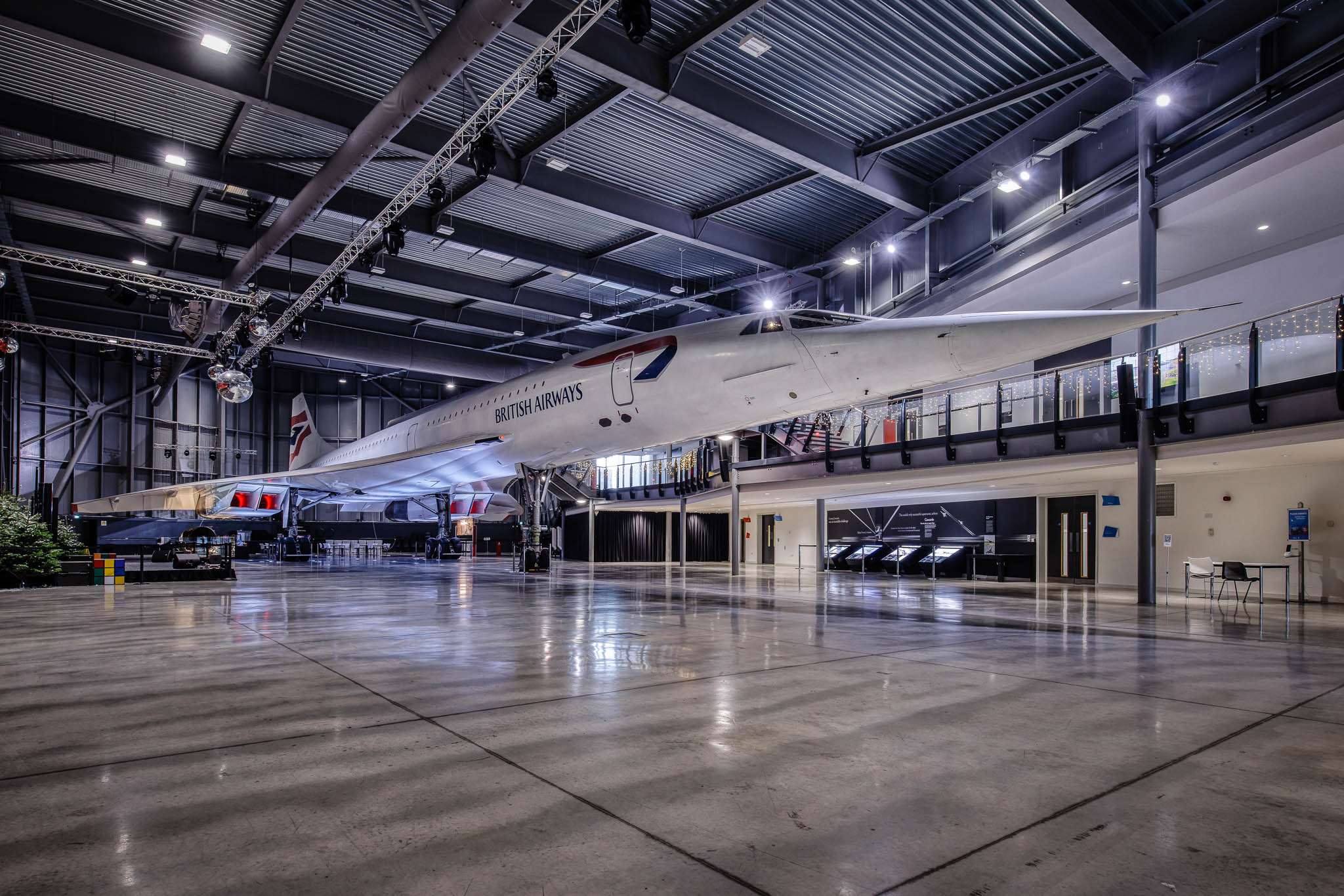 |
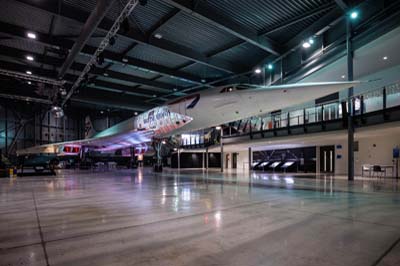
| British Aerospace Concorde (G-BOAF c/n 216). |
| Landmark Dates: On April 20, 1979, Concorde 216 made its first flight from Filton, painted white and registered G-BFKX. On June 12, 1980, it was re-registered G-BOAF for sale to British Airways and flown to Heathrow the following day, having completed ten flights. On January 1, 1983, G-BOAF achieved the fastest transatlantic crossing by a commercial aircraft, flying from New York to London in 2 hours, 56 minutes and 35 seconds.
On July 25, 2000, an Air France Concorde crashed shortly after take-off from Paris Charles de Gaulle Airport due to debris on the runway that led to a tyre burst, fuel leak and subsequent fire. Following the accident, both Air France and British Airways grounded their Concorde fleets. In January 2001, a programme of safety modifications was introduced, with G-BOAF selected as the development aircraft. These included strengthened tyres, Kevlar-lined fuel tanks and improved electrical insulation. On June 19, 2001, the modifications were completed and testing began. On September 11, 2001, G-BOAF flew the first operational assessment flight for Concorde's return to service. The same day's terrorist attacks in the United States later contributed to Concorde's final withdrawal. On October 22, 2001, the aircraft made the first Concorde flight to the United States since the grounding. On November 7, 2001, Concorde returned to commercial service, and G-BOAF flew Prime Minister Tony Blair to the United States. On December 1, 2001, the aircraft resumed services to Barbados, one of only two scheduled destinations until Concorde's retirement in 2003. On November 26, 2003, Concorde Alpha Foxtrot G-BOAF made the final flight of any Concorde, returning to Filton. On February 7, 2017, Aerospace Bristol moved Concorde Alpha Foxtrot to her purpose-built home. |
 |