Canadian Warplane Heritage Museum
Mount Hope, Hamilton, Ontario
September 2026
|
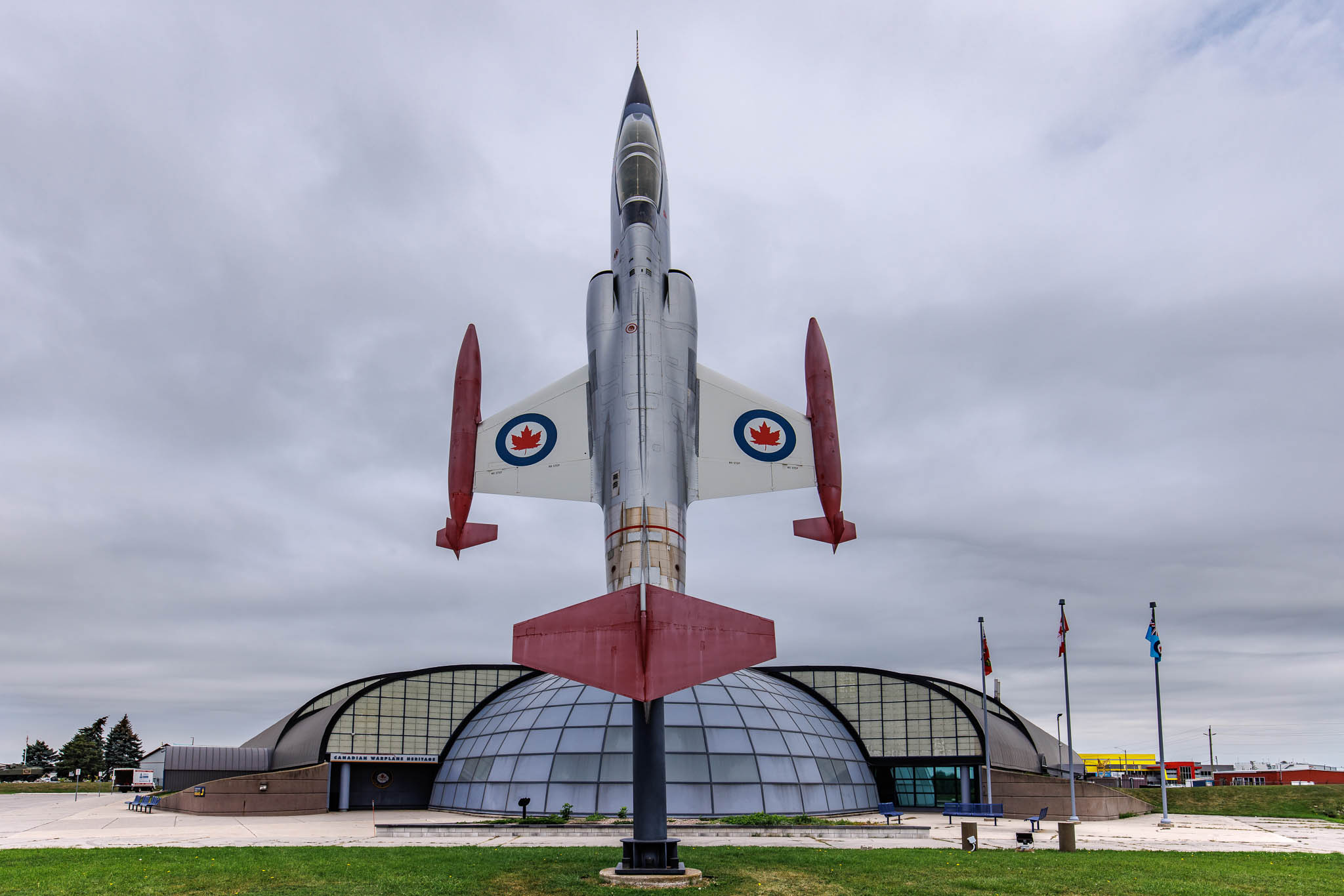
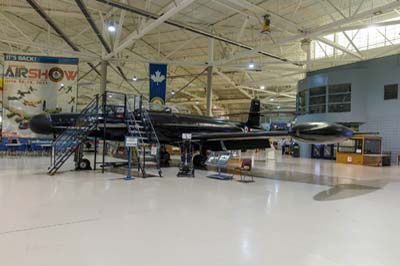
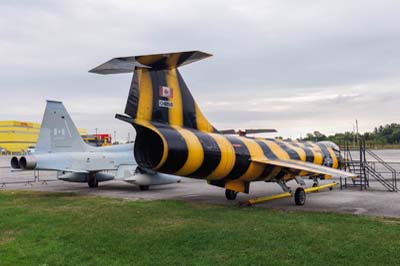
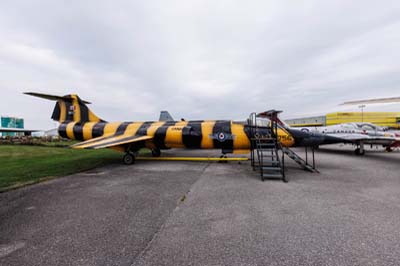
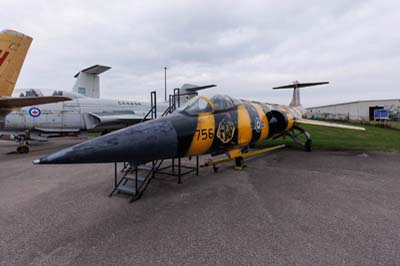
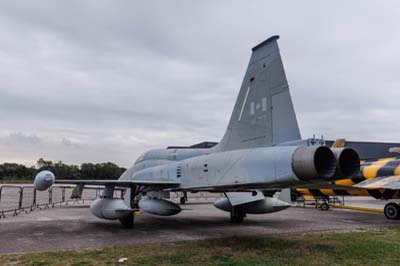
| Lockheed CF-104D Starfighter (12641 ex Royal Canadian Air Force (RCAF) outside the museum. |
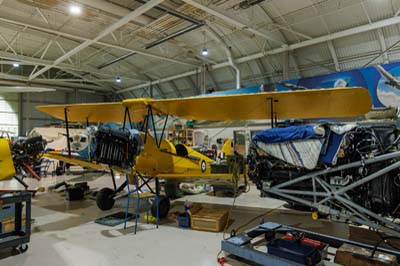
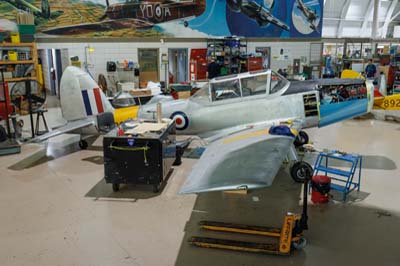
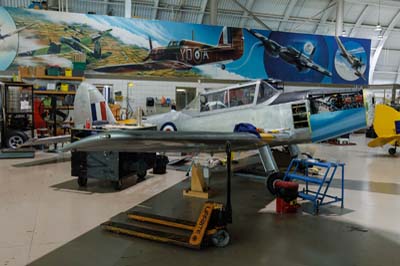
| The Canadian Warplane Heritage Museum, located at Hamilton International Airport in Ontario, is home to one of Canada’s most impressive collections of historic military and civilian aircraft. Dedicated to preserving the country’s aviation heritage, the museum displays aircraft spanning the World War Two and the post-war era, including an Avro Lancaster bomber, one of only two airworthy examples remaining in the world. Many aircraft have been restored to flying condition. |
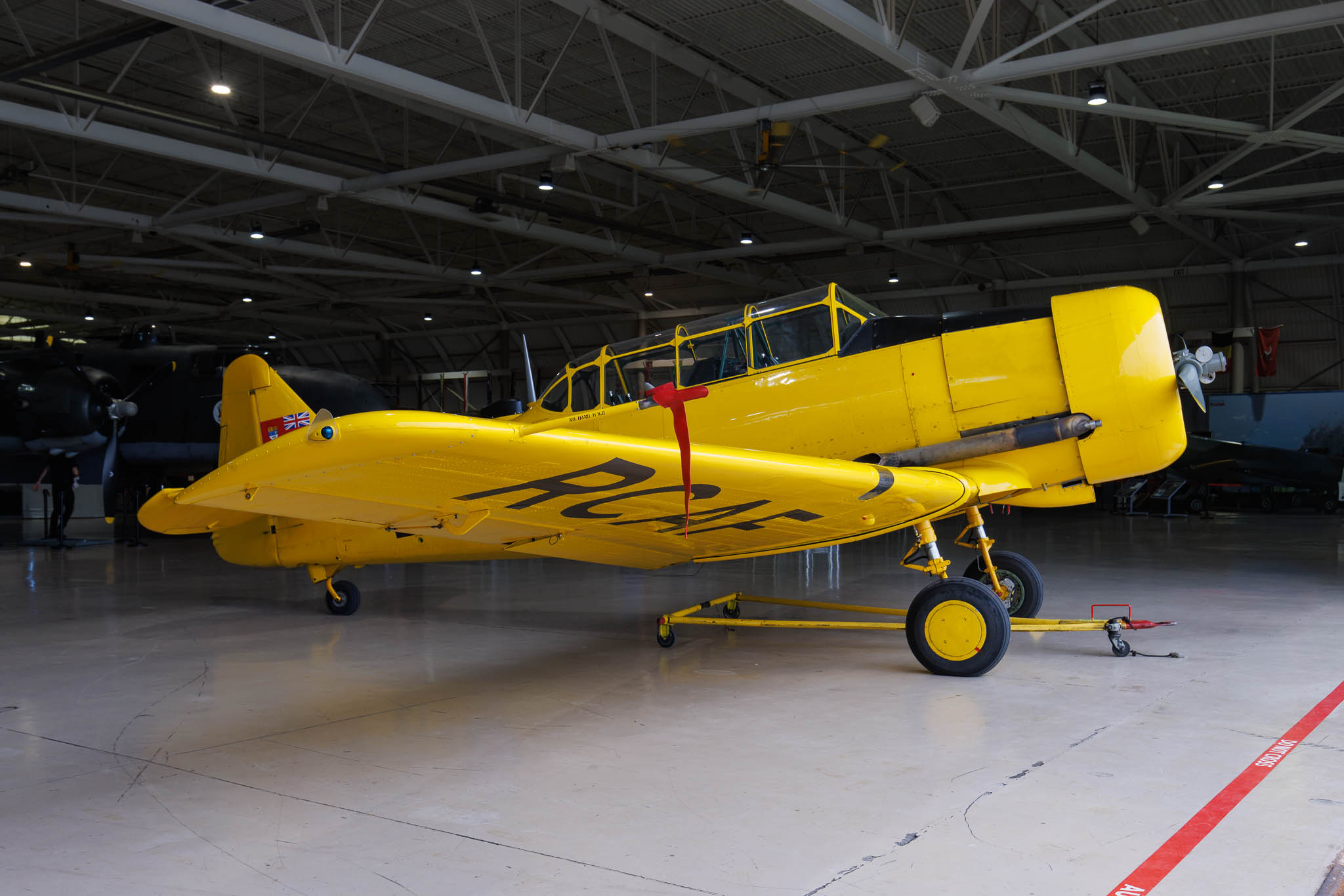
| Left to right: North American Harvard IV (20213 '213' registered CF-UUU) ex Royal Canadian Air Force (RCAF). Now with Canadian Warplane Heritage. |
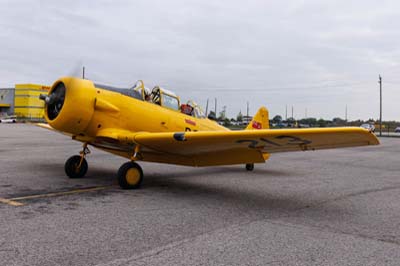
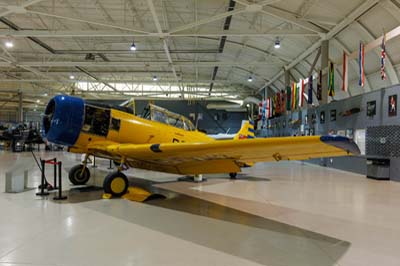
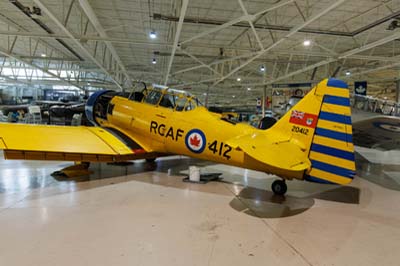
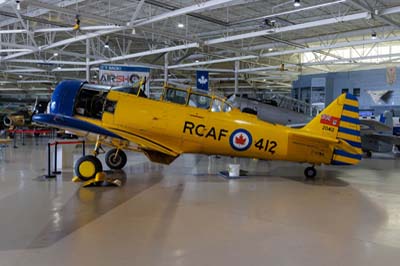
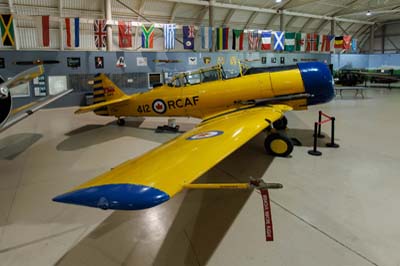
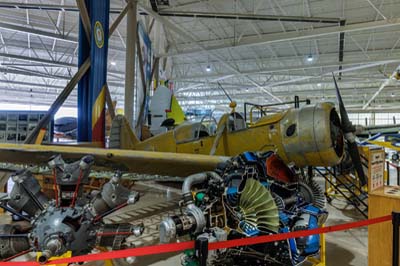
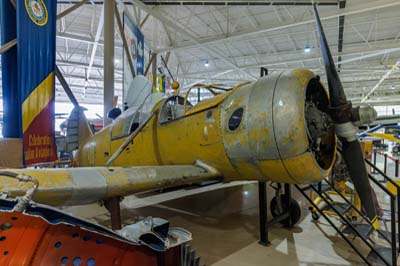
| Left to right: North American Harvard IV (20412 '412' registered C-FVMG). Taken on strength by the Royal Canadian Air Force (RCAF) in late 1952, this Harvard served as an advanced pilot trainer at Trenton, Saskatoon and Gimli. After retiring from military service, it passed into civilian ownership and was later repainted by aviation enthusiast Sid Bonser in the colours of the RCAF Goldilocks aerobatic display team. The Museum acquired the aircraft in 2008. |
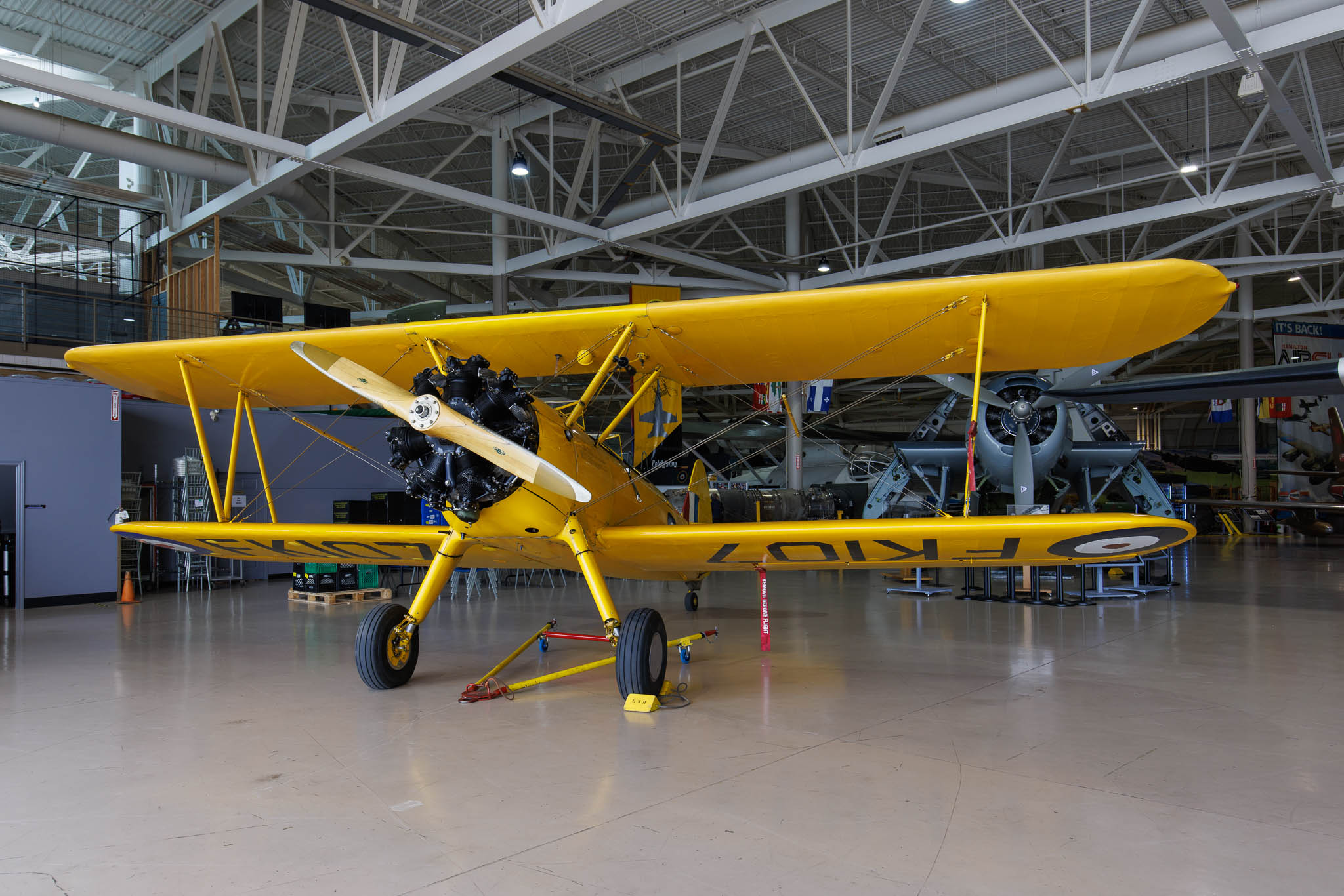
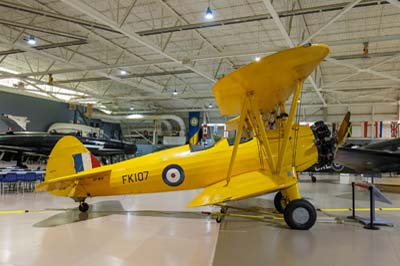
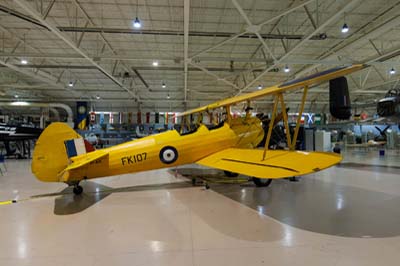
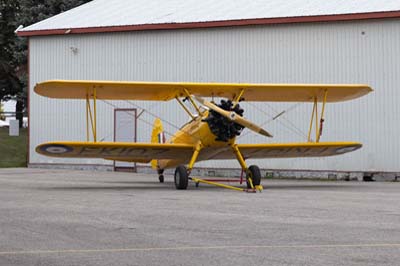
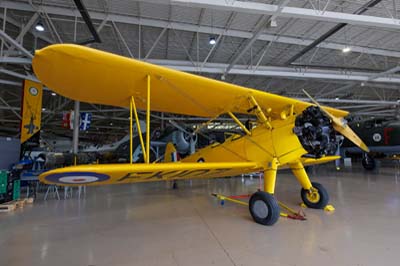
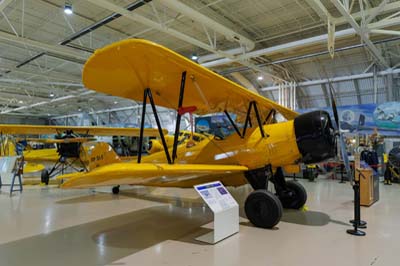
| Left to right: Stearman PT-17 Kaydet (41-8621 marked 'FK107' registered C-FAIU) ex USAAC. Manufactured in 1942 in Wichita, Kansas, for the United States Army Air Forces (USAAF), this Boeing Stearman PT-17 was later donated to the Canadian Warplane Heritage Museum by Bob Hill in 1986. It wears the Royal Canadian Air Force’s (RCAF) yellow and blue colours with the fake serial 'FK107', commemorating the final PT-17 delivered to Canada under the British Commonwealth Air Training Plan. Now with Canadian Warplane Heritage. |
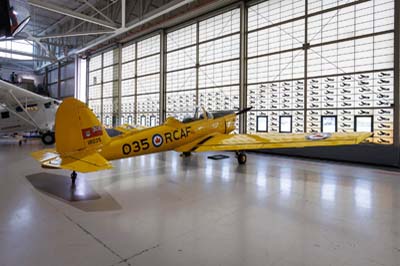
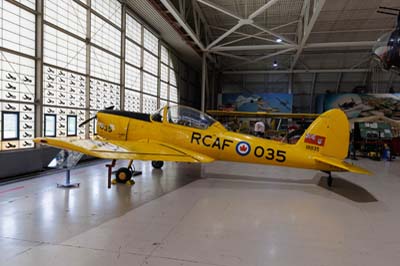
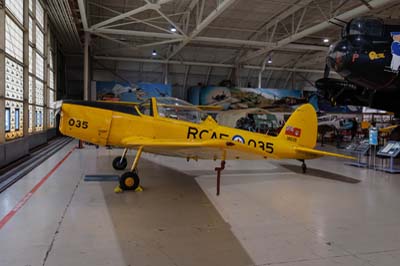
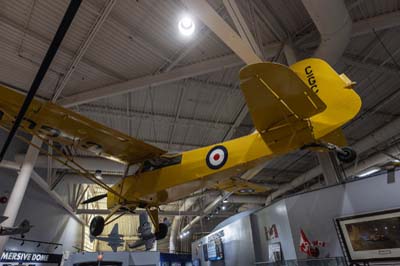
| Left to right: de Havilland Canada DHC-1B-2-S5 Chipmunk Mk.2 (18035 '035' registered CF-POW) Built in 1956 at Downsview, Ontario, it served as a primary trainer with the Royal Canadian Air Force (RCAF) until its retirement in 1971. |
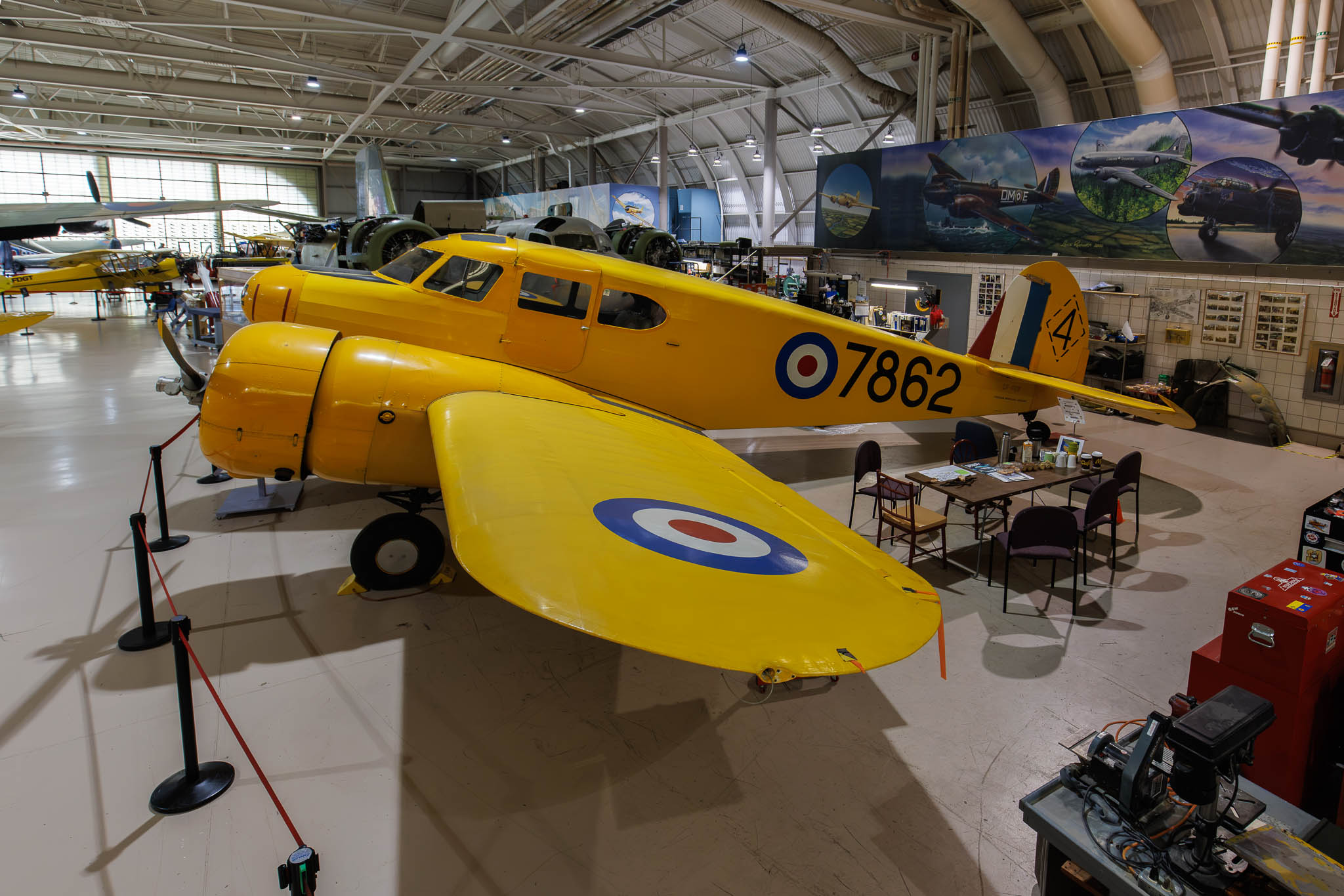 |
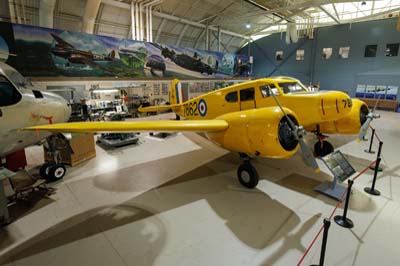
Left to right: Cessna Crane I (7862 registered CF-FGF) was delivered to the Royal Canadian Air Force (RCAF) in August 1941. It served with No.4 Service Flying Training School at Saskatoon and No.11 SFTS at Yorkton, Saskatchewan. Sold to Canadian Aviation Industries of St. Jean, Quebec, in November 1945, it joined Matane Air Service by 1949, flying commercially in the remote St. Lawrence North Shore region. In 1964, Doug Wardle of Rockcliffe, Ontario, purchased the aircraft and flew it privately for the next 12 years. Wardle donated the Crane to the Museum in 1976, prompting an extensive restoration. After ten years of work, it returned to the air in November 1986, painted in the colours and markings of its original posting with No.4 SFTS at Saskatoon.
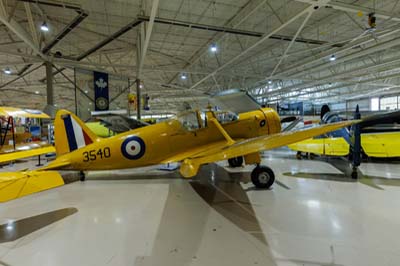
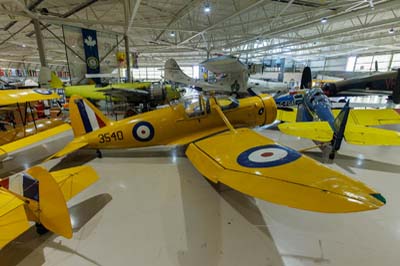
Fleet 60K (3540 registered C-FORT). Built in 1940, the Fleet 60 Fort was the prototype and the only aircraft designed and built entirely in Canada during World War Two for the British Commonwealth Air Training Plan. Taken on strength by the Royal Canadian Air Force (RCAF) in June 1941 as 3540, it became instructional airframe A182 in 1942 before being struck off strength. Restored and registered as C-FORT in 1993, now with Canadian Warplane Heritage. |
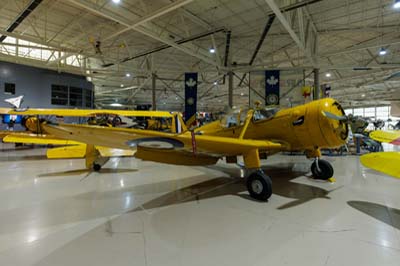
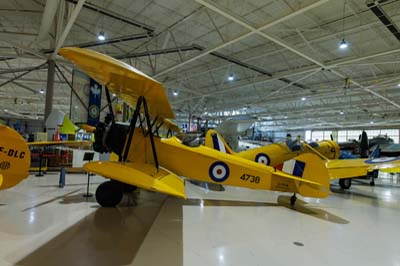
Left to right: Fleet 16B (4738 registered C-FFUI). Built in 1940, it served as a primary trainer with the Royal Canadian Air Force (RCAF), teaching basic flying skills to Allied pilots under the British Commonwealth Air Training Plan until its retirement in 1944. It later entered civilian service and was registered as CF-FUI in 1976.
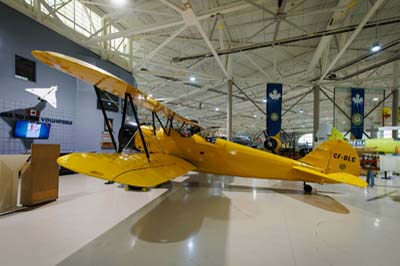
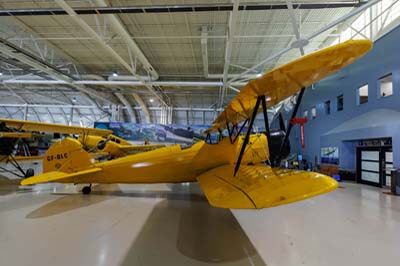
Fleet Model 21K (CF-DLC). Originally built in 1937, it was used by test pilot Tommy Williams for parachute drop trials with the Irvin Air Chute Company, releasing thousands of test payloads during World War Two. It was later converted into a unique two-seat Fleet Model 21K powered by a Jacobs engine. Restored, it was donated to the museum in 1985. |
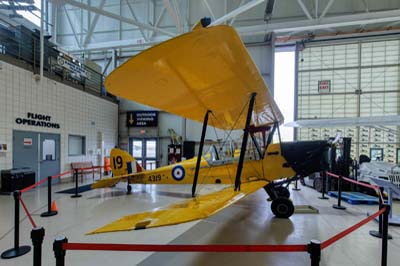
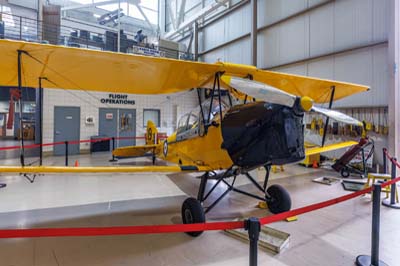
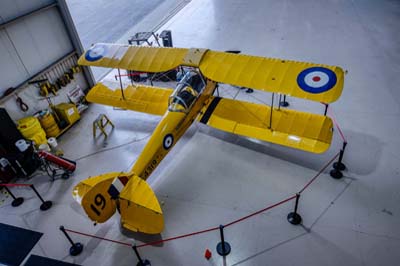
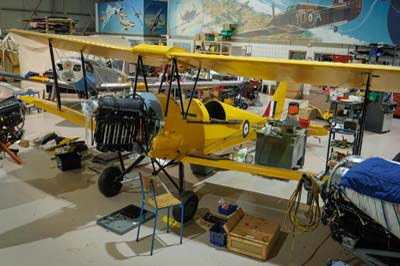
| Left to right: de Havilland DH.82C Tiger Moth (4319 '19' registered CF-GTU) with Canadian Warplane Heritage. Taken on strength by the Royal Canadian Air Force (RCAF) on December 7, 1940, it served as a primary trainer under the British Commonwealth Air Training Plan during World War Two. It trained pilots at No.8 Elementary Flying Training School in Vancouver, No.15 in Regina and No.12 in Goderich. Retired from military service in September 1945, it entered civilian use as CF-GTU. |
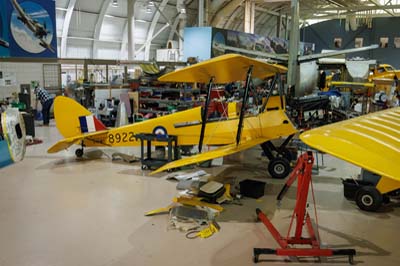
Left to right: de Havilland DH.82 Tiger Moth (8922 registered C-GCWT) ex Royal Canadian Air Force (RCAF). Now with Canadian Warplane Heritage.
Auster AOP.6 (VP664, 16681 registered C-GCID). |
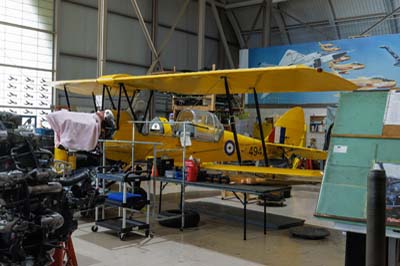
Left to right: de Havilland DH.82C Tiger Moth (4947 registered CF-ANN). Manufactured in 1941 at the de Havilland Canada factory in Downsview, Ontario. Entering service with the Royal Canadian Air Force (RCAF) in 1941, it supported the British Commonwealth Air Training Plan during World War Two. In 1943, it became an instructional airframe before being struck off military charge in 1946. Now with Canadian Warplane Heritage.
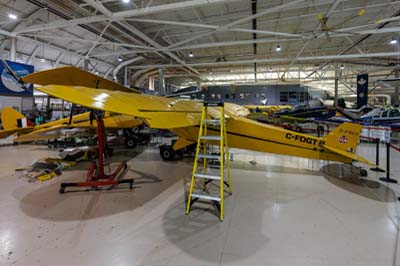
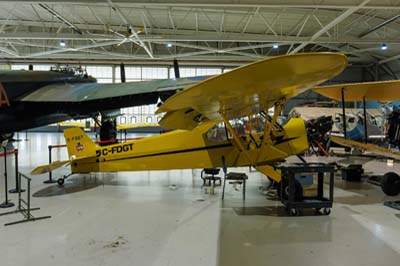
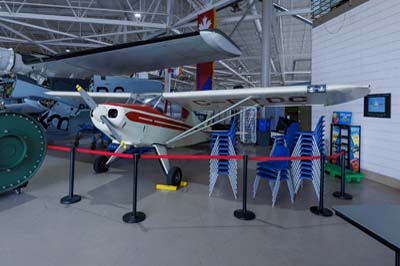
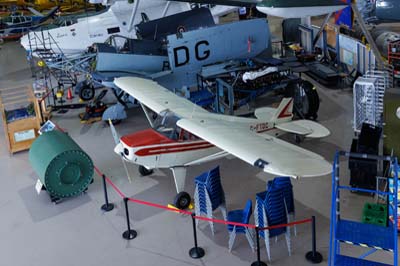
Piper J-3C-65 Cub (C-FDGT). Built in 1946 by Cub Aircraft Corporation Limited in Hamilton, Ontario. |
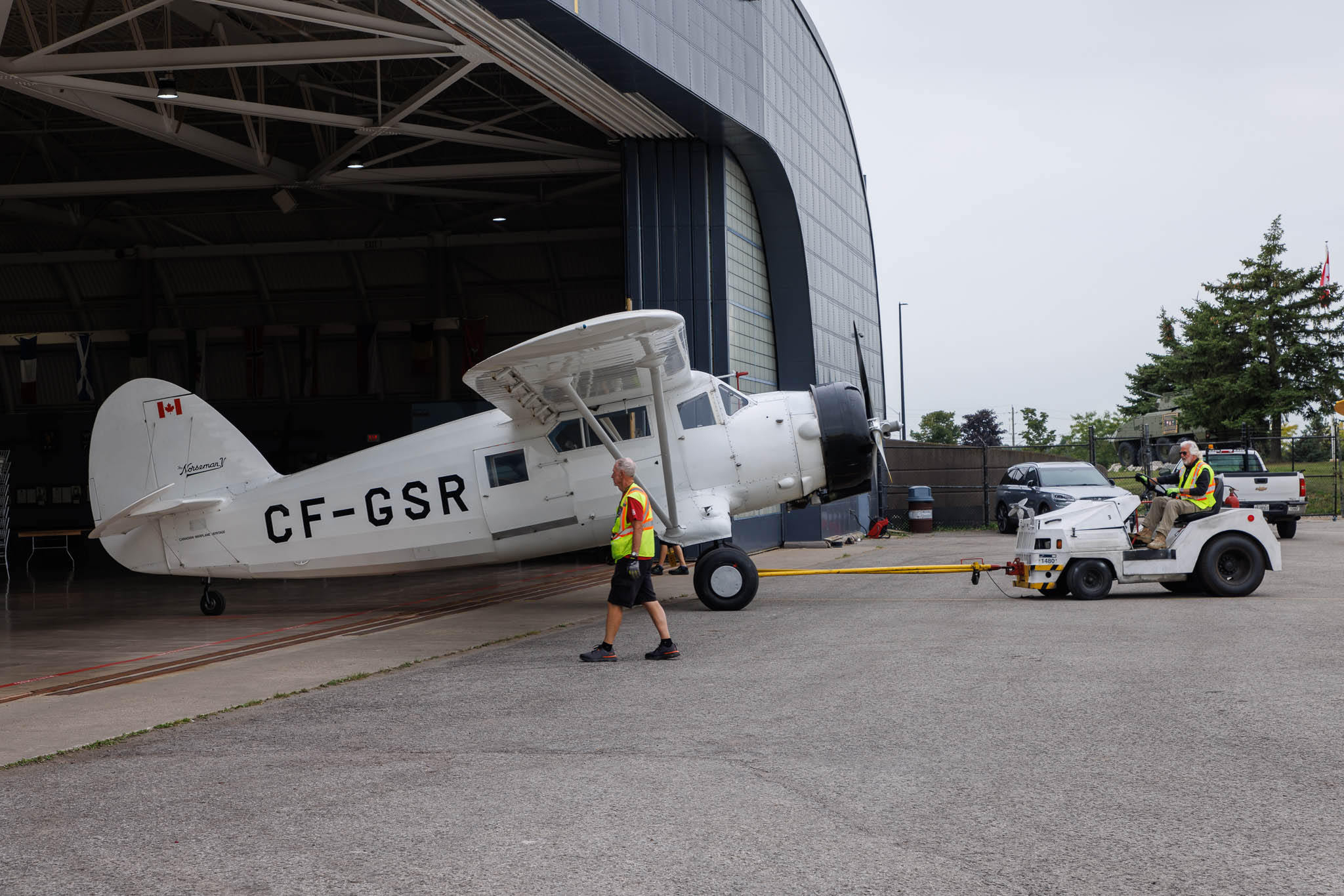 |
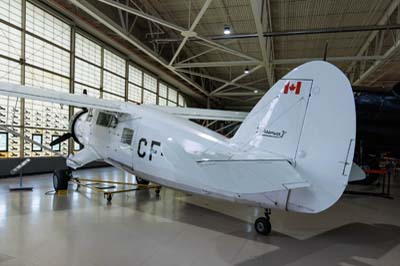
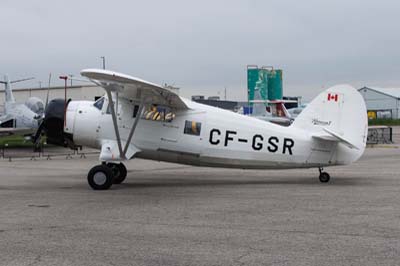
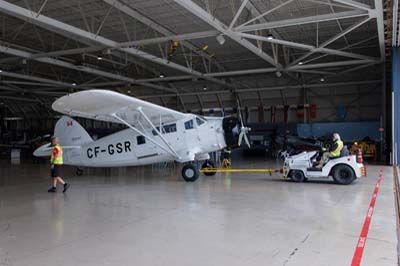
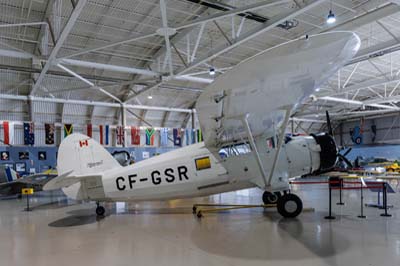
| Left to right: Noorduyn Norseman Mk.V (CF-GSR). Built in 1950 by Canadian Car and Foundry at Fort William, Ontario, the Noorduyn Norseman was designed by Robert B.C. Noorduyn and became an icon of Canadian bush flying. Its high-wing design, large cargo doors and interchangeable wheels, floats or skis made it ideal for remote operations. Registered as CF-GSR, it spent most of its working life on floats, serving Canadian Forest Products, Austin Airways, Bearskin Airlines and Slate Falls Airways. Following its final commercial service with Huron Air & Outfitters, the Canadian Warplane Heritage Museum acquired the aircraft in 2015. |
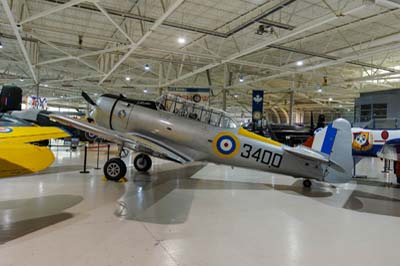
Left to right: North American Yale Mk.I (3400) ex Royal Canadian Air Force (RCAF).
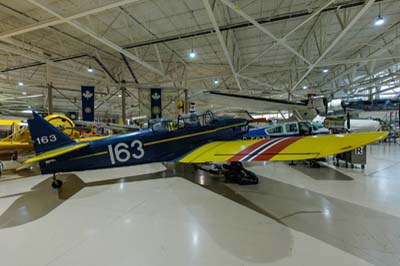
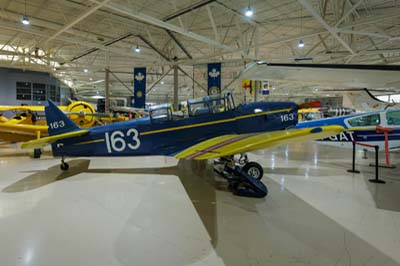
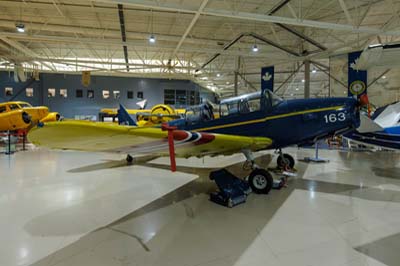
Fairchild Cornell II (FV702 registered CF-CVF) ex RCAF, marked as Royal Norwegian Air Force '163'. |
Left to right: de Havilland Canada DHC-1 Chipmunk T.20 (WP539 registered C-GVME).
Piper PA-22-108 Colt (C-FTDC). Manufactured in 1962. |
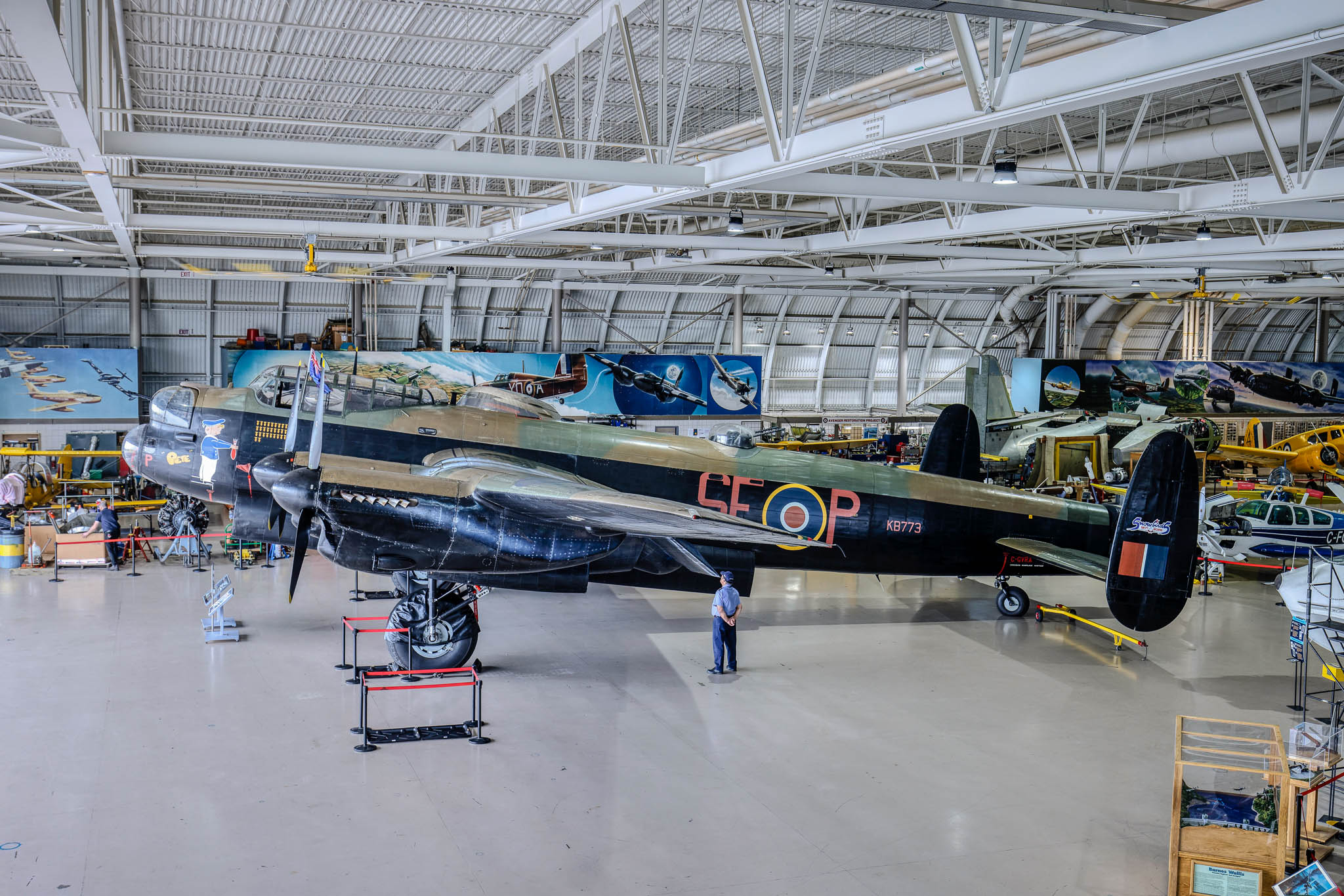 |
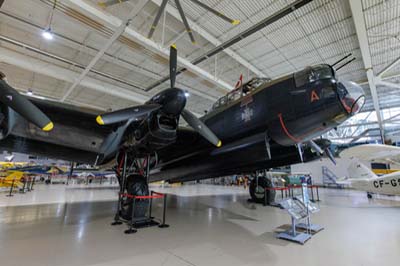
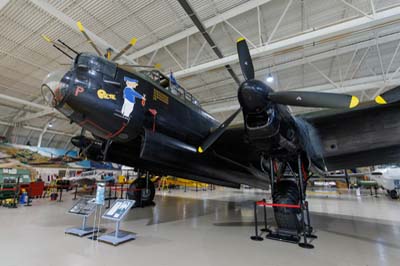
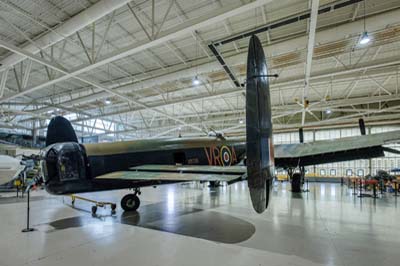
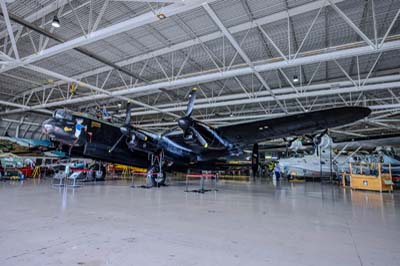
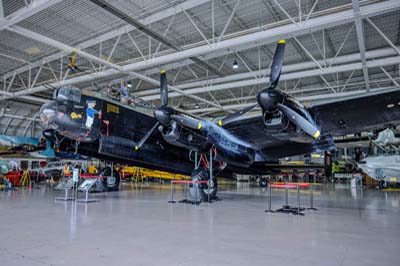
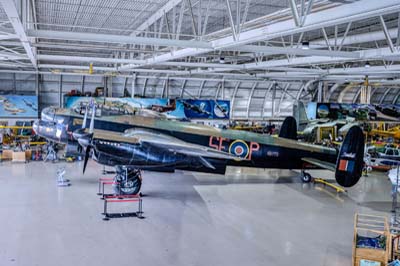
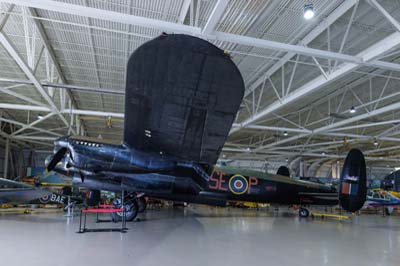
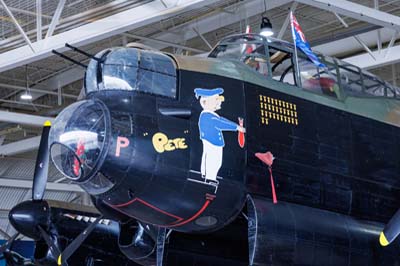
Left to right: Avro Lancaster BX (FM213 'VR-A', recently marked 'KB726' 'SE-P' code on port side only, registered C-GVRA) with Canadian Warplane Heritage. Built in July 1945 by Victory Aircraft in Malton, Ontario, Lancaster FM213 is the aircraft’s proper serial number. It rolled off the production line too late to see combat in World War Two. Known as the Mynarski Memorial Lancaster, it carries the long-standing starboard markings 'KB726 / VR-A', honouring Pilot Officer Andrew Mynarski of 419 (Moose) Squadron RCAF. Mynarski was posthumously awarded the Victoria Cross for attempting to rescue his trapped tail-gunner from a burning Lancaster, the original KB726, was shot down in 1944.
The museum also applied temporary markings to the port side as 'KB773 / SE-P', recreating a Canadian-built Lancaster that served with 431 Squadron RCAF. Originally coded 'SE-A' and later 'SE-P', that aircraft completed 46 operations and featured distinctive nose art depicting a young boy named Pete. |
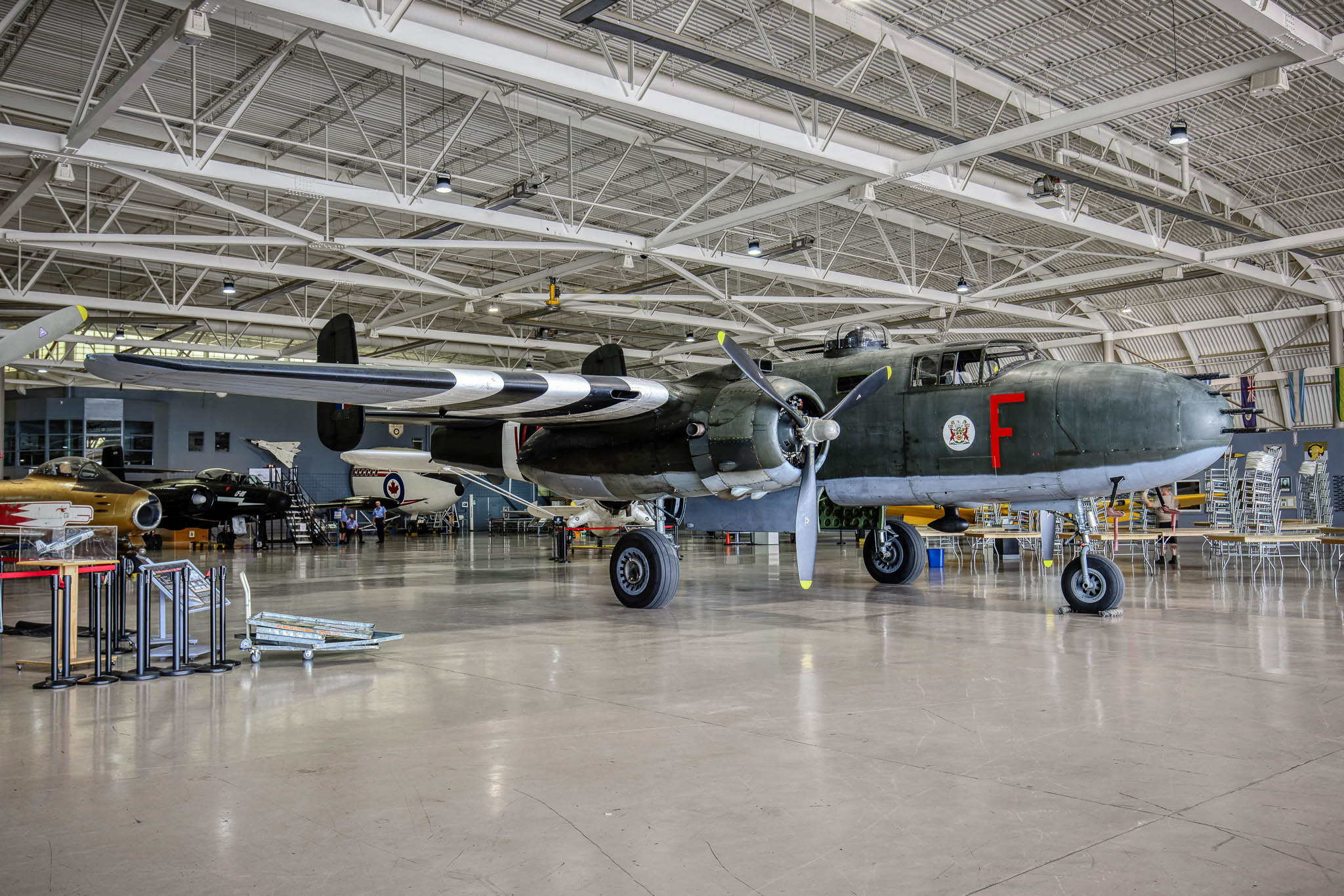 |
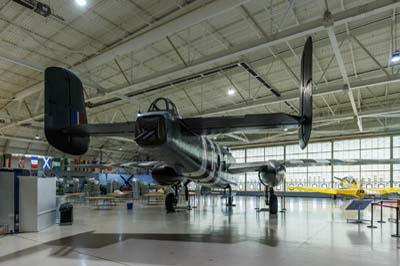
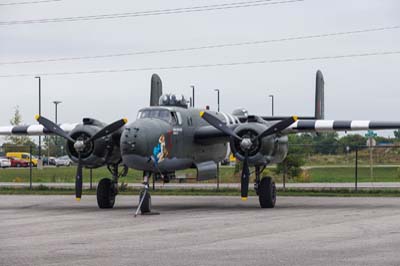
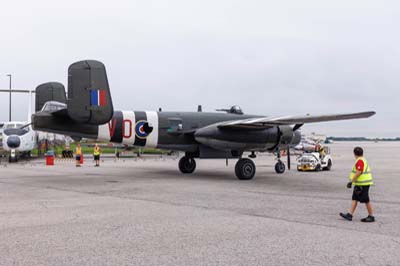
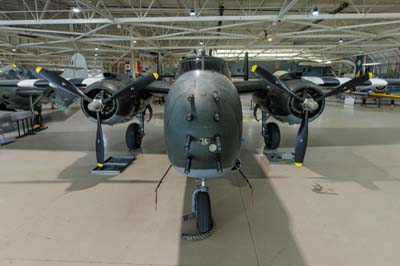
Left to right: North American B-25J Mitchell (45-8883 'VO-F' registered C-GCWM, marked 'HD372'). Built as a B-25J-35-NC by North American Aviation at its Fairfax plant in Kansas City, Kansas, the aircraft was completed on October 13, 1945, weeks after World War Two ended. It was never formally accepted into service by the United States Army Air Forces and was transferred to the Reconstruction Finance Corporation in Altus, Oklahoma, for disposal as surplus.
Stripped of its military equipment and turrets, the bomber began a new career as a civilian transport and executive aircraft. In 1946, it was purchased by A.B. Fitzgerald of Fort Worth, Texas, and registered as NL75755. Subsequent owners included leather manufacturer Albert Trostel & Sons Co. in Milwaukee (1948-1950) and Northern Pump Company in Minneapolis (1950-1958). From 1958 to 1965, it flew for various private owners and businesses, including Peter Volid and the King Korn Stamp Company in Chicago. |
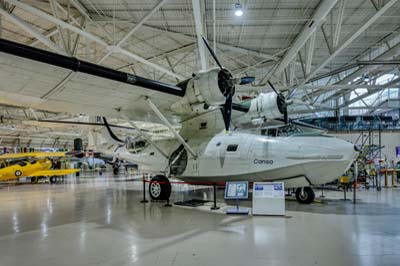
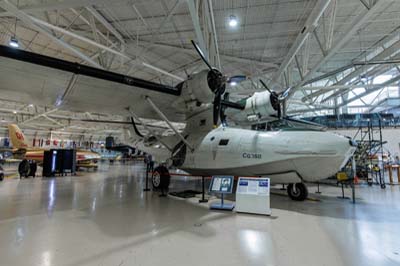
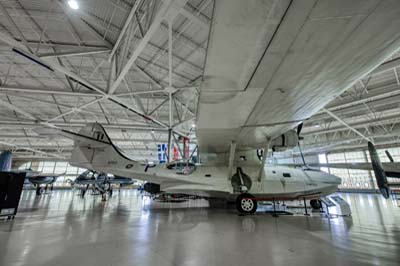
| Left to right: Canadian Vickers PBV-1A Canso A (11084 'P' marked '9754' registered C-FPQL) ex Royal Canadian Air Force (RCAF). This World War Two amphibious patrol bomber was built in 1944 by Canadian Vickers at their manufacturing plant in Cartierville, Montreal, Quebec. After serving the Royal Canadian Air Force in training, search and rescue, and Arctic transport roles, it was retired in 1961 and flown as a civilian water bomber until 1995. |
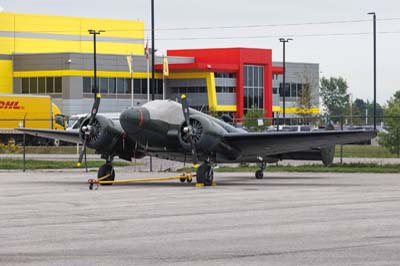
Left to right: Beechcraft D18S (C-GZCE marked 'HB143' 'BAE') with Canadian Warplane Heritage. Converted by Beech Aircraft Corporation in Wichita, Kansas, to a civil Model D18C, the aircraft was registered in the United States as NC80213. It spent several decades in commercial and private service with operators across the United States, Canada and Guatemala, including a New York-based airline and International Nickel in Canada.
In 1982, a private owner donated the aircraft to the Canadian Warplane Heritage Museum. Although it never served in the military, the museum restored it in the colours and markings of a circa 1944 Royal Canadian Air Force (RCAF) Photographic Section aircraft associated with 403 Squadron in Winnipeg. |
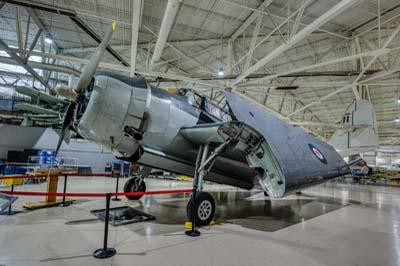
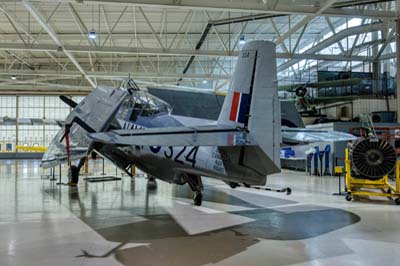
Left to right: Grumman TBM-3E Avenger (53858 registered C-GCWG marked as Royal Canadian Navy '86180/324') ex US Navy. Built in June 1945 by General Motors’ Eastern Aircraft Division, this Grumman Avenger served with the United States Navy’s Torpedo Squadron VT-5 until its withdrawal from active service in 1954. In 1963, it entered civilian service in California as a firebomber, with chemical tanks installed in its bomb bay to carry and dispense fire retardant for the California Department of Forestry. In 1976, Forest Protection Limited of New Brunswick, Canada, acquired the aircraft for aerial spraying against spruce budworm. It continued in commercial service until 1992.
Following a period in storage and an unsuccessful attempt by a French preservation group to transport it across the Atlantic, the Canadian Warplane Heritage Museum acquired the Avenger in late 2009. On May 1, 2026, the aircraft completed its first test flight in decades, marking a major milestone in a 17-year restoration project involving approximately 50,000 hours of volunteer work.
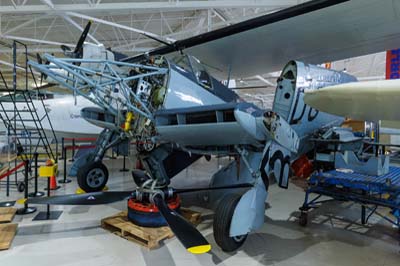
Fairey Firefly AS.6 (WH632 'BD-G' marked 'VH142'). Built in 1951, Firefly WH632 was delivered to the Royal Australian Navy (RAN) in June 1953 as an AS.6 anti-submarine aircraft. Equipped with underwing detection gear and sonobuoys for submarine hunting, it lacked defensive cannon armament and accumulated just 120 flight hours during its RAN service. It was struck off charge on May 29, 1960. Today, it is one of only two airworthy Fairey Fireflies remaining in the world. |
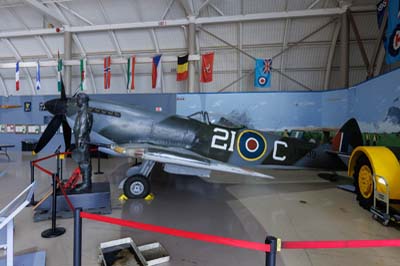
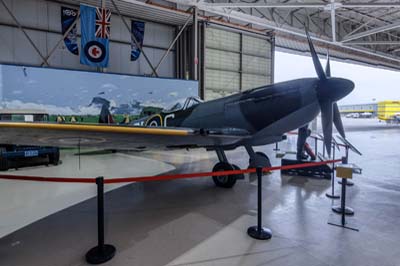
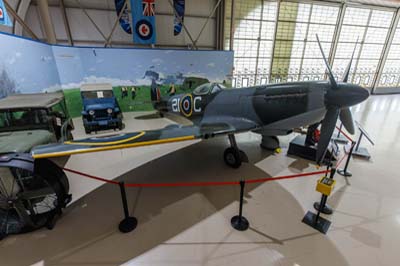
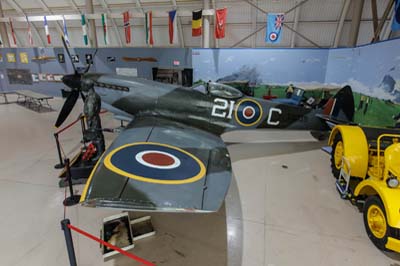
Left to right: Supermarine Spitfire LF Mk.XVIe (TE214 marked 'TD239/21-C'). Built in 1945 by Vickers-Armstrongs at the Castle Bromwich shadow factory near Birmingham. TE214 featured clipped wings and a Packard-built Rolls-Royce Merlin 266 engine. Delivered near the end of World War Two, it saw no active combat. After the war, it served with 203 Advanced Flying School and the Central Gunnery School at RAF Leconfield until 1950, when it was retired following damage in an accident and placed in storage. From 1956 to 1960, TE214 was used as a static display aircraft at RAF Ternhill for Battle of Britain Day events, temporarily carrying the fictitious serial number TE353.
On August 1, 1960, the British Air Ministry presented the Supermarine Spitfire to the Royal Canadian Air Force (RCAF). It was briefly displayed on Parliament Hill in Ottawa before being placed in storage at CFD Mountain View, Ontario. Officially taken on strength by the RCAF in January 1963, it was transferred to the Canadian National Aeronautical Collection, now the Canada Aviation and Space Museum, at Rockcliffe, Ontario, in 1966. The aircraft was painted in the wartime markings of 416 "City of Oshawa" Squadron RCAF, carrying the fuselage codes 'DN-T' to commemorate Canada's aviation heritage. After decades of display at various Canadian military museums, ownership was transferred to the Canadian Warplane Heritage Museum. |
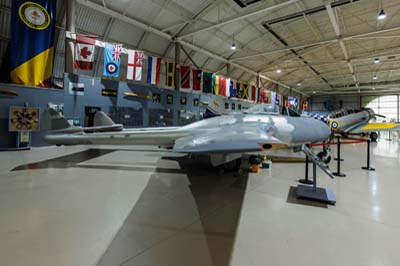
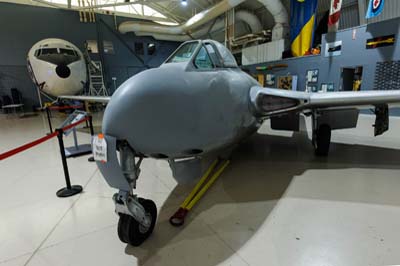
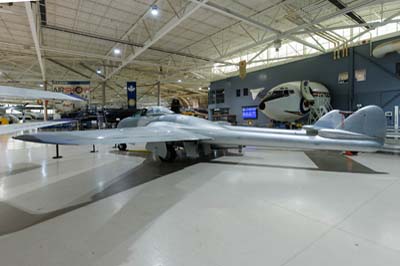
| Left to right: de Havilland Vampire Mk.6 (J-1145). Manufactured under licence by F+W Emmen in Switzerland in 1952, this de Havilland Vampire served with the Swiss Air Force, undertaking operational and support missions for several decades before retirement. Previously displayed with code 'AA-P' it is currently being restored. |
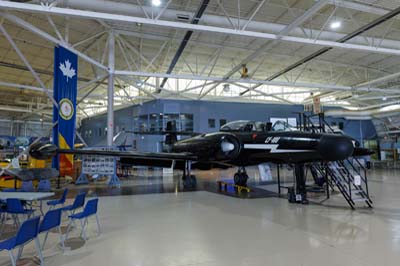
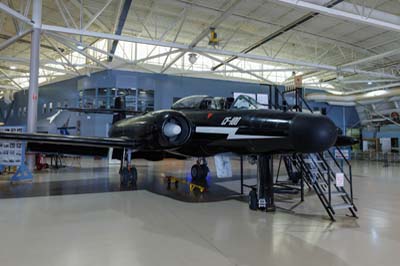
| Left to right: Avro Canada Canuck CF-100 Mk.5D (100785). Built in 1958 by Avro Canada, the CF-100 Mk.5/5D Canuck was a twin-jet, all-weather fighter adapted for electronic countermeasures (ECM). Delivered to the Royal Canadian Air Force (RCAF) as serial 18785, later 100785, it was converted to the Mk.5D ECM variant, fitted with wingtip fuel tanks in place of rocket pods. It served with 414 (Black Knight) Squadron at North Bay, Ontario. On February 10, 1982, it completed the final military flight by a CF-100, flying to Rockcliffe for the National Aviation Museum before moving to the Canadian Warplane Heritage Museum. |
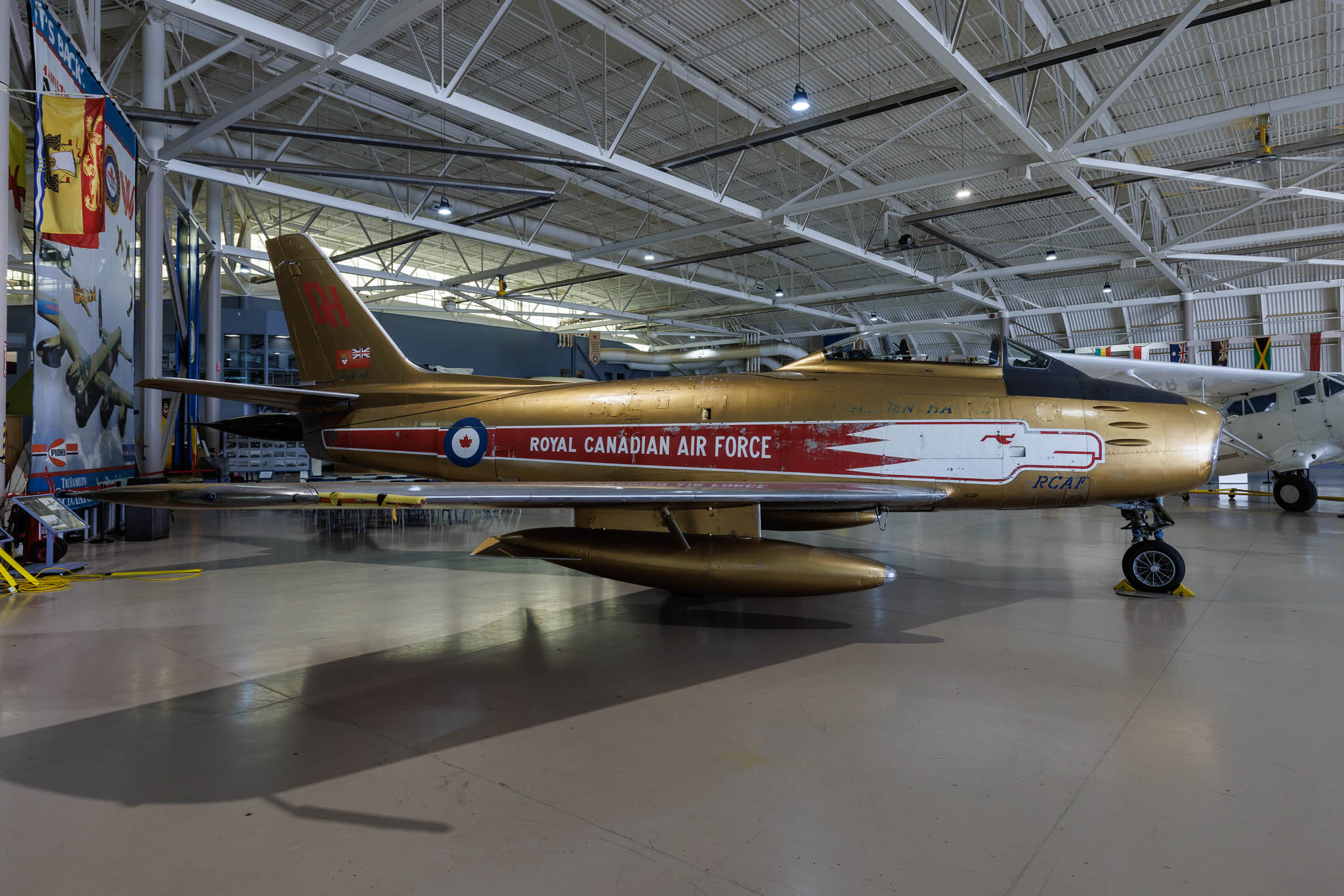 |
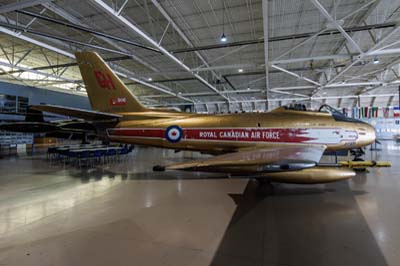
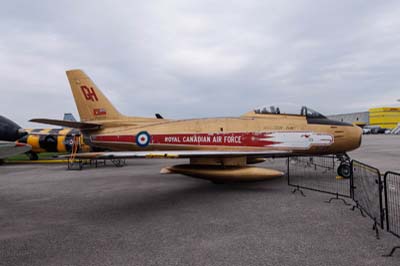
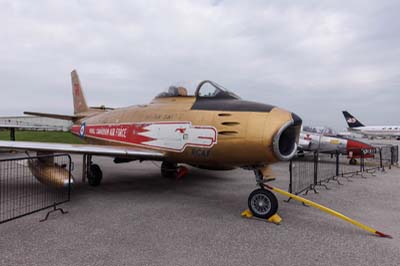
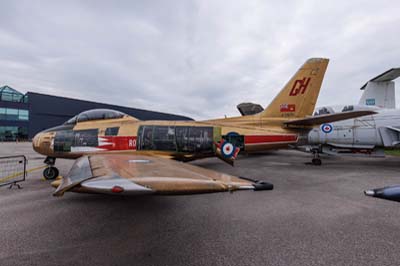
Left to right: Canadair CL-13 Sabre Mk.6 23651 'GH') ex Royal Canadian Air Force (RCAF) in Golden Hawks markings. Canadian Air Force (RCAF) on May 3, 1956. During the Cold War, it served with NATO forces in Europe, first with 421 Squadron of 2(F) Wing at Grostenquin, France, and later with 439 Squadron of 1(F) Wing at Marville, France. In December 1960, the aircraft was selected as one of the best-maintained Sabres for return to Canada. Following refurbishment, it joined the RCAF Golden Hawks aerobatic team and served as the personal aircraft of Flight Lieutenant, later Squadron Leader, Lloyd Hubbard. It flew as the team leader during the 1962 and 1963 seasons.
Following the disbandment of the Golden Hawks in February 1964, the Sabre was retired with just over 1,066 flying hours and converted for museum display. |
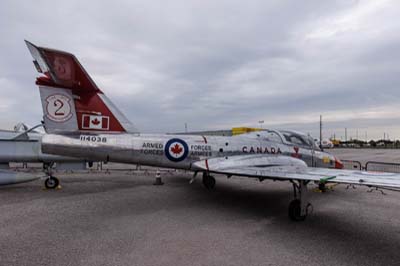
Left to right: Canadair CT-114 Tutor (114038 '038') ex Royal Canadian Air Force (RCAF).
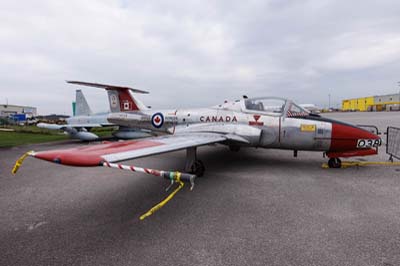
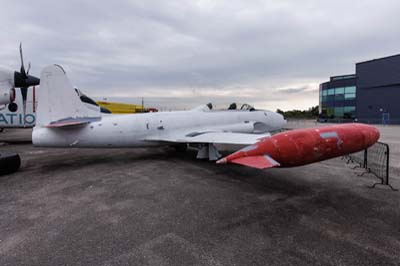
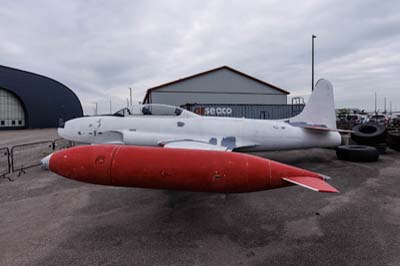
Canadair CT-133 Silver Star Mk.3 (21275) ex Royal Canadian Air Force (RCAF). |
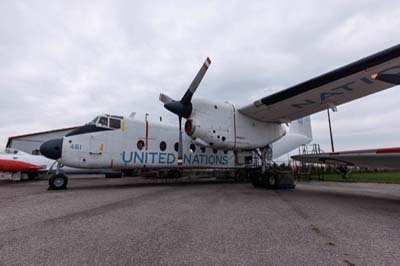
Left to right: de Havilland Canada DHC-5 Buffalo (811 marked '115461') ex Sudanese Air Force. United Nations markings.
Lockheed CF-104 Starfighter (104790 marked '104756') ex Royal Canadian Air Force (RCAF). |
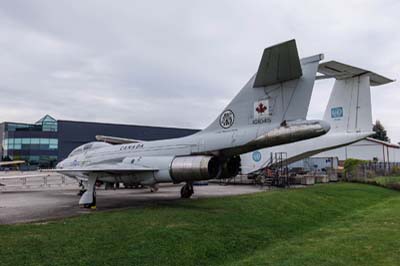
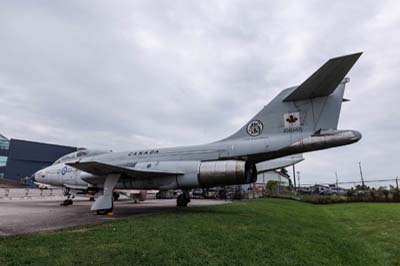
Left to right: McDonnell CF-101B Voodoo (101045 '045') ex Lynx Squadron, Royal Canadian Air Force (RCAF).
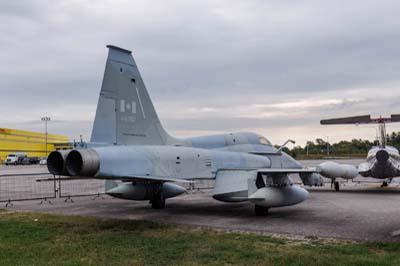
Northrop CF-116A Freedom Fighter (116757) ex Royal Canadian Air Force (RCAF). |
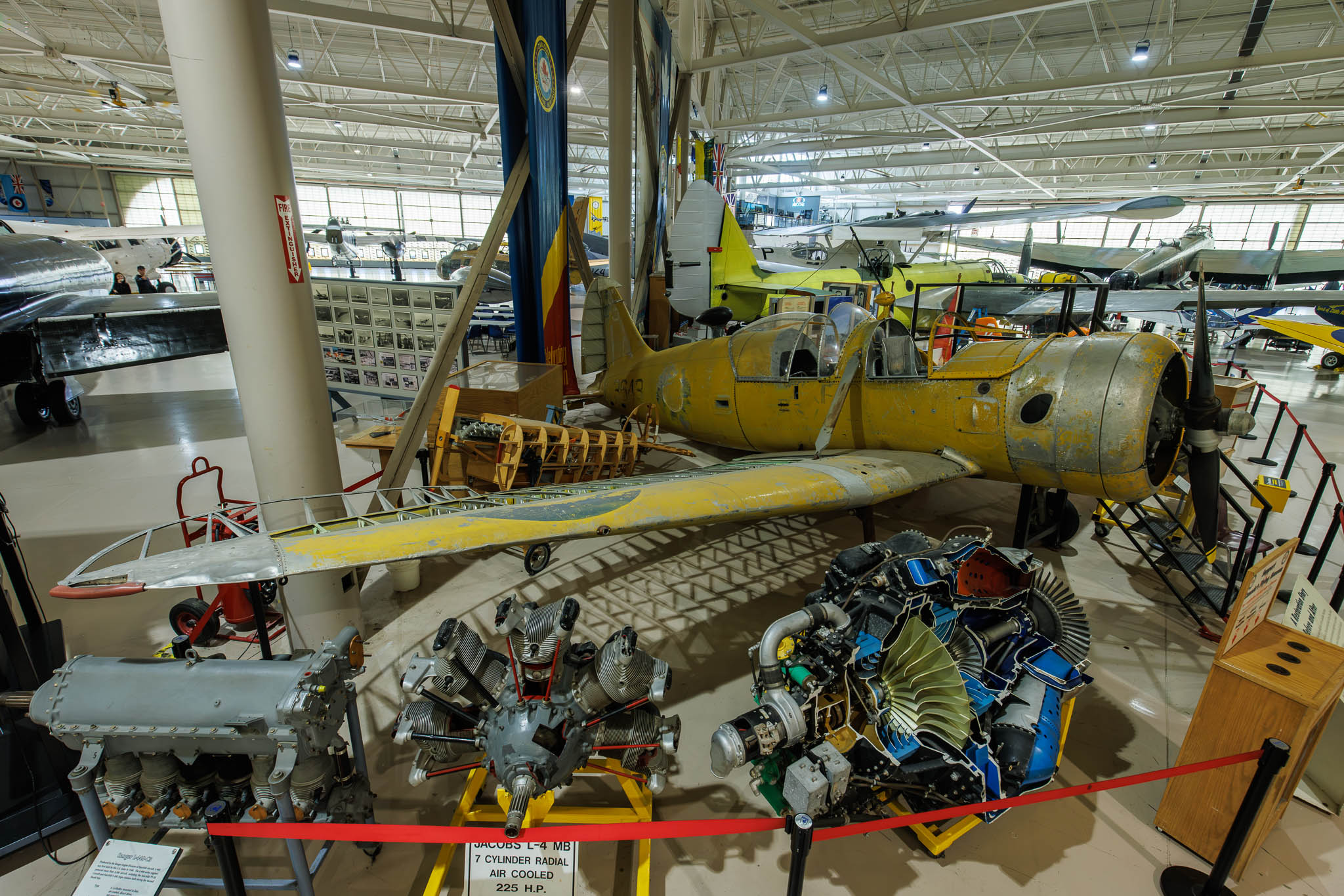 |
Left to right: Fleet 60K (3643) ex Royal Canadian Air Force (RCAF). Built by Fleet Aircraft of Canada in Fort Erie, Ontario, the Fleet Model 60K Fort was the only aircraft designed and built entirely in Canada during World War Two. Powered by a 330 hp Jacobs L-6MB radial engine, the prototype first flew in March 1940, with the first production aircraft following in May 1941. Delivered to the Royal Canadian Air Force (RCAF), it was initially developed as an intermediate trainer for the British Commonwealth Air Training Plan. However, handling issues and overlap with other training aircraft led to its reassignment for training wireless (radio) operators. Recovered from Winnipeg in 1983, the aircraft is now being restored for static display at the Canadian Warplane Heritage Museum.
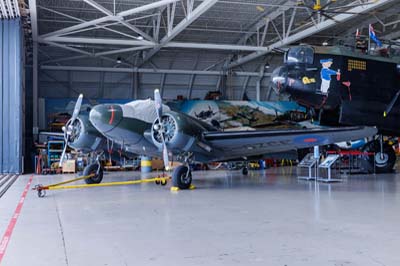
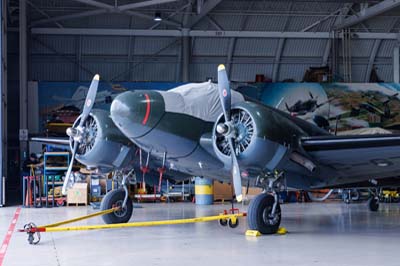
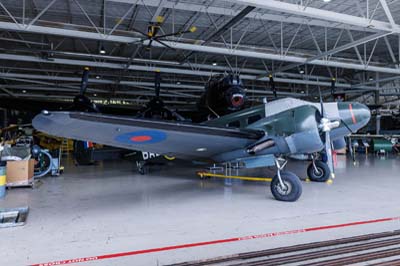
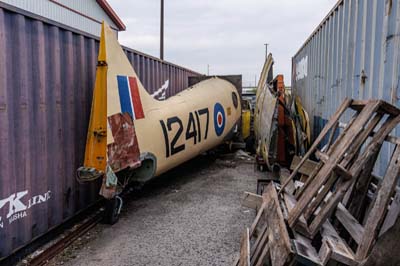
Avro Anson Mk.V (12103 marked '12417' registered CF-HOT). Built in 1944 by MacDonald Brothers in Winnipeg, Manitoba, this Avro Anson served with the Royal Canadian Air Force (RCAF) as serial 12103, undertaking photographic survey work with 7 Photographic Wing and 414 Squadron in Ottawa. It was powered by two 450 hp Pratt & Whitney R-985-AN-14B Wasp Junior radial engines and featured a distinctive moulded plywood fuselage using Vidal construction, with oval cabin windows.
In 1956, the aircraft was purchased by INCO (International Nickel Company) for mineral surveying, a role it continued until 1980 as CF-HOT. |
 |
 |
| Left to right: Grumman CS2F-2 Tracker (1577 registered C-GNVY) ex Royal Canadian Air Force (RCAF). |
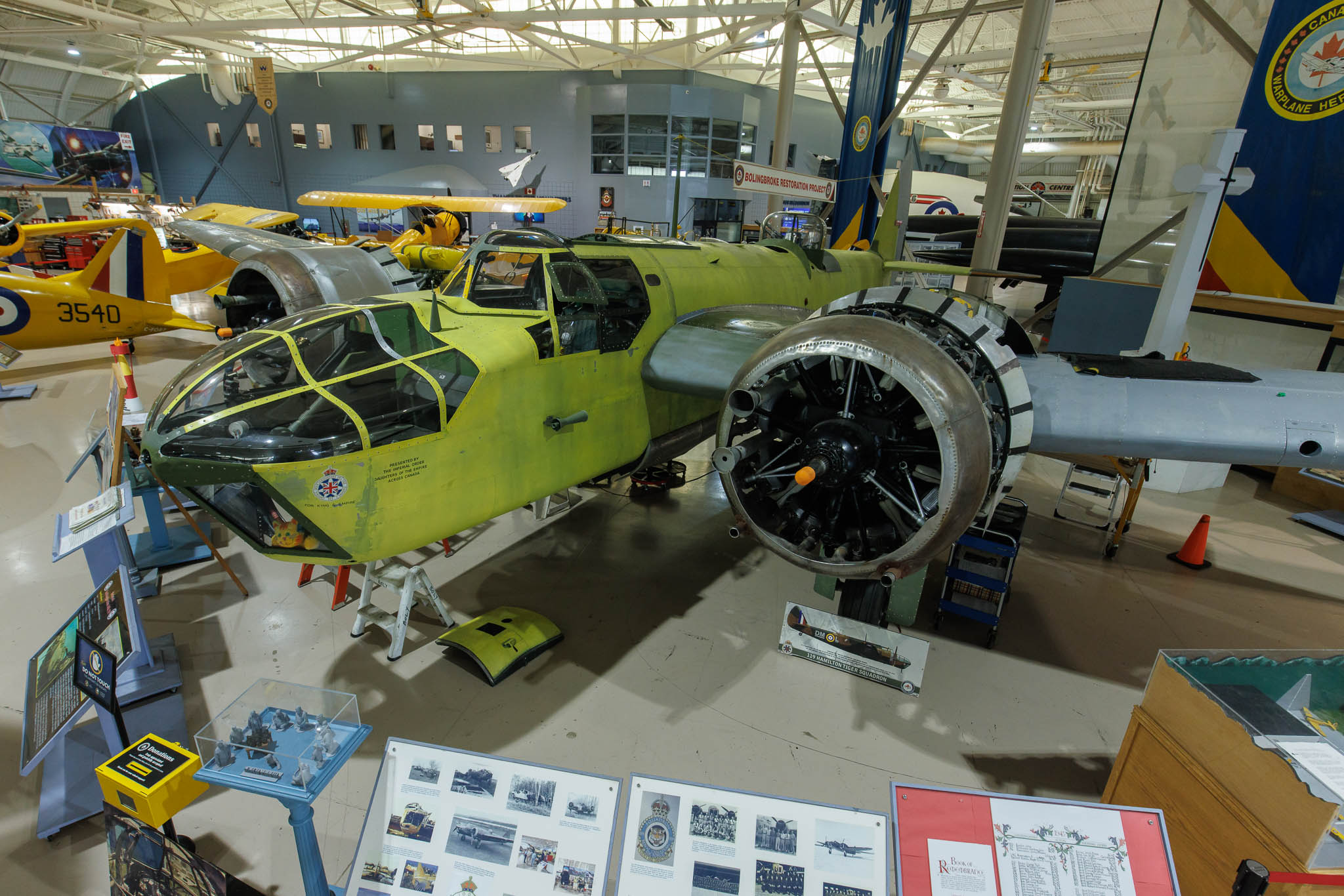 |
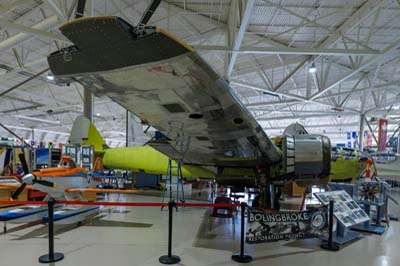
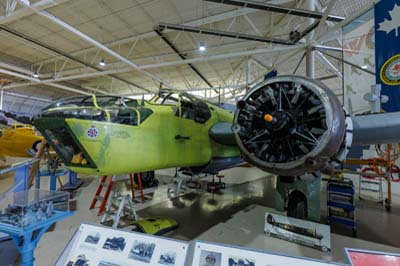
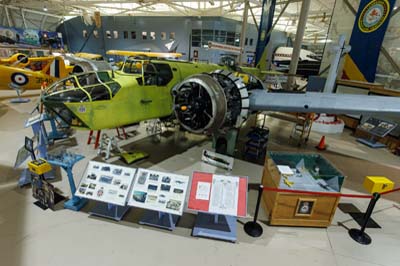
Left to right: Bristol Bolingbroke IVT (9023). Built under licence in Canada by Fairchild Aircraft, the Bolingbroke was the Canadian version of the British Bristol Blenheim Mk IV light bomber. The Bolingbroke IVT, designated for training and target towing, played an important role in preparing thousands of Commonwealth pilots, air gunners and navigators under the British Commonwealth Air Training Plan during World War Two.
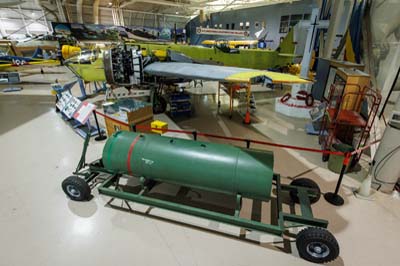
The Canadian Warplane Heritage Museum is restoring a composite airframe, primarily based on components from RCAF 10117, to represent RCAF 9023 in the markings of 119 "City of Hamilton" Squadron. The project combines parts salvaged from eight Bolingbroke airframes: 9889, 9937, 9949, 9981, 9989, 10040, 10117 and 10184. Several wrecks were recovered from Manitoba during the 1980s. The aircraft is being restored for static display and ground-running demonstrations only. A major milestone was recently achieved with the reattachment of the outer wing panels. |