Low-Level Flying Photography
Photographic Logs for Sweden 2013
(Swedish Air Force - Flygvapnet)
|
Low-flying photography with F 17 Wing at Kallinge/Ronneby in Sweden
There is a long tradition of flying at extreme low-level across Sweden. Low-level photography on the other hand is more or less unheard of as there are so few locations where this can be done. The southern half of Sweden is very flat, the hills and mountains further north are mostly covered in trees as is most of Sweden. The highest mountains along the Norwegian border in more recent years have been categorised as conservation areas and low-flying is no longer allowed here. Whilst I have identified locations using Google Earth that are possibly suitable for low-level photography having driven to several of these potential locations to explore them I have that many are tree'd in or have power cables crossing the valley.
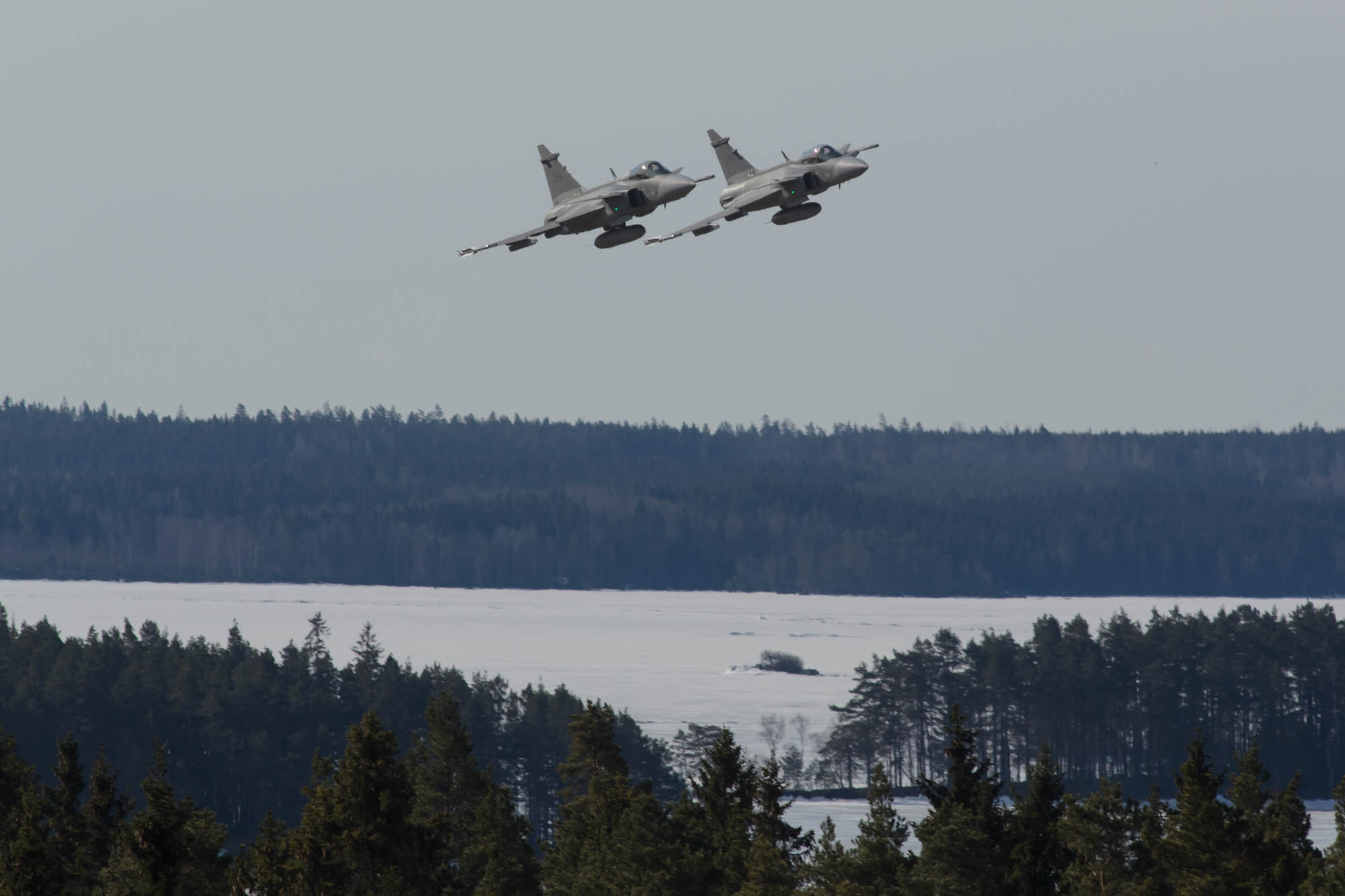
To solve the problem of the lack of suitable low-level locations for photography necessary to get the images required for the article I was made a number of low-level flights to shoot the Swedish Air Force flying at low-level. I was also persuaded to go to a hilltop location which had a military observation tower erected in the 1970s. Given a radio and the callsign 'Photo-tower1' I was able to direct a succession of jets to shoot them flying past. The problem here was that the tower and hill it was on was just not high enough for the jets to fly past low enough for a land-locked shot. Still it was a fantastic experience and amazing to see a Gripen change course as it approached the tower the instant I said; "turn right 10 degrees" to get it to pass closer to the tower.
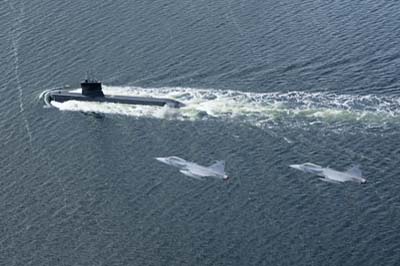
Many of the Swedish Air Force's low-level missions are flown over the Baltic Sea to protect the nation's sovereignty; consequently we flew sorties searching for merchant shipping and naval surface vessels and submarines.
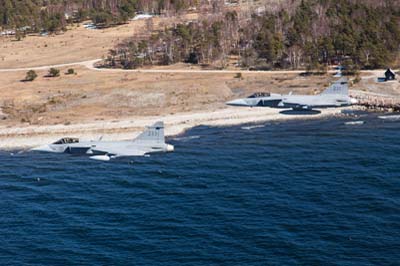
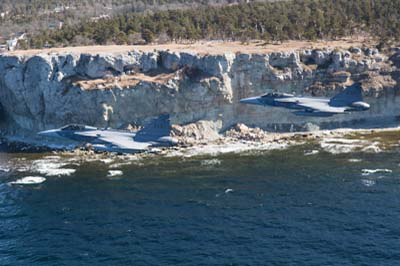
For the air to air photo shoots we flew in an Sk 60 configured with four-seats, that is the ejector seats had been removed to provide some extra space. For the first flight we flew with the flight safety officer Captain Martin Ramsin a former Viggen display pilot. As there were no ejector seats the aircraft was only cleared down to 1,200 feet (366m) AGL, however for our flight we were given permission to fly down to 600 feet (183m) over the sea where we should be well clear of birds. When I questioned these restrictions I was told in no uncertain terms, "If we hit a bird we die", by Captain Ramsin. In reality for the shoot it was not too much of a problem that is until we reached the coastline of Gotland. There our accompanying Gripens droppped to 200 feet (61m) and we were really too high to get a good close and consequently sharp shots. This sortie was shortened due to the Gripen using up their fuel and the rule that they should return with no less than 45% of their fuel was about to be broken. So the Gripen accelerated away back to base at about 40 miles out.
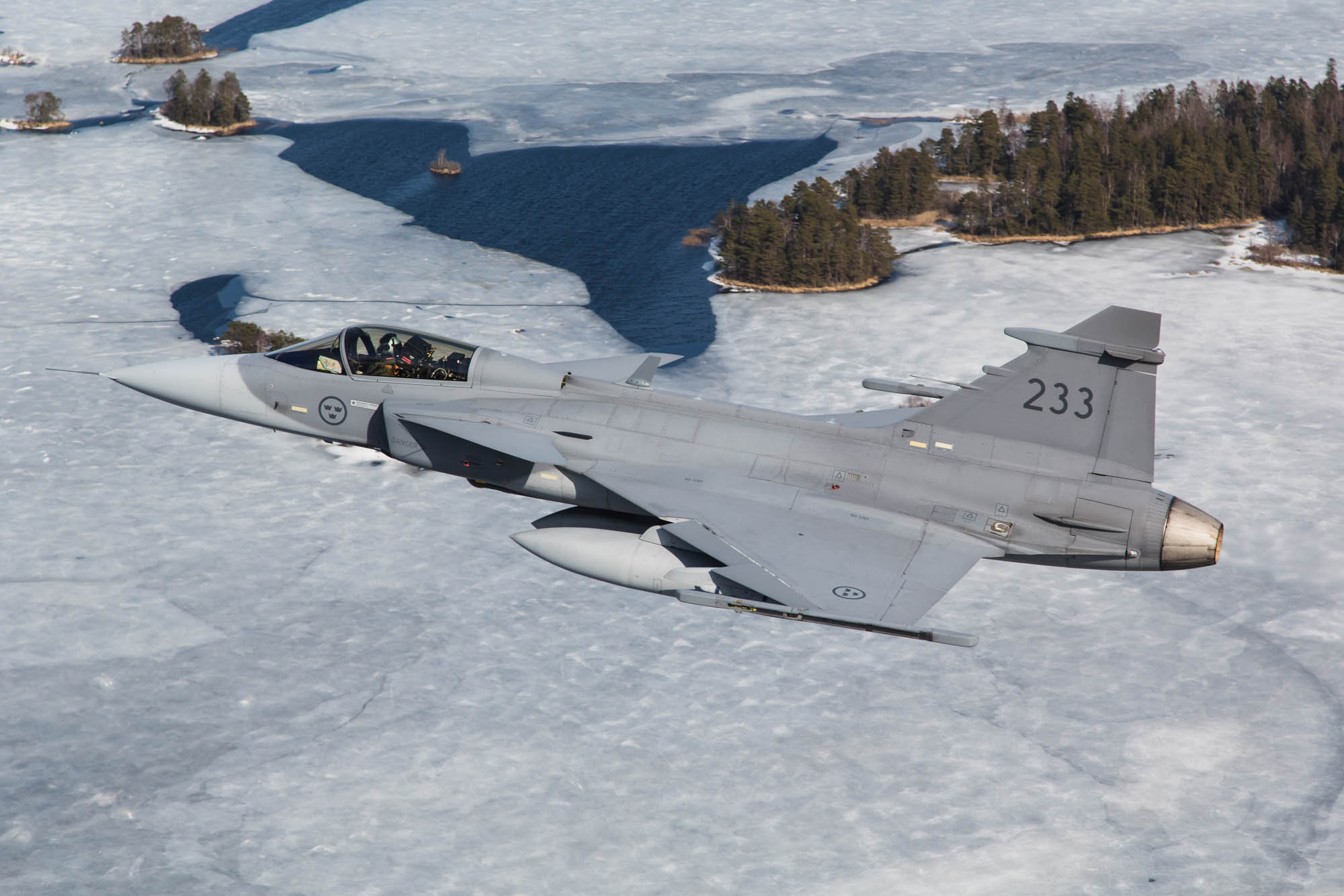
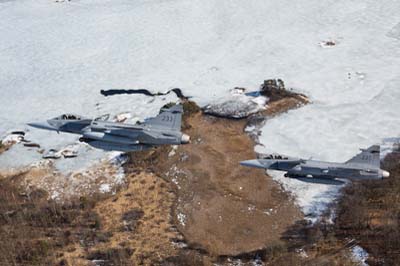
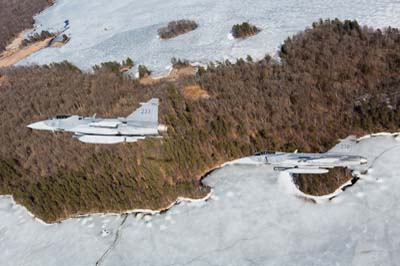
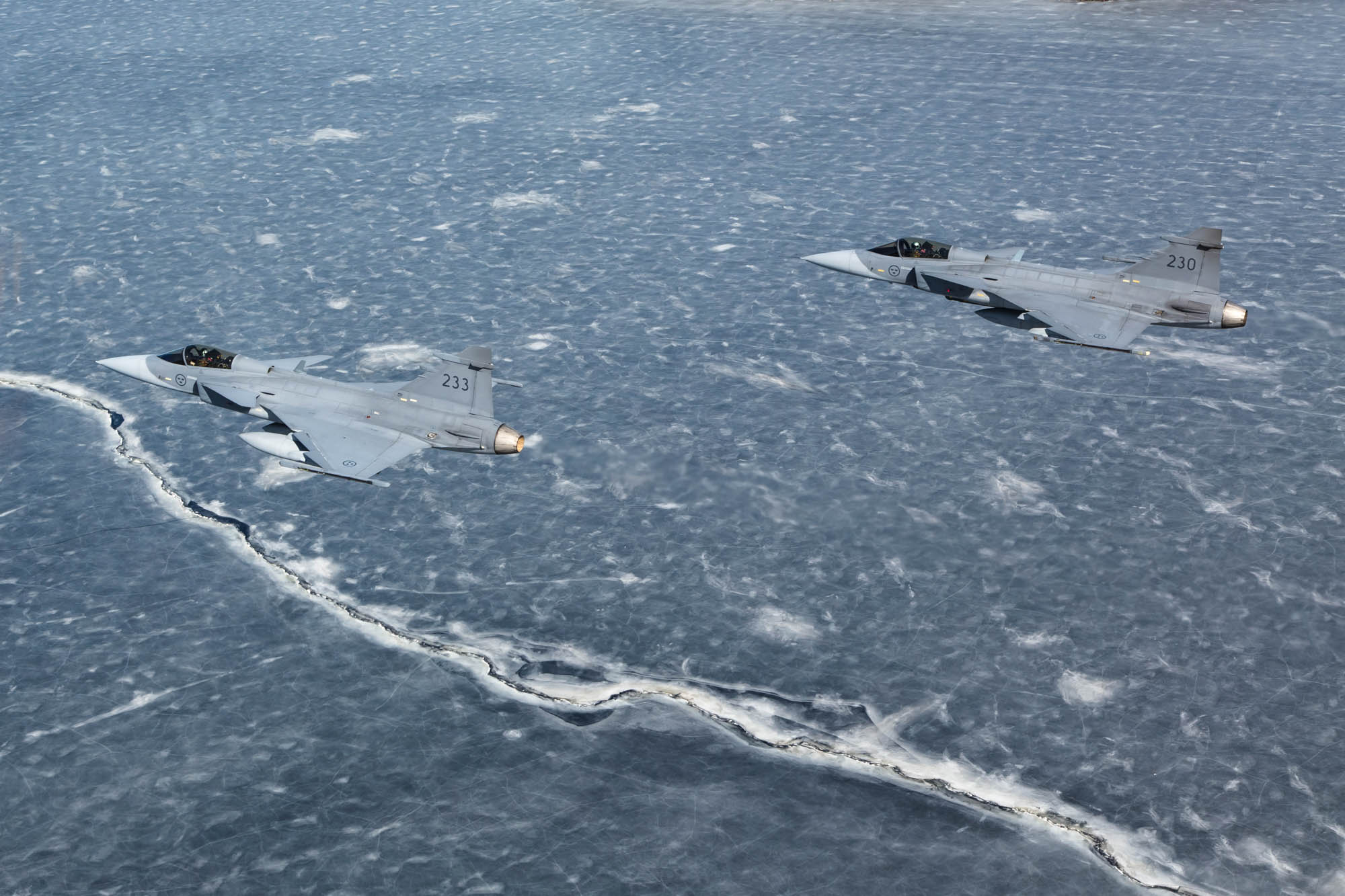
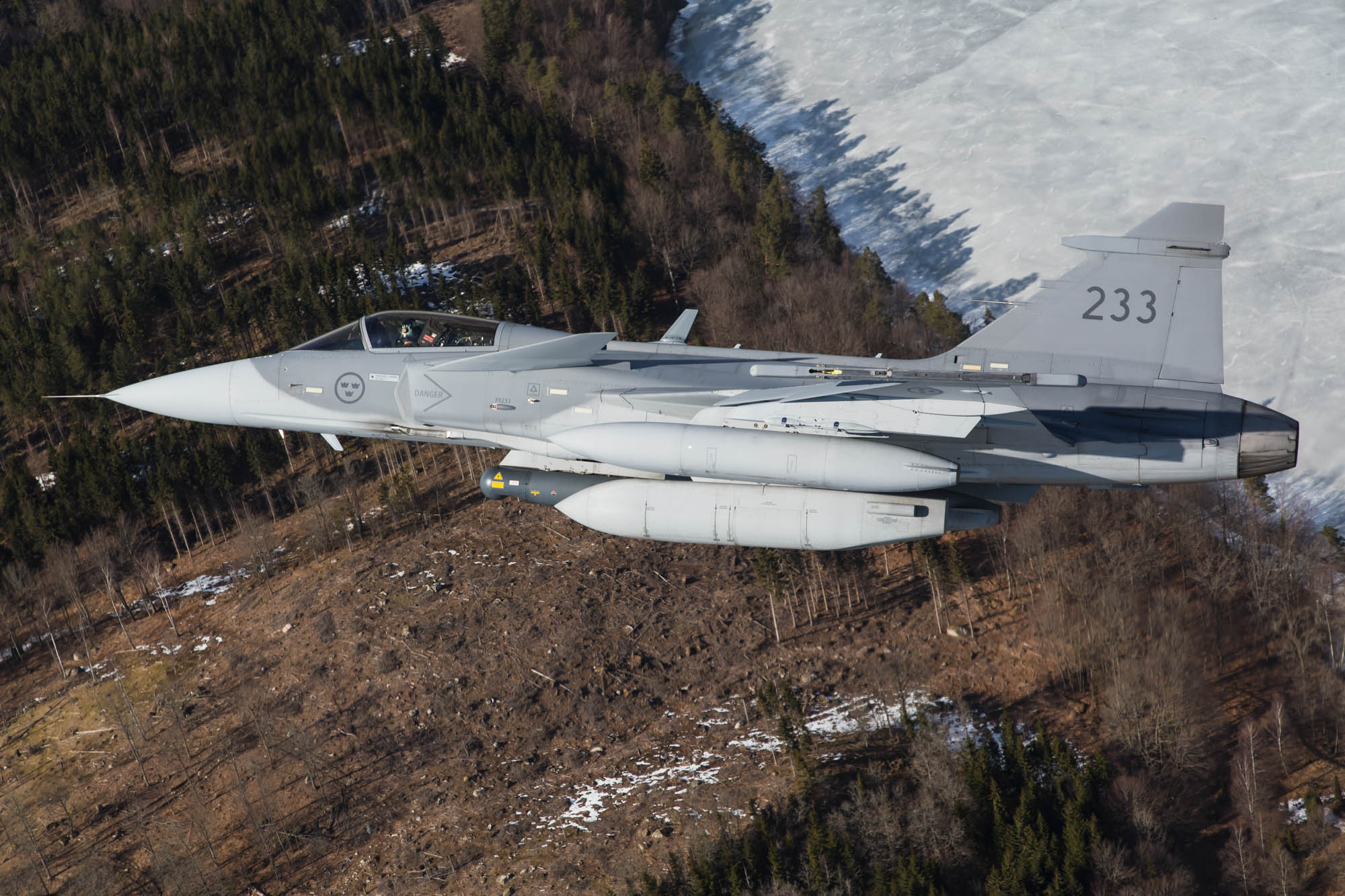
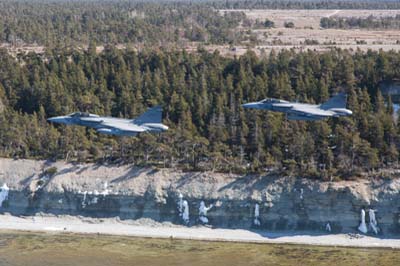
For the second sortie the following day our pilot was the Lt Col Anders Segerby, Wing commander Flying. For that sortie we flew further inland as I particularly wanted shots of the Gripen (which happened to be the same two jets) over the frozen lakes. |
The second sortie with Lt Col Segerby, Wing Commander Flying at the controls of my aircraft
The flight lead of the Gripen pair was once again Major Per Haard. |
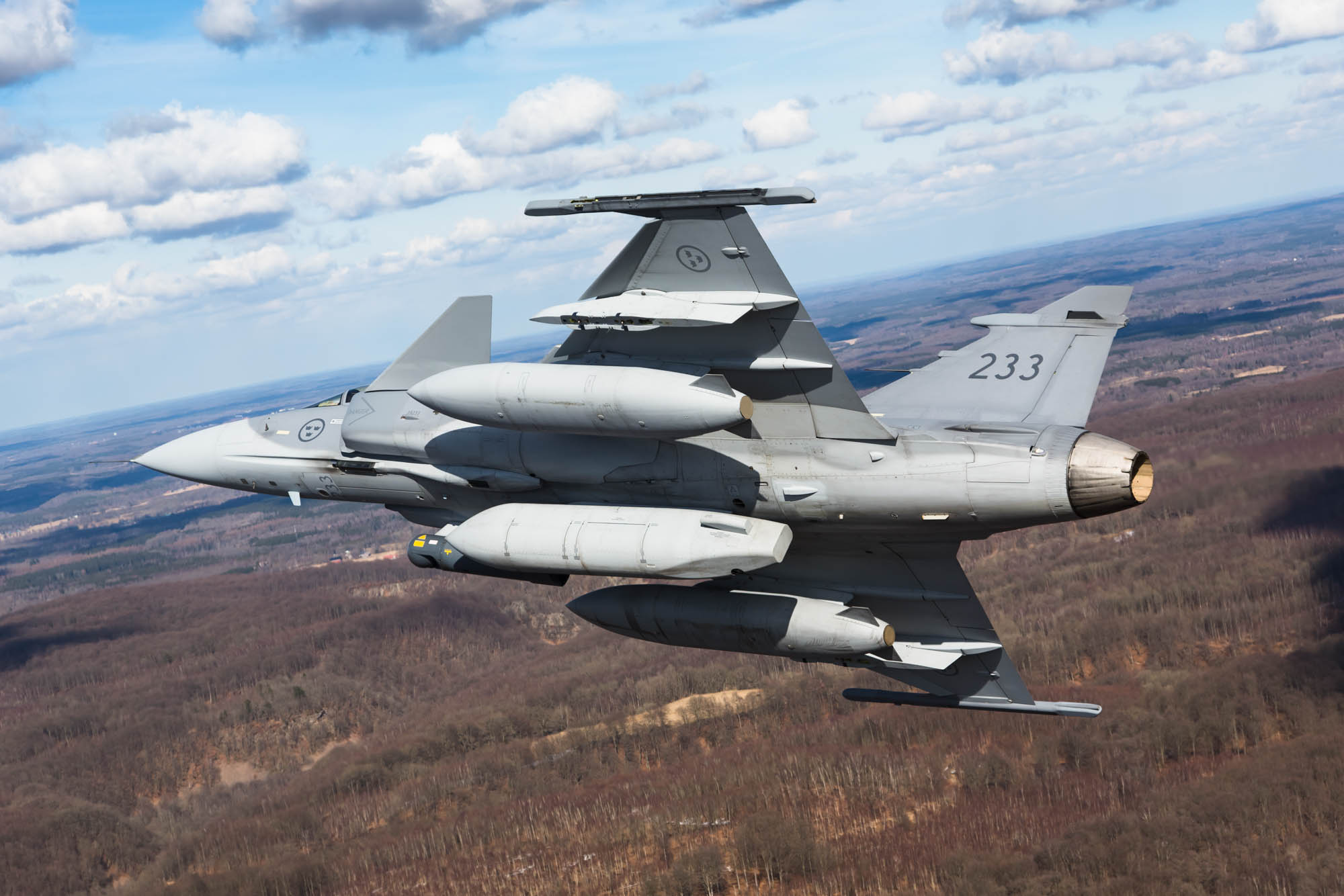
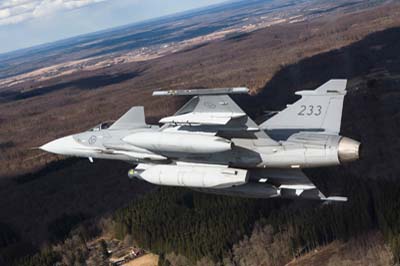
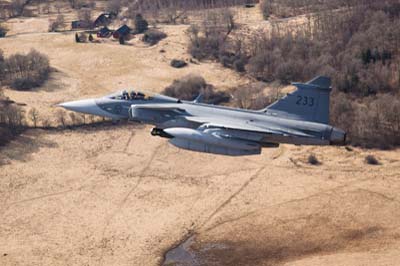
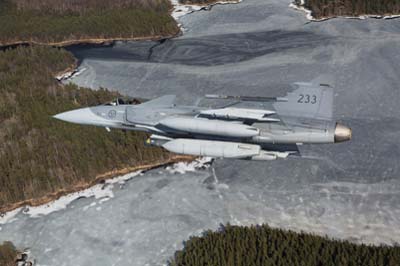
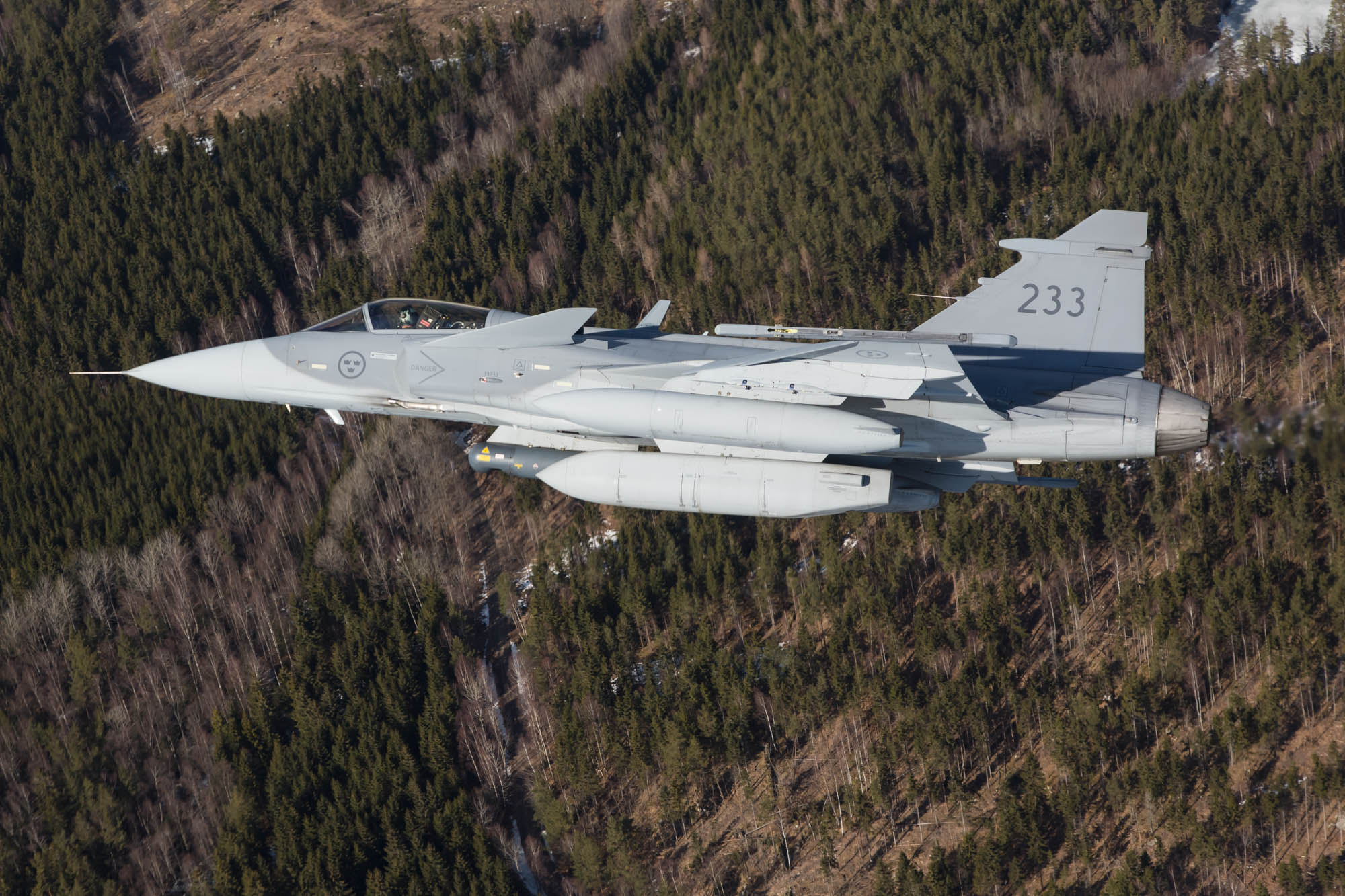
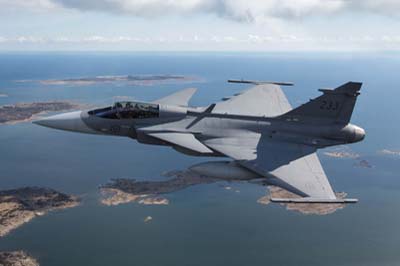
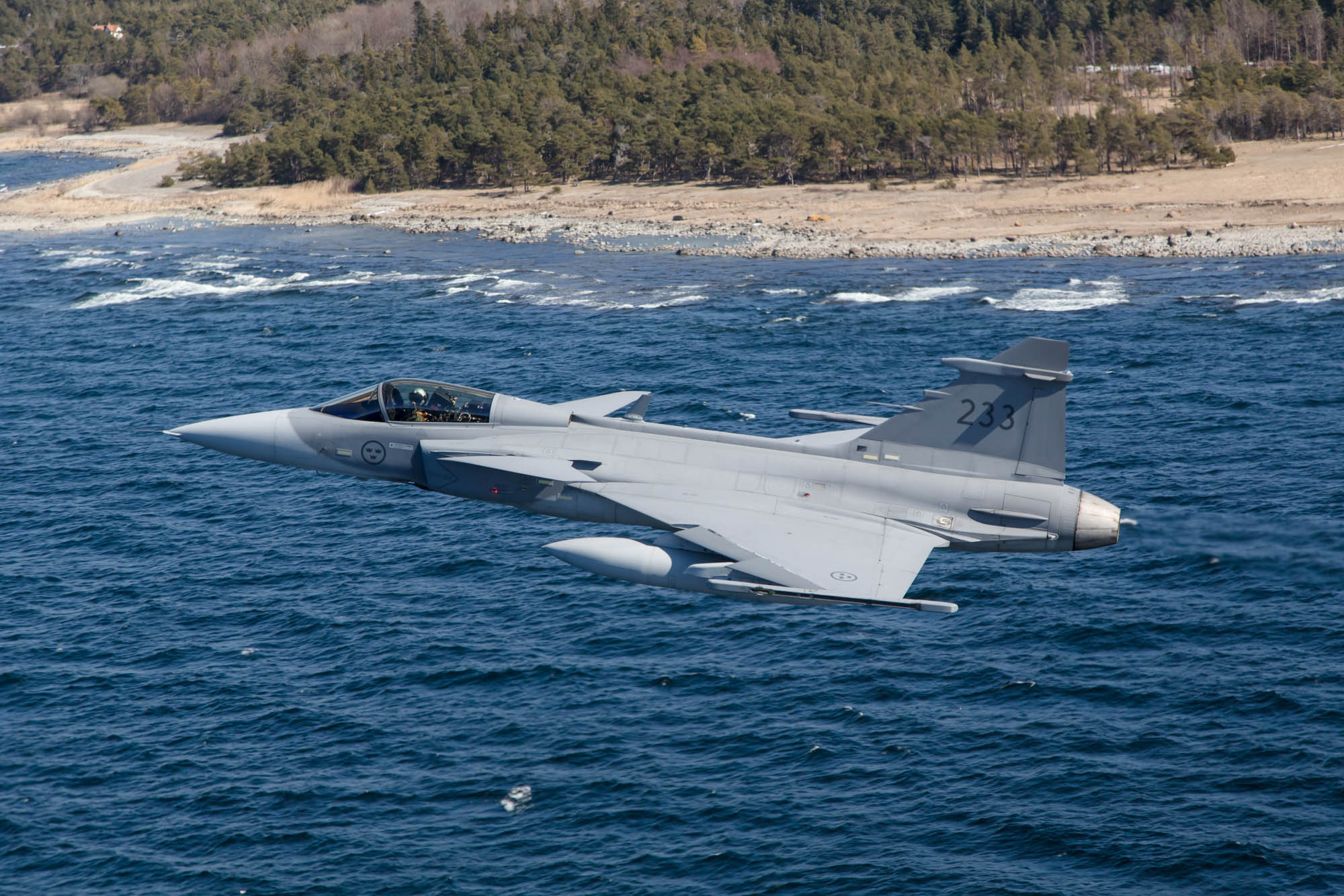
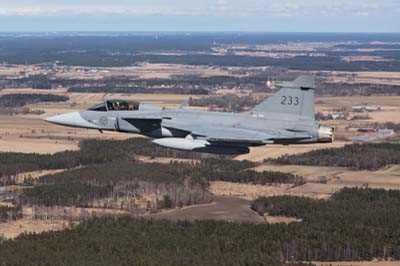
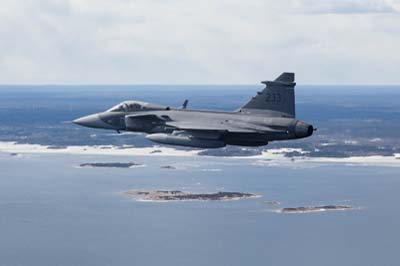
| Saab JAS 39C Gripen (39233 '233') of F 17 Wing at Ronneby, it is fitted with a Rafael Litening III Targeting pod on the forward pylon and Saab Avionics developed SPK-39 Spaningskapsel 39 Modular Reconnaissance Pod System - MRPS) on the centreline pylon. |
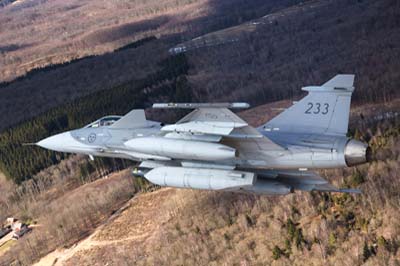
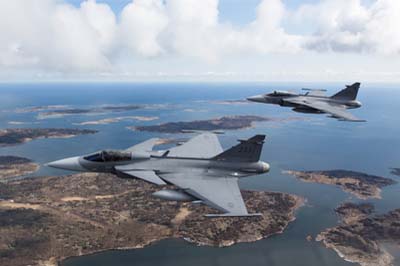
| Left to right: JAS 39C Gripen (39233 '233') A JAS39C Gripen is fitted under the centreline with the Terma/SAAB Modular Reconnaissance Pod System (MRPS) designated the Spaningskapsel 39 (SPK-39). It is fully digitised system built around three sub-systems; the Sensor fit, the Digital Mass Memory and the Reconnaissance Management System and has day and night capability. |
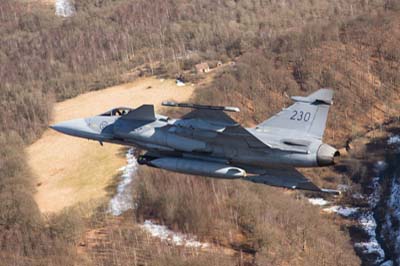
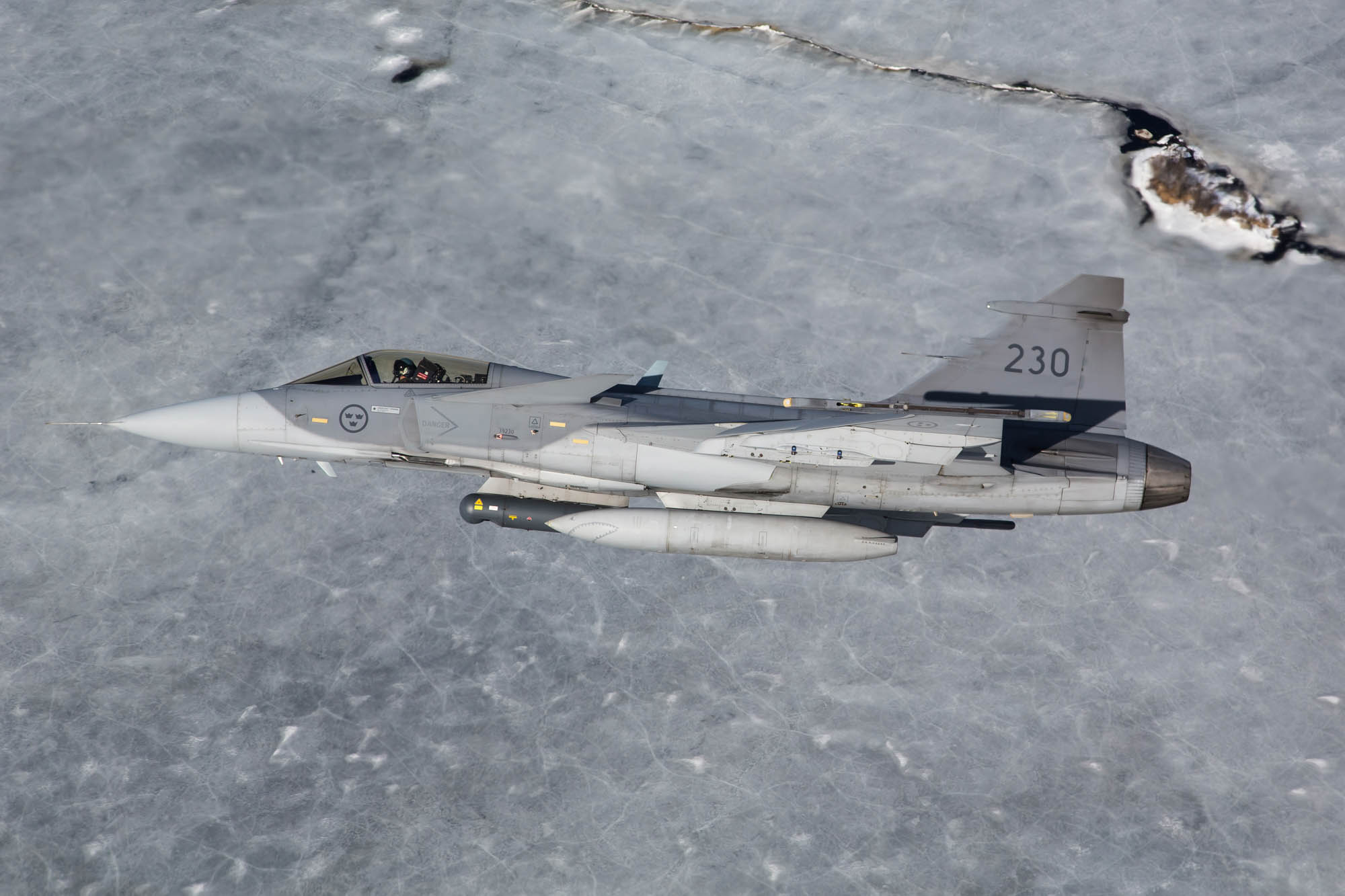
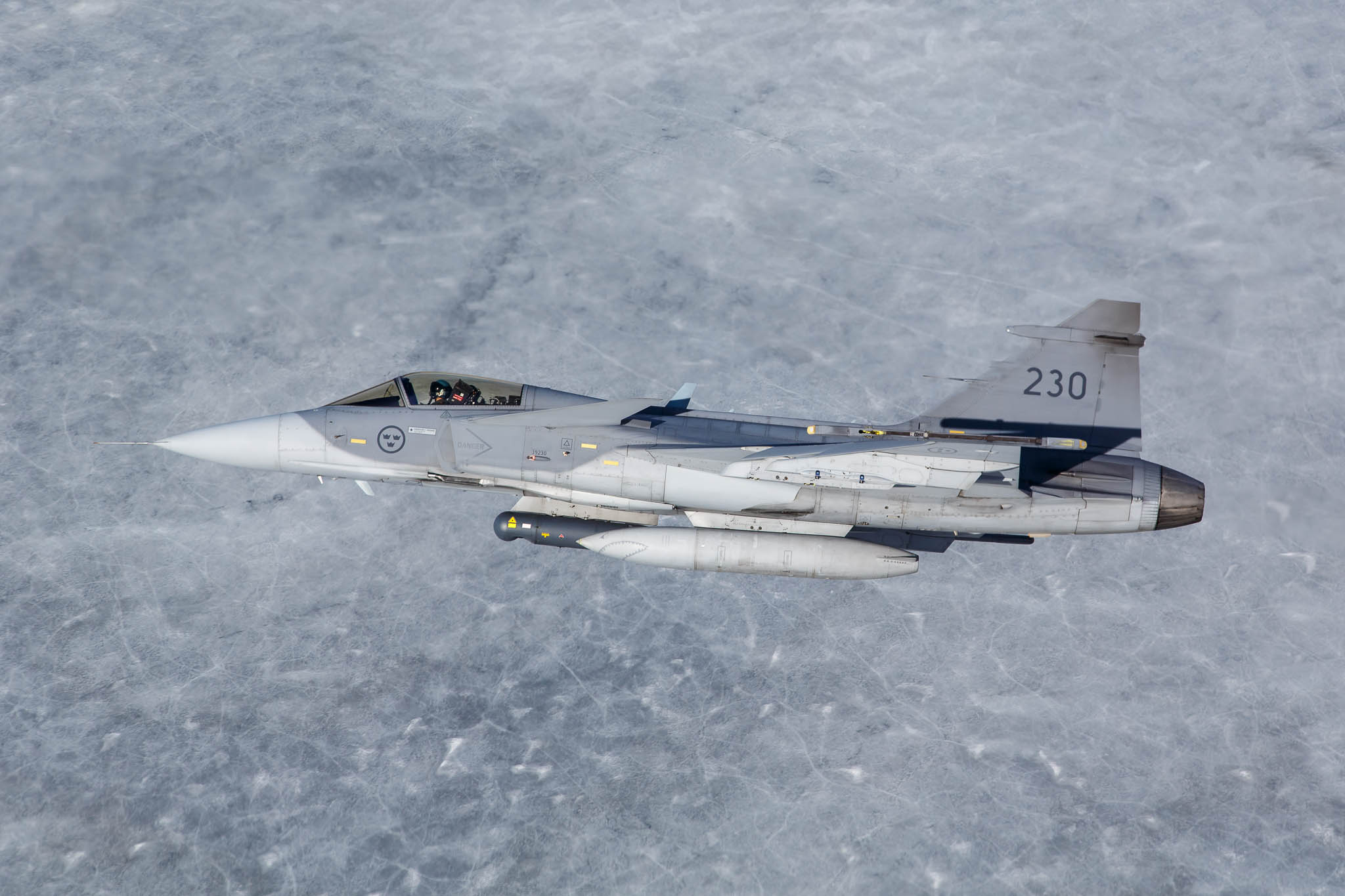
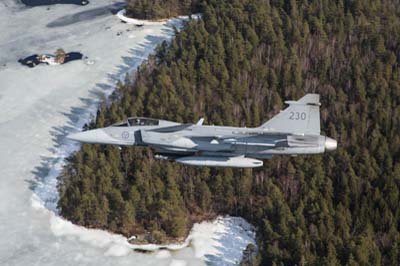
| Saab JAS 39C Gripen (39230 '230') with a Rafael Litening III Targeting pod. |
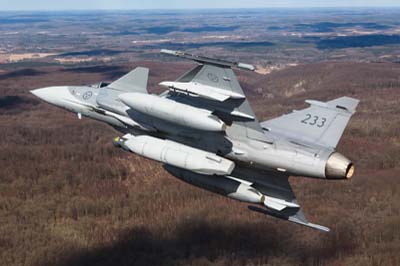
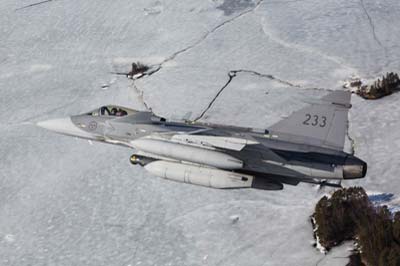
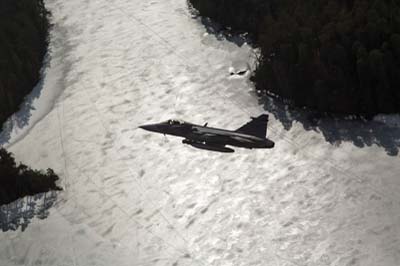
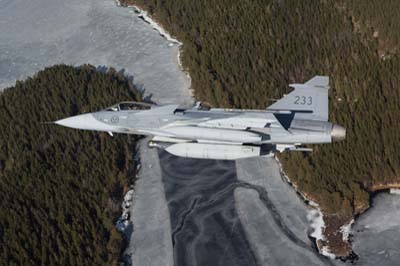
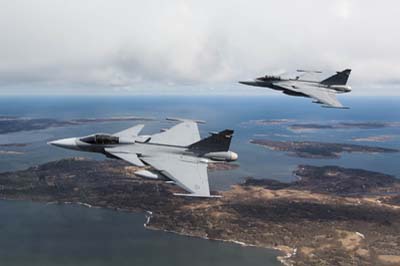
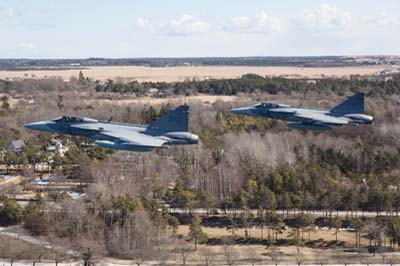
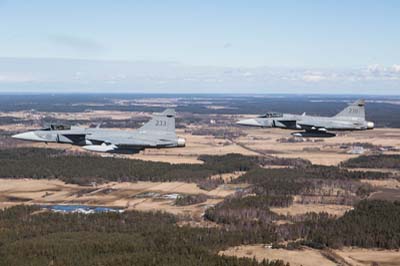
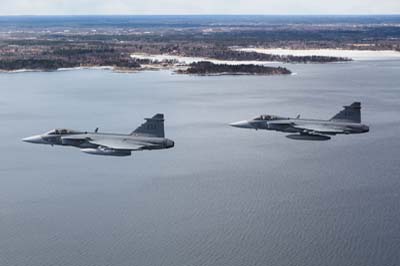
| Saab JAS 39C Gripen (39233 '233') over a frozen lake. |
| Saab JAS 39C Gripen (39230 '230') over a frozen lake. |
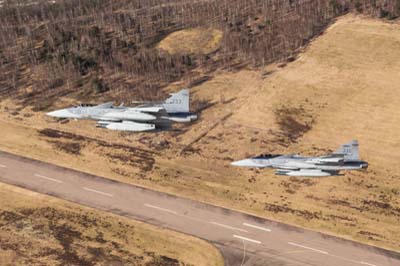
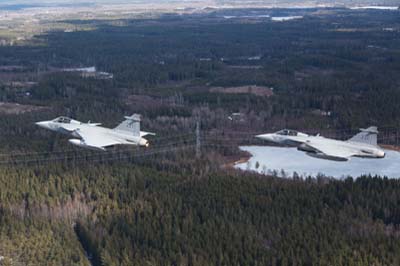
| JAS 39C Gripens (39233 and 39230) over a frozen lake. |
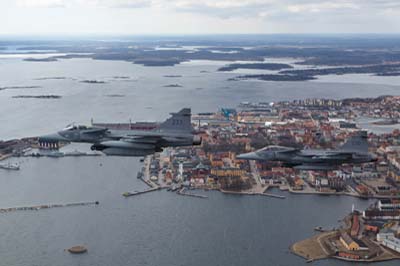
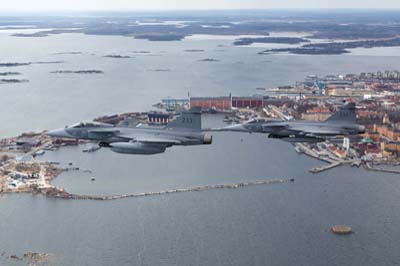
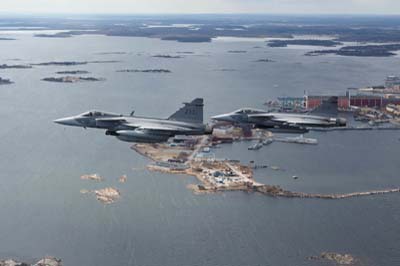
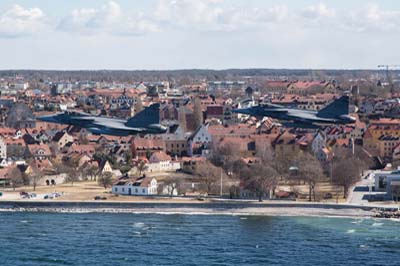
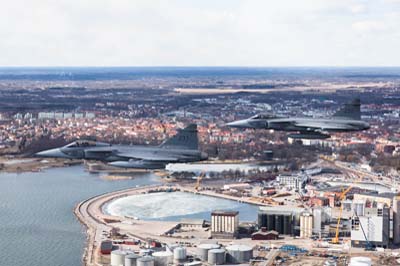
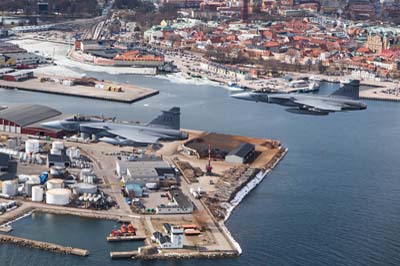
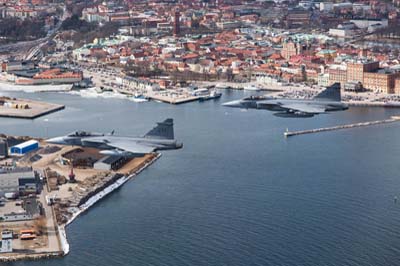
| Left to right: Low over the Naval port of Karlskrona |
The ex military observation tower used for a low-level photo shoot.
|
| Gripen pair from the observation tower. |
| Left to right: The ex military observation tower used for a low-level photo shoot and some of the jets under radio contact that passed the tower unfortunately we lacked the height needed for a true low-level image. |
The first sortie with Captain Anders Ramsin, Flight Safety Officer at the controls of my aircraft.
Our callsign was 'Aquilla 31' and the flight lead of the Gripen pair was Major Per Haard. |
| JAS 39C Gripen (39233) following the coast line of Gotland an island to the south-east of mainland Sweden |
| The western coast of Gotland |
| The western coast of Gotland |
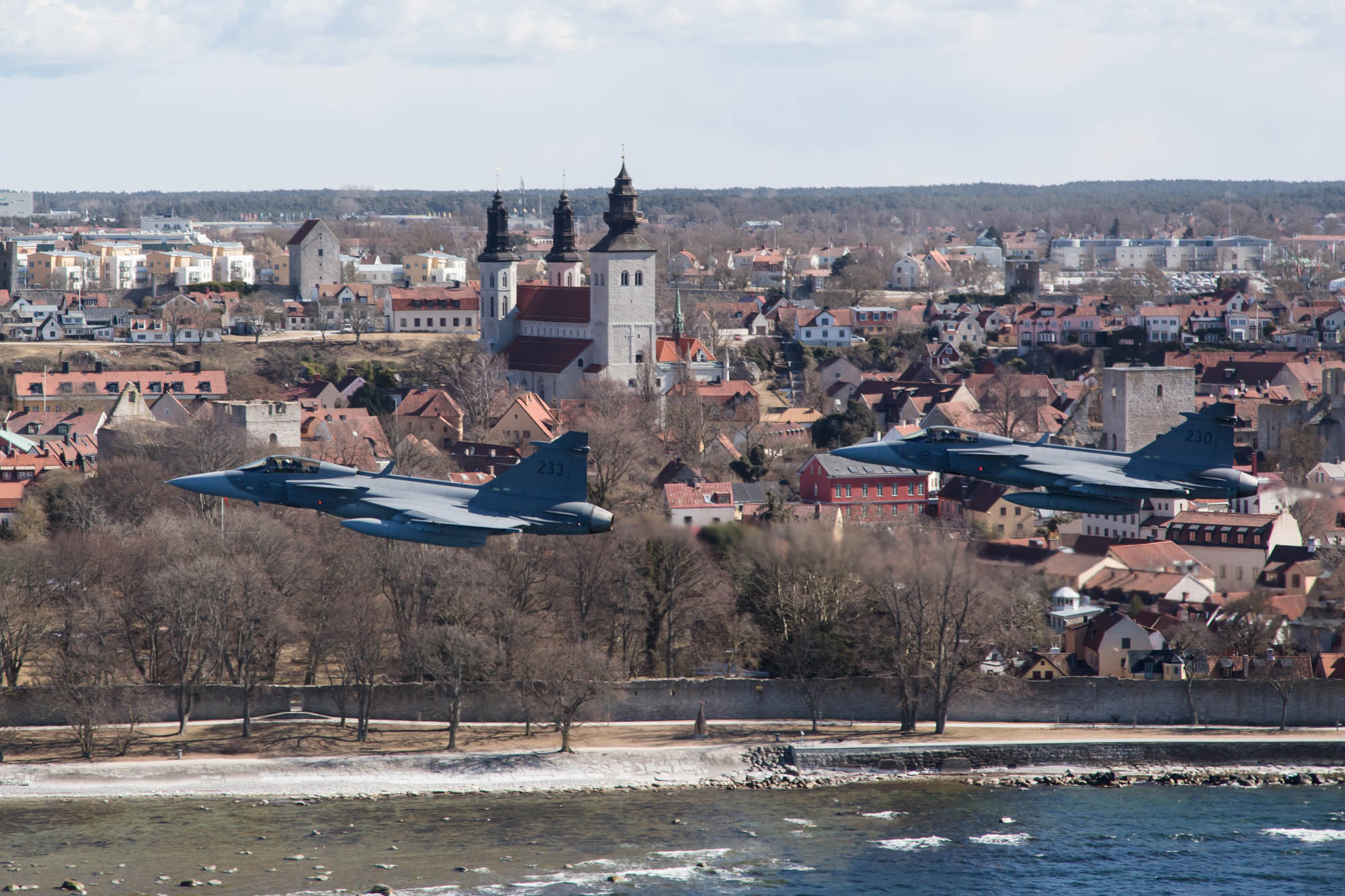
| Visby Cathedral on Gotland |
Visby and mainland Sweden.
Visby and Halmstad air bases are both assigned to F 17 Wing. "Visby air base, according to the 171 Squadron Commander, is regarded as their Swedish Air Force aircraft carrier in the Baltic, to extend the mission time and range or the combat radius, it is often used as a hot refuelling base or as a 'Red Air' base as part of a training scenario. |
| The road bridge from Kalmar across to the island of Oland and the port of Kalmar. |
Maritime Surveilance and Protection
|
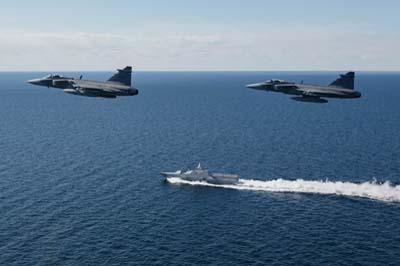
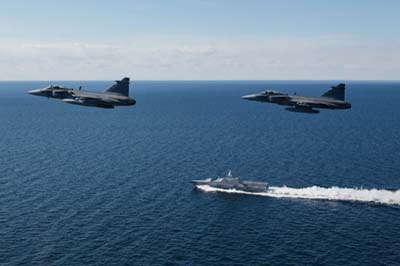
The HSwMS Visby (K31) is the latest class of corvette to be adopted by the Royal Swedish Navy after the Göteborg and the Stockholm class corvettes.
HSwMS Visby was commissioned in 1995. It is a small, fast, and highly maneuverable ship that is designed for a variety of tasks, including surface warfare, anti-submarine warfare, and mine countermeasures. The ship's design emphasizes low visibility or stealth technology. It is equipped with a range of sensors, including radar, sonar, and electronic warfare systems. It has with a range of weapons, including: anti-ship missiles, torpedoes, anti-submarine rockets, machine guns and small arms. HSwMS Visby has a small hangar that can accommodate a single helicopter or unmanned aerial vehicle (UAV).
|
| Left to right: HSwMS Visby (K31) a Royal Swedish Navy Visby-class corvette. |
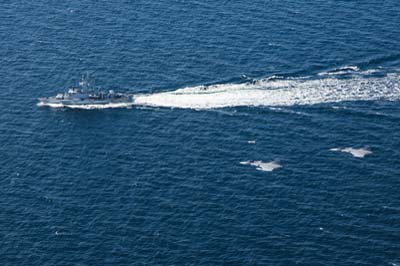
| Left to right: HSwMS Sundsvall (K24) is a Royal Swedish Navy Göteborg-class corvette. Believed to be a Royal Swedish Navy Gotland class attack submarine. |
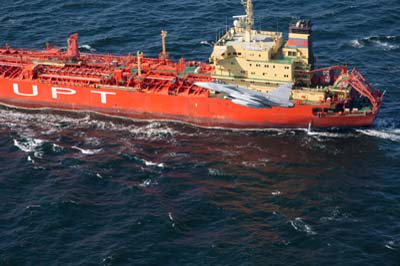
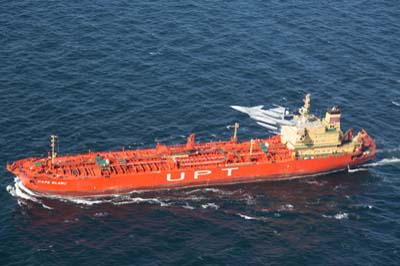
| Left to right: Sea traffic sailing around Sweden's waters are picked up on Radar, investigated and photographed at close quarters, here 'Cape Blanc' an oil tanker owned by UPT and sailing under the Marshall Islands flag is innocently sailing out of the Baltic and on to the North Sea. |