Military Aviation Museum
Virginia Beach, Virginia
October 2025
|
Located in Virginia Beach, the Military Aviation Museum showcases one of the world's largest collections of flying vintage military aircraft. Founded by Gerald "Jerry" Yagen, the museum opened to the public in 2008 and features over 50 restored aircraft from World War I and World War II, as well as historical structures across 130 acres.
The collection includes authentic and replica aircraft from countries such as the United States, United Kingdom, Germany, France, Italy, and Russia. From early World War I biplanes to iconic World War II warbirds, many of these aircraft fly regularly, offering visitors a rare glimpse into the evolution of military aviation and the stories of those who flew them.
A major fundraiser for them is the annual Warbirds Over the Beach air show, held each October. Having planned my trip to the United States nine months in advance specifically to attend this wonderful event, you can imagine my disappointment when, just two weeks before my departure, I received an email announcing that the 2025 show had been cancelled due to technical issues with their star attractions; the Mosquito and the Me 262. I still had a good enjoyable day with them, it really is a beautiful location. |
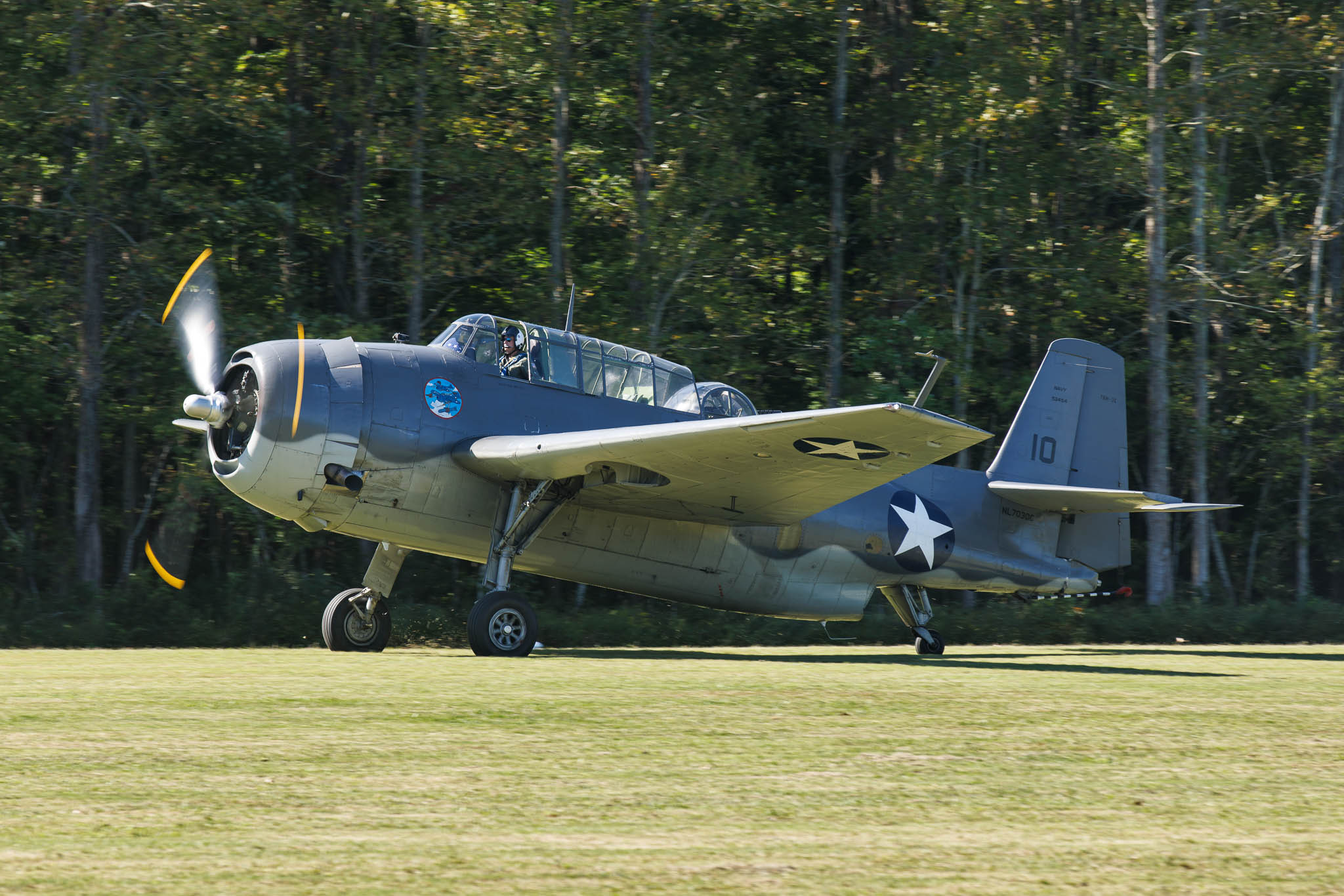 |
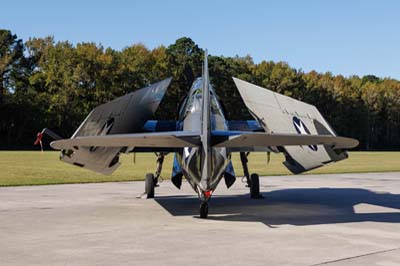
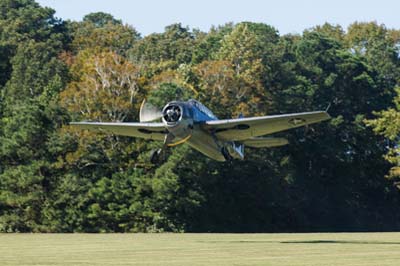
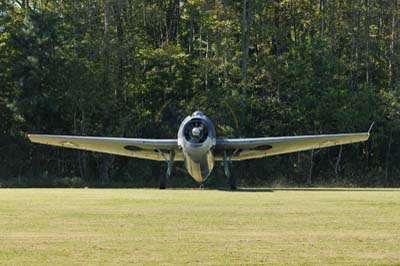
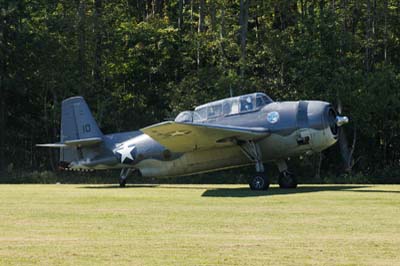
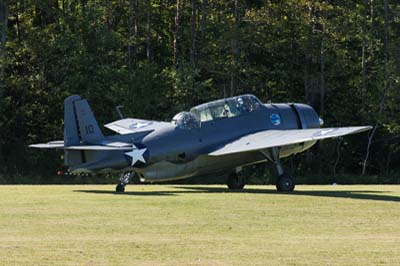
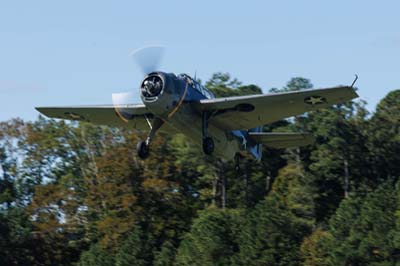
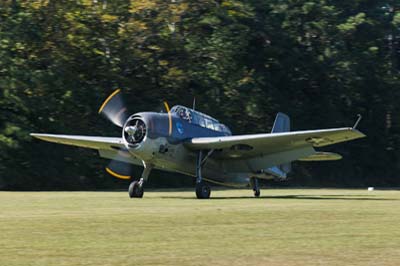
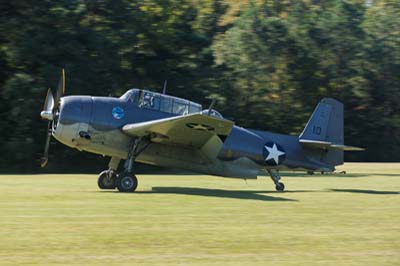
Left to right: Grumman TBM-3E Avenger (53454 '10' registered N7030C). The Avenger was a rugged and versatile US Navy torpedo bomber of World War Two. Built mainly by General Motors, it overcame early setbacks to become a reliable carrier aircraft used for bombing, anti-submarine warfare, and reconnaissance. The late-war TBM-3E variant also served in training, early warning, and carrier onboard delivery roles.
This example built by General Motors served with the US Marine Corps (USMC) before becoming a fire bomber (D13) and later a warbird restoration project at the museum. |
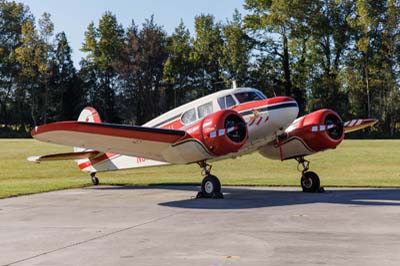
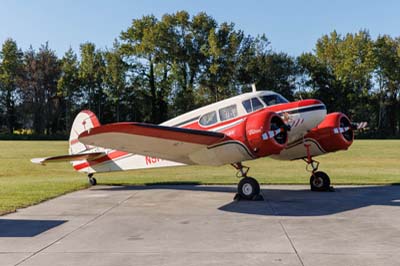
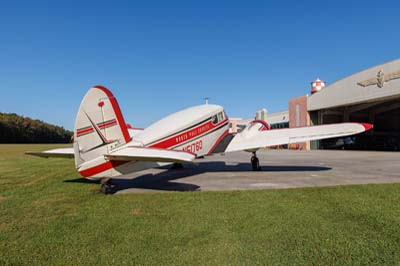
| Left to right: Cessna T-50 Bobcat (N51760) from 1944 it is inscribed 'North Pole Express'. The Bobcat was a popular (over 5,000 built), light twin-engine trainer/utility aircraft used extensively in World War Two for multi-engine pilot training, known for its wood and fabric construction, steel fuselage, electric gear, and simple, sturdy design, powered by twin radial engines. |
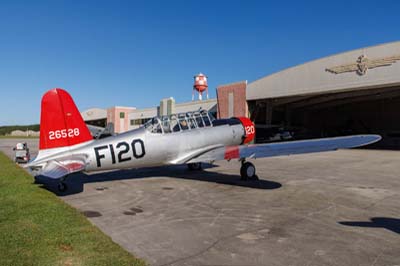
Left to right: Vultee BT-13 Valiant (41-22350 marked '26528 / F-120' registered N413BT) ex United States Army Air Forces (USAAF) from 1942. The Valiant was a crucial basic trainer, nicknamed the "Vultee Vibrator" by student pilots, and was essential in the second phase of pilot training during World War Two. This restored example arrived at the museum in April 2025. Around 16 BT-13s survive today.
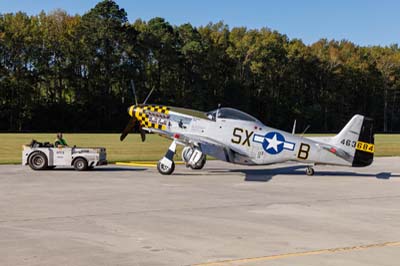
North American P-51D Mustang (44-63507 'SX-B' marked as '44-63684' registered N51EA) ex US Army Air Force and the Royal Canadian Air Force, it was originally restored as a TF-51. The nose art and call sign 'SX-B' actually belong to a different historical Mustang, 44-63684, known as 'Double Trouble Two'.
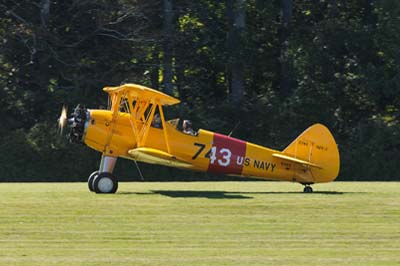
Stearman N2S-3 (PT-17) Kaydet (41-25254 '743' registered N41EE) ex USAF from 1941. Built as a primary trainer, serving the Army Air Forces (as PT-13) or Navy (as N2S), crucial for training thousands of pilots, at least 10,626 were built in the United States. |
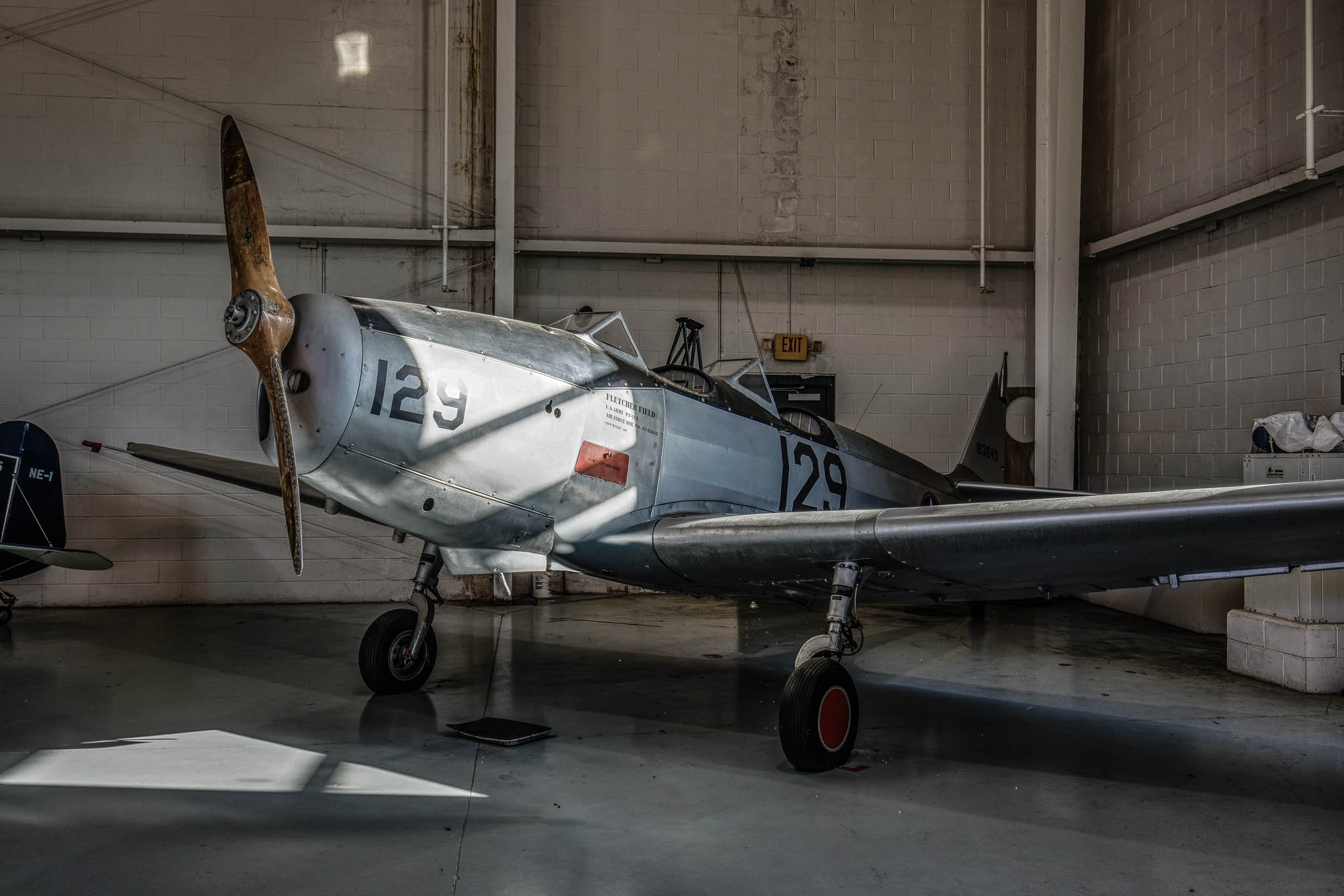 |
| Fairchild PT-19A Cornell (42-83643 '129' registered N129PT) was built by Fairchild Aviation in Hagerstown, Maryland, in late 1943. Accepted by the USAAF in February 1944 it was assigned to the training base at Fletcher Field near Clarksdale, Mississippi. The PT-19 was a rugged primary trainer used by the USAAF and Allies in World War Two, designed to transition cadets from biplanes to service aircraft. |
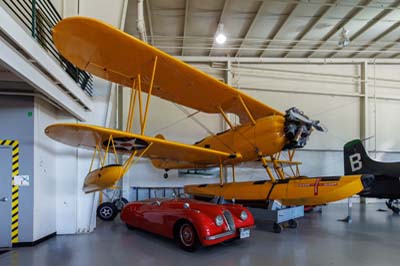
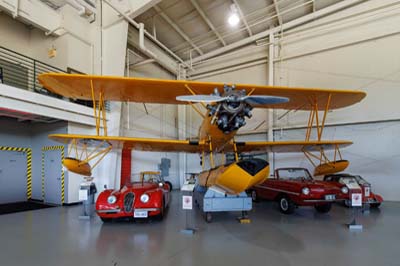
Left to right: Naval Aircraft Factory N3N-3 Canary (2892 registered N120BH) ex US Navy. This aircraft was a primary training biplane produced by the Naval Aircraft Factory (NAF) between 1935 and 1942. It served extensively throughout World War Two, became the last biplane in US military service, and was not retired until 1961. Known for its steel-tube fuselage, all-metal wings, and distinctive bright yellow finish, it was used for both land-based and seaplane training.
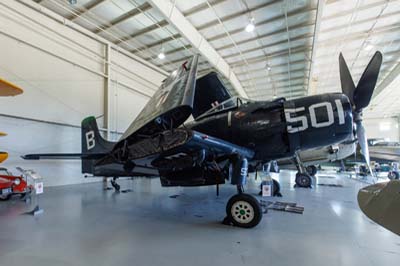
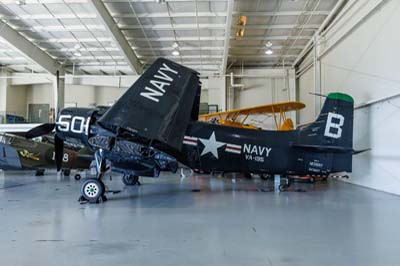
Douglas AD-4N Skyraider (123827 'B-501' registered N23827) ex US Navy. This piston-engine attack aircraft excelled in the Korean and Vietnam Wars, forming the backbone of US Navy and Marine Corps close air support thanks to its exceptional payload and endurance. The AD-4N variant was optimized for night operations with onboard radar, it became renowned for its durability, heavy strike capability, and rescue escort missions.
123827 served with several US Navy attack squadrons (VA) from 1949 to 1959 and later was used for Marine training with VMAT-20. After its active service, it became a static gate guard at DeKalb–Peachtree Airport (the former NAS Atlanta) in Georgia, remaining on display until around 1966. That year, it was acquired by a private collector, restored to flying condition, and returned to the air in 1978, carrying the civil registrations N54162 and later N23827. |
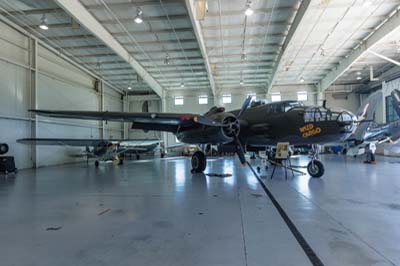
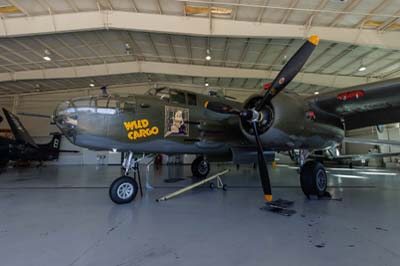
Left to right: North American B-25J Mitchell (44-30129 registered N7947C). Completed in December 1944 at the Fairfax plant, the aircraft served stateside with the USAAF as a B-25 trainer and did not see combat. After being sold as surplus in the late 1950s, it passed through several private owners, gaining the nickname 'Wild Cargo' following a 1963 engine failure while transporting live animals, which led to a gear-up landing near Cincinnati. It was later stored and partially disassembled in Ohio for decades before changing hands several times. Ultimately, an extensive restoration by the Fighter Factory and Vintage Aircraft teams at the museum it returned it to flight, with its first post-restoration flight occurring on November 19, 2005.
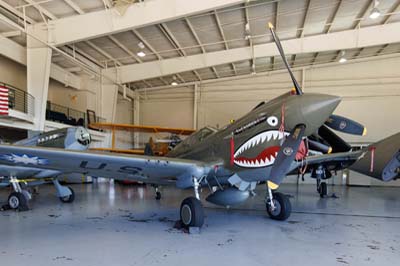
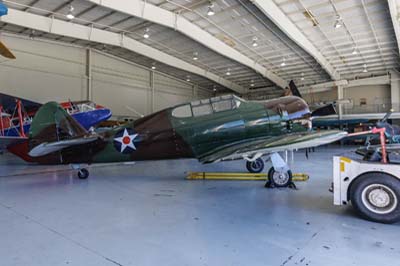
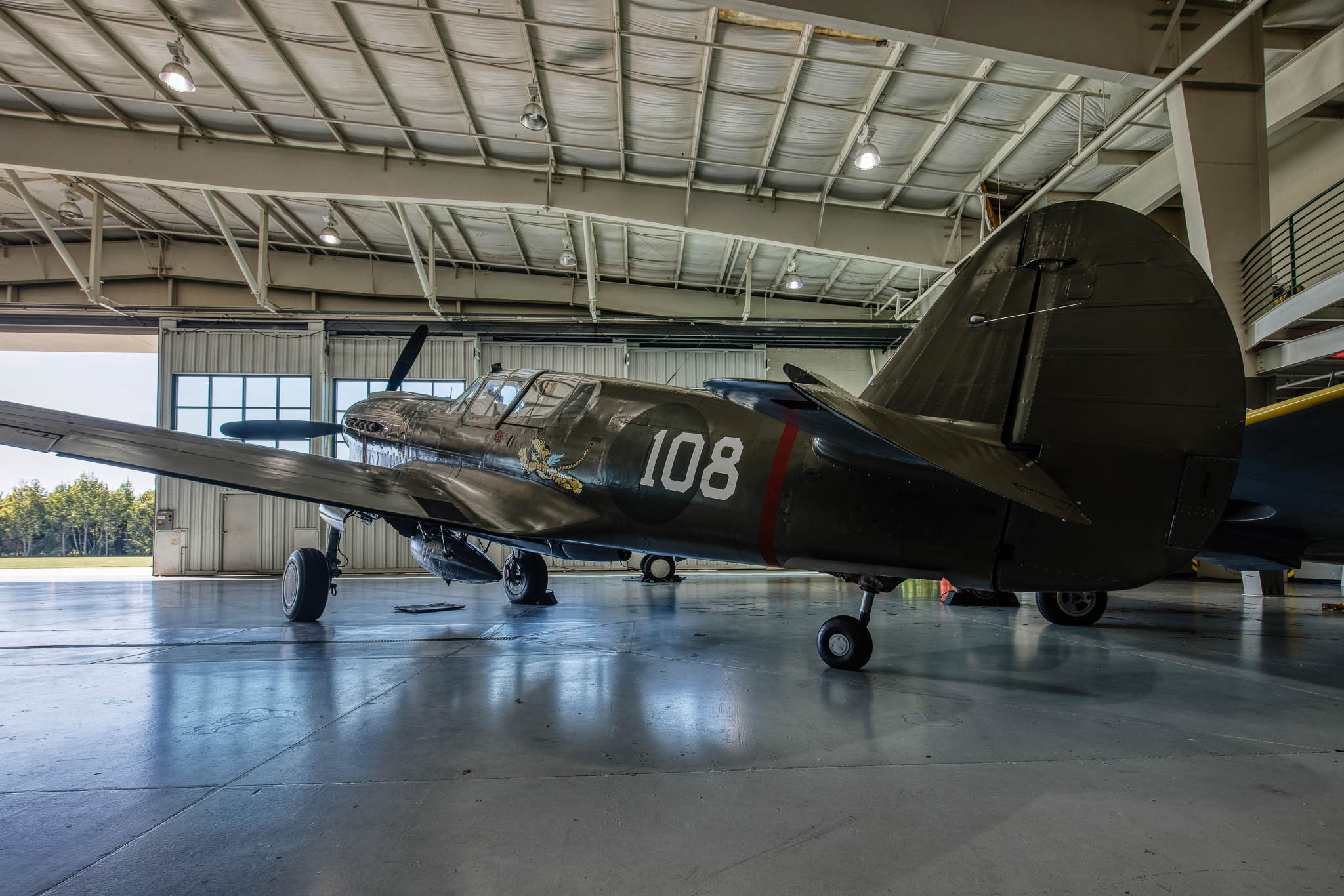
Curtiss Kittyhawk 1A (41-35927 marked '41-5658/108', ET573 registered N1941P). Originally built as 41-35927, this P-40E was intended for the Royal Air Force as a Kittyhawk IA (ET564) but was ultimately transferred to the Soviet Union with the code 1025. After being lost during World War Two, the aircraft was recovered near Murmansk in 1992 and restored to flying condition—initially in the US using parts from Canada, and finally completed in New Zealand, returning to the air in 2001. It became the first aircraft of the Military Aviation Museum and now carries the markings of an American Volunteer Group (AVG) P-40E 41-5658. |
 |
| Nord N1002 Pingouin II (258 registered N108ZZ). Post World War Two French liaison aircraft, a re-engined version of the German Messerschmitt Bf 108 Taifun, built by SNCAN (Société Nationale de Constructions Aéronautiques du Nord), around 286 built, often using captured Messerschmitt components. It used by French Air Force for liaison, many entered the civilian market. It served with the French Air Force as 258. |
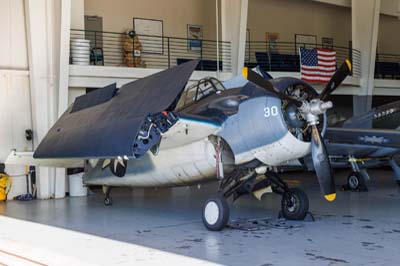
Left to right: Grumman FM-2 Wildcat (47030 'F-13' '30' registered N315E) ex US Navy. The FM-2 Wildcat was a robust, late-war version of the durable F4F Wildcat. Manufactured by General Motors to meet soaring demand while Grumman concentrated on the Hellcat, it featured a more powerful Wright Cyclone engine, a larger tail for improved stability, and four wing-mounted guns.
The aircraft was delivered to the US Navy on April 14, 1944, initially serving at NAS Terminal Island, California, before deploying to the South Pacific at Espiritu Santo. It returned to San Diego in October 1944 and later served with the VF-6 Operational Training Unit at NAS Sanford, Florida, followed by assignments to VF-97 at Pungo Naval Outer Landing Field, Virginia, and NAS Quonset Point, Rhode Island, before being stricken from Navy records and sold as surplus in October 1945. In civilian life, it passed through several owners, beginning with A.T. Whiteside in Florida, then Richard Spano in Maryland, and Alexis I. Dupont in Pennsylvania, who operated it at the Colonial Flying Field Museum, often displaying US Navy markings. From 2009 to 2019, it was owned by the Military Aviation Museum in Virginia Beach, Virginia, where it underwent full restoration to its original 1944 US Navy tri-color scheme, completed in April 2011.
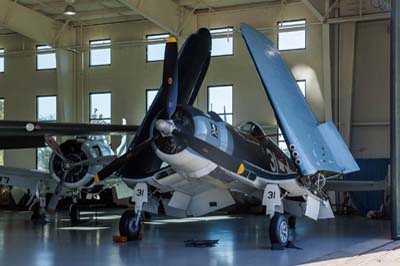
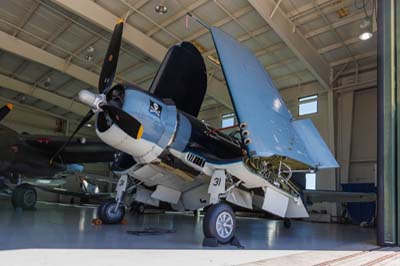
Vought FG-1D Corsair (92508 '31' registered N46RL). The FG-1D Corsair, built under license by Goodyear, was a powerful late-war variant, excelling as a land-based fighter-bomber in the Pacific during World War Two with a formidable 11:1 kill ratio and later serving in the Korean War, known for its ruggedness, potent engine, and longest production run of any American piston fighter.
This aircraft entered US Navy service on May 26, 1945, it never saw combat but was used by various Navy, Marine, and Naval Reserve squadrons across California, Florida, New York, and Arizona for mechanic training and pilot familiarisation. It was stricken from Navy records in 1955 after accumulating 1,533 flight hours and was initially slated for scrapping. Later, it was acquired by Training Services Inc. in Virginia Beach and restored to airworthiness, with its flying status noted around 1999. |
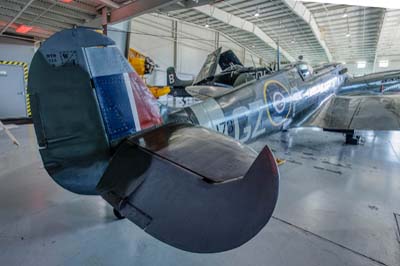
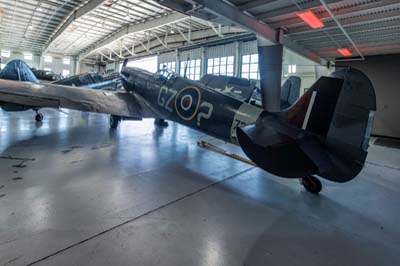
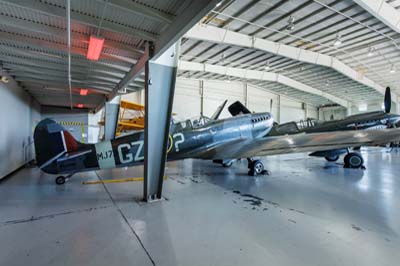
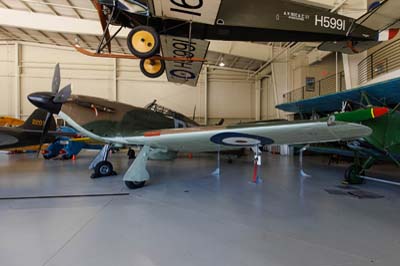
| Left to right: Supermarine Spitfire HFIXE (MJ730 'GZ-?' registered N730MJ). MJ730 was originally built as a Spitfire LF.IXe and served with the RAF before being overhauled for the Italian Air Force. In 1951, it was sold to Israel and operated by the Israeli Air Force in an Operational Training Unit as number "66" until its decommissioning in 1956, after which it was displayed in a playground. Found in poor condition, the aircraft was moved to England in 1978 for restoration, a project later sold to Fred Smith of Federal Express and completed in 1988. It was subsequently sold to David Pennell and registered as G-HFIX. |
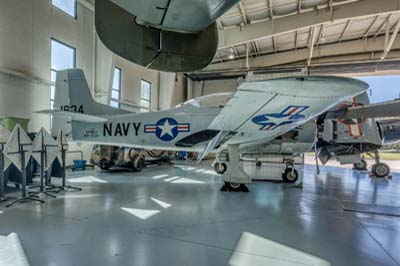
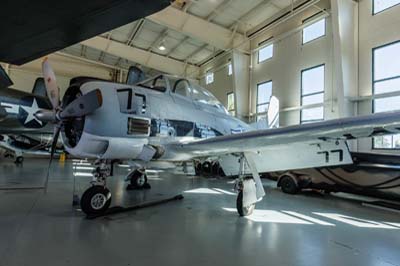
Left to right: North American T-28A Trojan (49-1634 registered NX99160). The T-28A Trojan was a powerful, radial-engine military trainer from the 1950s, designed to replace the T-6 Texan and transition pilots to jets.
This T-28A began as a USAF trainer, was sold in 1958, converted to an AT-28D for the Congo/Zaire Air Force (as FG-634), then registered N99160 in 1977, flying from Zaire back to the US by 1979.
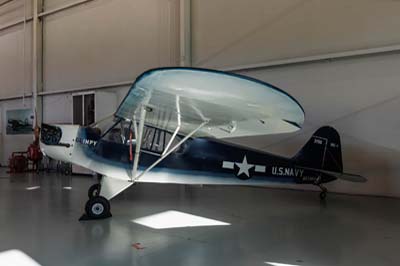
Piper J3C-65 Cub (N23464 '3196'). |
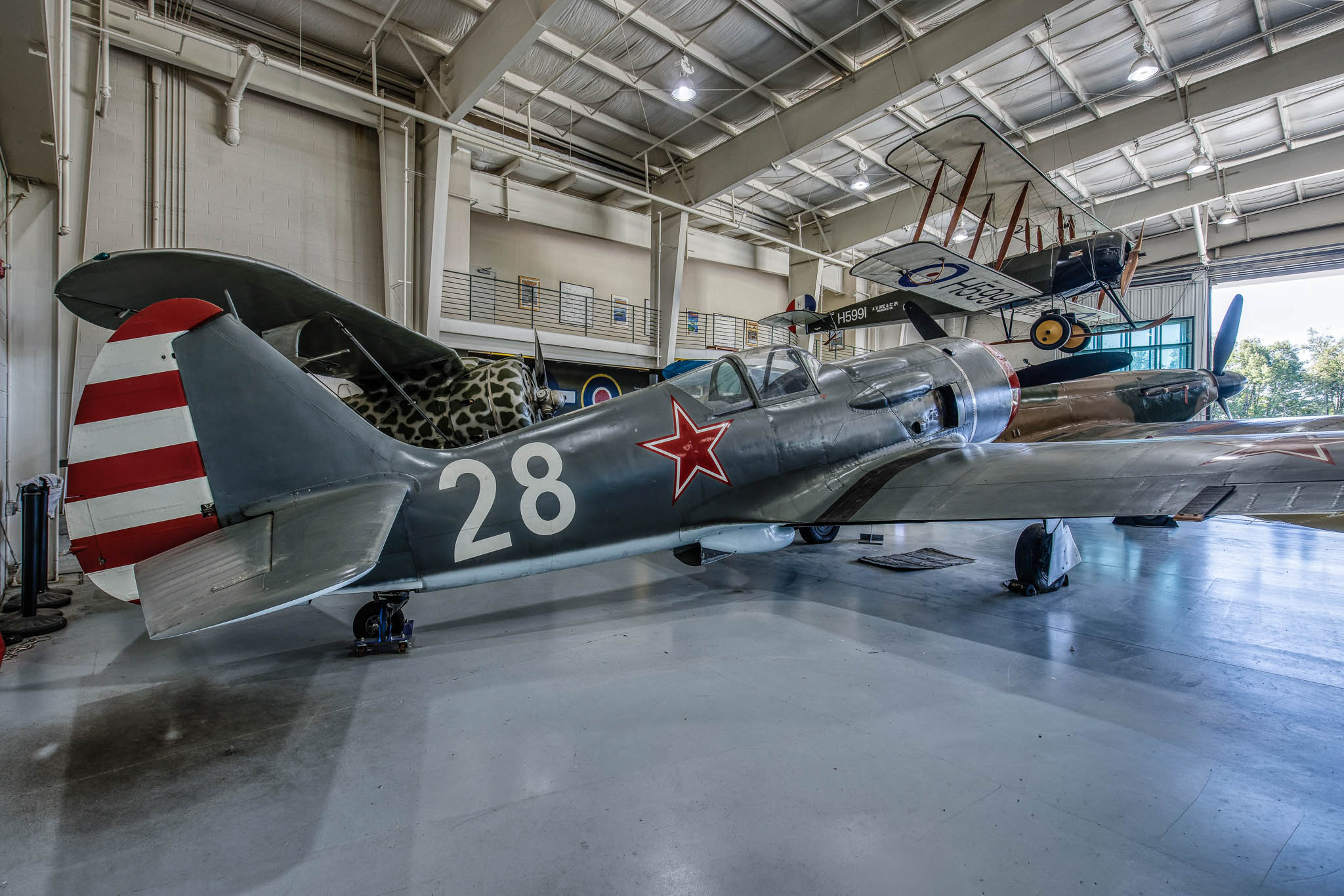 |
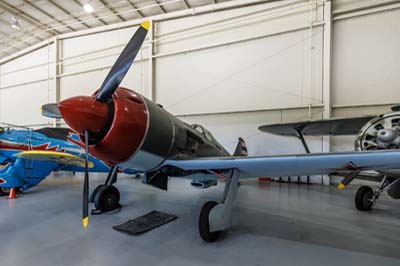
Left to right: Lavochkin La-9 "Fritz" ('28 white' c/n 828 registered N415ML previously G-BWUD) ex The "Volunteer Society for Cooperation with the Army, Aviation, and Fleet" or DOSAAF, a Soviet paramilitary organisation revived in modern Russia, focused on providing technical and military-related training.
The La-9 was a potent Soviet all-metal piston fighter, a post World War Two evolution of the wooden La-7, featuring a powerful Shvetsov engine, laminar flow wing, and four 23mm cannons, making it one of the last and best propeller fighters before jets dominated, serving the USSR, China, and North Korea, and seeing action in the Korean War, known for its speed and firepower.
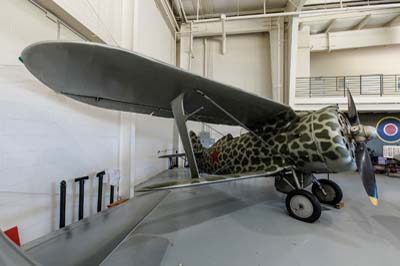
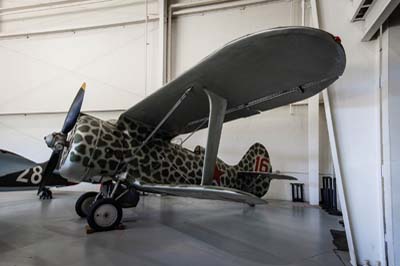
Polikarpov I-153 Chaika (6316 '16 red' registered N153RP) ex SovAF. Nicknamed Chaika (Seagull) the I-153 was Polikarpov's third development of the I-15.
This I-153 was found in a swamp outside Murmansk, salvaged it became part of the Alpine Fighter Collection in Wanaka, where founder Sir Tim Wallis funded the restoration of three I-153s and six I-16s to airworthy condition, including this aircraft. It was painted in a mottled green camouflage as '16 red'. Registered in New Zealand as ZK-JKN on August 24, 1999, it made its first test flight on September 30, 1999, and appeared at the Warbirds Over Wanaka air shows in April 2000 and April 2002. Later in 2002, it was purchased by Gerald Yagen of the Fighter Factory and shipped to Virginia in December, where it was registered as N153RP to Training Services Inc. and displayed at the Military Aviation Museum.
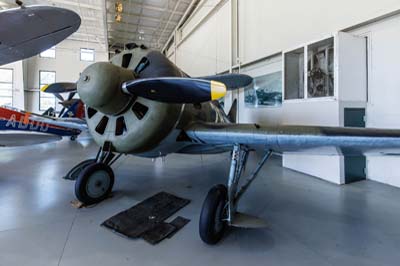
Polikarpov I-16 Rata (2421028 '28 white' registered N1639P). Built in 1939 as a Type 24 I-16, this aircraft served with the Soviet Air Force, likely in the 155th Fighter Aviation Regiment, before crashing in Karelia during 1941 or 1942. Recovered in 1991, it was restored to flying condition, later acquired by Gerald Yagen for the museum. |
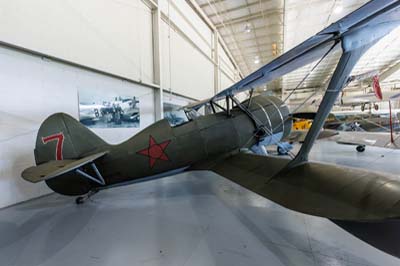
Left to right: Polikarpov I-15bis (3994 '7 red' registered N3815R). The Polikarpov I-15bis was a highly manoeuvrable Soviet biplane fighter, an evolution of the popular I-15, featuring a conventional straight upper wing instead of the I-15's gull wing for better pilot visibility, entering service in 1937. It saw extensive action in the Spanish Civil War, Second Sino-Japanese War, Battles of Khalkhin Gol, and the Winter War.
This example was built in 1938 by the Polikarpov Design Bureau, it served with the Soviet Air Force, likely in the 145th Assault Air Regiment of the Northern Front. It crashed near Karelia during the war, and the wreckage was recovered in the 1990s. Restored to airworthy condition by Aviarestoration in Novosibirsk, Siberia, it returned to flight in 2002, powered by an ASh-62 engine, an upgraded version of its original Shvetsov M-25. Purchased by Gerald Yagen, the museum's founder, and was shipped to the United States.
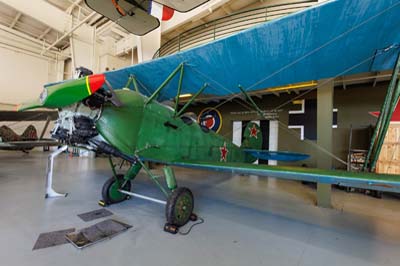
Polikarpov Po-2 (U-2) (717 '01 yellow' registered N3602) ex Soviet Air Force. Built in the Soviet Union in 1944, its wartime history is largely unknown. In 1946, it was sent to Yugoslavia as part of a group of 30 Po-2s and was used at the Military Air Force Academy and later by the Yugoslav Air Club. Registered as YU-CLJ and flying until 1961, it was eventually donated to the Yugoslav National Museum in 1979. It was later sold, brought to the UK and registered as G-BSSY in 1990, and subsequently went through ownership changes in the US and New Zealand. The Shuttleworth Collection acquired it in 2004, undertaking a comprehensive restoration that was completed in 2011. It is now with the museum.
Hawker Hurricane XII (5667 'DZ-O' marked as 'V6793' registered N943HH) ex Royal Canadian Air Force. The aircraft was built by Canadian Car & Foundry (CanCar) in Fort William, Ontario, in late 1942 or early 1943 and officially entered RCAF service on February 3, 1943. Initially assigned to RCAF Station Dartmouth, Nova Scotia, it served with the 126(F) and 129(F) Fighter Squadrons for home defense and training, with 129(F) Squadron pilots as its primary operators. It remained in Saskatchewan until retiring in the summer of 1945 and was sold as surplus in April 1946 to a local farmer, who left the largely complete airframe on his property and reportedly used the wing behind a tractor to break up soil. In 1965, Neil Rose purchased the Hurricane and undertook a restoration lasting over 30 years, culminating in its return to flight in 1994. |
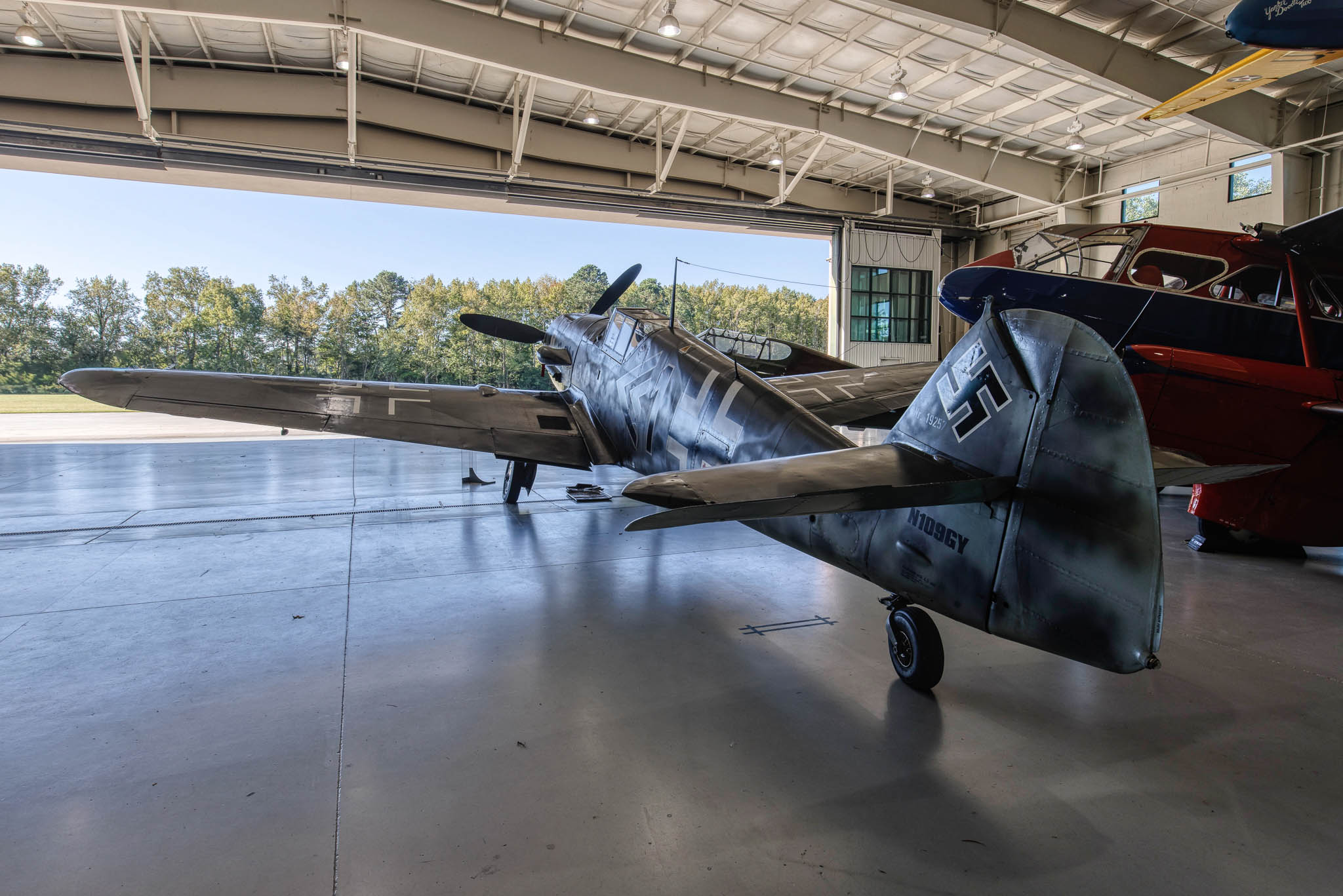 |
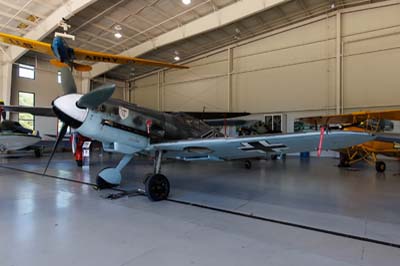
| Messerschmitt Bf 109G-4 (19257 registered N109GY) ex Luftwaffe. |
Left to right: Messerschmitt Bf 109G-4 (19257 registered N109GY) ex Luftwaffe.
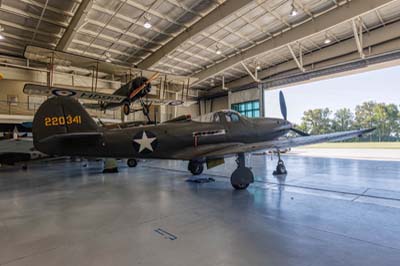
Bell P-39F Airacobra (41-7215 marked as '42-20341'). Flown by the USAAF in the Pacific theater, known for its unusual mid-engine layout and heavy nose cannon, it crash-landed on Australia's Cape York Peninsula in May 1942 during a ferry flight; its wreckage was recovered in the 1970s and eventually shipped to Russia for restoration.
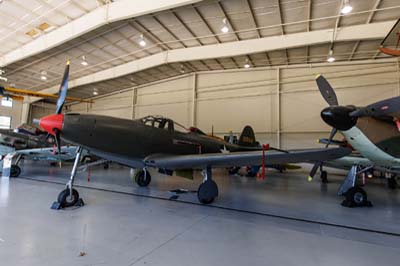
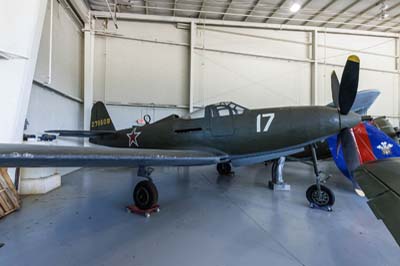
Bell P-63A Kingcobra (42-70609 '17') ex SovAF. The P-63 Kingcobra was a US fighter developed by Bell Aircraft as an improvement over the P-39 Airacobra. While considered superior to its predecessor, the US Army Air Forces (USAAF) found it inferior to the P-51 Mustang and P-47 Thunderbolt, which were already in full production. As a result, the vast majority of P-63s produced (over 2,300 of 3,303 total) were sent to the Soviet Union via the Alaska-Siberia route (ALSIB) as Lend-Lease aid.
42-70609 is known to have served with the Soviet Air Force and participated in attacks against Japanese forces in August 1945, in the Far East theater. The main components of the aircraft were recovered in 1998 from the Kuril Islands (likely Shumshu Island) off the coast of Russia. |
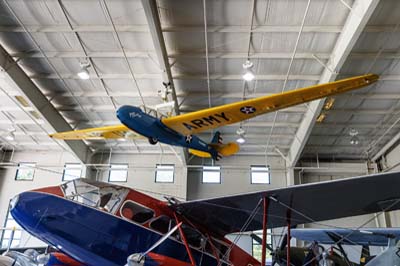
Left to right: Laister-Kaufmann TG-4A (42-53069 registered NC51462) ex US Army. The TG-4A was a two-seat training glider used during World War II to instruct pilots in the basics of glider flight before they transitioned to the much larger and less maneuverable Waco CG-4A cargo gliders.
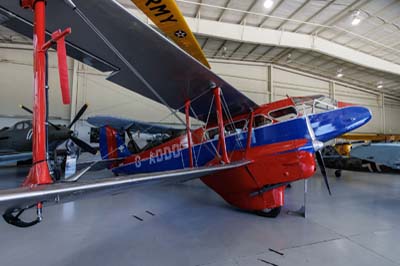
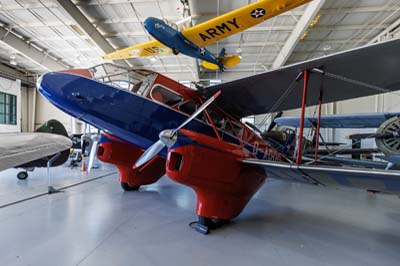
De Havilland Dragon Rapide (HG724 registered N89DH painted as 'G-ADDD' ex G-AKPA, EI-AML and F-BLHZ).
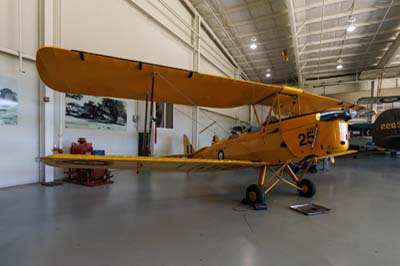
De Havilland DH.82 Tiger Moth (T5525 '25' registered N6463). |
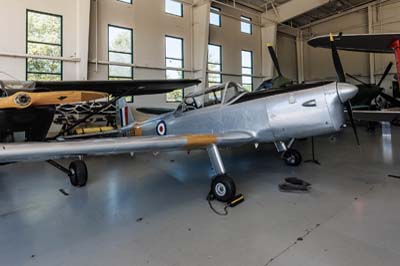
Left to right: DHC Chipmunk T10 (WK559 registered N559WK).
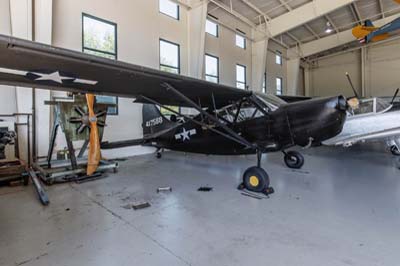
Stinson Sentinel L-5E (44-17588 registered N57WT) ex USAF.
North American SNJ-4 Texan (51363 registered NX22518) ex US Navy, it is modified to NA-50 standard. |
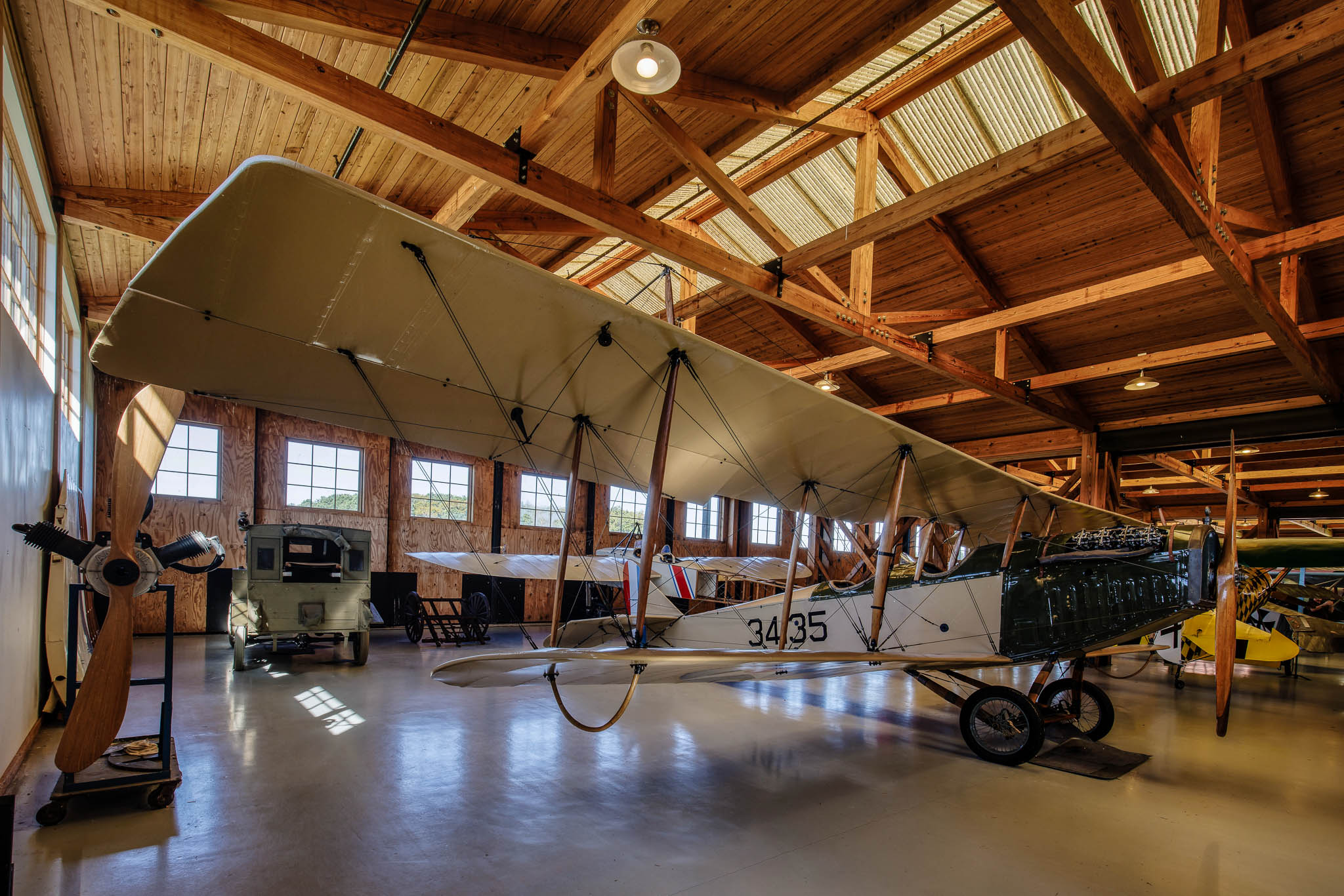 |
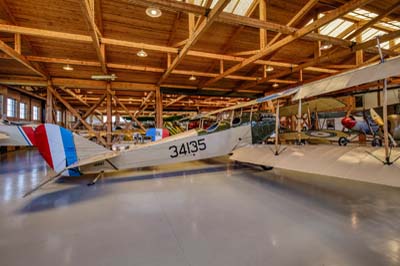
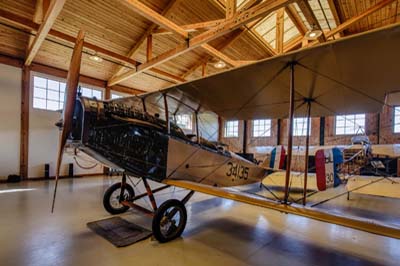
Left to right: Curtiss JN-4D "Jenny" (34135 registered N6898C). The Jenny series was the most widely produced United States aircraft from 1917 through the 1920s. While it served as a primary trainer for the US Army Air Service during World War One, the Jenny became even more popular in the 1920s for barnstorming and carrying airmail.
The JN-4D model was the definitive version of the Curtiss JN series. Introduced in 1917, shortly after the United States entered World War One, it was one of several improvements Curtiss made to his aircraft design. Notably, the JN-4D replaced the earlier control wheel with a control stick to operate the ailerons, which were now located only on the upper wings.
This example was built in 1918 by the St. Louis Aircraft Co. under license from Curtiss. It is airworthy but reportedly no longer flown by the museum due to its historical rarity. Its airworthiness certificate was issued in May 2024 and expires in May 2031. Previously displayed at the Arkansas Aviation Historical Society before being acquired by the Military Aviation Museum in 2013.
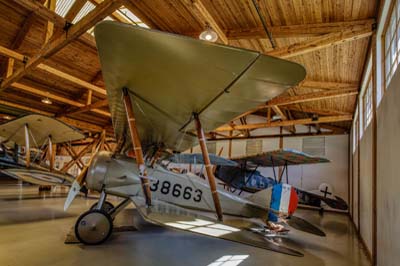
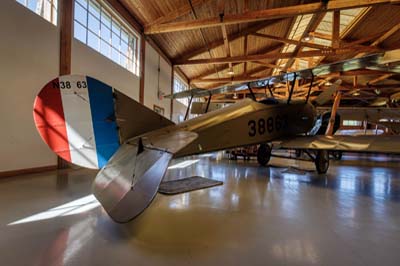
Thomas-Morse S-4C Scout (38863 registered N38863 c/n 481). Designed by Benjamin Douglas Thomas (no relation to the Thomas-Morse company founders), also the designer of the Curtiss JN-4D "Jenny", the Thomas-Morse S-4C was produced by the Ithaca (from 1913) and Bath (from 1914), New York based Thomas-Morse companies, with approximately 447 aircraft built. An advanced trainer operated by both the US Army and US Navy, it was nicknamed the "Tommy" by its pilots, carried a single machine gun, and had a top speed of about 97 mph. The company was taken over by Consolidated Aircraft Corporation in 1929 and dissolved in 1935, and today roughly ten S-4Cs are known to survive.
This S-4C Scout was accepted into US Army Air Corps service in July 1918 and has since been rebuilt using original components, including an 80-hp Le Rhône 9-C nine-cylinder rotary engine. It is believed to have served at Rockwell Field, California, and after the war was sold as surplus. |
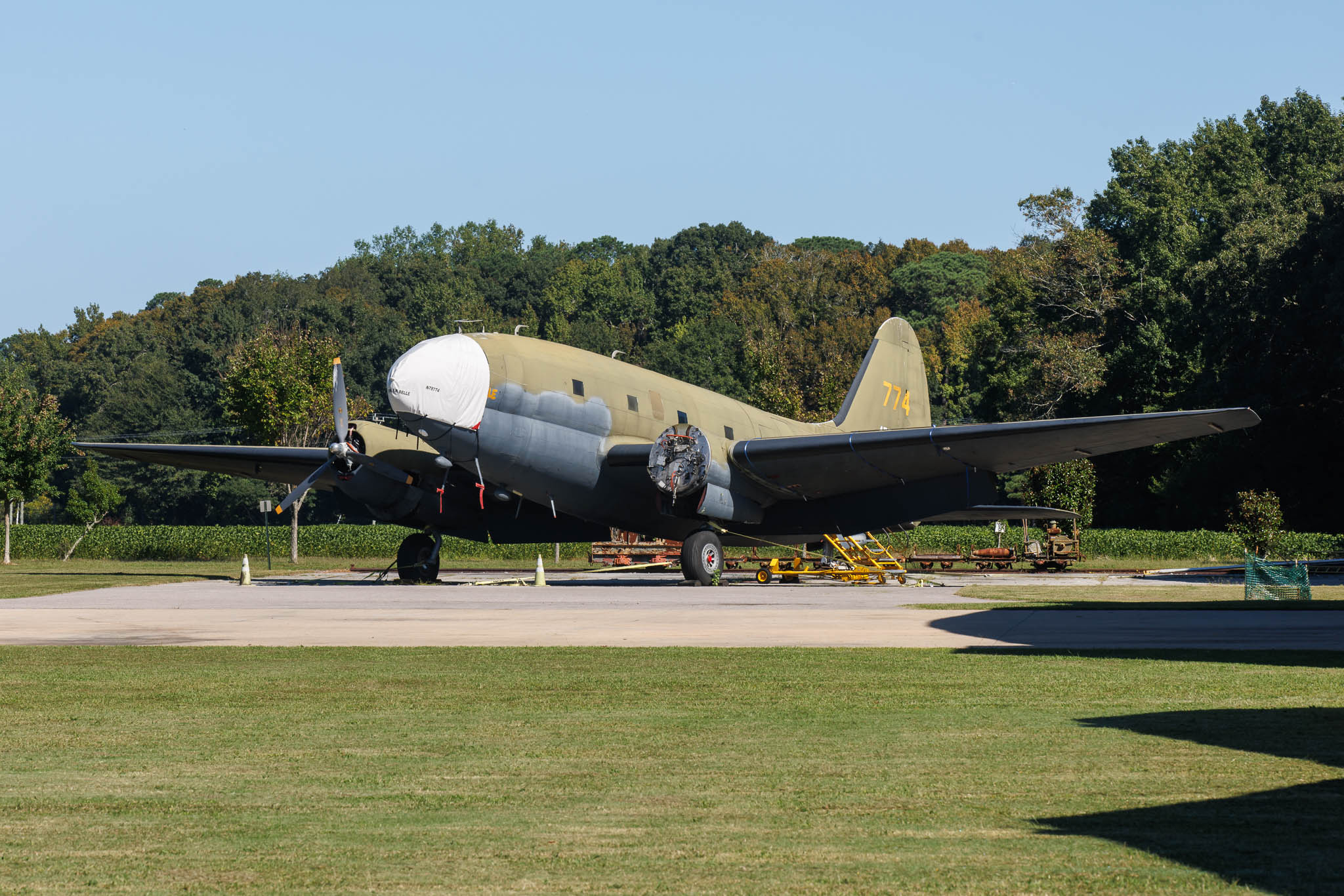 |
| Curtiss C-46F Commando (44-78774 '774') named "The Tinker Belle" operated by the Confederate Air Force (CAF). |