Naval Air Test and Evaluation Museum
Patuxent River, Maryland
October 2025
|
The Patuxent River Naval Air Museum (PRNAM), located in Lexington Park (adjacent to NAS Patuxent River), Maryland, it first opened in 1978. Originally supported by federal funding, the museum is now a private, non-profit organisation. Its mission is to showcase the research, development, testing, and evaluation aspects of naval aviation.
The museum features a collection of approximately 25 aircraft, including several rare, one-of-a-kind models. PRNAM is dedicated to the men and women who have contributed their expertise to the advancement of naval aviation research, development, testing, and evaluation. |
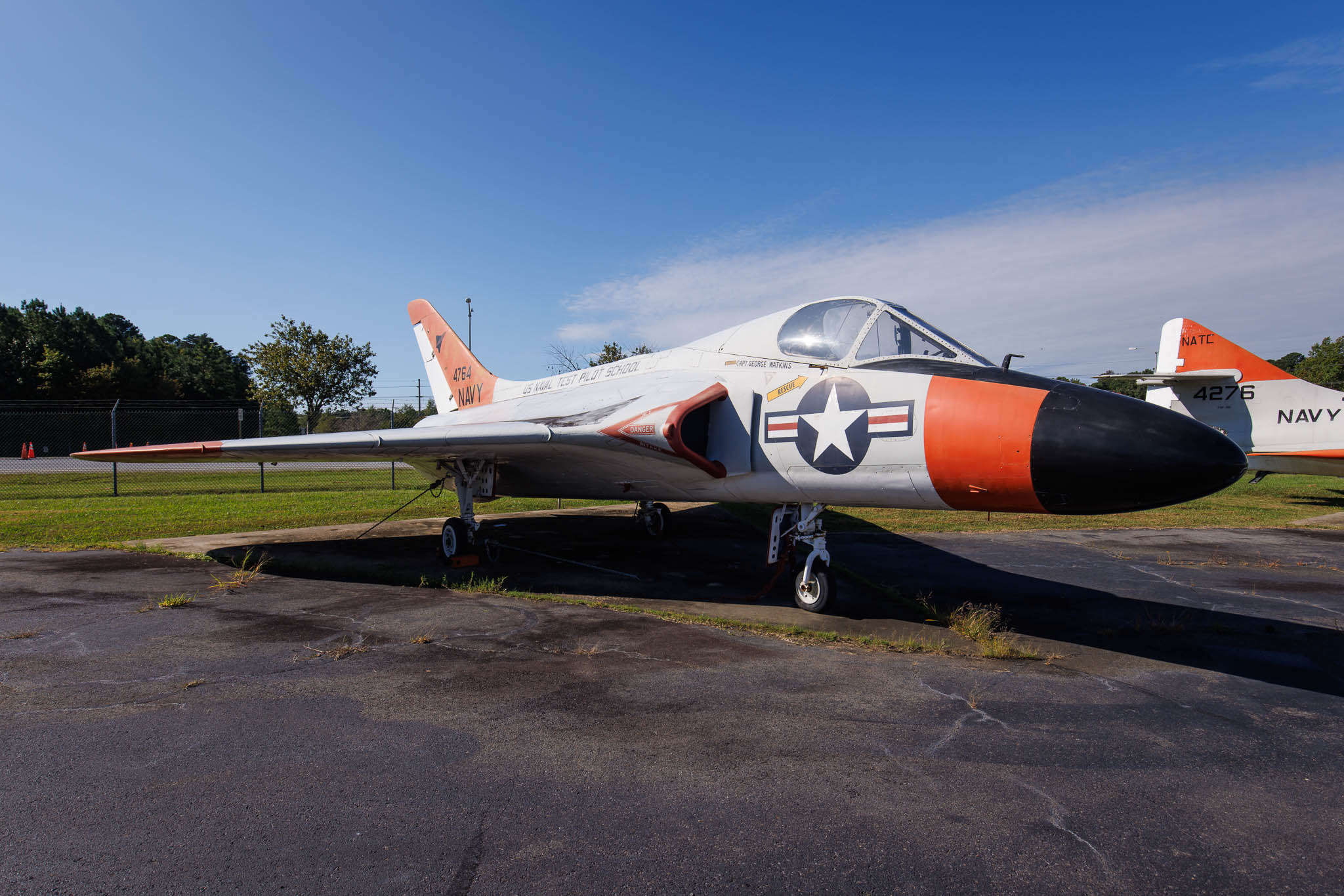 |
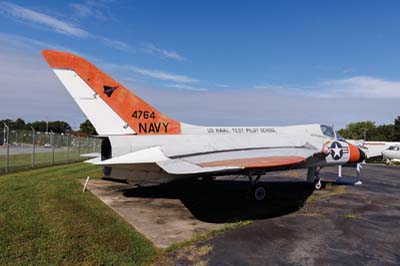
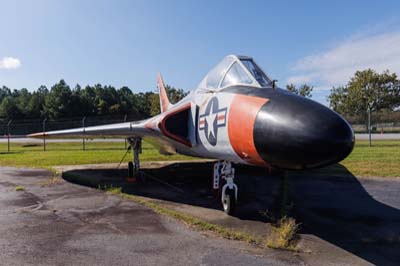
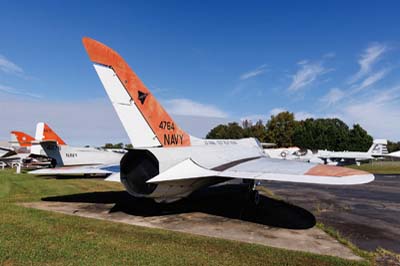
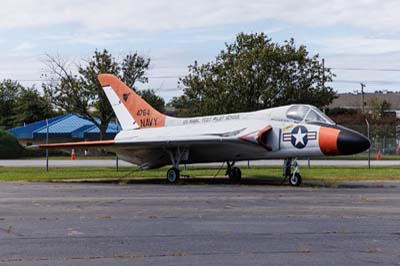
Left to right: Douglas NF-6A Skyray (134764) US Naval Test Pilot School. The Douglas F4D Skyray (later F-6 Skyray) was a carrier-based supersonic fighter and interceptor built by the Douglas Aircraft Company. It was the company's last fighter before merging with McDonnell Aircraft. Developed in the late 1940s as the D-571-1 design, the Skyray featured a delta wing and was designed for rapid climbs to intercept enemy bombers.
134764 served with the Naval Air Test Center from July 1957 to July 1958 before joining various Navy and Marine Corps squadrons. In 1961, it returned to NAS Patuxent River for use at the US Naval Test Pilot School as the first of three F-6As demonstrating delta wing performance and handling. The aircraft was retired in August 1966. |
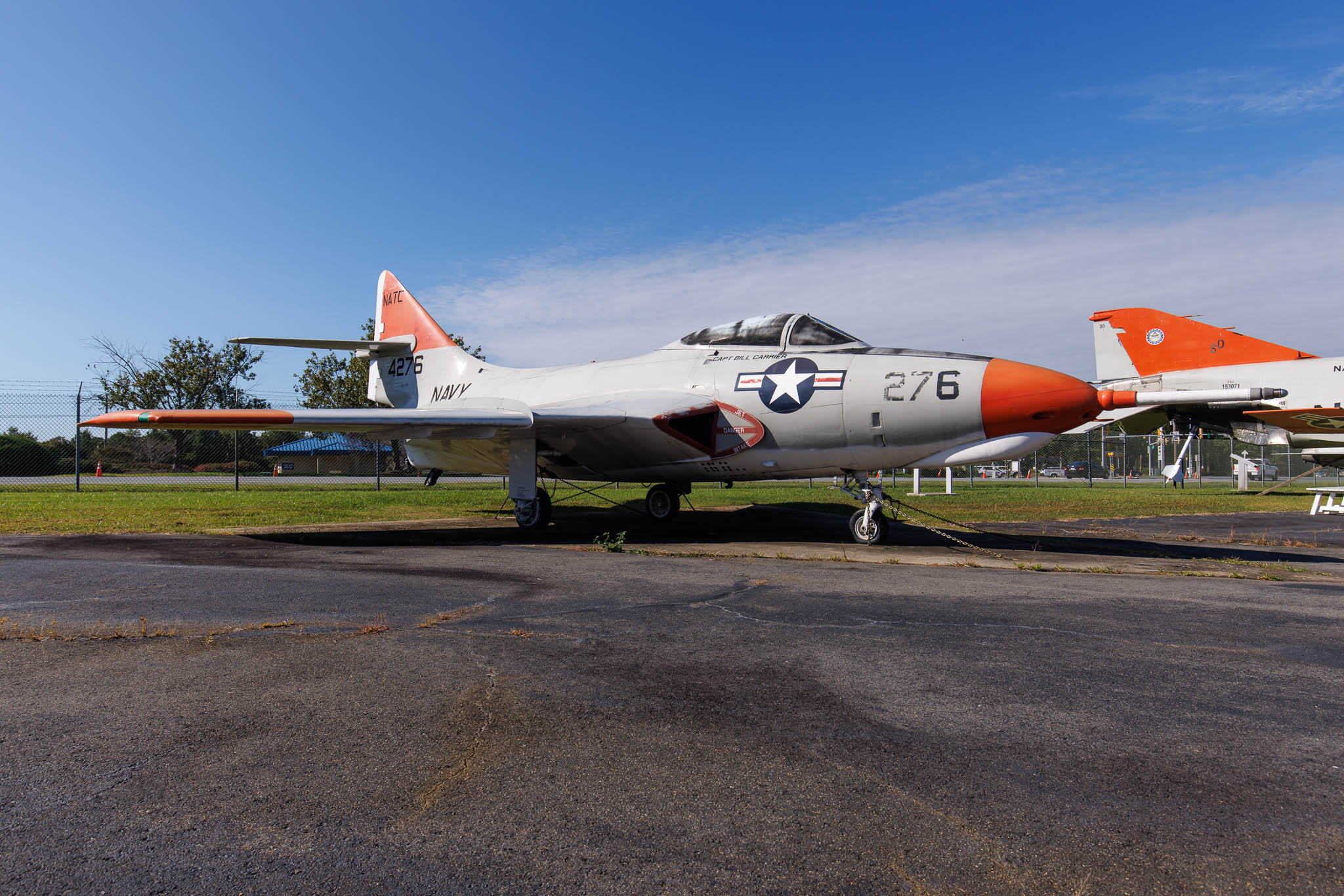 |
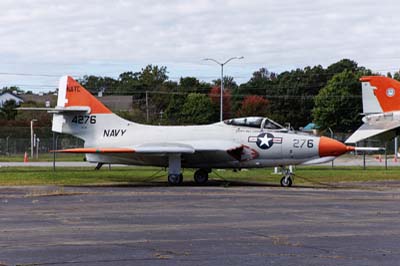
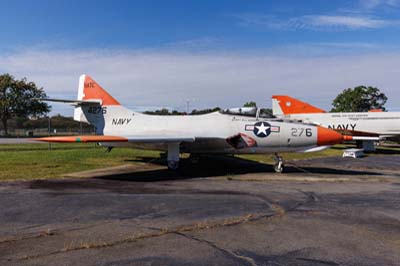
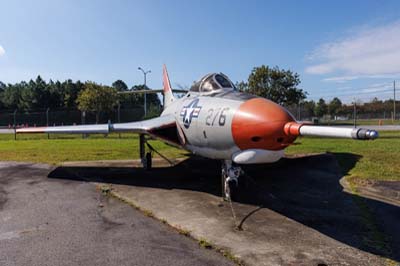
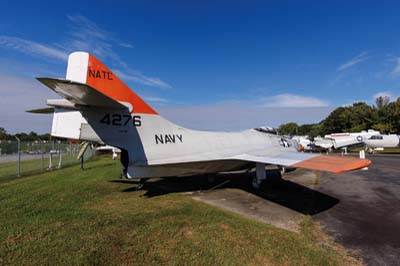
Left to right: Grumman F-9J (F9F-8) Cougar (144275 painted as '144276') with Naval Air Training Command (NATC). The Grumman F9F/F-9 Cougar is a carrier-based, jet-powered fighter aircraft conceived in the early 1950s for the United States Navy and United States Marine Corps. The Cougar was created to quickly provide a swept-wing naval fighter in response to emerging jet technology. Rather than designing an entirely new aircraft, Grumman engineers built upon the earlier F9F Panther, replacing its straight wings with newly designed swept wings to achieve improved speed and aerodynamic performance.
144275 was delivered to the Navy as an F9F-8 and later converted to an F9F-8B. It was subsequently modified into a QF-9J target drone for the Pacific Missile Test Center at NAS Point Mugu. Retired in September 1966, the aircraft was briefly displayed in Richmond, Virginia before being transferred to the museum. |
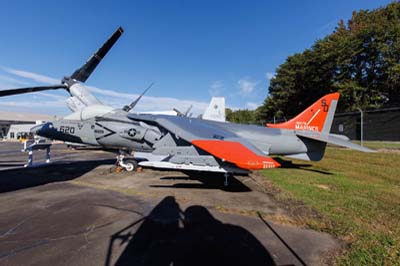
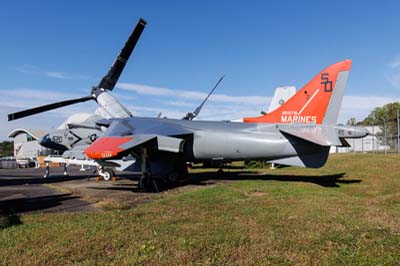
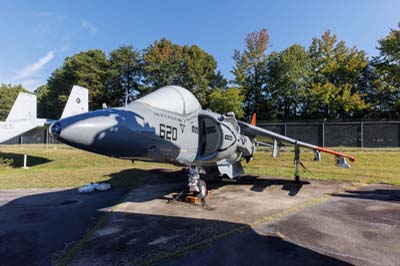
Left to right: McDonnell Douglas AV-8B Harrier (161576 'SD-620') US Marine Corps (USMC) based at NAS Patuxent River.
161576 is the fourth production AV-8B. It flew at NAS Patuxent River with the Strike Aircraft Test Directorate, VX-5, and the Naval Strike Aircraft Test Squadron before being retired in August 1999. The aircraft joined the museum's flight line in January 2019.
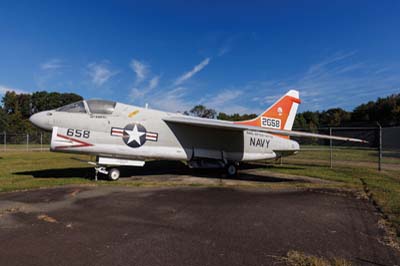
Ling-Temco-Vought NA-7A Corsair II (152658) with Naval Air Test Center (NATC) based at NAS Patuxent River. The A-7 Corsair II is an American carrier-capable, subsonic light attack aircraft built by Ling-Temco-Vought (LTV). Developed in the early 1960s to replace the Douglas A-4 Skyhawk, its design was based on the Vought F-8 Crusader.
152658 was delivered to the Naval Air Test Center in September 1966, it was used for Board of Inspection and Survey trials and A-7 carrier suitability tests on USS America. In 1969, it became the first A-7 powered by the TF41 engine and was modified with the 'N' designation for permanent test use. After its final flight on October 27, 1978, it was transferred to the museum in 1979.
|
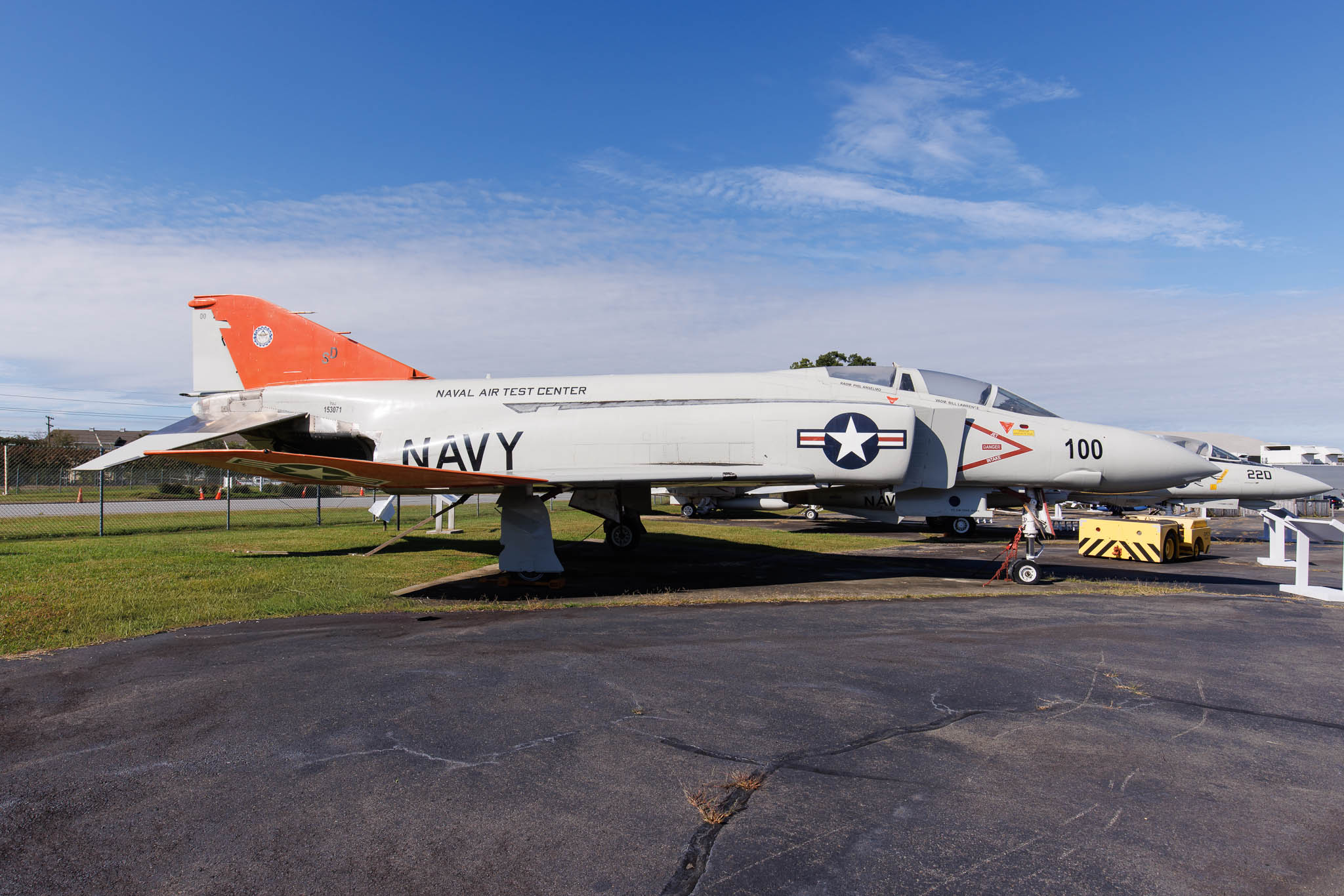 |
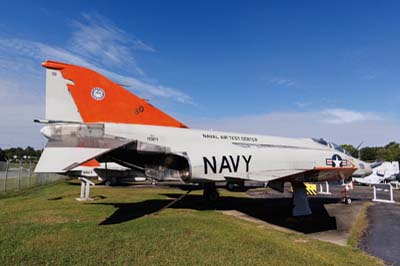
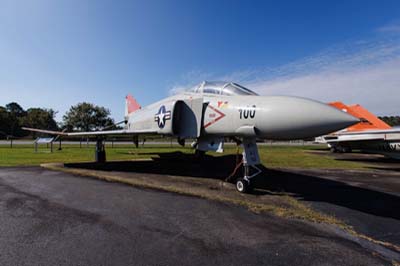
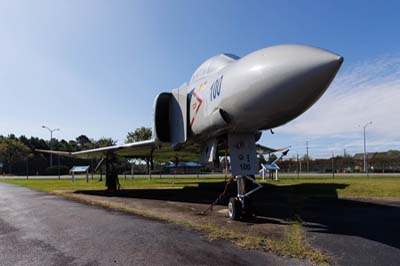
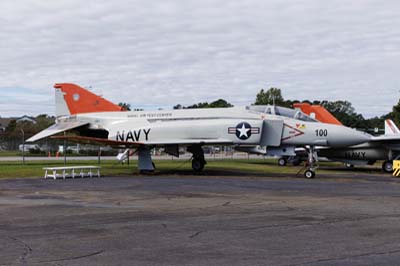
Left to right: McDonnell Douglas F-4J Phantom II (153071 'SD-100') with Naval Air Test Center (NATC) based at NAS Patuxent River. The F-4J as developed as an all-weather, long-range supersonic jet interceptor and fighter-bomber for the US Navy.
153071 spent its entire career at NAS Patuxent River. First flown on June 28, 1966, it joined the Naval Air Test Center in 1967 and was used mainly for carrier suitability and automatic carrier landing system testing. It was retired in October 1986 and transferred to the museum in 1987. |
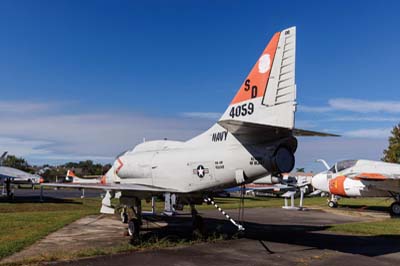
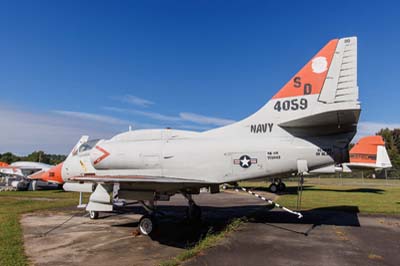
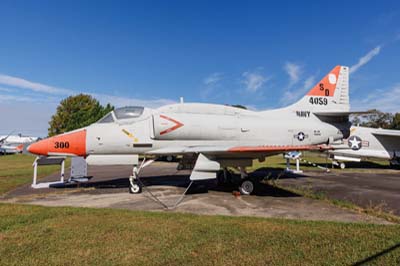
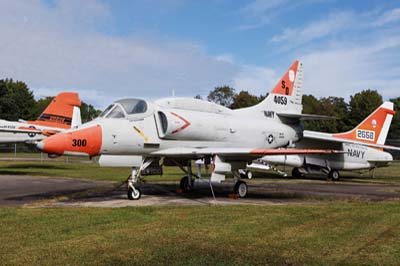
Left to right: Douglas NA-4M Skyhawk (155049 'SD-300') based at NAS Patuxent River, a former test and evaluation aircraft that served as the prototype for the A-4M Skyhawk model. Originally a Douglas A-4F, it was converted to an NA-4F and then NA-4M. The A-4 Skyhawk is a single-seat, subsonic, carrier-capable light attack aircraft. Developed in the early 1950s for the US Navy and Marine Corps, it was designed to replace the propeller-driven Douglas A-1 (AD) Skyraider.
155049 spent its entire career at NAS Patuxent River. Built as an A-4F, it first flew on 14 May 1970 and was converted into the prototype A-4M with the special "N" designation as a permanent test aircraft. It served with the Naval Air Test Center for Board of Inspection and Survey trials, engine improvement programs, and other projects until being retired and transferred to the museum in November 1990. |
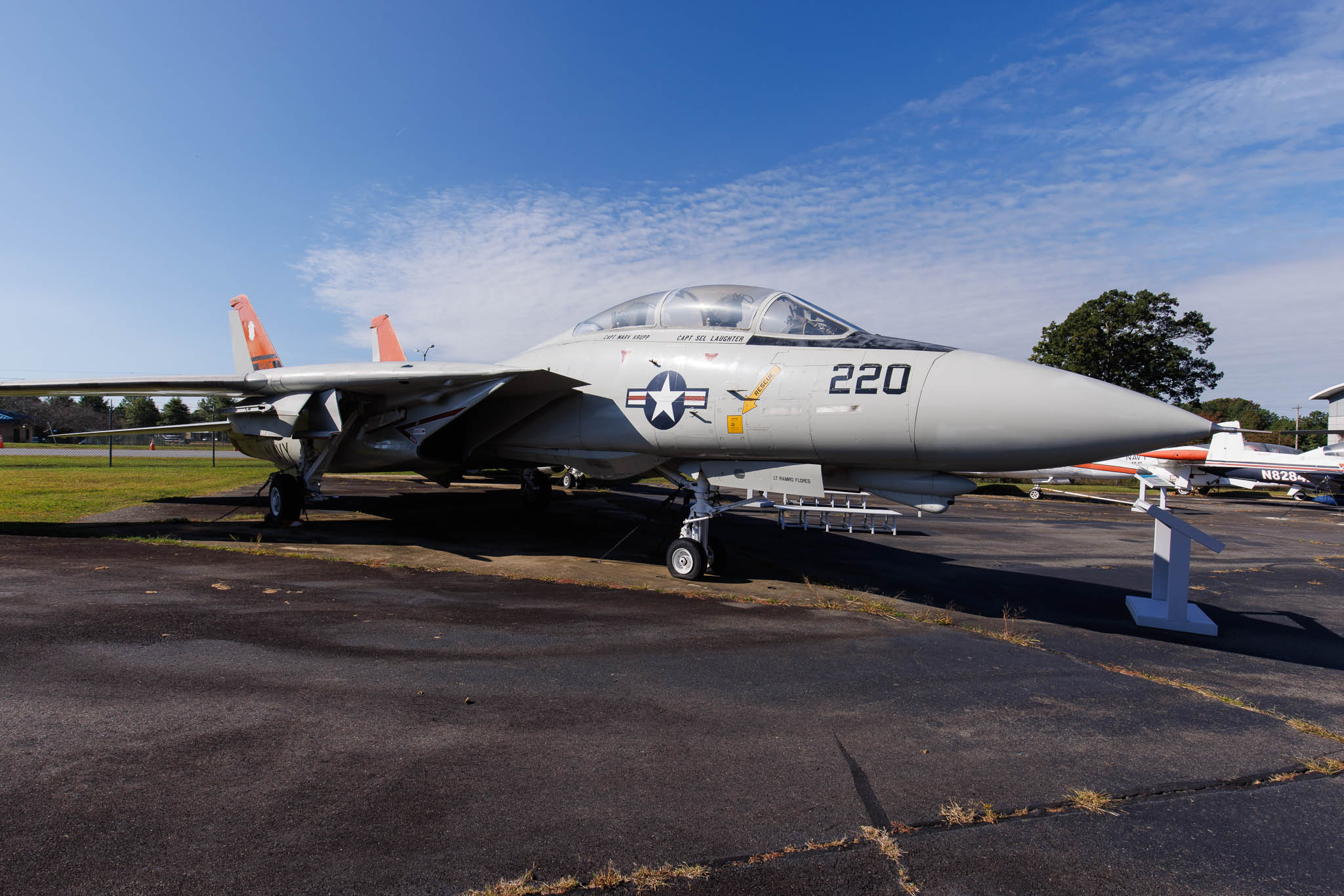 |
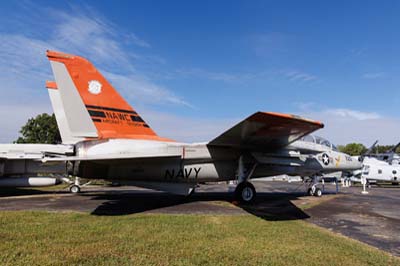
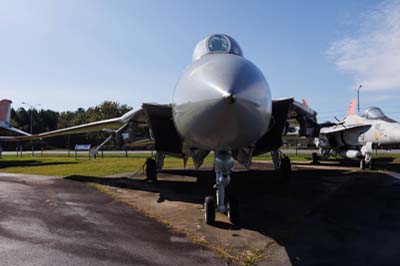
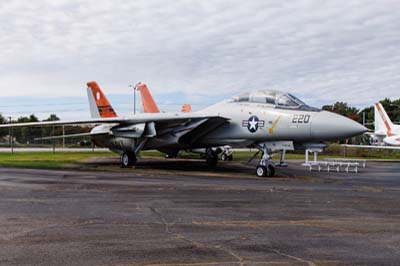
| Left to right: Grumman NF-14D Tomcat (161623 '220') with Naval Air Warfare Center (NAWC) based at NAS Patuxent River. 161623 was the last of four F-14D development/test planes, the first having flown in September 1988. During its test career, it was used by Grumman Aircraft Company and the Naval Air Test Center for testing various avionics and airborne electronic systems. |
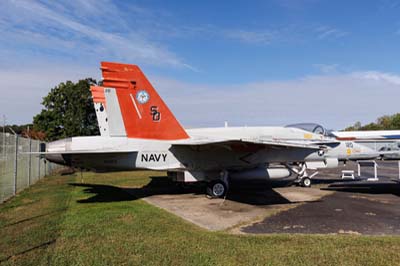
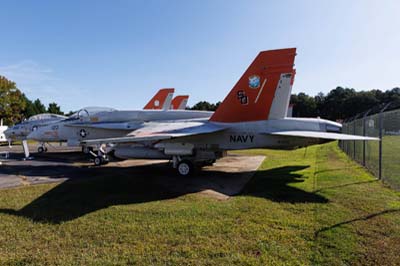
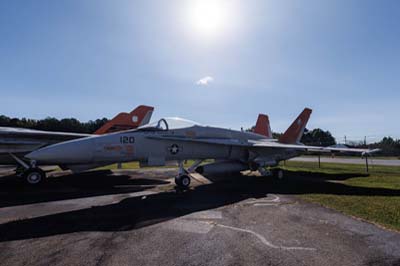
Left to right: McDonnell Douglas F/A-18A Hornet (161353 'SD-120') based at NAS Patuxent River. An all-weather supersonic, twin-engined, carrier-capable, multirole combat aircraft, designed as both a fighter and ground attack aircraft.
161353 was accepted by the Navy in June 1981 and initially served with VFA-125 on the West Coast. It was transferred to the Naval Air Test Center in 1986 for mission systems testing, then flew with the Blue Angels from 1990 to 1991. The aircraft was retired in August 1993 and moved to the museum in September 1996. |
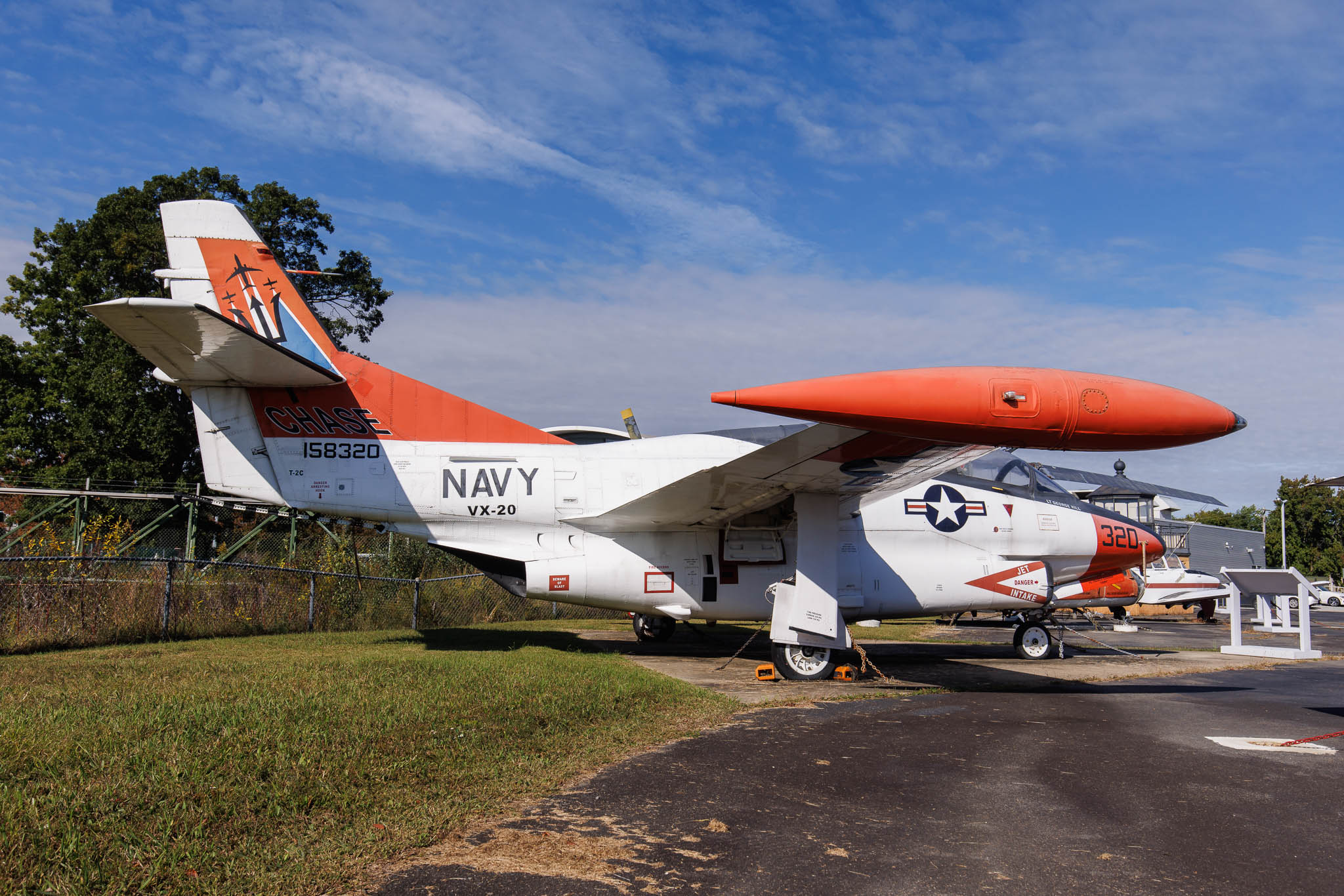
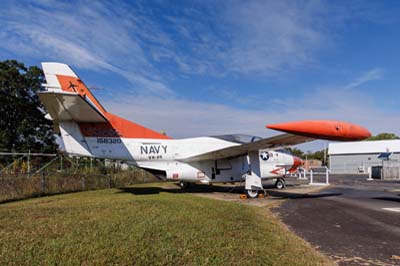
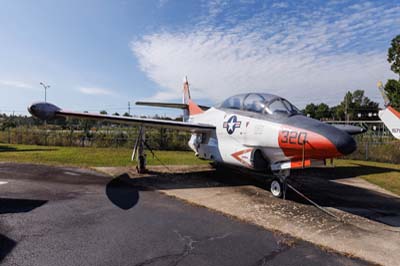
| Left to right: North American Rockwell T-2C Buckeye (158320 '320') with VX-20 US Navy. A jet trainer aircraft that was accepted in 1971 and retired in 2015, after which it became the last US Navy T-2 to fly. Initially serving in the Training Command, it was later transferred to VX-20 for use as a chase aircraft and flew with the US Naval Test Pilot School based at NAS Patuxent River. |
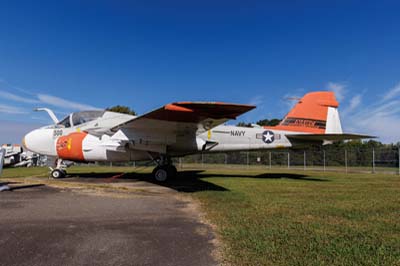
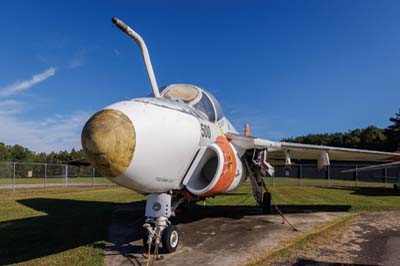
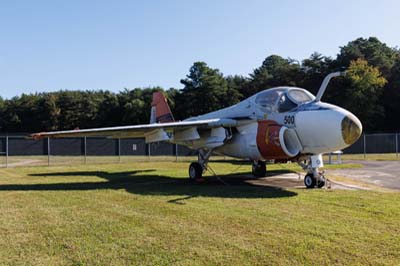
Left to right: Grumman A-6E Intruder (156997 '500') with Naval Air Warfare Center (NAWC) based at NAS Patuxent River. The A-6 Intruder is the world's first fully all-weather attack bomber capable of detecting and identifying both tactical and strategic targets.
156997 first flew in December 1969 as an A-6A and served with several fleet squadrons. Converted to an A-6E, it later joined VX-5 at Point Mugu, for mission system testing, and in October 1984 transferred to NATC's Strike Aircraft Test Directorate for continued upgrade evaluations. Its final flight was on 29 July 1993, and it was moved to the museum in April 1995. |
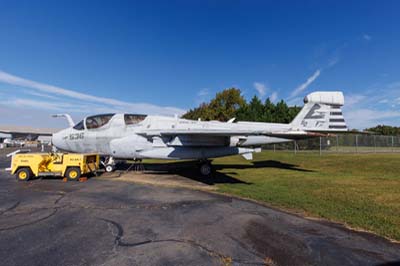
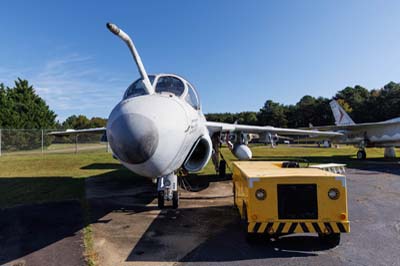
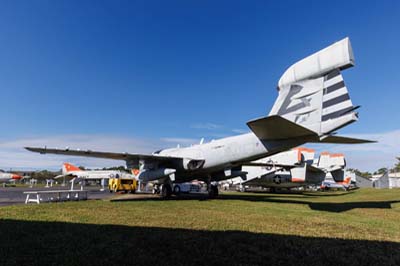
Left to right: Grumman EA-6B Prowler (159909 'SD-536') with VX-23 'Salty Dogs' based at NAS Patuxent River. The EA-6B Prowler is a twin-engine, four-seat, mid-wing electronic warfare aircraft. Operated by the US Navy and US Marine Corps from 1971 to 2019, it was developed from the A-6 Intruder airframe.
159909 was the third EA-6B built in the 'Improved Capability' (ICAP) configuration. Manufactured in 1978, it served with several active-duty squadrons, seeing combat in Libya (1986), Bosnia (1995), and other operations. Converted to a test aircraft in 2004, it spent most of its flight time at NAS Patuxent River testing ICAP-III and other upgrades. The EA-6B was retired in October 2017 and joined the museum. |
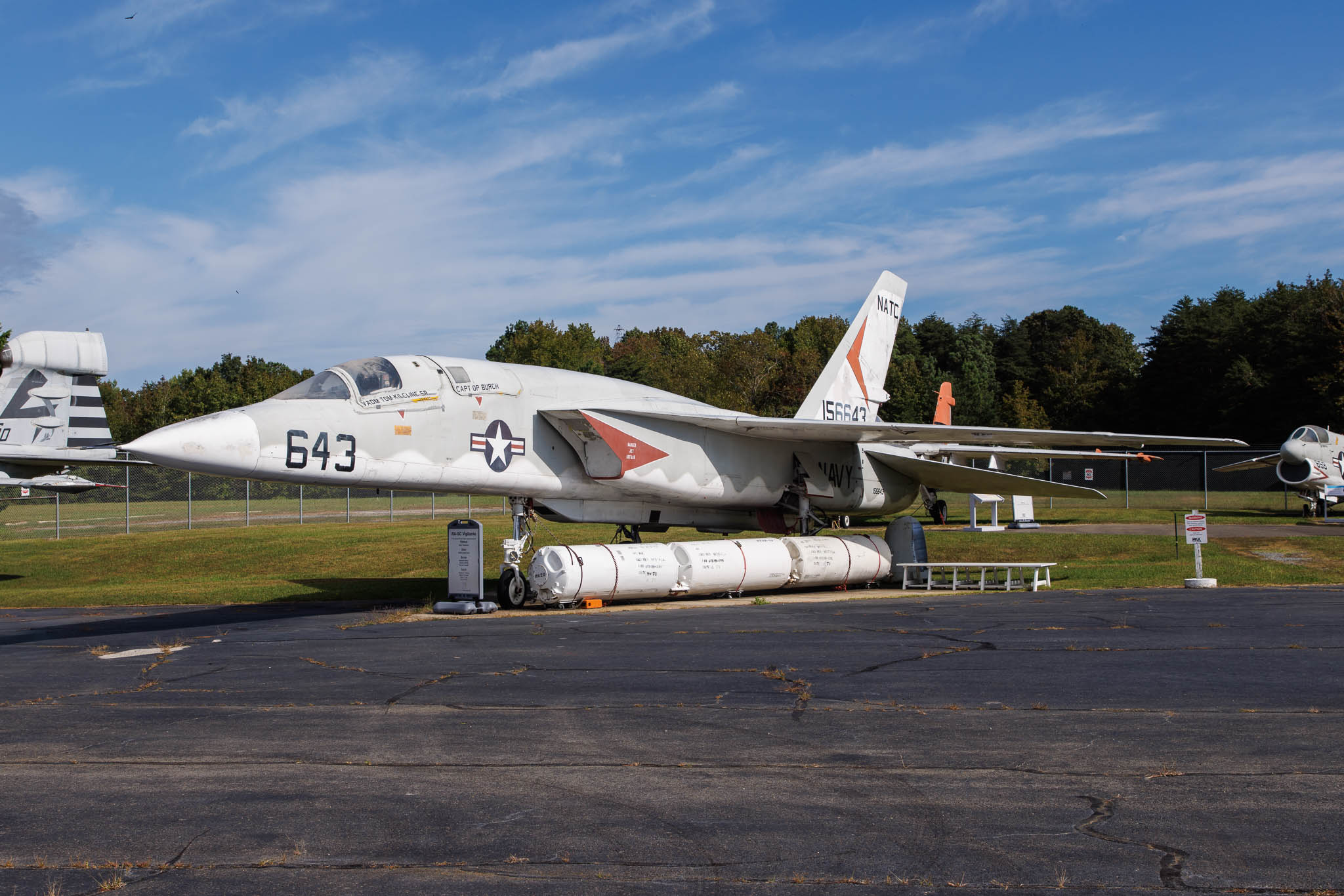 |
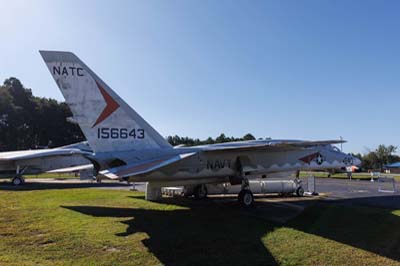
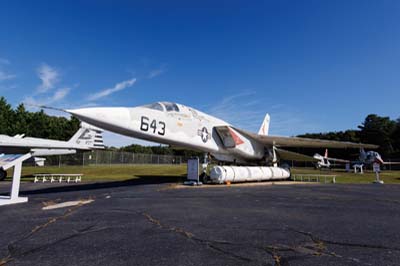
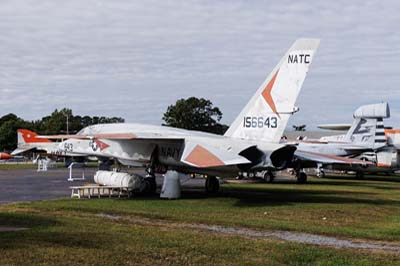
Left to right: North American RA-5C Vigilante (156643) Naval Air Training Command (NATC).
156643 was the last production RA-5C reconnaissance aircraft accepted by the US Navy in October 1970 and after serving with various squadrons, was retired in June 1979. The Vigilante was a carrier-based supersonic bomber designed US Navy and introduced in 1961. |
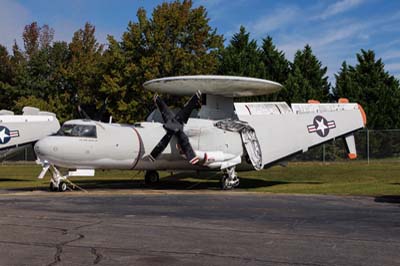
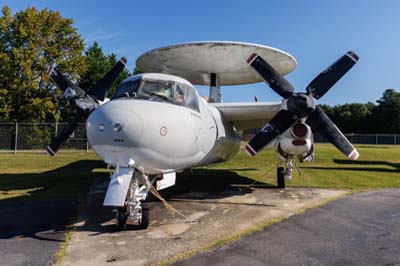
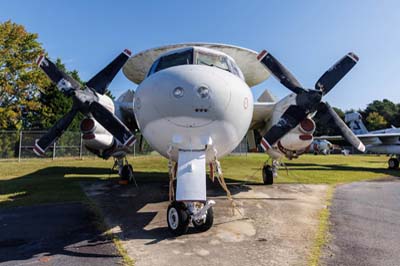
Left to right: Grumman E-2B Hawkeye (152476) with the Naval Air Test Center. The E-2 Hawkeye is an all-weather, carrier-capable tactical airborne early warning (AEW) aircraft. Unlike earlier AEW platforms, the E-2 was the first aircraft purpose-built for the AEW role, rather than being a modification of an existing airframe, establishing a new standard for naval airborne surveillance and command operations.
152476 was built as an E-2A and accepted by the Navy on 3 February 1966. It served with various fleet squadrons before being converted to an E-2B in January 1971, after which it operated with NATC's Service Test Division and additional fleet units. Its final flight was in July 1985, joining the museum in September 1986. |
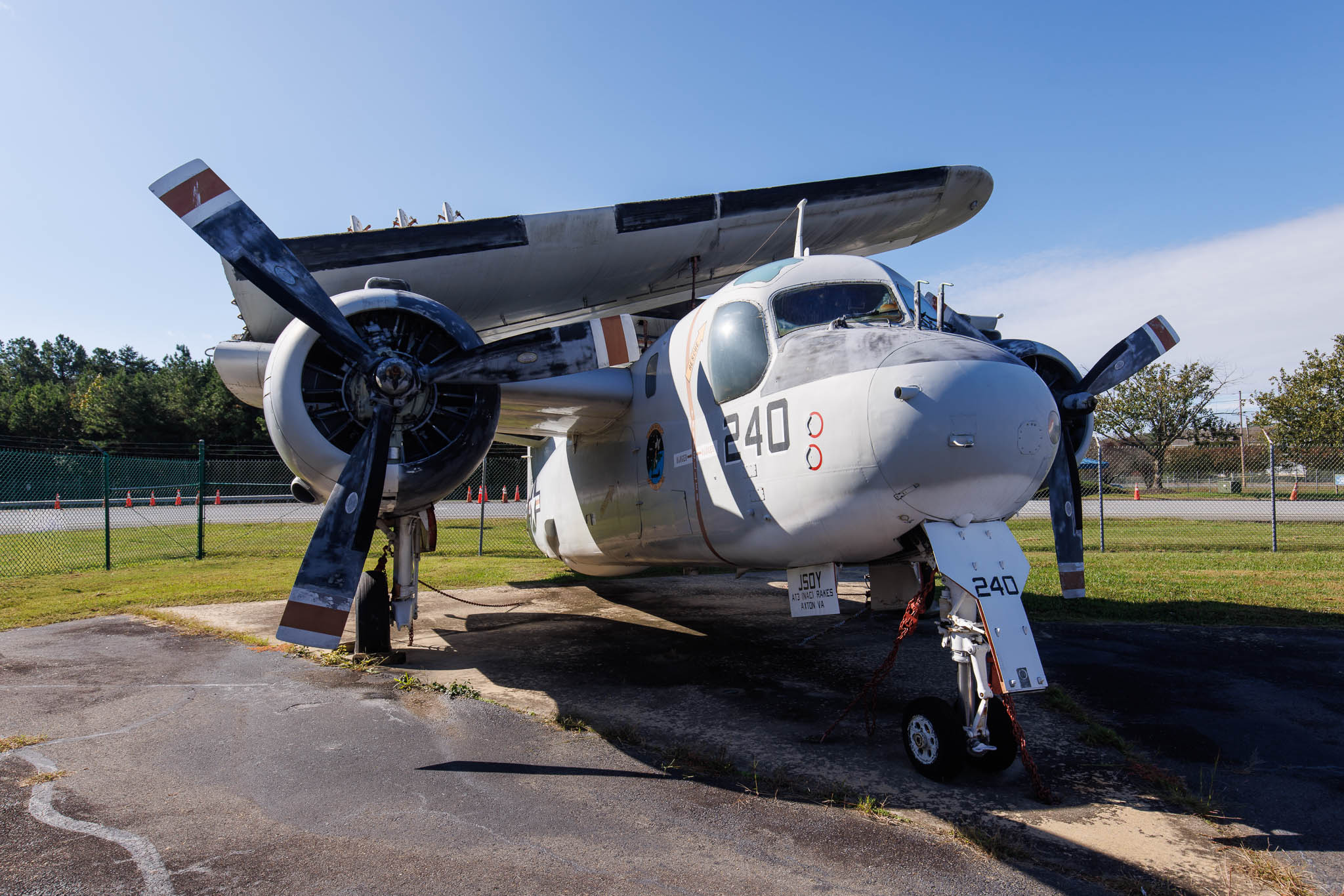 |
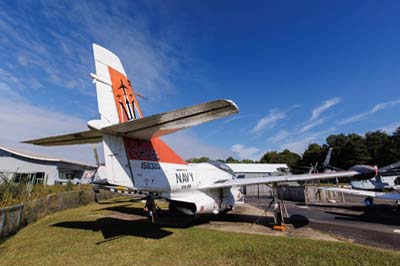
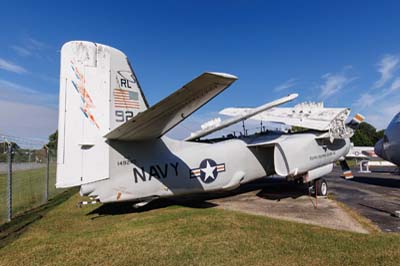
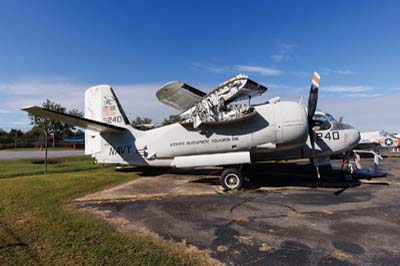
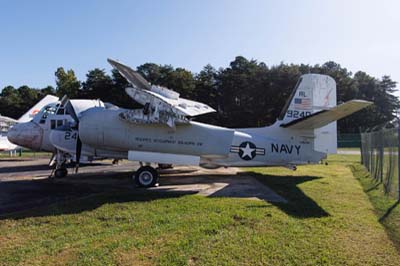
Left to right: Grumman S-2D Tracker (149240 'RL-240') from Scientific Development Squadron One. The S-2 Tracker was the first aircraft specifically designed and built as a single airframe anti-submarine warfare (ASW) platform for the United States Navy. Serving as a key component of the Navy's Cold War ASW operations, the Tracker combined detection and attack capabilities in one aircraft, a significant innovation for its time. It was later replaced by the Lockheed S-3 Viking. The last Navy S-2 was officially retired on August 29, 1976.
149240 was manufactured on 20 March 1962 and operated at NAS Patuxent River with the Naval Research Laboratory's Flight Support Detachment. It was retired in 1981 and transferred to the museum in 1982. |
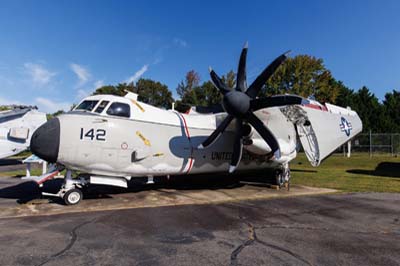
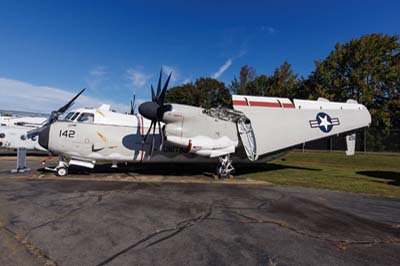
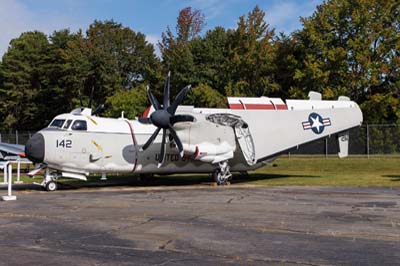
| Left to right: Grumman C-2A Greyhound (162142). A US Navy twin-engine turboprop aircraft, formerly used for carrier-onboard-delivery (COD) missions. It was with VX-20 based at NAS Patuxent River. Joined the museum in 2020. |
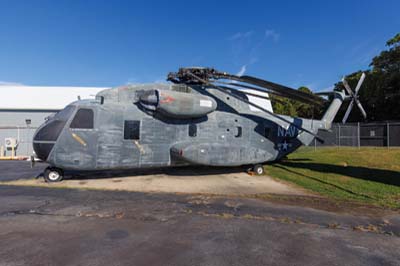
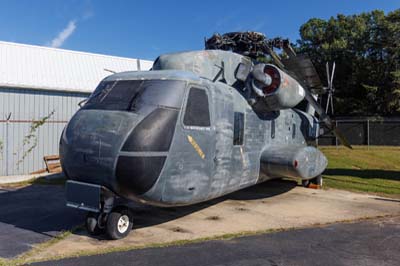
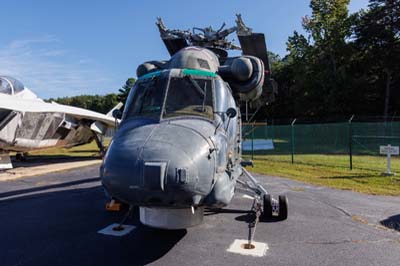
Left to right: Sikorsky NCH-53A Stallion (151686). The NCH-53A Stallion was a US Navy variant of the original CH-53A Sea Stallion, modified for permanent special testing and evaluation.
151686 was the third CH-53A produced. It served with HMH-363 from 1968 to 1971 before transferring to the Naval Air Development Center in Warminster, PA, to support FLIR and Night Vision system development for low-altitude night operations. The helicopter was retired in 1991 and moved to the museum.
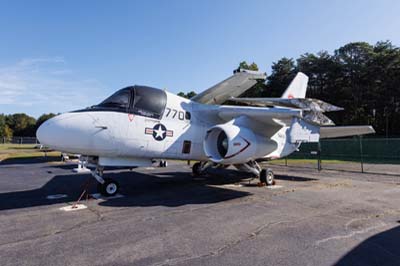
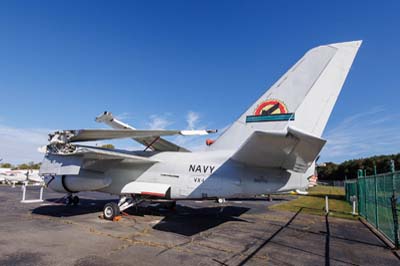
Lockheed S-3B Viking (159770) an anti-submarine and carrier-based aircraft.
159770 was originally built as an S-3A and transferred to the Naval Air Test Center in October 1976. It was used for carrier suitability testing, missile integration (Harpoon and Maverick), and various navigation and radar upgrades. In October 2003, it joined VX-1 for software and missile testing before being transferred to the museum in January 2006. |
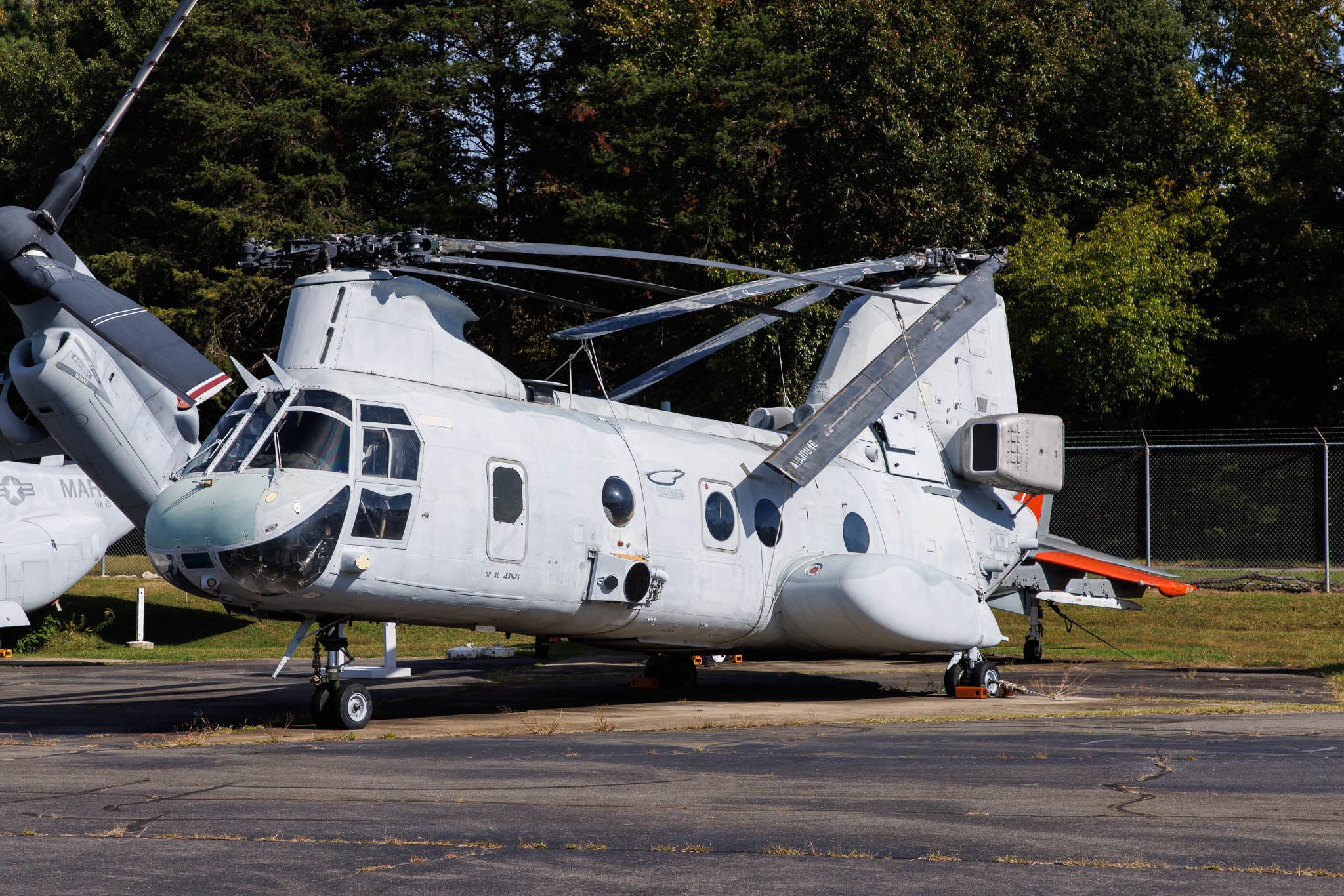 |
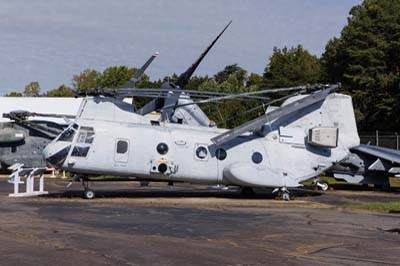
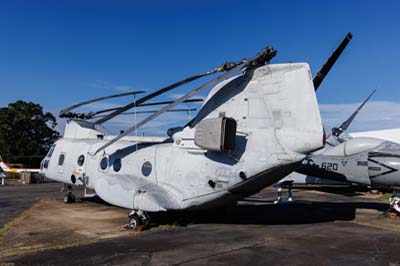
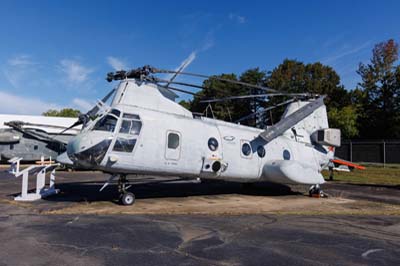
Left to right: Vertol CH-46E Sea Knight (152578). The CH-46E Sea Knight was a versatile assault transport helicopter used from 1964 through the 2010s, serving in troop and cargo transport, search and rescue, and combat support, before being replaced by the MV-22 Osprey.
152578 was delivered to the Navy as a CH-46D and later upgraded to a CH-46E in the late 1970s, receiving new avionics, structural enhancements, composite rotor blades, and more powerful engines. Serving with HX-21 at NAS Patuxent River, it was used to test mission systems, infrared signature suppression, and armament upgrades. The helicopter was retired in October 2012 and transferred to the museum in 2014. |
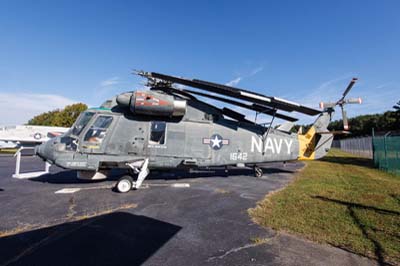
Left to right: Kaman SH-2G Seasprite (161642). A ship-based helicopter with anti-submarine, anti-surface threat capability, including over-the-horizon targeting.
161642 was manufactured as an SH-2F and accepted by the Navy in November 1983. It served with NATC's Rotary Wing Aircraft Test Directorate in 1984, then flew with HSL-32 until October 1991. Converted to the SH-2G variant by Kaman, it returned to NATC for flight envelope and system testing until its final flight in September 1997. The aircraft was transferred to the museum in July 1998.
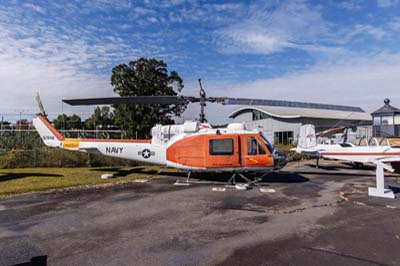
Bell TH-1L Iroquois (157842). The TH-1L was a two-seat helicopter used for intermediate pilot training, with one instructor and one student, designed to teach the fundamentals of helicopter flight.
157842 was accepted into service by the Navy in April 1970 and served with the Navy's Air Training Command until August 1983. At that point, it was withdrawn from service and transferred to the Naval Air Test Center's Rotary Wing Aircraft Test Directorate.
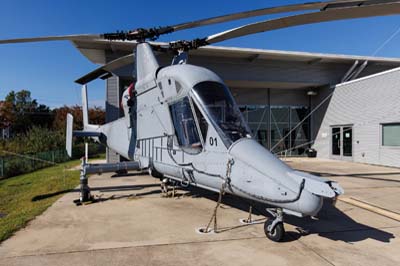
Kaman K-1200 K-MAX (169221). It was one of two delivered to the Marine Operational Test and Evaluation Squadron at MCAS Yuma for testing unmanned operations of cargo aircraft. To the musem in January 2025. |
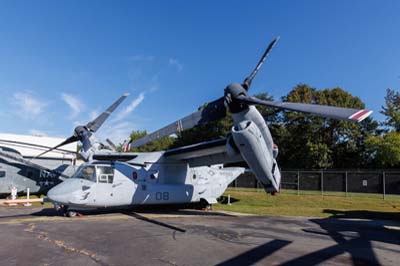
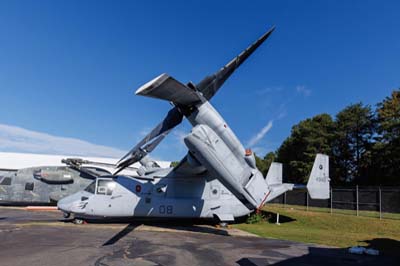
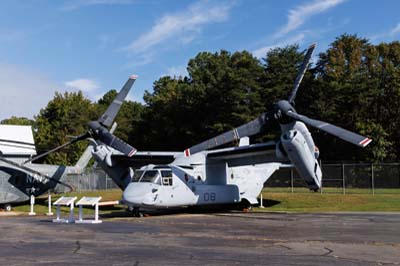
| Left to right: Bell-Vertol MV-22B Osprey (164940 '08') it was the first MV-22B variant to be built, serving as the 8th Osprey overall and part of the original Engineering and Manufacturing Development (EMD) test aircraft. |
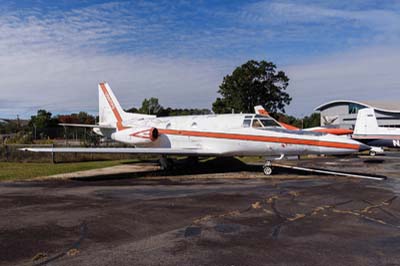
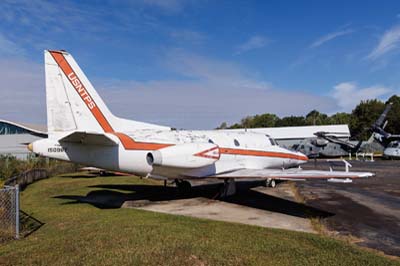
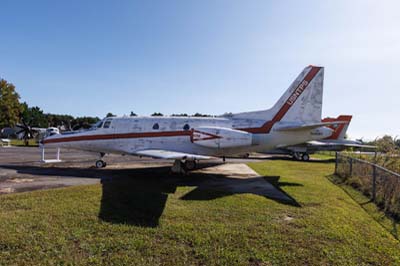
Left to right: North American Rockwell NT-39D Sabreliner (150987). The United States Naval Test Pilot School (USNTPS) is renowned for training some of the world's top developmental test pilots. Among its training aircraft, the NT-39D was employed to instruct flight officers in radar navigation and airborne radar-intercept techniques, providing essential skills for advanced operational and experimental flight missions.
150987 was a unique T-39 aircraft. Accepted by the Navy on 12 August 1964, it initially served as a Naval Flight Officer trainer until 1977. It was then modified with an F/A-18 nose and radar to support Hornet radar development and flight testing at NAS Patuxent River and China Lake. In 1988, it was transferred to the US Naval Test Pilot School for radar evaluation training, flying for the last time on July 14, 1989. |
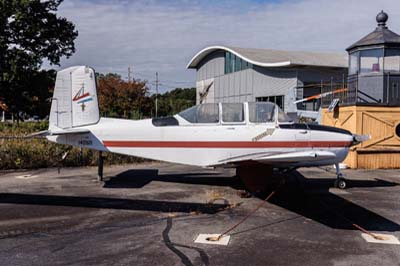
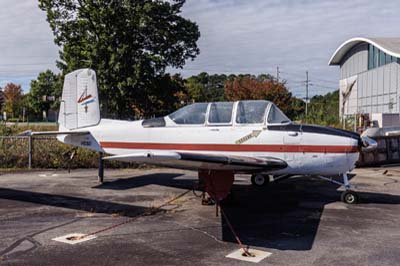
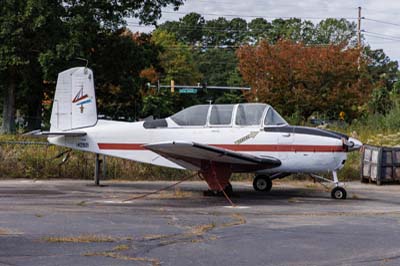
| Left to right: Beech T-34B Mentor (140921). The Mentor was a US Navy version of the single-engine trainer aircraft derived from the Beechcraft Bonanza. The T-34B was built until 1957 and was used for primary flight training until being superceded by the T-34C Turbo-Mentor and the T-6 Texan II in the 2000s. |
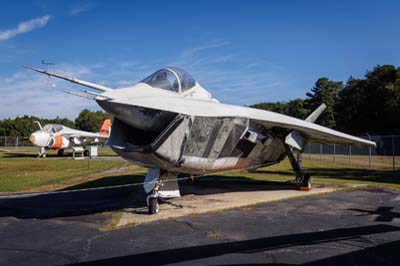
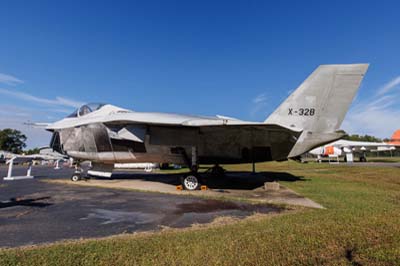
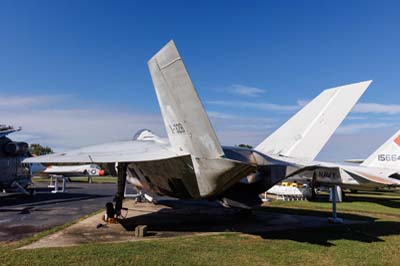
Left to right: Boeing X-32B JSF Demonstrator (no serial allocated) a concept demonstrator aircraft that was designed for the Joint Strike Fighter competition, it lost to the Lockheed Martin X-35 demonstrator.
The X-32B is the only aircraft of its type and first flew on 29 March 2001. It was never assigned a Navy Bureau Number. After initial testing at Edwards AFB, it moved to NAS Patuxent River for JSF flight trials between May and July 2001. Transferred to PRNAM in March 2005, the demonstrator completed 78 flights totaling 43 flight hours. |
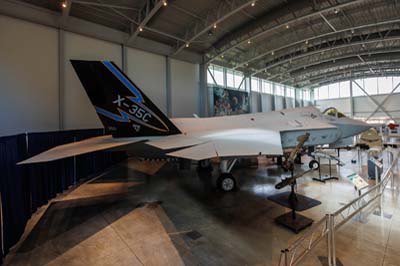
Left to right: Lockheed Martin X-35C (300) a carrier-capable concept demonstrator aircraft (CDA) for the Joint Strike Fighter program, it featured larger wings and a stronger landing gear than the other X-35 variants. Its design was later developed into the F-35 Lightning II.
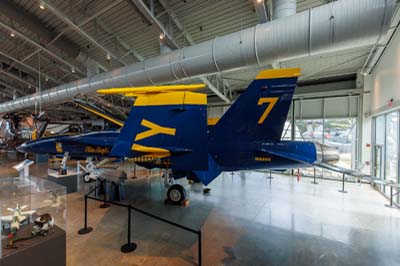
McDonnell Douglas F/A-18B Hornet (162885 '7') painted in Blue Angels scheme.
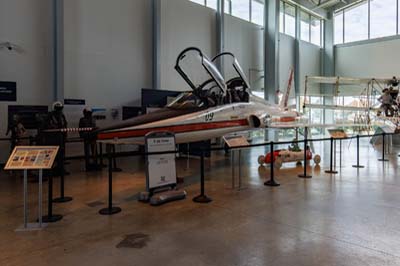
Northrop T-38A Talon (623625 '09') with the United States Naval Test Pilot School (USNTPS).
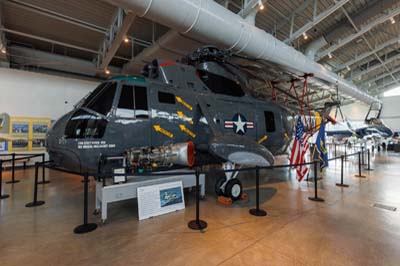
Sikorsky UH-3A Sea King (148038). The SH-3 Sea King is a twin-engine anti-submarine warfare (ASW) helicopter. It was among the first ASW helicopters to be powered by turboshaft engines, marking a major advancement in rotorcraft performance and reliability. The Sea King was developed in response to the United States Navy's growing need during the 1950s to combat the increasing threat posed by Soviet submarines. The UH-3H version displayed is a cargo, utility transport version for the US Navy; converted from SH-3H by removing ASW systems.
|