Luftfahrt Technisches Museum
(Aviation Technical Museum)
Rechlin, Germany
February 2026
|
Rechlin was a major aircraft testing centre, before and during World War Two: From 1936 onwards, Rechlin emerged as Germany's principal flight testing centre, hosting demonstrations of new aircraft, upgraded engines, and advanced onboard systems for the Reich Air Ministry. Key types such as the Messerschmitt Bf 110 and Junkers Ju 88 made early appearances here.
Testing pushed both technology and personnel to the limit. By 1937, a series of fatal crashes highlighted the dangers inherent in high performance experimental flying, even as the establishment expanded rapidly in size and importance.
On July 3, 1939, Rechlin showcased groundbreaking innovations to Adolf Hitler and senior officials, including the rocket powered Heinkel He 176, the jet powered Heinkel He 178, early radar equipment, and new weapons and servicing techniques.
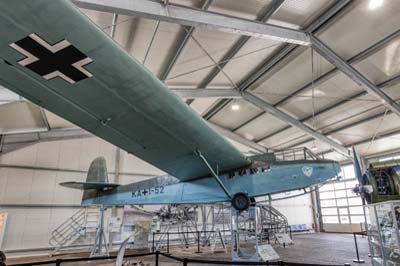
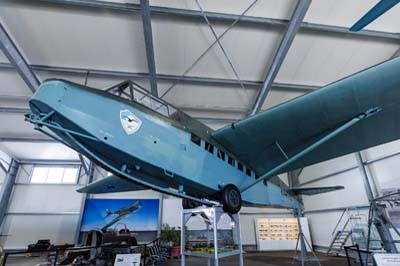
During World War Two, Rechlin's role broadened further. Combat experience drove continuous evaluation of improved fighter and bomber variants, while mounting logistical challenges led to extensive trials of transport gliders and large cargo aircraft. This development path progressed from the DFS 230 and Go 242 to the massive Messerschmitt Me 321 and its powered successor, the Messerschmitt Me 323, tested from 1942 onwards.
A key milestone came in the summer of 1944, when Rechlin began testing the new generation of jet aircraft, most notably the Arado Ar 234 and the Messerschmitt Me 262. These trials marked a decisive shift into the jet age, as engineers and test pilots evaluated performance, handling characteristics, and operational suitability under wartime conditions.
On April 10, 1945, a major attack by the United States Army Air Forces on jet fighter bases in northern Germany brought Rechlin and Lärz back into the crosshairs. A force of 275 bombers struck the area, inflicting severe damage and effectively ending the operational capability of the Rechlin test site.
Following the advance of the Red Army into Rechlin, the occupying forces began dismantling the remaining serviceable airfield installations, removing equipment and infrastructure that had survived the bombing.
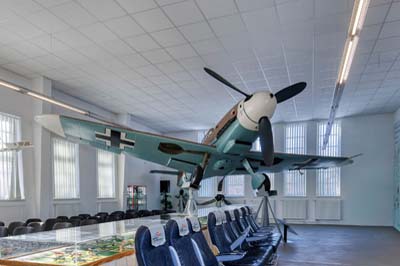
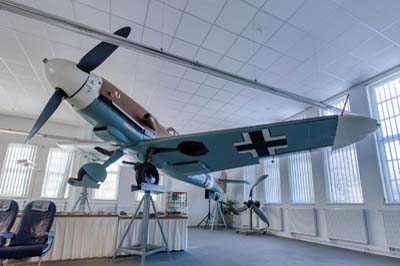
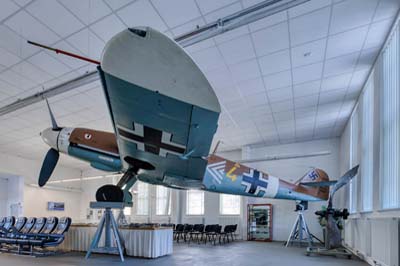
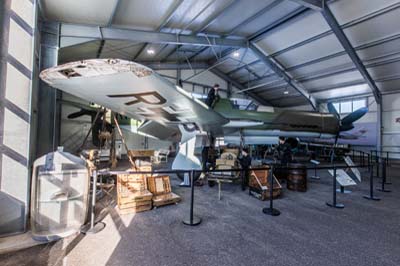
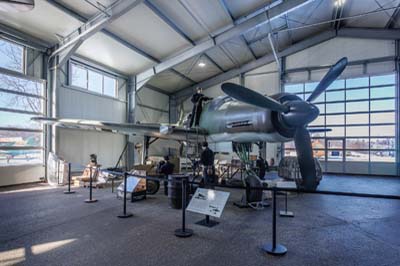
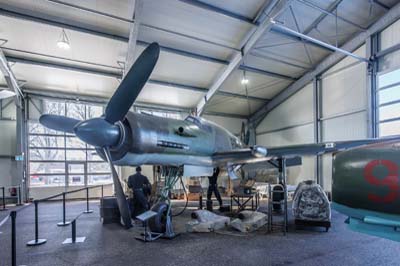
The Luftfahrt Technisches Museum, founded in 1993, presents exhibits and documentation exploring the history of the former Luftwaffe test site at Rechlin. During World War Two, Rechlin served as a central hub for German flight testing, where aircraft including the Messerschmitt Bf 109 underwent intensive evaluation.
Supported entirely by donations, the museum's grounds were gradually acquired, and the existing buildings carefully refurbished. Progress was steady rather than swift. It was not until 1999 that the first two aircraft, a Sukhoi Su 22 and a Zlin Z 37, were moved onto the site. Restoration work continued with the renewal of roofs and walls, followed by the construction of an outer perimeter fence.
The collection expanded over time. A Mikoyan Gurevich MiG 21 and a Messerschmitt Me 262 arrived in 2008, followed by a MiG 23 in 2010. Visitor numbers reflected this growth, reaching 20,000 in 2009. In 2011, the museum welcomed its 200,000th visitor since opening.
In the years that followed, additional aircraft were gradually added, each arrival marking another chapter in the museum's continuing development. |
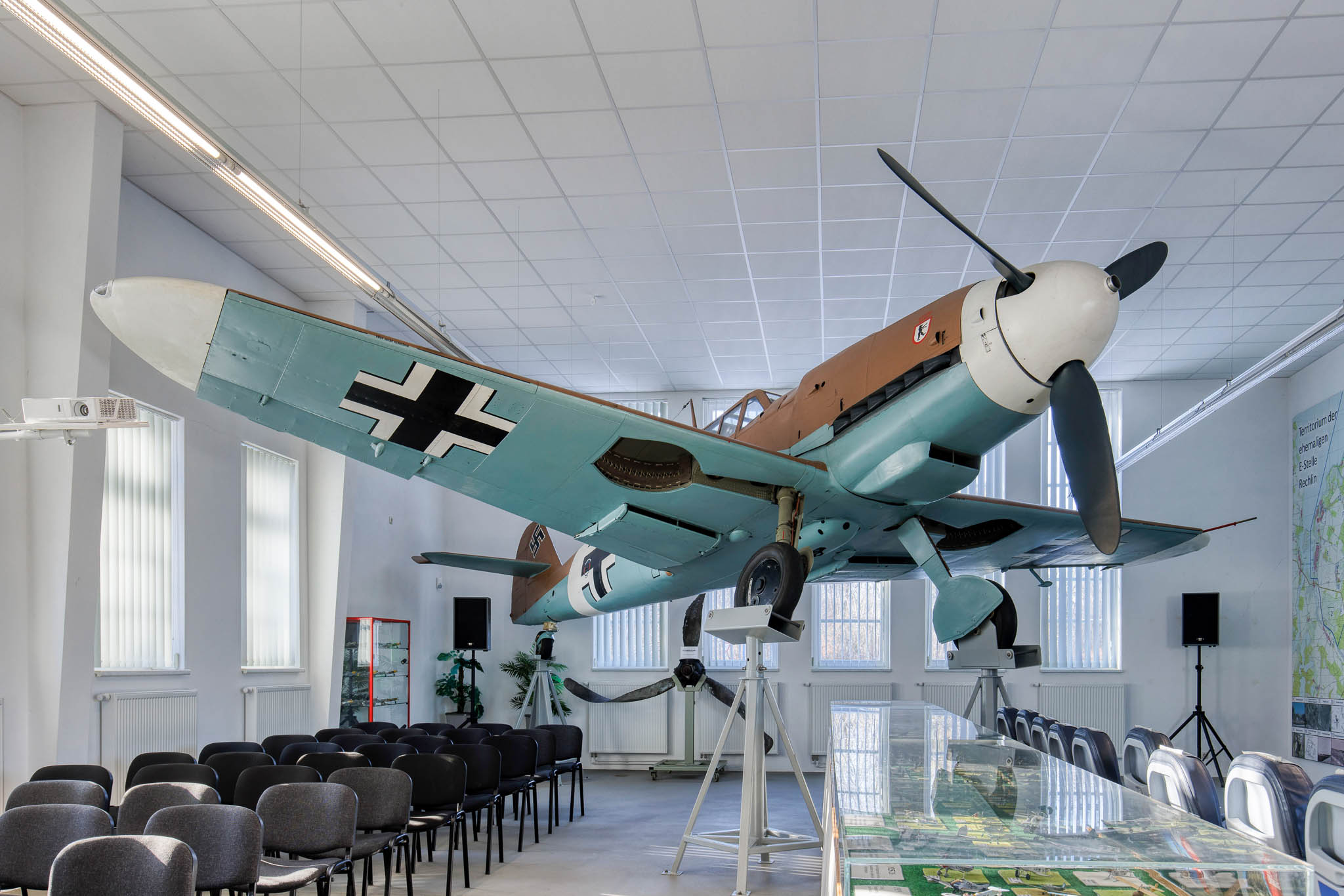 |
| Left to right: Hispano Aviación HA-1109-K1L 'Buchón' (C.4J-?? marked 10575 Yellow 4). It is a post-World War Two Spanish fighter designed by Hispano Aviación. It is a variant of the Messerschmitt Bf 109G built under license, featuring a Rolls-Royce Merlin engine instead of the original German powerplant. The aircraft was built in Seville, Spain, in the 1950s and used by the Spanish Air Force (Ejército del Aire). Previously on display at Luftwaffenmuseum, Gatow. This Buchón has been rebuilt as Bf 109G-2 with a Daimler-Benz DB 605 engine as have several other survivors. |
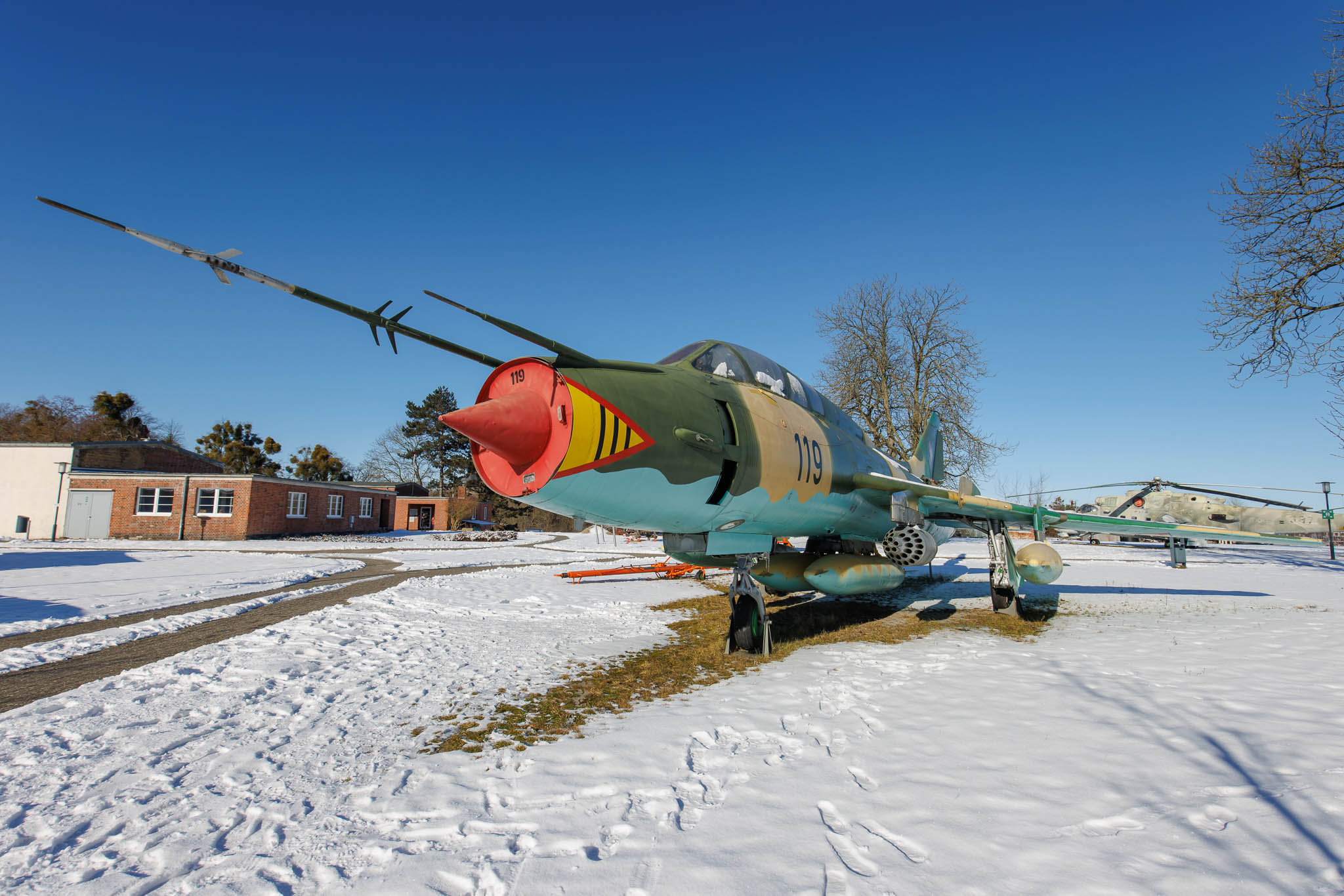
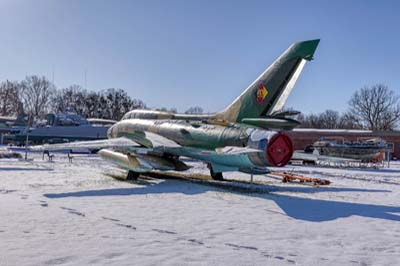
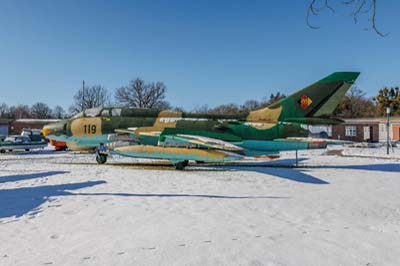
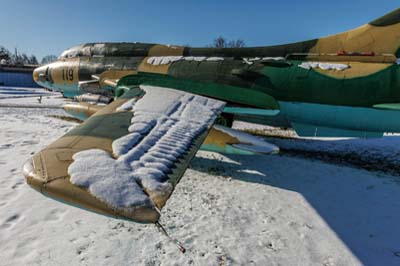
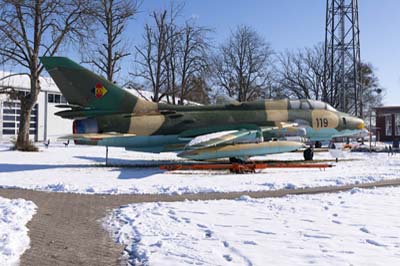
| Left to right: Sukhoi Su-22UM-3K 'Fitter G' (25+48, 119). Former NVA aircraft (Nationale Volksarmee or National People's Army), otherwise known as the armed forces of the Deutsche Demokratische Republik (DDR) from 1956 to 1990. |
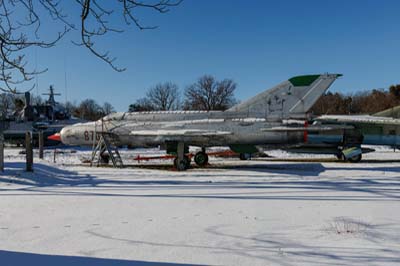
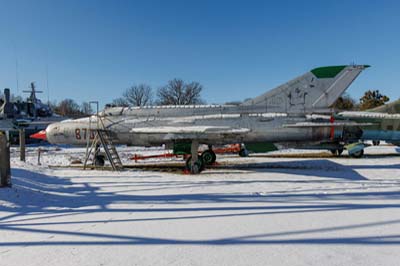
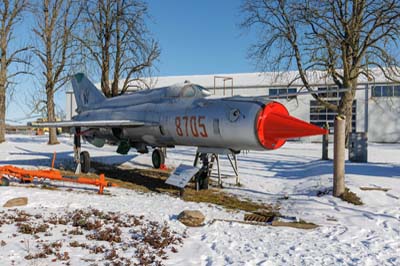
| Left to right: Mikoyan Gurevich MiG-21bis (8705) ex Polish Air Force. In total, there were approximately 15 different versions of the MiG-21. With around 10,300 aircraft built, the MiG-21 is one of the most produced combat aircraft in the world since World War Two. |
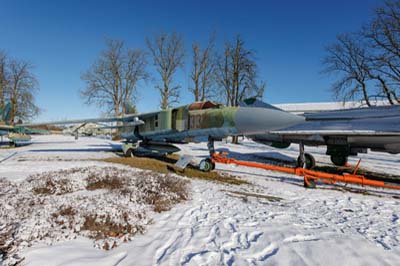
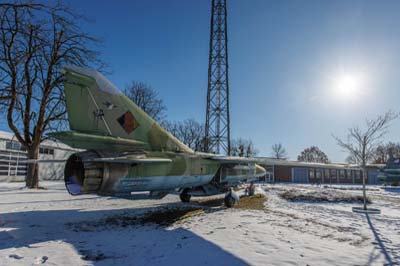
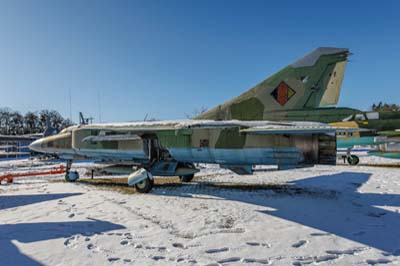
| Left to right: Mikoyan-Gurevich MiG-23ML (332). Former NVA aircraft (Nationale Volksarmee or National People's Army) aircraft from JG-9 of LSK/VV based at Peenemünde. |
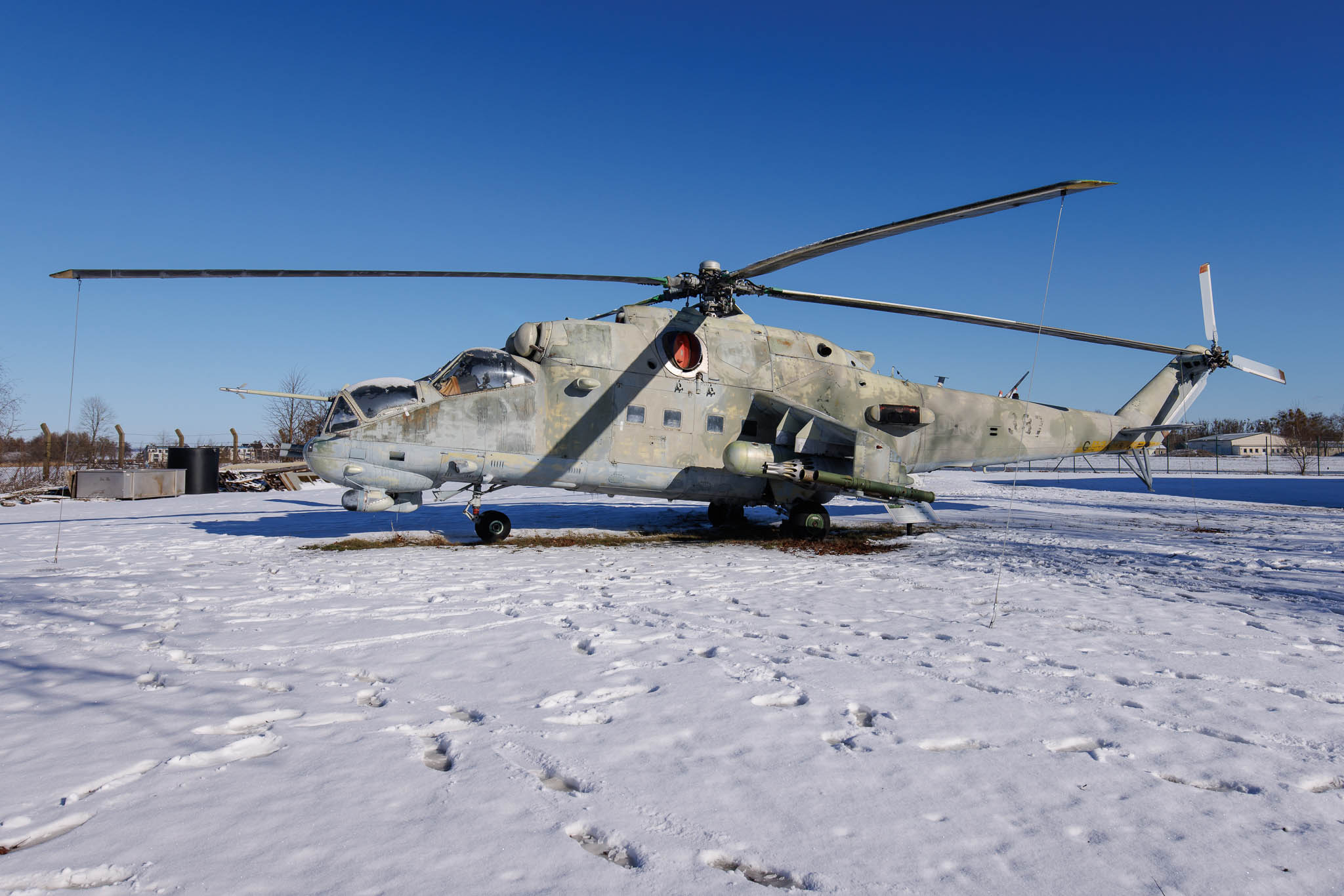
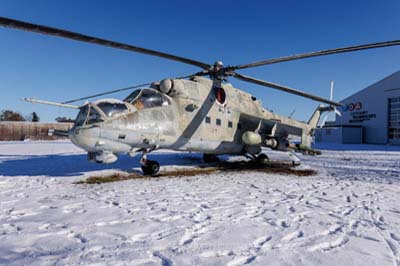
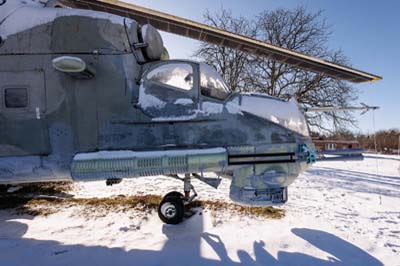
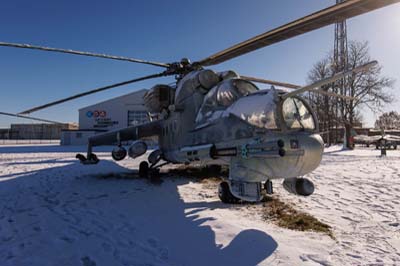
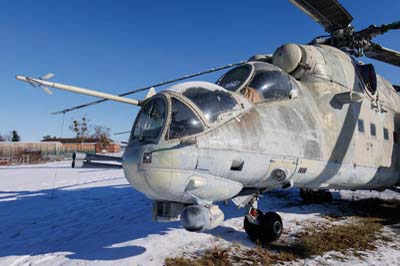
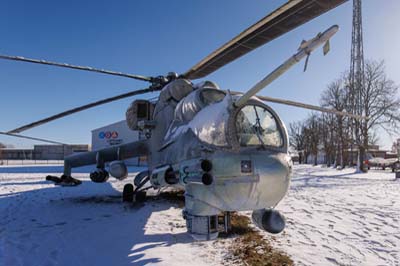
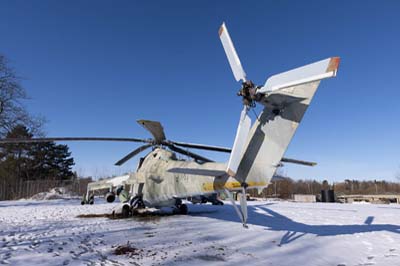
| Left to right: Mil Mi-24 'Hind' (387). The aircraft flew with the Combat Helicopter Wing 5 "Adolf von Lützow" at Basepohl. The first Mi-24P of twelve helicopters of this type which arrived in Basepohl on December 15, 1989. The aircraft remained in service for only ten months before being decommissioned in October 1990. |
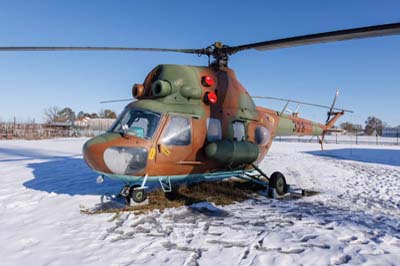
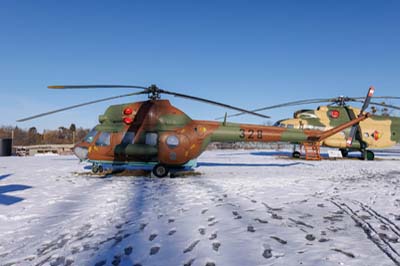
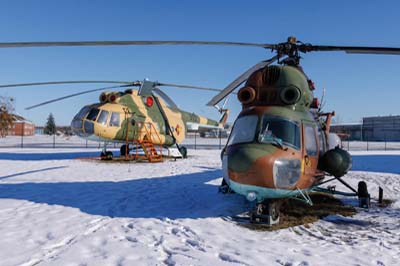
| Left to right: Mil Mi-2F (328). This was a Mi-2 with the GDR border troops for monitoring the former inner-German border with a special side dome window and a high-resolution plate camera mount. |
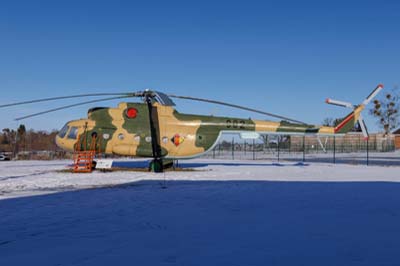
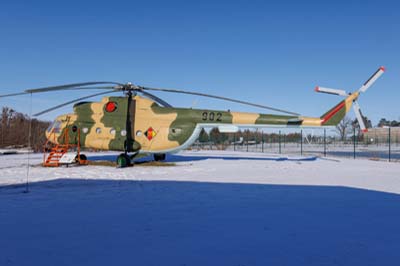
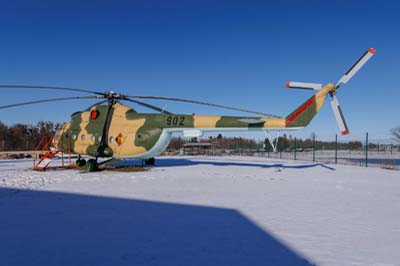
| Left to right: Mil Mi-8T 'Hip-C' (902). Former NVA aircraft (Nationale Volksarmee or National People's Army). |
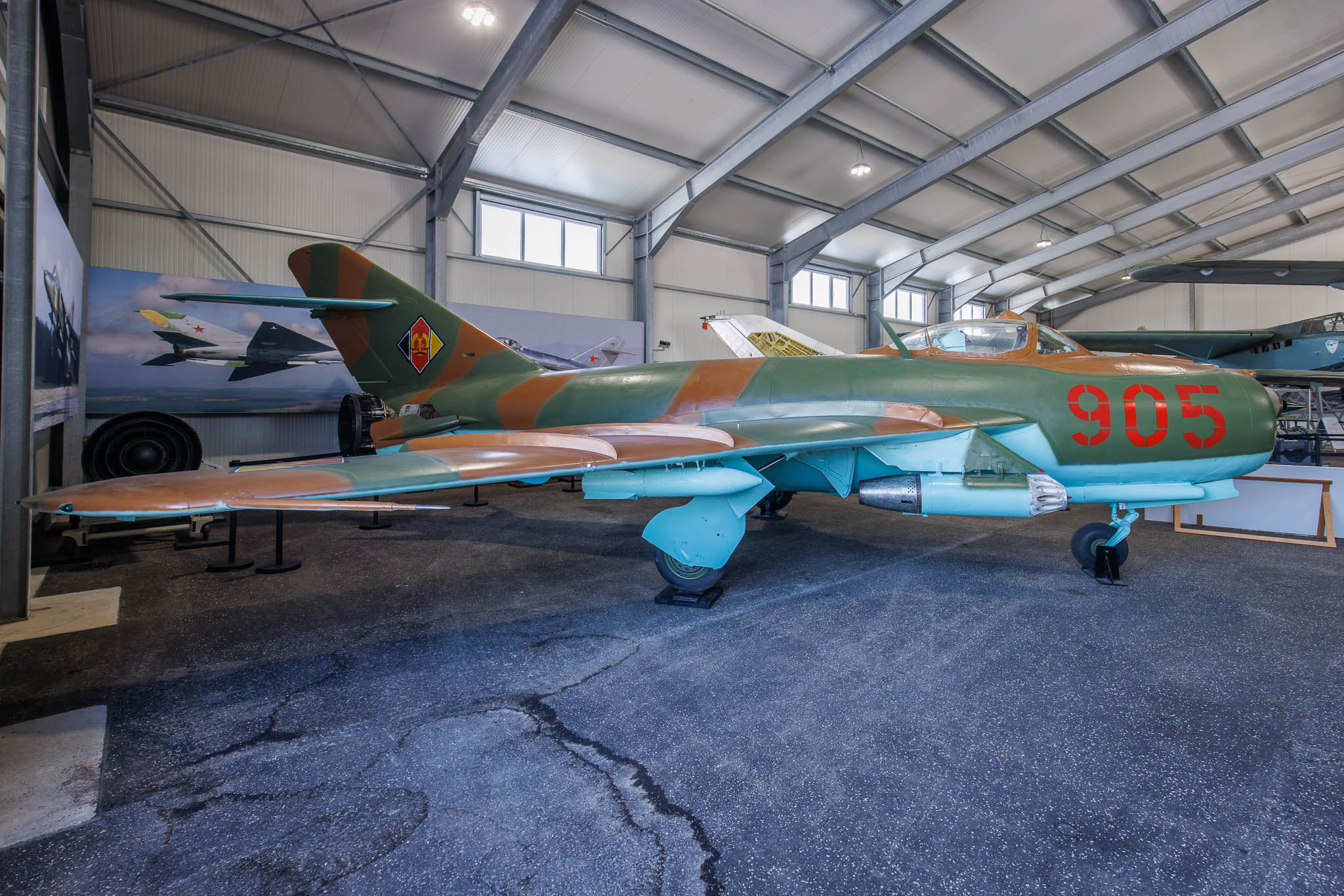
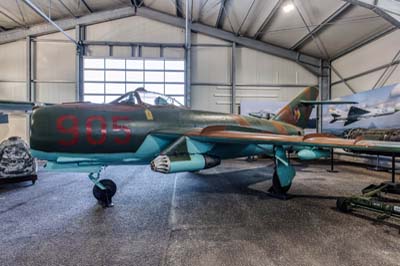
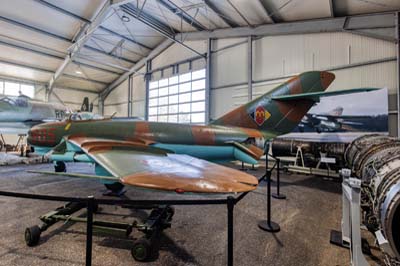
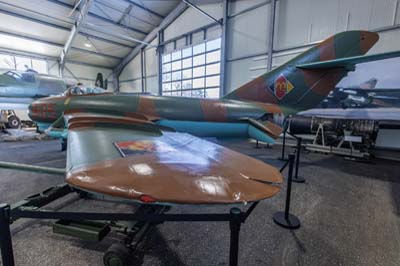
| Left to right: Mikoyan-Gurevich MiG-17F (905). Former NVA aircraft (Nationale Volksarmee or National People's Army). Soviet MiG-17 fighter-bombers were stationed at Rechlin/Lärz from 1956 onward. The museum displays the original MiG-17F, which formerly operated by Fighter-Bomber Wing 37 of the East German Air Force. The aircraft is on loan from the Military History Museum, Gatow. |
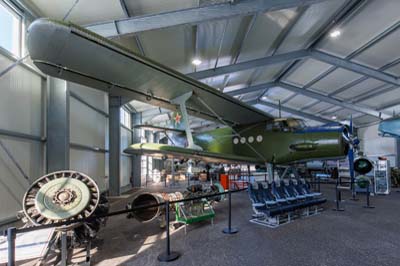
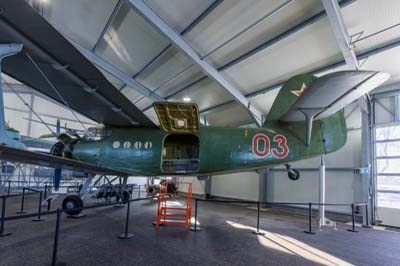
Left to right: Antonov An-2T ('Red 03'). This An-2 served as a liaison aircraft for the Group of Soviet Forces in Germany (GSSD), operating between garrison towns in the former East Germany. The aircraft was based at Großenhain. Following the withdrawal of Soviet forces in 1993, it was sold into private ownership, later flown to Oberschleißheim, and displayed at the Deutsches Museum until 2023. In spring 2023, its owner, Mrs Junkers, donated the aircraft to the Rechlin Aviation Museum.
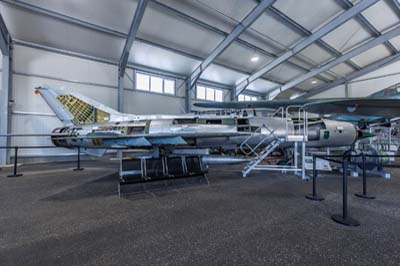
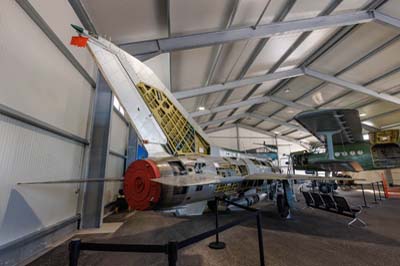
Mikoyan-Gurevich MiG-21PFM (950). Former NVA aircraft (Nationale Volksarmee or National People's Army). This example entered service with Fighter Wing 1 "Fritz Schmenkel" in Cottbus in April 1965. Just one year later, it was transferred to Fighter Wing 2 "Yuri Gagarin" in Trollenhagen. After seven years of service, the aircraft was decommissioned and reassigned on July 5, 1972, to the Officer School of the Air Force and Air Defense Forces "Franz Mehring" in Kamenz for use as a training aircraft. There, it served as a demonstration model for field repair procedures, including the simulation and removal of combat damage. The right wing, fitted later, originates from a MiG-21M (515). The cutaway section of the MiG-21PFM is on loan from the Military History Museum, Gatow. |
 |
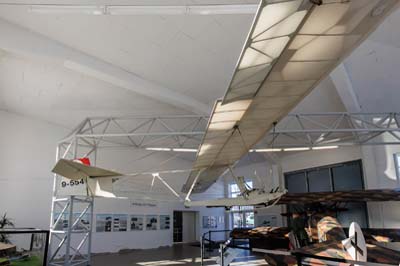 |
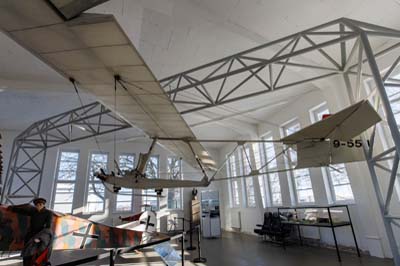
Left to right: SG 38 Schulgleiter (9-554). The SG 38 training glider was designed by Schneider, Rehberg and Hofmann at Schneider Flugzeugbau in Grunau in 1938. It became one of the most widely used aircraft for solo flight training in the 1940s. Development had begun in 1936, and from 1938 the glider was produced in large numbers by both amateur builders and industrial manufacturers, including the Deutsche Forschungsanstalt für Segelflug (DFS).
This SG 38 is on loan from the Military History Museum, Gatow. |
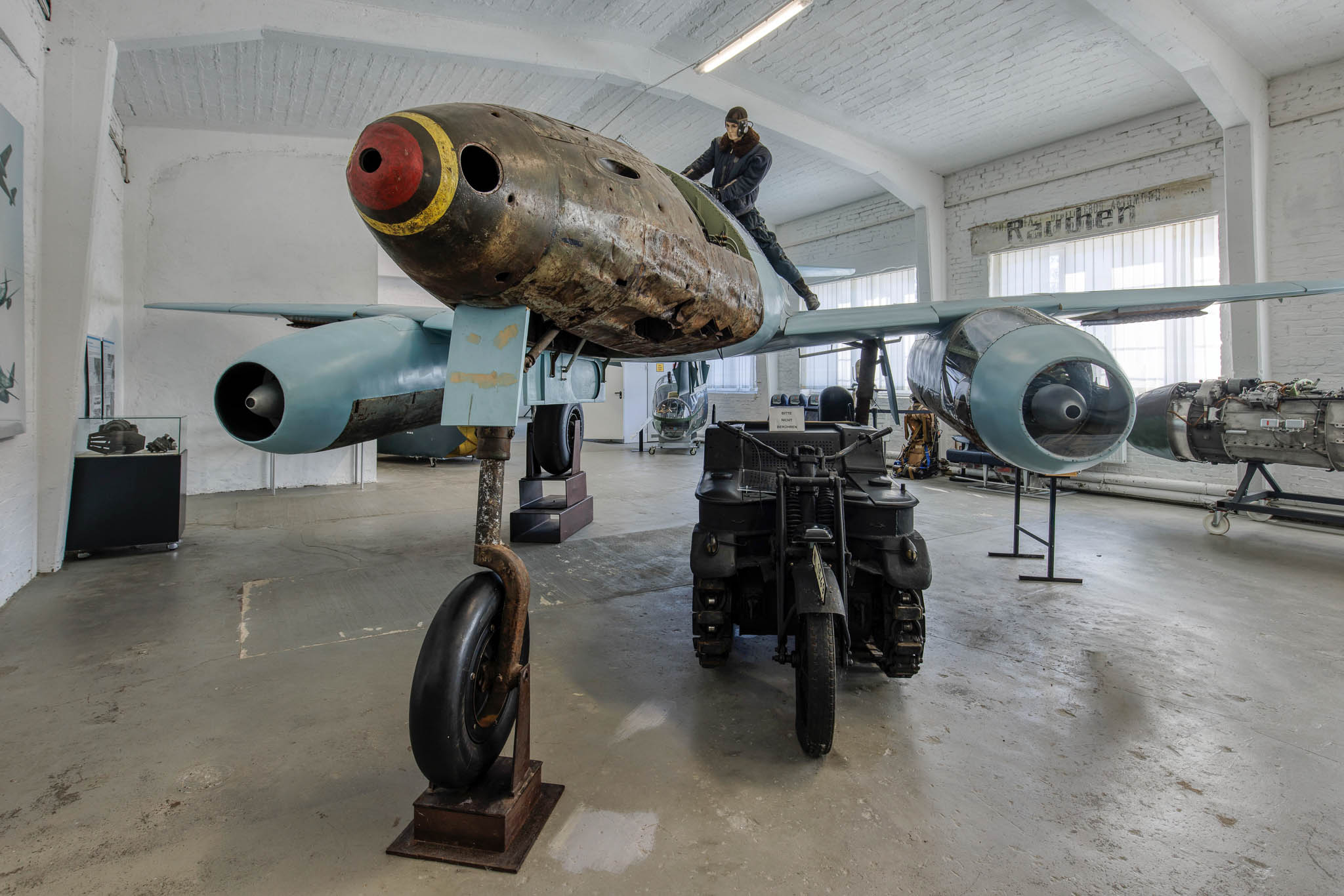 |
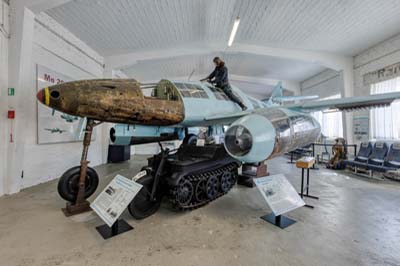
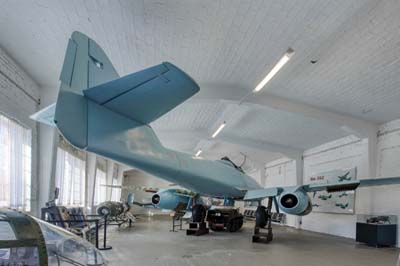
Left to right: Messerschmitt Me 262. A replica constructed of wood, but does contain some original parts.
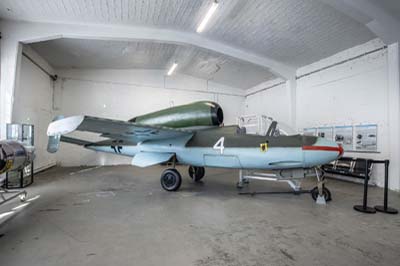
Heinkel He 162 Volksjaeger (marked as Werknummer '120067 White 4'). The German aircraft industry were pushed towards the end of the war to produce aircraft designs that could reverse an ever increasingly desperate situation. The He-162 jet fighter took just 69 days from initial design to its first flight. It was the first aircraft to be fitted with an ejection seat. Deliveries began in February 1945, with 200 only being delivered. Due to a shortage of supplies it was mostly built of wood.
The first operational unit to be equipped with the new He 162 was Erprobungskommando 162 located at Rechlin-Roggenthin. This exhibit is a reconstruction with approximately 40% original parts. It is on loan from D. Lemp. |
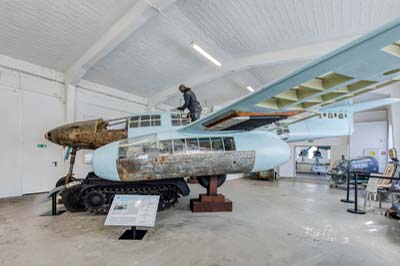
Left to right: The Focke-Wulf Fw 189 Uhu (Eagle Owl), a twin-boom, three-seat tactical reconnaissance aircraft, was extensively tested and evaluated at the Rechlin Luftwaffe test center during World War II. Known for its exceptional visibility, the Fw 189 was developed in the late 1930s and tested at Rechlin to replace the Henschel Hs 126, with variants like the Fw 189C ground-attack prototype undergoing trials there in 1940. Described as a replica but with some original parts.
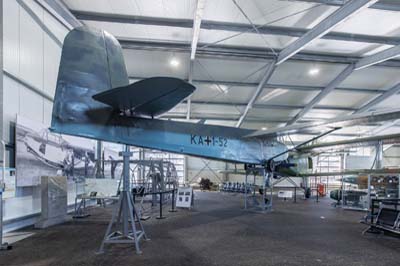
DFS-230 (makred 'KA+1-52'). A replica glider on loan from the Militart History Museum, Gatow. |
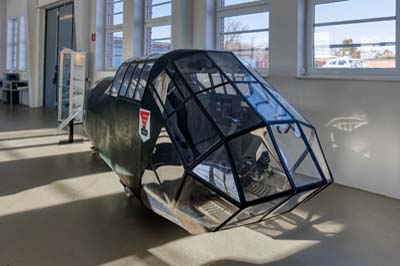
| Left to right: Dornier Do 335V-14 (230014 'RP+UQ'). On display complete since January 2020, is this replica was built by Holger Bull starting in 1998, using many original parts such as the bomb bay doors and the main fuel tank. The two main landing gears come from a Messerschmitt Bf 110. The aircraft bears the registration RP+UQ of the Do 335V14 (230014), which was captured by French troops towards the end of the war but was scrapped in 1949. The fuselage had already been on public display since 2019. |