Shannon Air Museum
Fredericksburg, Virginia
October, 2025
|
In 1950, Sidney Shannon Jr. founded Shannon Airport, and in 1976, he established the Shannon Air Museum. At the time, the museum housed one of the rarest collections of aircraft in the world, with each plane dating back to the golden age of flight. Following Sidney Shannon Jr.'s death in 1981, the collection was relocated to the Virginia Aviation Museum at Richmond International Airport.
In 2014, Shannon Airport was purchased by Luke and Kim Curtas. Luke made it a priority to return some of the original Shannon collection to the airport, especially after the Virginia Aviation Museum (then part of the Science Museum of Virginia) had closed the previous year due to building deterioration. With the support of the Shannon Air Wing and our volunteer aircraft maintenance team, the entire collection was successfully returned. The Shannon Air Museum celebrated a grand reopening in 2017. There are plans for the collection to be moved to the original museum hangar. |
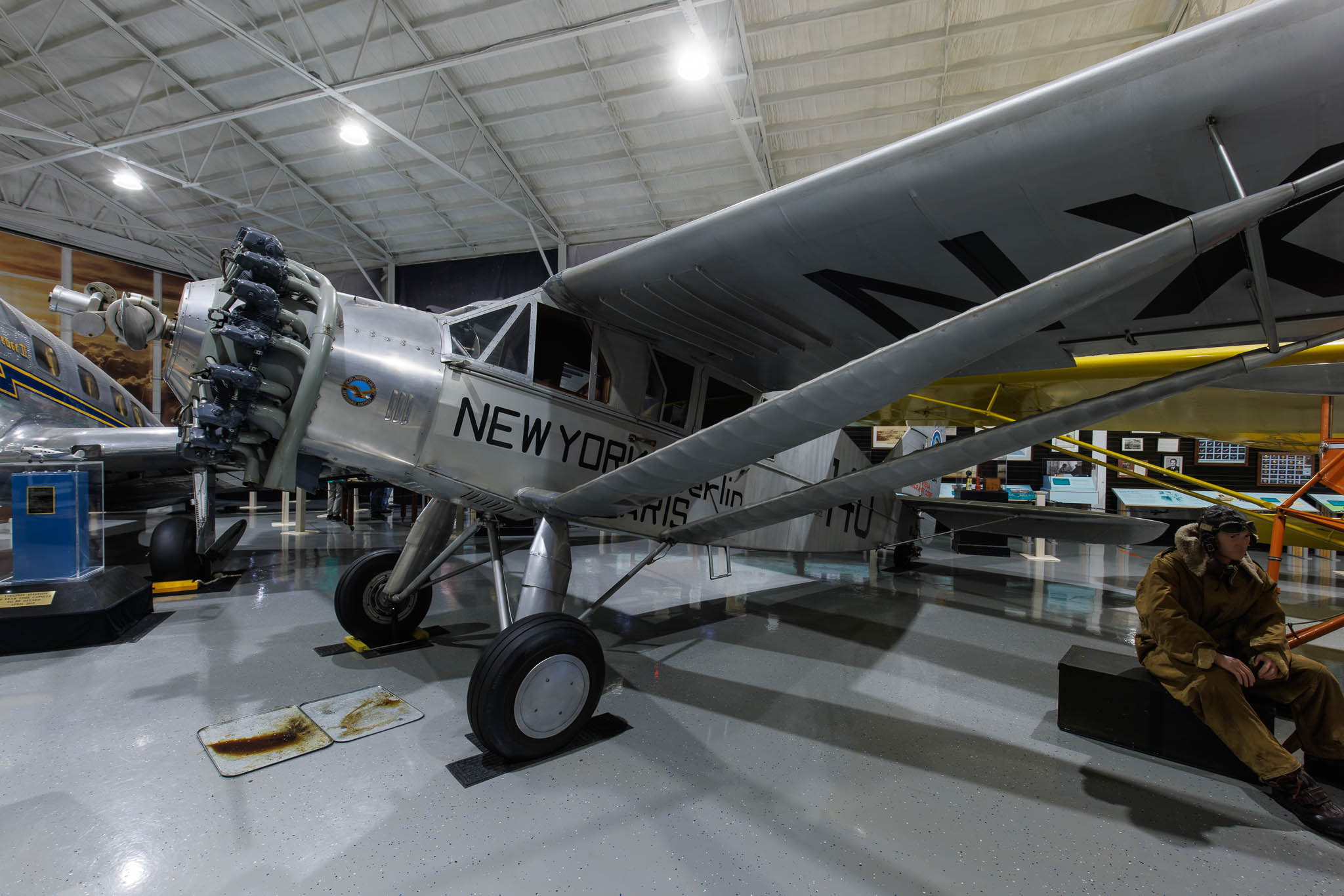 |
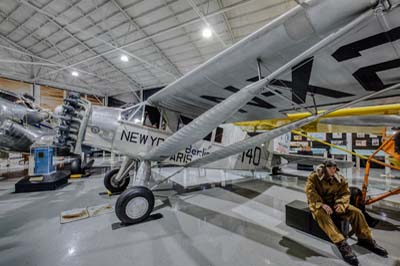
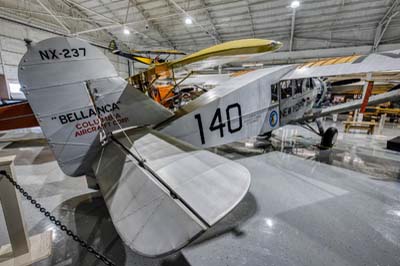
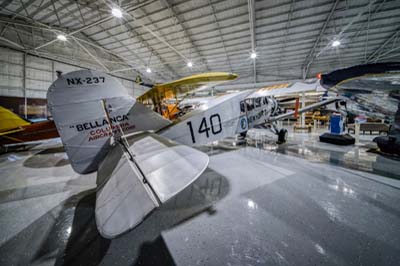
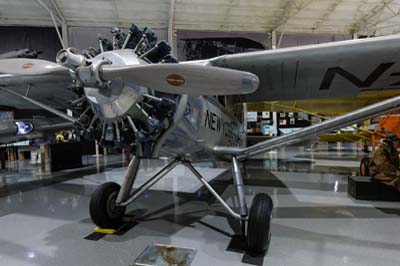
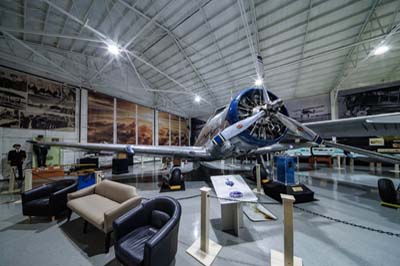
Left to right: Bellanca CH-400 Skyrocket (NX237 '140' c/n 187). The CH-400 is a six-seat utility aircraft built in the United States during the 1930s, continuing the design lineage that began with the Bellanca WB-2. While maintaining the same basic airframe as the earlier CH-200 and CH-300 models, the CH-400 was upgraded with a more powerful Pratt & Whitney Wasp radial engine. A total of 32 CH-400 Skyrockets were produced by Bellanca.
This Bellanca CH-400 was originally built in 1927 as a CH-300. It served in Alaska before being recovered from a glacier in 1962. In 1976, it was rebuilt to CH-400 specifications, primarily by replacing the original Wright J-6 engine with a more powerful Pratt & Whitney Wasp.
The aircraft is painted in the livery of Clarence Chamberlain's record-setting Bellanca WB-2. Only one WB-2 was ever built, and the CH-200, CH-300, and CH-400 models followed in its legacy. Chamberlain completed two record-breaking flights in the WB-2, including a non-stop journey from New York to Eisleben, near Berlin, in 1927—just two weeks after Charles Lindbergh's historic transatlantic flight. Sadly, the original WB-2 was destroyed in a fire at Bellanca Field in the 1930s. |
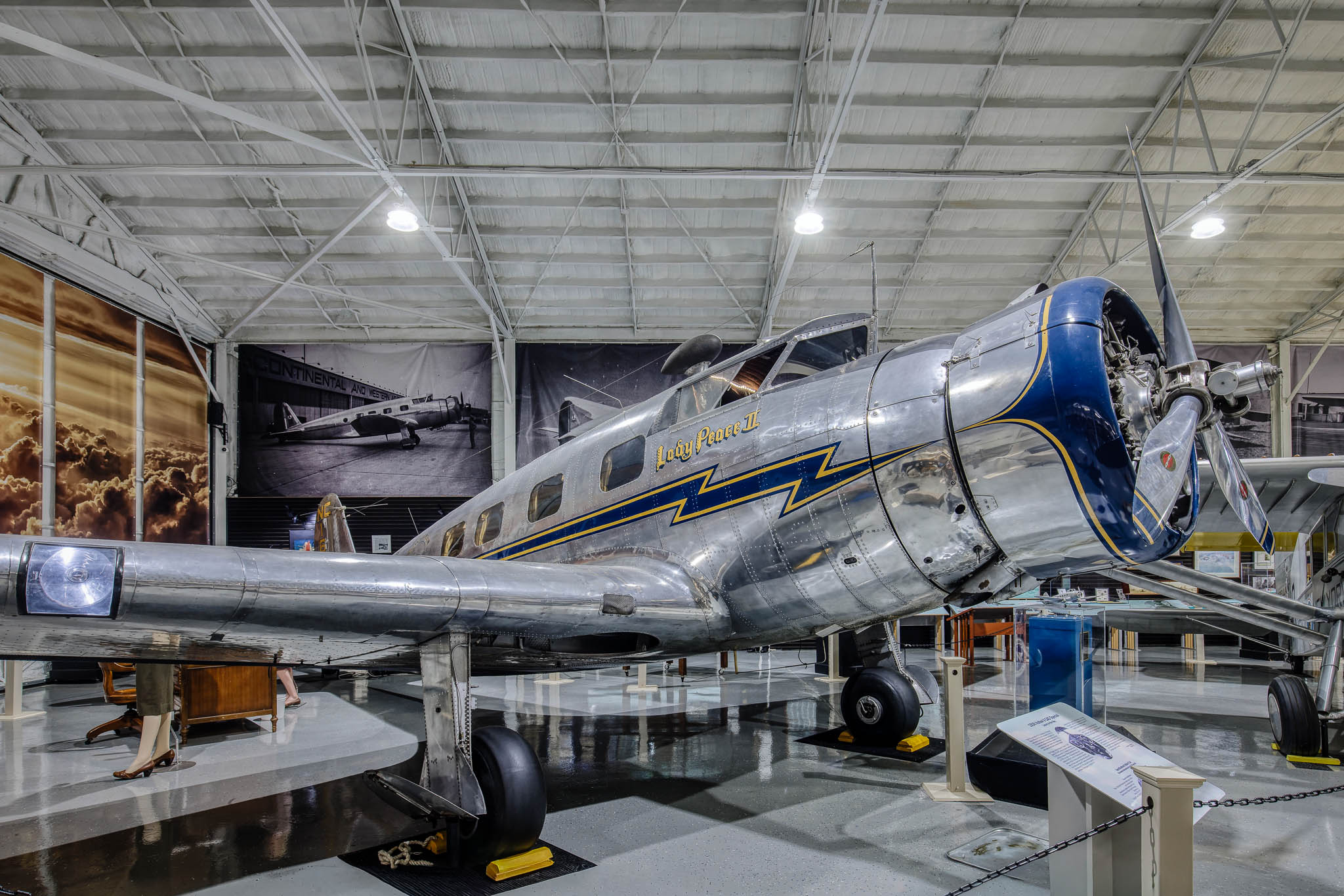 |
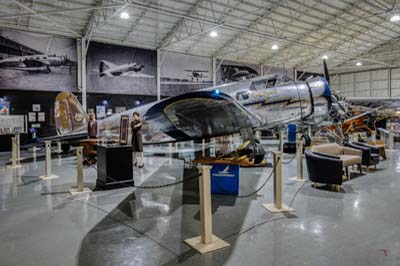
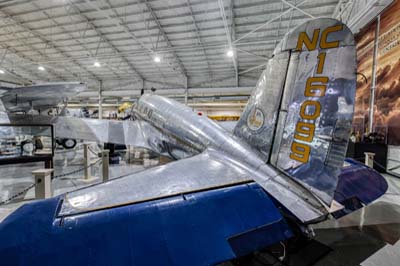
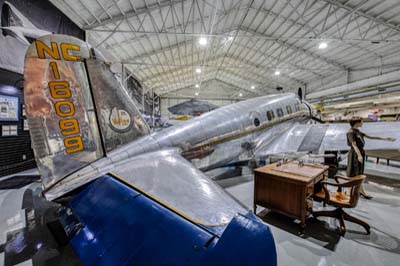
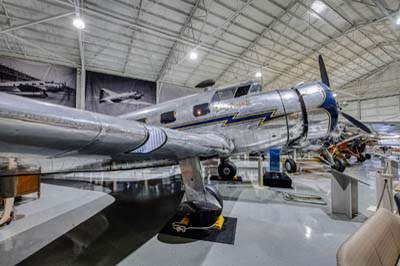
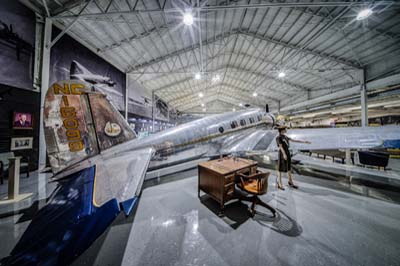
| Left to right: Vultee V-1AD Special (NC16099) named 'Lady Peace II', it is the only surviving V-1AD in the world. This aircraft was custom-built in 1936 for publisher William Randolph Hearst Sr. In 1939, it was sold to a Panamanian airline, and during World War Two, it served in Central and South America on behalf of the US government. |
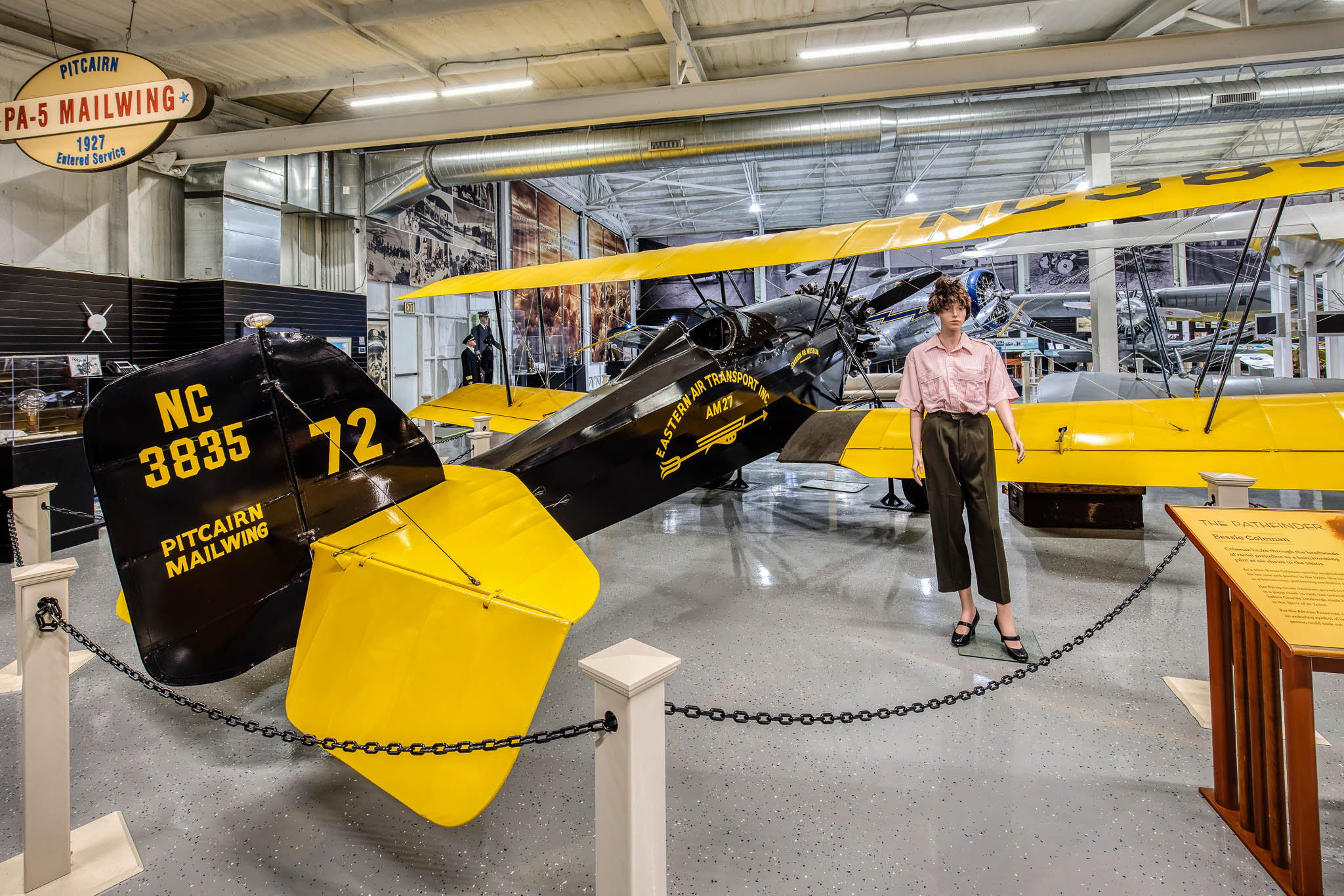
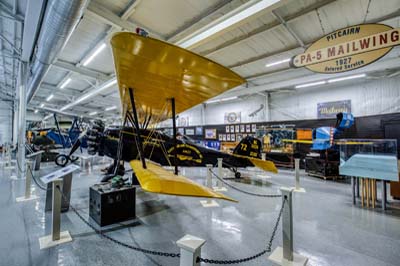
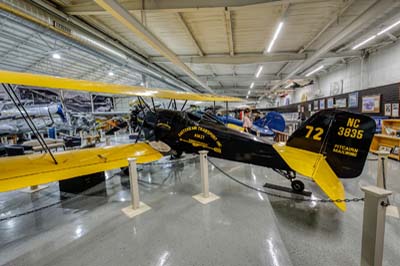
| Left to right: The Pitcairn PA-5 Mailwing (NC3835 '72' c/n 9). Produced between 1927 and 1931, the PA-5 was the first aircraft in the Mailwing series. It was specifically designed to carry airmail and cargo. Pitcairn Aviation; the predecessor of Eastern Air Transport, later Eastern Airlines, they operated 16 PA-5s to transport airmail between New York and Atlanta. The aircraft served seven cities along the 792-mile route, including Richmond, Virginia. |
 |
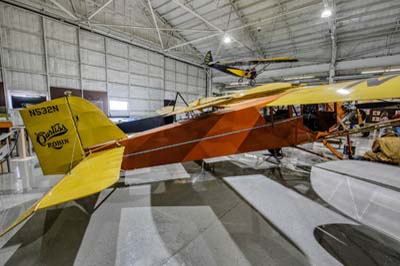 |
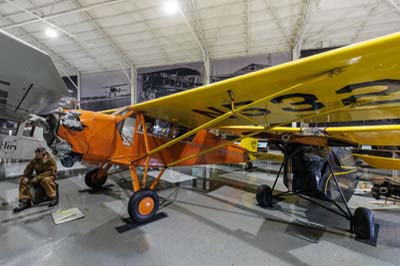
Left to right: Curtiss-Robertson Robin J-1 (N532N c/n 773) from 1929. The Curtiss Robin, introduced in 1928, is an American high-wing monoplane produced by the Curtiss-Robertson Airplane Manufacturing Company. A practical cabin aircraft, the Robin featured a wooden wing and a steel-tube fuselage. Its cabin accommodated three people, with two passengers seated side-by-side behind the pilot.
The Robin Model J-1 was notably maneuverable and easy to maintain. The pilot occupied the front seat, while the two passengers sat in wicker seats at the rear of the cabin. A J-1 version was famously flown by "Wrong Way" Corrigan, who made an unauthorized transatlantic flight after being denied permission to cross the Atlantic.
|
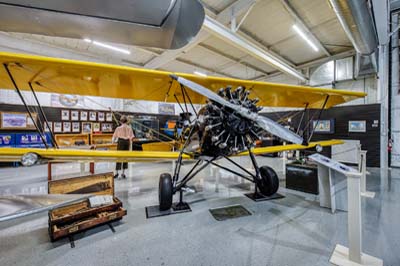
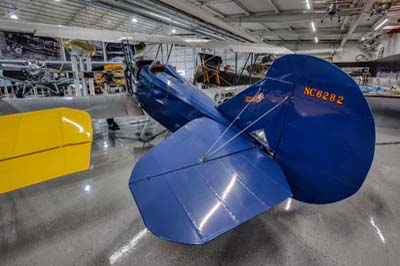
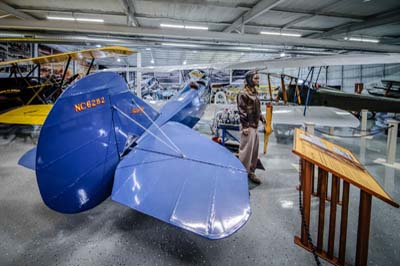
| Left to right: Travel Air 2000 (NC6282 c/n 721) built in 1927 it is fitted with an original OX engine. The Travel Air 2000 is an open-cockpit biplane built in the United States in the late 1920s by the Travel Air Manufacturing Company. Between 1924 and 1929, the company produced more aircraft than any other American manufacturer, turning out more than 1,000 biplanes during that period. |
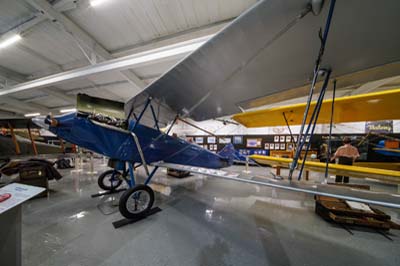
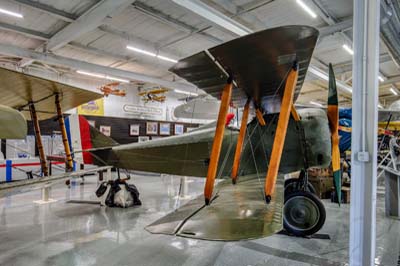
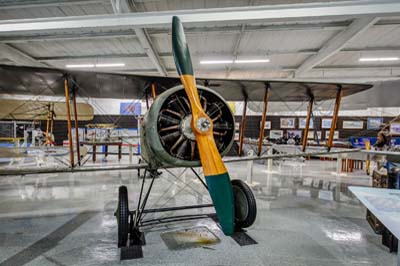
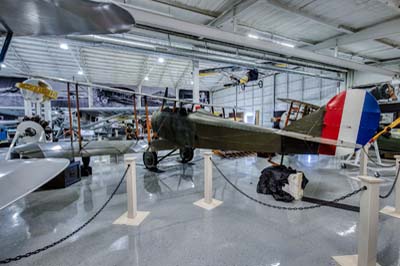
| Left to right: Standard E-1 It was developed by the Standard Aircraft Corporation and first flown in 1917, was initially intended as a US Army pursuit aircraft but proved underpowered for combat. It was subsequently reassigned as an advanced trainer. Of the 168 built, 128 served in training roles, powered by either a 100-hp Gnome rotary engine or an 80-hp LeRhone C-9.
This 1918 example was rediscovered in Dayton, Ohio in the 1950s, accounts differ on whether it came from a barn or a flower shop—and has since been restored for museum display. |
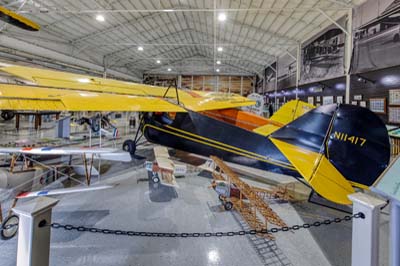
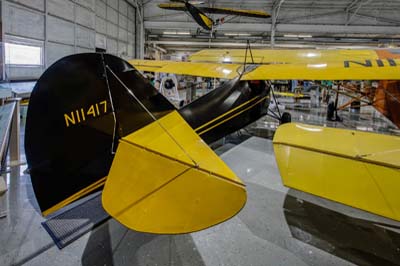
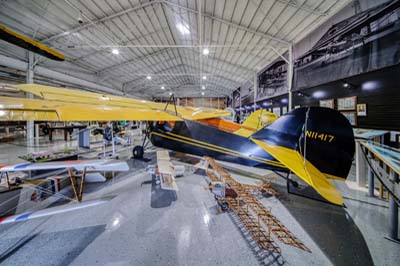
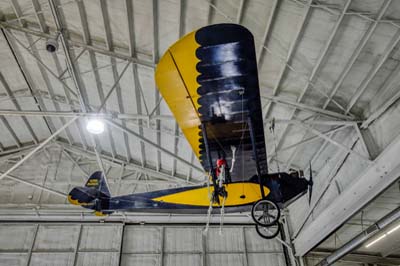
| Left to right: Aeronca C-2N Collegian (N11417 c/n A151) from 1932. he Aeronca C-3, nicknamed the "Flying Bathtub", was produced from 1931 to 1937 by the Aeronautical Corporation of America. Developed from the earlier C-2, the C-3 added a passenger seat alongside the pilot, making it a practical two-seat aircraft. The C-2 had been the first widely produced light plane certified by the US Department of Commerce, and its safe, economical, and easy-to-fly design helped open the market for private aviation. The C-3 first flew in October 1929, equipped with just four instruments: altimeter, oil temperature, oil pressure, and tachometer. Production ended in 1937 when the design no longer met updated airworthiness standards, and of roughly 400 to 440 built, about 30 survive today. |
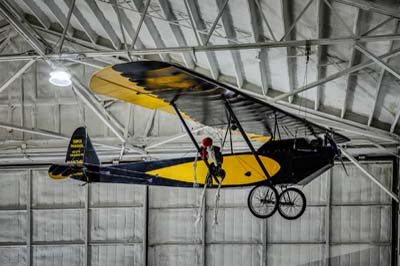
Left to right: Heath Super Parasol (N1926) from 1928. Designed by Edward Heath of Chicago in 1926, the Heath Parasol is an American homebuilt monoplane with a parasol wing and an open cockpit, configured for one or two seats. Heath died in a crash in 1931, and the company was sold to Edward Anthony in 1935. Under Anthony, it evolved into the well-known Heathkit electronics brand, which continues to exist today.
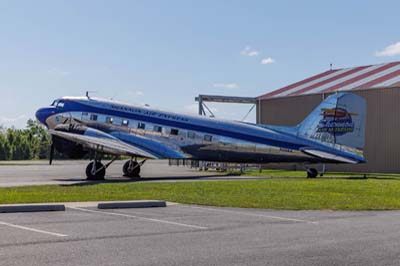
Douglas DC-3 Dakota (N28AA), named 'Stars and Stripes', is being refurbished to flying condition for display at air shows and fly-ins. Built in 1940, it was originally delivered to Braniff Airlines. Airport owners Luke and Kim Curtas were drawn to this DC-3 because it also flew with Eastern Airlines, connecting it to the airport founder's father, Sidney Shannon Sr. |