Royal Navy Fleet Air Arm Museum
RNAS Yeovilton
2018 to 2026
|
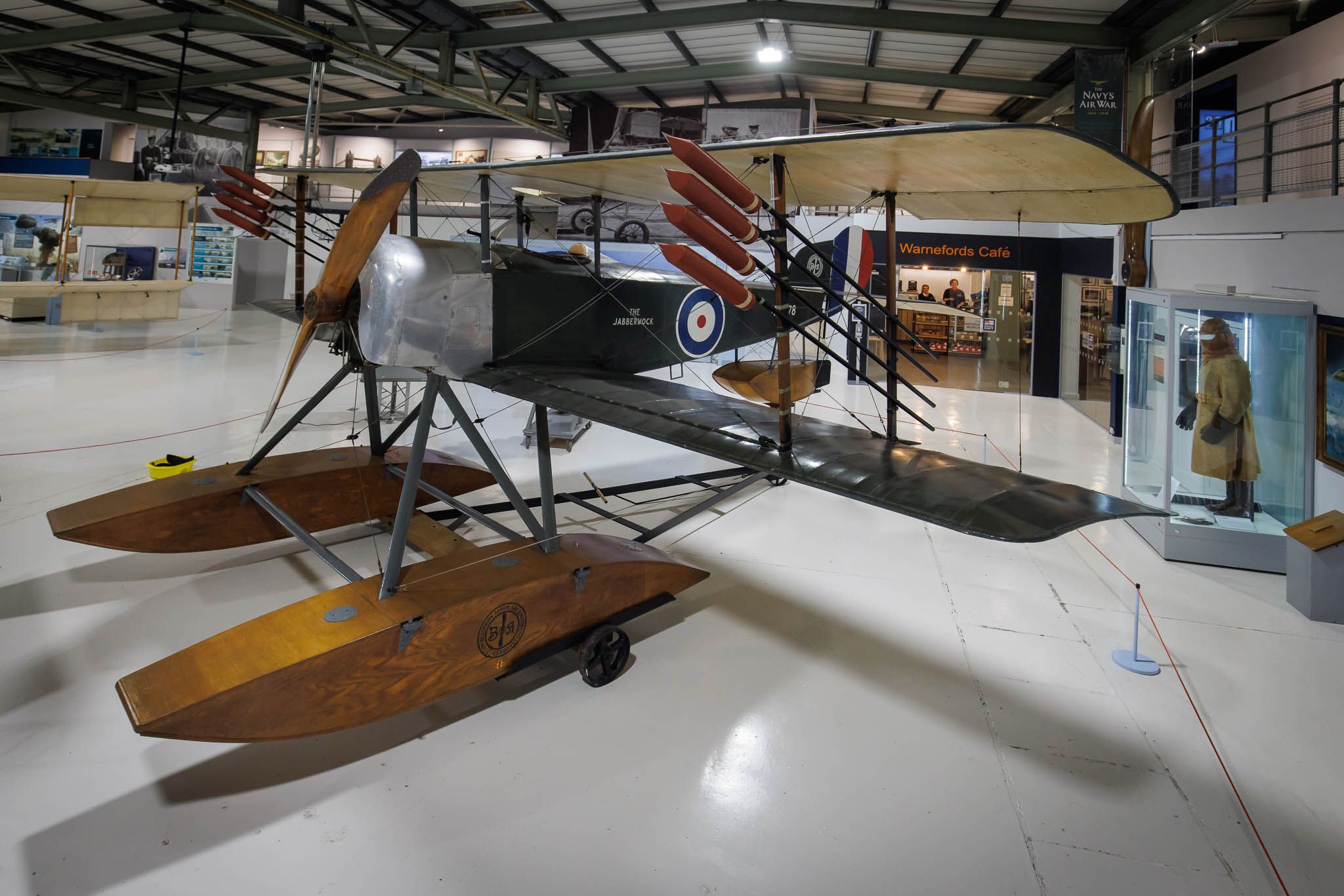
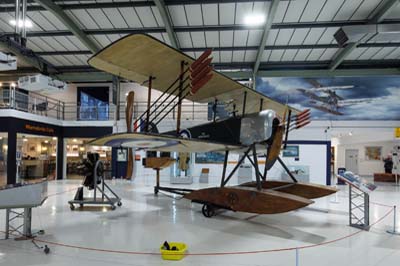
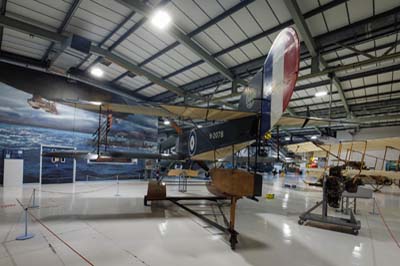
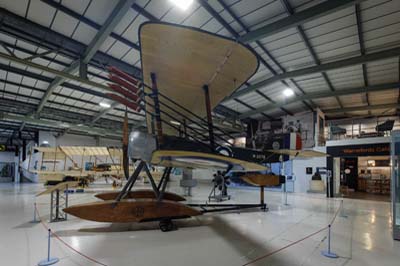
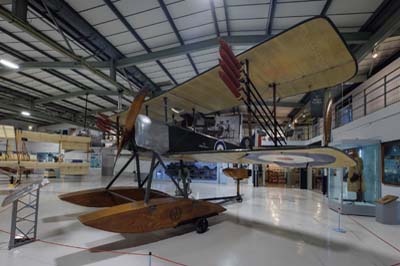
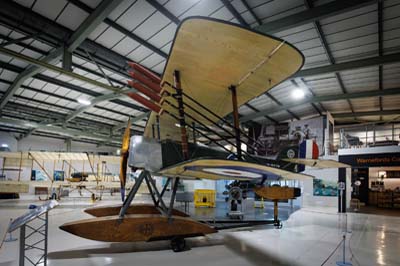
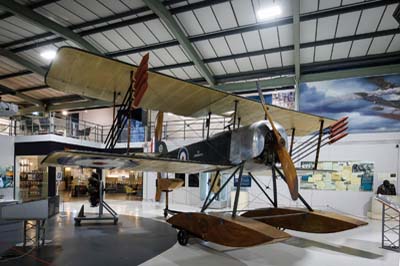
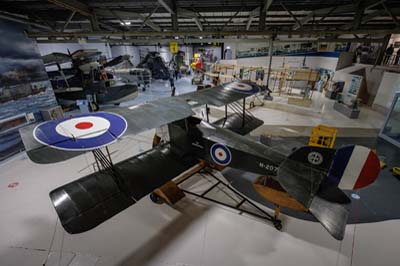
| Left to right: Sopwith Baby (N2078) composite aircraft using parts of 8214 and 8215, it is inscribed 'The Jabberwok'. |
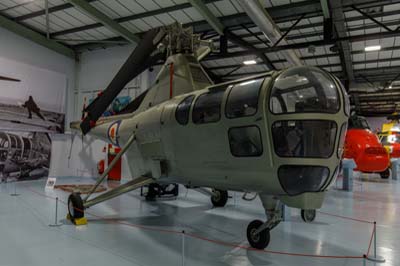
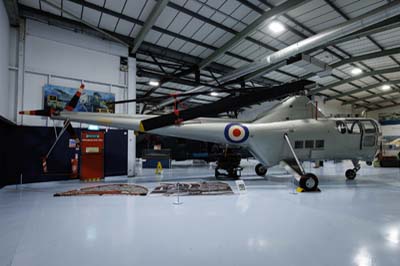
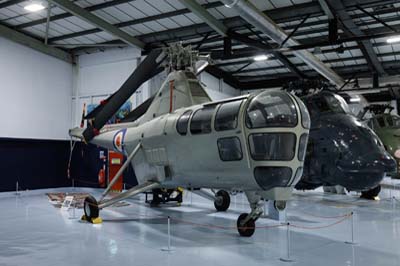
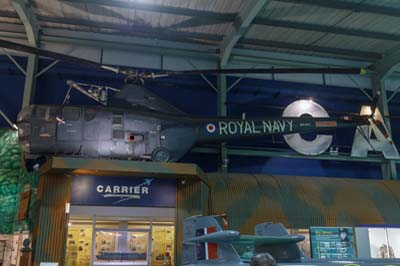
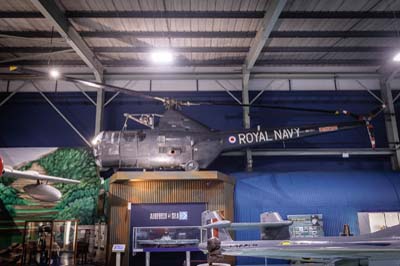
Left to right: Westland Dragonfly HR.5 (WN493).
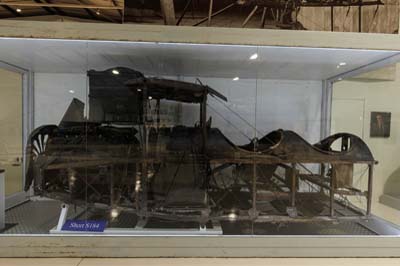
Short S184 (8359). Built 1916 it was the first aircraft to take part in a naval battle, when it was used to find the German Fleet before the Battle of Jutland in 1916. |
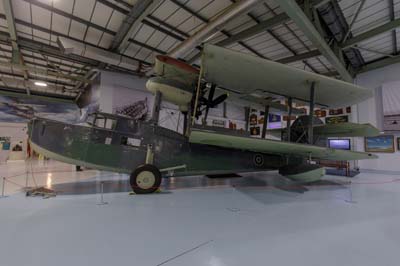
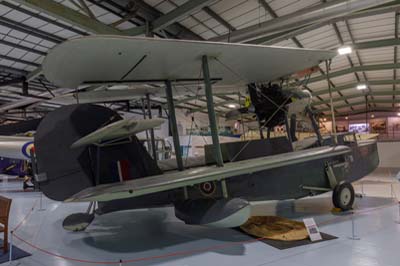
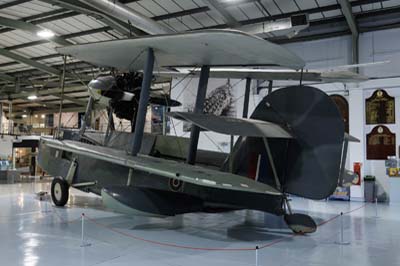
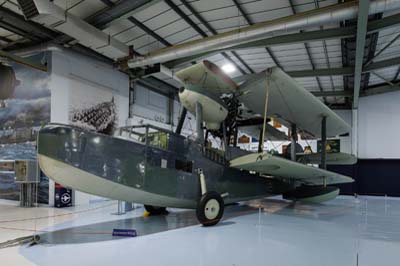
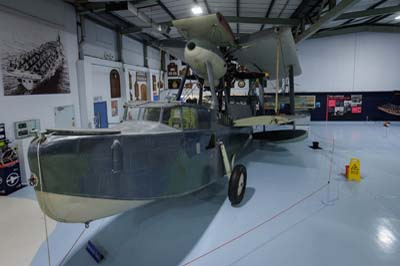
| Left to right: Supermarine Walrus I (L2301). |
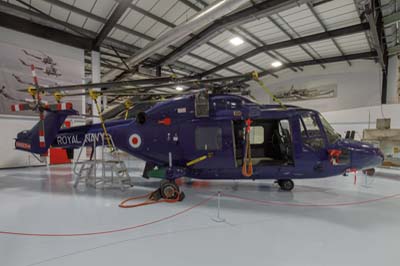
Left to right: Westland Lynx HAS.3 (XZ699), it was no longer on display by 2014.
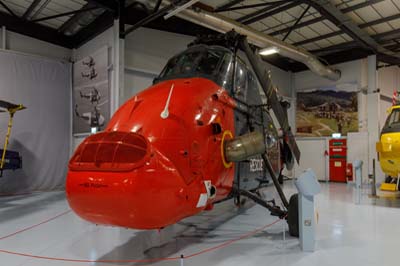
Westland Wessex HU.5 (XS508), it was no longer on display by 2014.
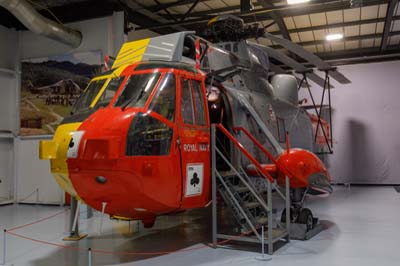
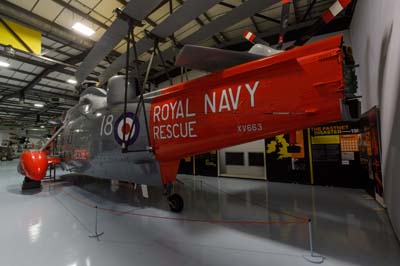
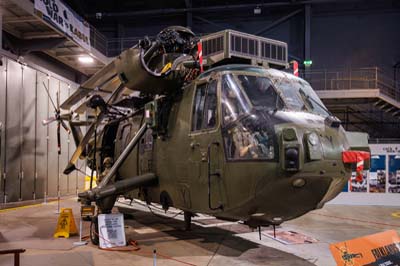
Westland Sea King HAS.6 (XV663 '18'). |
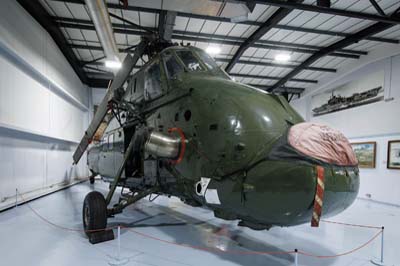
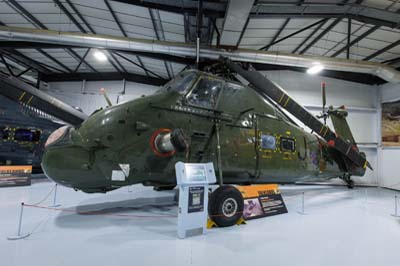
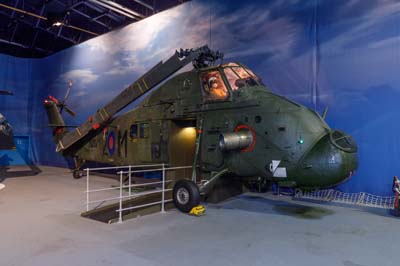
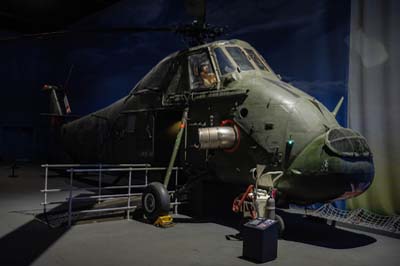
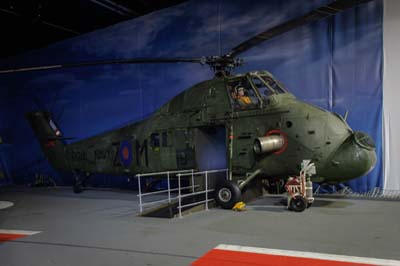
Left to right: Westland Wessex HU.5 (XT765 'WJ') it was with 845 Naval Air Squadron, Royal Navy based at RNAS Yeovilton.
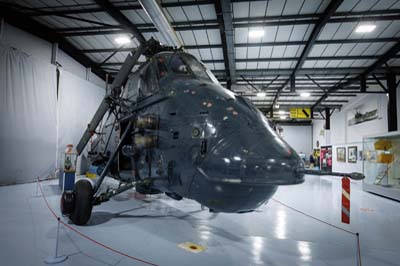
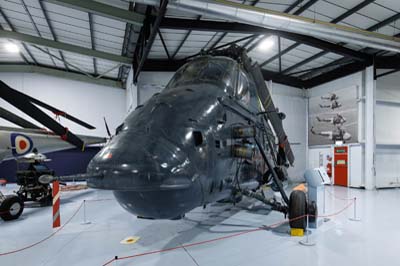
Westland Wessex HAS.3 (XP142) named 'Humphrey' it was one of the most famous aircraft of the Falklands Conflict when stationed aboard the destroyer HMS Antrim when it attacked the Argentinean submarine, Santa Fe which was subsequently abandoned. |
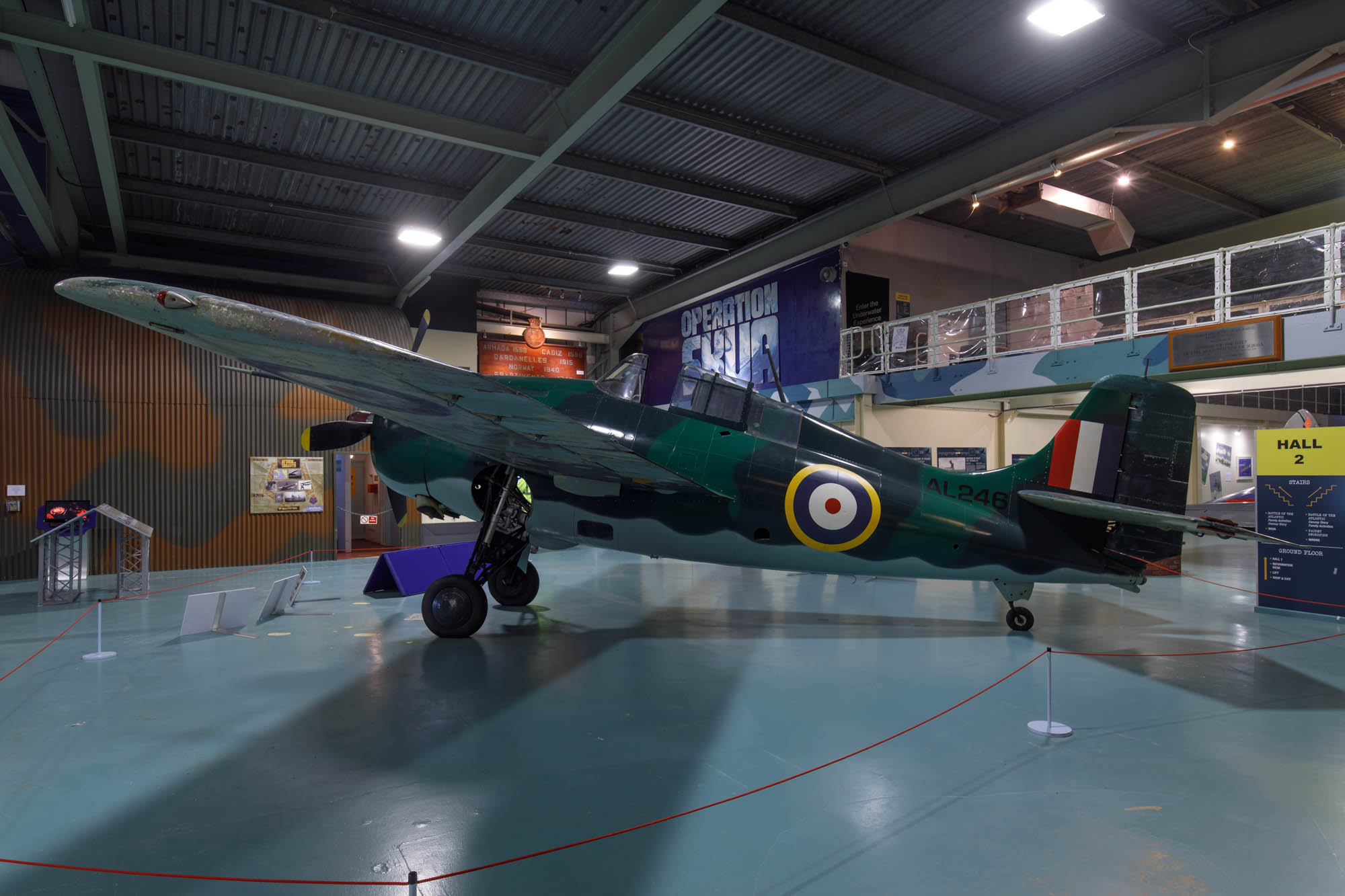 |
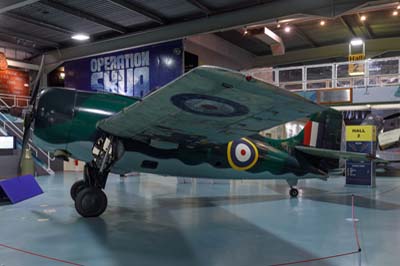
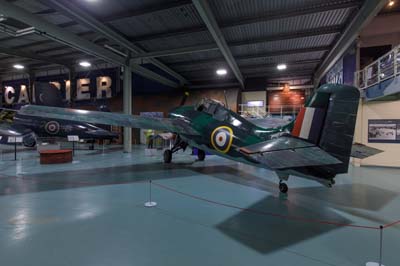
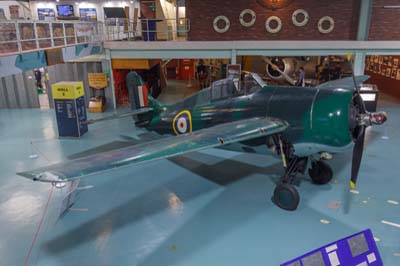
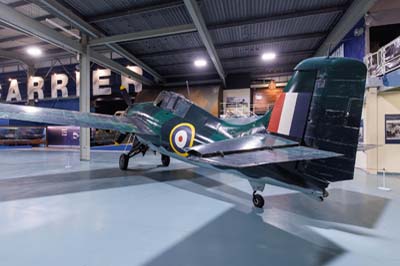
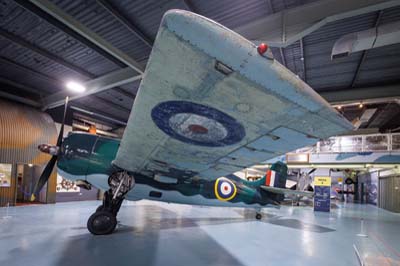
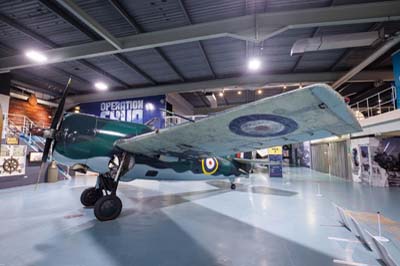
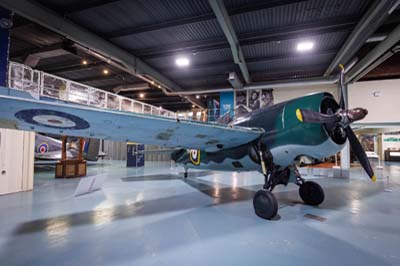
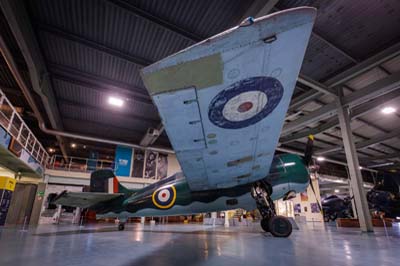
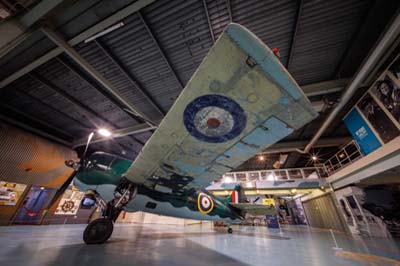
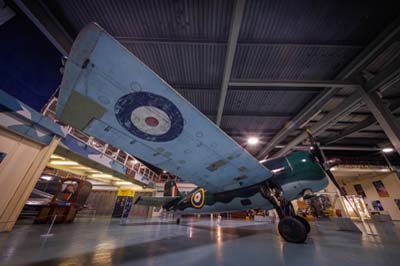
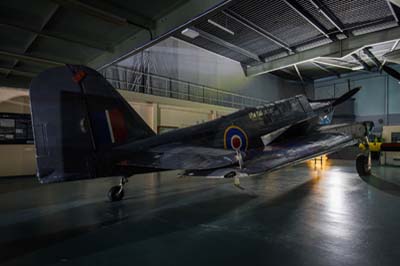
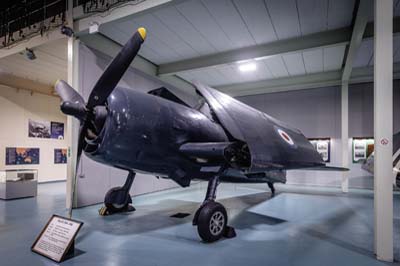
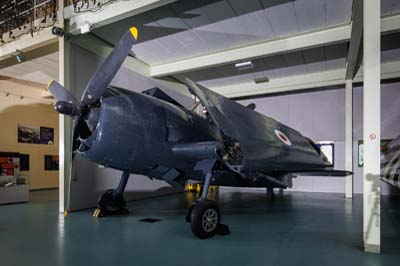
Left to right: Grumman Martlet (AL246). The Grumman F4F Wildcat, initially ordered by France as the G-36A in early 1940, was never delivered to France due to its surrender. Instead, the Royal Navy's Fleet Air Arm (FAA) acquired 81 of these aircraft as the Martlet I to replace the Fairey Fulmar. They were painted in a unique US version of the FAA's green/blue camouflage and entered service in August 1940 with 804 Naval Air Squadron at Royal Navy Air Station Hatston, Orkney Islands.
The Martlet achieved the first combat victory by a US-built fighter in British service during World War II, shooting down a Junkers Ju 88 over Scapa Flow on Christmas Day 1940. From September 1941, 802 NAS operated six Martlets from the escort carrier HMS Audacity, protecting convoys to Gibraltar and shooting down five Fw 200 Condors before the carrier was sunk by a U-boat in December 1941. Later F-4F deliveries were designated Wildcat VI by the Royal Navy.
AL246 served at RNAS Donibristle and RNAS Machrihanish in Scotland and is the only surviving Martlet (F4F-4). From 1945 to 1960, it was used as an instructional airframe at Loughborough College. In 1963, it was transferred to the Fleet Air Arm Museum (FAAM) in its Royal Navy dark blue scheme. AL246 was carefully restored in 2005, removing paint layers to reveal the original 1940 US delivery colours on the fuselage, while the wings were left stripped of Royal Navy paint.
|
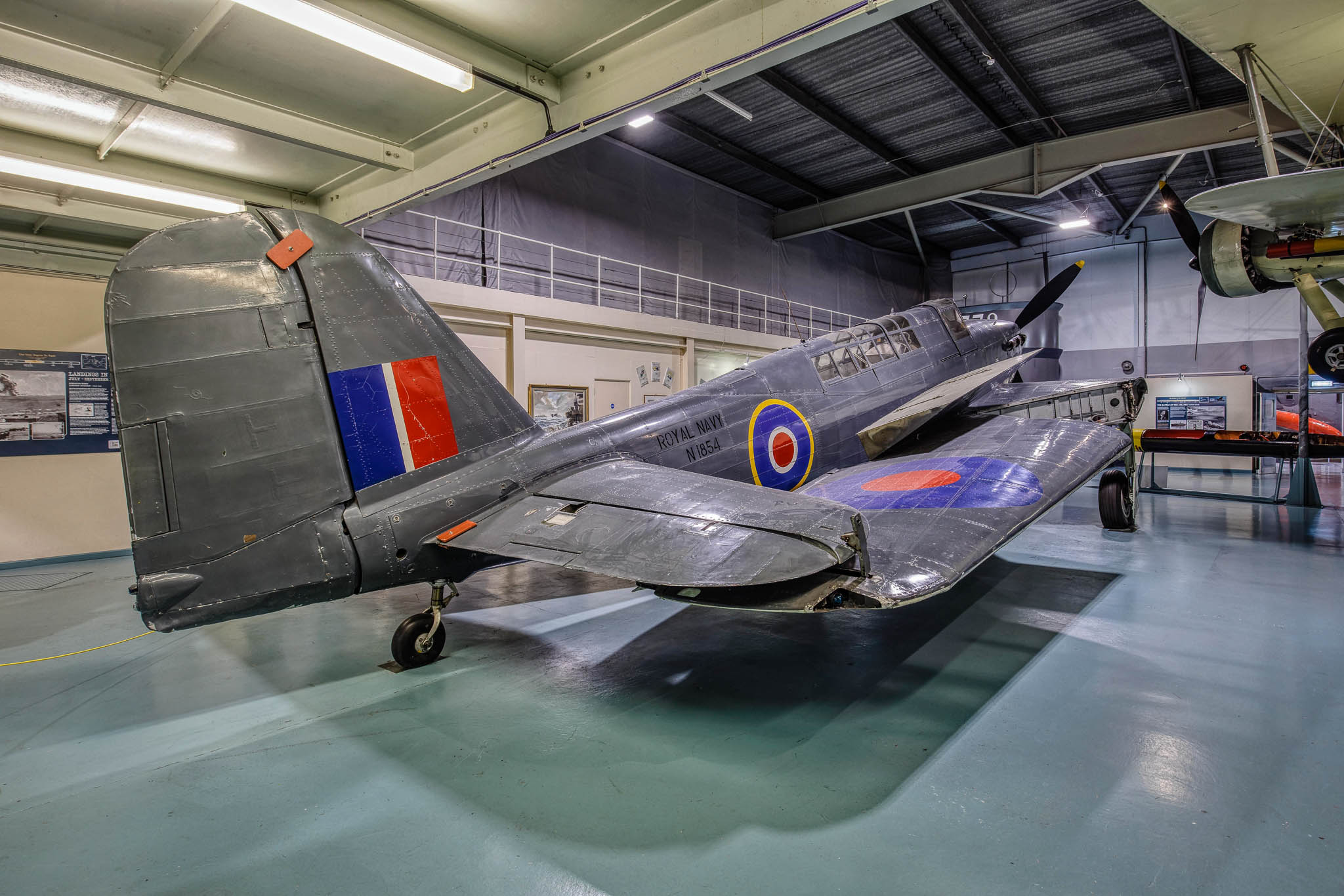 |
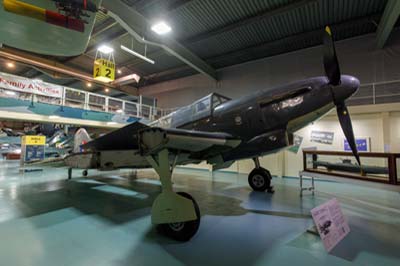
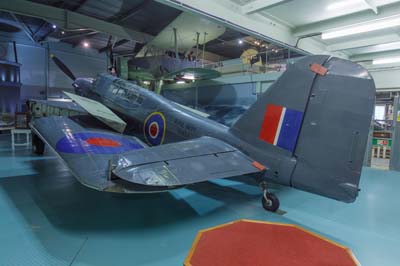
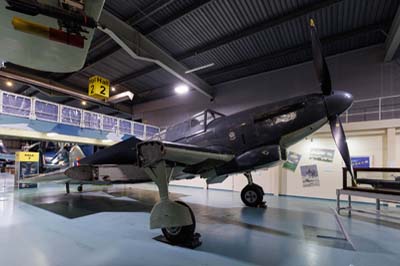
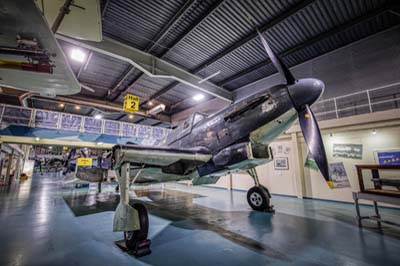
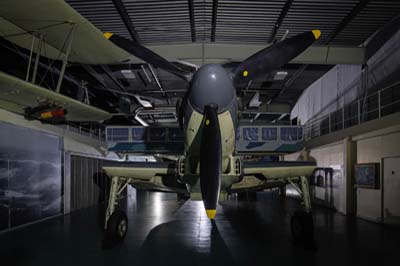
Left to right: Fairey Fulmar Mk.1 (N1854 registered G-AIBE). The Fairey Fulmar was a British carrier-borne fighter and reconnaissance aircraft developed by Fairey Aviation for the Fleet Air Arm. Entering service in 1940, it saw extensive action during the early years of World War Two, including the hunt for the German battleship Bismarck, convoy protection to Malta, the North African campaign and the Battle of Cape Matapan. Although highly effective in the Mediterranean, it was outclassed in the Far East by the Japanese Mitsubishi A6M Zero.
Fulmar N1854 made its first flight on January 4, 1940, and was used for official naval performance trials before being retained by Fairey Aviation as a company transport and test aircraft. Registered as G-AIBE between 1946 and 1959, it was later restored to its military appearance and displayed at the 1962 Farnborough Air Show. Following its final flight on December 18, 1962, it was preserved and presented to the Fleet Air Arm Museum in 1972. Today, it is the sole surviving example of the nearly 700 Fulmars built. |
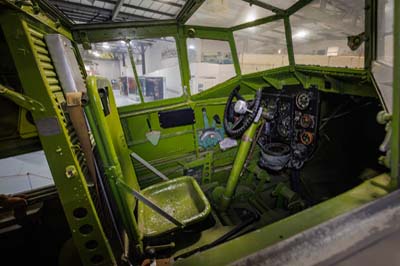
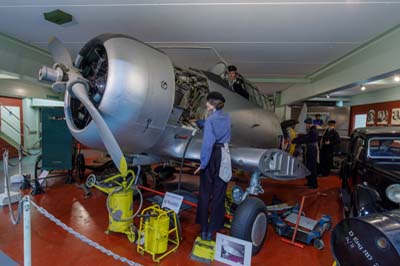
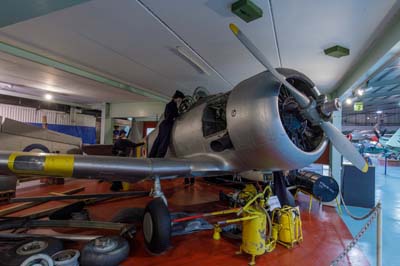
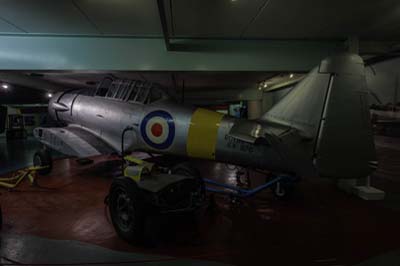
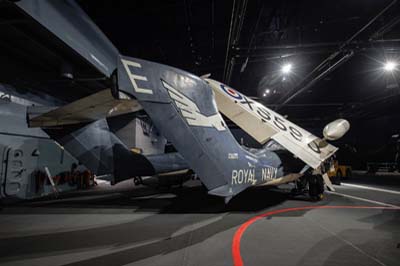
Left to right: North American Harvard III (EX976).
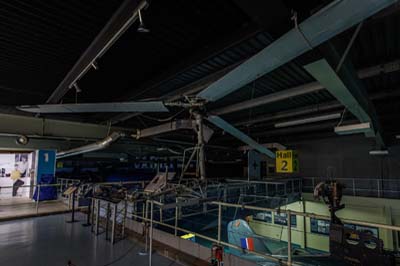
Focke-Achgelis Fa 330A-1 Bachstelze (100545). It was designed as an unpowered autogyro kite towed behind German Type IXD2 U boats to serve as an observation platform. The aircraft was designed by Heinrich Focke, with testing beginning in mid 1942. Operational deployment followed in early 1943, and around 200 examples were built by Weser Flugzeugbau. |
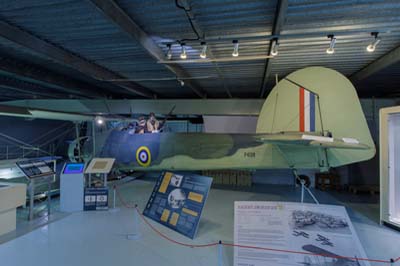
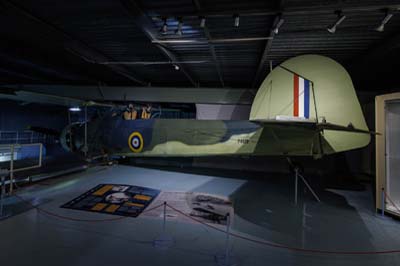
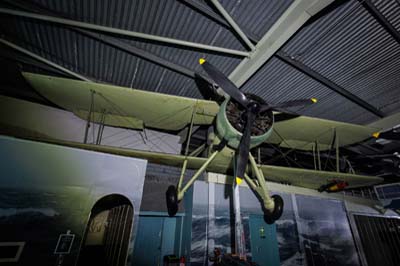
| Left to right: Fairey Swordfish II (HS618 painted as 'P4139'). |
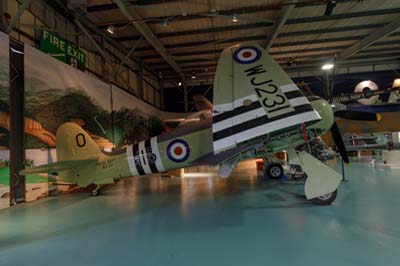
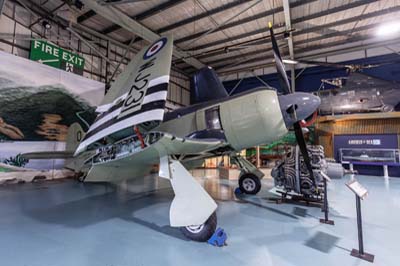
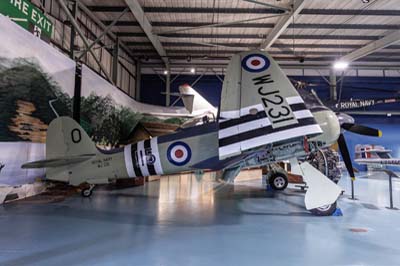
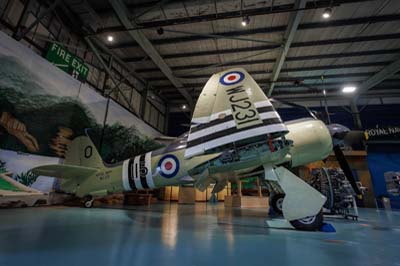
| Left to right: Hawker Sea Fury FB.11 (WJ231 'O-115'). |
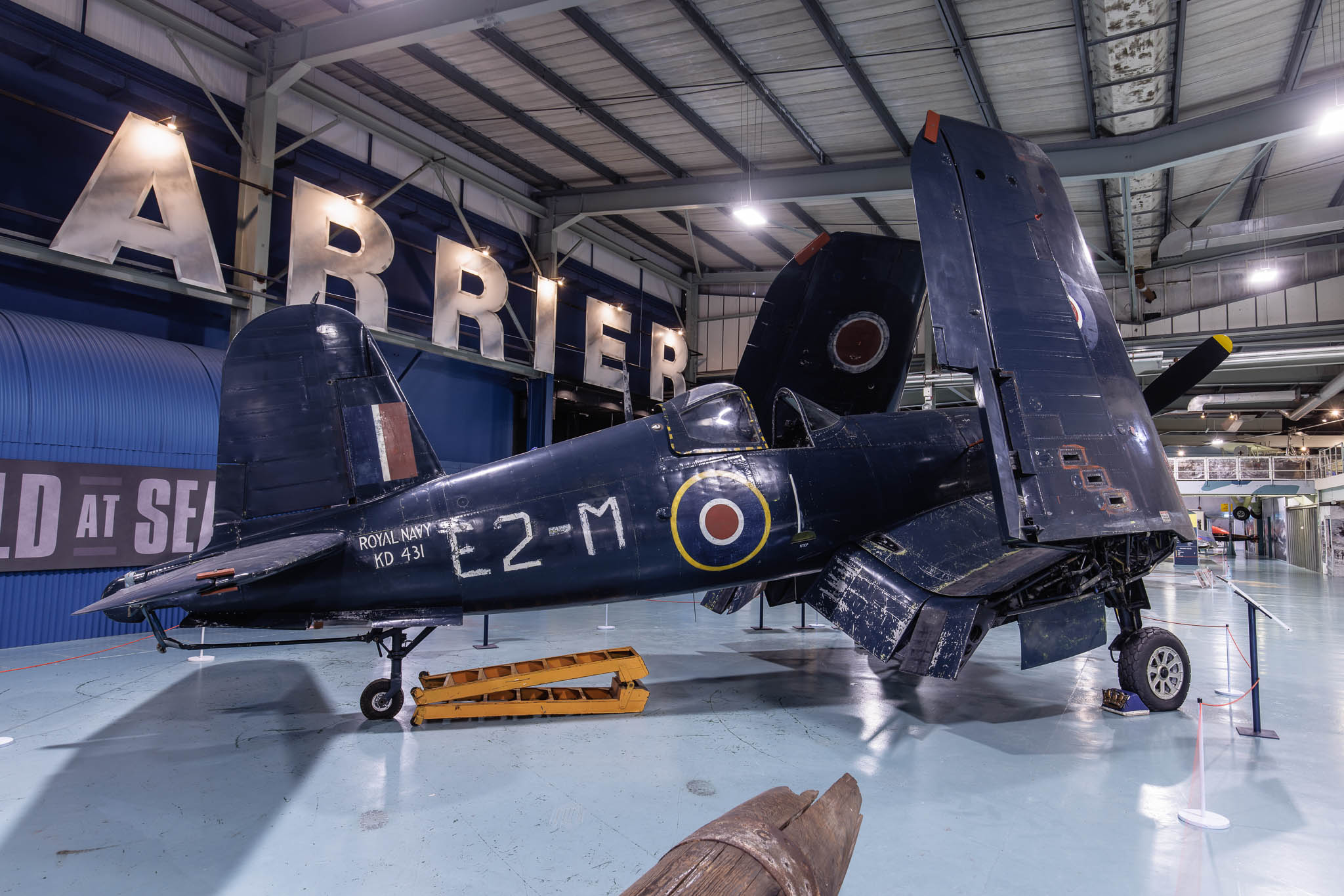
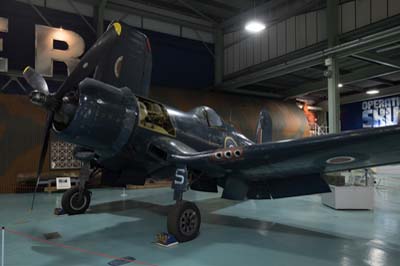
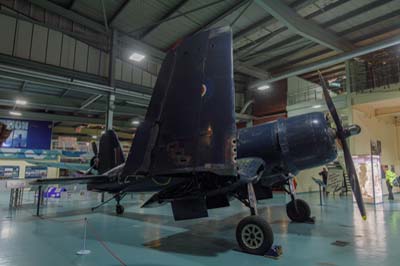
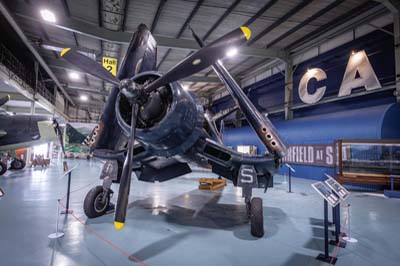
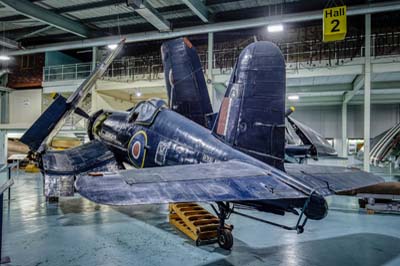
| Left to right: Grumman Corsair Mk.IV (KD431 'EZ-S' / 'E2-M'). Built by Goodyear in August 1944 as an FG-1A with serial 14862, it was transferred to the Royal Navy Fleet Air Arm under the lend lease program. Following retirement from service in 1946 KD431 was given to the College of Aeronautics at Cranfield as an instructional airframe. Acquired by the Historical Aircraft Preservation Society in 1963 it was transferred to the Fleet Air Arm Museum at RNAS Yeovilton. It was given a complete repaint over the original paint before it was put on display. In 1999 it was decided to remove the paint applied in 1963. By 2005 the paint had been removed to reveal the original wartime markings. |
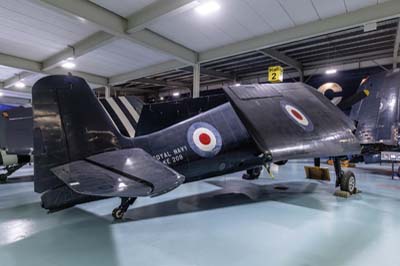
| Left to right: Grumman Hellcat II (KE209). Delivered to Royal Navy in 1945. To FAAM in 1970. |
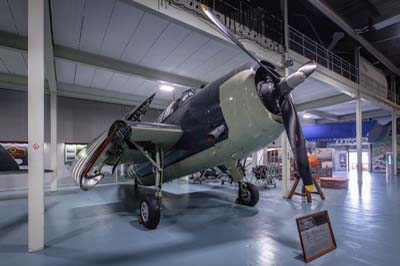
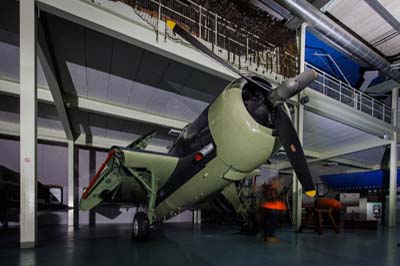
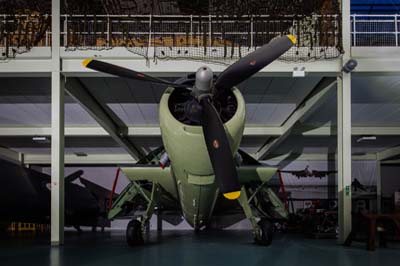
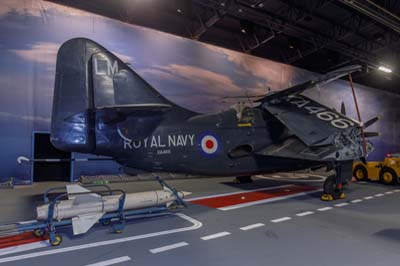
| Left to right: Grumman Avenger ECM6B (XB446) To Royal Navy in 1953 for conversion to ECM6B. Grounded in 1963 to FAAM in 1969. |
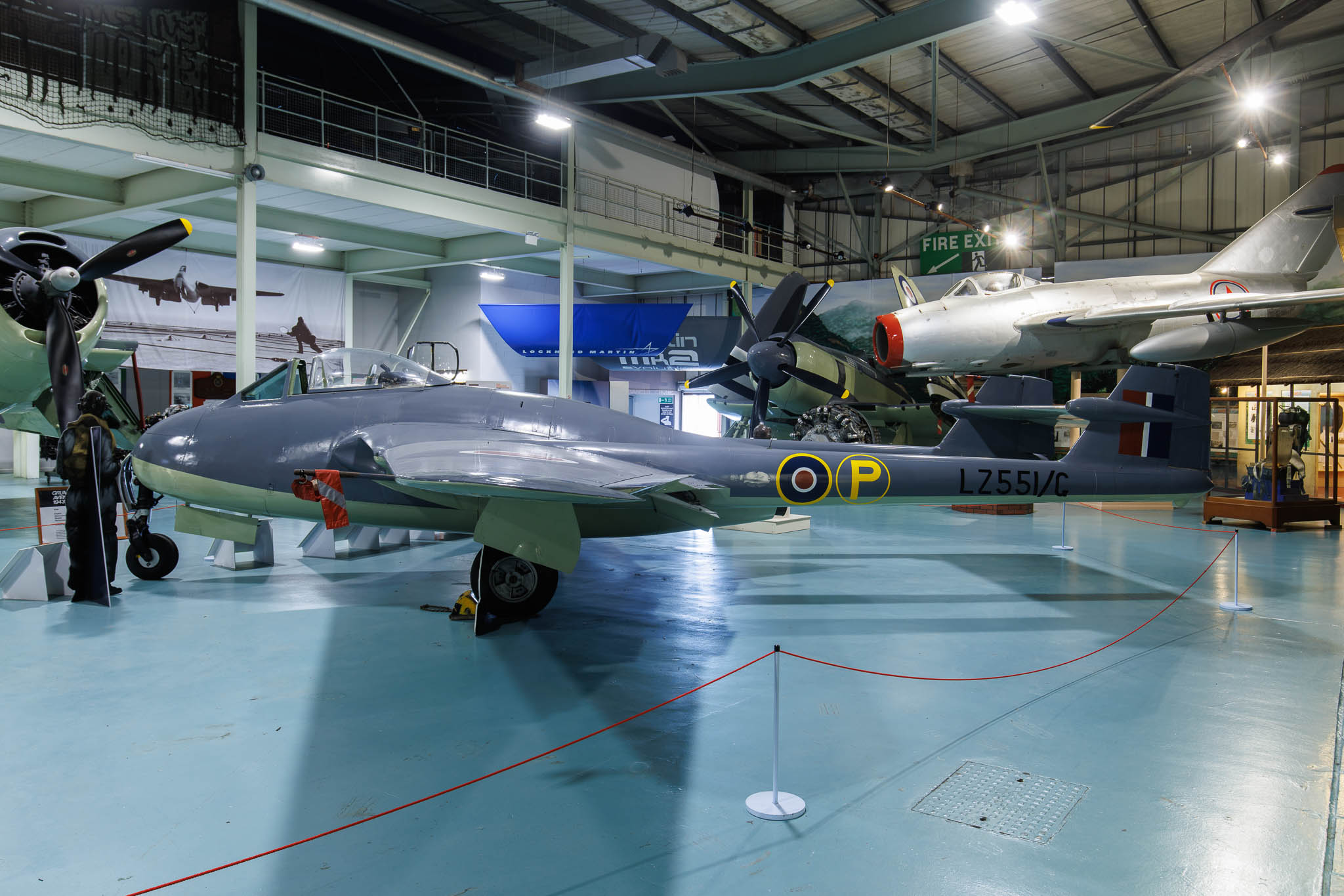
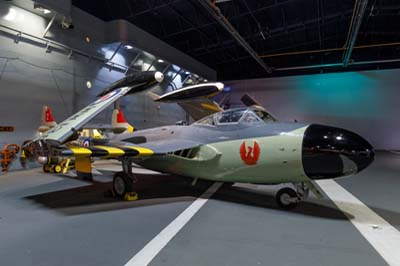
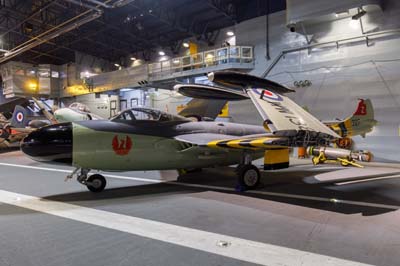
| Left to right: de Havilland Sea Vampire (LZ551/C). |
| Left to right: Dragonfly (WN493). |
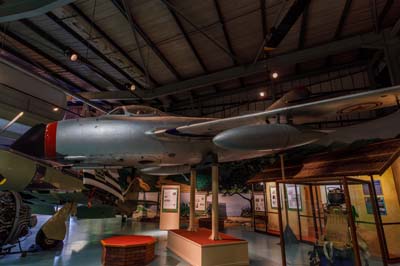
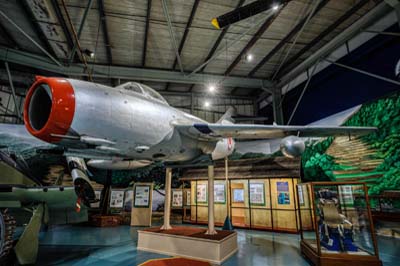
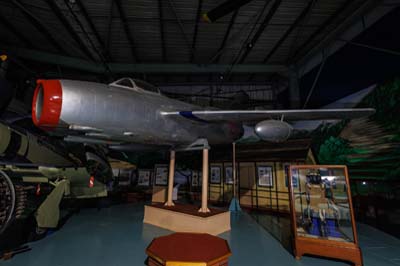
| Left to right: LIM2 (MIG 15 copy) (01420 registered G-BMZF). |
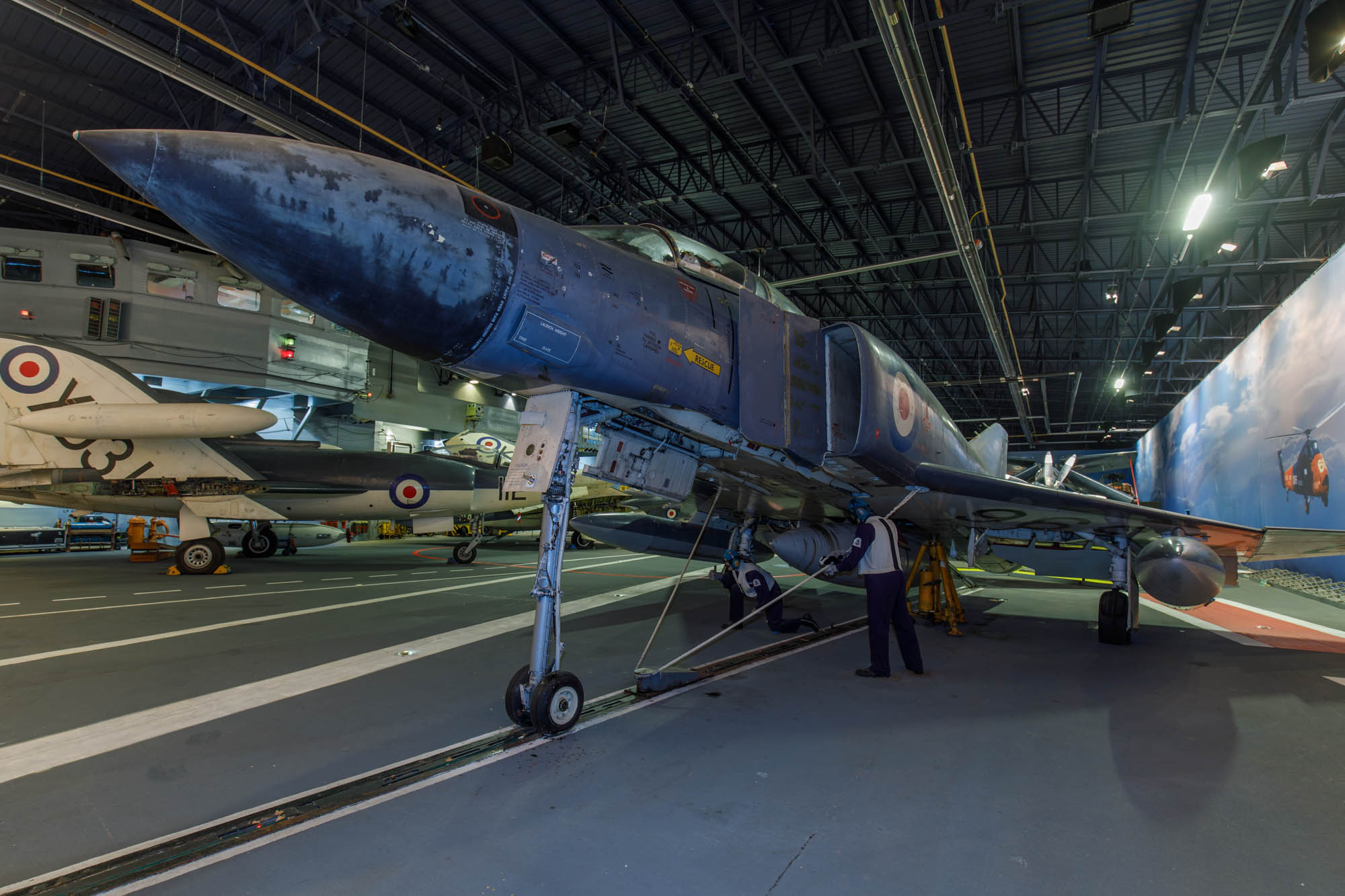
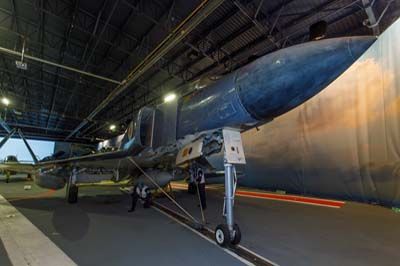
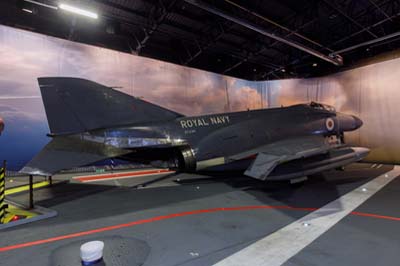
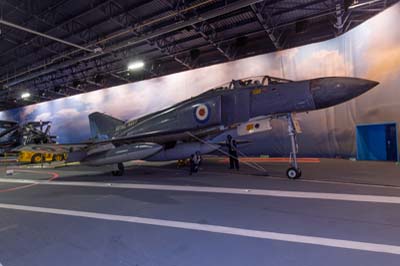
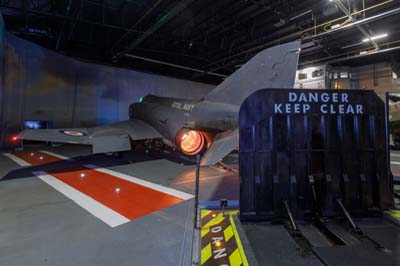
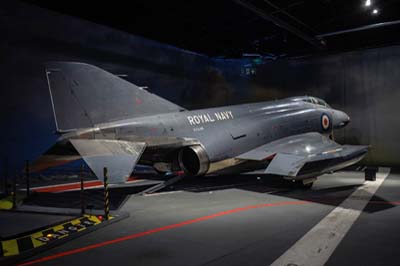
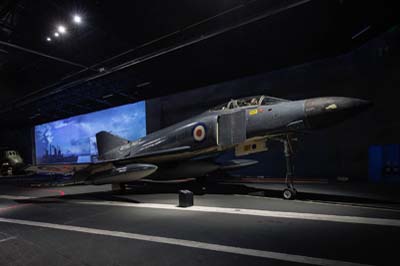
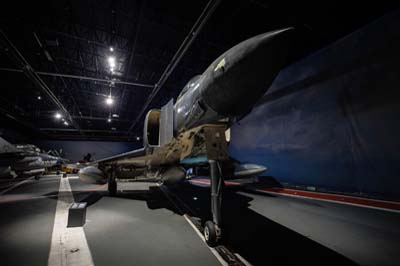
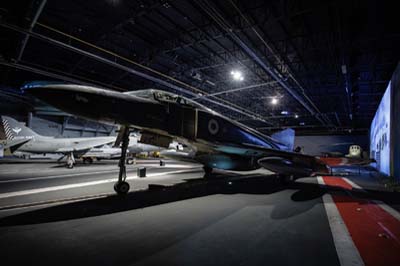
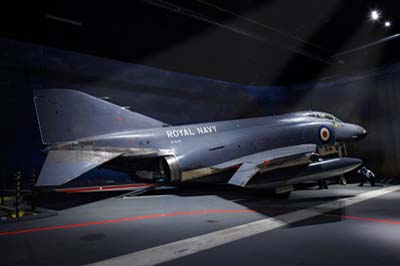
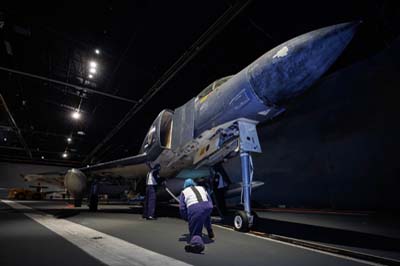
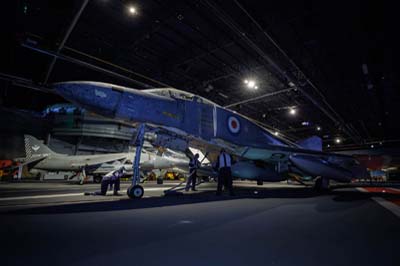
| Left to right: McDonnell Phantom FG.1 (XT596) ex Royal Navy, this was the YF-4K prototype. |
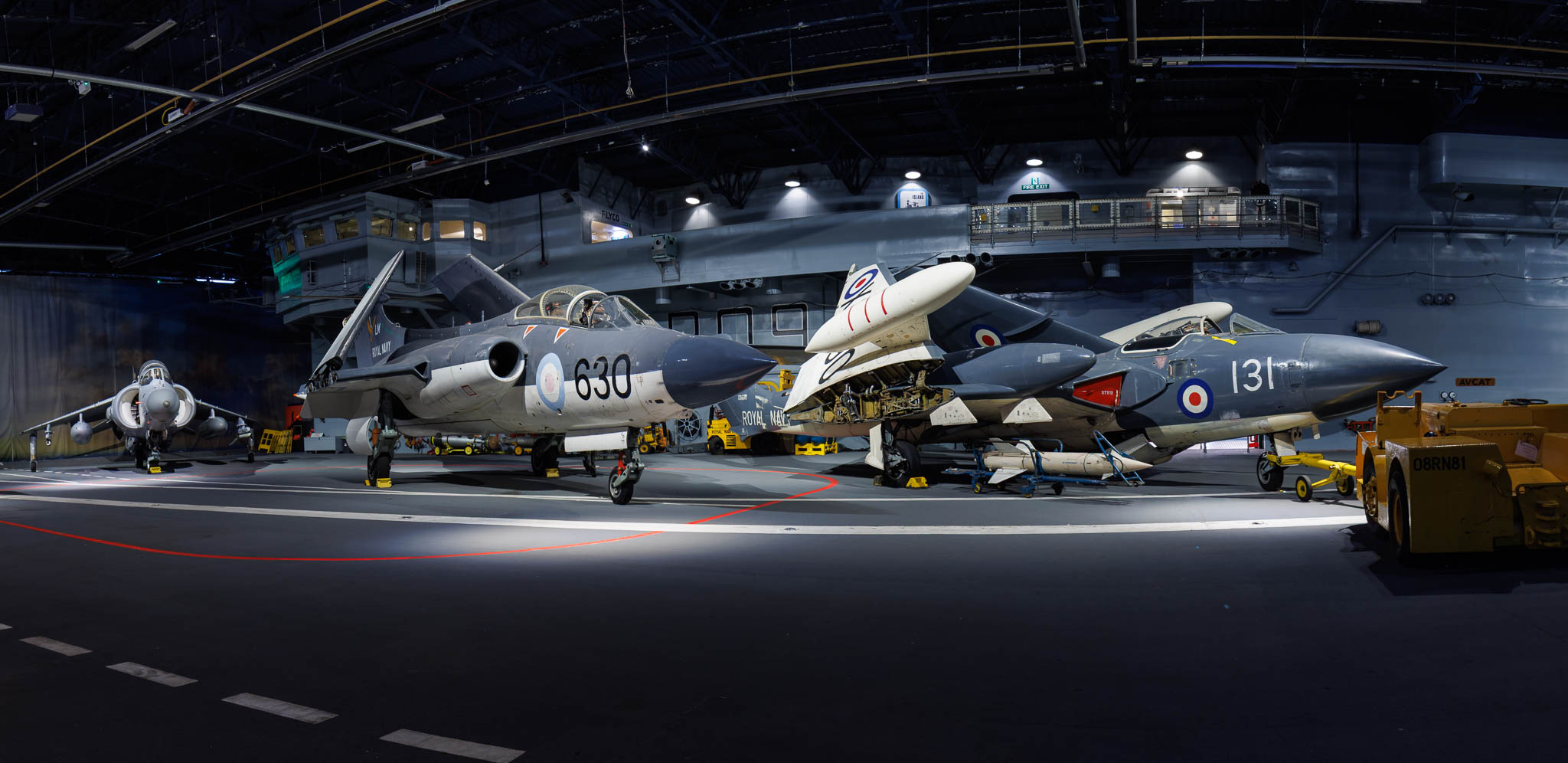
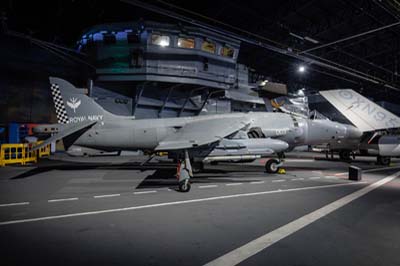
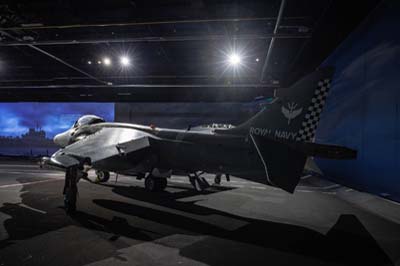
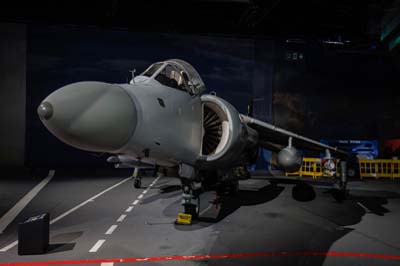
| Left to right: Sea Harrier F/A.2 (XZ499 '003') ex Royal Navy. |
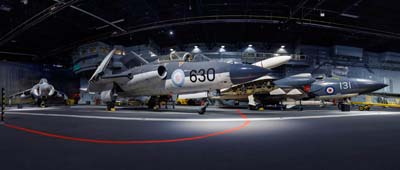
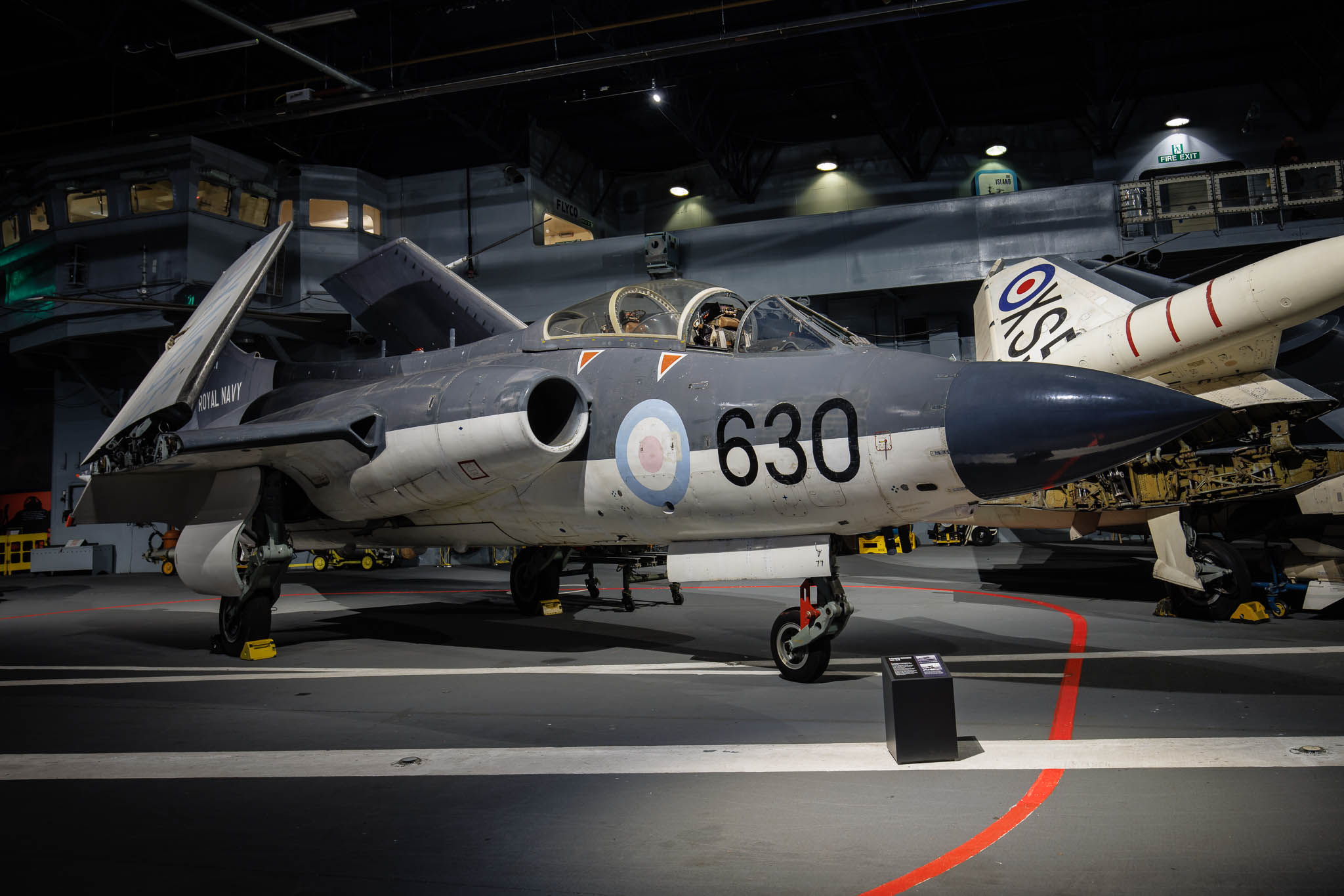
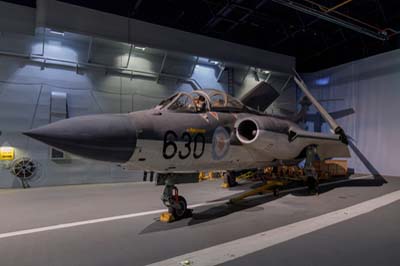
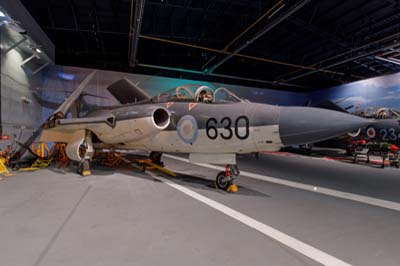
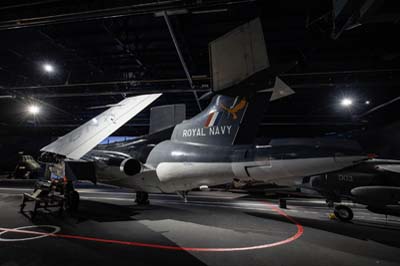
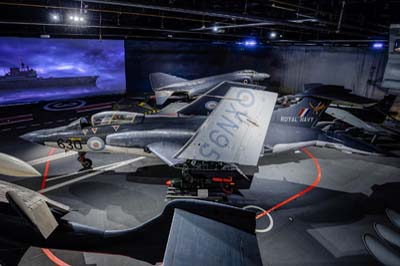
| Left to right: Blackburn Buccaneer S.1 (XN957 'LM-630') ex Royal Navy. |
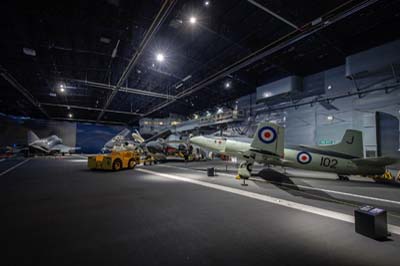
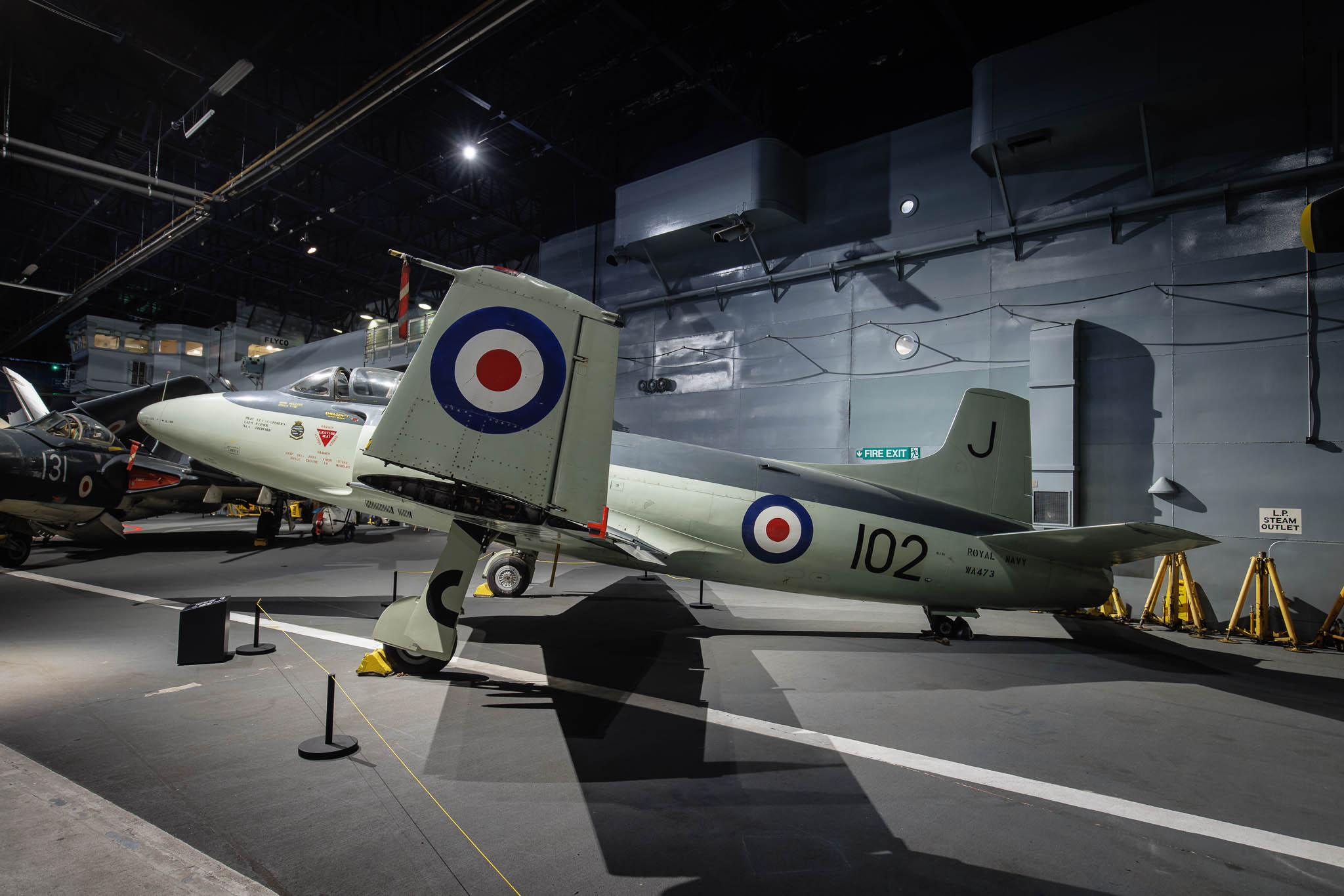
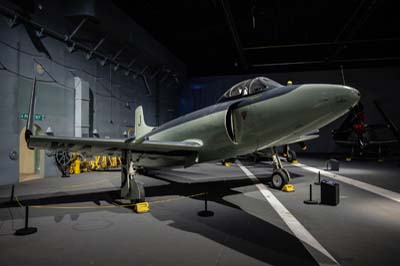
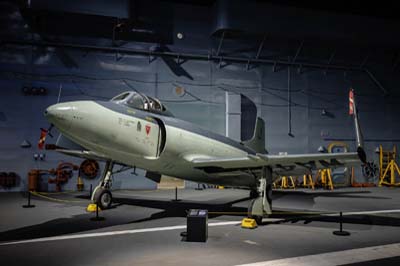
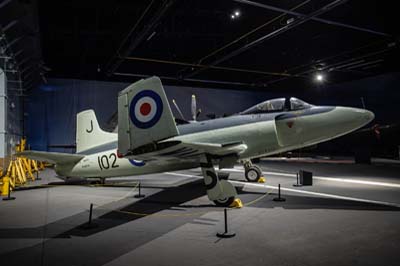
| Left to right: Vickers Supermarine Attacker F.1 (WA473 'J-102') ex Royal Navy. |
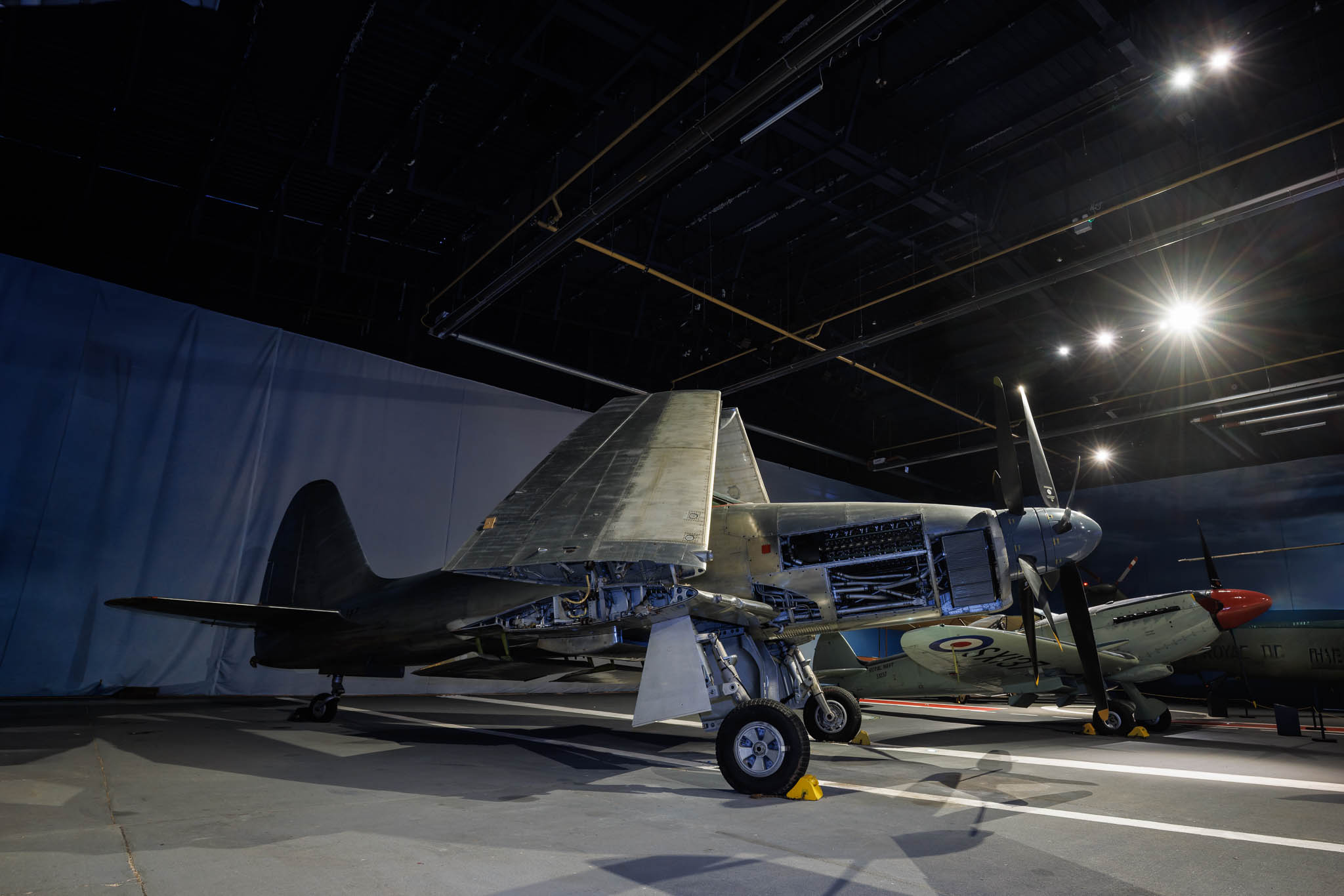
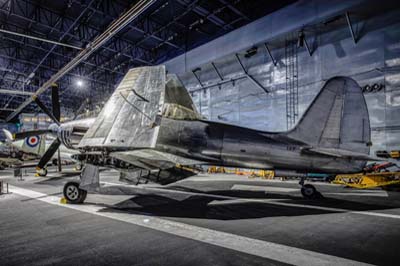
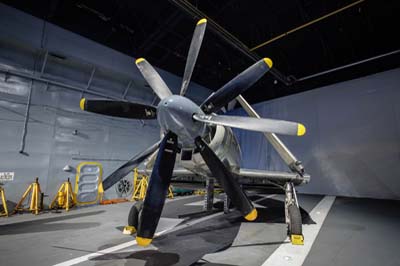
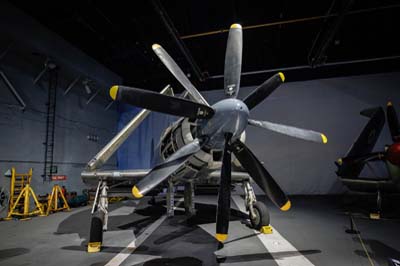
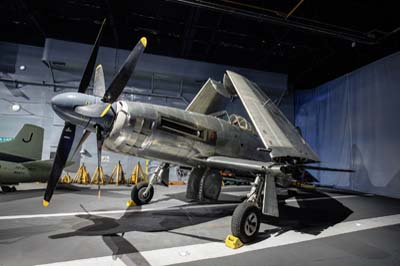
| Left to right: Westland Wyvern TF1 (VR137). Built at Yeovil in 1947 it was not flown but transferred to the College of Aeronautics at Cranfield as a training aid in 1950. To the FAA Museum in 1966. Moved to the Reserve Collection at Cobham Hall Store in 2012 before going on display in 2014. |
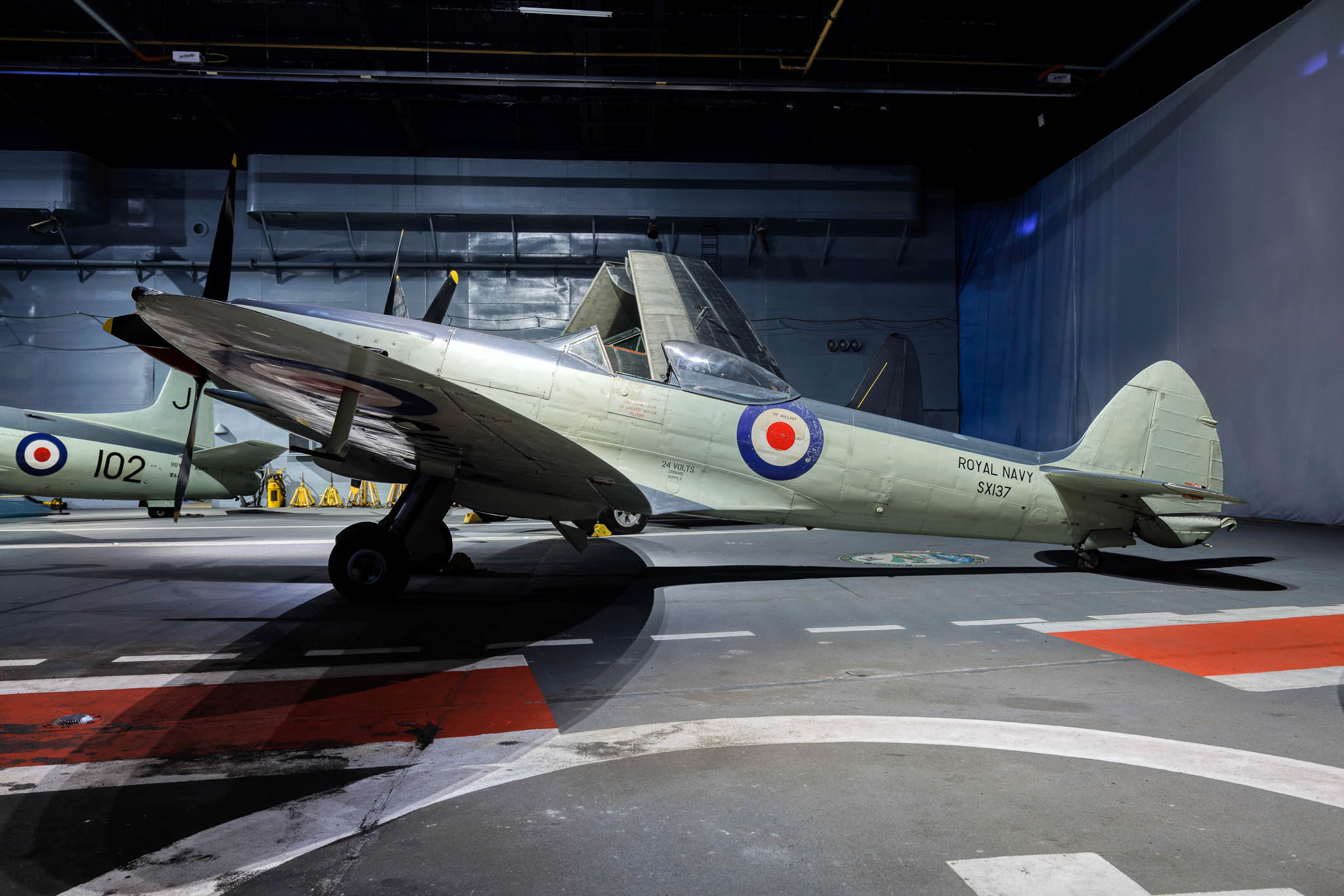
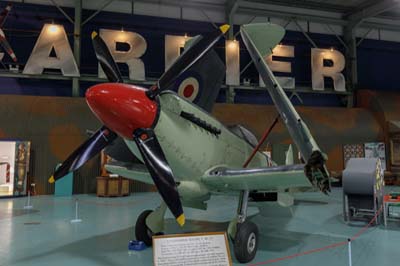
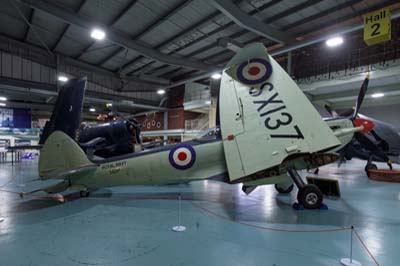
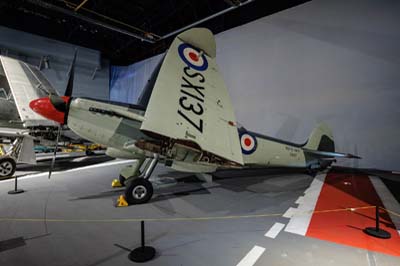
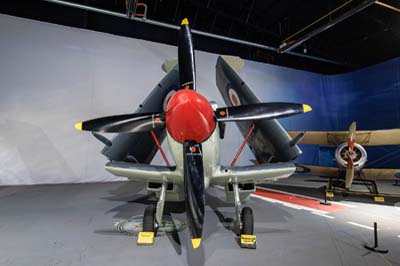
| Left to right: Supermarine Seafire F Mk.7 (SX137). Built at Yeovil by Westland Aircraft in 1945. |
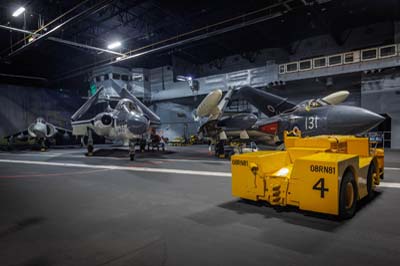
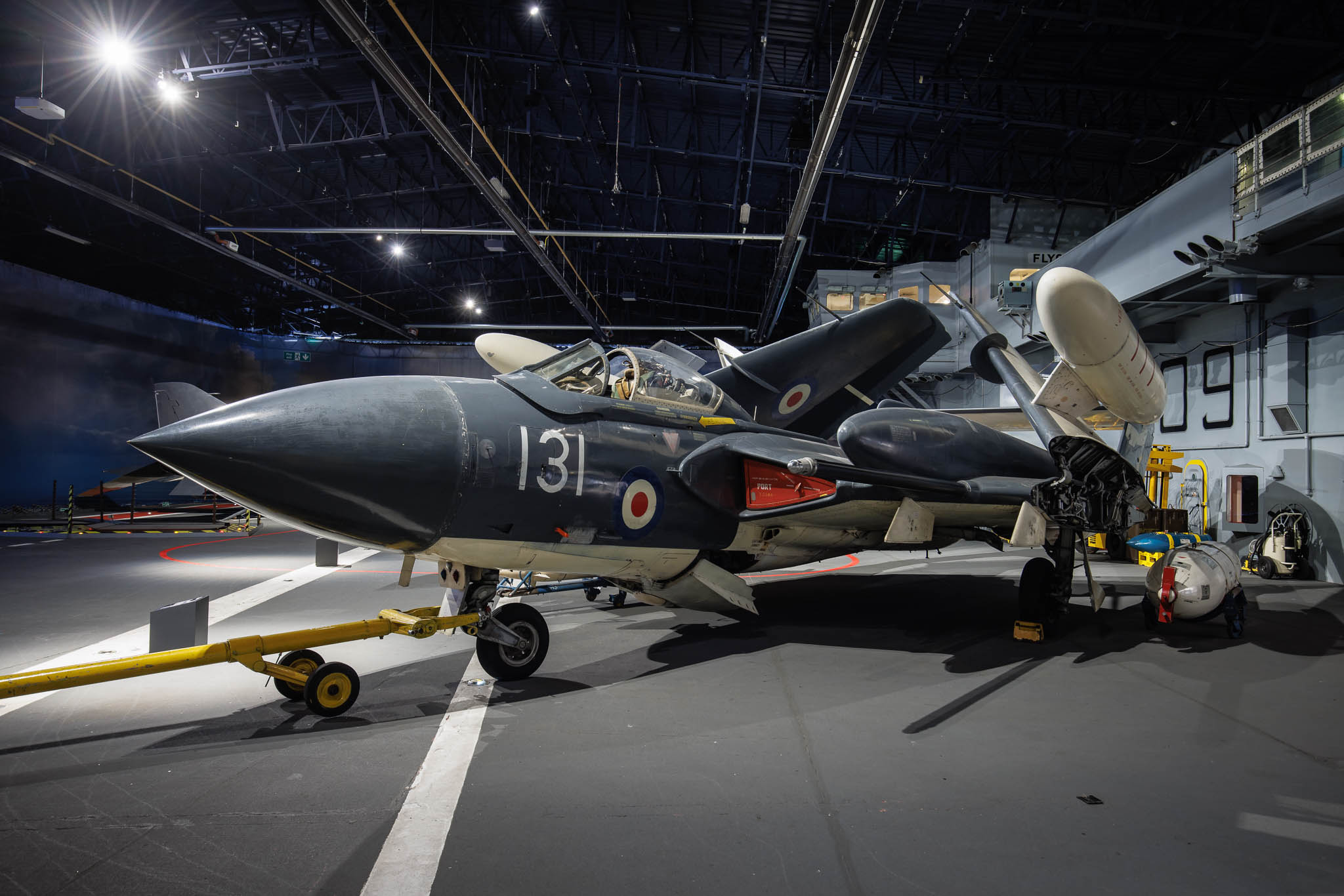
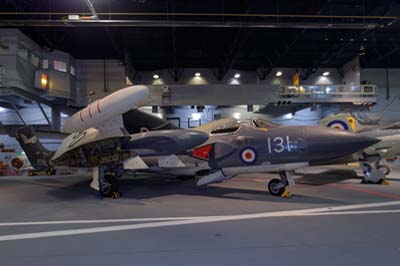
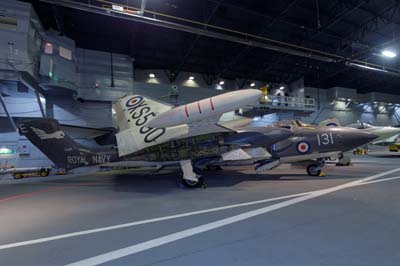
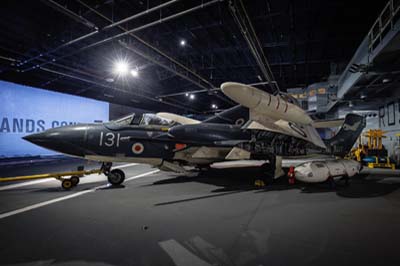
| Left to right: de Havilland Sea Vixen FAW.2 (XS590 'E-131') ex Royal Navy. |
| Left to right: Westland Wessex HU.5 (XT482 'VL Z-M') ex Royal Navy. |
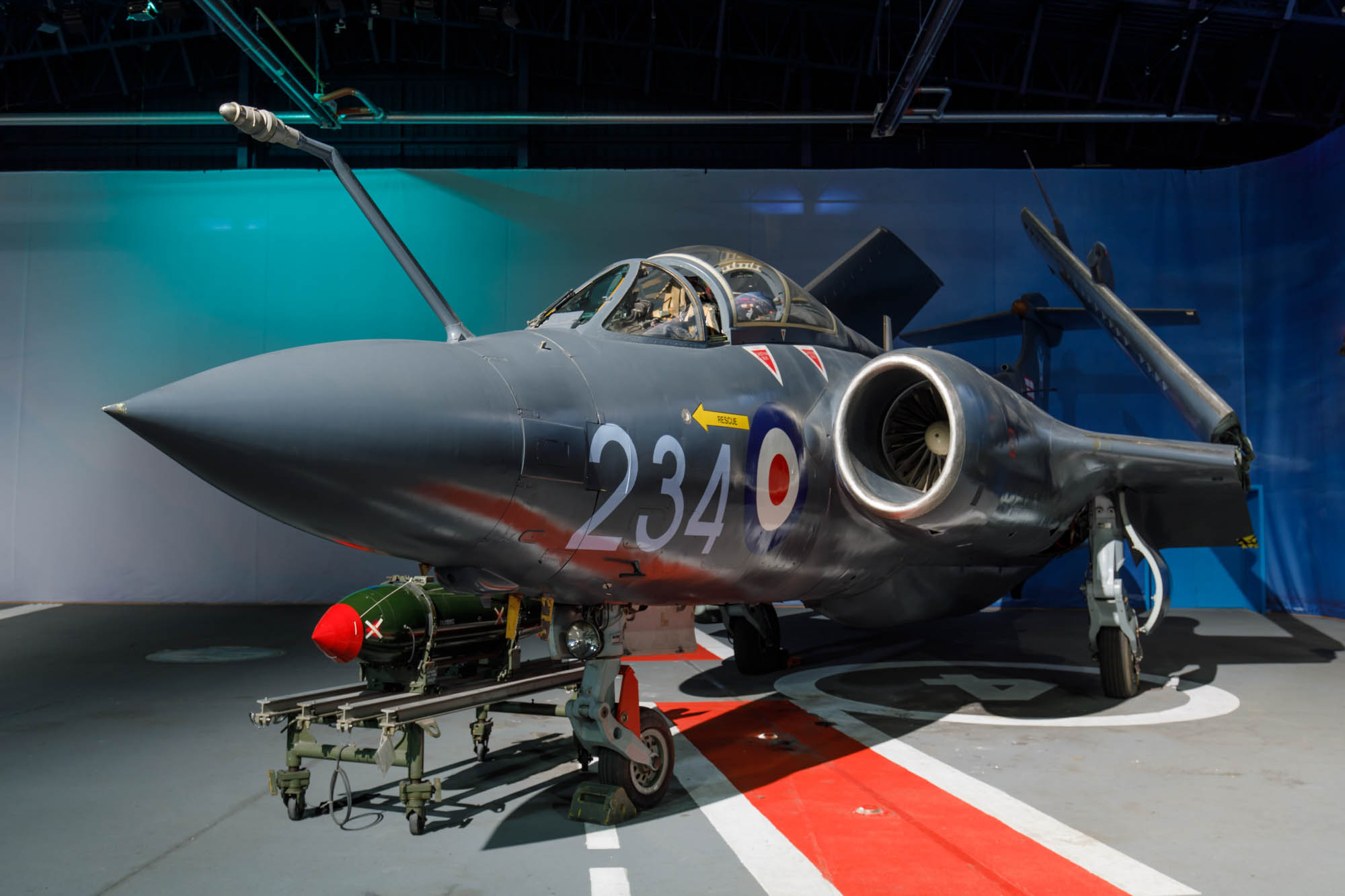
| Hawker Siddeley Buccaneer S.2B (XV333 'H-234') ex Royal Navy, it was no longer on display by November 2023. |
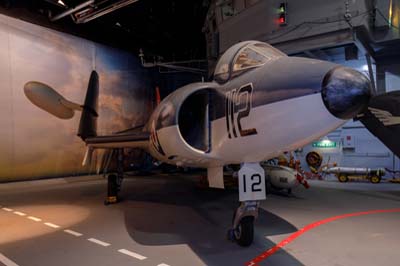
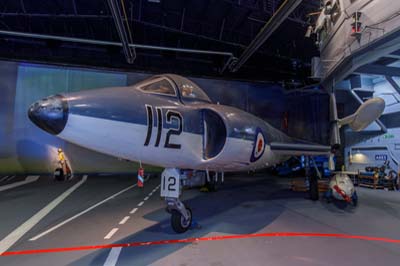
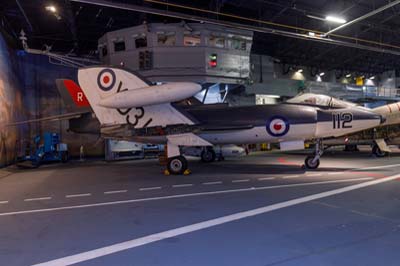
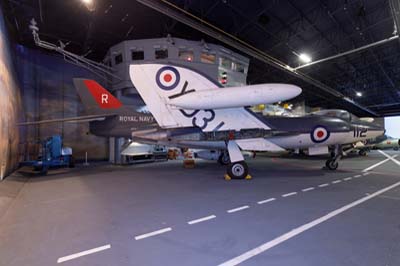
Left to right: Vickers Supermarine Scimitar F.1 (XD317 'R-112') ex Royal Navy, it was no longer on display by November 2023.
|
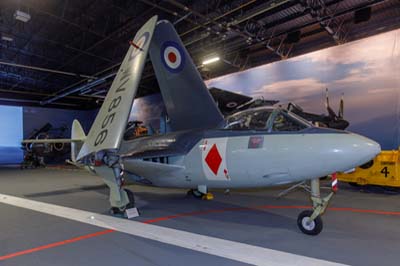
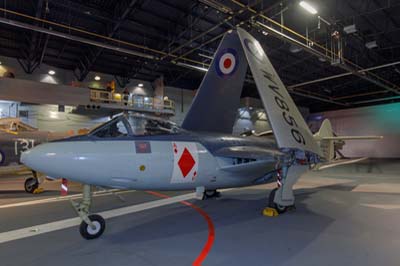
Left to right: Hawker Seahawk FGA.6 (WV856) ex Royal Navy, it was no longer on display by November 2023.
de Havilland Sea Venom FAW.22 (WW138 'Z-227') ex Royal Navy, it was no longer on display by November 2023. |
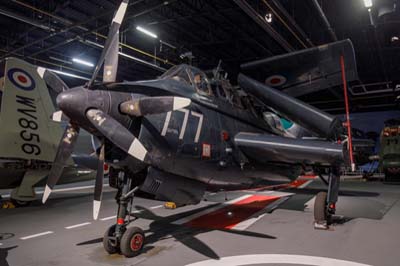
| Left to right: Fairey Gannet COD.4 (XA466 'LM-777') ex Royal Navy, it was no longer on display by November 2023. |
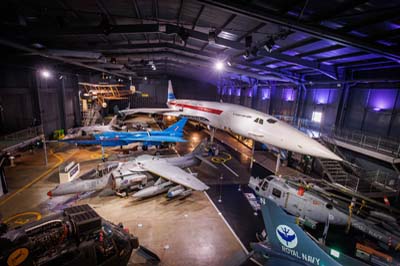
Hall 4
|
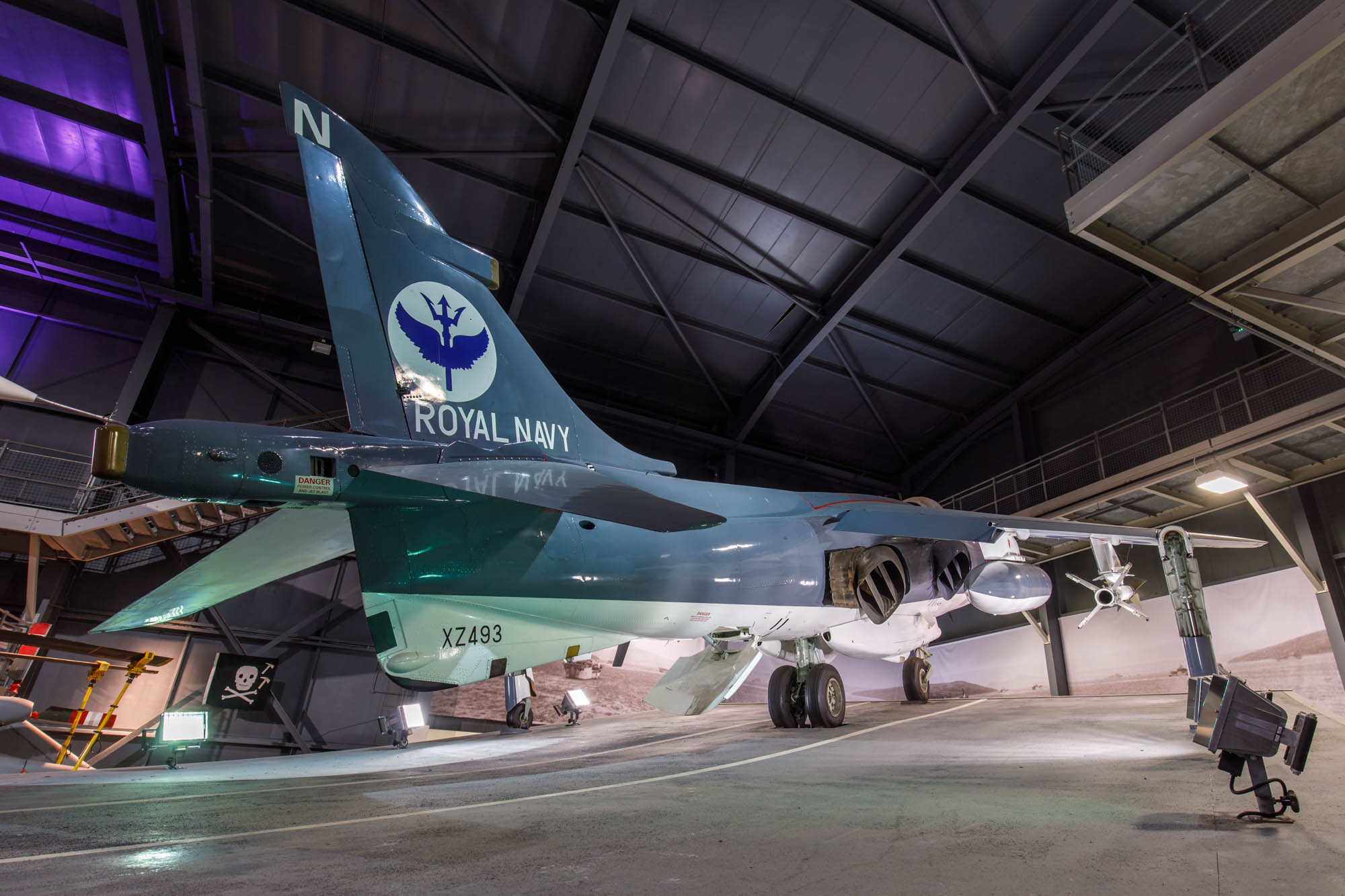
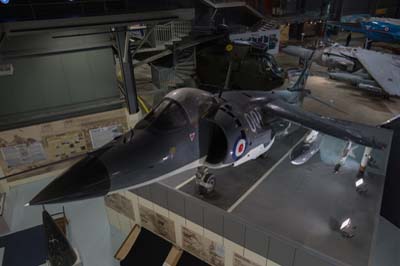
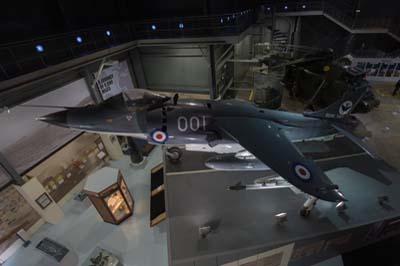
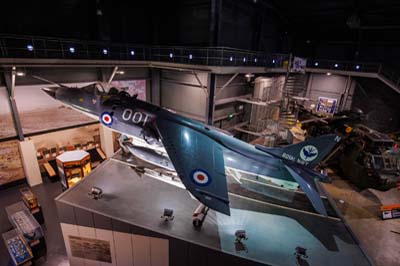
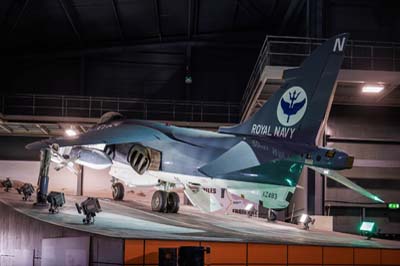
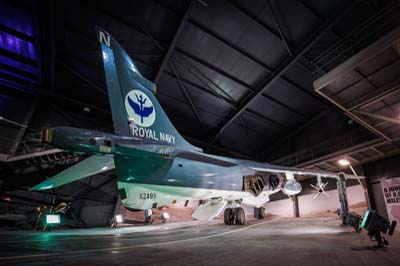
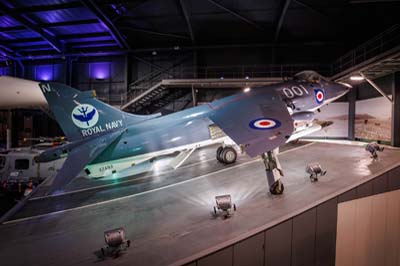
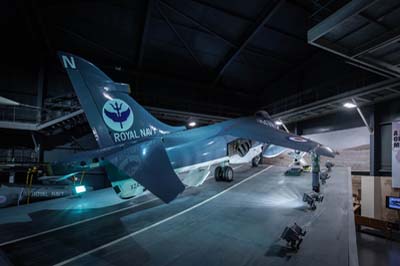
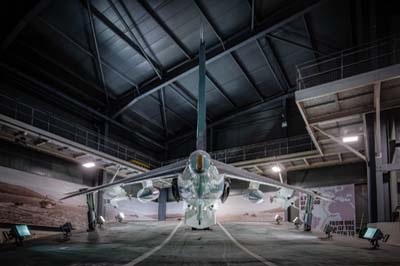
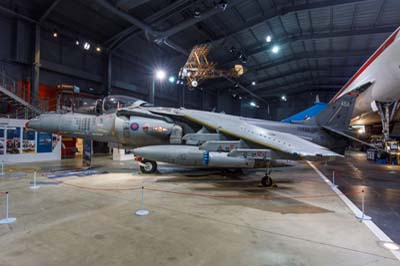
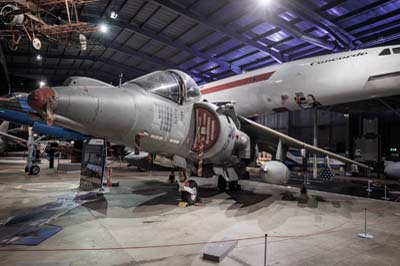
| Sea Harrier FRS.1 (XZ493 'N-001'). |
| Left to right: British Aerospace Sea Harrier FRS.1 (XZ493 'N-001'). |
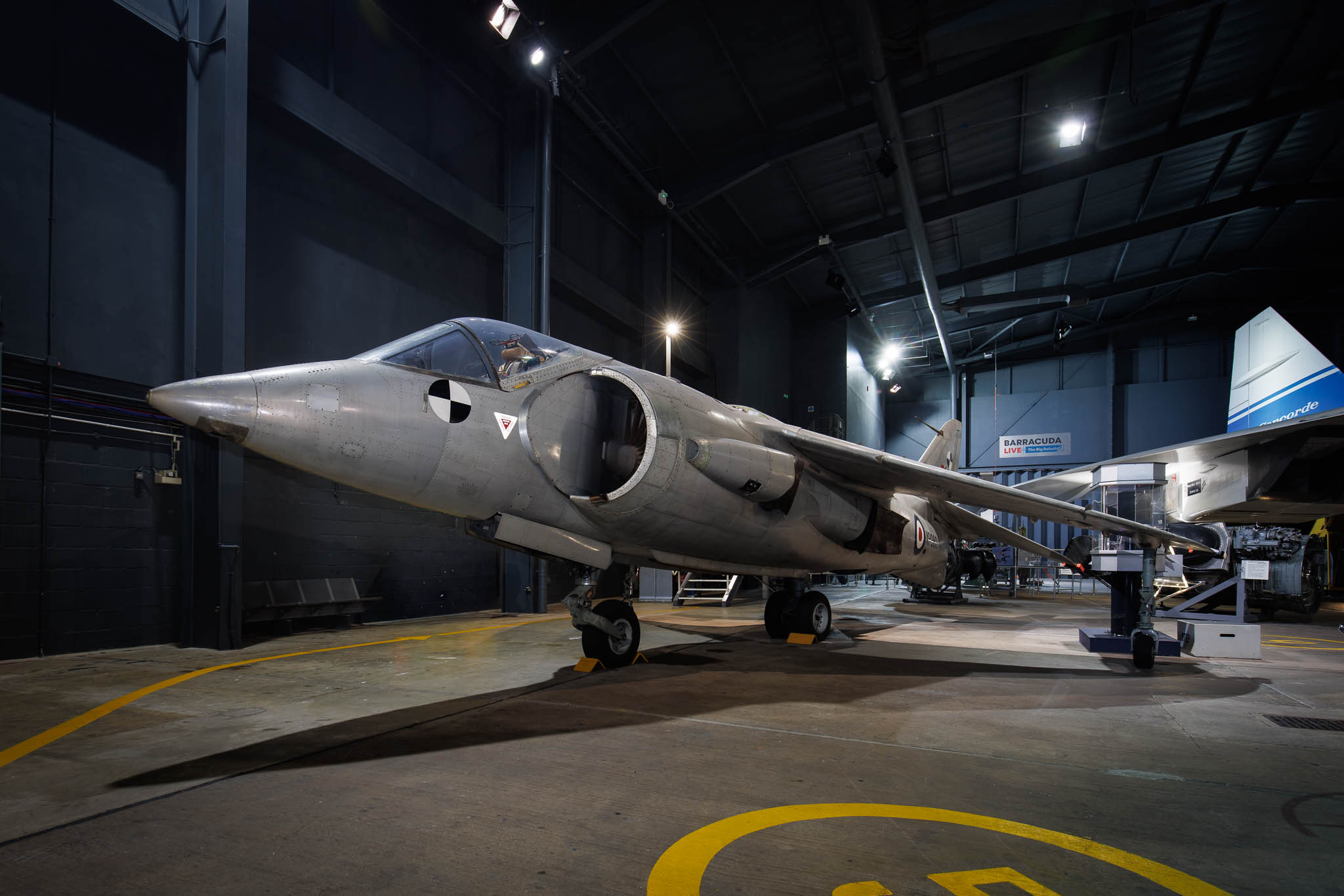
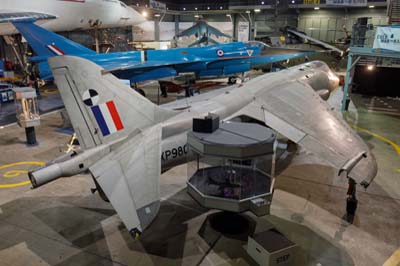
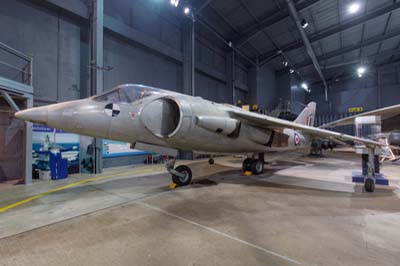
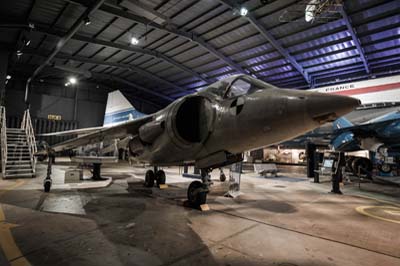
| Left to right: Hawker P1127 (XP980). |
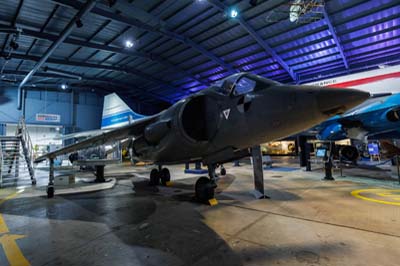
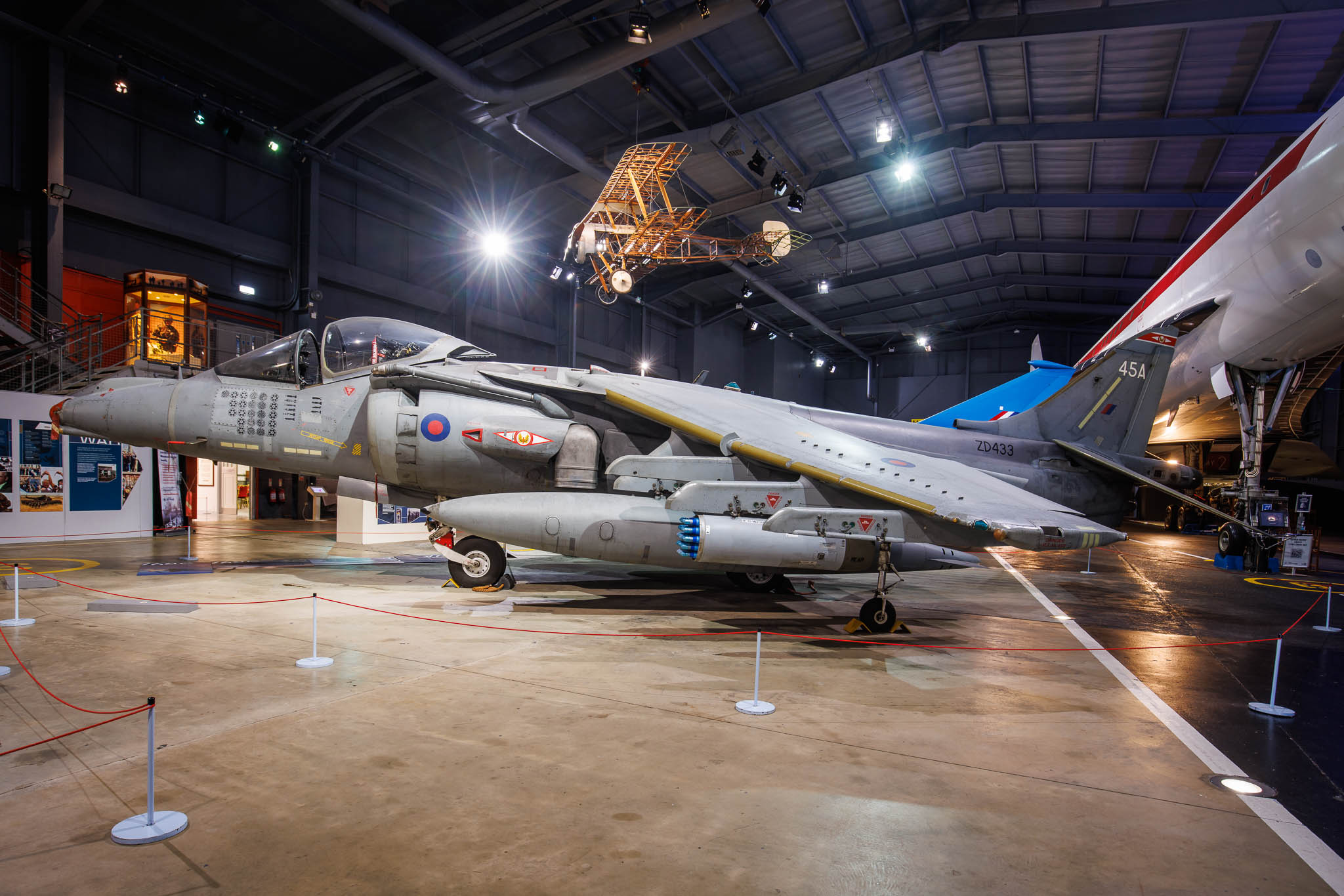
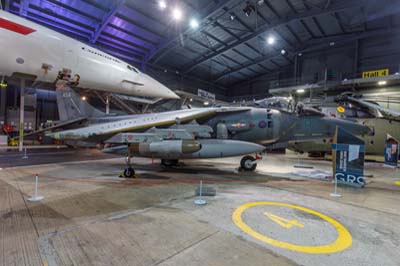
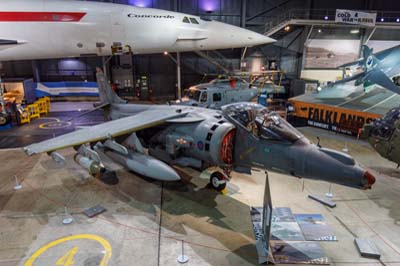
| Left to right: BAe Harrier GR.9A (ZD433 '45A'). |
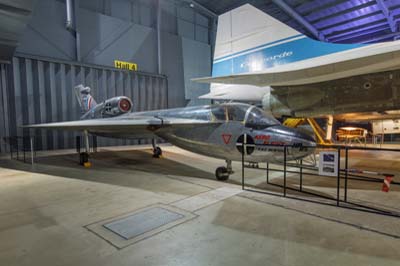
Left to right: Handley Page HP.115 (XP841), no longer on display by November 2023.
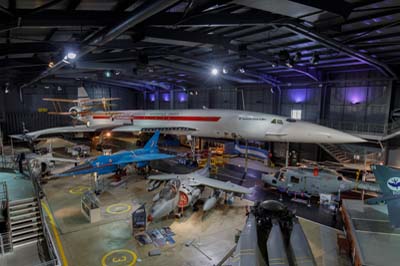
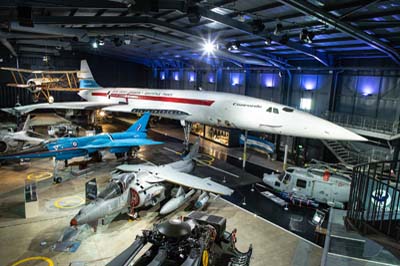
Aérospatiale/BAC Concorde (G-BSST). |
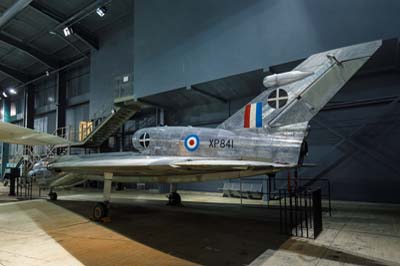
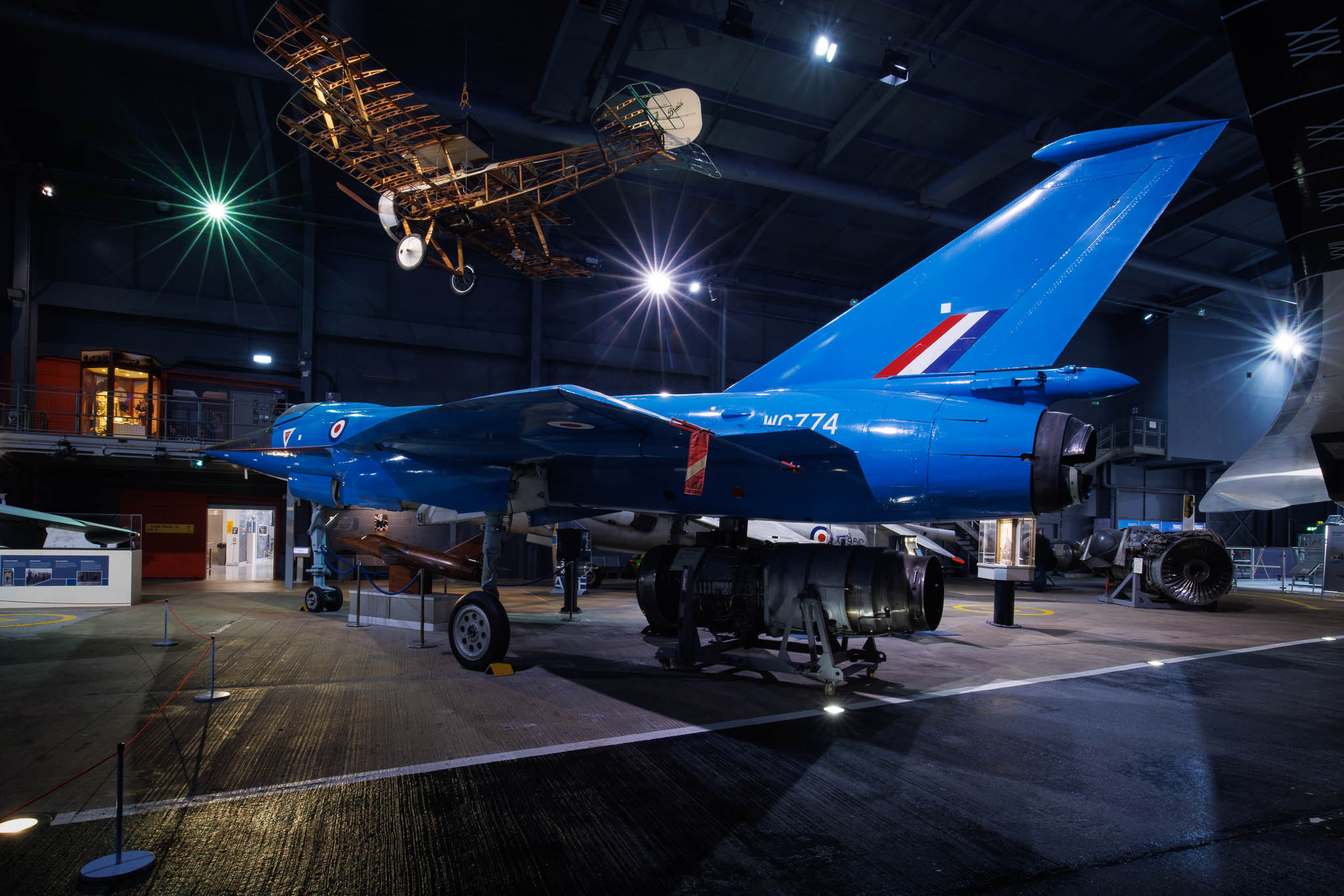
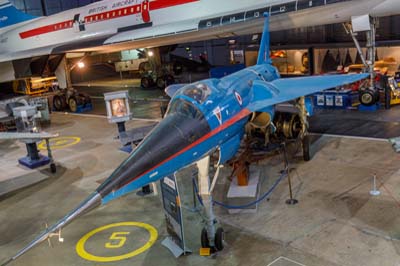
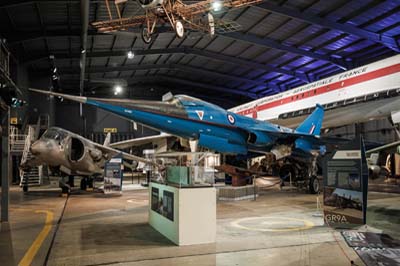
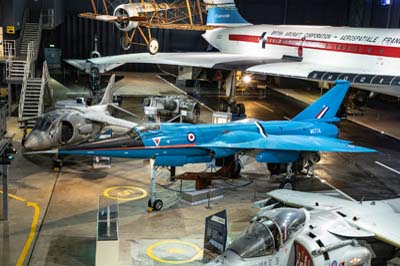
| Left to right: British Aircraft Corporation 221 (WG774). This was the first prototype it had been modified to become the BAC 221 (originally it was the Fairey Delta 2) by the British Aircraft Corporation, who took over Fairey in 1960, for flight testing as part of the Concorde development program. |
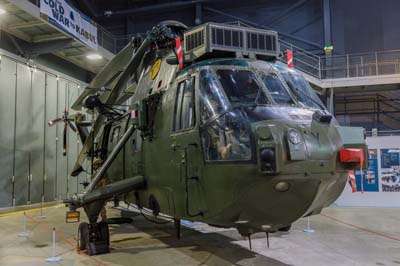
Left to right: Sea King HC.4 (ZA298 'Y').
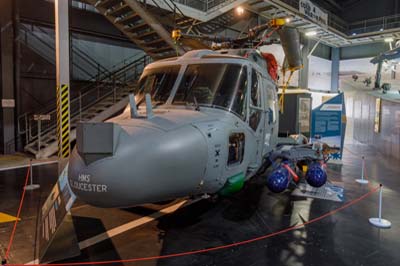
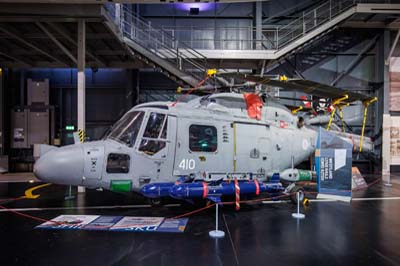
Westland Lynx HAS.3GMS (XZ720 '410') HMS Gloucester. |
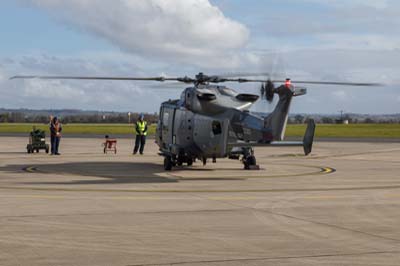
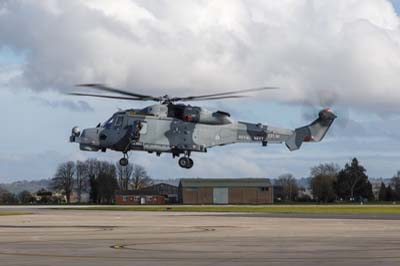
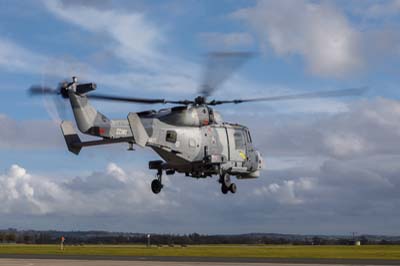
| Images taken from inside the museum of the Royal Navy Wildcat HMA.2 ramp. |
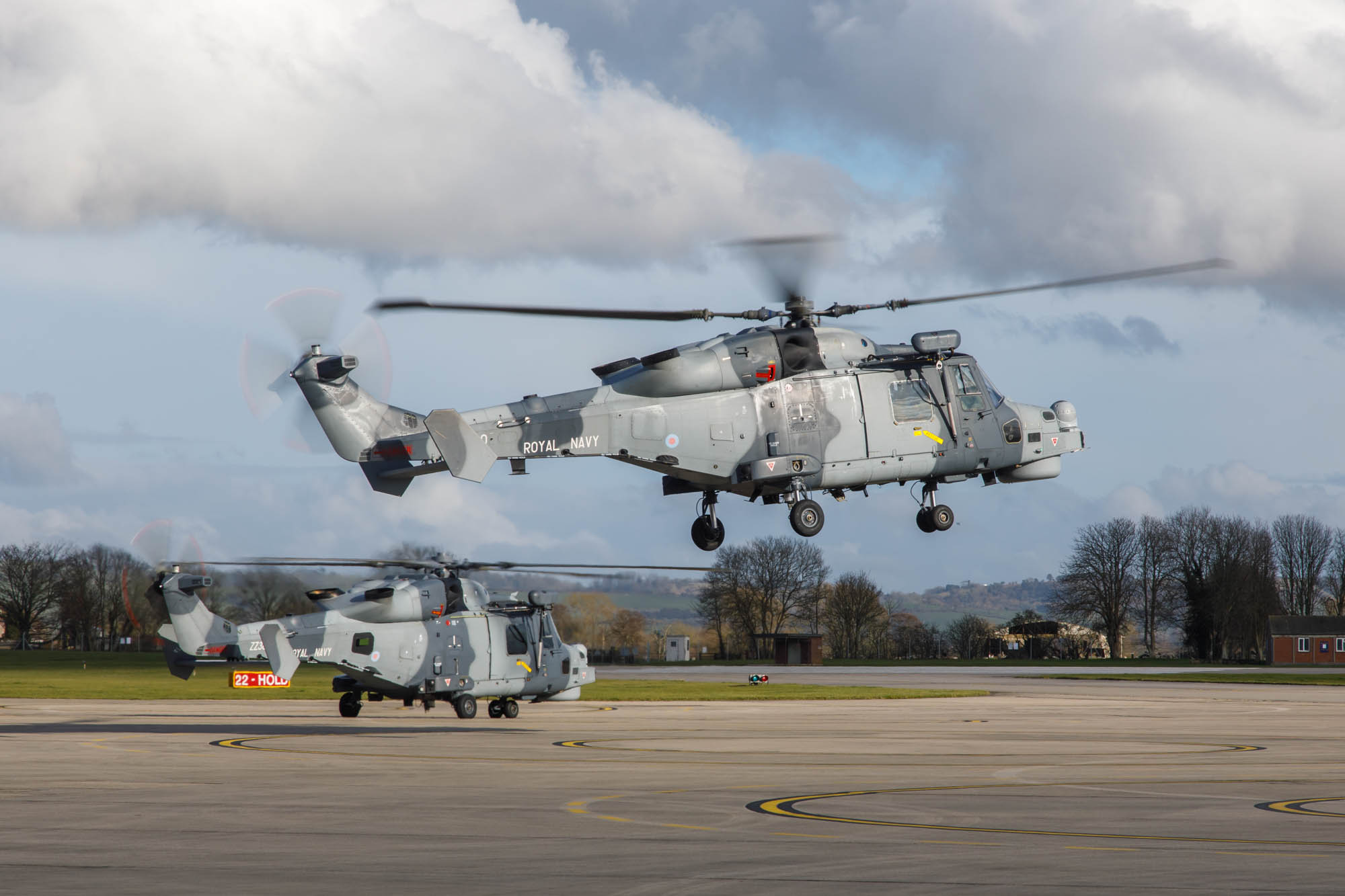
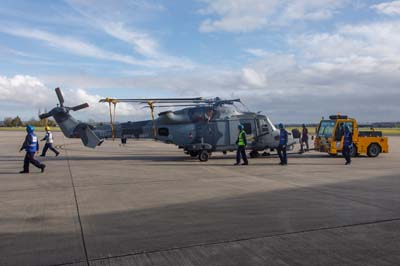
| Wildcat HMA.2s (ZZ380 and ZZ530) with 815 NAS Royal Navy. |
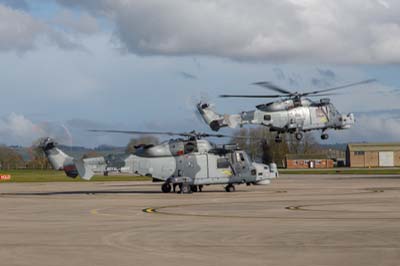
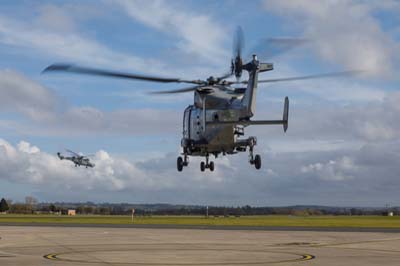
| Left to right: Wildcat HMA.2s (ZZ380 and ZZ530) with 815 NAS Royal Navy. |
| Left to right: Wildcat HMA.2s (ZZ380 and ZZ533) with 815 NAS Royal Navy. |