Canada Aviation and Space Museum
Rockcliffe Airport, Ottawa, Ontario
September 2026
|
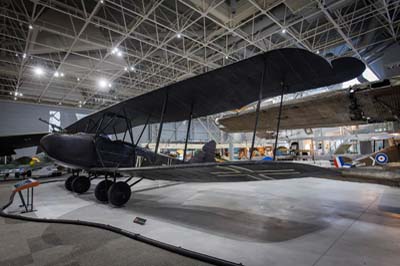
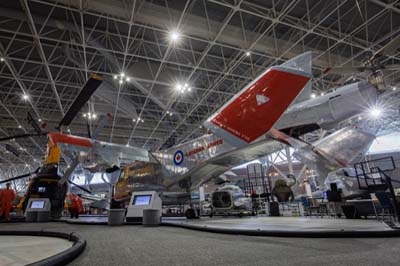
The Canada Aviation and Space Museum's collection includes rare World War One aircraft, aircraft associated with the Royal Canadian Air Force and British Commonwealth Air Training Plan, and significant Canadian-built aircraft from the Second World War and post-war eras. With many unique and historically important aircraft, the museum provides a comprehensive insight into Canada's aviation heritage.
My request to use a tripod was rejected, but as you can see hand-held worked ok if not a little tedious to post process. Be certain to book yourself on the restoration hangar tour as soon as you arrive, there are many more rare aircraft in the adjacent building. |
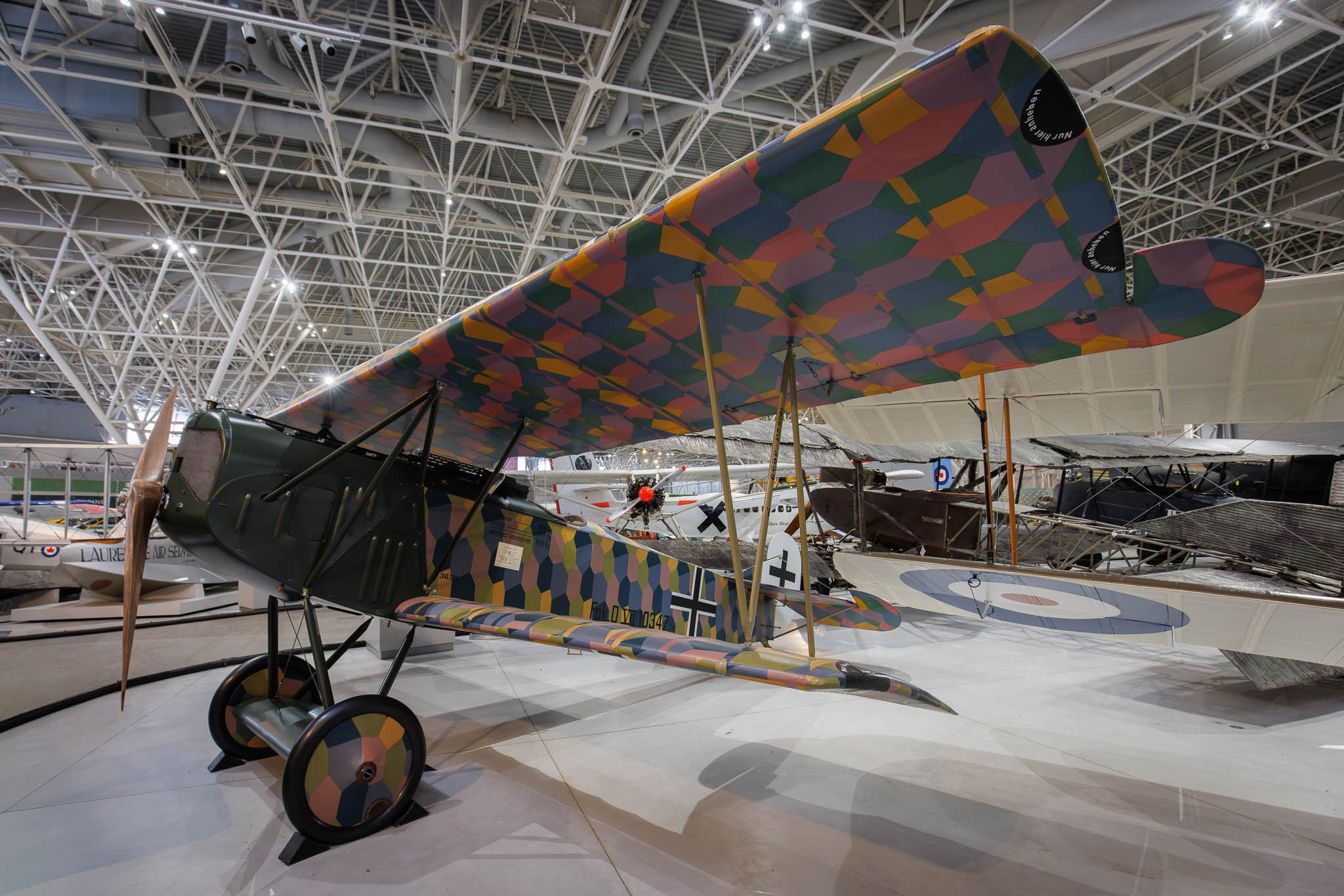 |
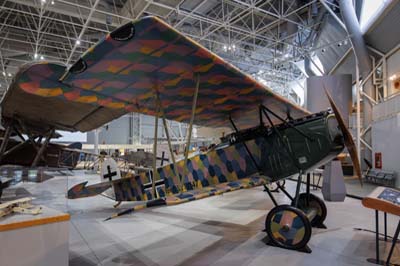
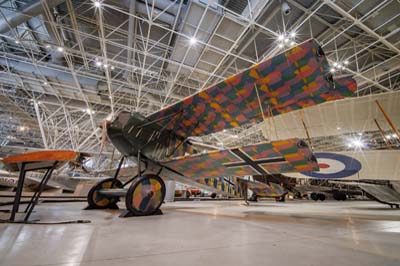
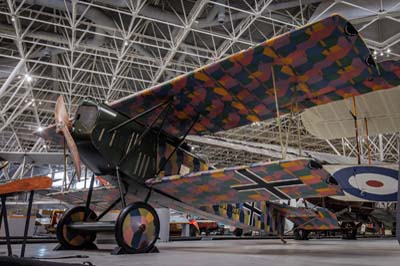
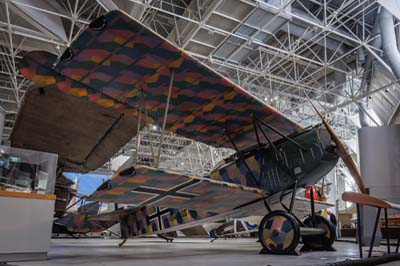
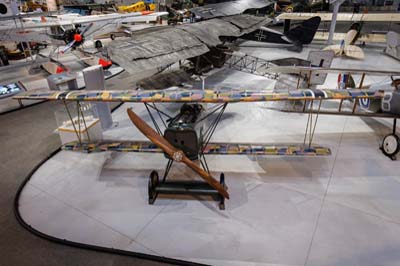
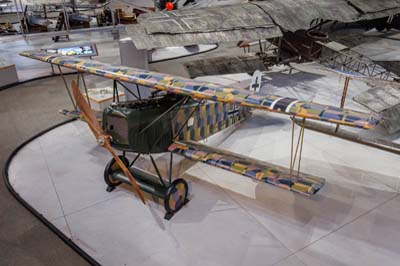
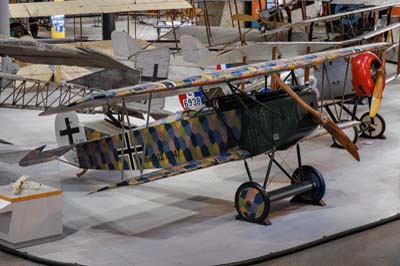
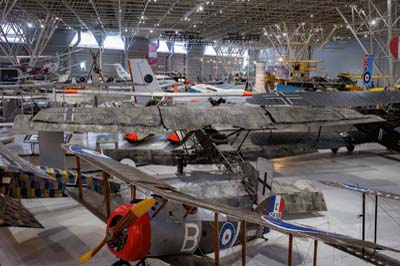
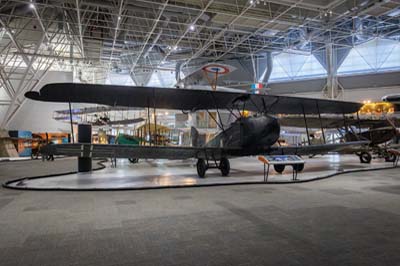
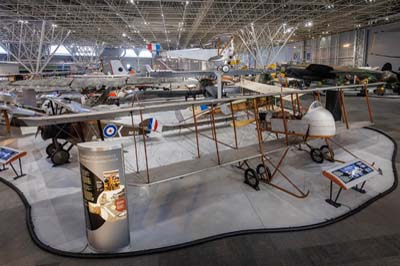
Left to right: Fokker D.VII (10347/18 registered NC1178) ex German Air Force. The Fokker D.VII was a German fighter aircraft designed by Reinhold Platz and introduced during World War One. Around 3,300 were built in 1918, with the type quickly earning a formidable reputation in combat. By the war's end in November 1918, 775 aircraft were in service across 46 German fighter squadrons.
The D.VII proved so effective that the Armistice specifically required Germany to surrender all surviving examples to the Allies. Captured aircraft were widely evaluated and operated after the war, including by the United States, France, Great Britain, Canada, the Netherlands, Belgium and Switzerland.
Fokker D.VII 10347/18 was built by Fokker Flugzeug-Werke GmbH and later operated in civilian hands as NC1178. It appeared in several early aviation films, including Howard Hughes' 1930 film Hell's Angels. The museum purchased the aircraft at auction in 1971, after which it underwent an extensive and painstaking restoration by The Vintage Aviator Ltd (TVAL) in New Zealand before returning to Canada. |
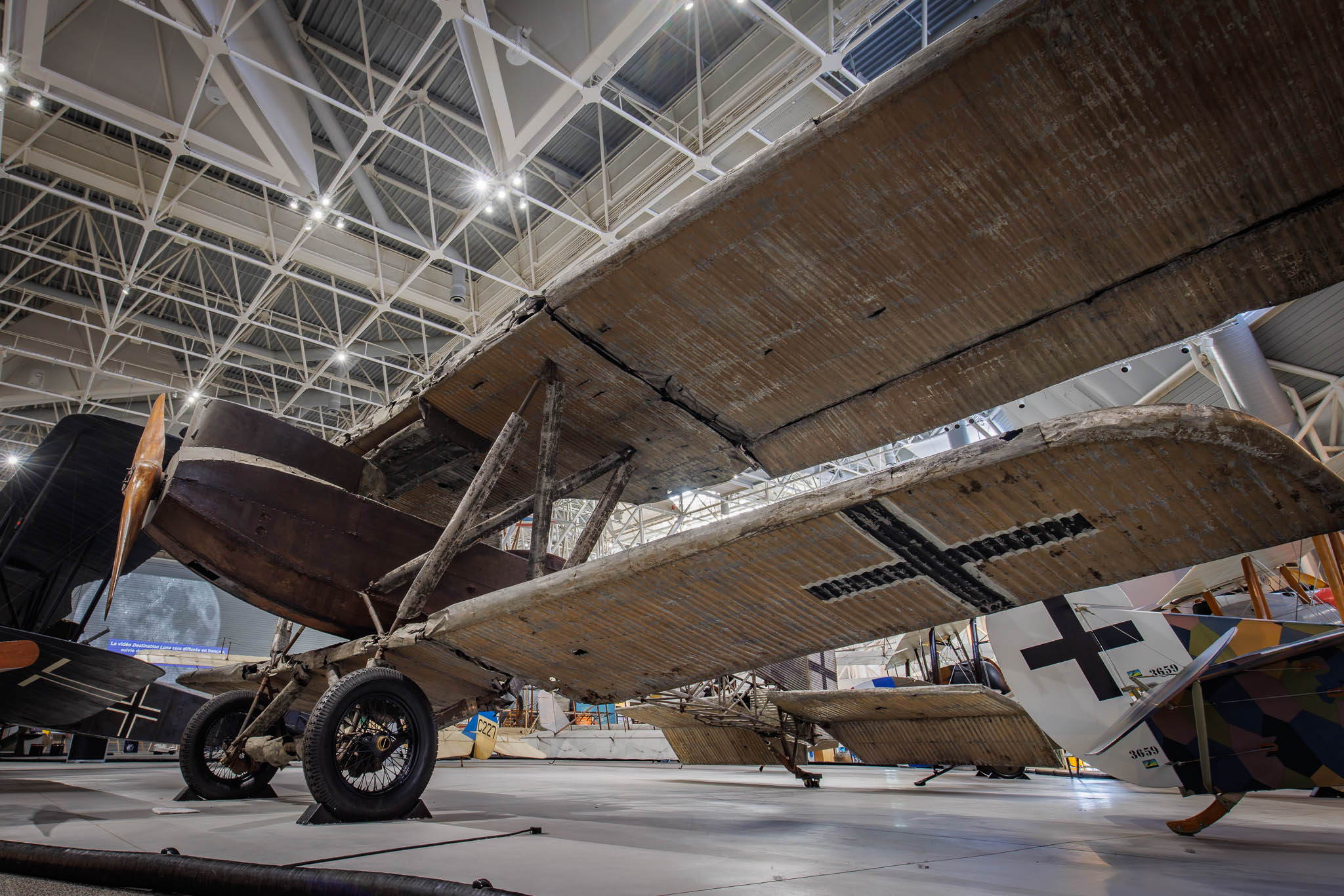 |
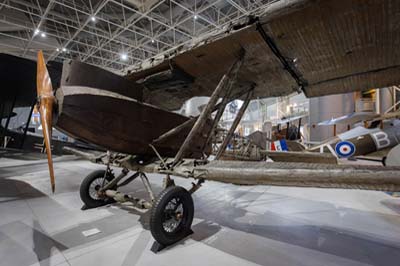
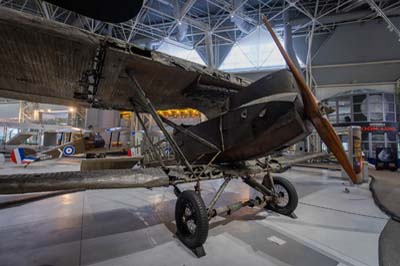
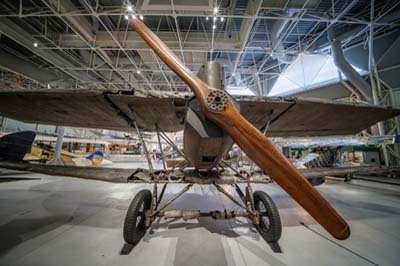
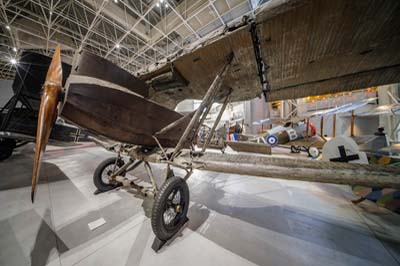
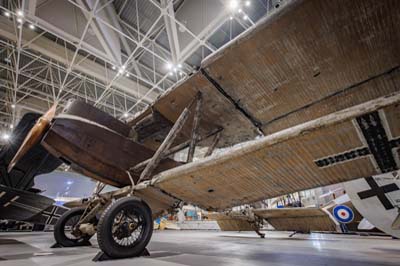
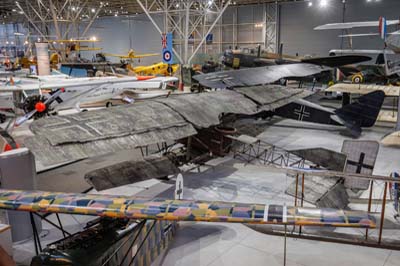
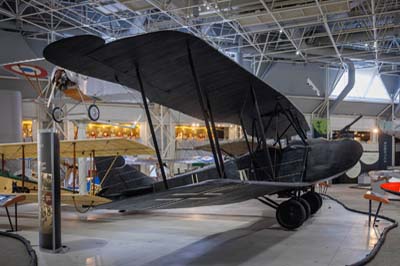
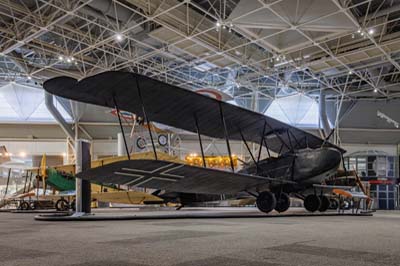
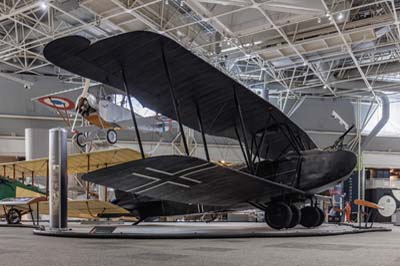
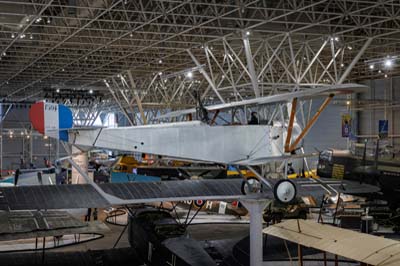
Left to right: Junkers J.1 (586/18) ex German Air Force. The Junkers J.I was developed for low-level ground attack, observation and army cooperation. It featured a heavy 5mm chrome-nickel steel armoured "bathtub" nacelle, protecting the crew and the 200 hp Mercedes D.IV engine. The aircraft entered frontline service in August 1917 and was used on the Western Front during the German Spring Offensive of 1918. Production at the Junkers works was slow due to poor organisation, with only 227 J.Is manufactured before production ceased in January 1919.
Junkers J.I 586/18 is the world's only surviving complete example of this pioneering World War One all-metal armoured ground-attack aircraft. It was shipped to Canada in May 1919 as a technological war asset following the conclusion of World War One and was subsequently held by the Canadian War Museum before being transferred here. |
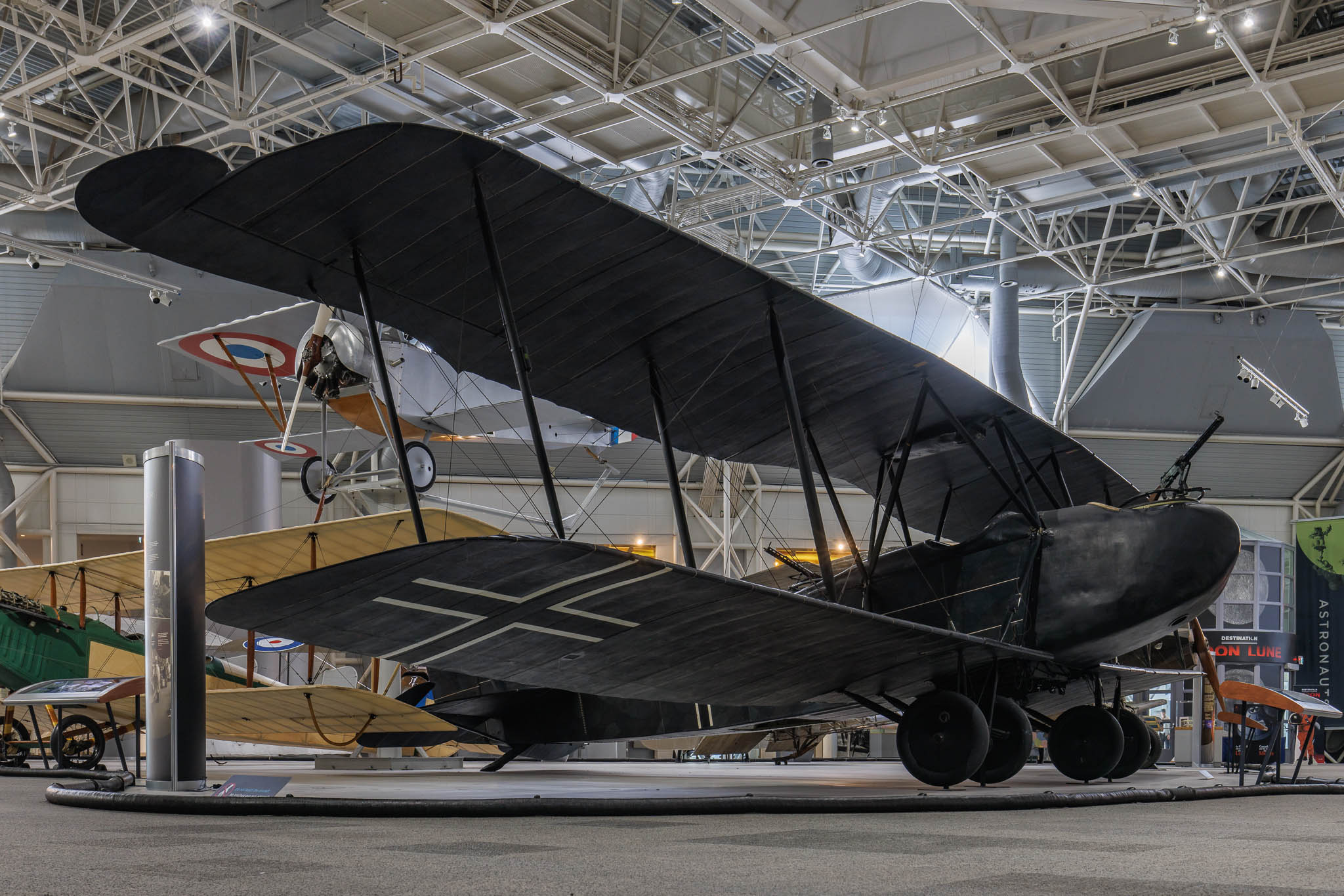 |
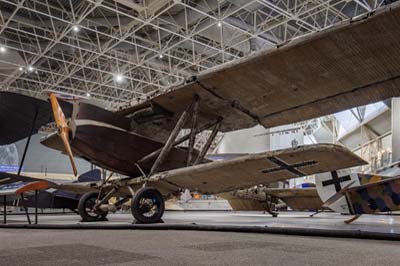
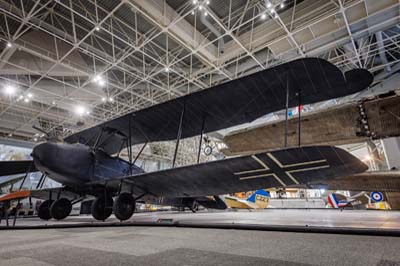
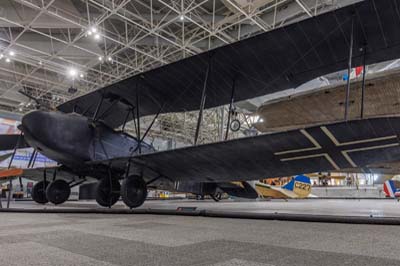
Left to right: AEG G.IV (574/18) was a German twin-engine tactical bomber built by Allgemeine Elektrizitäts-Gesellschaft (AEG) in 1918. It saw service with the Luftstreitkräfte (Imperial German Army Air Service) during World War One and could carry a substantial 400 kg (880 lb) bomb load. Its armament included racks for 25 lb bombs beside the rear cockpit, with an additional rack beneath the floor between the cockpits. Up to five 50 lb bombs could also be carried, with one beneath each wing and three beneath the fuselage, with bomb release controlled from the forward cockpit. The aircraft was typically flown by a three-man crew.
574/18 is the sole surviving example of the type, it retains its rare original "night lozenge" camouflage, designed to provide concealment during nocturnal missions. Shipped to Canada aboard SS Venusia in May 1919 as a war trophy and reparation, it was stored for decades before being restored and transferred to the museum in 1970. |
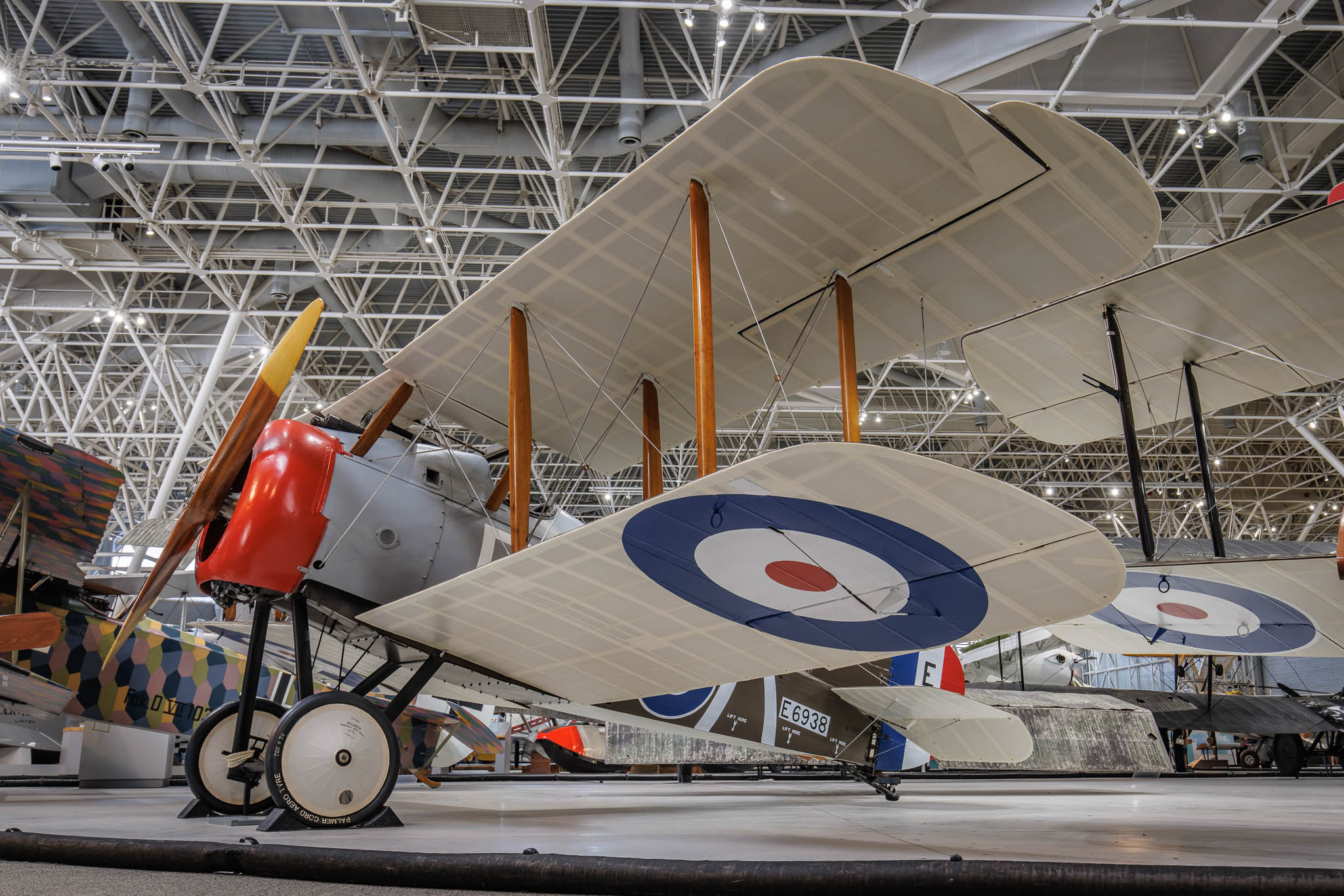 |
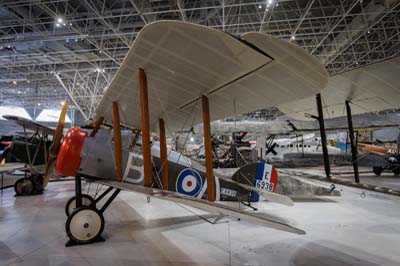
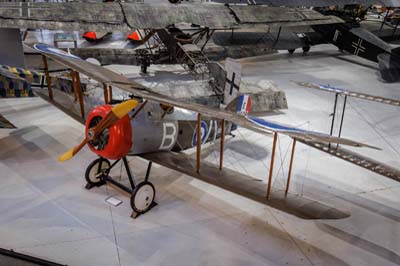
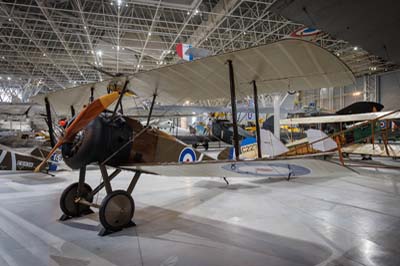
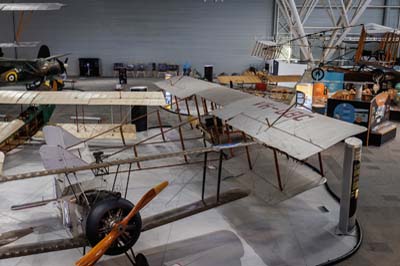
Left to right: Sopwith Snipe F.1 (E6938). Designed and built by the Sopwith Aviation Company, the Snipe entered squadron service in late 1918, shortly before the end of World War One. The Snipe I was produced by several manufacturers, including Sopwith, Boulton & Paul, Coventry Ordnance Works, Napier, Nieuport and Ruston Proctor. Although not particularly fast, the Snipe was highly manoeuvrable, easy to handle and offered better visibility, climb and high-altitude performance than the Sopwith Camel. Despite unimpressive test results, it was selected as the RAF's standard postwar single-seat fighter.
This example, built by Nieuport & General Aircraft in 1918, was exported to California in 1926 by former Royal Flying Corps pilot and actor Reginald Denny and used in films. Restored during the 1960s, it was acquired by the museum in 1964. Only two Snipes survive, the other being E8105 at the National Air and Space Museum in Washington, D.C. |
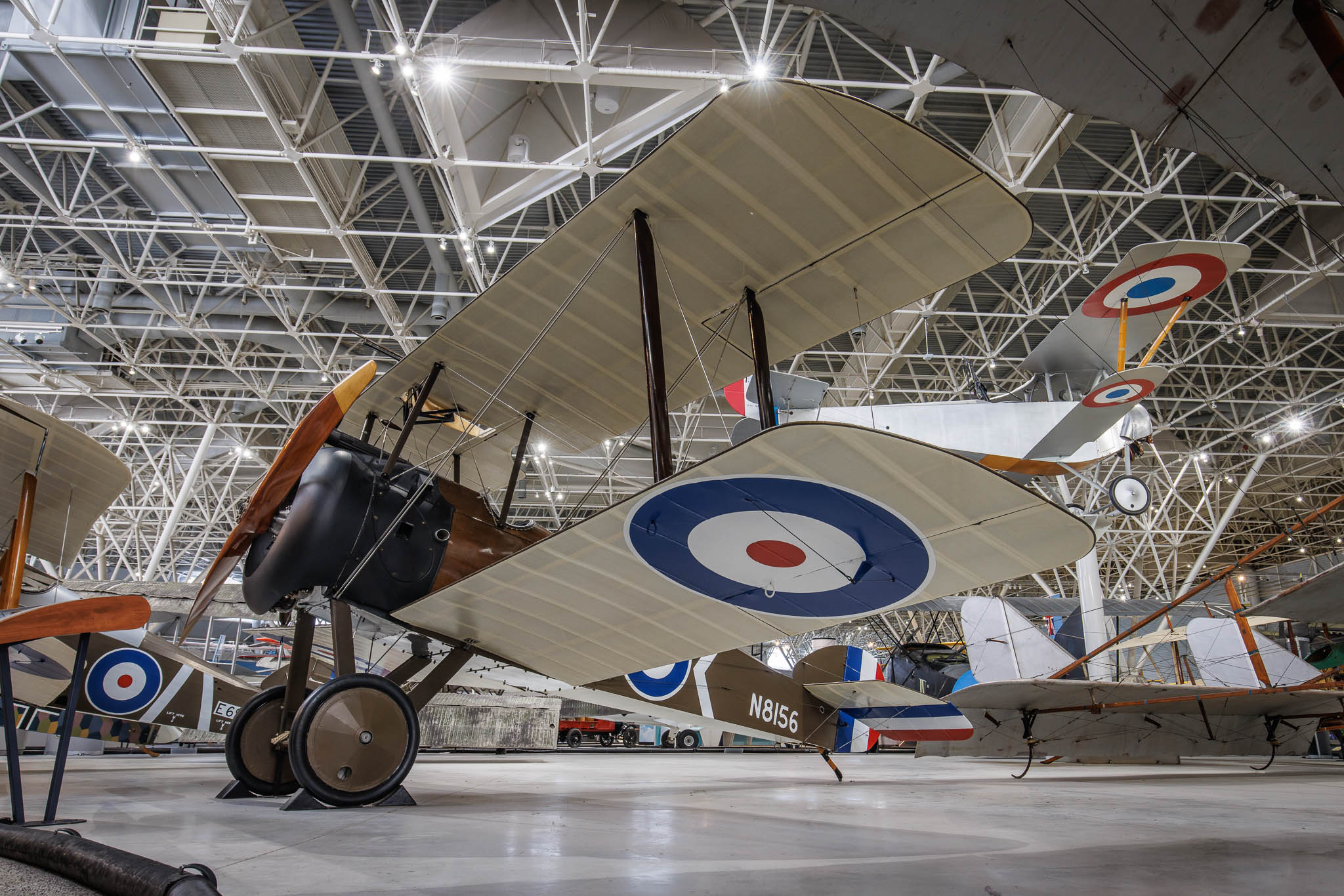 |
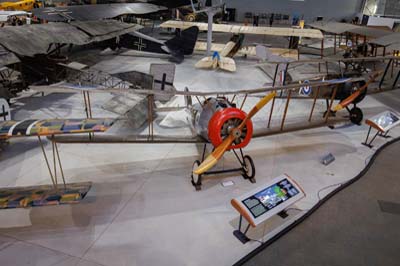
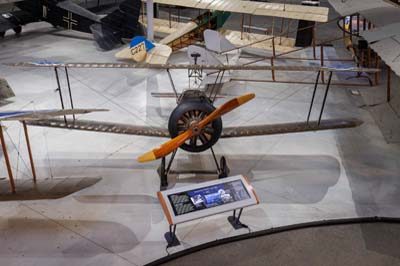
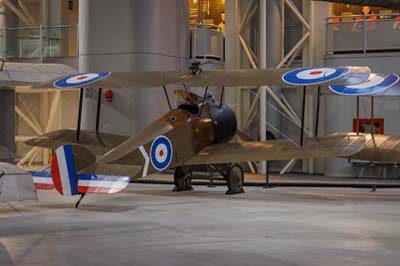
Left to right: Sopwith Camel 2F.1 (N8156). The Sopwith F.1 Camel was a single-seat biplane fighter developed to replace the Sopwith Pup. One of the most successful Allied fighters of World War One, 5,490 were built and credited with 1,294 enemy aircraft destroyed. The type was produced by Sopwith and 11 other companies.
This 2F.1 variant was a navalised version designed for carrier operations, featuring a detachable fuselage for compact storage, a shorter wingspan and modified armament. Fewer than 300 were built. Manufactured by Hooper & Co. in London in late 1918, this aircraft was completed too late for combat. It served with the RAF until 1925 before being transferred to Canada for RCAF training and demonstration flights. Restored and flown in 1967, it was subsequently preserved in the museum's collection. |
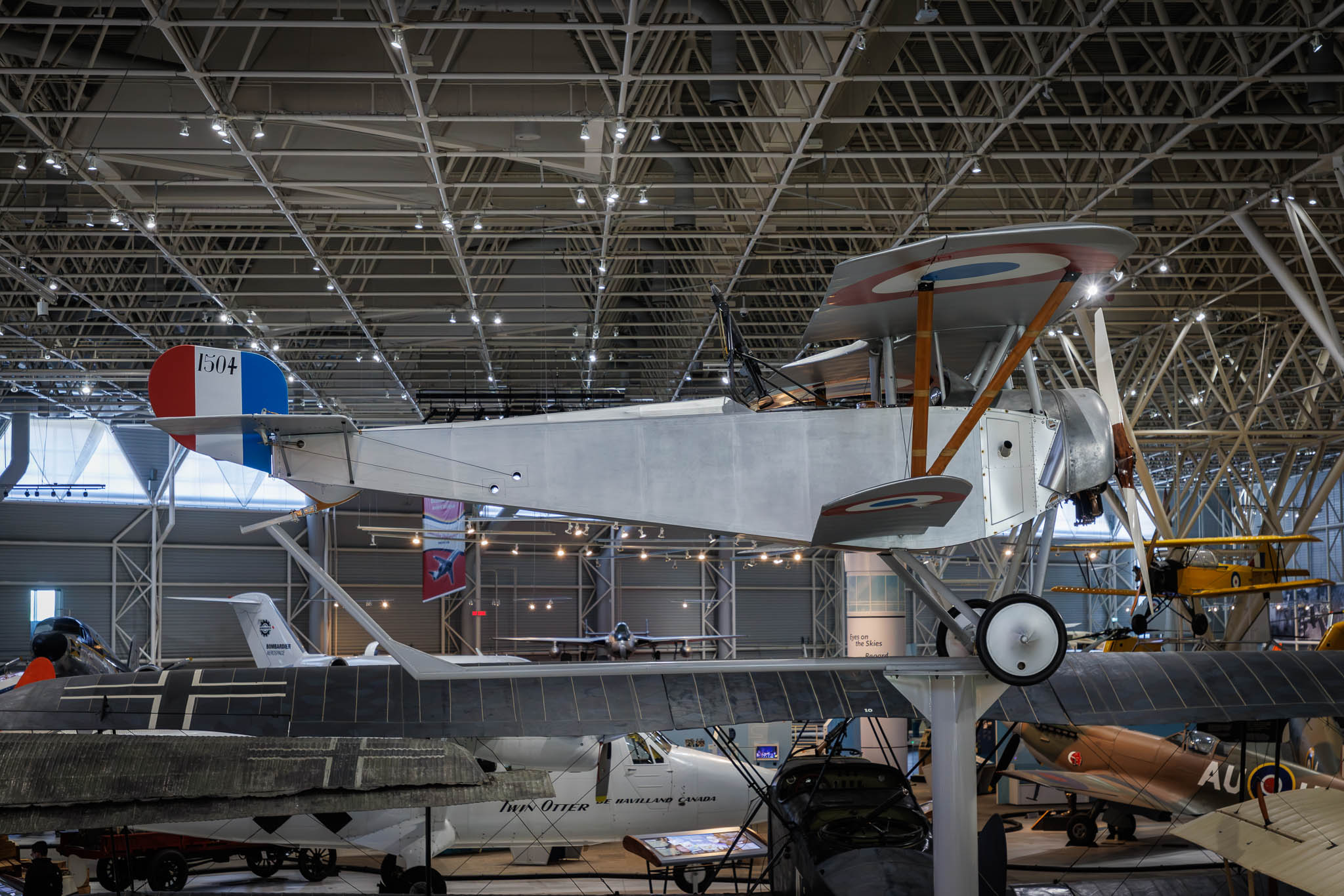 |
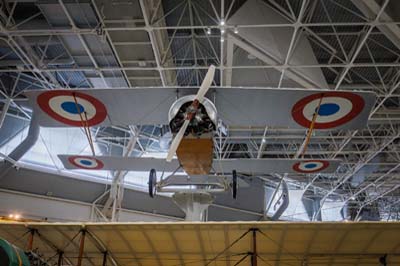
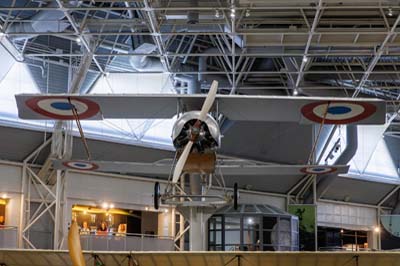
Left to right: Nieuport 12 (N1504). The Nieuport 12 was a French two-seat reconnaissance and fighter aircraft used by France, Russia, Great Britain and the United States during World War One. Later production examples were built as trainers and remained in service into the late 1920s.
Built in 1915, this aircraft served with the French Air Force (Armée de l'Air) and is the only surviving former French Nieuport 12. Following extensive restoration, including the reinstallation of its original Le Rhône 9J rotary engine, it was presented to Canada by the Government of France and transported to Halifax by steamship. |
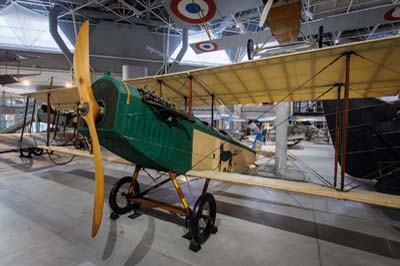
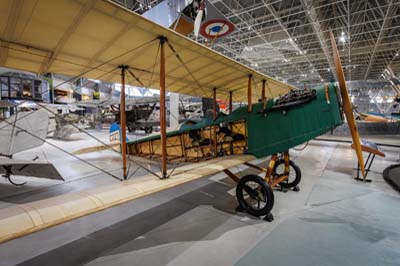
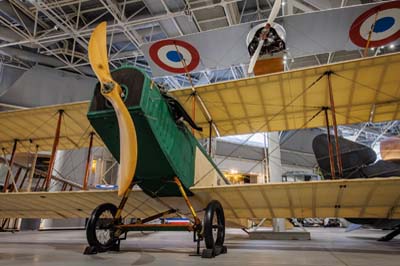
Left to right: Curtiss JN-4C 'Canuck' (39158 'C227') ex United States Army Air Service (USAAS). The Curtiss JN-4 Jenny was the most widely produced American aircraft of the 1917-1920s, serving as a primary trainer during World War One before becoming famous for barnstorming and airmail operations.
The JN-4 (Canadian) Canuck was a Canadian-built development produced by Canadian Aeroplanes Ltd. for the Royal Flying Corps in Canada. Its lighter airframe, ailerons on both wings and redesigned tail and flying surfaces distinguished it from the American JN-4.
This aircraft, USASC 39158, was built in Toronto, Canada, by Canadian Aeroplanes Ltd. It was part of an order of 680 Canucks delivered to the Aviation Section of the United States Army Signal Corps (USASC). It was acquired in 1962 and restored by May 1964. Around 35 Jennys survive from the 6,813 built. |
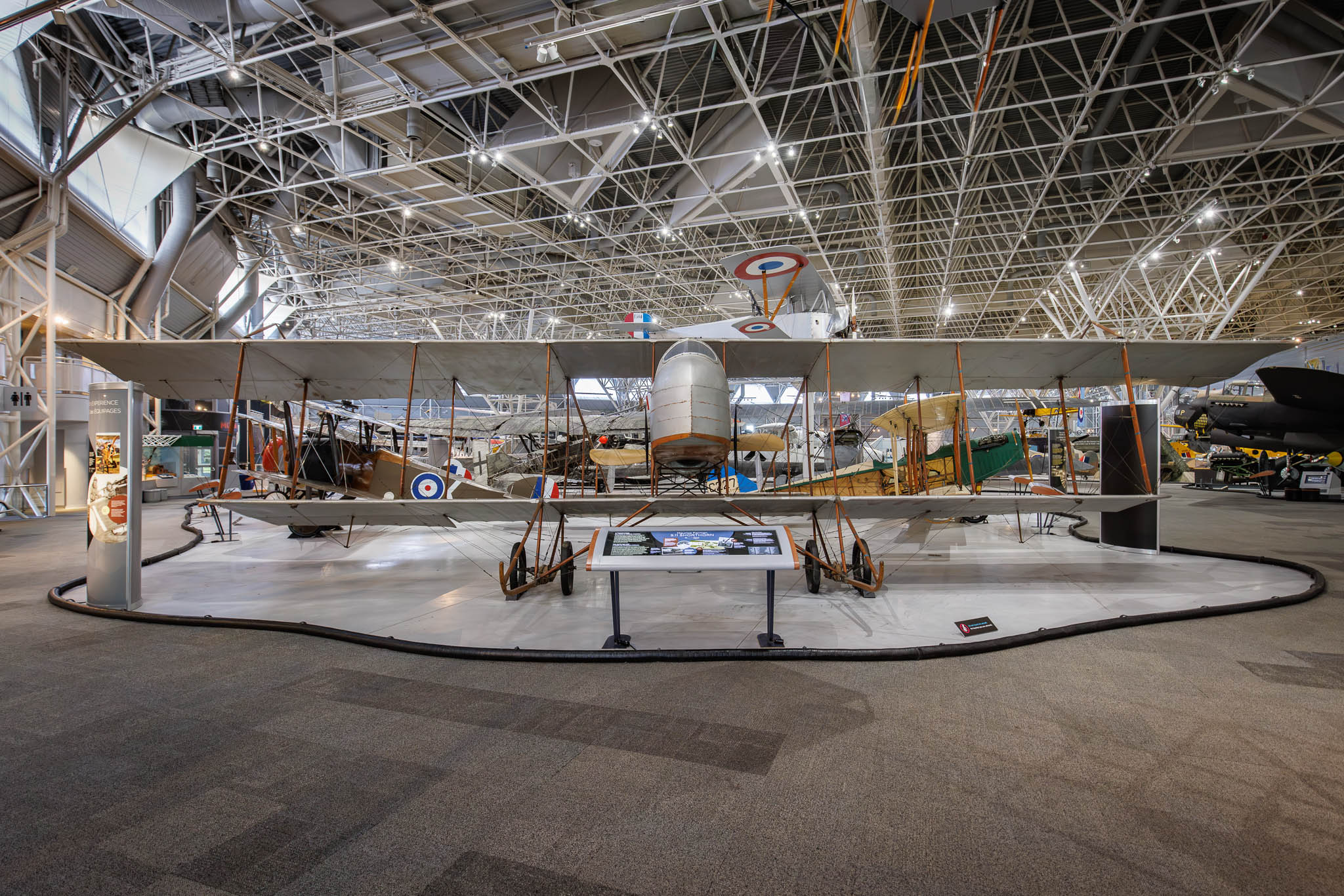 |
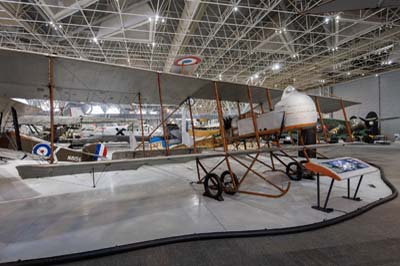
Left to right: Farman MF.11 'Shorthorn' (VH-UBC). The Farman MF.11 'Shorthorn' was a French reconnaissance and light bombing aircraft developed by Maurice Farman. Named for its lack of the forward elevator fitted to the earlier 'Longhorn', it served with British and French air services before becoming primarily a trainer. On December 21, 1914, an MF.11 of the Royal Naval Air Service carried out the first bombing raid of World War One, attacking German artillery positions near Ostend, Belgium.
This aircraft was built in Britain by Airco for the Royal Flying Corps. Four British-built MF.11s were sent to Australia in 1917 for use by the Australian Flying Corps at Point Cook. After a long career involving several owners, crashes and rebuilds, it was sold to Tallmantz Aviation in California in 1956, where Hollywood stunt pilot Frank Tallman flew it. The aircraft was acquired by the museum in 1981. |
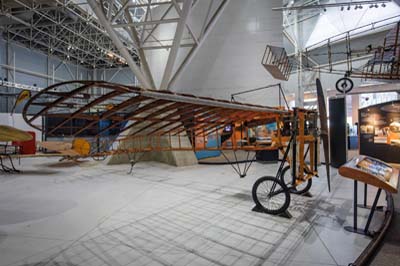
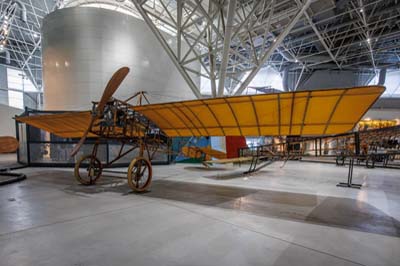
| Left to right: Blériot XI (). The Blériot XI is a French aircraft from the pioneer era of aviation. On July 25, 1909, Louis Blériot used the first example to make the first flight across the English Channel by a heavier-than-air aircraft. Blériot established his first flying school at Étampes near Rouen in 1909, followed by another at Pau in early 1910, where the climate allowed more practical year-round flying. A third school opened at Hendon Aerodrome near London in September 1910. By 1914, nearly 1,000 pilots had gained their Aero Club de France licence through the Blériot schools. The first Blériot XIs entered military service with the French and Italian forces in 1910, with Italian aircraft seeing combat in North Africa the following year.br>
This aircraft was built in San Francisco in 1911 by the California Aero Manufacturing and Supply Company from locally available plans. Believed to be the first California-built aircraft to fly, it was stored after several accidents. Partially restored from 1953, it appeared at air shows before being acquired by the museum in 1971. |
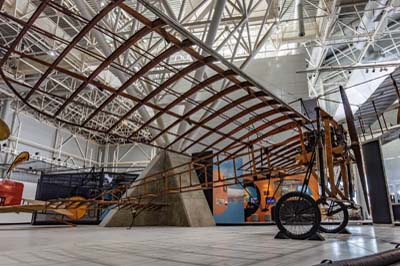
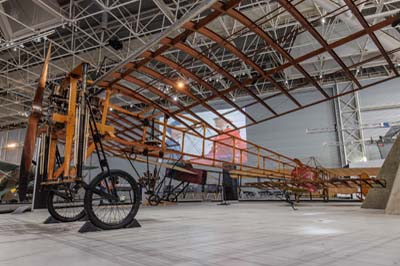
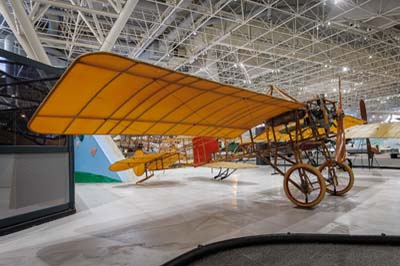
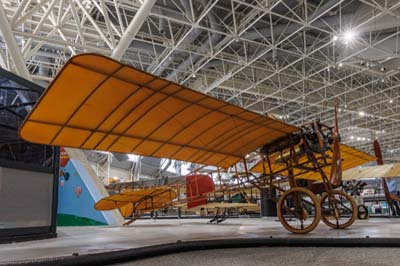
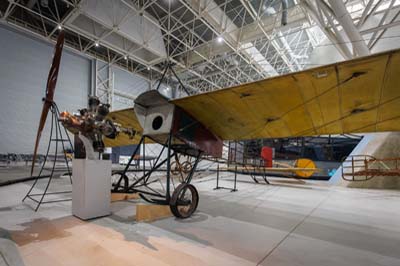
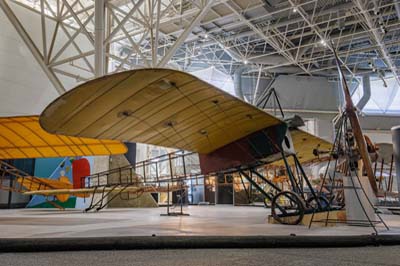
| Left to right: McDowall Monoplane (). Designed and built by Ontario aviation pioneer Robert McDowall, this is the oldest surviving Canadian-built aircraft. A land surveyor and civil engineer, McDowall was inspired to build it after seeing aircraft during a visit to England and France in 1910. Constructed between 1912 and 1915 in a carriage shop, the monoplane was broadly similar to the Blériot XI. McDowall made several attempts to fly it, but the aircraft was unable to achieve sustained flight, managing only short 'hops'. Following the final attempt in 1915, it was placed in storage. |
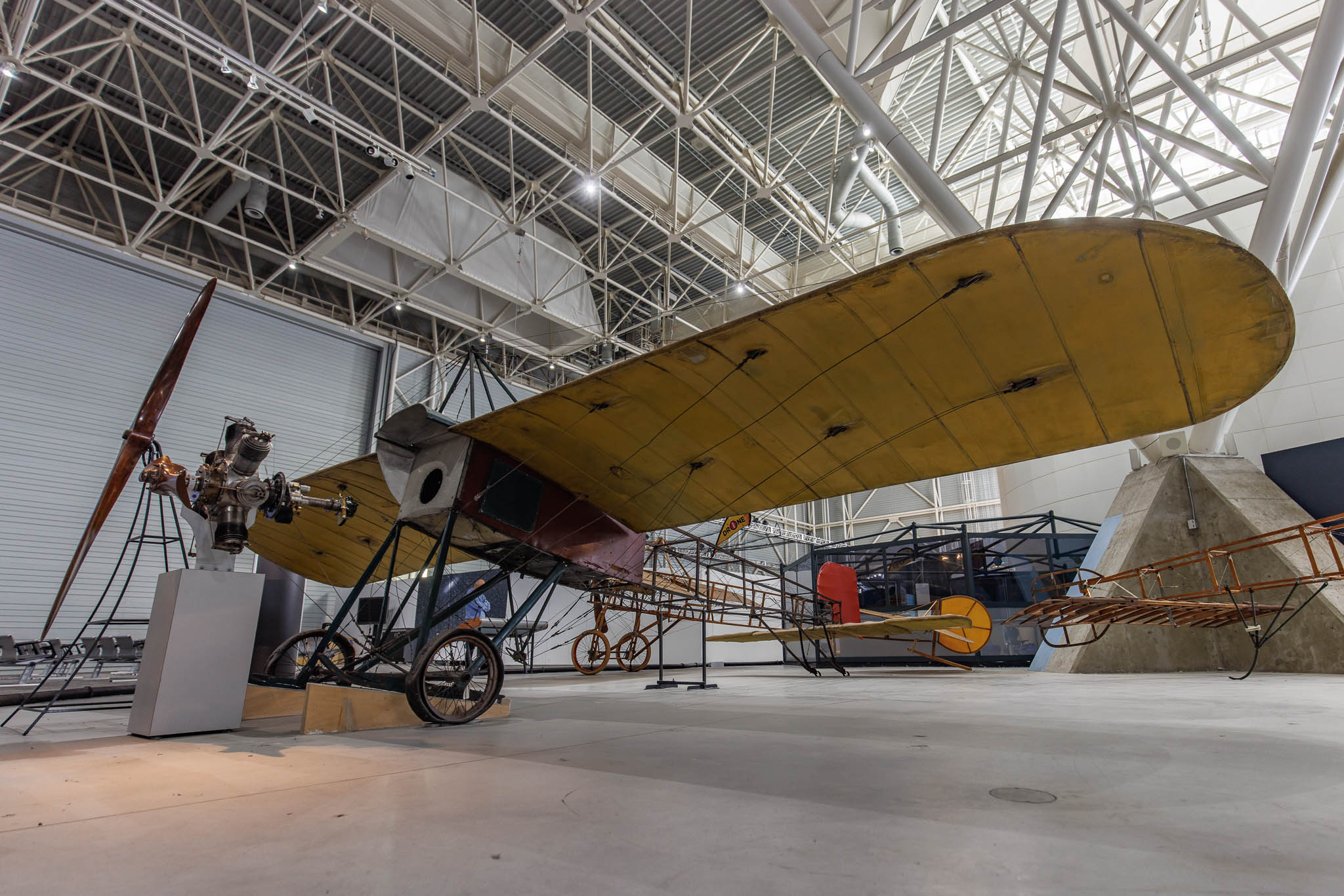 |
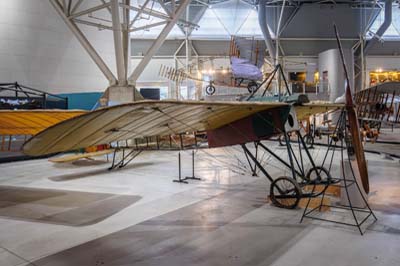
Left to right: Borel-Morane (). Developed in 1911 by Raymond Saulnier, Léon Morane and Gilbert Borel, the Borel-Morane was a single-seat monoplane inspired by the Blériot XI and designed for recreational flying, racing and air demonstrations. Pioneering aviator Jules Védrines frequently flew the type in races.
This aircraft is the only surviving Borel-Morane and the oldest surviving aircraft to have flown in Canada. Imported from France in 1912 by Belgian exhibition pilot Georges Mestach, it toured North America before suffering several crashes, including one in Winnipeg and another at an air meet in Chicago that resulted in North America's first fatal mid-air collision. American exhibition pilot Earl S. Daugherty later acquired the aircraft, which remained with his family until it was purchased by the museum in 2002. |
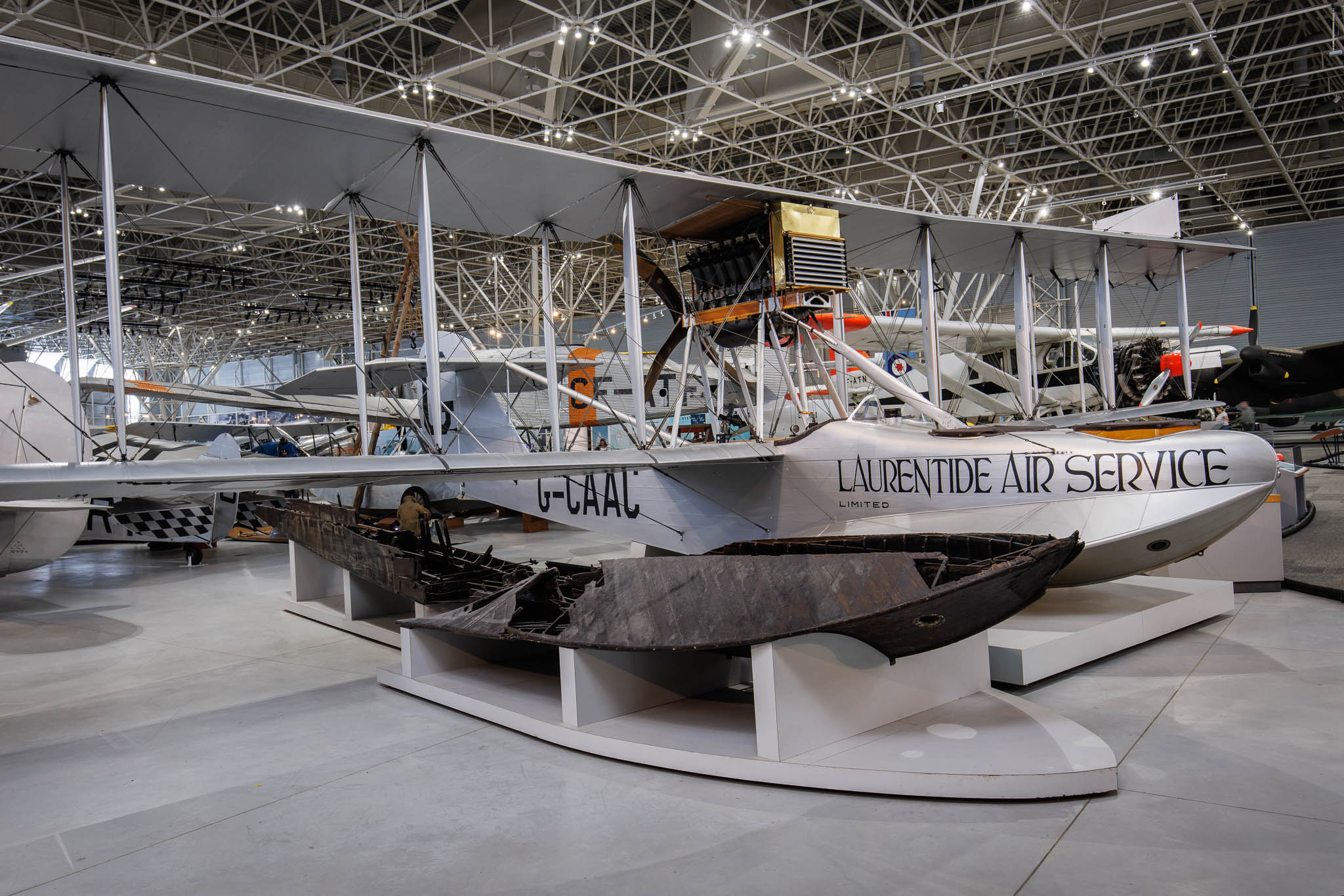 |
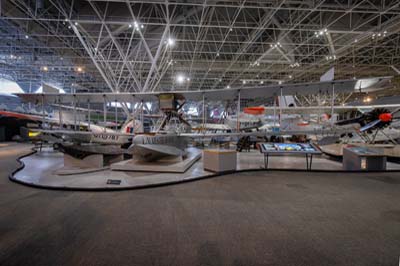
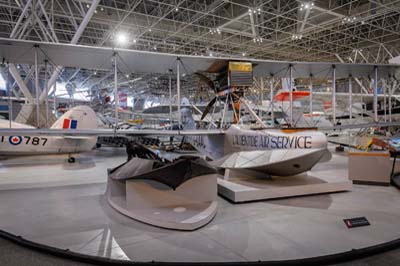
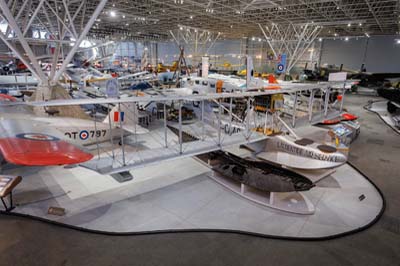
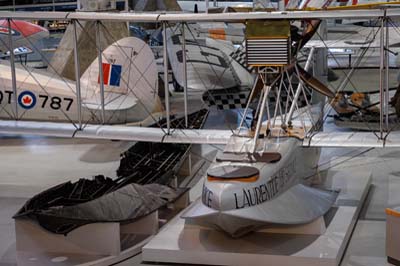
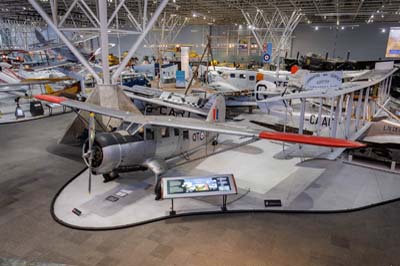
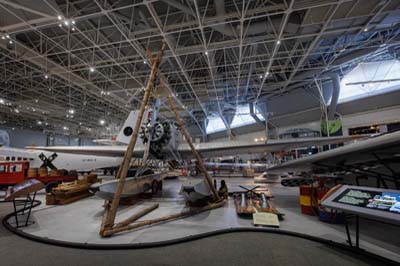
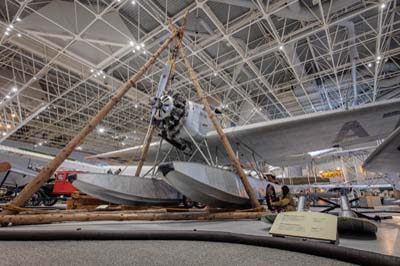
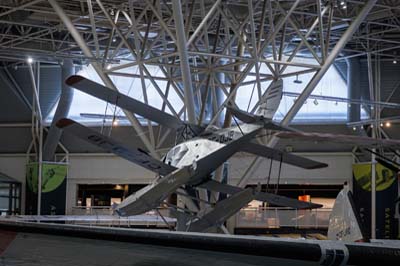
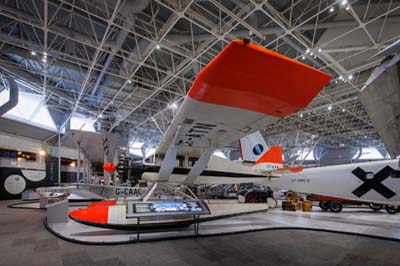
Left to right: Curtiss HS-2L (G-CAAC) named La Vigilance. The HS-2L was built in 1918 for US Navy anti-submarine patrols. Donated to Canada in 1919, it was operated by Laurentide Air Service for forestry patrols, timber surveys, mining exploration and early mail and passenger services, becoming one of Canada's first bush planes.
This reconstruction is the only complete Curtiss HS-2L surviving in the world. Built using components from three aircraft, its restoration took 16 years, from 1970 to 1986, making it the museum's largest and longest restoration project.
The aircraft is displayed beside an original lower hull (A1876 US Navy) fuselage hull wreckage. The hull and other surviving components were recovered from Foss Lake, where the aircraft crashed on takeoff in September 1922. Salvage operations began in 1967 and continued until 1969. |
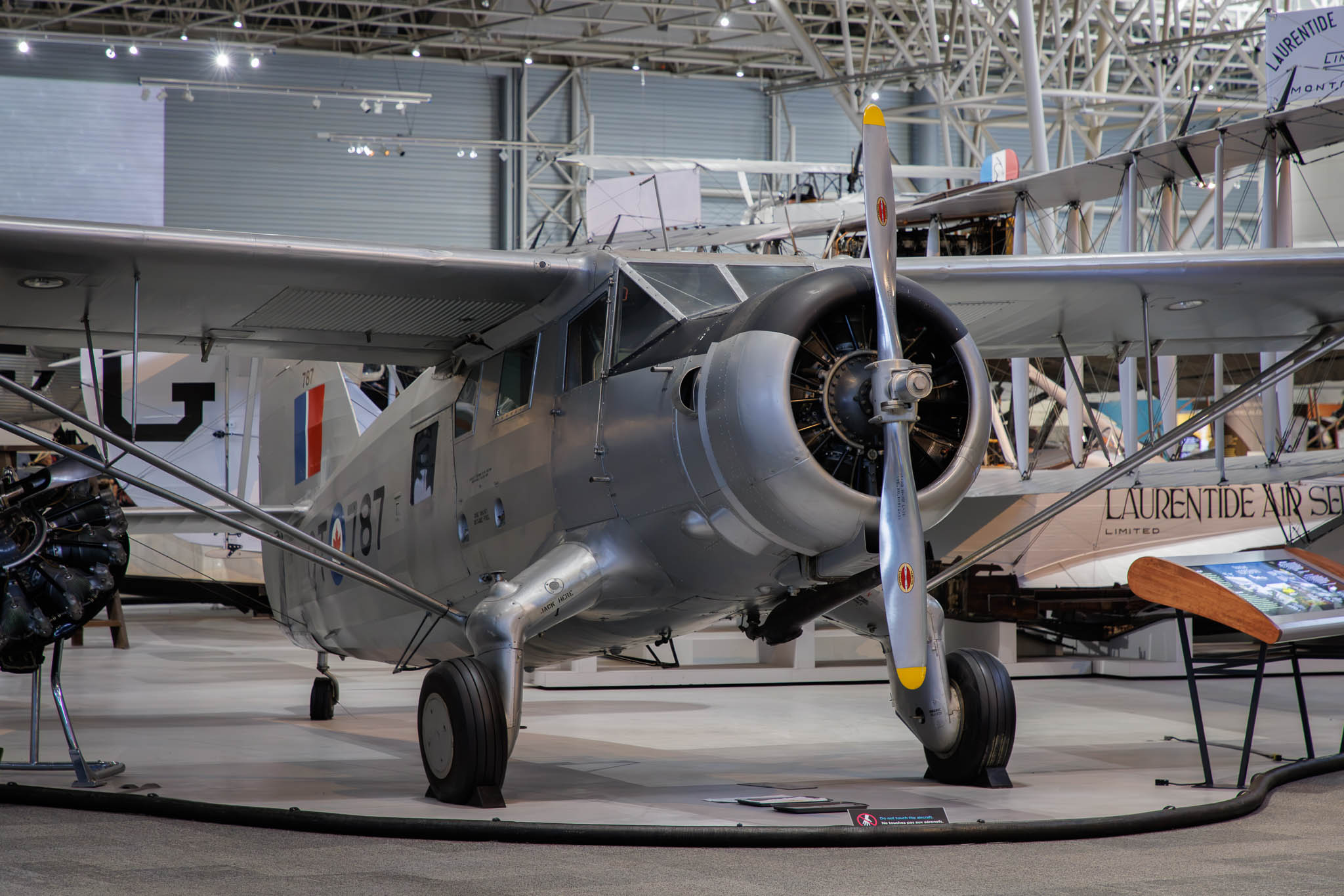 |
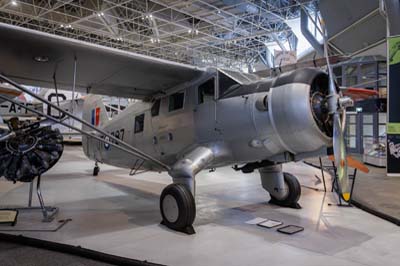
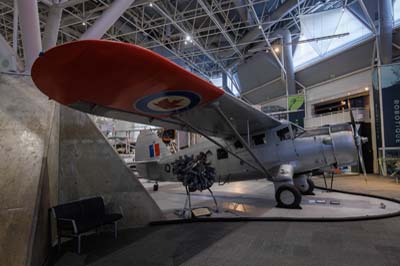
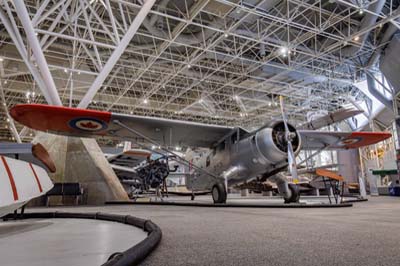
Left to right: Noorduyn Norseman VI (787 'QT-787' c/n 136) ex Royal Canadian Air Force (RCAF). Designed by Robert Noorduyn in 1935, the Norseman is recognised as the world's first purpose-built bush aircraft. Nicknamed the 'one-ton flying truck', it remained in production for almost 25 years, with more than 900 built.
Built in 1943, this Norseman VI was the first of its variant adopted by the Royal Canadian Air Force. During World War Two, it served with No.3 Wireless School in Montreal as a training aircraft for wireless operators. From 1945 to 1950, it was used across Canada for communications, search and rescue and transport duties, before joining No.121 Communications and Rescue Flight. It was transferred to the museum in February 1964 and retains its RCAF markings from its final year of service. |
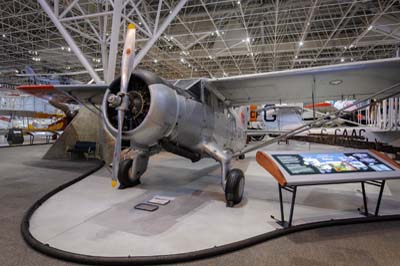
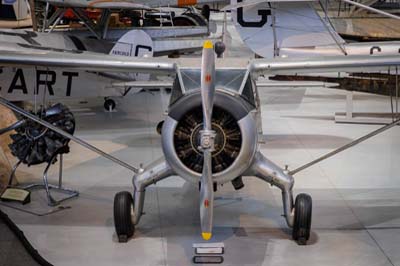
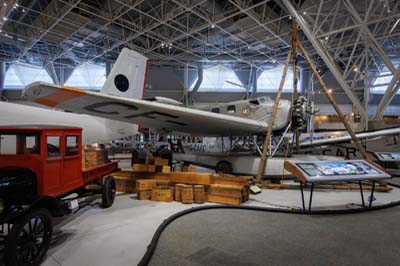
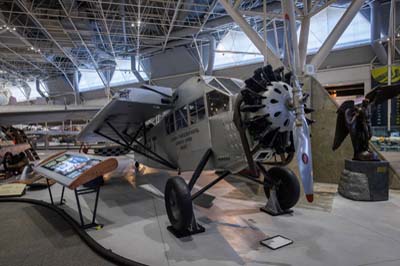
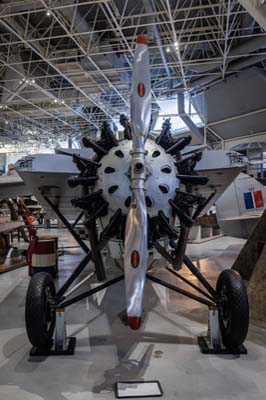
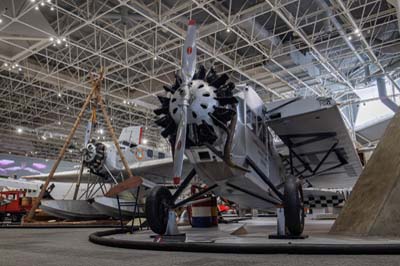
Left to right: Junkers W34f/fi (CF-ATF). The Junkers W34 was an all-metal transport and bush aircraft produced in Germany by Junkers Flugzeugwerke from 1926 to 1935, with 3,024 built. Only nine W33s and W34s were imported into Canada, and all but one served with Canadian Airways.
CF-ATF operated extensively as a bush aircraft in Quebec and Manitoba with Canadian Airways and later Canadian Pacific Airlines. Donated to the museum in 1962 by Mrs. J.A. Richardson, its ferry flight to Ottawa marked the final operational flight of the Junkers F13, W33 and W34 range of aicraft in the world. |
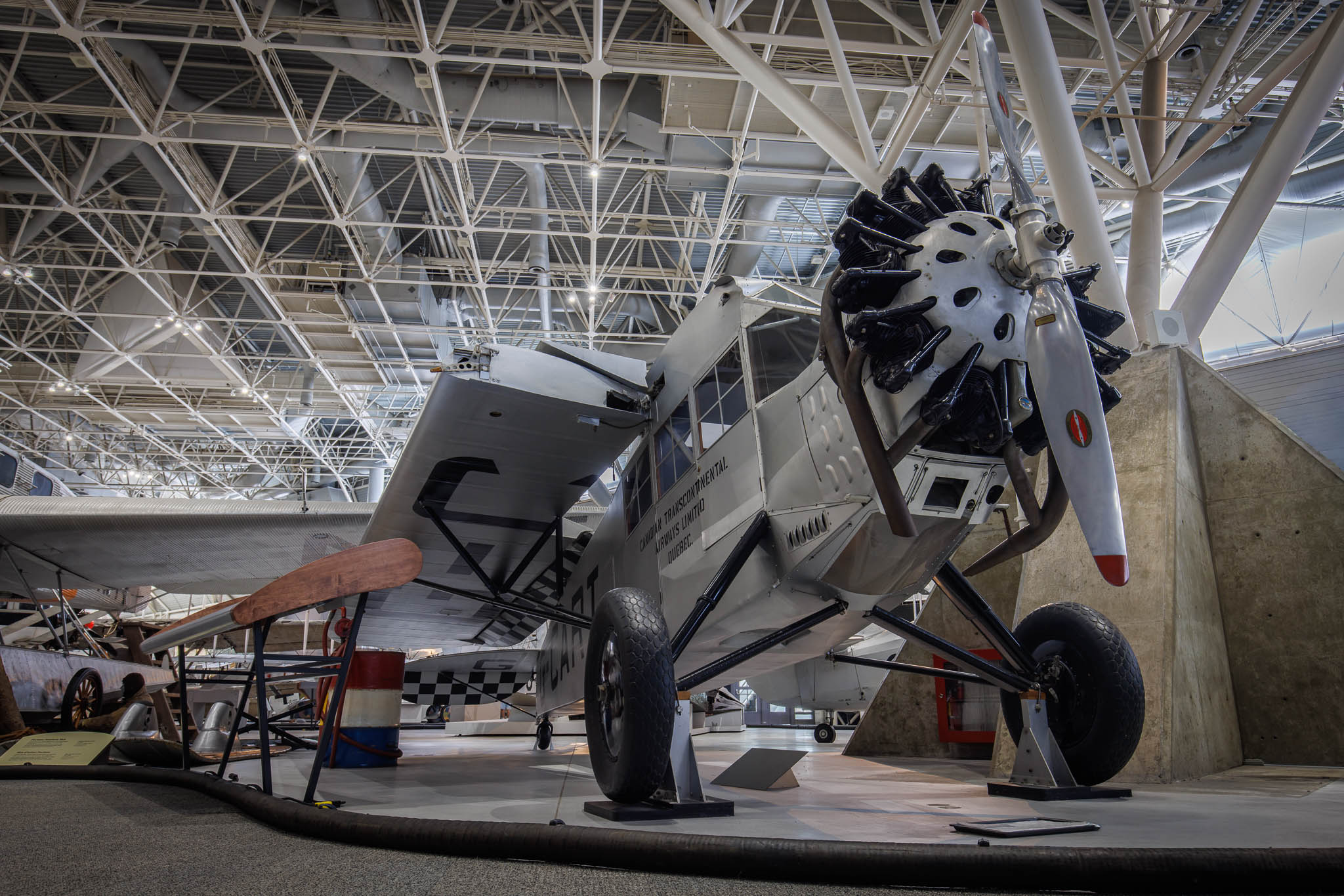 |
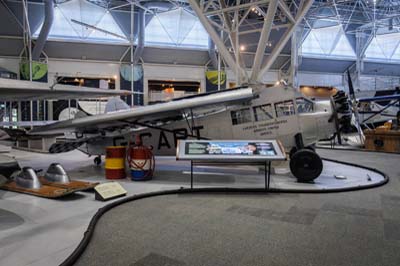
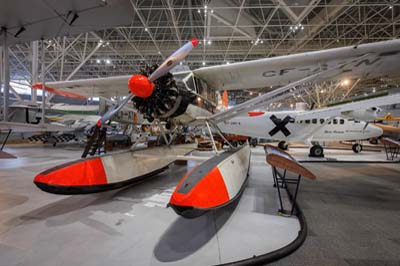
Left to right: Fairchild FC-2W2 ('G-CART', NC6621 c/n 128). The Fairchild FC-1 and its derivatives were a family of light, single-engine, high-wing utility monoplanes produced in the United States during the 1920s and 1930s. The prototype FC-1 first flew in June 1926. A cargo-optimised version, the FC-2W, featured a Pratt & Whitney Wasp radial engine and increased wingspan. Designed for versatility, the FC-2 pioneered airmail services and was widely used for aerial photography, with a specially designed downward-facing camera. A total of 118 standard FC-2s were built in the United States, with a further 12 produced under licence in Canada by Canadian Vickers. Only five FC-2s survive worldwide.
The real G-CART was c/n 126 built in 1928 and was used extensively for aerial surveys in the United States and Canada by Brock and Weymouth Inc. and the Aero Service Corporation through the early 1940s. Following an engine failure during take-off and a forced landing, it remained with the company until founder Virgil Kauffman donated the aircraft to the museum in 1962. It was subsequently restored and displayed in the markings of Canadian Transcontinental Airways. |
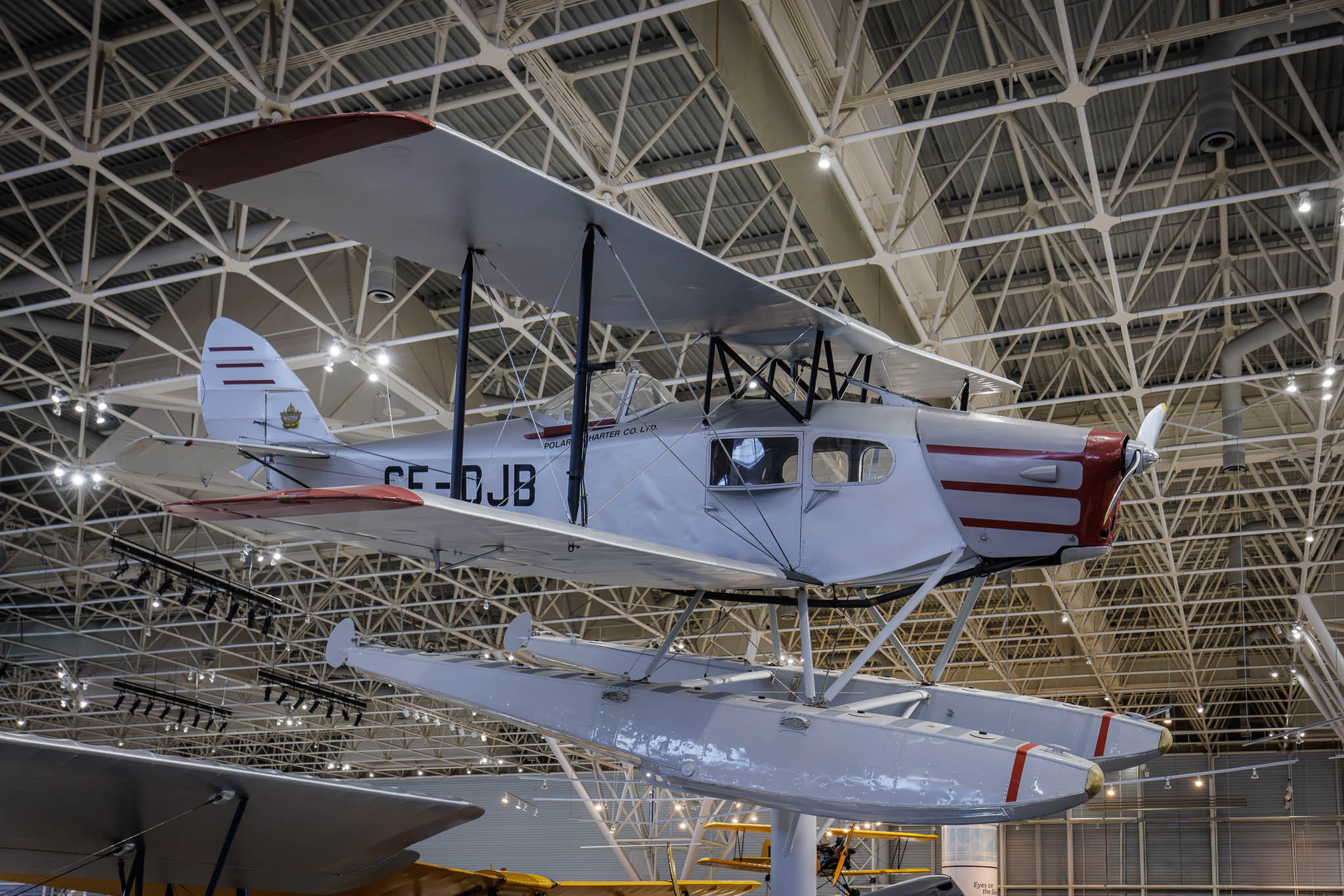 |
Left to right: de Havilland DH.83C Fox Moth (CF-DJB). The aircraft was designed in late 1931 as a low-cost, light passenger aircraft by de Havilland Aircraft of Canada Ltd. Many components, including the engine, tailplane, fin, rudder and wings, were identical to those of the de Havilland DH.82 Tiger Moth. The prototype first flew on January 29, 1932, and was subsequently sent to Canada, generating sufficient interest for seven aircraft to be assembled at the company's Toronto plant. A total of 53 were built in Canada for bush flying and transport. Overall production of the DH.83/DHC.83C Fox Moth totalled 153 aircraft, comprising 98 built in England, two in Australia and 53 in Canada after World War Two.
This aircraft was donated to the museum in 1989 by Canadian aviation pioneer Maxwell Ward, founder of Wardair.
Bellanca CH-300 Pacemaker (CF-ATN c/n 181). The Bellanca Pacemaker was a six-seat utility aircraft developed from the Bellanca CH-200 and produced primarily in the United States during the 1920s and 1930s. Fitted with a more powerful engine, it became renowned for its long-distance endurance and was particularly popular with operators in Alaska and the Canadian bush. Canadian-operated Bellancas were initially imported from the United States, but six were later built by Canadian Vickers in Montreal and delivered to the RCAF, which used them mainly for aerial photography.
This aircraft operated in Alaska and the United States until 1964, when it was acquired by the museum. Originally powered by a Wright J-6 engine, it was later upgraded with a 420 hp Pratt & Whitney Wasp. It is the only surviving Bellanca Pacemaker. |
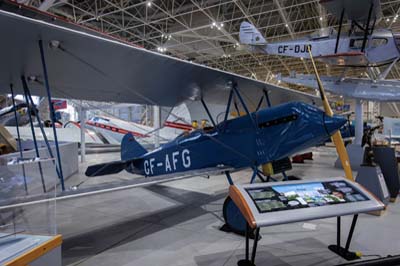
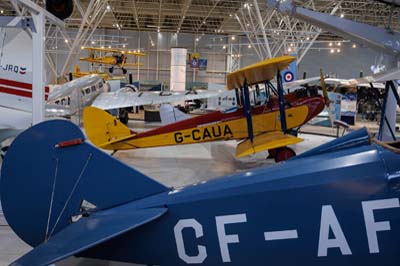
Left to right: Travel Air 2000 (CF-AFG). Founded in Wichita, Kansas, in 1925 by Clyde Cessna, Walter Beech and Lloyd Stearman, the Travel Air Manufacturing Company became a leading US producer of light aircraft. The Travel Air 2000 was an open-cockpit biplane, with more than 1,000 Travel Air biplanes built between 1924 and 1929. Travel Air was the largest-volume aircraft manufacturer in the United States in 1928 and merged with the Curtiss-Wright Corporation in August 1929.
Manufactured in 1929, this aircraft was purchased that September by Janney Aircraft and Boats Limited of Kingston, Ontario. It later passed through several private owners before being withdrawn from use in July 1941 due to wartime restrictions. Acquired by the museum in September 1968, the aircraft underwent extensive conservation and restoration between 1999 and 2010.
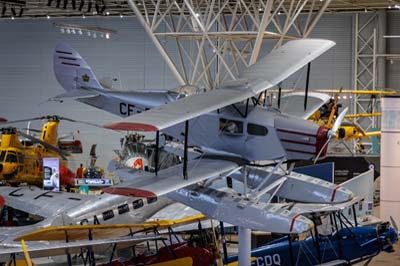
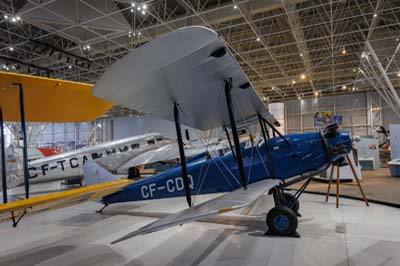
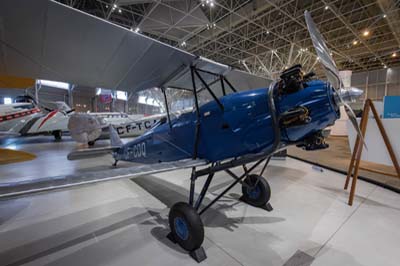
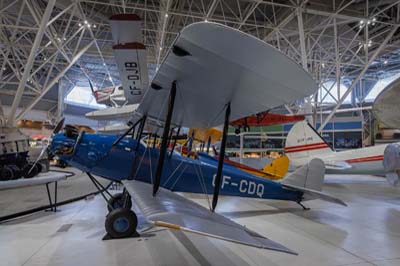
Avro 594B Avian Mk.IVM (CF-CDQ). The Avro 581 Avian prototype was designed and built for the Lympne light aircraft trials in September 1926. Based on the wooden fuselage of the Avro 576 autogyro, it featured conventional biplane wings and a 70 hp Armstrong Siddeley Genet engine. Although it performed well, an engine failure eliminated it from the competition. Production aircraft were designated Type 594 and built in several versions, the most numerous being the Avro 616 Avian IVM, introduced in 1929 with a welded steel-tube fuselage to simplify repairs overseas. Approximately 190 were built.
This Avian was one of several produced under licence in Canada by the Ottawa Car Manufacturing Company in Ottawa, Ontario, in 1930. Delivered to the Royal Canadian Air Force (RCAF) in April 1930 as part of a batch of aircraft gifted by the United Kingdom, it was transferred to the Moose Jaw Flying Club in 1932 and the Winnipeg Flying Club in 1935. Privately owned and placed in storage during World War Two, it was later sold to Charles Graffo before being donated to the museum in 1968. |
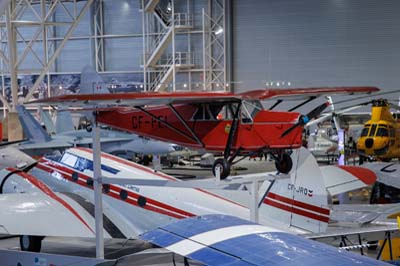
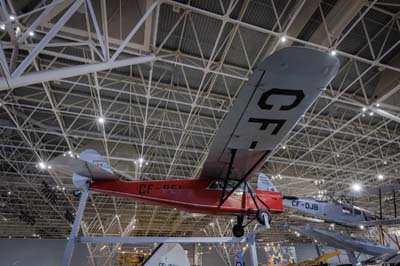
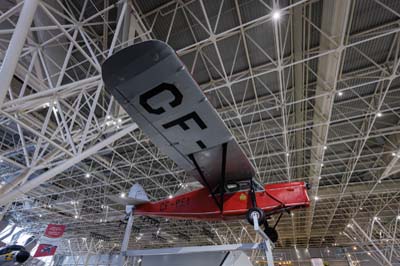
| Left to right: de Havilland DH.80A Puss Moth (HM534 registered CF-PEI). The de Havilland Puss Moth was a three-seat, high-wing monoplane built between 1929 and 1933. With a top speed approaching 124 mph (200 km/h), it was one of the highest-performance private aircraft of its time. It featured folding wings and an inverted engine, which improved pilot visibility and reduced oil spray on the windscreen. The first production aircraft flew in March 1930 and was promptly sent on a sales tour of Australia and New Zealand. Orders followed quickly, and 259 aircraft were built in England during the three years of production ending in March 1933, with a further 25 built by de Havilland Canada. The Puss Moth was succeeded on the production line by the de Havilland DH.85 Leopard Moth. |
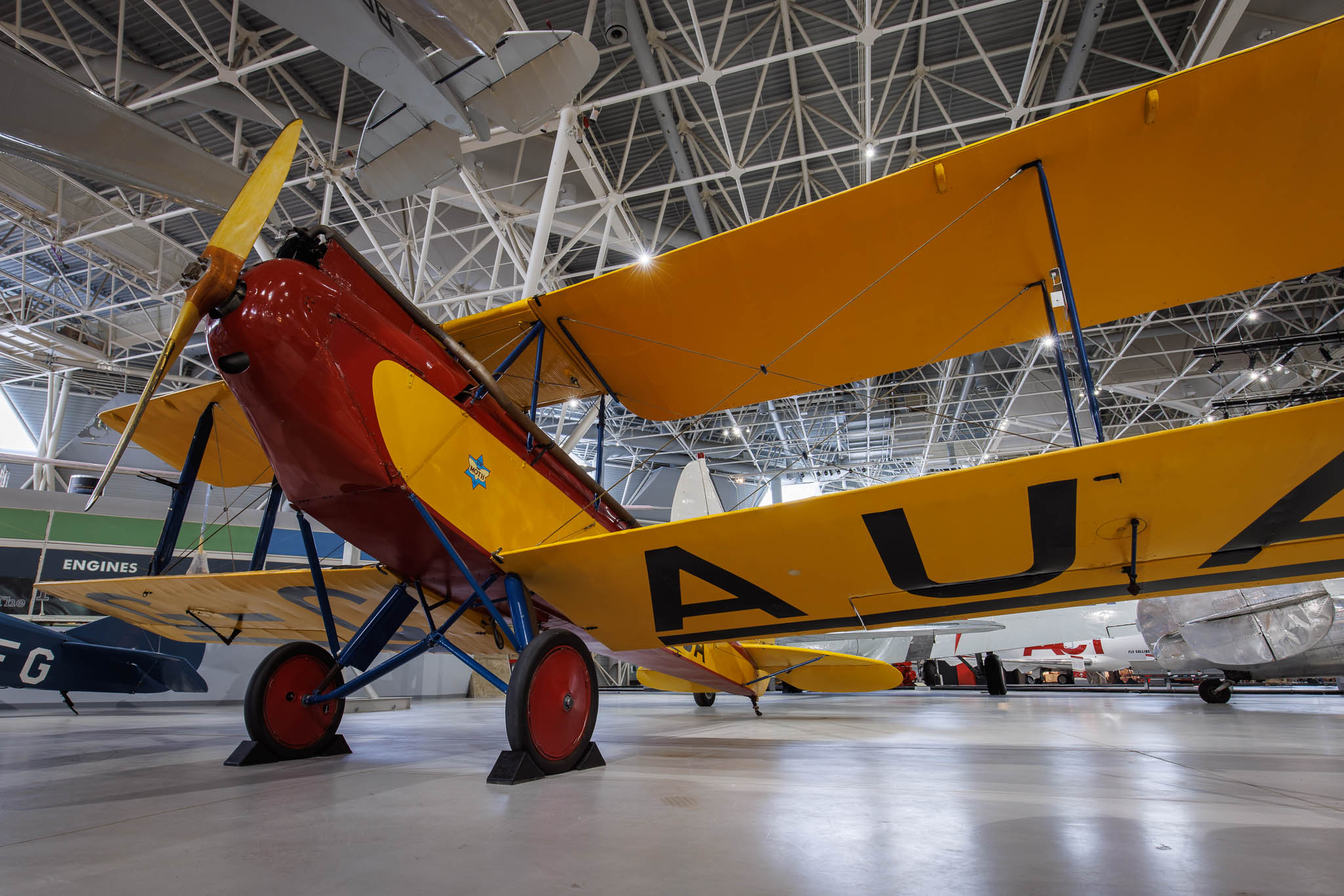 |
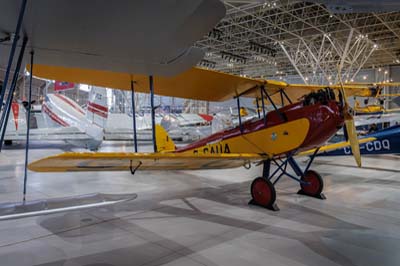
Left to right: de Havilland DH-60X Moth (G-CAUA). The DH.60 was developed from the larger DH.51 biplane, with the first flight of the ADC Cirrus-powered prototype carried out by Geoffrey de Havilland at the works airfield at Stag Lane on February 22, 1925. The Moth was a two-seat wooden biplane with a plywood-covered fuselage and fabric-covered flying surfaces. A useful feature was its folding wings, allowing owners to store the aircraft in much smaller hangar spaces.
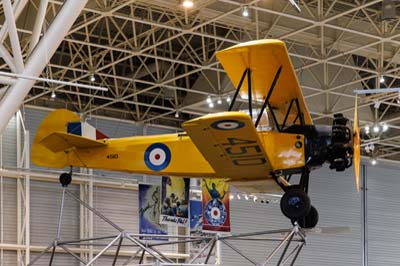
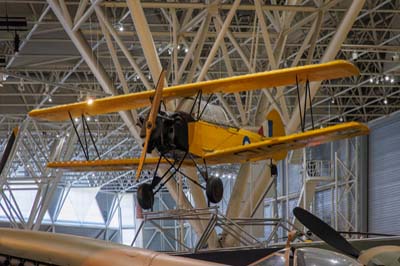
Fleet 16B Finch II (4510 registered CF-SUX c/n 408). The Fleet Finch was a two-seat training biplane designed by the Consolidated Aircraft Corporation of Buffalo, New York, and produced from 1928 to 1941. More than 400 were built under licence by Fleet Aircraft Limited at Fort Erie, Ontario, between 1939 and 1941. The Finch was used by the Royal Canadian Air Force (RCAF) for pilot training under the British Commonwealth Air Training Plan (BCATP). This aircraft was restored by No.400 Reserve Squadron at Downsview Airport and transferred to the RCAF's historic aircraft collection in June 1966. |
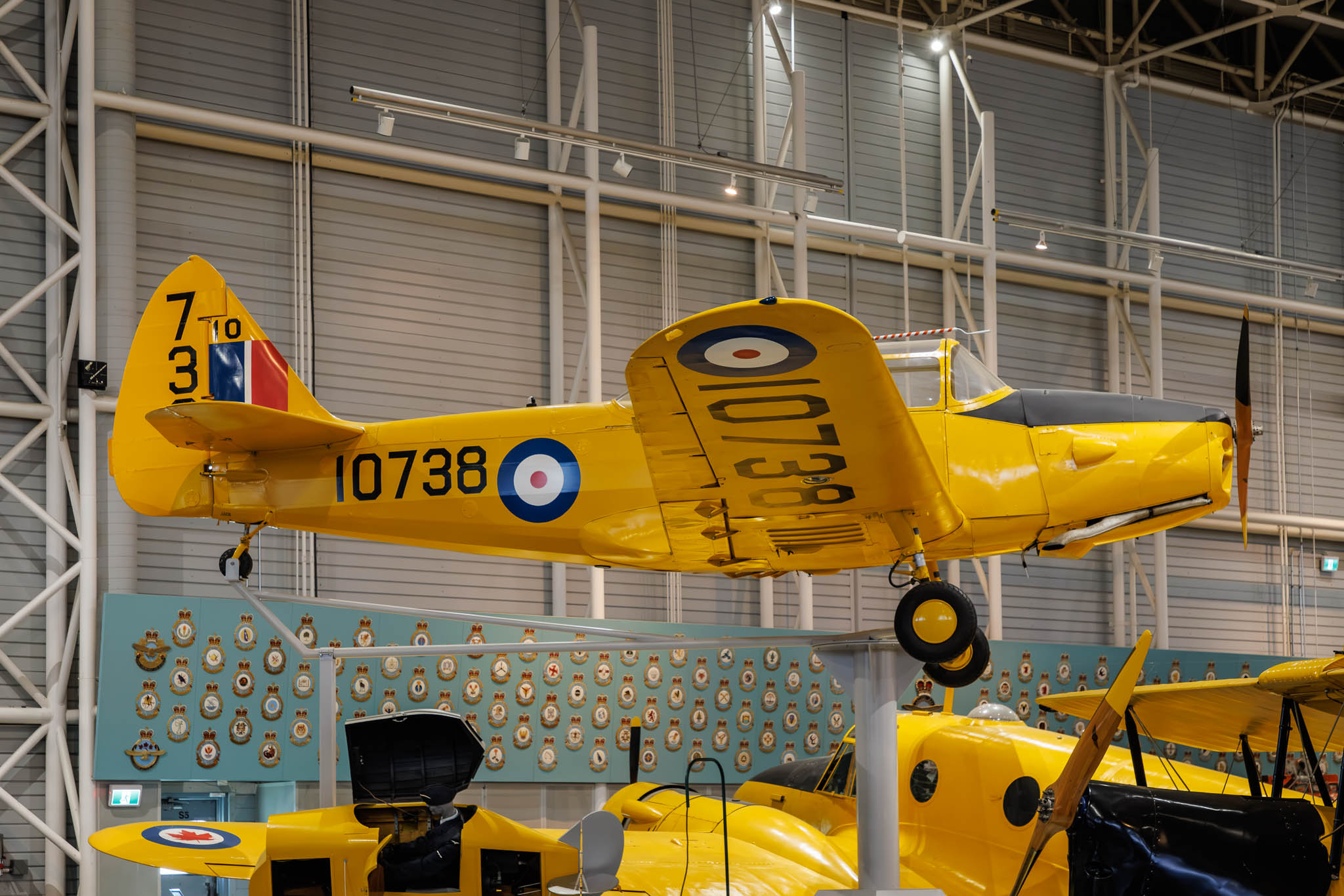 |
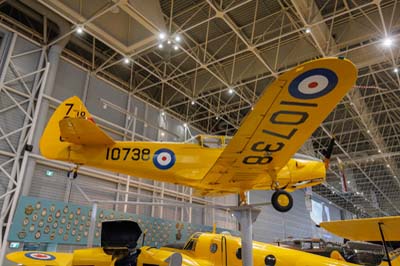
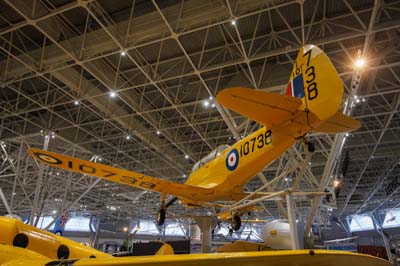
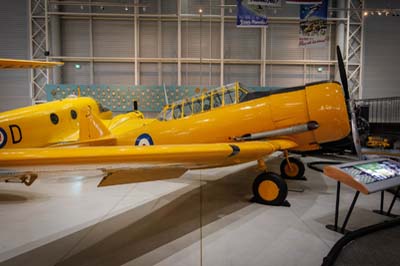
Left to right: Fairchild PT-26B Cornell III (10738) ex Royal Canadian Air Force (RCAF). The Fairchild Cornell succeeded the Tiger Moth and Fleet Finch as an elementary pilot trainer under the British Commonwealth Air Training Plan. The RCAF version, the Cornell III, was manufactured by Fleet Aircraft at Fort Erie, Ontario, and remained in service until 1947.
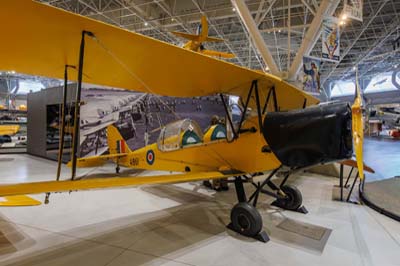
de Havilland DH.82C-2 Menasco Moth Mk.I (4861) ex Royal Canadian Air Force (RCAF). The Menasco Moth was powered by a 125 hp Menasco D.4 Super Pirate inverted in-line engine. It featured a right-side cooling inlet and opposite propeller rotation compared with a standard Tiger Moth. As the Menasco engine could power a more powerful generator, these variants were used mainly for wireless telegraphy training rather than primary pilot training. |
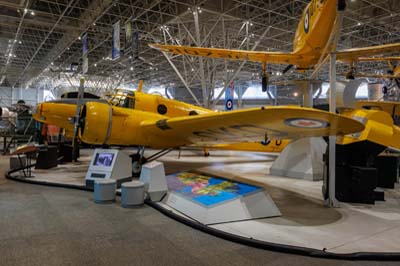
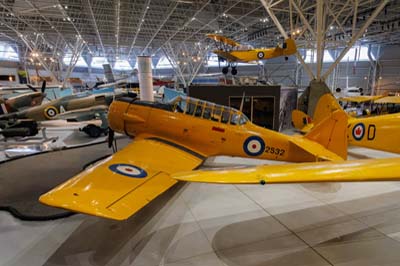
Left to right: Avro Anson (12518 'CK-D') ex Royal Canadian Air Force (RCAF), Central Experimental & Proving Establishment (CEPE) at RCAF Station Rockcliffe. The Mk.V variant featured a new moulded-plywood monocoque fuselage developed in Canada to conserve critical strategic metals during World War Two.
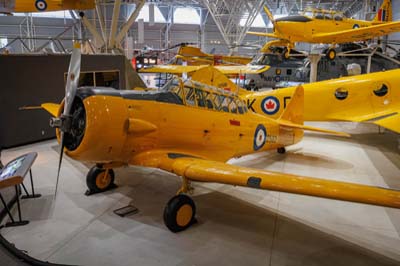
North American Harvard II (2532) ex Royal Canadian Air Force (RCAF). Noorduyn Aviation Limited and Canadian Car & Foundry Limited produced a total of 3,350 Harvards in Canada during and after World War Two. Served across multiple RCAF training schools before being placed into storage in 1962. Used in Canada during the Second World War under the British Commonwealth Air Training Plan. |
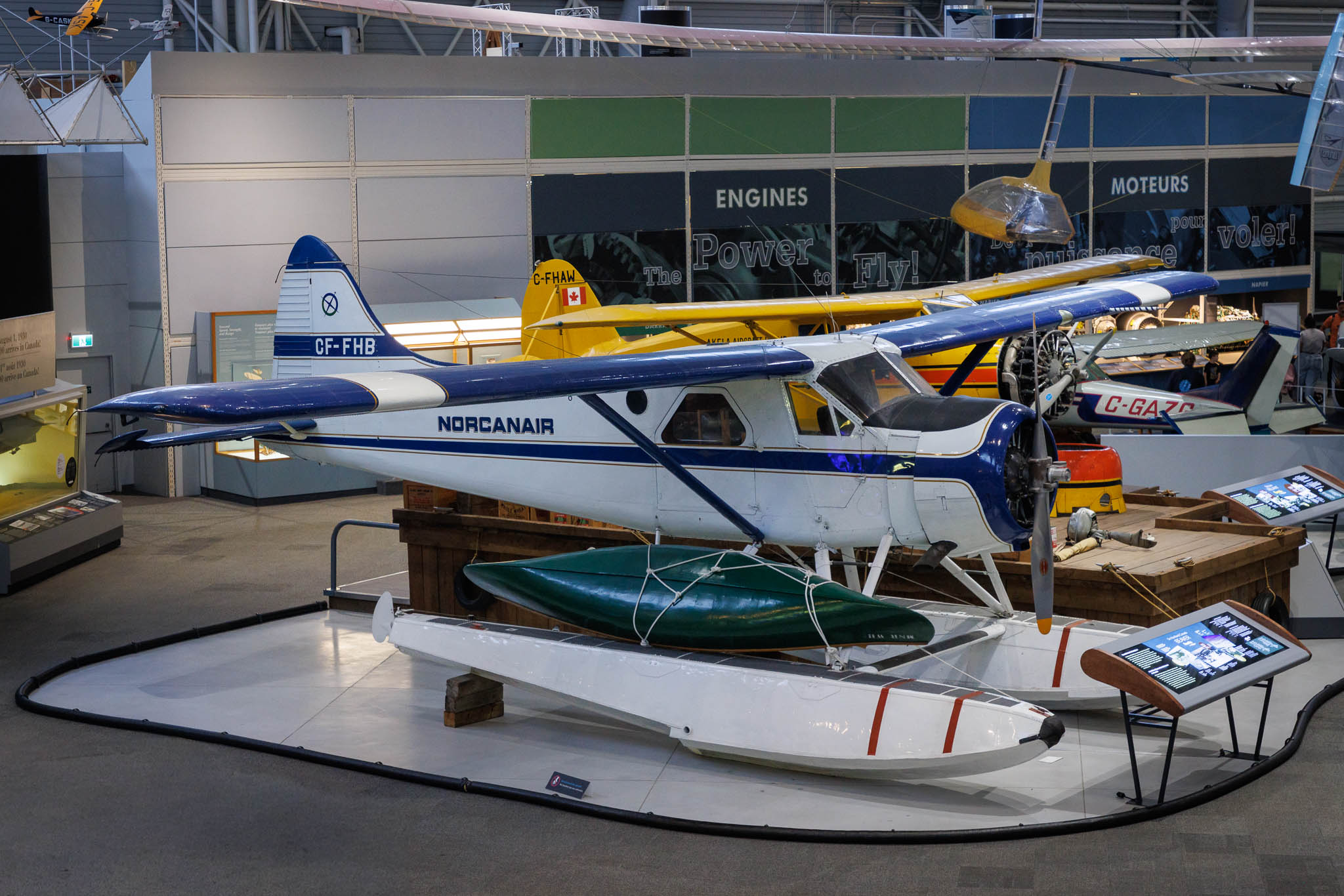 |
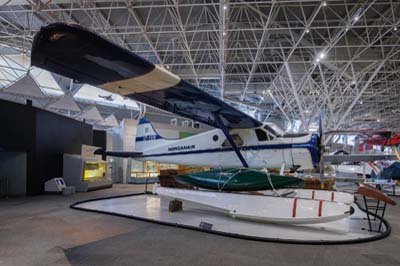
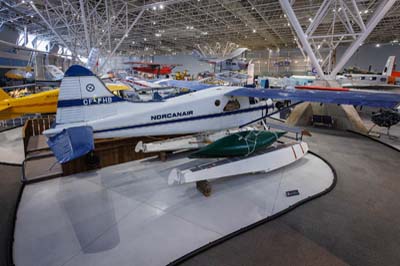
Left to right: de Havilland Canada DHC-2 Beaver (CF-FHB). THis is the first DHC-2 Beaver built. The aircraft first flew on August 16, 1947, at Downsview, Toronto. It operated as a rugged bush aircraft across Western and Northern Canada for 32 years with various operators, including Norcanair. The museum purchased it from Norcanair in July 1980 and displayed it in its Northern and Bush Flight Exhibition in Norcanair colours.
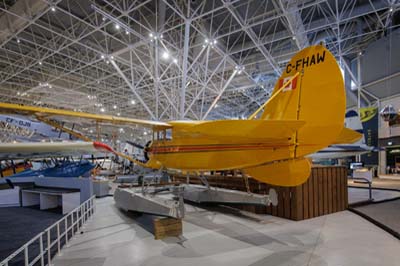
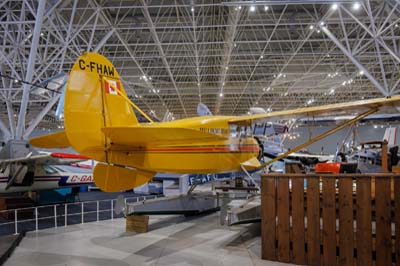
Stinson SR Reliant (C-FHAW). The Stinson Reliant is a high-wing, single-engine monoplane designed to seat four to five people, built by the Stinson Aircraft in Wayne, Michigan. Between 1933 and 1941, a total of 1,327 Reliants were produced across various models ranging from the SR-1 to the SR-10. The final commercial version, the SR-10, was launched in 1938. Production of the Reliant can be divided into two main categories: the straight-wing models (SR-1 through SR-6) and the gull-wing models (SR-7 through SR-10). |
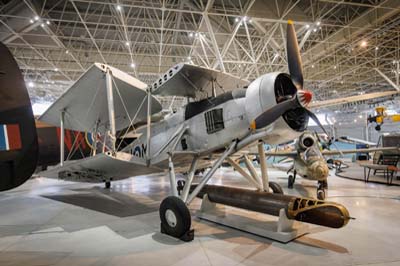
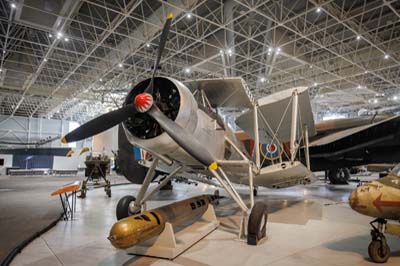
Left to right: Fairey Swordfish III ('NS122'). Its true identity is not known. The aircraft was purchased by the museum in 1965 and restored with assistance from the Royal Canadian Navy and Fairey Aviation of Canada Limited. It was assigned the fictitious serial number NS122 to match a historical Swordfish operated in Canada during World War Two.
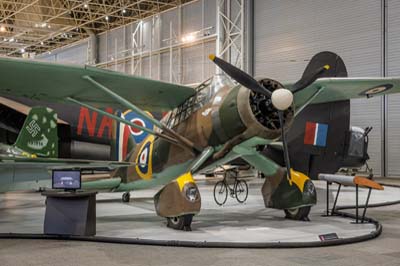
Westland Lysander IIIA (R9003). The type was built between 1938 and 1943, with 225 aircraft manufactured in Canada by National Steel Car at Malton. Although obsolete for frontline army cooperation by 1940, Lysanders were repurposed for search-and-rescue and target towing under the British Commonwealth Air Training Plan.
This composite aircraft was rebuilt in 1967 using a UK-built fuselage and Canadian-built wings, and painted in Royal Canadian Air Force (RCAF) markings. |
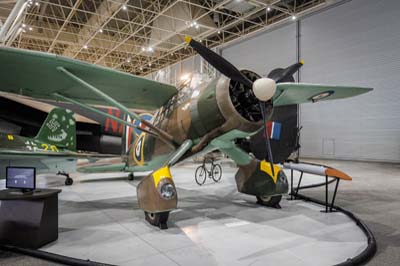
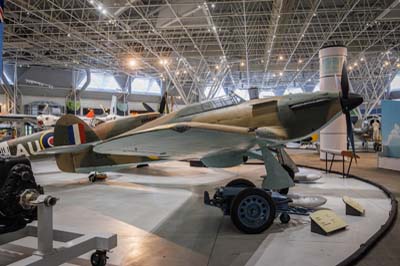
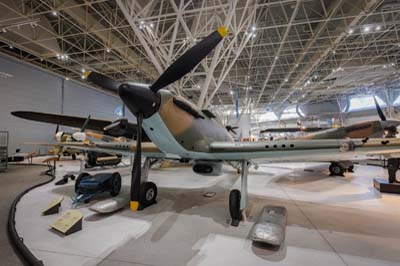
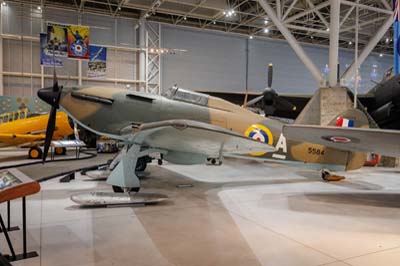
| Left to right: Hawker Hurricane XII (5584 'A') ex Royal Canadian Air Force (RCAF). Built in Canada by the Canadian Car and Foundry Company Ltd. in 1942, this is one of only five Canadian-built Hawker Hurricanes remaining in Canada. It was based in Winnipeg from 1942 to 1943, then stored or assigned to various locations across Canada until 1946. It entered the Rockcliffe airport collection in 1964. |
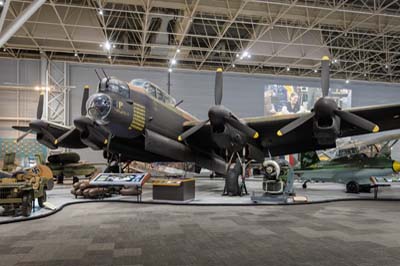
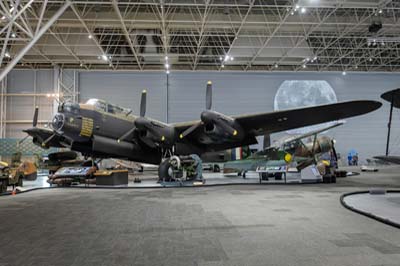
Left to right: Avro Lancaster BX (KB944 'NA-P'). Built by Victory Aircraft Ltd. at Malton, Ontario, in March 1944, the aircraft was delivered to the UK in March 1945 and assigned to No.425 Squadron RCAF (Alouette Squadron) in May 1945. It returned to Canada in June 1945 and subsequently served in various capacities before being placed in storage. It was transferred to the museum collection on May 11, 1964.
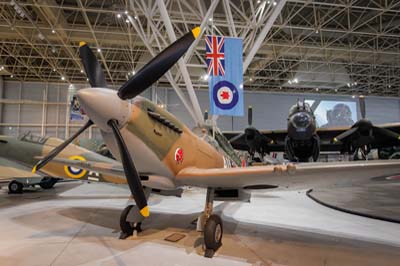
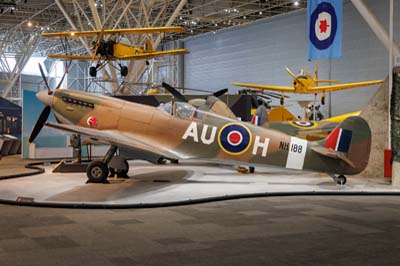
Supermarine Spitfire LF.IXc (NH188 'AU-H'). Flown by Polish and Royal Canadian Air Force (RCAF) squadrons in 1944, the aircraft was damaged near D-Day. It subsequently served with the Royal Netherlands Air Force (RNLAF) from 1947 to 1952 as H-109 and H-64, followed by service with the Belgian Air Force from 1952 to 1954 as SM-39. It was later flown privately in Belgium as OO-ARC before being imported to Canada and registered as CF-NUS. The aircraft was donated to the museum by John N. Paterson on June 7, 1964. |
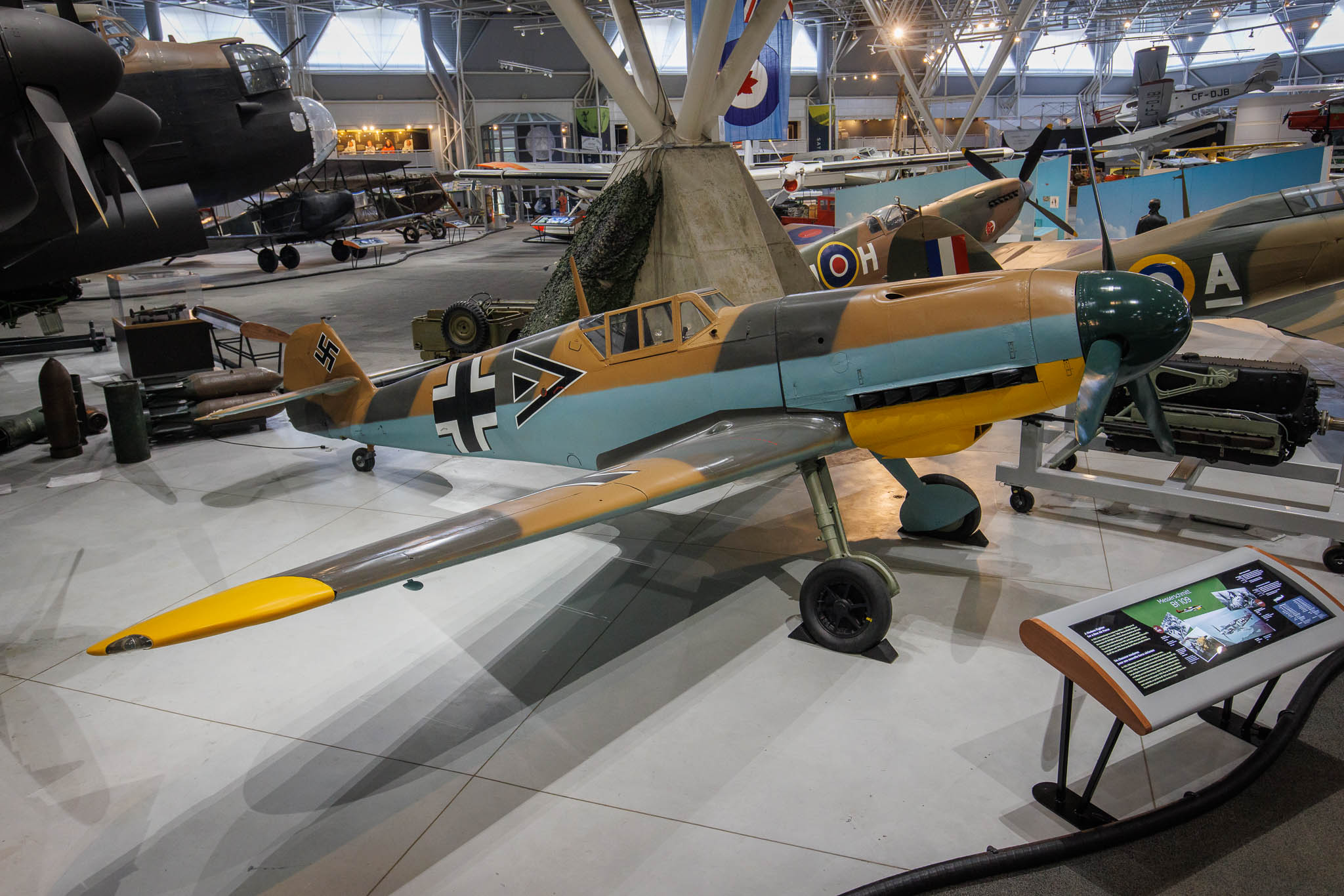 |
| Messerschmitt Bf.109F-4/Z (10132) ex German Air Force. This aircraft was flown on the Eastern Front by JG 5 and piloted by ace Horst Carganico. On August 8, 1942, it was struck by gunfire during an air battle near Murmansk, forcing a crash landing. Recovered in Russia, it was sold to Aero Vintage Ltd. in England in 1995 and restored while retaining its original battle scars, including visible bullet holes in the airframe and propeller. The aircraft was transferred to Ottawa aboard a Canadian Forces C-130 in June 1999. |
 |
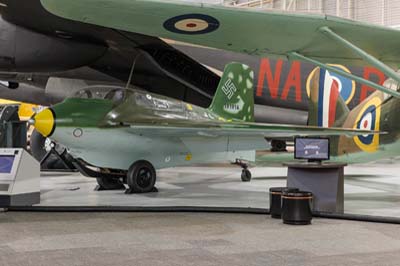 |
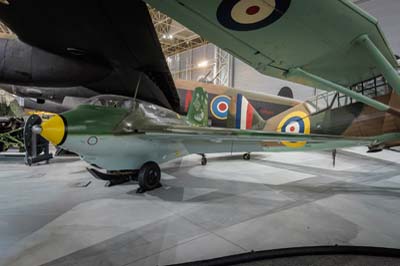
Left to right: Messerschmitt Me.163B-1a Komet (191914 'Yellow 26', AM 220) ex Luftwaffe. The Messerschmitt Me 163 Komet was the only rocket-powered aircraft to enter operational service during World War Two. Flying the exceptionally fast but volatile Me 163, pilots of Jagdgeschwader (JG) 400 claimed nine Allied aircraft from August 1944.
This aircraft served with JG 400 and was surrendered at Husum, Germany, at the end of World War Two. It was transferred to the Royal Aircraft Establishment at Farnborough before passing through storage units including 6 MU Brize Norton and 47 MU Sealand. It was shipped from Salford Docks aboard SS Manchester Commerce in August 1946, arriving in Montréal in September 1946. |
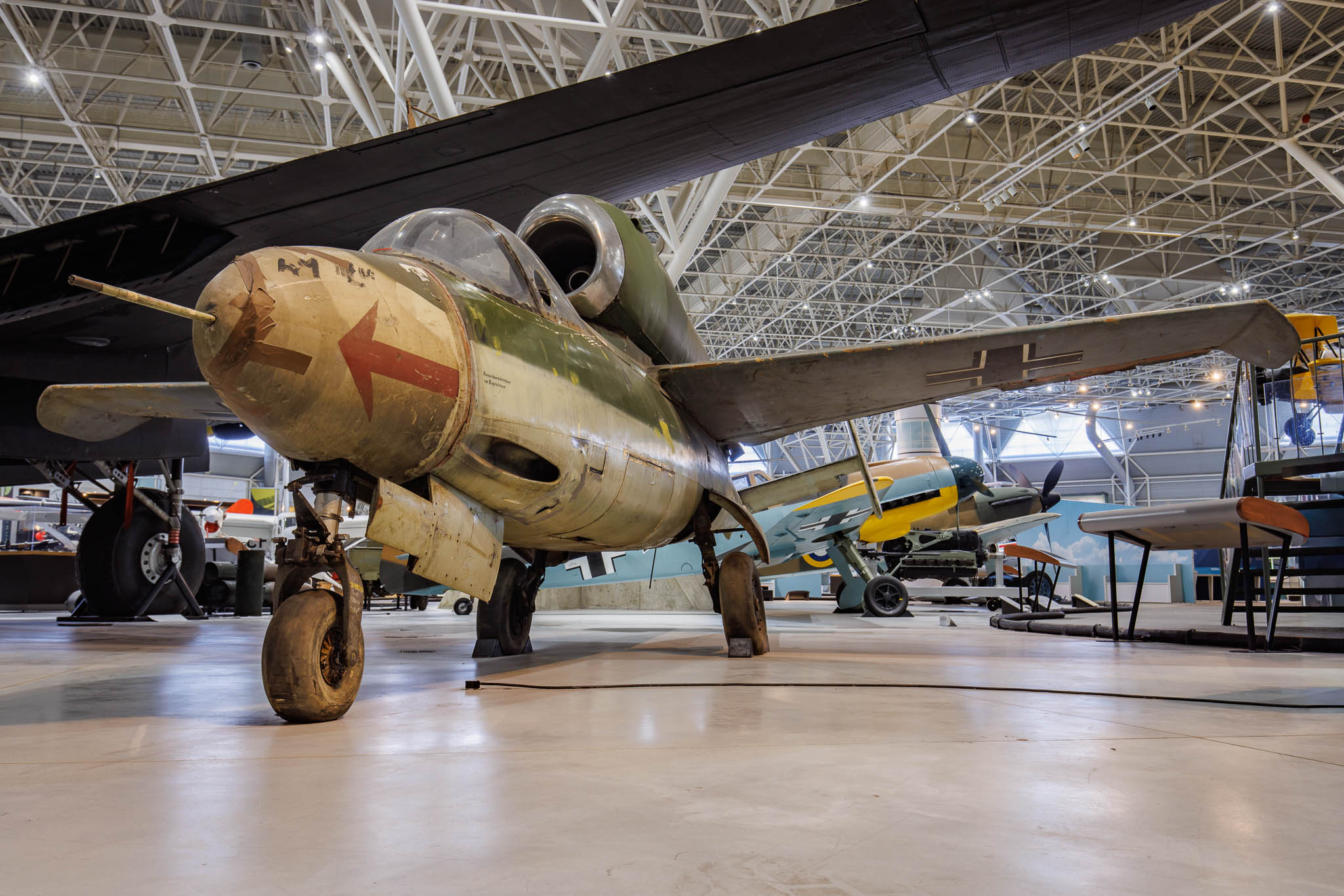 |
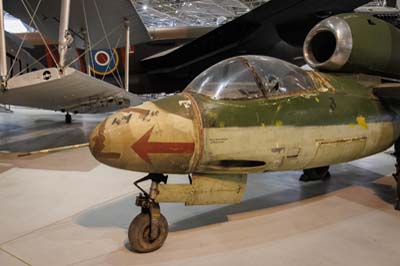
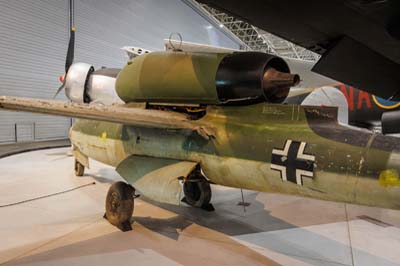
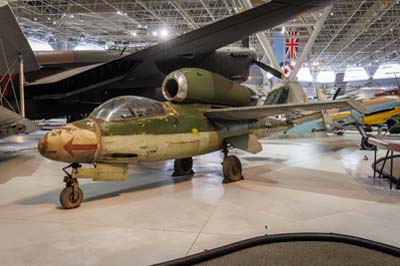
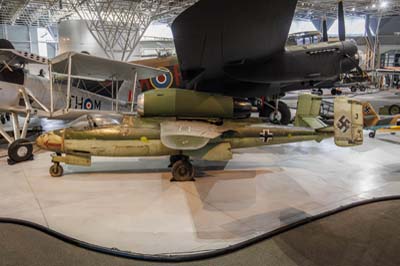
Left to right: Heinkel He.162A-2 Volksjäger (120086 'Yellow 2', Air Min 62) ex Luftwaffe. As the situation became increasingly desperate towards the end of World War Two, the German aircraft industry was pushed to develop new designs that could turn the tide. Built by Ernst Heinkel Flugzeugwerke GmbH at Rostock-Marienehe, Germany, the He 162 jet fighter took just 69 days from initial design to first flight. It was the first aircraft to be fitted with an ejection seat. Deliveries began in February 1945, but only around 200 were completed. Due to shortages of strategic materials, the aircraft was largely constructed from wood.
Captured at Leck, Germany, on May 8, 1945, this aircraft was displayed in London's Hyde Park after the war before being shipped to Canada in September 1946. It was transferred to the Canadian War Museum in 1964 and later to the Canada Aviation and Space Museum in 1967. It retains a high degree of its original factory camouflage. |
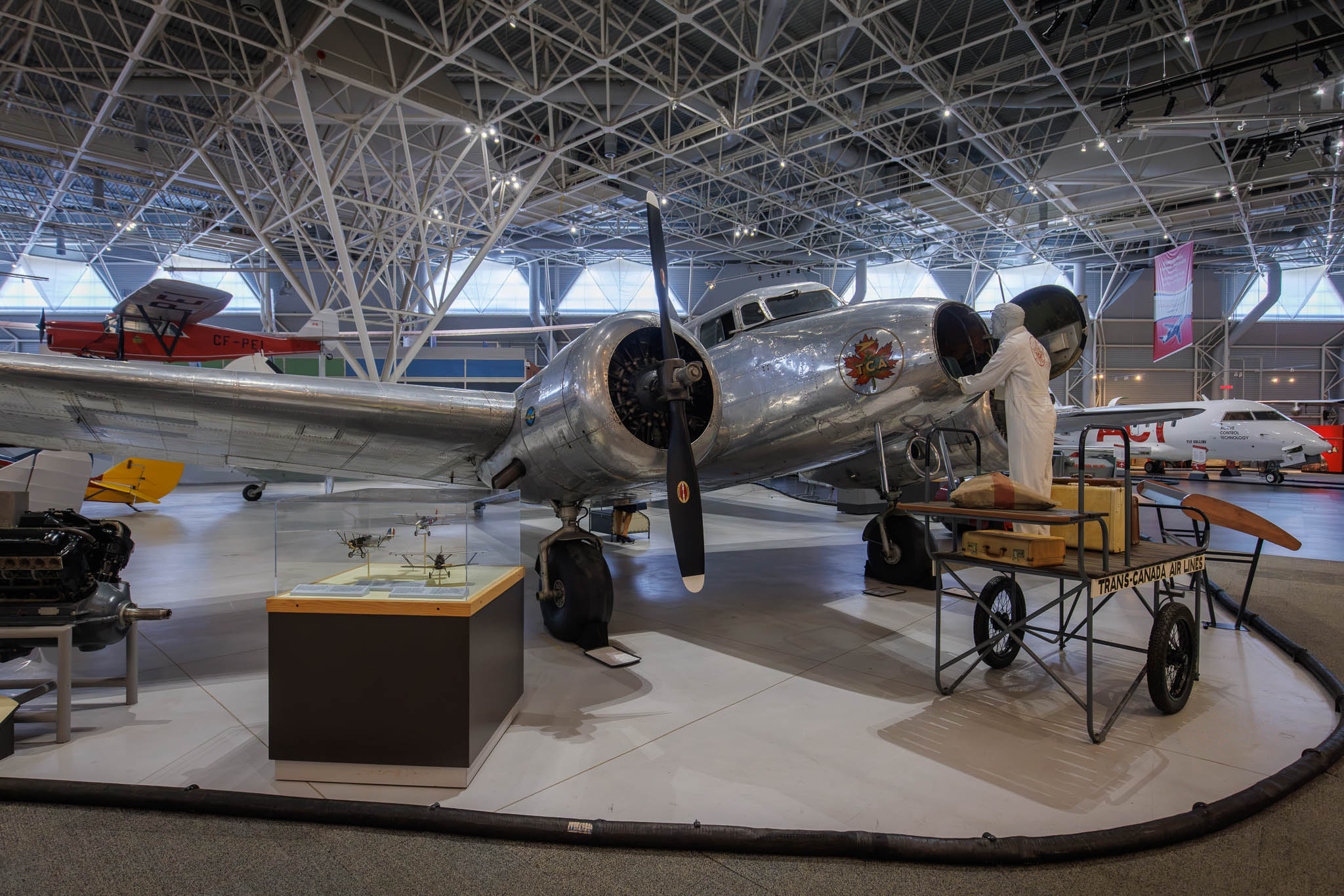 |
| Lockheed L-10A Electra (CF-TCA). Built in 1937, this was the first new aircraft purchased by Trans-Canada Air Lines (TCA). Transferred to the Royal Canadian Air Force (RCAF) in 1939, it served as a transport aircraft for six years, apart from a brief six-month loan back to TCA in 1941. Purchased by Lee Koepke in 1962 and rebuilt, it was flown around the world by Ann Pellegreno in 1966 to commemorate Amelia Earhart's fatal 1937 flight. Air Canada acquired and restored the aircraft in 1968. It was subsequently displayed at Expo 86 in Vancouver before being placed on permanent exhibition at the museum. |
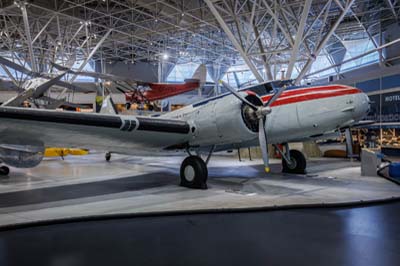
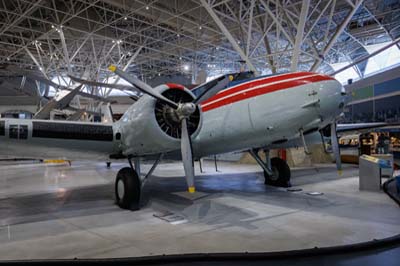
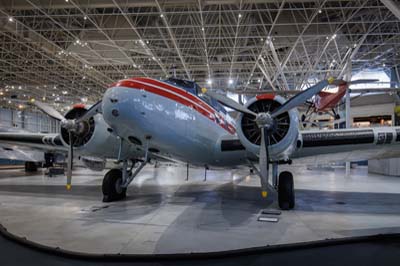
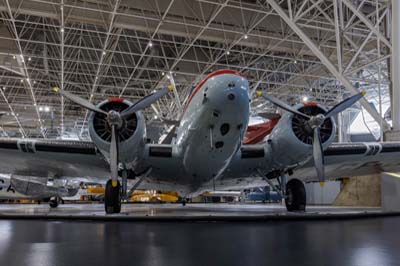
Left to right: Boeing 247D (7638 registered CF-JRQ) ex Royal Canadian Air Force (RCAF). Designed and built in the United States between 1933 and 1934, the Boeing 247 was an advanced airliner capable of carrying up to ten passengers and two crew. Superseded on main routes by the Douglas DC-3, 247s continued to operate with smaller airlines and private operators into the 1950s. Only 75 were built.
Manufactured in 1934 as a Boeing 247, this aircraft was converted to 247D standard in July 1935. It flew with more than ten operators, including United Air Lines, the RCAF, Quebec Airways and Canadian Pacific Airlines. Donated to the museum in 1967 by its final operator, California Standard Oil of Calgary, Alberta, it is one of only four complete Boeing 247s known to survive. |
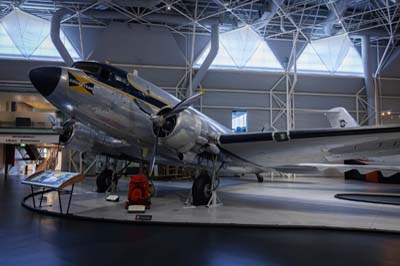
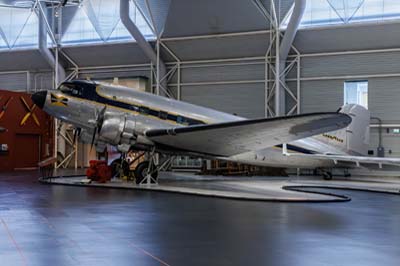
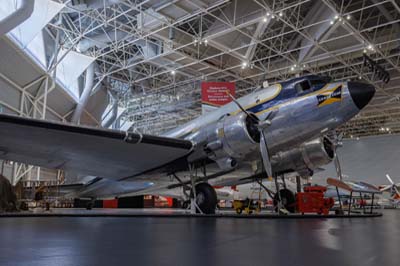
Left to right: Douglas C-49J Skytrain (43-1985 registered C-FTDJ). Built in November 1942, the C-49J series comprised civilian DC-3 airliners impressed into U.S. Army Air Forces (USAAF) service. Unlike the purpose-built C-47 Skytrain, the C-49J lacked a large cargo door, heavy-duty cargo floor, reinforced landing gear and glider-towing equipment.
Purchased in 1945, this aircraft became Trans-Canada Air Lines' first DC-3. Sold to the Goodyear Tire and Rubber Company in 1948, it was converted to a VIP transport and remained in service until 1983, when it was donated to the museum. |
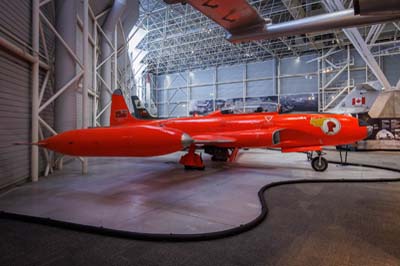
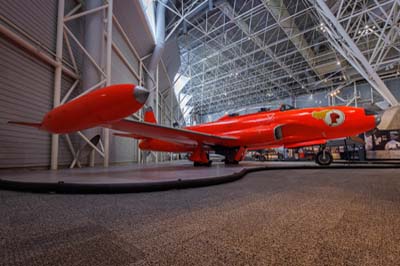
Left to right: Canadair T-33AN Silver Star Mk.3 (21574) ex Royal Canadian Air Force (RCAF). This aircraft served with the Royal Canadian Air Force (RCAF) from 1957 to 1964, operating across Manitoba, Alberta and Saskatchewan. It was famously painted red and flown as a Red Knight solo aerobatic demonstration aircraft before being transferred to the museum in 1964.
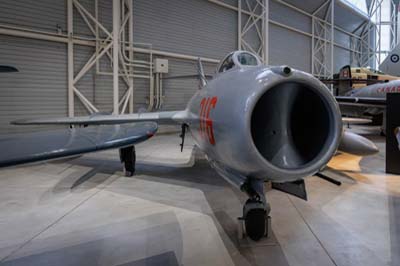
PZL Lim-2R (316) ex Polish Air Force.
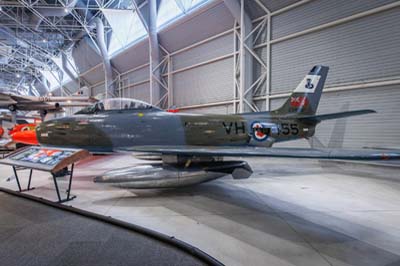
Canadair Sabre Mk.6 (23455 'VH-455') ex Royal Canadian Air Force (RCAF), 444 Sqn markings. |
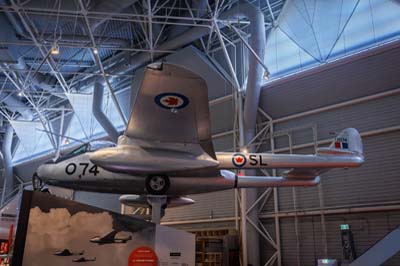
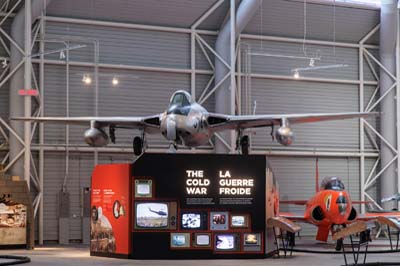
| Left to right: de Havilland DH.100 Vampire F.3 (17074 ex VP775) ex Royal Canadian Air Force (RCAF). The aircraft served with No.1 Fighter Operational Training Unit at St. Hubert, Quebec, until 1949, followed by No.421 Squadron at Chatham, New Brunswick, until November 1953. It later operated with No.442 City of Vancouver Squadron before being placed in storage in 1956. In 1964, it was transferred to the museum. |
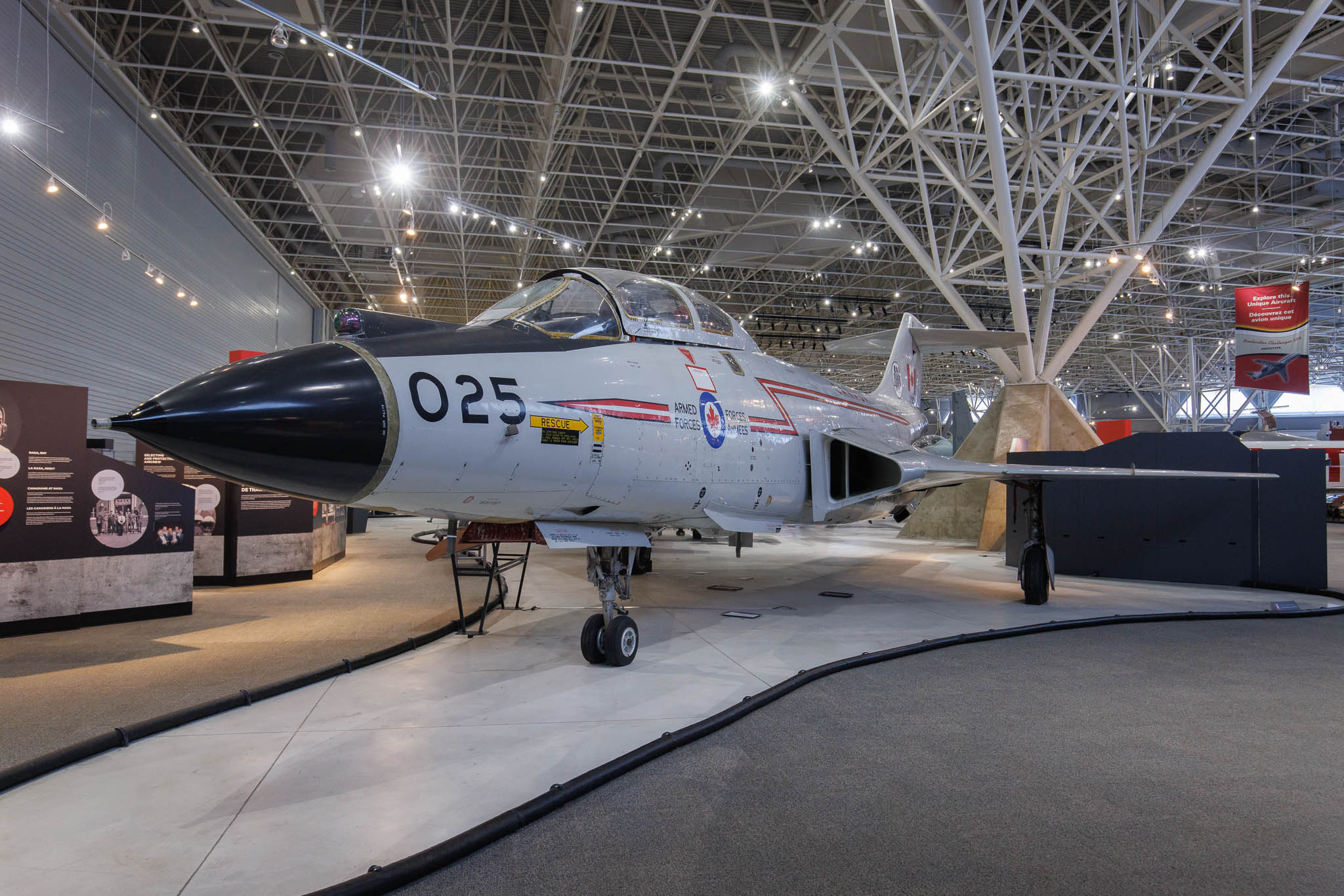
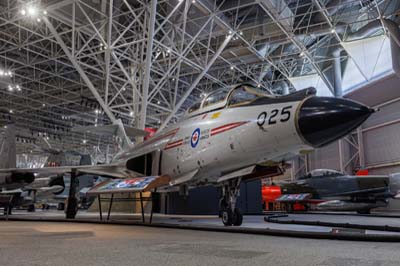
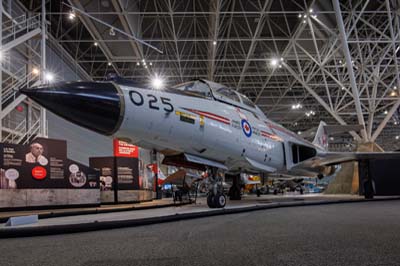
| Left to right: McDonnell CF-101B Voodoo (101025 '025') ex Royal Canadian Air Force (RCAF). |
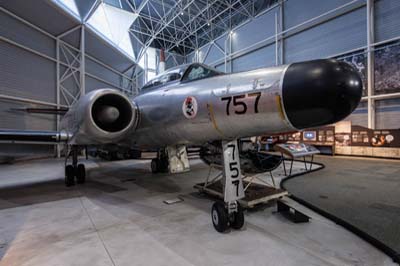
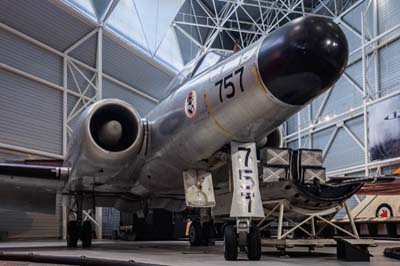
Left to right: Avro Canada CF-100 Canuck Mk.5D (100757 '757') ex Royal Canadian Air Force (RCAF).
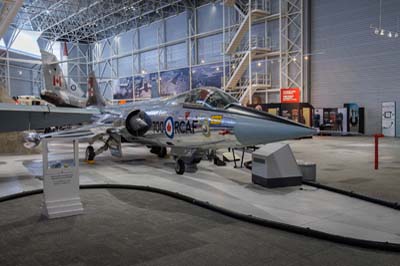
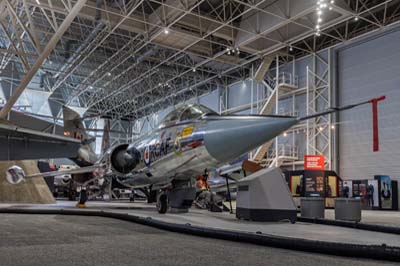
Lockheed CF-104A Starfighter (12700 'X') ex Royal Canadian Air Force (RCAF). |
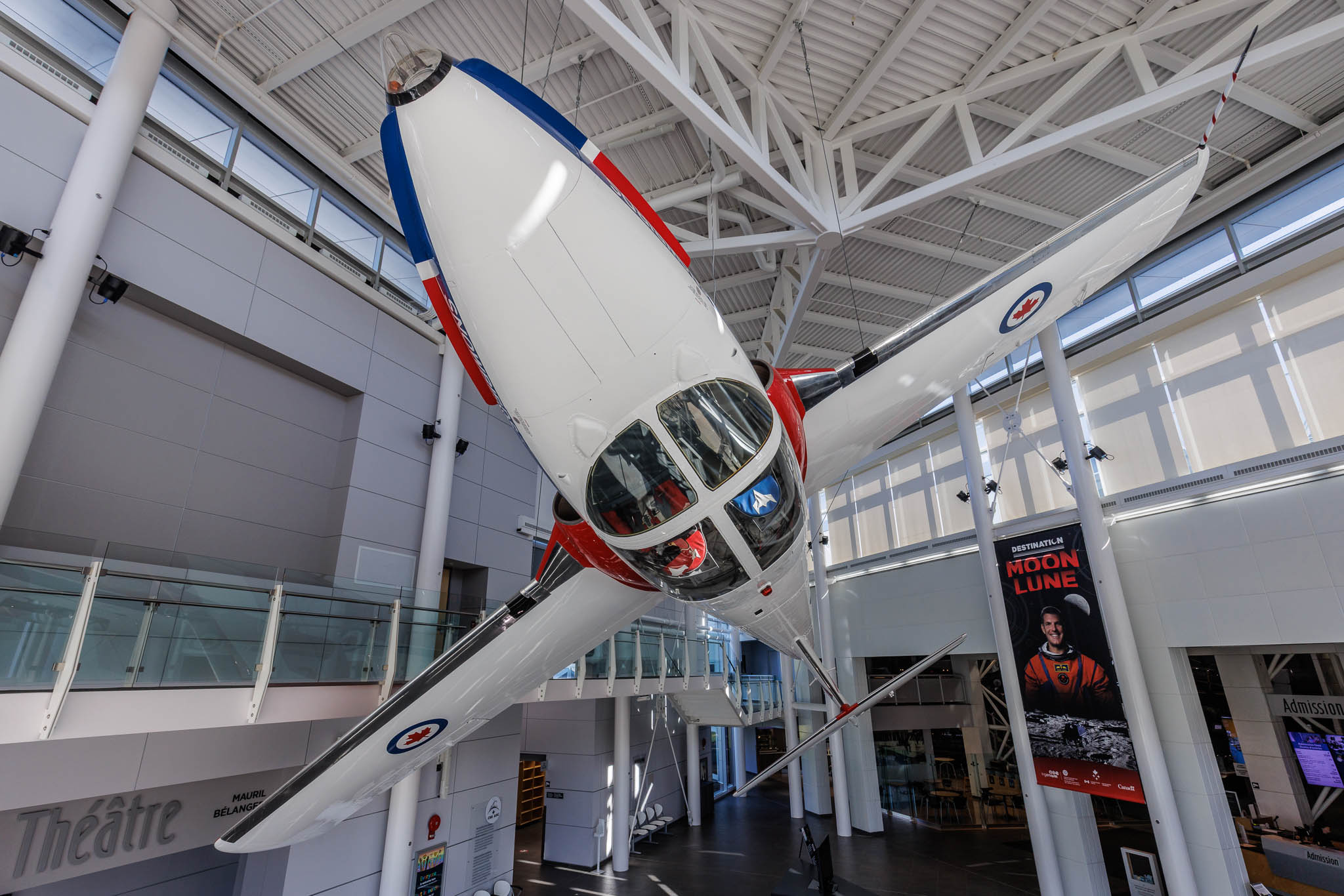
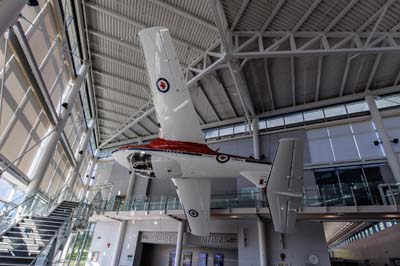
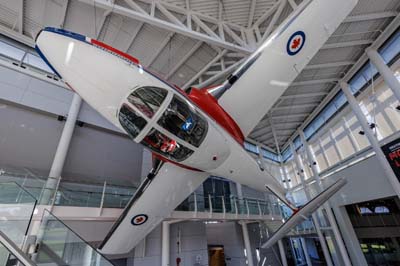
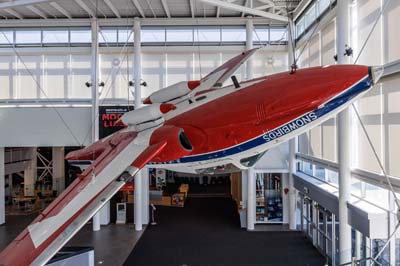
| Left to right: Canadair CT-114 Tutor (114155 '5'). Served as a Royal Canadian Air Force (RCAF) training aircraft before transferring to the Snowbirds (431 Air Demonstration Squadron). |
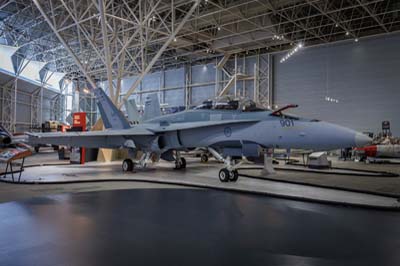
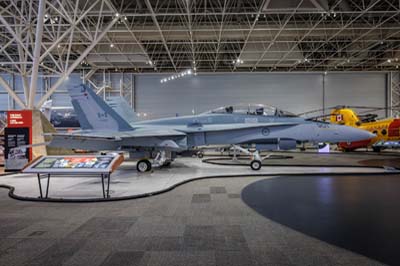
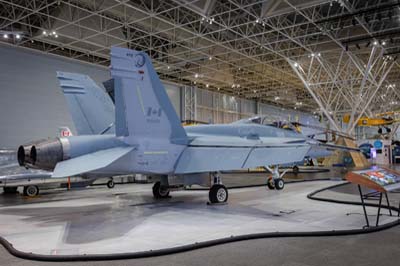
Left to right: McDonnell-Douglas CF-188B Hornet (188901) ex Canadian Armed Forces.
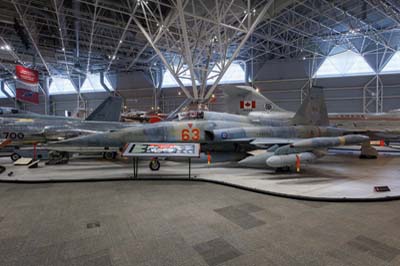
Northrop CF-116A Freedom Fighter (116763 '63') ex Canadian Armed Forces. |
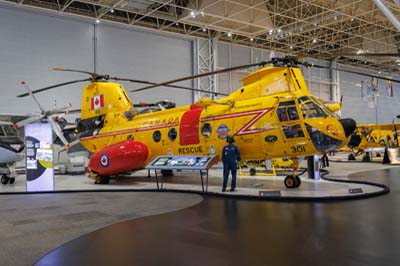
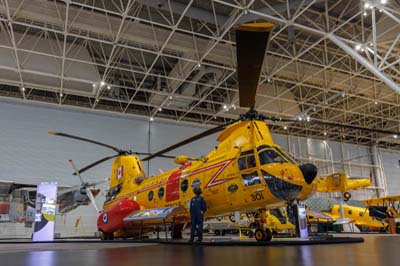
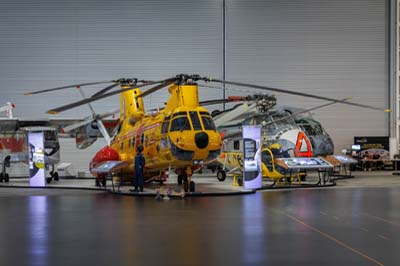
| Left to right: Vertol CH-113 Labrador (11301) ex Royal Canadian Air Force (RCAF). |
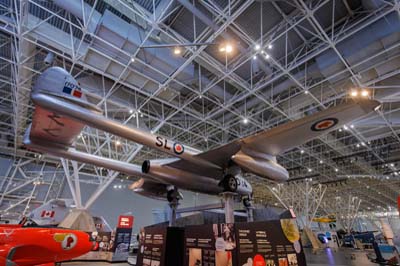
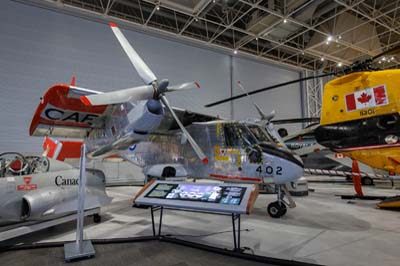
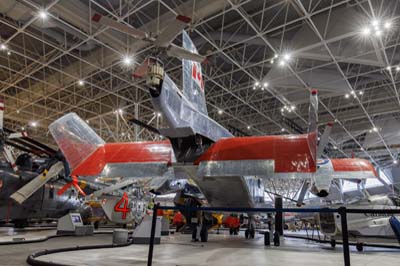
Left to right: Canadair CL-84-1 (8402, CX-8402) ex Royal Canadian Air Force (RCAF).
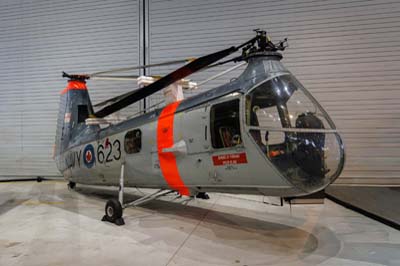
Piasecki H-25A Retreiver (51-16623 '623'). Built originally as a US Army H-25A, it was transferred and modified for the Royal Canadian Navy (RCN) in June 1954. It served with squadron HU-21, embarked on HMCS Labrador for Arctic and hydrographic surveys, and later flew with VU 33). |
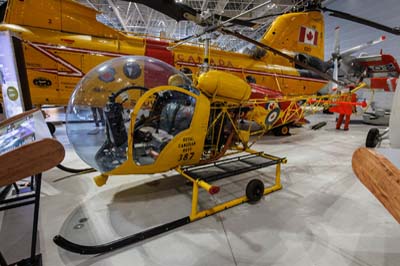
Left to right: Bell 47HTL-6 (1387) ex Royal Canadian Navy.
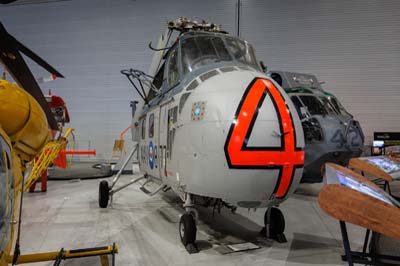
Sikorsky HO4S-3 Chickasaw (55877 '4') ex Royal Canadian Navy.
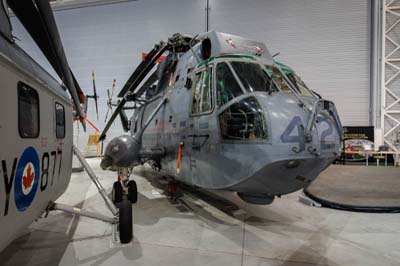
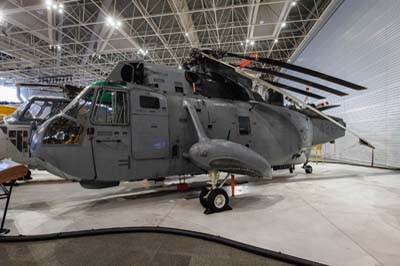
Sikorsky CH-124A Sea King (12426 '426') ex Canadian Armed Forces. |