Canada Aviation and Space Museum
Reserve Hangar
Rockcliffe Airport, Ottawa, Ontario
September 2026
|
One of the highlights of visiting the Canada Aviation and Space Museum is a guided tour of its Reserve Collection. Housed in a large storage hangar away from the main exhibition, it contains an amazing range of aircraft and aviation artefacts, including types not normally on public display. Some of these aircraft have previously been displayed in the museum's main exhibition.
The tours offer a unique opportunity to see the aircraft at close quarters while learning about their history, preservation and restoration. For aviation enthusiasts, the Reserve Collection provides a fascinating complement to the main exhibition and a deeper insight into Canada's aviation heritage.
My guide was very knowledgeable and was happy to accommodate my request to obtain better photographs of aircraft that were often packed closely together, making photography difficult. |
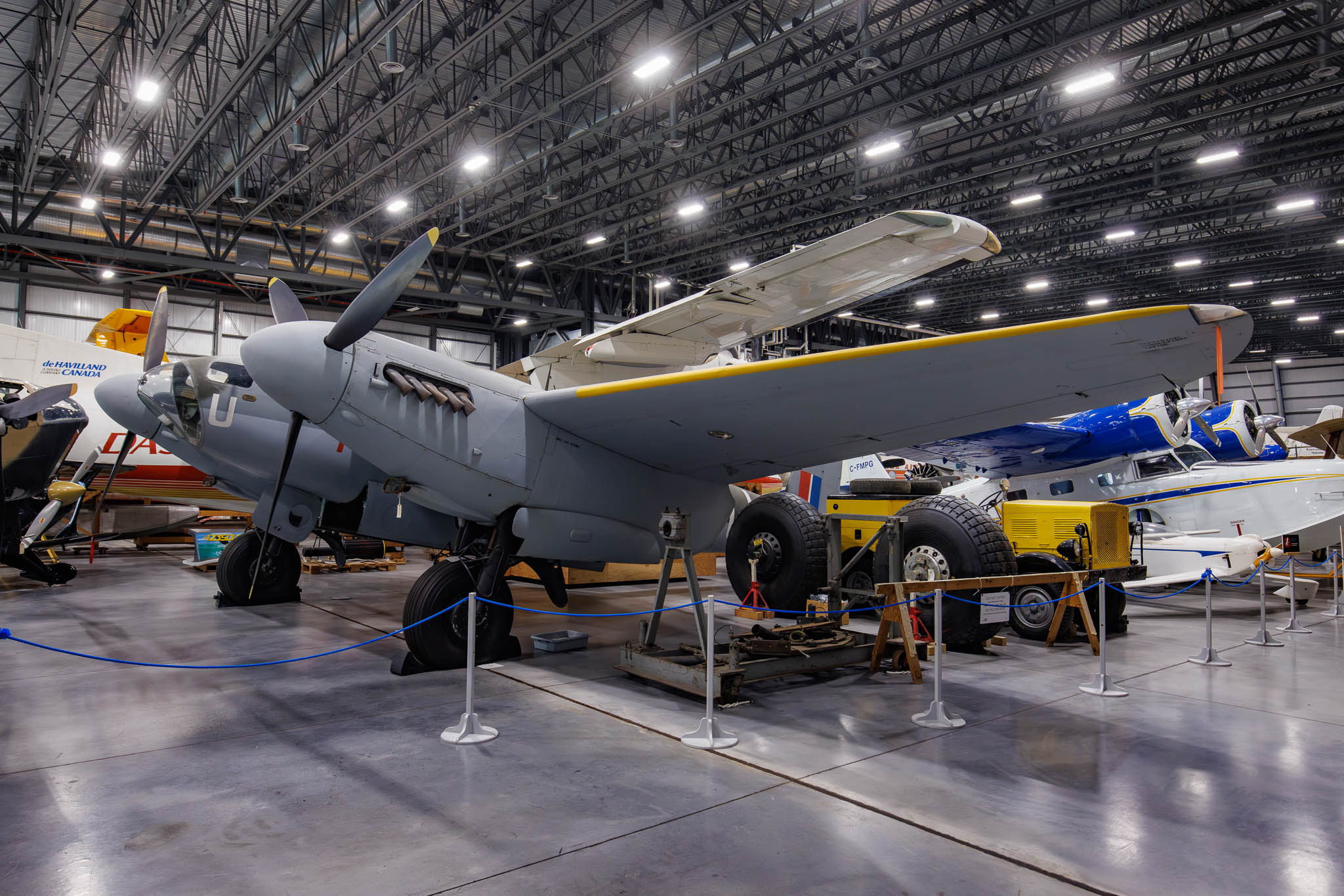 |
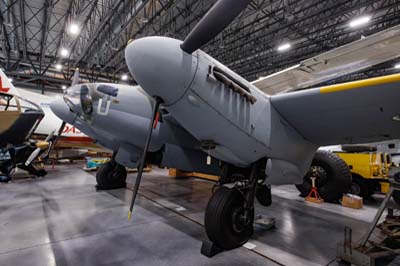
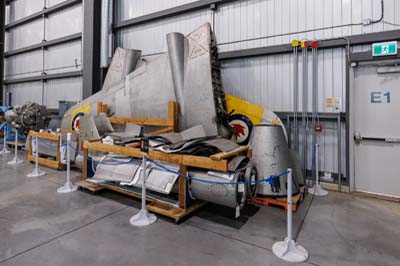
Left to right: de Havilland Mosquito B20 (KB336 'U'). Built by de Havilland Aircraft of Canada Ltd. at Downsview, Toronto, in 1944, the Mosquito was used primarily for operational training by the Royal Canadian Air Force (RCAF). More than 1,000 were built in Canada, with 1,032 Canadian-built Mosquitos flown during World War Two.
This aircraft served with the RCAF and No.7 Operational Training Unit in Nova Scotia before being transferred to the museum collection in 1964.
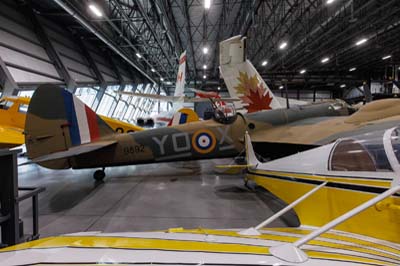
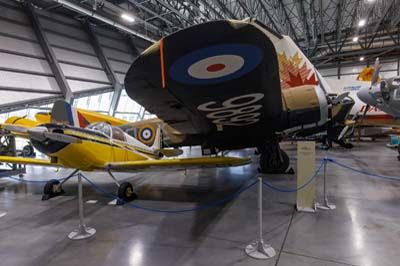
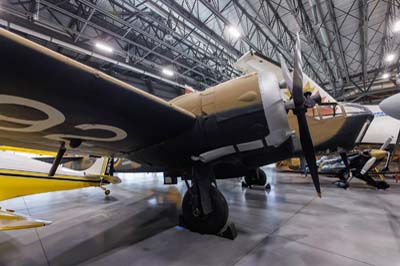
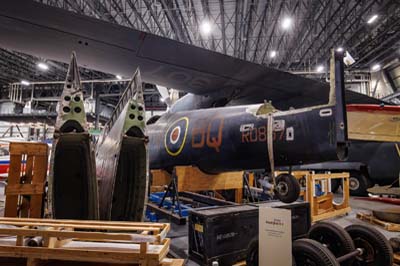
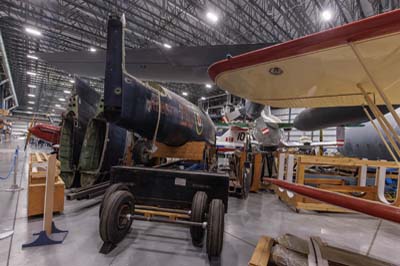
Bristol Bolingbroke IVT (9892 'YO-X'). The Bristol Fairchild Bolingbroke was a Canadian-built version of the Bristol Blenheim Mk IV, produced by Fairchild Aircraft at Longueuil, Quebec, for the Royal Canadian Air Force. Used as a maritime patrol aircraft and trainer during World War Two, the Mk.IVT was equipped with a Boulton Paul Type C turret and widely used under the British Commonwealth Air Training Plan.
Built in June 1942, this Bolingbroke served briefly with No.1 Training Command in Toronto before transferring to No.2 Training Command in Winnipeg. Placed in storage in June 1944, it was sold as war surplus in September 1945. The aircraft was later acquired by George Maude, who moved it to Salt Spring Island, British Columbia. In 1962, Maude donated it to the RCAF and it was transported to Alberta for restoration. Completed in the markings of a No.8 Squadron RCAF aircraft, it was formally presented to the RCAF at Rockcliffe on June 6, 1964, before being transferred to the museum. |
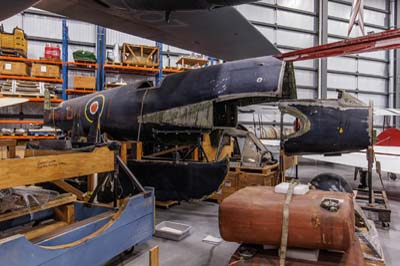
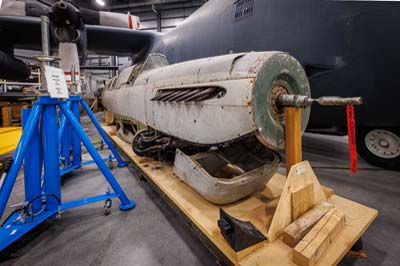
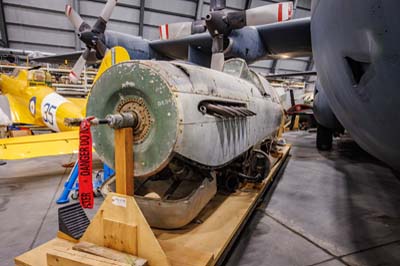
Left to right: Bristol Beaufighter TF.10 (RD867 'BQ-I'). The Beaufighter was a two-seat anti-shipping strike fighter, remaining in service from 1940 for 20 years. It carried four 20mm cannon in the nose and six machine guns on the wings and another on top of the fuselage. It could also carry one torpedo or eight rockets and two bombs. The prototype first flew on July 17, 1939, RAF Fighter Command taking delivery of the first aircraft in April 1940. They were fitted with radar and performed well at night against Germany. The last of 5,562 Beaufighters was delivered in September 1945. The Bristol Beaufighter TF.X was originally built as a torpedo fighter before many were converted for target-towing duties.
Built near the end of World War Two, this aircraft served with the Royal Air Force in the United Kingdom and Malta as a target tug until its retirement in 1958. The aircraft was acquired by the museum in 1969 in an exchange with the RAF Museum for a Bristol Bolingbroke. It is a semi-complete airframe that has undergone partial restoration and is displayed with its nose and cockpit section. It lacks its Bristol Hercules engines, cowlings and many internal components. Parts from RD867 were also historically used in the restoration of other Beaufighter airframes, including RD253 at the RAF Museum Hendon. |
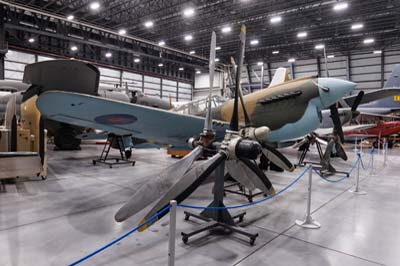
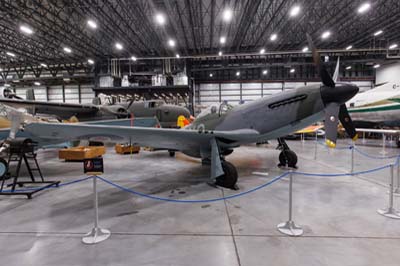
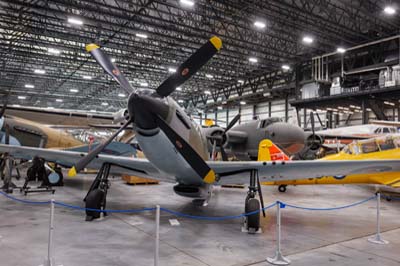
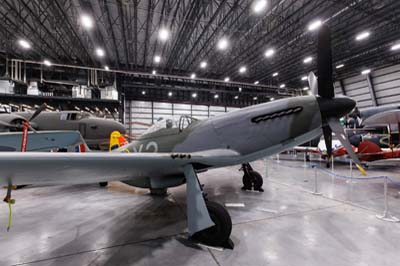
Left to right: Curtiss Kittyhawk I (AL135, 1076). Built in 1942 by the Curtiss-Wright Corporation in the United States, this aircraft was originally intended for the RAF as AL135. It was instead diverted to the Royal Canadian Air Force (RCAF) and taken on strength on March 23, 1942. Initially assigned to No.132 (Fighter) Squadron, it helped defend the west coast of British Columbia before being transferred to training duties as the war progressed. It served at air stations including Sea Island, Patricia Bay, Tofino, Boundary Bay, Montreal and Winnipeg, before being placed in storage at Vulcan, Alberta, after the war. Earmarked for preservation at an early stage, the aircraft was transferred to the museum collection in 1964.
North American P-51D Mustang (44-73347, 9298 'Y2-E'). Taken on strength by the Royal Canadian Air Force on March 16, 1951, and retired on August 9, 1961. It was transferred to Rockcliffe Airport in 1964. It is finished as a Mustang III of No.442 "City of Vancouver" Squadron in 1945. |
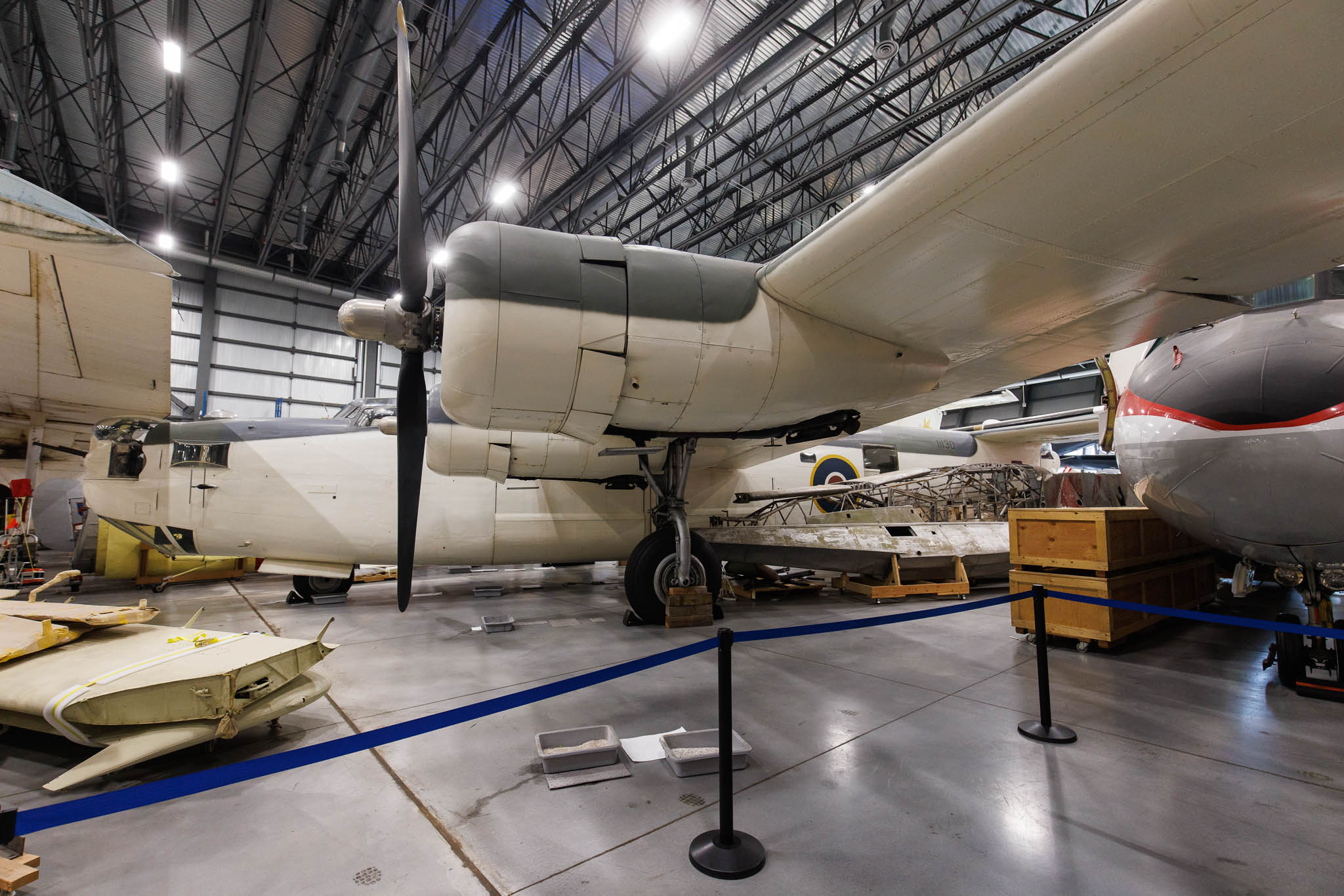 |
Consolidated Liberator BVII (44-50154, KN820 marked '11130'). Built by Ford at Willow Run, Michigan, this Liberator was allocated to the Royal Air Force under Lend-Lease in 1944 as KN820. Delivered to India in July 1945, it served with No.355 Squadron RAF.Refurbished by Hindustan Aircraft in 1949, it was operated by the Indian Air Force as HE773 'M' with No.6 Squadron until December 31, 1968.
The aircraft was exchanged with Canada for a restored Westland Lysander and flown to Canada in 1968. Its 10,500 mile (16,900 km) ferry flight remains the longest undertaken by any aircraft in the museum's collection. After arrival in June 1968, No.6 Repair Depot at Trenton refinished it as '11130' for an RCAF Eastern Air Command anti-submarine aircraft. |
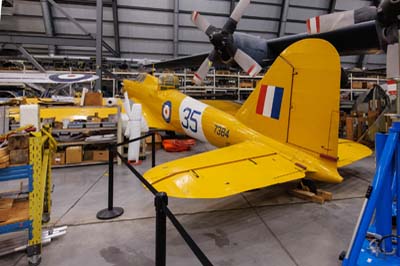
Left to right: Fairey Battle IT (R7384 '35'). Built by the Fairey Aviation Company Ltd at Stockport, England, in 1940, this aircraft was taken on strength by the Royal Canadian Air Force in January 1941 and initially served as a pilot trainer at No.31 Service Flying Training School in Kingston, Ontario. In December 1942, it was converted to Mk.IT turret-gunnery trainer standard, fitted with a Bristol turret, and operated at No.3 Bombing and Gunnery School at Macdonald, Manitoba. Placed in storage in 1943, it was restored in the 1990s and transferred to the museum collection in 1964.
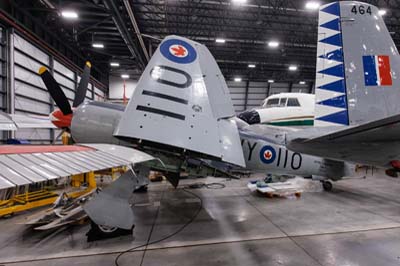
Hawker Sea Fury FB.11 (TG119 '110'). Built by Hawker Aircraft Ltd at Kingston, England, in 1948, this aircraft was taken on strength by the Royal Canadian Navy (RCN) that year and shipped to Canada aboard HMCS Magnificent. It was assigned to 883 Squadron, later redesignated VF 871, at HMCS Shearwater in Dartmouth, Nova Scotia. Damaged in 1954, it was repaired by Fairey Aviation Company of Canada before being retired from active service in 1956. Purchased by Bancroft Industries in 1963, it was donated to the museum later that year and restored between 1963 and 1964.
Fairey Firefly FR.1(DK545, Ethiopia AF 617) ex Royal Navy Fleet Air Arm. It was found derelict at Asmara in Eritrea. The museum's FR.1 would have been flown by the Royal Canadian Navy until 1950. In 1954 a number of former RCN FR.1's were sold to Ethiopia. They were reported last flown in 1965. Some were left derelict outdoors at Asmara, Eritria. In 1993 Museum and Canadian Air Force staff dismantled two examples and returned them back to Canada. |
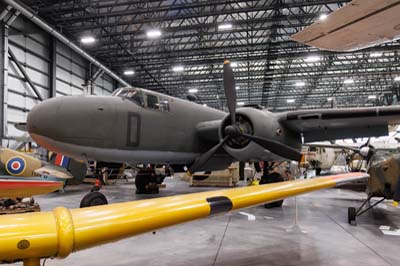
Left to right: North American B-25J Mitchell (5244 'D'). Built by North American Aviation in Kansas City, Missouri, in 1945 as a B-25J for the United States Army Air Forces, this aircraft did not see combat during World War Two. It was later converted to a TB-25L pilot trainer and entered Royal Canadian Air Force service in January 1952.
The aircraft served at the No.1 Flying Instructor School at Trenton, Ontario, No.5 Air Observer School at Winnipeg, Manitoba, and the Central Experimental and Proving Establishment at Uplands Airport. In 1964, it was refinished in the colours and markings of No.98 Squadron RAF to honour Canadians who flew with the squadron during World War Two. It is now preserved in the museum's Reserve Hangar at Rockcliffe Airport.
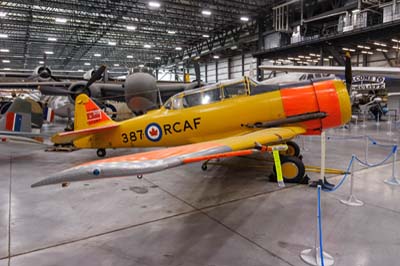
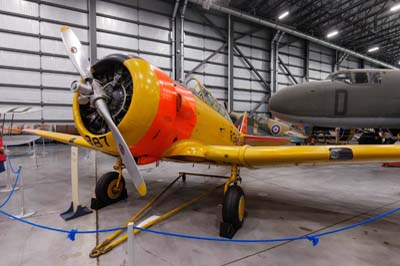
North American Harvard IV (20387 '387' registered CF-GBV). Manufactured by Canadian Car & Foundry Limited at Fort William, Ontario, in 1952, this Harvard was accepted by the RCAF in September that year and initially served with No.3 Flying Training School at Claresholm, Alberta. After a brief period in storage, it transferred to No.2 Flying Training School at Moose Jaw, Saskatchewan, in November 1958, remaining there until July 1959 before being placed in storage at Lincoln Park, Calgary. Retired and transferred to the Museum in March 1964, it made its final flight during National Aeronautical Collection Day at Rockcliffe Airport in June 1973.
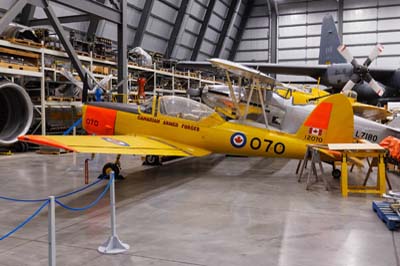
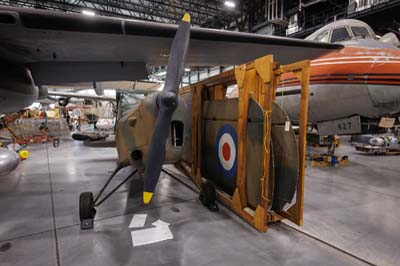
de Havilland Canada CT-120 Chipmunk (12070 '070' registered CF-CIA) ex Royal Canadian Air Force (RCAF). In background Hawker Hind (L7180).
Built in 1956, this was the 207th Chipmunk produced in Canada and one of the final examples built there. It served with the Royal Canadian Air Force as a training aircraft at bases including Centralia and Dunville, Ontario, Portage la Prairie, Manitoba, and Saskatoon, Saskatchewan. The aircraft was placed in storage at the Aerospace Maintenance Depot Unit at Mountain View, Ontario, in 1971 and acquired by the museum the following year. |
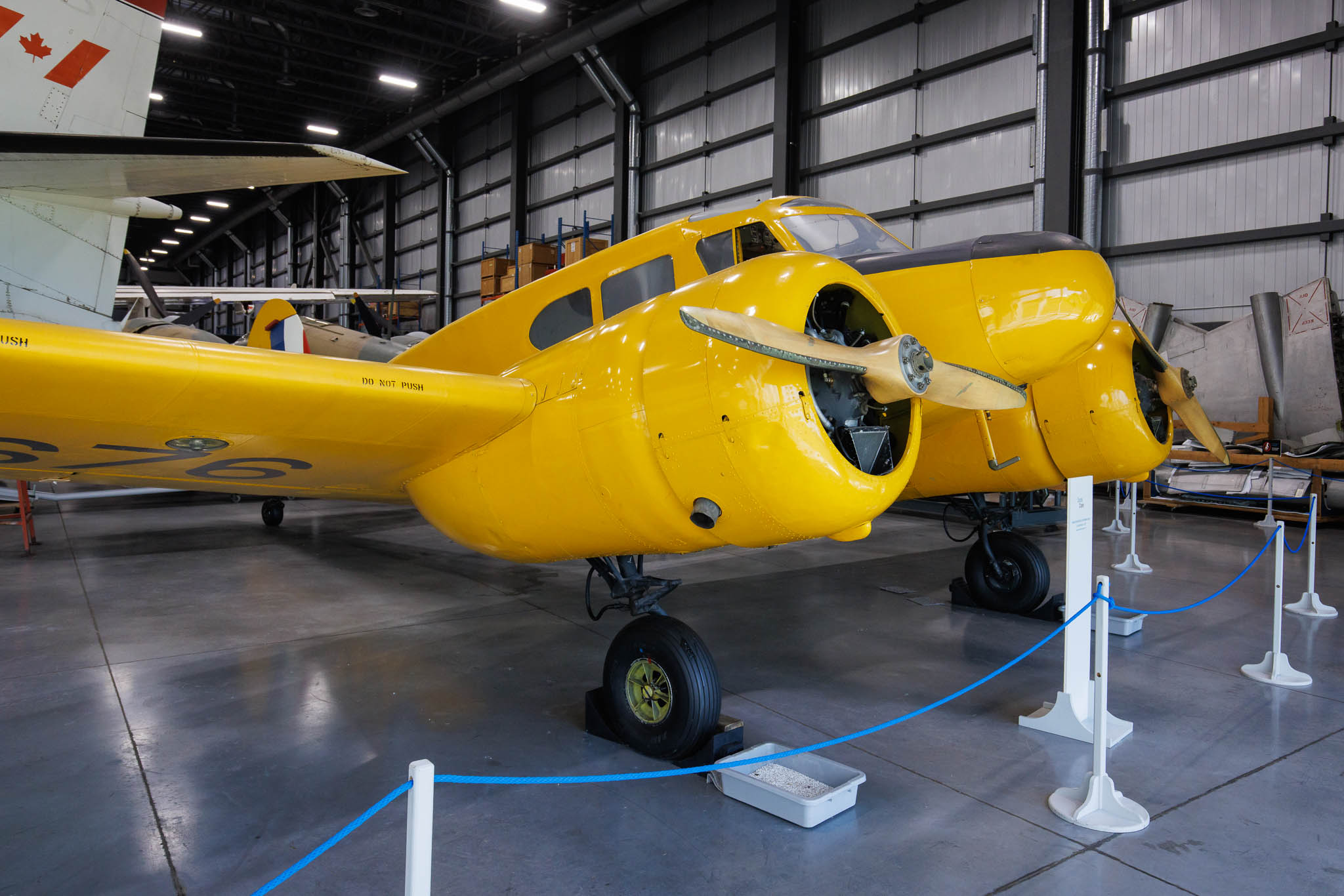 |
Left to right: Cessna T-50 Crane I (8676). Manufactured by Cessna at Wichita, Kansas, in 1941, this Crane was delivered to the Royal Canadian Air Force in January 1942. It served with No.15 Service Flying Training School (SFTS) at Claresholm, Alberta, and later No.12 SFTS at Brandon, Manitoba, before being loaned to Prairie Airways Limited in June 1943. The aircraft was subsequently placed in storage and selected for display at Portage la Prairie, Manitoba, in 1946. After further storage at Macdonald, Manitoba, it was displayed at an Air Force Day event in Ottawa in April 1962. The Crane was transferred to the RCAF's historic aircraft collection at Rockcliffe Airport in 1964 and passed to the museum in January 1965.
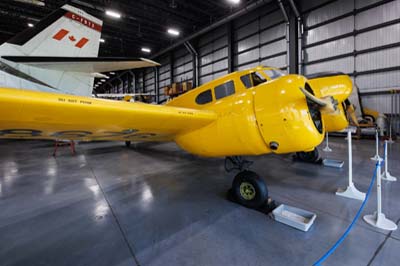
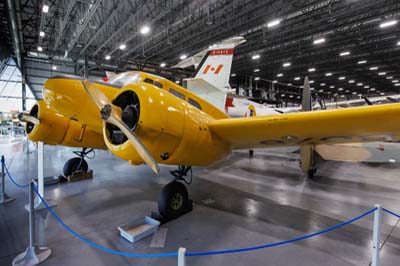
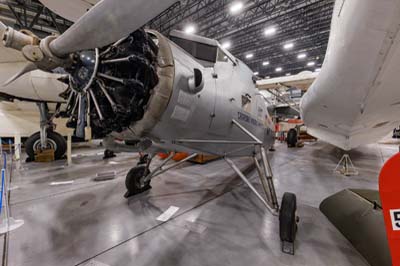
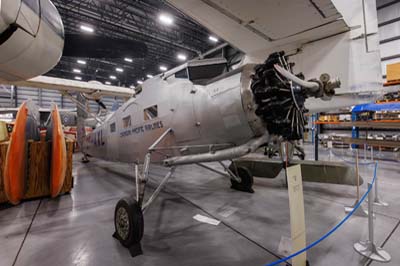
Lockheed 12A Electra Junior (CF-CCT). This Lockheed 12A was the only Model 12 registered in Canada before the Second World War. Purchased by the Department of Transport in May 1936, it was used to survey the proposed trans-Canada airway and establish and calibrate radio facilities, remaining in government service throughout its career. Retired in 1963 after more than 25 years of service, it was acquired by the museum when it was donated by the Department of Transport. |
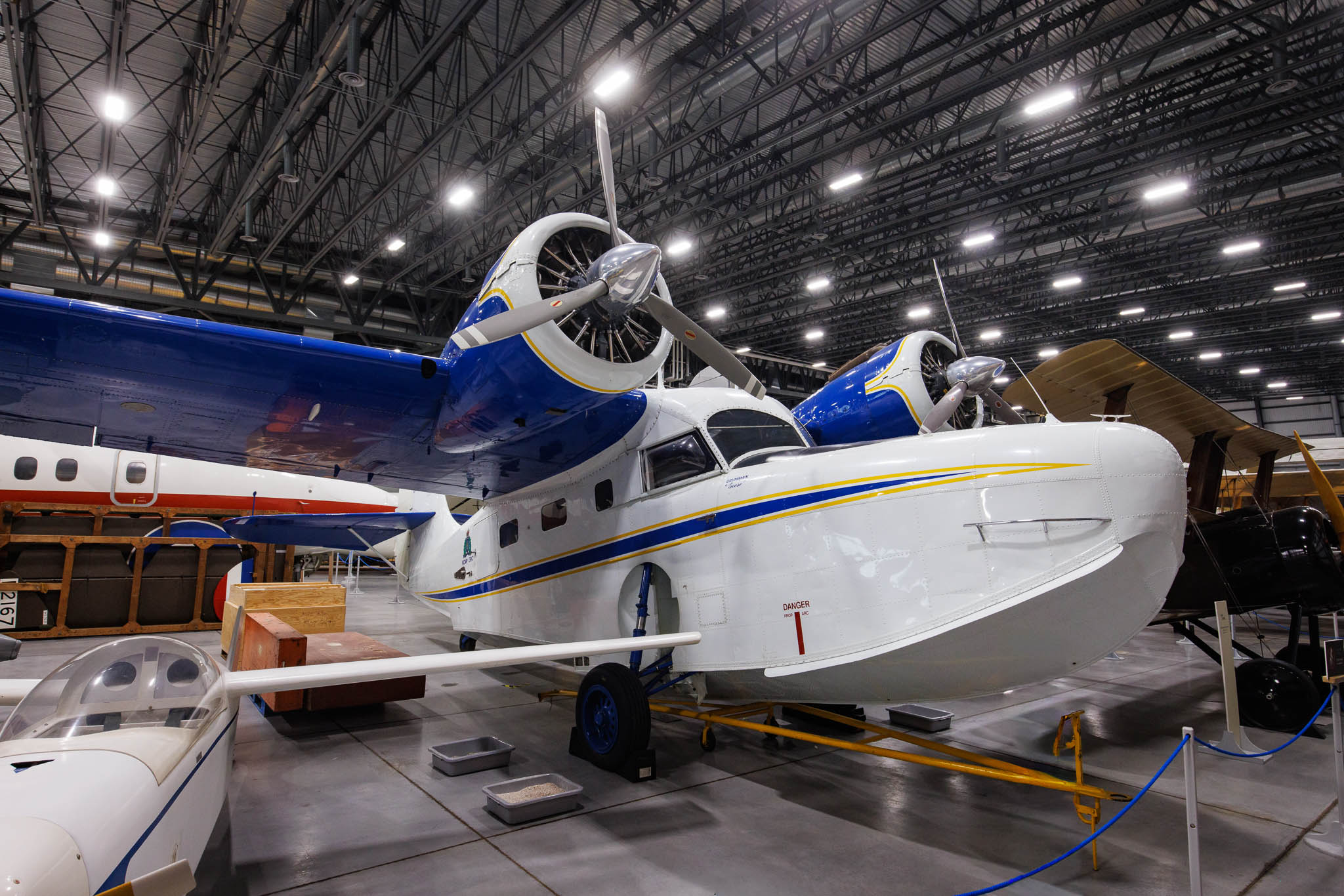 |
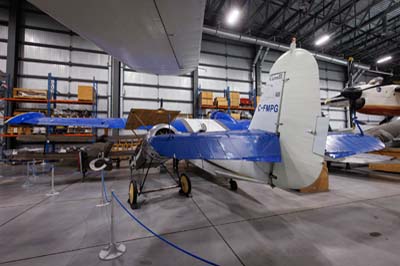
Left to right: Grumman JRF-5 Goose (37824, 391 registered CF-MPG) ex US Navy, Royal Canadian Air Force (RCAF). Delivered to the Royal Canadian Air Force under Lend-Lease on August 24, 1944, it served as a light military transport during World War Two. In February 1946, it was acquired by the Royal Canadian Mounted Police Air Service and registered CF-MPG. Over nearly five decades, it flew more than 24,000 hours across Canada, serving northern and coastal communities with search and rescue, medical evacuation and transport duties. Retired in January 1994, it was donated by the RCMP and British Columbia government to the museum.
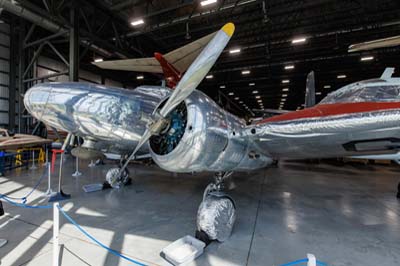
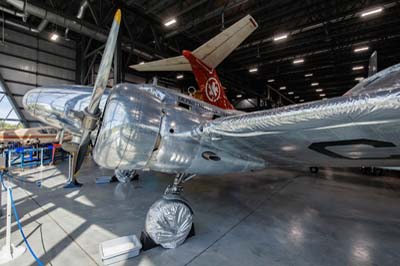
Fairchild 82A (CF-AXL). The Fairchild 82 was a single-engine civil utility bush aircraft seating two crew and up to nine passengers. Powered by a 600 hp Pratt & Whitney R-1340-AN-1 Wasp radial engine, it was designed for the demanding conditions of Canadian bush operations.
Built by Fairchild Aircraft Limited in 1936, this aircraft operated with Starratt Airways, Ontario Central Airlines and Canadian Pacific Air Lines before being donated to the museum in May 1967.
It is one of only two surviving Fairchild 82s in the world. The other is a Fairchild 82D preserved at the Museo Nacional de Aeronáutica in Argentina.
Auster AOP.6 (VP628, 16651 registered CF-LWK marked 'VF582' c/n 2558). Built by Auster Aircraft Limited in Britain in 1948, this Auster AOP.6 was assembled at No.6 Repair Depot and taken on strength by the RCAF. It served with the Canadian Army from 1949 as 16651 before returning to the RCAF in 1955. Sold for civilian use in 1957, it passed through several Canadian owners. The Canadian War Museum acquired the aircraft in March 1965, after which No.6 Repair Depot refurbished it in the markings of a British Army Auster VF582, flown during the Korean War by Canadian artillery officer Captain Peter Tees. Tees used the aircraft to direct artillery fire from the air and was awarded the Commonwealth Distinguished Flying Cross. Transferred to the museum in 1967. |
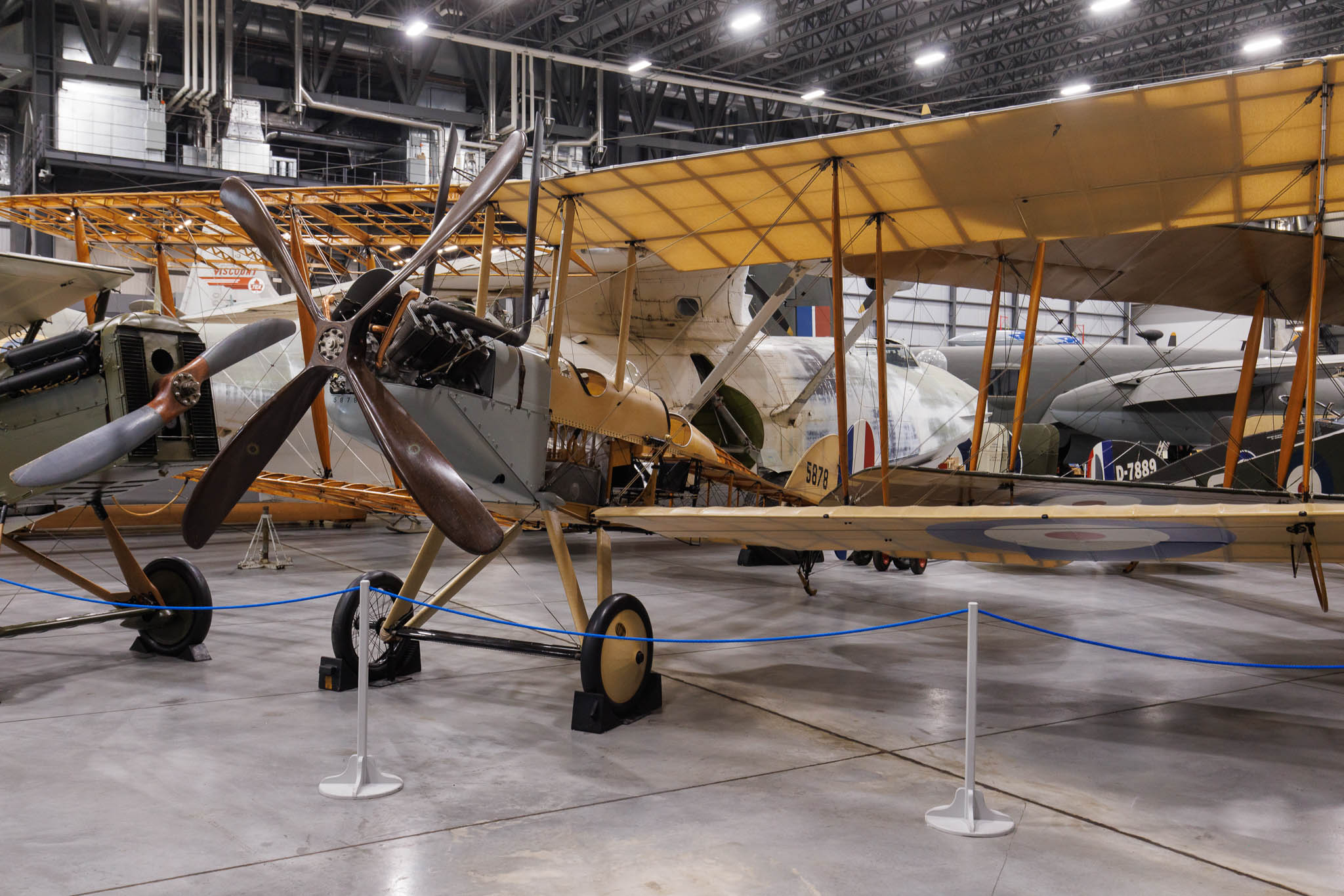 |
RAF BE.2C (5878). Built in 1915 by the British and Colonial Aeroplane Company, this Royal Aircraft Factory B.E.2 served with No.7 Squadron RFC from 1916 to 1917. Misidentified as a B.E.2c fighter flown by a Canadian who had destroyed a German airship, it was sent to Canada as a war trophy in 1919. After being displayed at the National Research Council's Aeronautical Museum from 1936 to 1940, the aircraft remained in storage until its restoration by the RCAF in 1957-1958. It was subsequently displayed at the Canadian War Museum before joining the Canada Aviation and Space Museum collection in 1964.
During later restoration, the museum's conservation team established its true Royal Flying Corps identity as B.E.2 5878. |
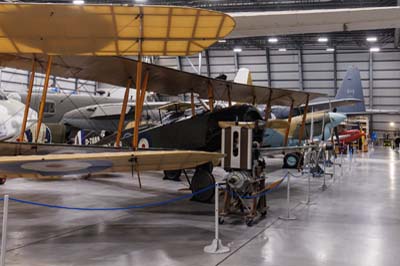
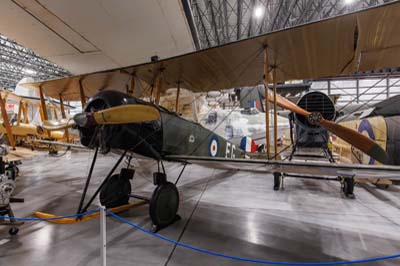
Left to right: Bristol F.2b (D-7889 registered G-AANM). Built by the Bristol Aeroplane Company in 1918, this F.2B Fighter has a poorly documented service history, partly because many Royal Flying Corps and Royal Air Force records were destroyed during bombing raids on London in the early 1940s. It may have been powered by a Sunbeam Arab engine rather than the preferred Rolls-Royce Falcon. Delivered to a supply depot at Marquise, France, it was never issued to a squadron and may have been flown to Britain after the Armistice.
The aircraft was later stripped of its engine and equipment, with the fuselage sold to Mr Boddington and used as part of a barn roof. It was eventually recovered and restored in Britain by the Historic Aircraft Collection from the 1980s until early 2006. Following restoration, the aircraft flew in British air displays in 2006, powered by the world's oldest airworthy Rolls-Royce aero engine. Acquired by the museum that year, it is one of only three original Bristol F.2B Fighters known to survive.
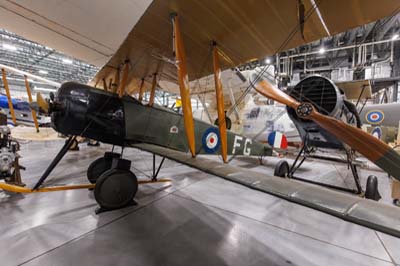
Avro 504K (H2453 'FG' registered G-CYFG). The Avro 504 was used during the First World War for reconnaissance and anti-Zeppelin patrols before being developed into a widely used trainer. In 1920, the Avro 504K was selected as the standard trainer for the Canadian Air Force and remained in service until 1928.
Built by AV Roe and Company in Britain in 1918, this aircraft passed through several American owners, including James Palen, who used it in flying exhibitions. The RCAF purchased it from Palen in 1961 and subsequently restored it. After taking part in RCAF air demonstrations in 1967, it was retired to the RCAF's historic aircraft collection and transferred to the museum in 1968. |
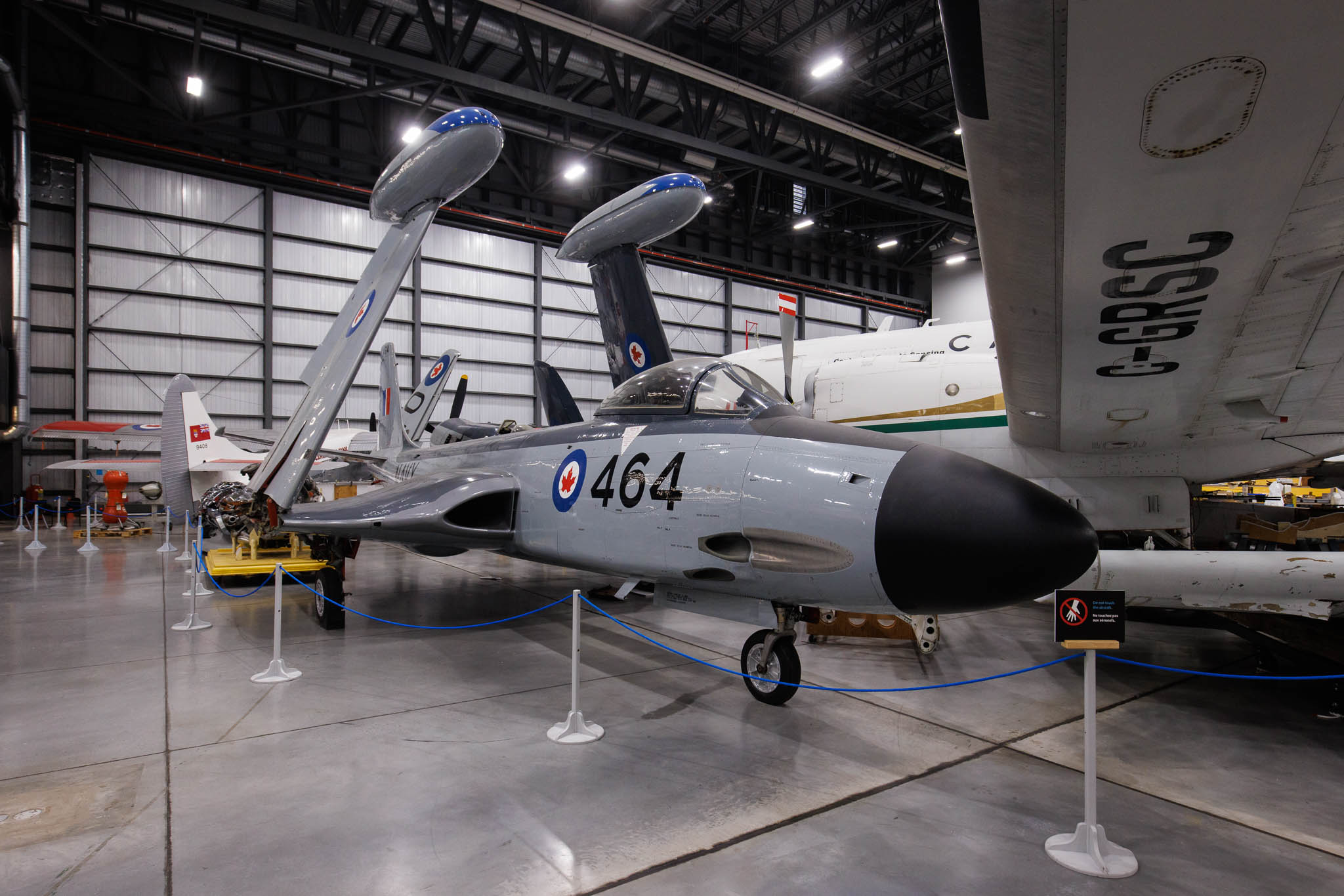 |
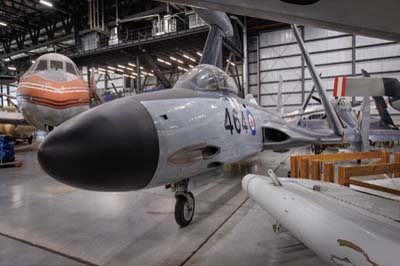
Left to right: McDonnell F2H-3 Banshee (126464 '464'). The Banshee was the only jet fighter operated by the Royal Canadian Navy from an aircraft carrier. Canada requested 60 new aircraft but instead received 39 second-hand US Navy examples, which Canadian maintainers rebuilt and returned to service. Canadian Banshees achieved the country's best fighter interception record and, in 1959, became the first Canadian aircraft to fire air-to-air missiles operationally, destroying five drones over the Irish Sea. Twelve aircraft were lost in service, with eight Canadian aircrew killed. The final Banshee squadron disbanded in September 1962, marking the end of Canada's carrier-based fighter era.
Built by the McDonnell Aircraft Corporation in St. Louis, Missouri, in 1953, this aircraft served with the US Navy at various naval stations and aircraft carriers before being acquired by the Royal Canadian Navy (RCN) in 1957 as part of a 39 aircraft fleet. Operating from bases including HMCS Shearwater and aboard HMCS Bonaventure, it also flew with the RCN's Grey Ghosts aerobatic team. Withdrawn from service and struck off strength on September 12, 1962.
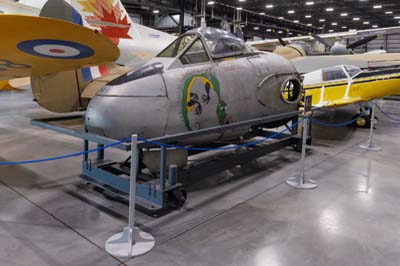
de Havilland Vampire F.1 (TG372) ex Royal Canadian Air Force (RCAF). The Museum's Vampire I was manufactured in the United Kingdom by the English Electric Company Limited in 1945, and was brought to Canada for cold weather trials. It served with the RCAF before being relocated to the Ontario Science Centre in Toronto. It is the RCAF's only Vampire I, the second-oldest Vampire in the world, and probably the example that is most complete and closest to its original configuration. The aircraft was transferred to the Museum in 1968. The Museum also holds a Vampire Mk.3.
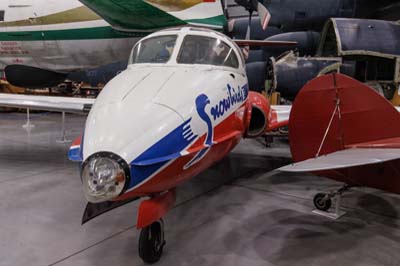
Canadair CT-114 Tutor (114108 '10') ex Royal Canadian Air Force (RCAF), Snowbirds markings. |
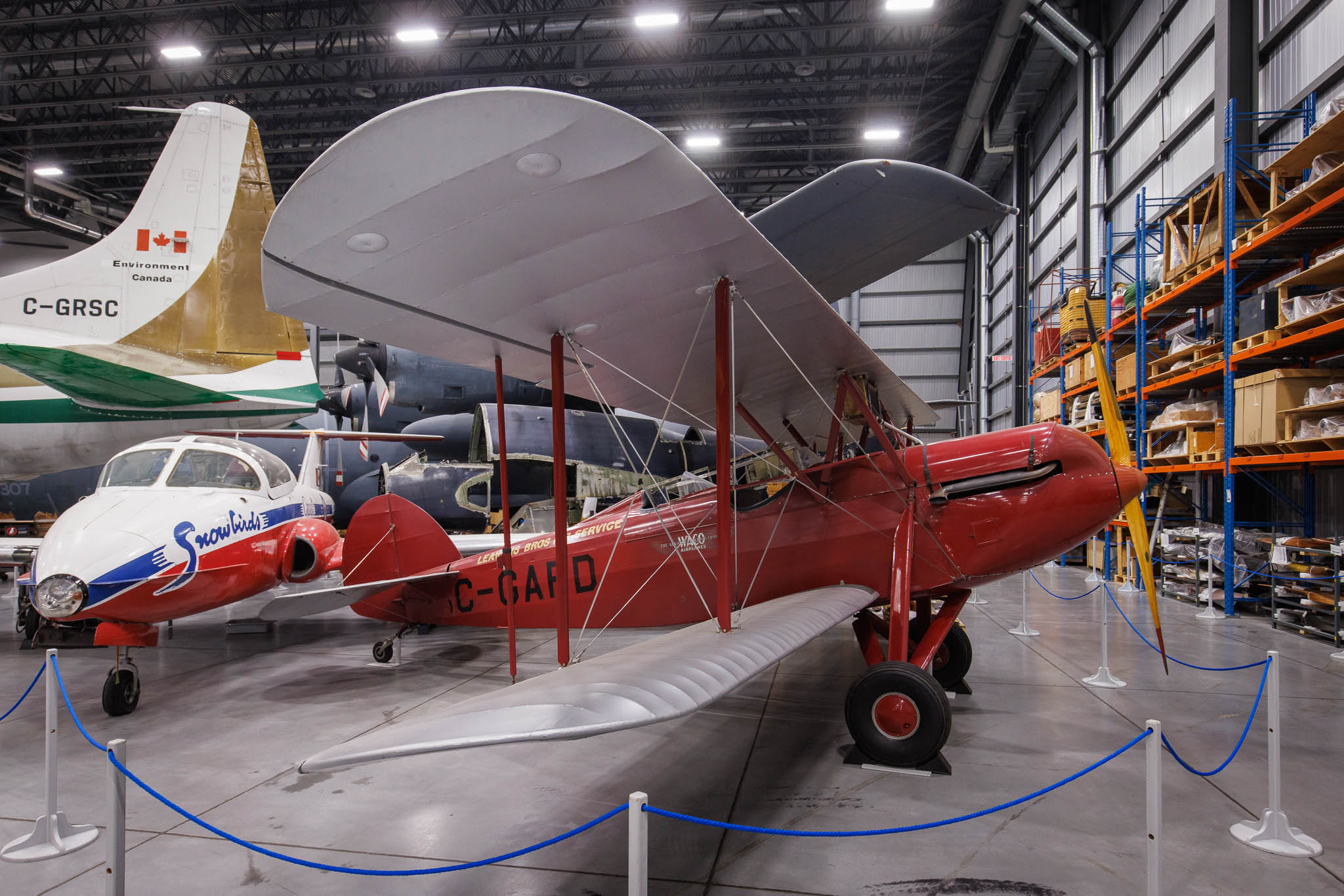 |
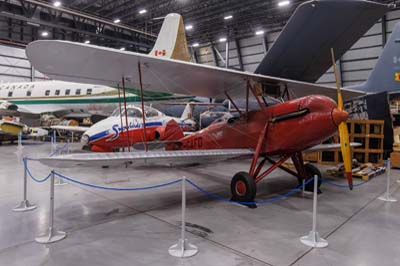
Left to right: Waco 10 (GXE) (C-GAFD). First flown in 1927, this single-engine, three-seat general-purpose biplane was produced by the Advance Aircraft Company and later the Waco Aircraft Company in the United States from 1927 to 1933. Redesignated the Waco GXE and sometimes known as the Waco 90, it introduced hydraulic shock-absorbing landing gear to the personal aircraft market. A 200 hp Wright Whirlwind-powered derivative won the 1928 Ford Reliability Tour, covering 6,300 miles (10,150 km). Similar in design to the Travel Air 2000, the type was produced until 1933.
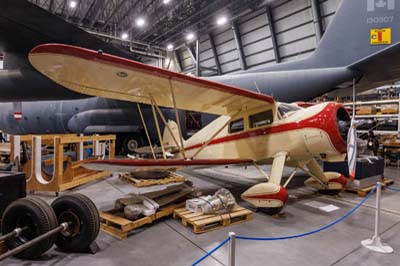
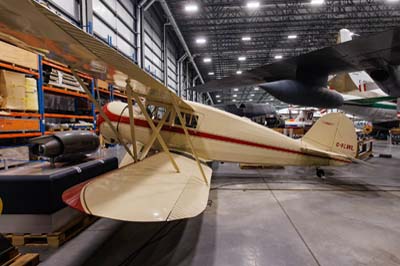
Waco VKS-7F (C-FLWL). Built by the Waco Aircraft Company in the United States in 1942, this VKS-7F was one of only 21 examples of the variant produced between 1936 and 1942. Fitted with wing flaps, it was developed for the US Civilian Pilot Training Program as an instrument flying and cross-country navigation trainer. The type also helped introduce enclosed-cabin biplanes to the corporate and bush-flying markets. Imported to Canada in 1959, this aircraft was donated to the museum in 2008.
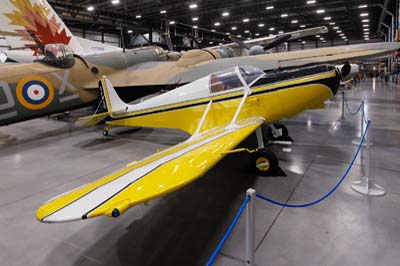
Stits SA-3A Playboy (C-FRAD). Designed by Ray Stits in 1952, this aircraft was built over 11 months in 1955 by Keith Hopkinson in Goderich, Ontario. It became Canada's first amateur-built aircraft licensed under the Ultralight classification after Hopkinson successfully persuaded the Department of Transport to relax its certification rules for homebuilt aircraft. |
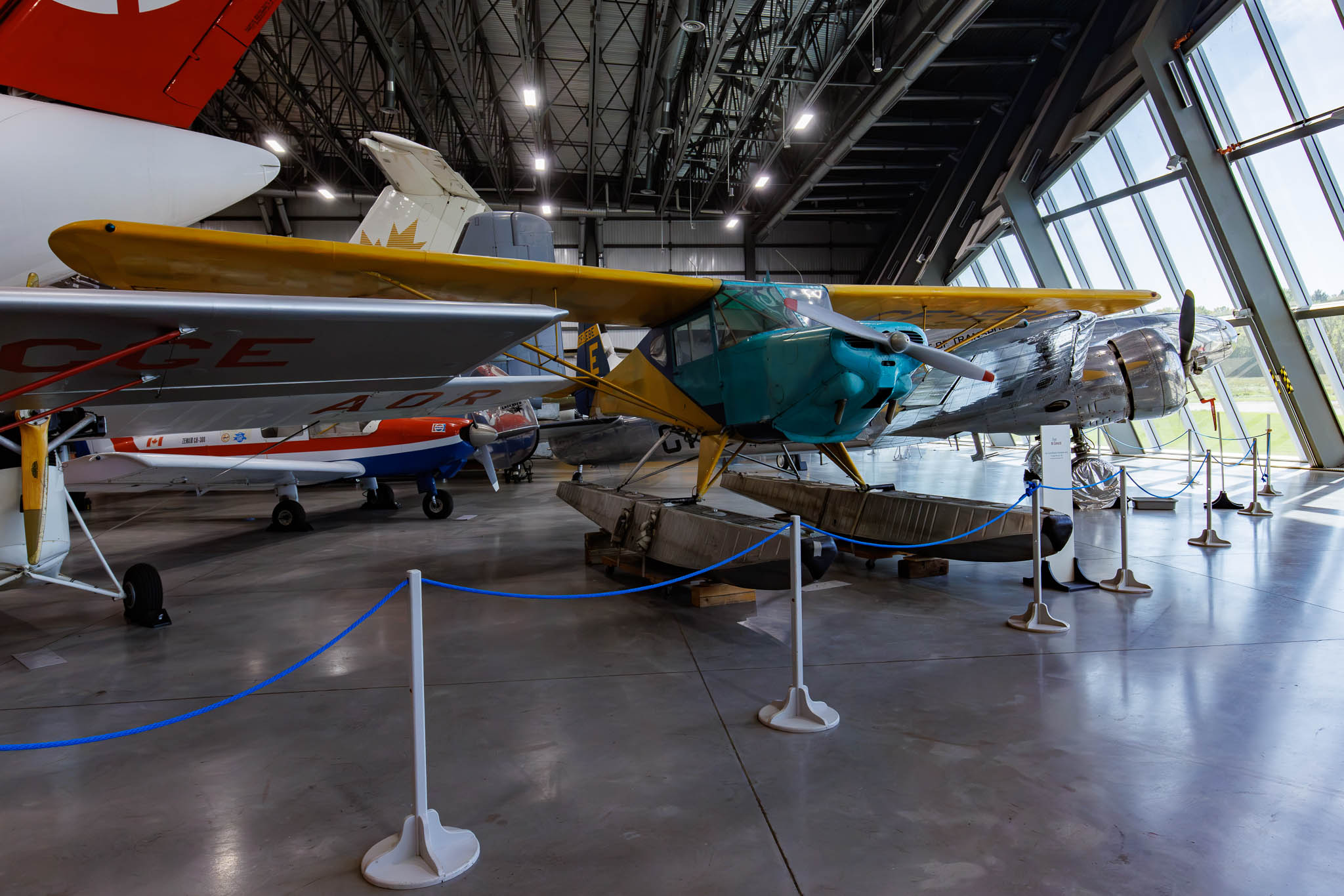 |
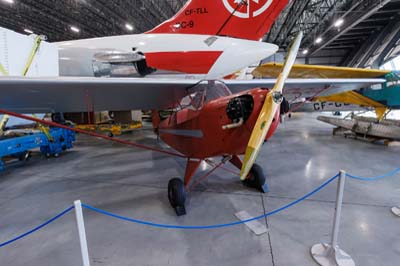
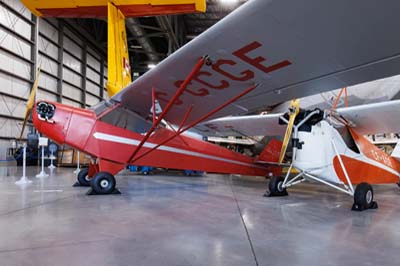
Fleet Model 80 Canuck (CF-EBE). The Canuck was a light two-seat training and utility aircraft designed in Canada and produced from 1945 to 1949. Based on the Noury N-75 prototype, designed by J. Omer Noury at Stoney Creek, Ontario, in 1944, the design was acquired by Fleet Aircraft Limited in 1945. Fleet produced 198 aircraft, followed by a further 25 built by Leavens Brothers of Toronto. The type trained thousands of Canadian pilots and many remained in civil use.
This aircraft, the 149th built, was manufactured by Fleet at Fort Erie, Ontario, in 1946 and delivered to Toronto aircraft dealer Roger Watson in September 1947. He sold it to Central Airways at Toronto's Island Airport, which operated one of Canada's largest flight training programmes.
After 24 years with Central Airways, the aircraft was sold to private owners. The museum acquired it in 1974, complete with Fleet-designed skis and floats. |
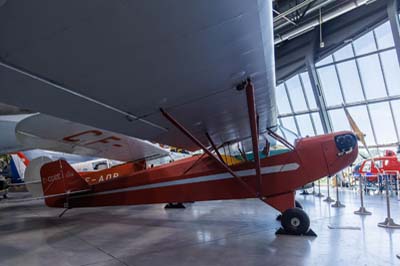
Left to right: Aeronca C-2 (CF-AOR). First flown on October 20, 1929, the Aeronca C-2 was an ultra-light monoplane designed by Jean A. Roché and built in the United States by the Aeronautical Corporation of America (Aeronca). Designed as a simple and inexpensive aircraft for amateur pilots, its low price helped spark a boom in American light aviation during the Depression. Its unusual shape earned it the nickname "Flying Bathtub".
The C-2 featured a steel tube fuselage and wooden wings covered in doped cotton fabric. The first C-2 in Canada was displayed at a Montreal air meet in 1930. Founded in 1928 in Cincinnati, Ohio, Aeronca began C-2 production in 1929 and later developed the C-3 and Scout. Following a devastating flood in 1937, production moved to Middletown, Ohio, and the company was renamed Aeronca Aircraft Corporation in 1941.
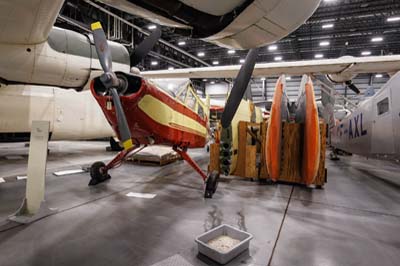
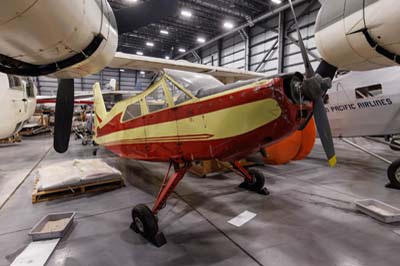
Found FBA-2C (C-GCCF) manufactured by Found Brothers Aviation Limited at Malton Airport, Toronto, Ontario in June 1963.
This was the fourth FBA-2C built. It was used for the type's final certification tests and received Department of Transport type approval in January 1964. Found Brothers then operated it as a demonstration aircraft until the company closed in 1969 due to a lack of financial backing. Later that year, the aircraft was acquired by Centennial College of Scarborough, Ontario, where it served for eight years as a ground instruction airframe for the Aircraft Maintenance Technician programme. The college donated the FBA-2C to the museum in April 1979. |
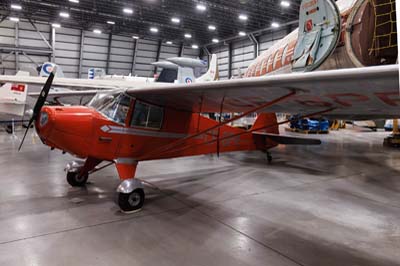
Left to right: Taylorcraft BC-65 (CF-BPR). Built in 1939 and imported to Canada that same year by Leavens Brothers Air Services, one of the country's best-known general aviation companies, this aircraft may have been used by the company's flying school at Barker Airport, Toronto. Founded in 1927 by three barnstorming brothers from Belleville, Ontario, Leavens Brothers carried more than 60,000 passengers on sightseeing flights across Canada during its first ten years, before expanding into flying instruction, aircraft sales and repairs.
Sold to a private owner in 1947, the aircraft subsequently passed through the hands of twelve owners before being acquired by Harry Drover of Collingwood, Ontario, in the 1990s. Drover restored and flew it until 1999, when he donated it to the Museum.
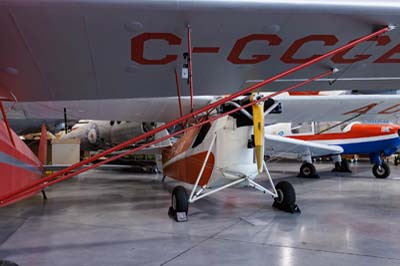
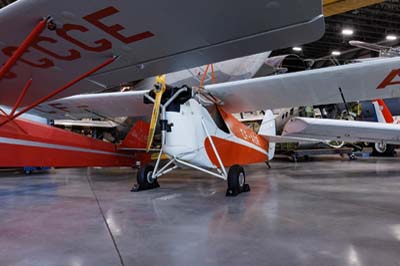
Taylor E-2 Cub (C-GCGE). Built by the Taylor Aircraft Co. in August 1935, this E-2 was registered to its first owner, Gordon Curtis of New York City, on September 6. After passing through four owners, it was acquired in 1940 by the Choate School in Wallingford, Connecticut, where it was used for ground instruction. Garth Elliot of Toronto bought the aircraft in 1975 and undertook a meticulous restoration with assistance from Max Say, Frank Shaineline and D.J. (Dick) Berg of the Department of Transport. During the restoration, the original wings were destroyed by fire and replaced with a new set obtained from Ohio. The aircraft made its first flight in Canada on July 30, 1980. |
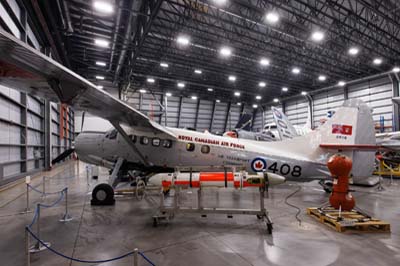
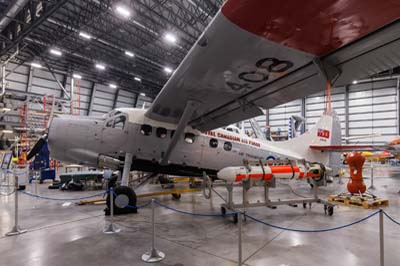
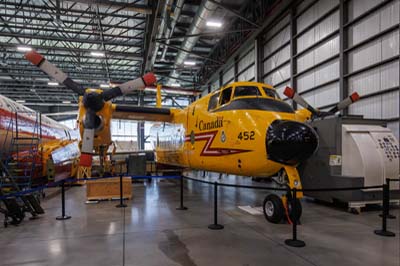
Left to right: de Havilland Canada CC-123 Otter (9408 '408') ex Royal Canadian Air Force (RCAF).
Vickers 757 Viscount (CF-THI '627') ex Trans-Canada Air Lines (TCA). |
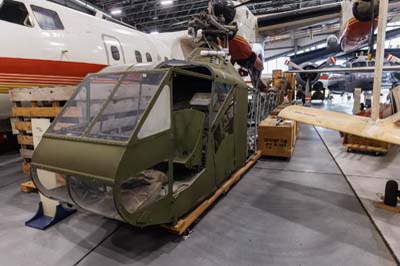
Left to right: Sikorsky R-4B Hoverfly (43-46565) ex USAAF. Built by the Sikorsky Aircraft Division in the United States in 1944, this R-4 was the world's first mass-produced helicopter and the first helicopter to enter U.S. and British military service. Developed from the VS-300, it marked a major milestone in helicopter development. The aircraft was acquired by the museum in 1983.
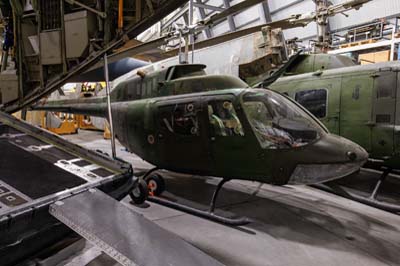
Bell CH-136 Kiowa (136224) ex Canadian Armed Forces.
de Havilland Canada CC-115 Buffalo (115452) ex Canadian Armed Forces. |
 |
 |
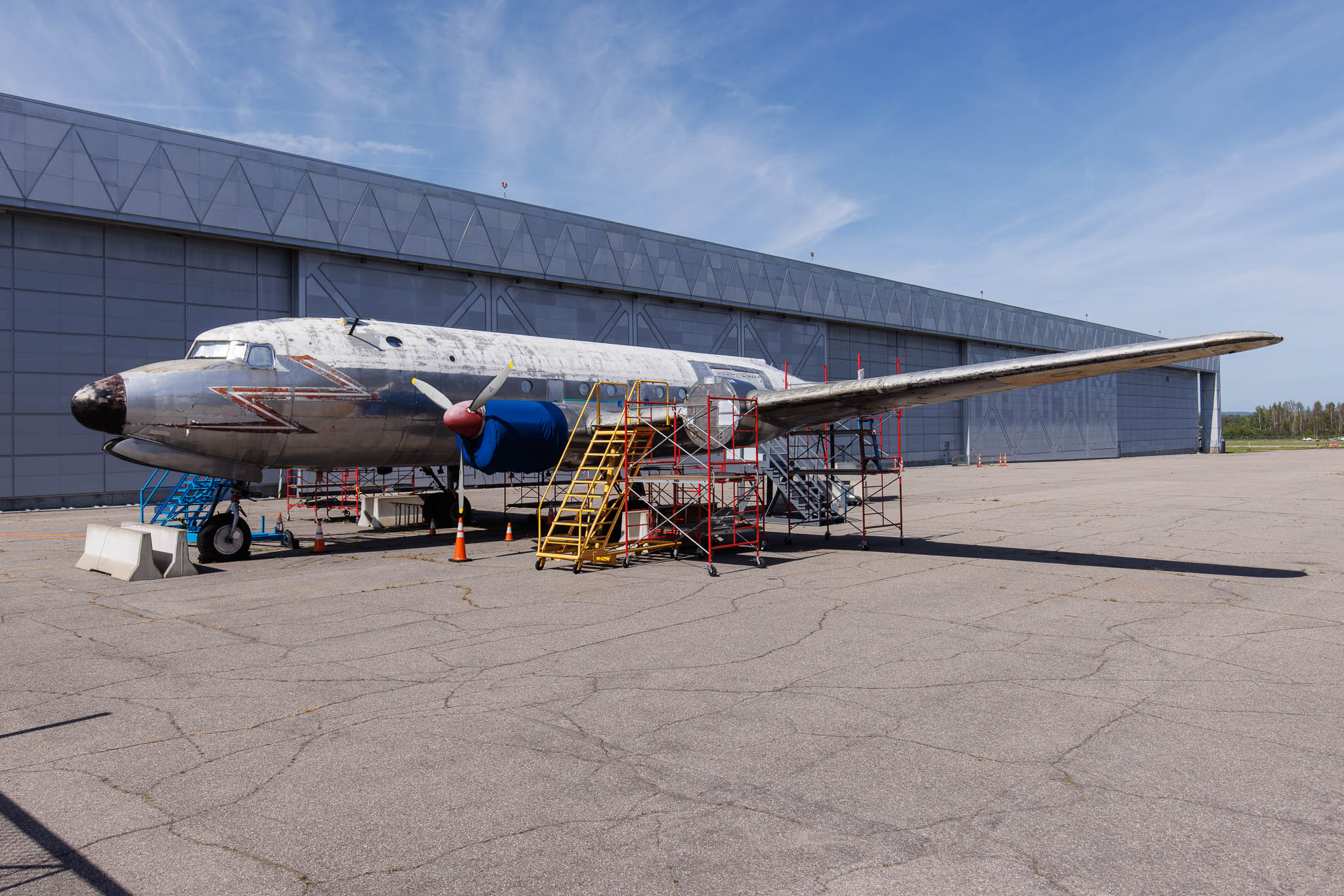 |
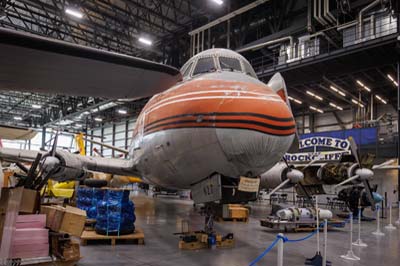
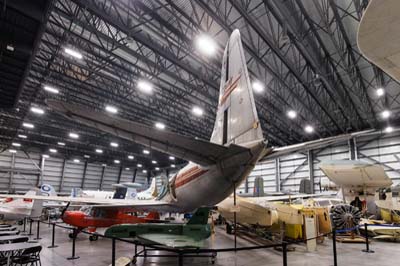
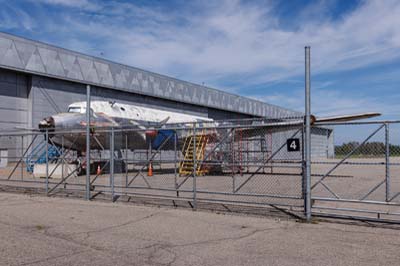
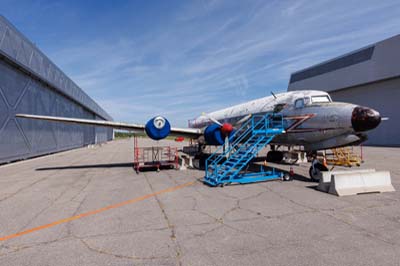
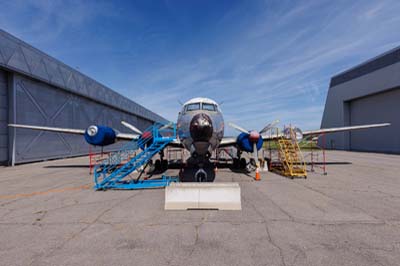
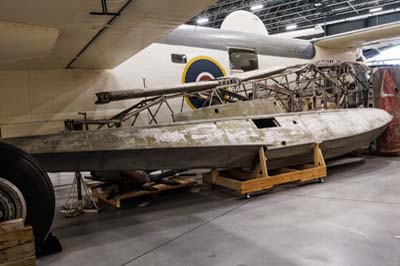
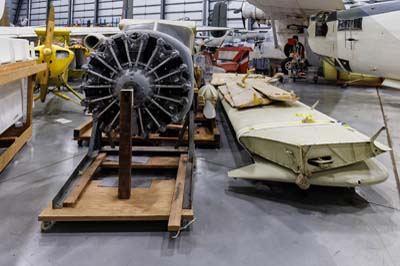
Left to right: Canadair North Star (17515 '15'). First flown on July 15, 1946, the Canadair North Star was a Canadian-built transport aircraft produced by Canadair Limited from 1946 to 1950. Based on the Douglas C-54/DC-4, it was fitted with British Rolls-Royce Merlin engines and served with the RCAF and airlines including Trans-Canada Air Lines on domestic and transatlantic routes. The civilian version was pressurised for high-altitude operations, while the RCAF used the type during the Korean War to transport supplies across the Pacific.
This aircraft was built in Montreal, Quebec, in 1948 and delivered to the RCAF in March that year, serving throughout its career with 426 Squadron. From 1950, it operated on Operation Hawk, flying supplies from the United States to Japan via the Aleutian Islands. It also undertook flood relief in Manitoba, northern resupply and UN peacekeeping missions before becoming a transport trainer in 1962. One of two North Stars used at the type's official stand down ceremony in December 1965, it was retired and transferred to the museum in 1966. It is now the only surviving North Star.. |
 |