
|
|
|
|
| Smithsonian's National Postal Museum Steven F Udvar-Hazy Center |
| Smithsonian's National Air & Space Museum Washington DC October 2025 |
| The National Air and Space Museum (NASM) of the Smithsonian Institution, located in Washington DC, is dedicated to the history of human flight and space exploration. Founded in 1946 as the National Air Museum, its main building opened on the National Mall near L'Enfant Plaza in 1976. In 2023, the museum attracted 3.1 million visitors, making it the fourth most visited museum in the United States and the eleventh most visited in the world. It's free but you need to register a time you intend to arrive, so visit the NASM website beforehand. The museum is currently undergoing a $360 million renovation that began in 2018. As of today, 13 of its galleries are open to the public, with the remaining ten scheduled to reopen by 2026. I did ask and write, but was told that tripods were prohibited in Smithsonian's museums. |
 |
 |
 |
 |
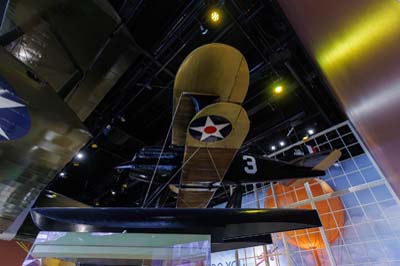 |
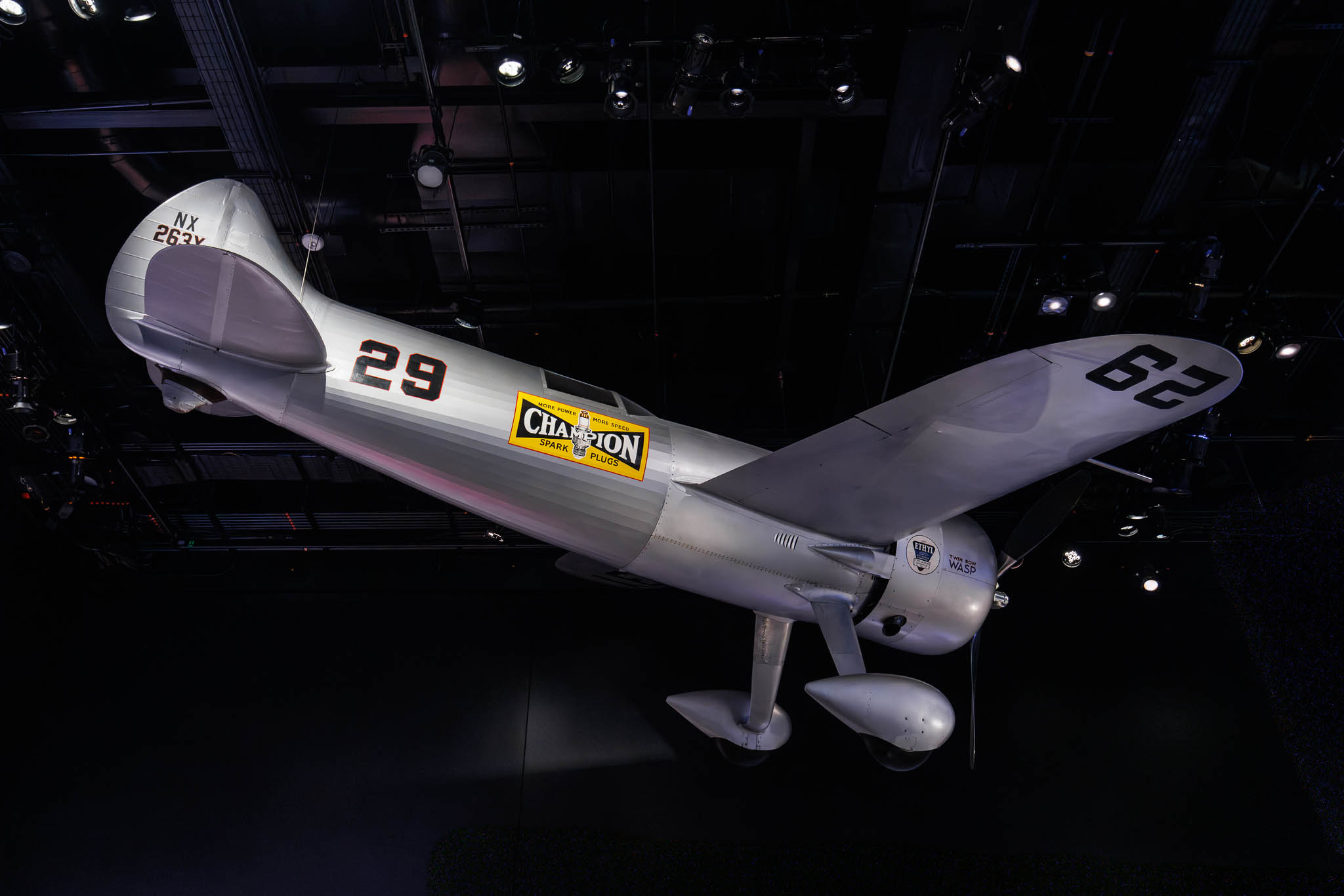
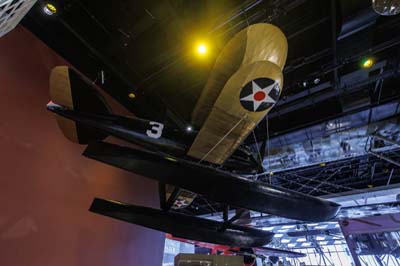
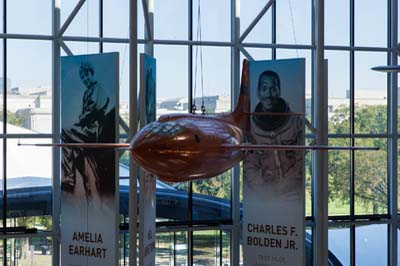
| Left to right: Laird-Turner LTR-14 Meteor (NX263Y) was the only LTR-14 Meteor ever built. It was designed by the famed racing pilot Roscoe Turner and constructed by Matty Laird. The aircraft was powered by a 14-cylinder Pratt & Whitney Twin Wasp engine and was capable of reaching speeds of up to 350 mph. The aircraft, ultimately named Miss Champion after its final sponsor, the Champion Spark Plug Company, proved to be an exceptionally successful racer. Flying it, Roscoe Turner became the only pilot to win the prestigious Thompson Trophy twice, later earning a third victory in a different aircraft. After accumulating just 30 hours of total flight time, the Meteor was retired and placed on display in Turner's personal museum in Indianapolis. It remained there until 1972, when it was donated to the Smithsonian Institution. Curtiss R3C-2 (A-7054 '3'). On October 26, 1925, US Army Lieutenant James H. Doolittle piloted the Curtiss R3C-2 to victory in the Schneider Trophy Race, achieving an average speed of 232.17 mph. The following day, Doolittle flew the same aircraft over a straight course and set a world speed record of 245.7 mph. In the Schneider Trophy Race held on November 13, 1926, the same airplane, now fitted with an improved engine, was flown by US Marine Corps Lieutenant Christian F. Schilt and finished in second place, averaging 231.4 mph. When flown in the 1925 Schneider Race, the aircraft carried the number 3, and in the 1926 Schneider Trophy Race it was numbered 6. |
 |
 |
 |
 |
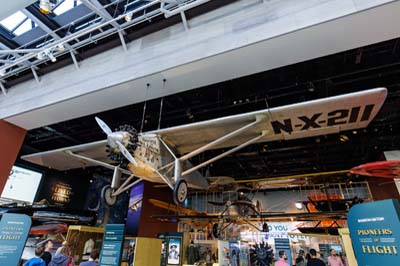 |
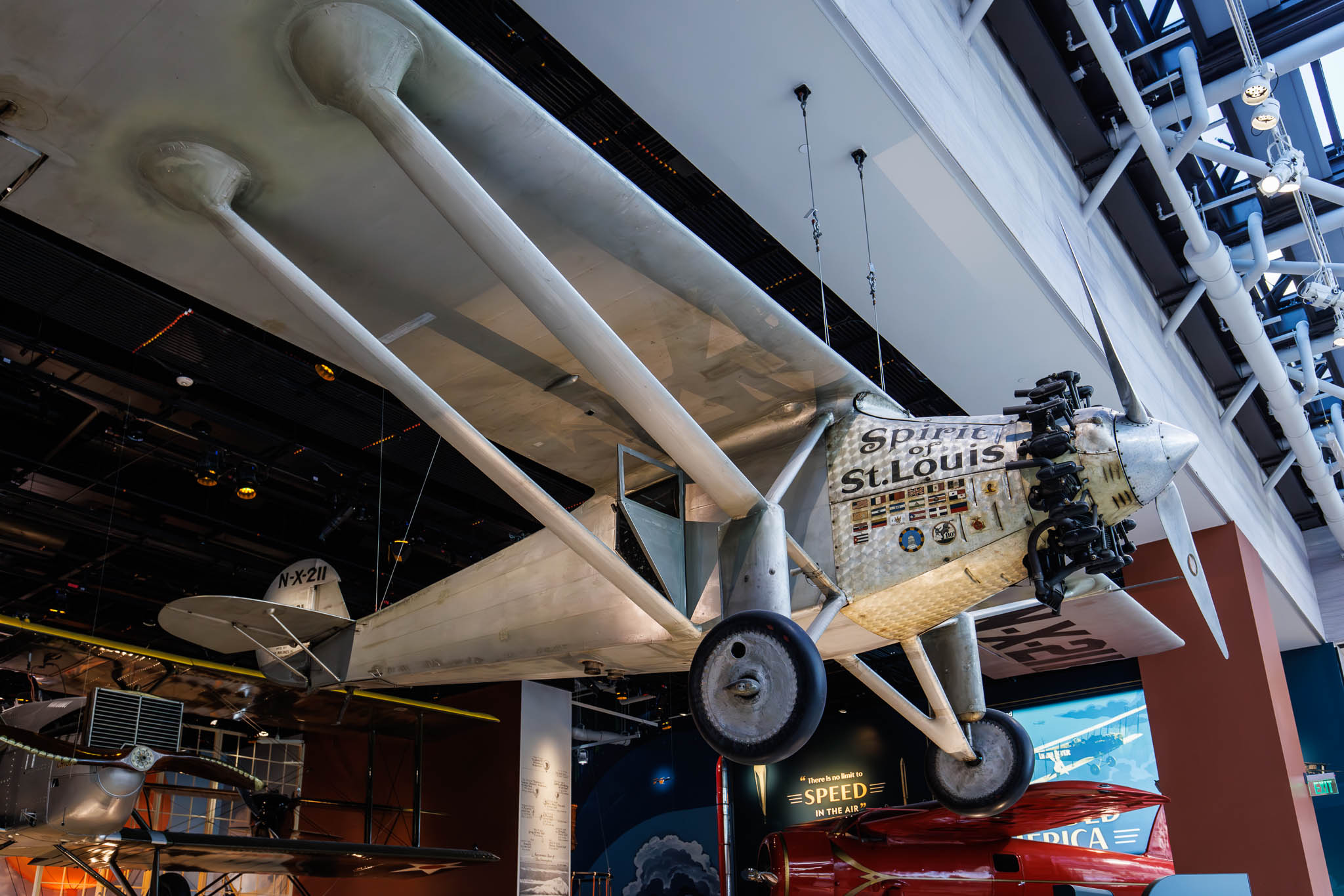
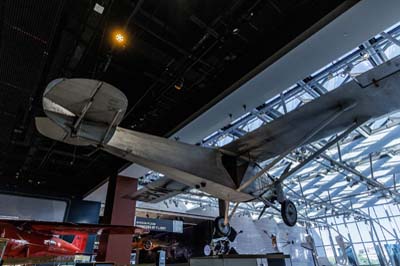
| Left to right: Ryan NYP (NX-211) flown by Charles Lindbergh on the first solo, non-stop transatlantic flight from Long Island, New York to Paris in 1927. Lindbergh took off in the Spirit from Roosevelt Airfield in Garden City, New York, and landed 33 hours, 30 minutes later at Aéroport Le Bourget in Paris, a distance of approximately 3,600 miles. |
 |
 |
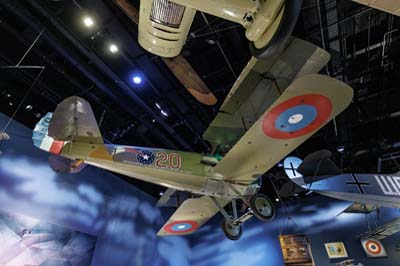 |
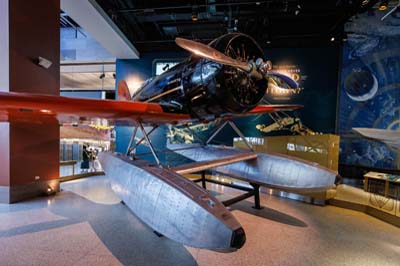
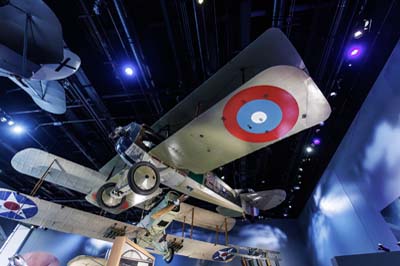
| Left to right: Lockheed Sirius (NR-211) named "Tingmissartoq". Charles A. Lindbergh and Anne Morrow Lindbergh flew this Lockheed Sirius low-wing monoplane, which was powered by a 680-hp Wright Cyclone engine. The Sirius was designed in 1929 by John K. Northrop and Gerard Vultee. This particular aircraft was specially equipped to operate either on pontoon floats for water landings or on wheels for conventional ground-based use. SPAD XIII (7689 '20') USAAS. The aircraft were originally built by 'Societie des Productions Armand Deperdussin' (SPAD) in France. Later the company was taken over by Louis Blériot in 1913, when it was renamed 'Societe Pour l'Aviation et ses Dérivés' (also SPAD). The SPAD V first flew in 1915 and was the prototype for the SPAD VII, which entered service one year later. The larger and improved SPAD XIII followed, first entering service in September 1917, with double the fire power of the SPAD VII. The SPAD quickly became a much sort after aircraft. Eight factories in France (including Blériot), two in England and one in Russia built this rugged fighter. With over 8,000 SPAD XIIIs produced, it made it the most produced World War One fighter. Arthur Raymond Brooks flew this SPAD XIII when he shot down his sixth and final enemy aircraft on October 9, 1918. He named his aircraft 'Smith IV' after his fiancée's college. A row of painted tombstones appears on the lower right side of the fuselage, each one representing a mission on which Brooks narrowly escaped death. Iron Cross symbols mark bullet holes in the fuselage, wings, and tail, starkly illustrating how frequently and closely death pursued him. Brooks survived the war and lived to see his aircraft displayed in the museum. Today, only four SPAD XIIIs survive. |
 |
 |
 |
 |
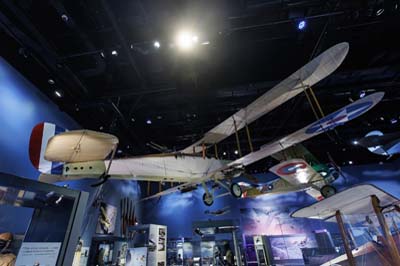 |
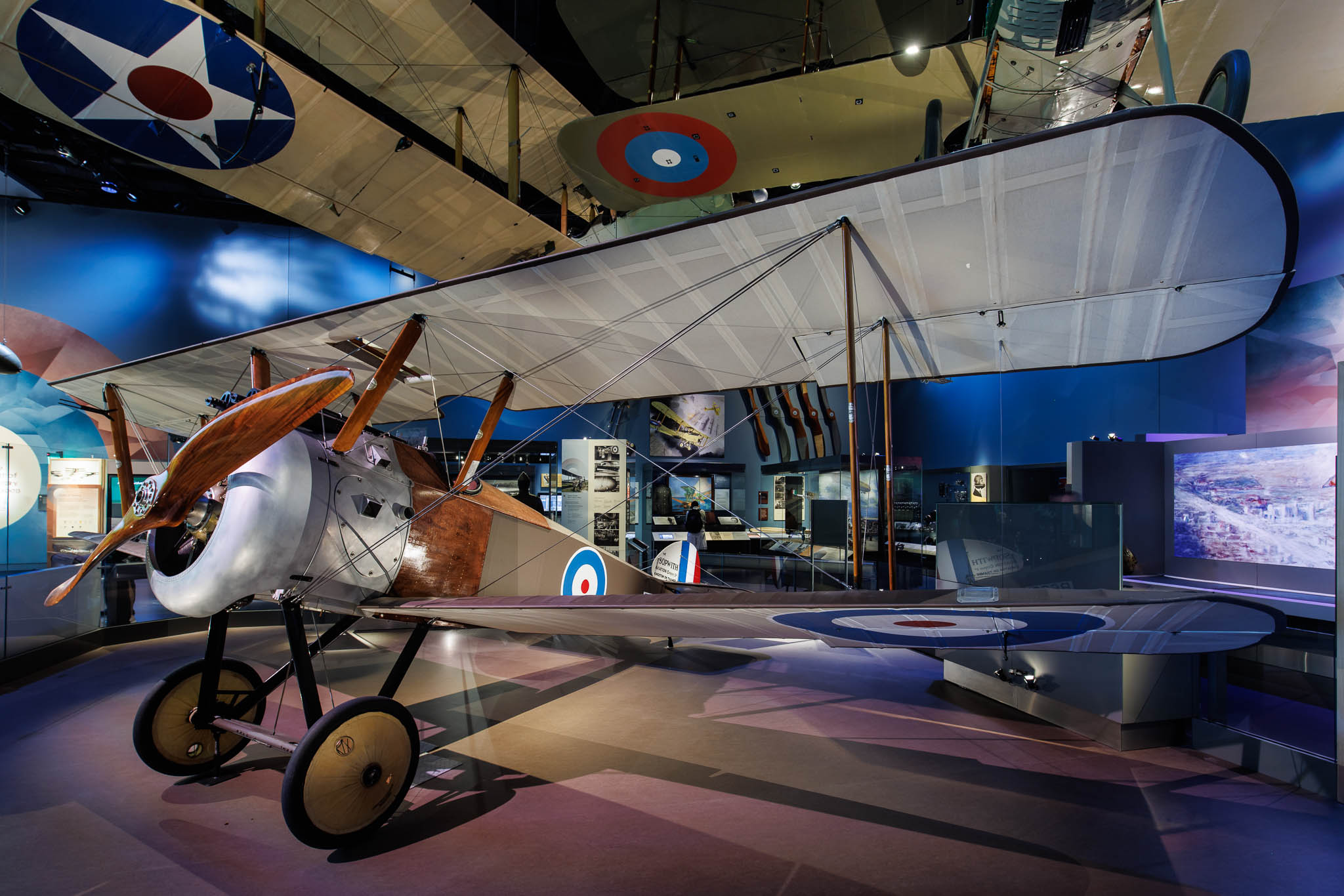
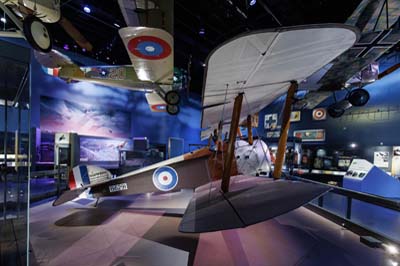
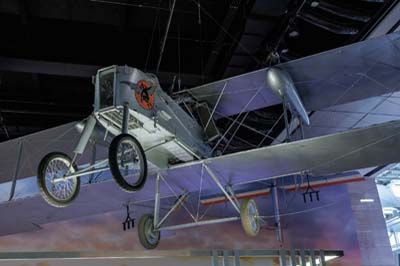
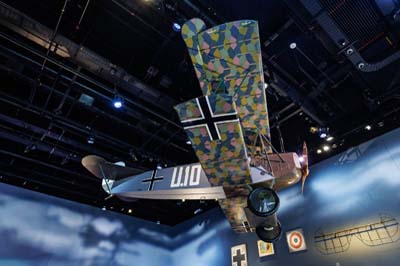
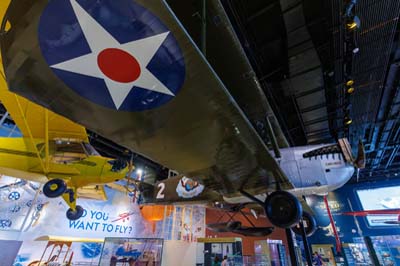
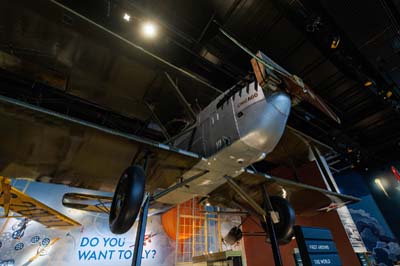
| Left to right: Sopwith Camel F1 (B6291 registered G-ASOP). Developed from the Sopwith Pup, it was the most successful aircraft of World War One. It's name was derived from a slight hump forward of the cockpit. 5,490 were produced from 1916 and they claimed more kills (1,294) of German aircraft than any other allied fighter. Eleven companies apart from Sopwith Aviation Company built the Camel, including Fairey Aviation. It was found to be a difficult aircraft to fly due to its rotary engine that generated torque, which unless full right rudder was used on take off, caused inexperienced pilots to ground loop. During World War One, 413 Sopwith Camel pilots died in action with 385 pilots being killed through accidents. This airframe was among the relatively few constructed directly by the original Sopwith company rather than by subcontractors. It served with No.10 Squadron of the Royal Naval Air Service (RNAS) during the First World War. The aircraft sustained damage in both 1917 and 1918 and was subsequently relegated to training duties before being sold as surplus after the war. In 1936, it became part of the Nash Collection. It was later acquired by Javier Arango, following his family donated it to the Smithsonian Institution's National Air and Space Museum. The aircraft underwent an extensive restoration beginning in the 1980s and ultimately returned to flight in the United Kingdom in 1992. Today, it is one of five Sopwith Camels that survive. Voisin VIII (4640) ex AdlA. The Voisin Type 8 entered service with French night bombing squadrons in November 1916. By early 1917, the Voisin VIII formed the core of the Aéronautique Militaire's night bombing force, gradually replacing the earlier Voisin V. The aircraft fully equipped two Groupes de Bombardment (GB 1 and GB 3) before engine reliability issues led to their replacement by French-built Sopwith 1½ Strutters and the more powerful Voisin X. The Voisin VIII was then reassigned to secondary units, which continued to operate it until the end of the war. This example is the oldest surviving aircraft that was specifically designed as a bomber. When manufactured in February 1916, it was equipped as a night bomber, with internal bomb racks, cockpit lights, and provision for landing lights. Fokker D.VII (4635/18 'U.10'). Designed by Reinhold Platz at Fokker, the D.VII was flown in a fighter competition by Baron Manfred von Richthofen, the "Red Baron." After suggesting several improvements, von Richthofen saw the aircraft declared the winner. Production was ordered not only from Fokker but also from Albatros and AEG. The first D.VII entered service in May 1918, unfortunately, just days after von Richthofen was killed. By the end of World War One, the D.VII was widely regarded as Germany's best fighter. After the war, 120 examples were sent to the Netherlands, and another 142 were shipped to the United States, where the US Air Force continued flying them into the mid-1920s. Lt. Heinz von Beaulieu-Marconnay, whose brother German ace Oliver had recently died, landed this Fokker D.VII by mistake due to engine trouble. Captured by American forces, he was processed as a prisoner. The captured Fokker, originally marked 'U.10' for Heinz's unit, was adorned with the US 95th Aero Squadron insignia, shipped to America. In the 1970s, it was restored to its 1918 appearance, including the original 'U.10' marking. Today, this example is one of seven D.VII survivors. Airco DH.4 (21959). The DH.4 was a British two-seat biplane day bomber of World War I, designed by Geoffrey de Havilland for Airco—hence the "DH" designation. It was the first British two-seat light day bomber capable of defending itself. The DH.4 made its maiden flight in August 1916 and entered operational service in France on 6 March 1917, less than a year later. Many DH.4s were produced in the United States for the American Expeditionary Forces, making it the only American-built aircraft to see combat in World War One. At the time, the US Army Air Service lacked suitable frontline aircraft, prompting the procurement of planes from Britain and France, including the DH.4. 21959 was built in 1917 by the Dayton-Wright Airplane Company (under Airco). As the first aircraft produced, it served as a test aircraft and was retained by the manufacturer. In 1919, it was transferred to the Smithsonian Institution. |
 |
 |
 |
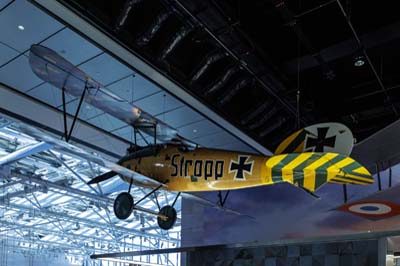 |
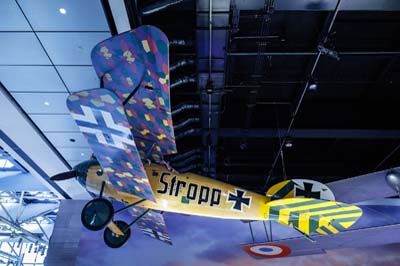
| Left to right: Douglas World Cruiser (23-1230 '2') named 'Chicago'. After the groundbreaking transatlantic flights of 1919 by the US Navy's NC-4 and Alcock and Brown, the next frontier was clear, flying around the world. In 1923, the US Army Air Service (USAAS) announced plans for a global expedition, commissioning four custom-built Douglas aircraft. Named the Seattle, Chicago, Boston, and New Orleans, these 'World Cruisers' set out to make history. Only the New Orleans and Chicago completed the grueling 27,553 mile journey. Over 175 days and 371 hours of flight, the crews battled forced landings, mechanical failures, and relentless weather. Their success was not just a triumph of skill and endurance, it was a landmark achievement that paved the way for global air travel. The War Department presented the Chicago to the Smithsonian Institution in 1925. Albatross D.Va (7161/17). Built by Albatros Flugzeugwerke, it was the final development of the Albatros D.I family and the last Albatros fighter to see operational service with the Luftstreitkräfte (Imperial German Air Service) during World War One. It is believed to have served with Jasta 46 before being captured in April or May 1918. In 1919, the aircraft was presented to the De Young Museum in San Francisco, California, and later acquired by the National Air and Space Museum in 1949. It remained in storage until restoration began in 1977. During the restoration a bullet was found having passed through the fuel tank, proving that the aircraft had seen active service which was ended by the projectile. Since 1979 it has been on display at this museum. The aircraft is distinguished by the personal markings of "Stropp" on the fuselage sides. Only two Albatross D.Va survive today, the other is on display at the Australian War Memorial in Canberra. |
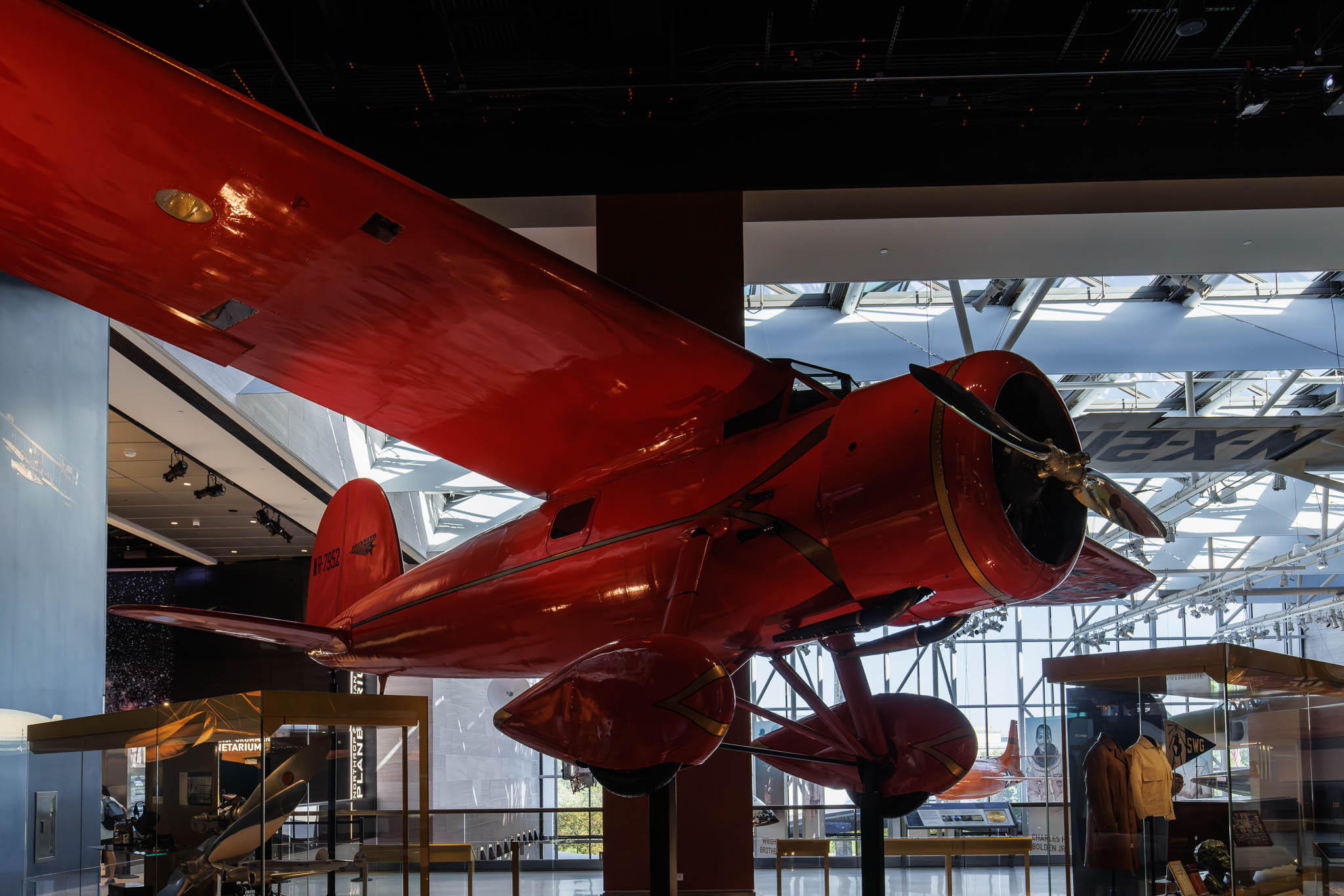 |
| Lockheed Vega 5B (NR-7952). A five to seven seat airliner built by the Lockheed Corporation from 1927 and designed by John Knudsen Northrop and Gerald Vultee, both of whom would later form their own aircraft manufacturing companies. Amelia Earhart set two historic aviation records flying her bright red Lockheed 5B Vega, which she called her "Little Red Bus." In 1932, she became the first woman to fly solo nonstop across the Atlantic, covering 2,026 miles from Newfoundland to Northern Ireland in 15 hours. Later that year, she made the first solo nonstop flight by a woman across the United States, flying 2,447 miles from Los Angeles to Newark in about 19 hours. Introduced in 1927, the Vega was a fast, sturdy, and innovative aircraft favored for speed and distance records. Earhart sold the plane in 1933, and it was acquired by the Smithsonian in 1966. |
 |
 |
 |
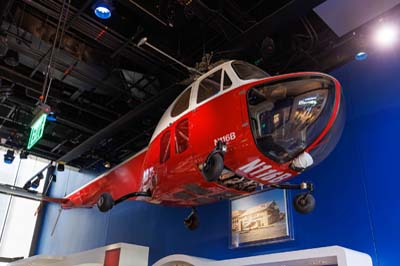 |
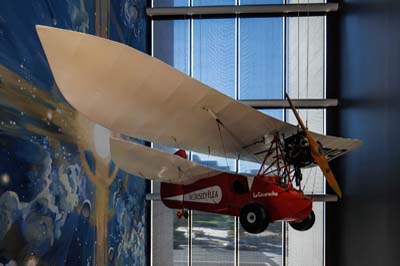
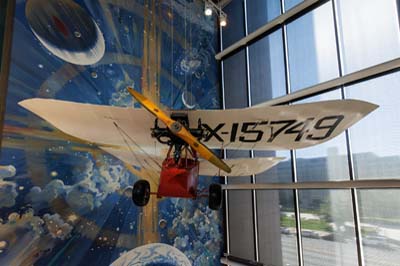
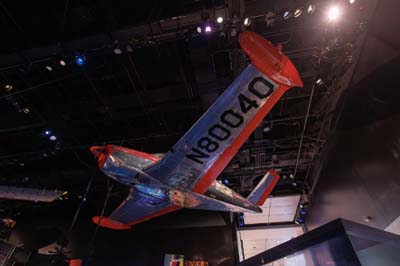
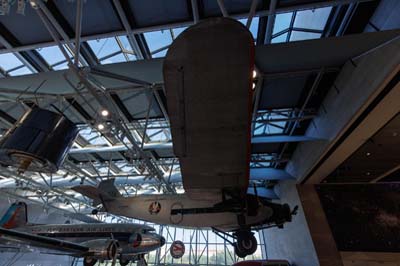
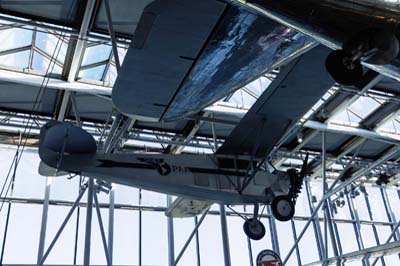
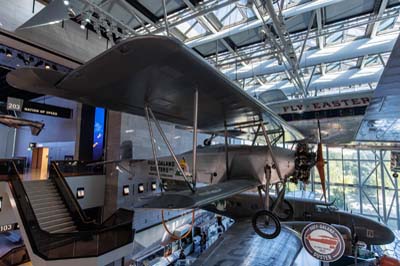
| Left to right: Mignet HM.14 Pou du Ciel (X-15749). The 'Flying Flea', designed in 1934 by Henri Mignet was probably the first home-built to be offered to the public for home construction. Following a number of fatal accidents and the discovery of aerodynamic design errors the French authorities banned it from flying in 1936, the British authorities following suit in 1937. The example on display was the first Mignet HM.14 built and flown in the United States, constructed in November 1935 for Powel Crosley Jr, president of the Crosley Radio Corporation. After several flights, the aircraft crashed at the Miami Air Races in December 1935 and was grounded. Around 1960, it was donated to the Smithsonian. Beechcraft Model 35 Bonanza (N80040). William Odom flew this Bonanza, the fourth aircraft built, on the first light-plane flight from Hawaii to the mainland in March 1949. Later renamed 'Friendship Flame', it was used on a goodwill world tour to promote peace. Bell 47B (N116B c/n 47B-36), it was the 36th one built and the first Bell model certified for civilian use, arriving in 1946. |
 |
 |
 |
 |
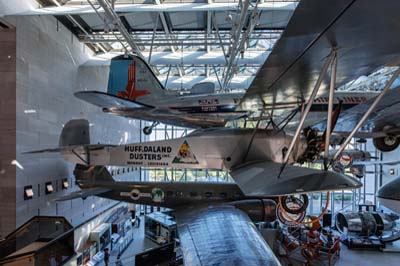 |
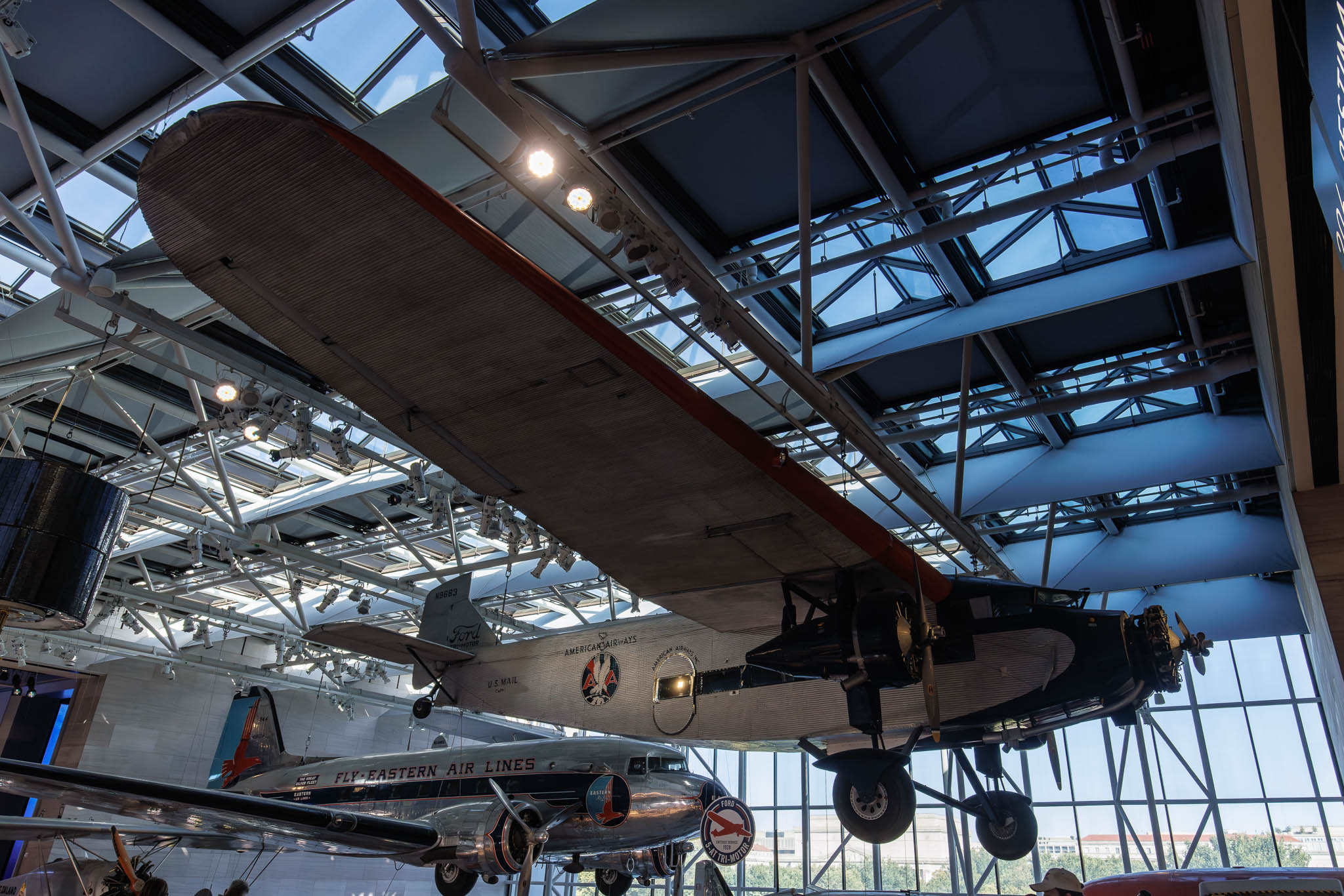
| Left to right: Ford 5-AT Tri-Motor (NC9683). Affectionately called the "Tin Goose", the Ford Tri-Motor was the largest civil aircraft in America when it first flew on August 2, 1926. Its all-metal, corrugated aluminum construction and the Ford name made it instantly popular with passengers and airlines. Though noisy, it was reliable and played a key role in convincing the public that air travel could be safe and practical. Reacquired by American Airlines, who first owned it in 1931, NC9683 was fully restored and flown on public relations tours across the country, including the first regular flight from Dulles International Airport, Virginia, in November 1962. After concluding its PR career, the aircraft was donated to the National Air and Space Museum. Huff-Daland Duster (unknown). It was designed in 1925 to introduce a new method of controlling agricultural pests: aerial crop dusting. The Huff-Daland Manufacturing Company adapted its durable Petrel military biplane by adding a large chemical hopper and spraying equipment. The company also established the nation's first aerial dusting business, the Huff-Daland Duster Company, initially in Macon, Georgia, and later in Monroe, Louisiana. The remains of two of the original 18 Dusters built remained in storage until 1967, when Delta Air Lines selected one for restoration. |
 |
 |
 |
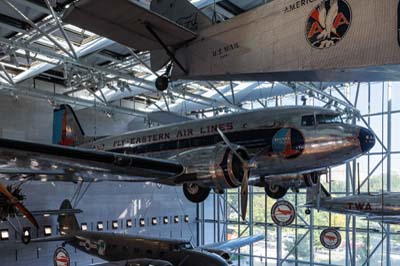 |
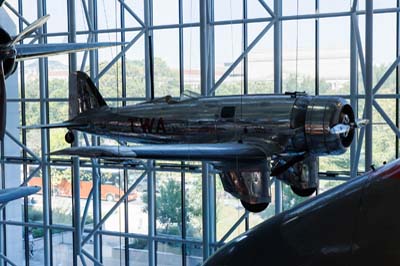
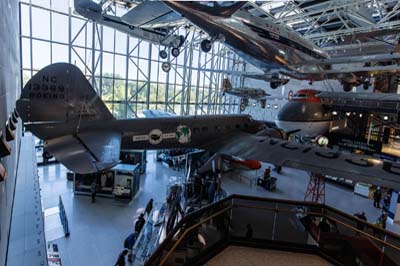
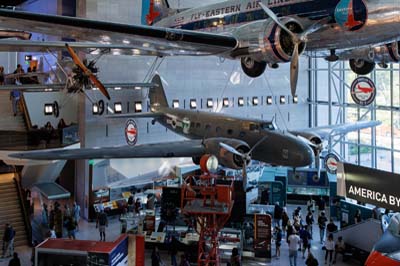
| Left to right: Northrop 4A Alpha (NC11Y). Introduced in 1930, the Northrop Alpha was a transitional aircraft that combined modern all-metal, streamlined construction with older features like fixed landing gear, a single engine, and an open cockpit for the pilot. Designed by Jack Northrop, it seated six passengers and marked an important advance in metal aircraft design, influencing later planes such as the DC-2 and DC-3. Though eventually replaced by more powerful twin-engine airliners, it remained useful as a fast cargo aircraft and was later restored by Trans World Airlines volunteers. Boeing 247-D (NR-257Y, NC-13369). The aircraft on display is the first production Boeing 247-D. It was flown by Roscoe Turner and Clyde Pangborn in the 1934 England-to-Australia International Air Derby, better known as the MacRobertson Race. The airplane placed third overall and second in the transport category, completing the 18,180-kilometer (11,300-mile) journey in just under 93 hours. After the race, it was returned to United Air Lines, where it served as the airline's flagship until being replaced by the DC-3. Douglas DC-3 Dakota (N18124 '344'). The aircraft displayed accumulated more than 56,700 flight hours with Eastern Air Lines. Its final commercial flight took place on October 12, 1952, when it flew from San Salvador to Miami. It was later donated to the Museum by Eastern Air Lines president Edward Rickenbacker. |
 |
 |
 |
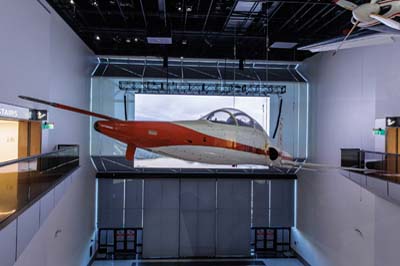 |
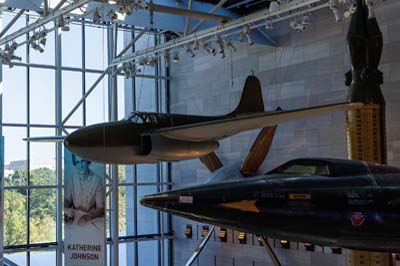
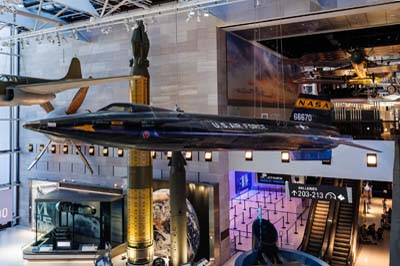
| Left to right: Bell XP-59A Airacomet (42-108784). The Bell P-59 Airacomet was the first jet-powered aircraft built in the United States and was developed under the strictest security measures. Despite the secrecy and high expectations surrounding the program, the aircraft ultimately proved to be an underwhelming design. Powered by two General Electric J31 centrifugal-flow turbojet engines, derived from the American development of Sir Frank Whittle's Power Jets W1. The Airacomet suffered from limited performance, its top speed of just 413 mph made it slower than several contemporary piston-engine fighters then in combat service with the US Army Air Forces. As a result, the P-59 never entered frontline service, and that distinction instead went to the Lockheed P-80 Shooting Star, which became the first American jet fighter to achieve operational status. A total of 66 P-59 Airacomets were built between 1942 and 1944, including three XP-59A prototypes. The first prototype, 42-108784, was constructed by Bell Aircraft in Buffalo, New York, and transported by rail to Muroc Dry Lake in California. It arrived on September 19, 1942, under the tightest security, where it began its flight testing program. Bell X-1 (46-062). The Bell X-1 was a rocket-powered experimental aircraft developed by Bell Aircraft as a supersonic research project. It was conceived in 1944, built in 1945, and in 1948 became the first aircraft to approach 1,000 mph, marking a major milestone in supersonic flight. The X-1 46-062, flown by Chuck Yeager and nicknamed Glamorous Glennis after his wife, was the first piloted airplane to exceed the speed of sound in level flight, achieved on October 14, 1947, over the Mojave Desert. North American X-15 (56-6670) ex NASA. 56-6670 was the first of three X-15 aircraft built and the first to take flight. Flown by renowned test pilots such as Joe Walker, it played a crucial role in bridging the gap between manned atmospheric flight and spaceflight by reaching hypersonic speeds and extreme altitudes. The X-15 was a rocket-powered research aircraft designed to explore hypersonic flight and high-altitude conditions, featuring a skin made from the heat-resistant nickel alloy Inconel X. It completed a total of 81 missions, including the final eight flights of the program, and made history as the first winged aircraft to achieve Mach 4, Mach 5, and Mach 6. Northrop T-38A Talon (60-0551) is a historically significant supersonic trainer best known for its association with pioneering aviator Jacqueline "Jackie" Cochran, who used the aircraft to set multiple world records. It also served with NASA as both a chase aircraft and an astronaut training platform. |
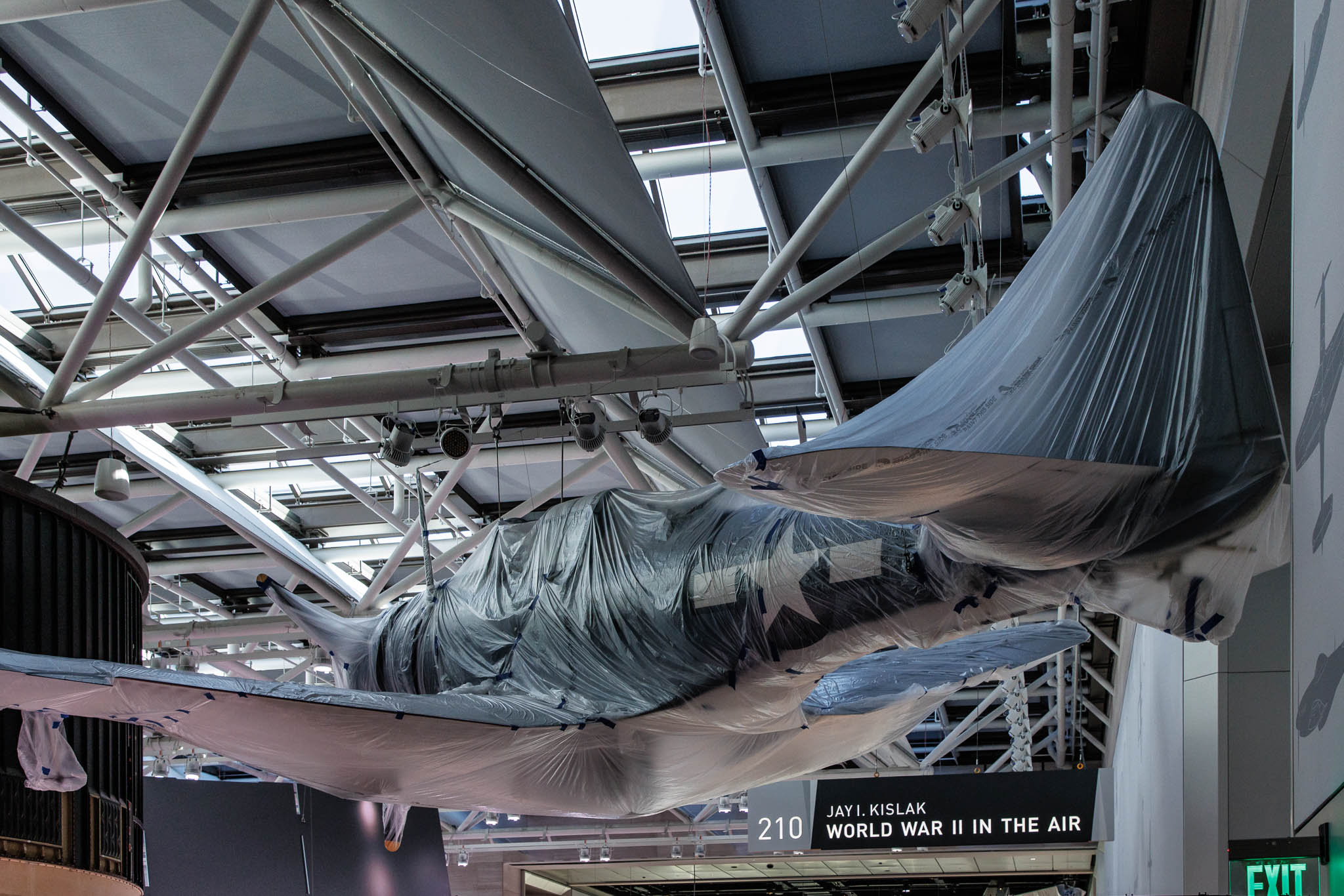 |
| Douglas SBD-6 Dauntless (54605 '109'). The SBD's design evolved from the Northrop BT-1, incorporating significant engine and structural improvements. Production orders were placed in April 1939. In service the Dauntless dive bomber sank more enemy ships than any other Allied bomber of World War Two. Its most famous achievement came on June 4, 1942, during the Battle of Midway, when Dauntless aircraft destroyed four Japanese aircraft carriers, decisively shifting the course of the war in the Pacific. The SBD-6 became the final production variant, with 450 aircraft built. 54605 was delivered to the US Navy in April 1944 and spent its entire operational life at Naval Air Station Patuxent River, Maryland. From August to September 1944 it was used for tactical evaluations, followed by flight testing duties from October 1944 through April 1948. In May 1948 it was placed in storage at NAS Weeksville, North Carolina. Stricken from Navy service on June 30, 1948, the aircraft was subsequently transferred to the Smithsonian collection. |
 |