Steven F Udvar-Hazy Center
Chantilly, Virginia
October 2025
|
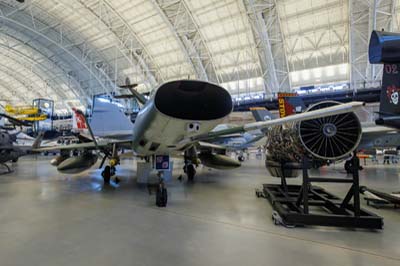
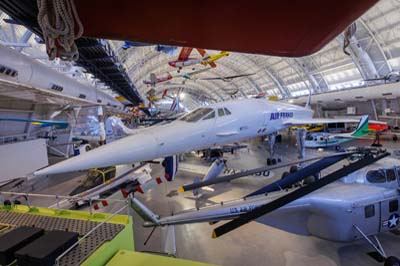
The Steven F. Udvar-Hazy Center, located at Dulles International Airport in Chantilly, Virginia, is an annex of the Smithsonian's National Air and Space Museum. It houses large aircraft, spacecraft, and rockets that cannot be displayed at the main museum on the National Mall.
Its vast hangar showcases major aviation and space artifacts, including the Space Shuttle Discovery, the Enola Gay, an SR-71 Blackbird, and a Concorde. The 760,000-square-foot centre was funded largely by a $65 million donation from Steven F. Udvar-Házy, a Hungarian-American and co-founder of the International Lease Finance Corporation. Connected to Dulles Airport by a private taxiway, the facility allows some aircraft to be flown in directly rather than transported by ground. Floor plan at time of visit, well almost!
The Steven F Udvar-Hazy Center and the Mary Baker Engen Restoration Hangar are adjacent to each other and accessed through a connecting corridor and stairway. I did ask and write, but was told that tripods were prohibited in Smithsonian's museums. |
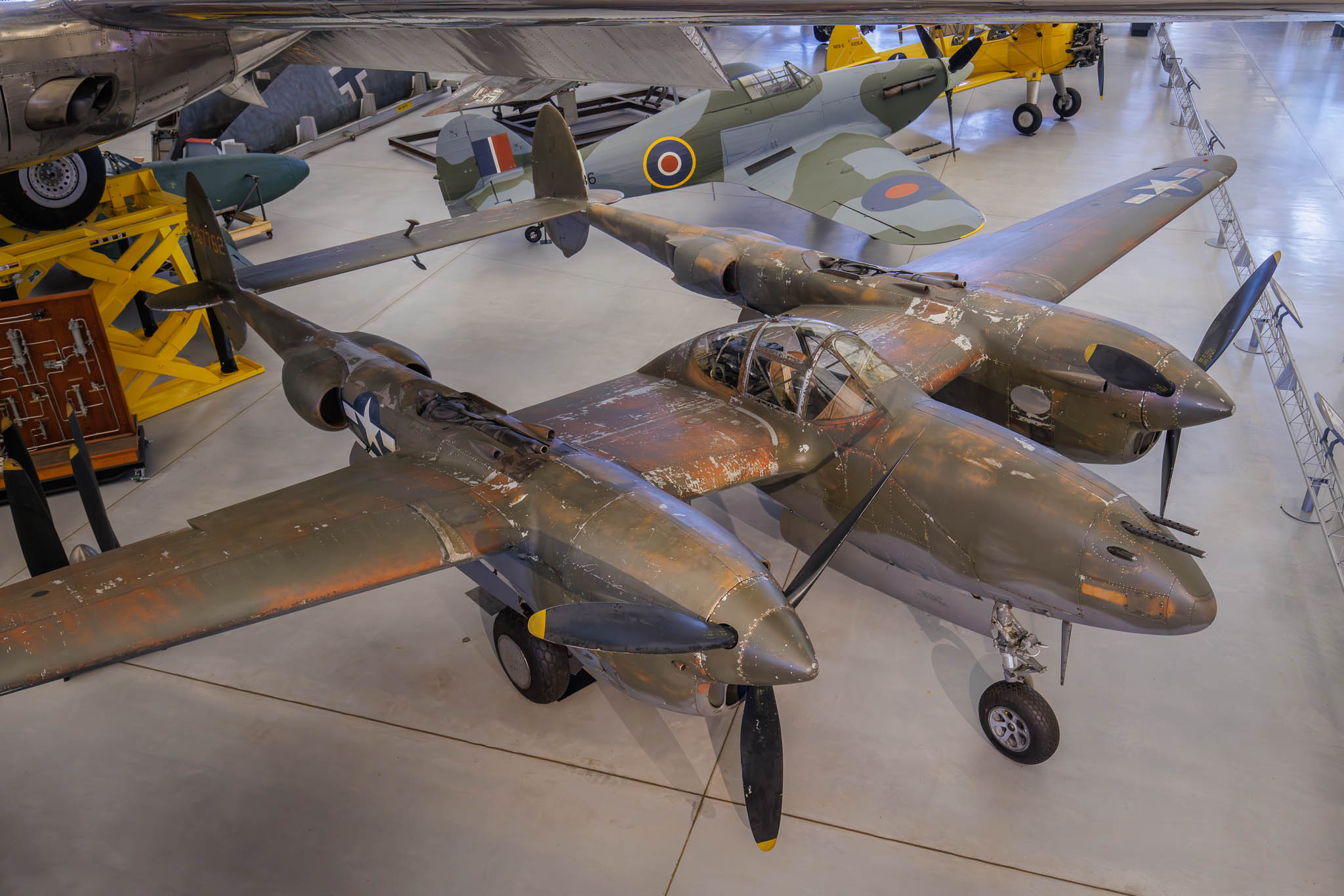 |
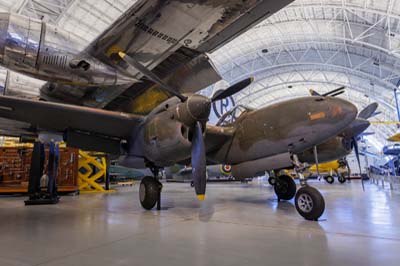
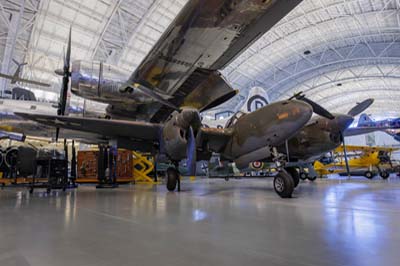
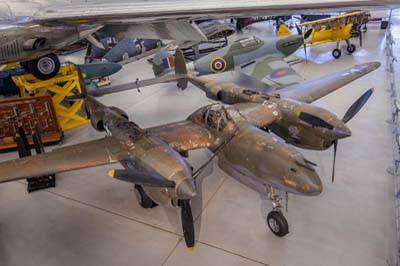
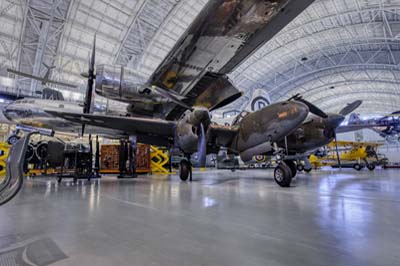
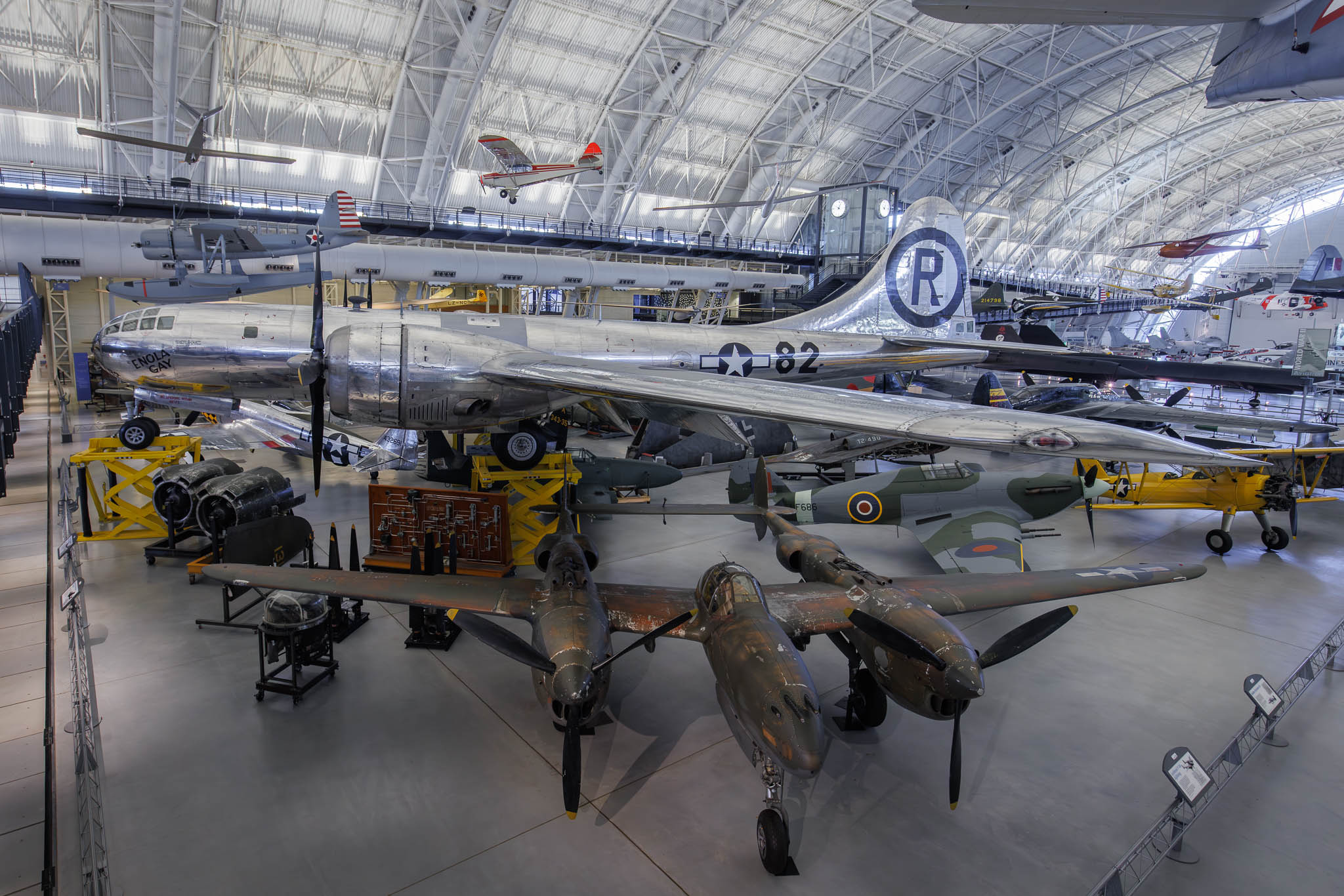
| Left to right: Lockheed P-38J Lightning (42-67762) ex USAAF. |
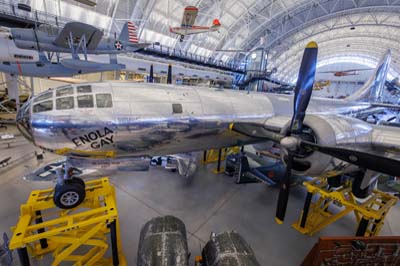
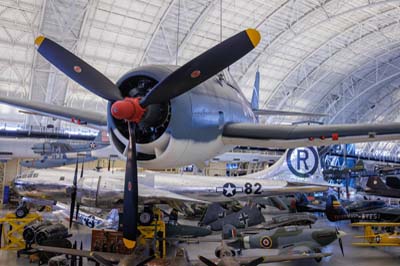
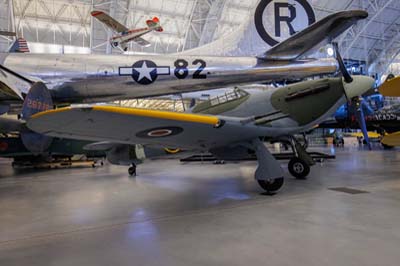
| Left to right: Boeing B-29 Superfortress (44-86292 '82-R') named 'Enola Gay' ex USAAF |
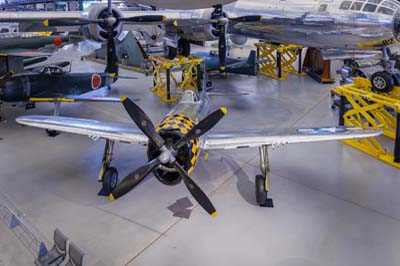
Left to right: Republic P-47D Thunderbolt (44-32691 'LH-E') ex USAAF.
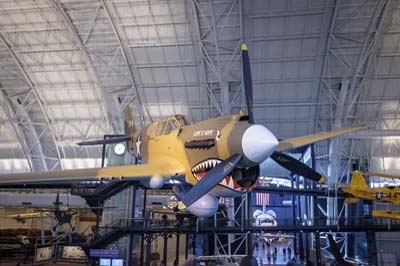
Curtiss Kittyhawk I (AK875 '194' RCAF 1047) named 'Lope's Hope' ex Royal Canadian Air Force.
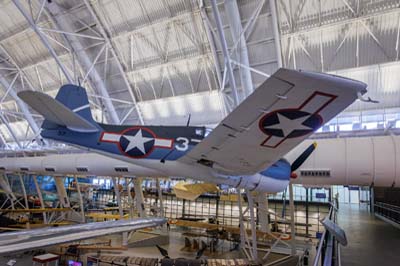
Grumman F6F-3K Hellcat (41834 '37') ex US Navy. |
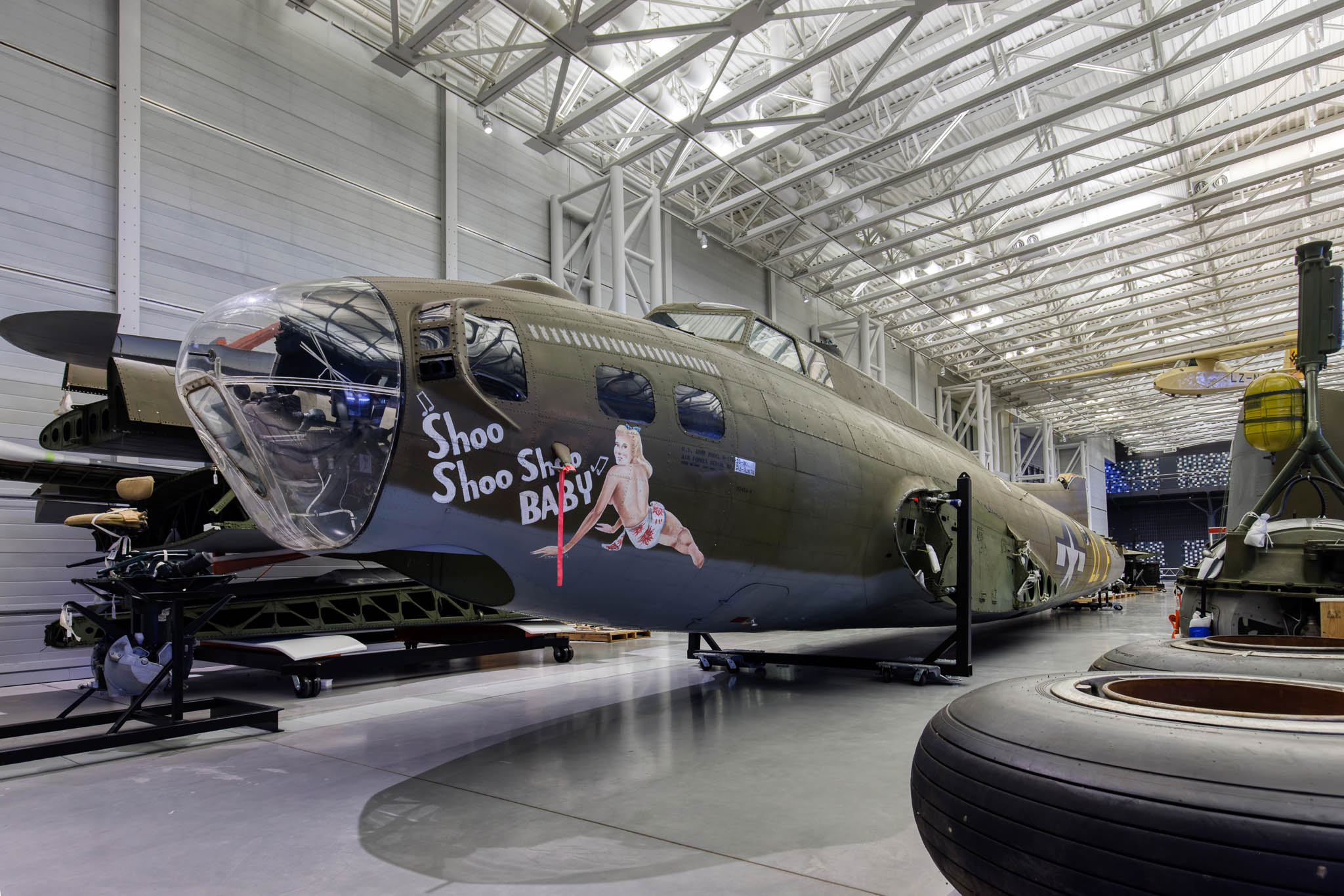
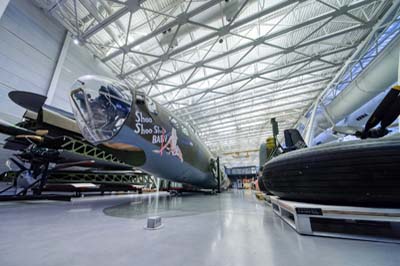
| Left to right: Boeing B-17G Flying Fortress (42-32076 'LL-E') named 'Shoo Shoo Shoo Baby' ex USAAF. |
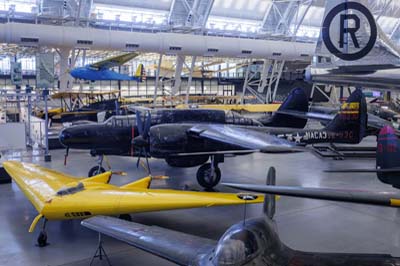
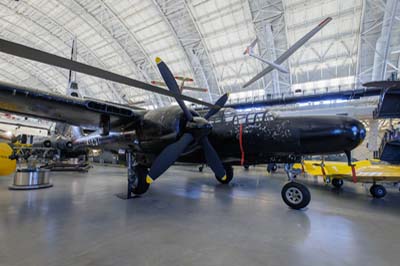
Left to right: Northrop P-61C Black Widow (43-8330 'FK-330' NACA 3) ex USAAF.
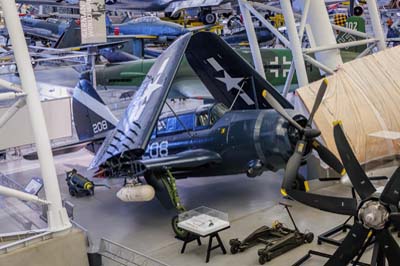
Curtiss SB2C-5 Helldiver (83479 '208') ex US Navy. |
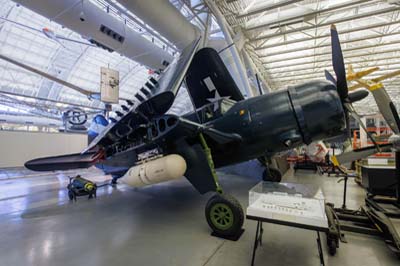
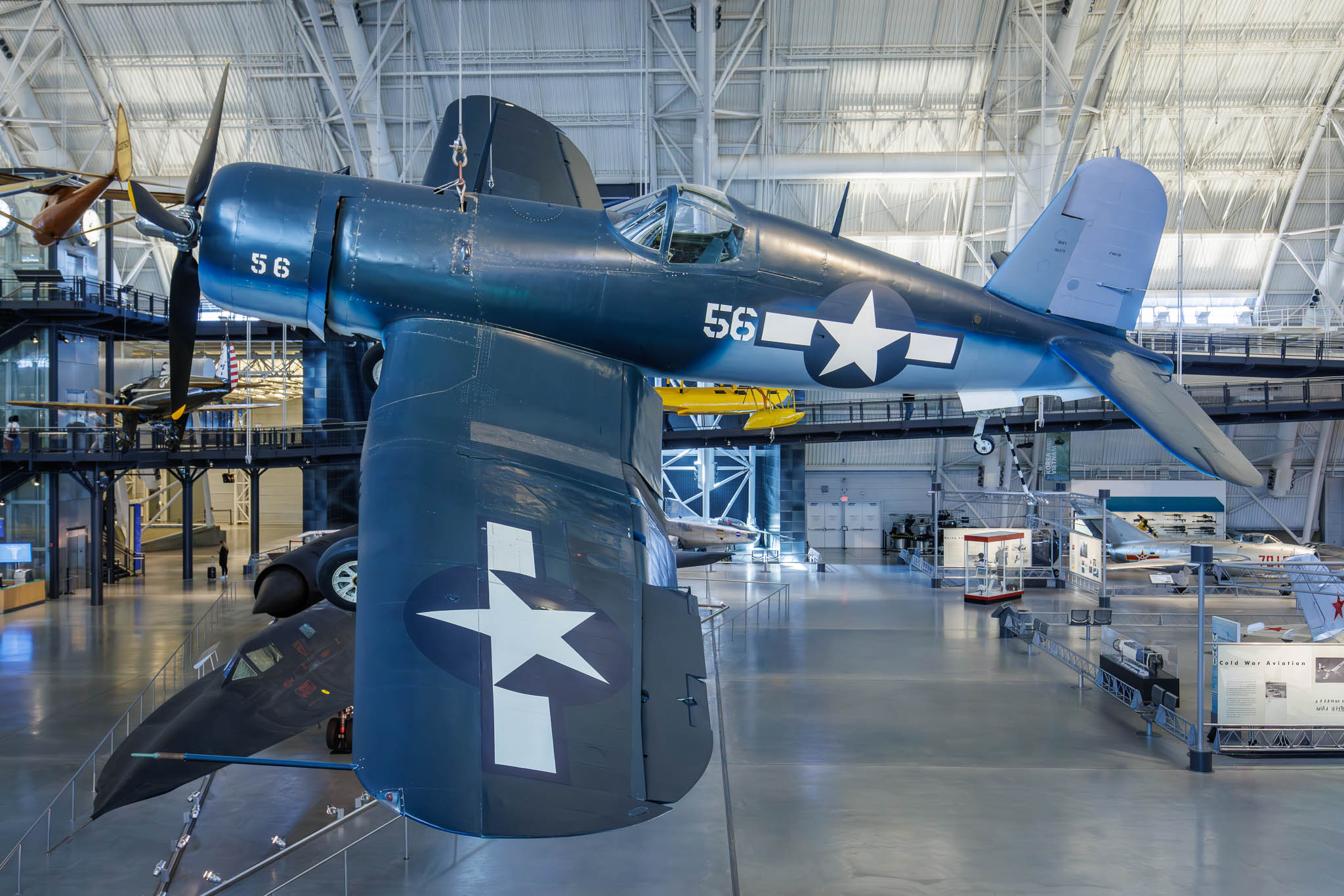
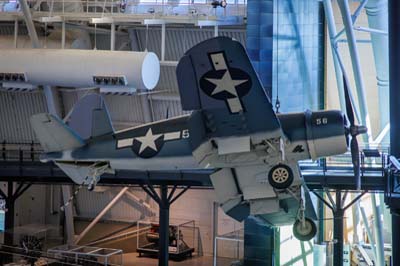
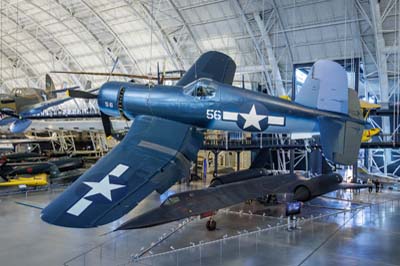
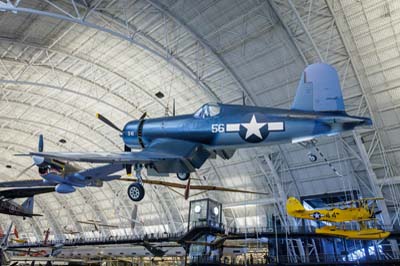
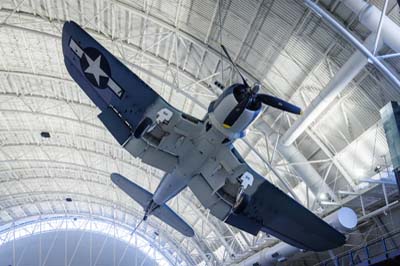
| Left to right: Vought F4U-1A Corsair (50375 '56') ex US Navy. |
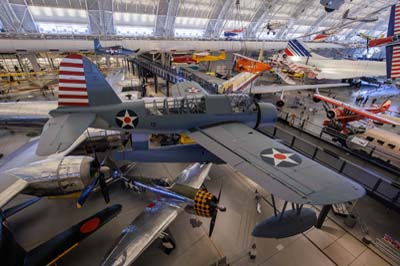
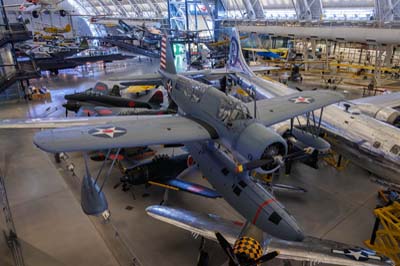
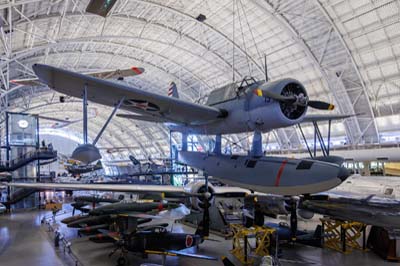
| Left to right: Vought Kingfisher OS2U-3 (5909 '13') ex US Navy. |
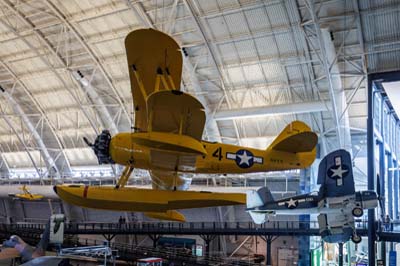
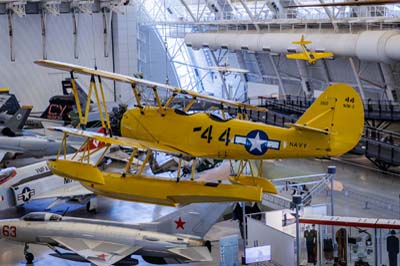
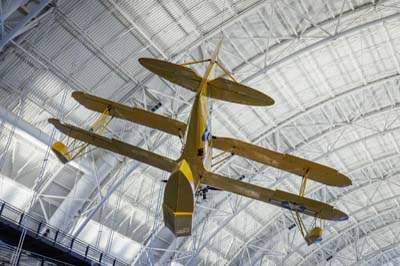
Left to right: Naval Aircraft Factory N3N-3 Canary (3022 '44') ex US Navy. This aircraft was a primary training biplane produced by the Naval Aircraft Factory (NAF) between 1935 and 1942. It served extensively throughout World War Two, became the last biplane in US military service, and was not retired until 1961. Known for its steel-tube fuselage, all-metal wings, and distinctive bright yellow finish, it was used for both land-based and seaplane training.
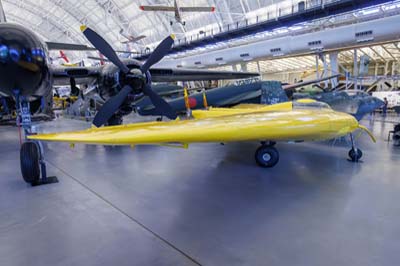
Northrop N1M (N28311) ex USAAF. |
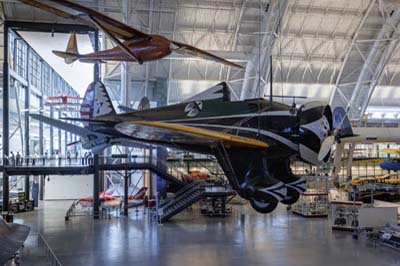
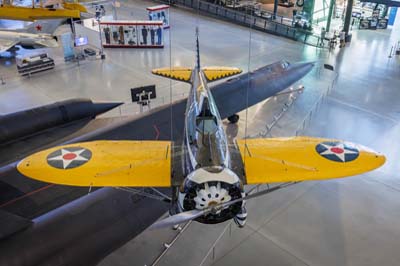
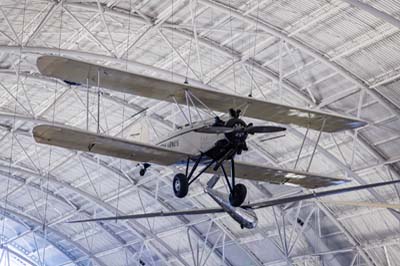
Left to right: Boeing P-26A Peashooter (33-135 '7') ex USAAC.
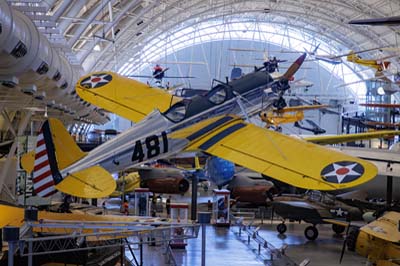
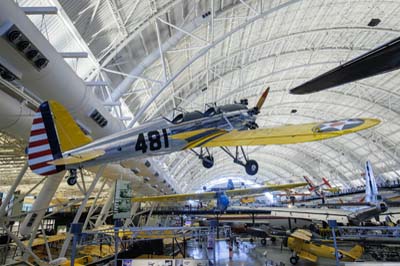
Ryan PT-22A Recruit (42-57481 '481') ex USAAF. |
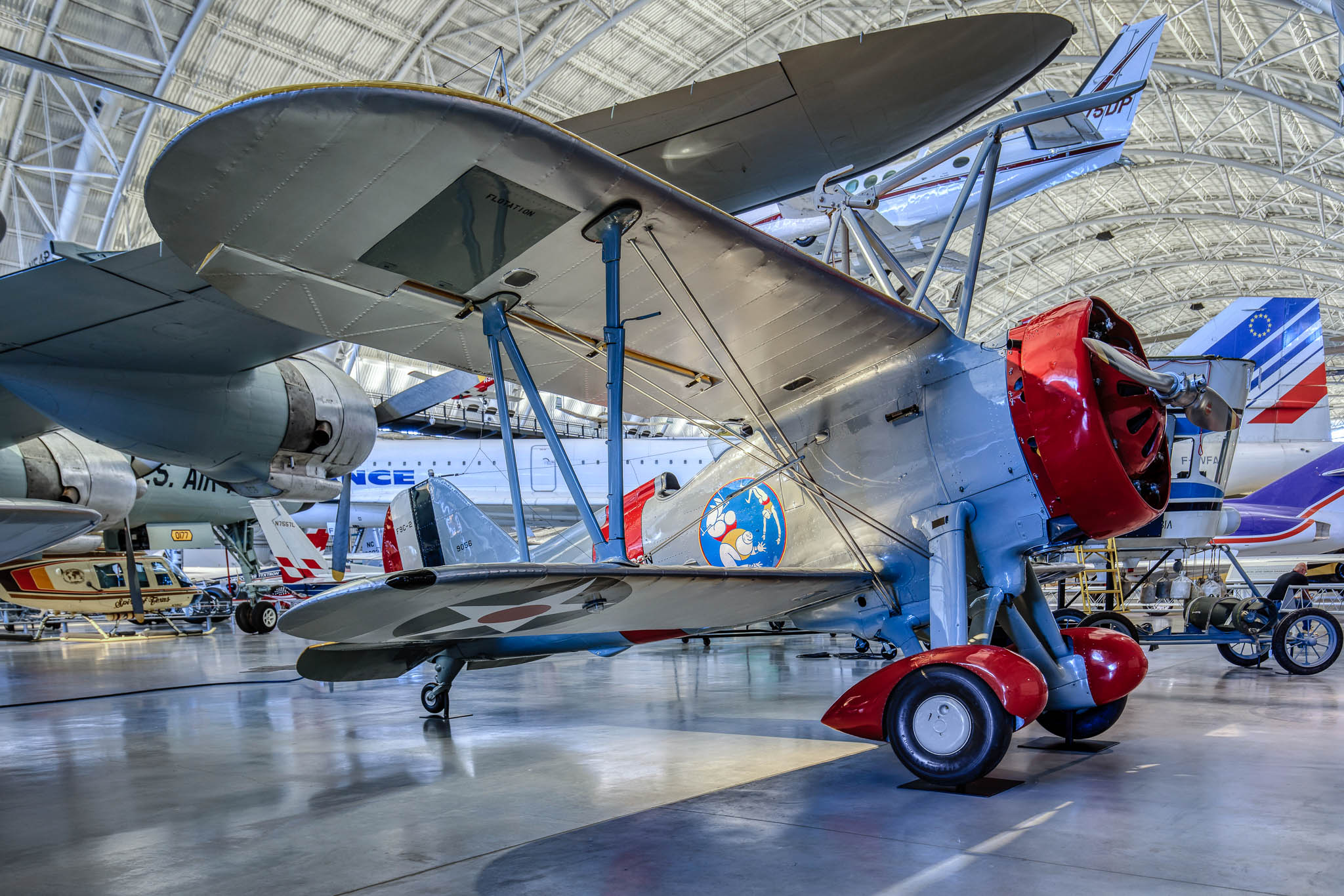
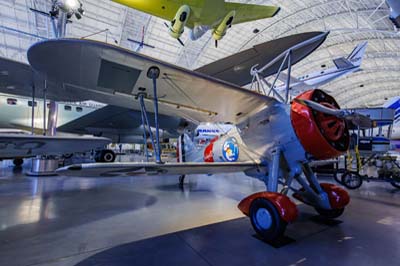
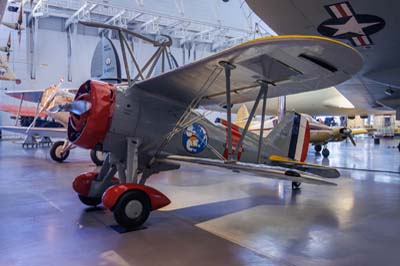
| Left to right: Curtiss F9C-2 Sparrowhawk (9264 marked as '9056') ex US Navy. |
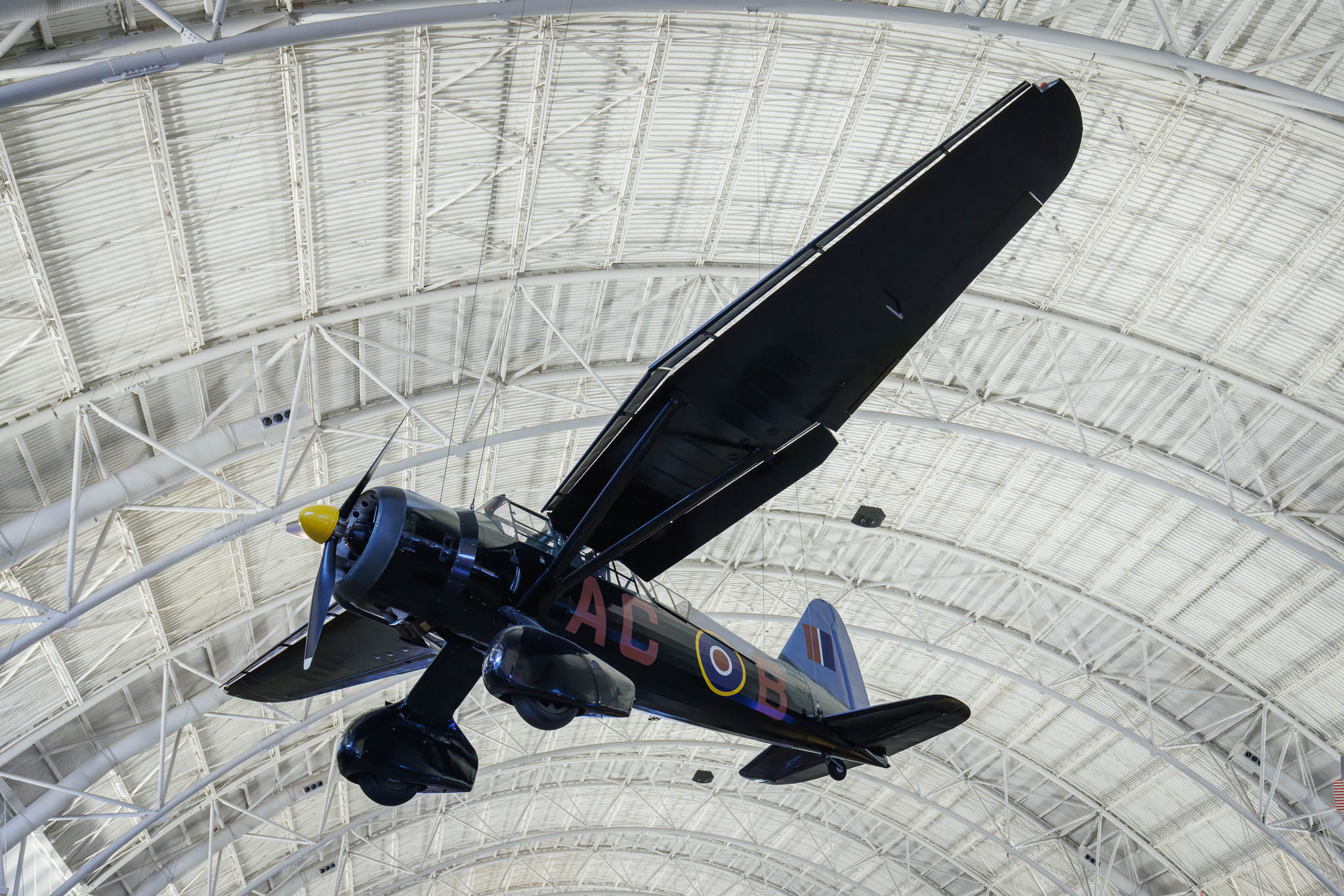 |
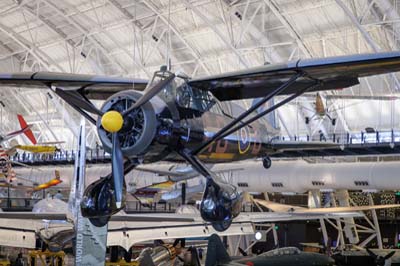
Left to right: Westland Lysander IIIA (2346 'AC-B', marked as 'N7791') ex Royal Canadian Air Force. The Lysander was designed to work closely with the Army as a specialized transport and observation aircraft. Rugged and reliable, it could take off and land on very small, improvised airstrips, making it especially useful near the front lines. In 1939, four squadrons equipped with 170 Lysanders were deployed to France; by the time operations there ended, only 50 had returned. The aircraft later shifted to coastal patrol duties, searching for downed airmen and deploying dinghies when needed. The Lysander served with the Royal Air Force from 1938 to 1946.
In addition to its RAF service, the Westland Lysander also played an important role with the Royal Canadian Air Force. Built in Canada under license, 225 in total for both the RCAF and RAF—it was used mainly for training, target towing, and coastal patrols. Most Canadian-built Lysanders remained in Canada, forming a key part of home defense and aircrew preparation, particularly at bombing and gunnery schools.
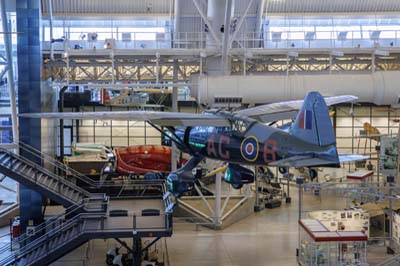
Hawker Hurricane IIC (LF686, later 5207M). This aircraft was built at Hawker's Langley Factory in early 1944 and delivered to the Royal Air Force as LF686 on March 14 of that year. It was first sent to No.5 Maintenance Unit at RAF Kemble for the installation of operational equipment, and on April 15, 1944, it was assigned to No.41 Operational Training Unit at RAF Hawden. After the war, on June 27, 1945, it was transferred to RAF Maintenance Command at Chilbolton, designated as a maintenance airframe, and reclassified under the serial number 5207M. In July 1948, the aircraft was moved to RAF Bridgenorth, where it served at No.7 School for recruit training. It later went to RAF Hullavington in 1963 before being transferred to the RAF Museum at RAF Colerne, where it remained from 1963 to 1970. Following an overhaul, it was placed in storage. The aircraft came to the National Air and Space Museum at Silver Hill, Maryland, in 1974. It underwent restoration from 1989 to 2000, then was stored until its relocation to the Steven F. Udvar-Hazy Center in 2003. |
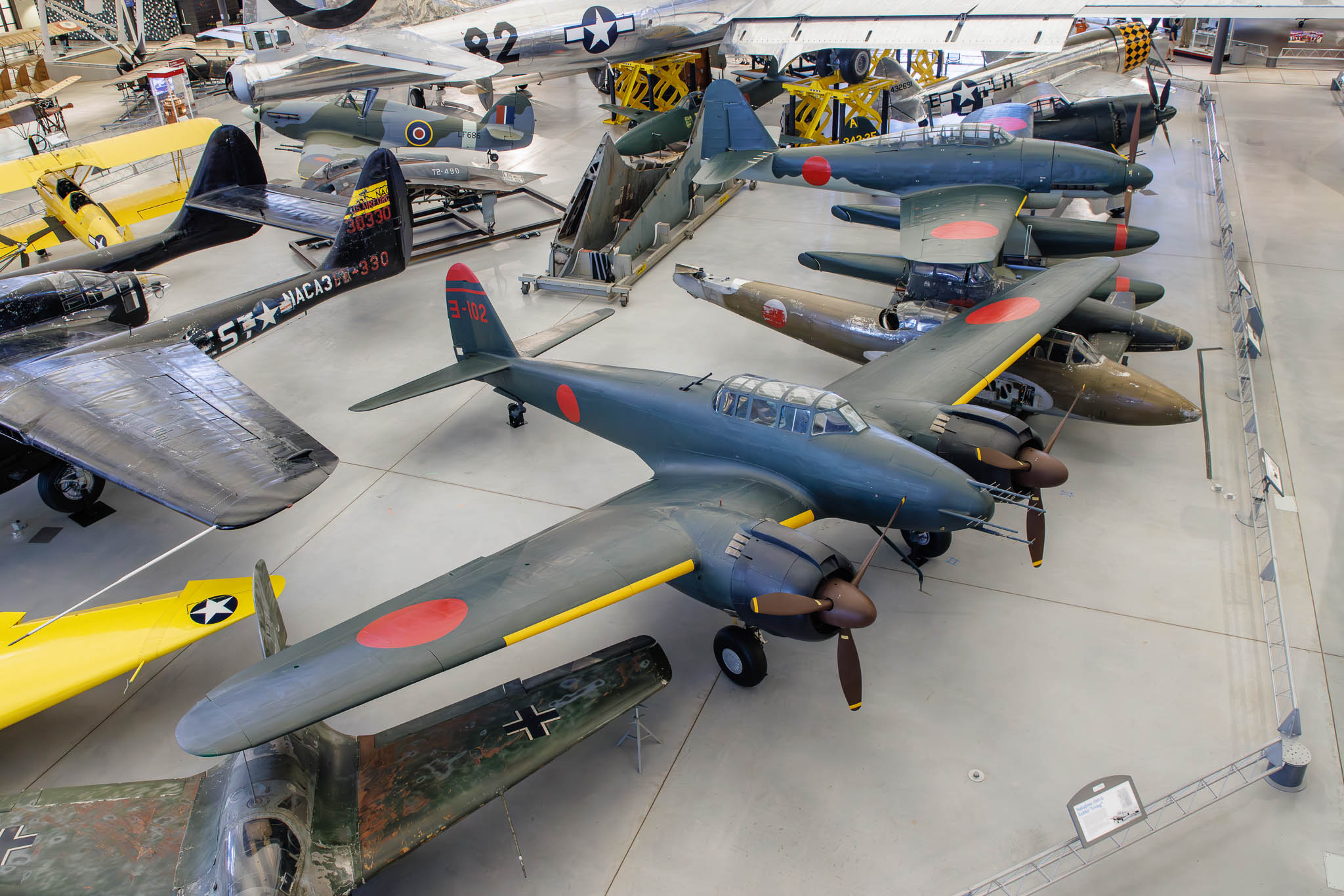 |
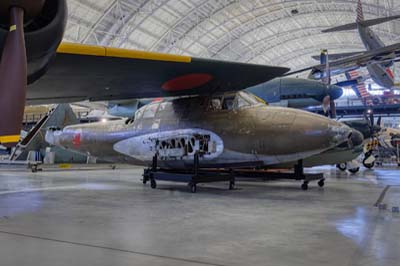
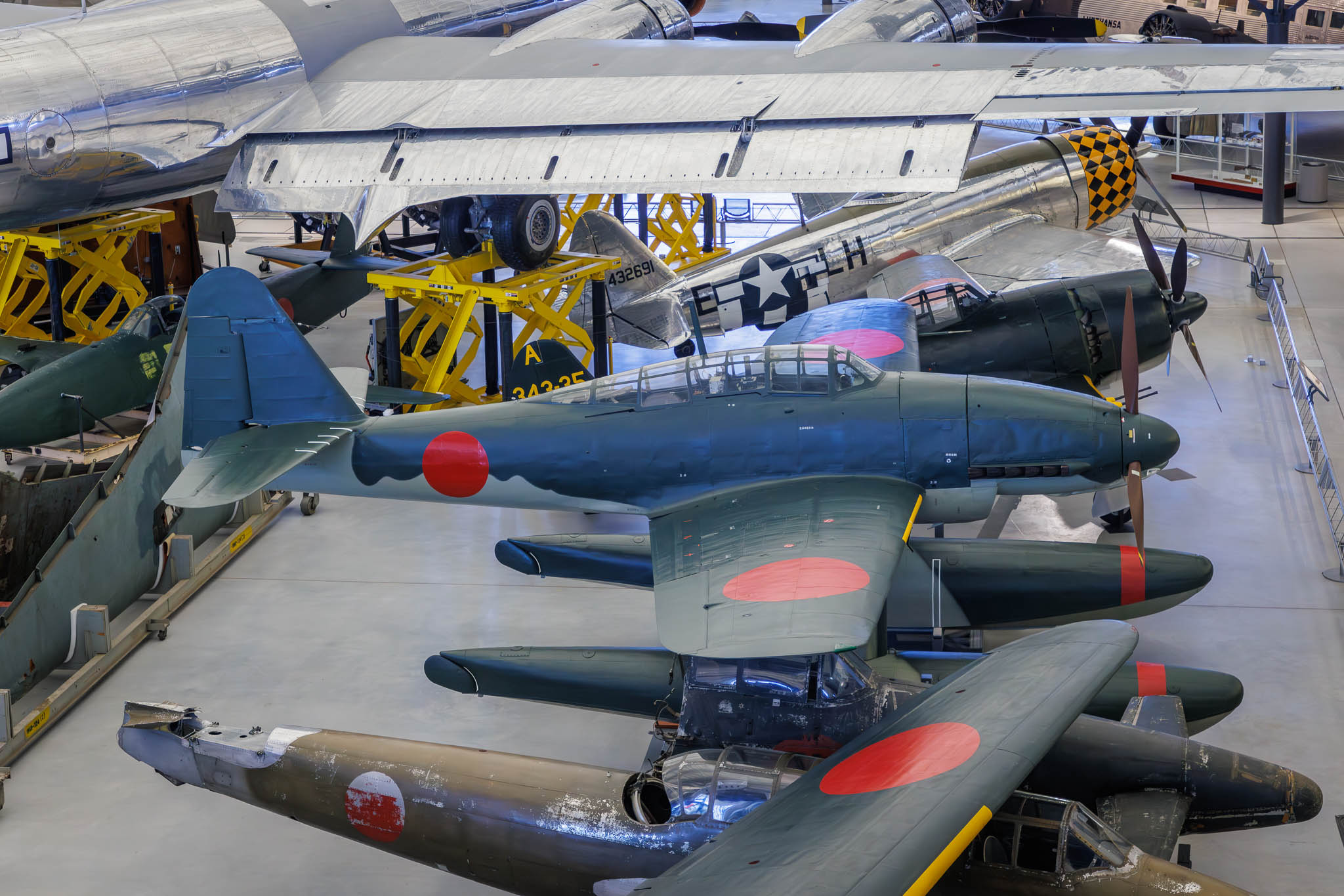
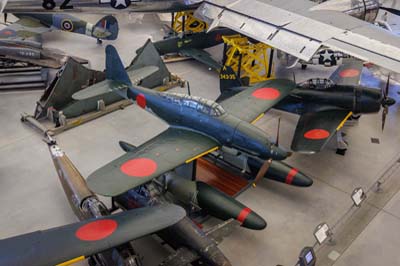
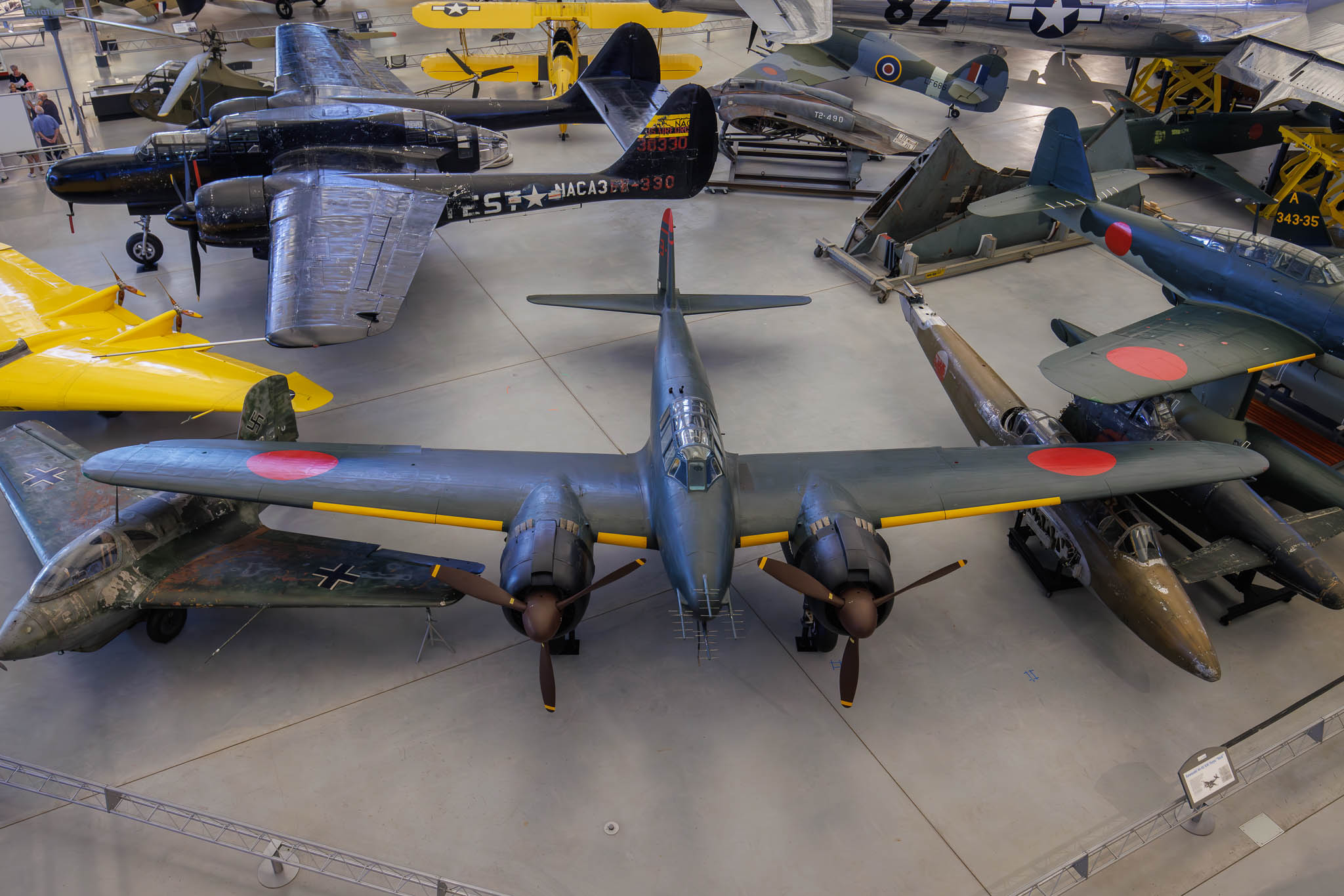
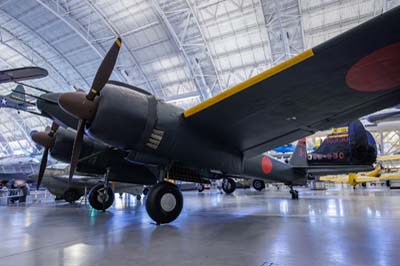
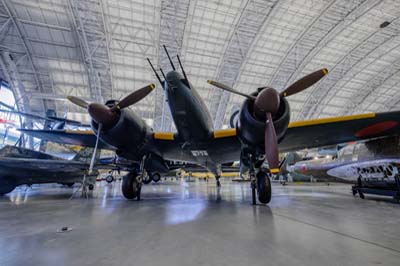
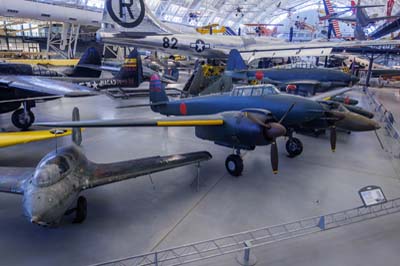
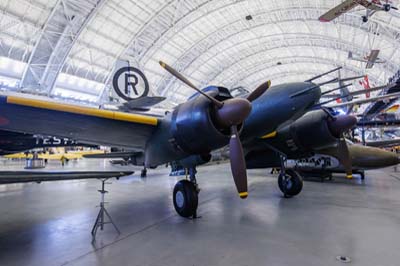
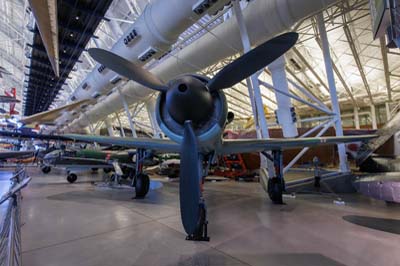
Left to right: Kawasaki Ki45 kai (4268, USAAF T2-701) ex Imperial Japanese Army Air Service (IJAAS).
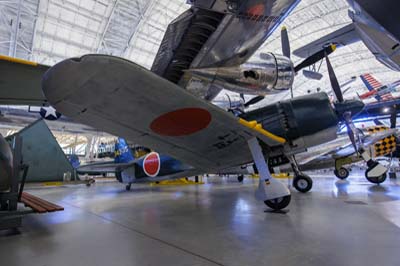
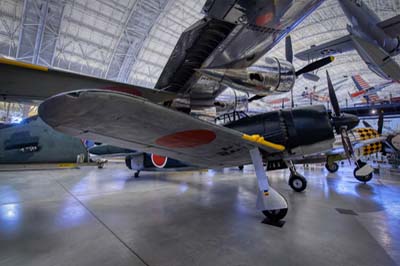
Kawanishi N1K 2-J (5341 343-35) ex Imperial Japanese Navy Air Service (IJNAS). |
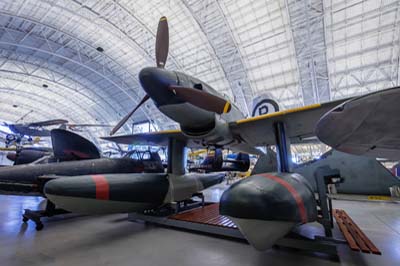
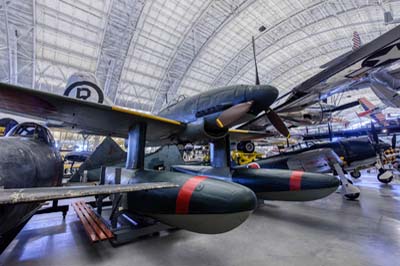
| Left to right: Aichi M6A1 Seiran (1600228) ex Imperial Japanese Navy Air Service (IJNAS). |
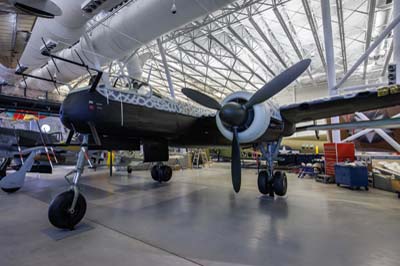
| Left to right: Nakajima J1N1-S Gekko (7334, USAAF 'FE-700') ex Imperial Japanese Navy Air Service (IJNAS). |
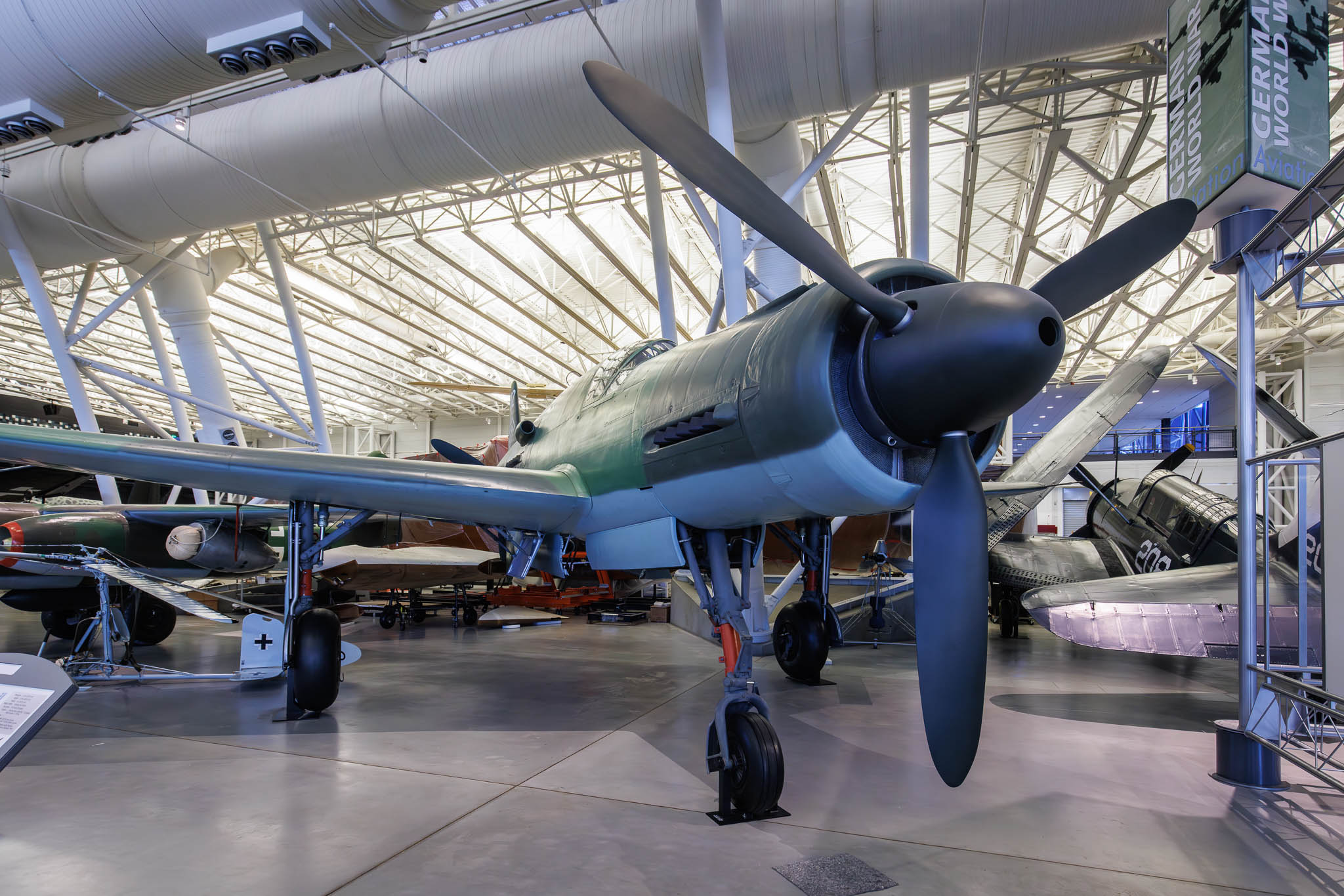
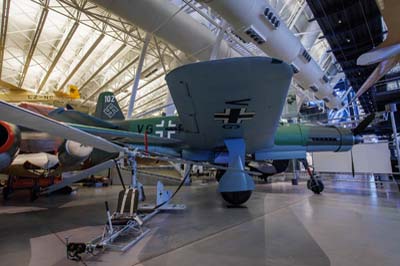
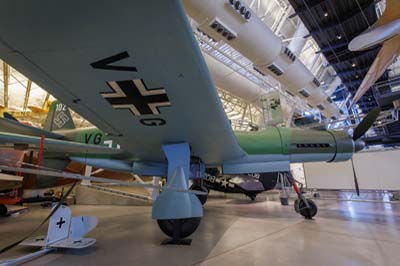
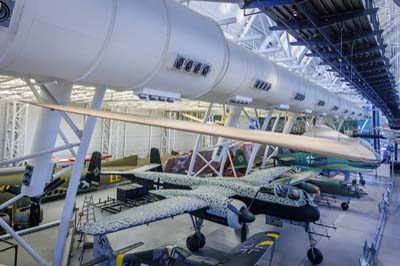
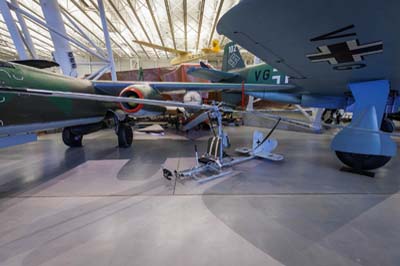
| Left to right: Dornier Do.335A-02 (240102 'VG+PH', USAAF FE-1012) ex Luftwaffe. VG+PH was evaluated by the Navy at Naval Air Station Patuxent River between 1945 and 1948, then left in outdoor storage at Naval Air Station Norfolk, where its condition declined. Donated to the Smithsonian's National Air Museum in 1961, it was later moved to storage in Suitland, Maryland. In October 1974, the aircraft returned to Dornier in Oberpfaffenhofen, Germany for full restoration. Restored in 1975, it appeared at the Hannover Airshow in May 1976, went on display at the Deutsches Museum in Munich until 1988, and was then shipped back to Maryland and later moved here for display. It is the only survivor. |
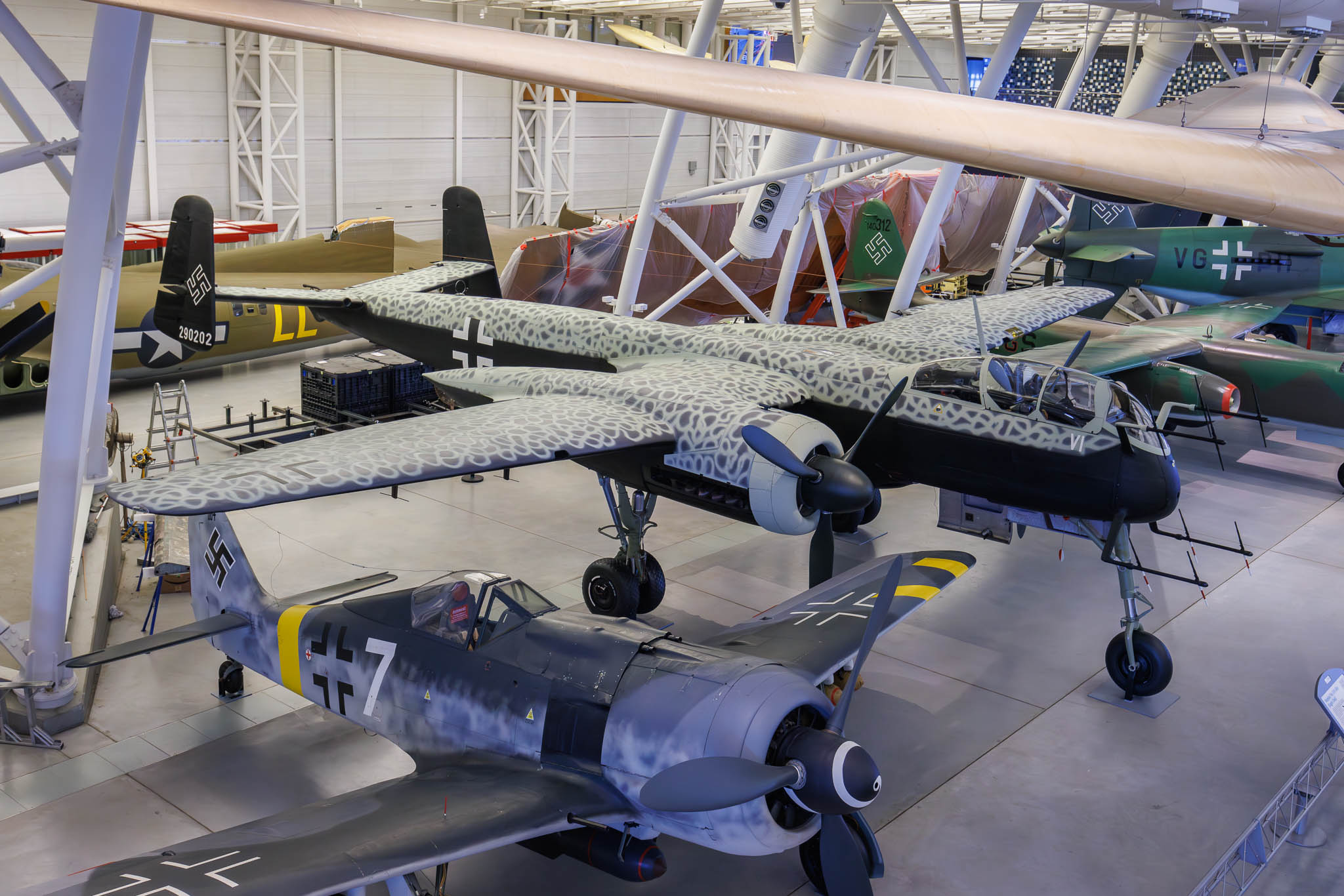
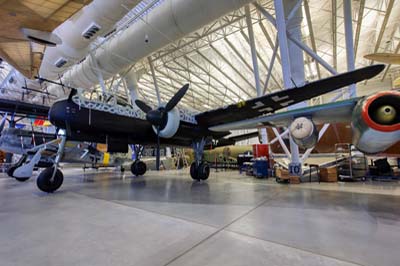
Left to right: Heinkel He 219A (290202, USAAF T2-614) ex Luftwaffe.
Horten Ho IIIf (32, USAAF T2-5042) ex Luftwaffe. |
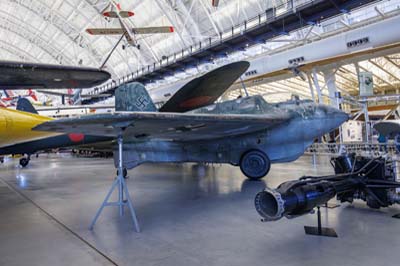
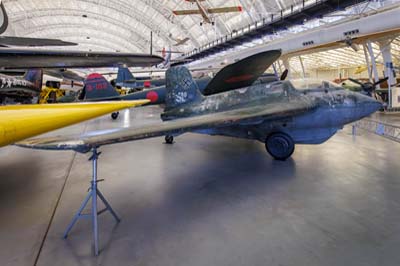
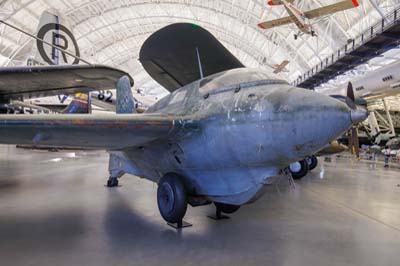
| Left to right: Messerschmitt Me.163B-1a (191301) ex Luftwaffe. |
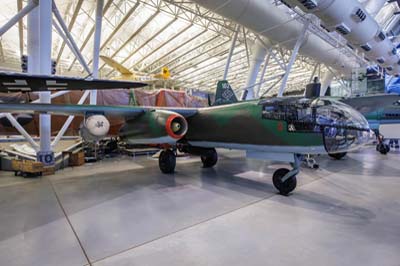
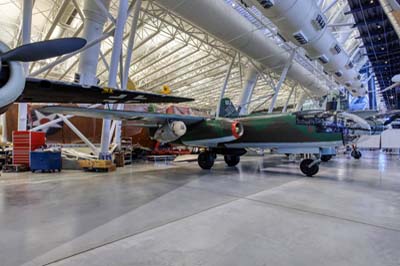
Left to right: Arado Ar.234B-2 (140312 'F1+GS') ex Luftwaffe.
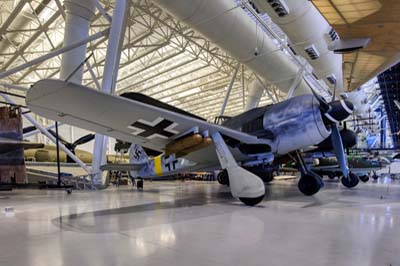
Focke-Wulf Fw 190F-8/R-1 (931884 'White 7') ex Luftwaffe.
Focke-Achgelis Fa 330A-1 'Bachstelze' (T2-4618, USAAF T2-4618) ex Luftwaffe. It was designed as an unpowered autogyro kite towed behind German Type IXD2 U boats to serve as an observation platform. The aircraft was designed by Heinrich Focke, with testing beginning in mid 1942. Operational deployment followed in early 1943, and around 200 examples were built by Weser Flugzeugbau. |
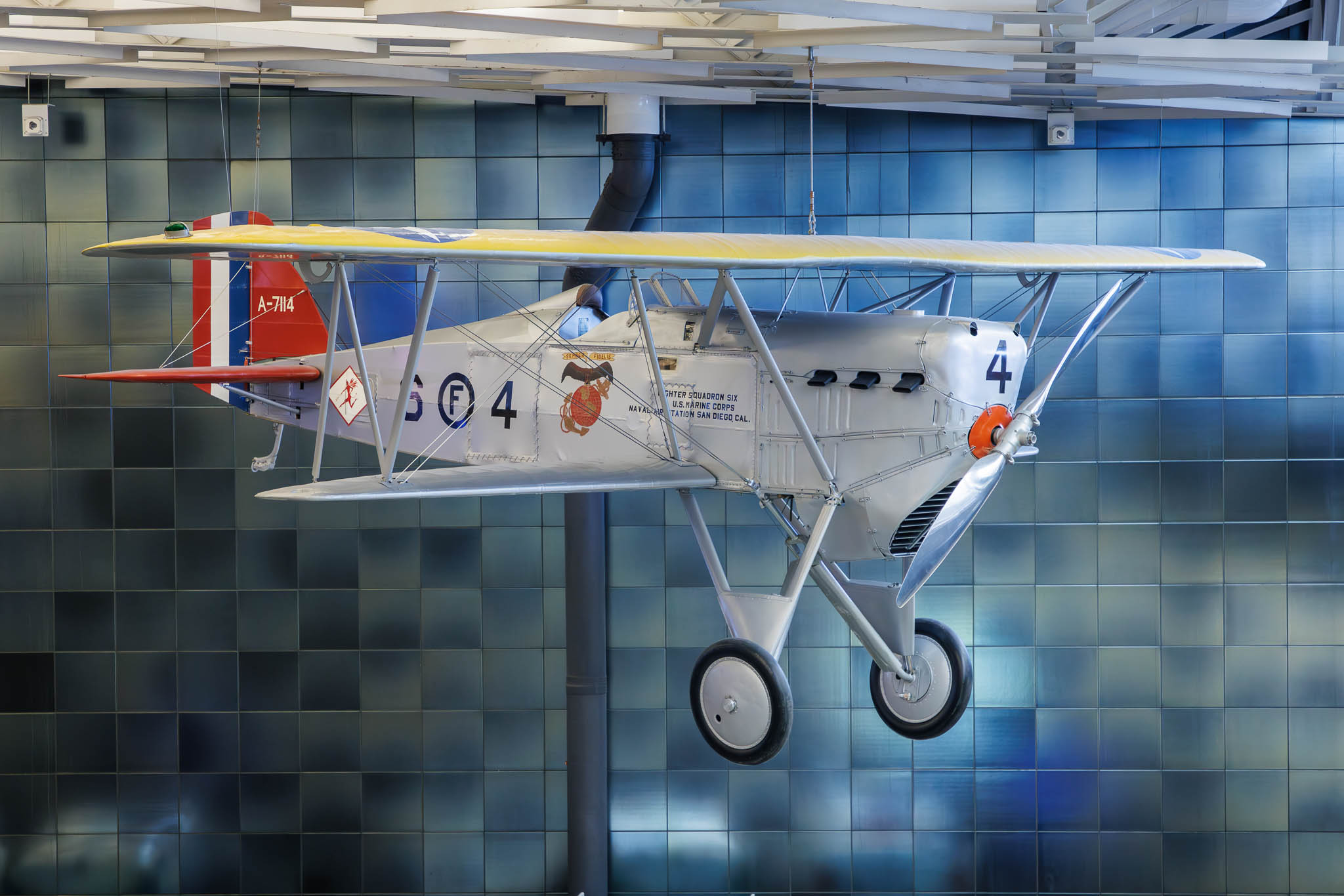
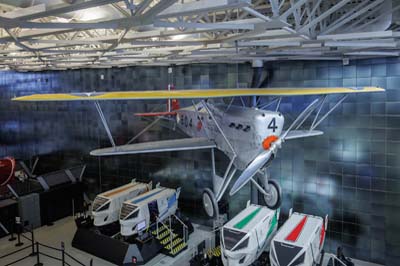
Left to right: Boeing FB 5 (A-7114 '6-F-4') ex US Navy.
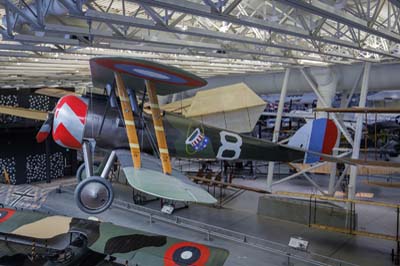
Nieuport 28 (Unknown '8') ex US Army Air Service (USAAS). |
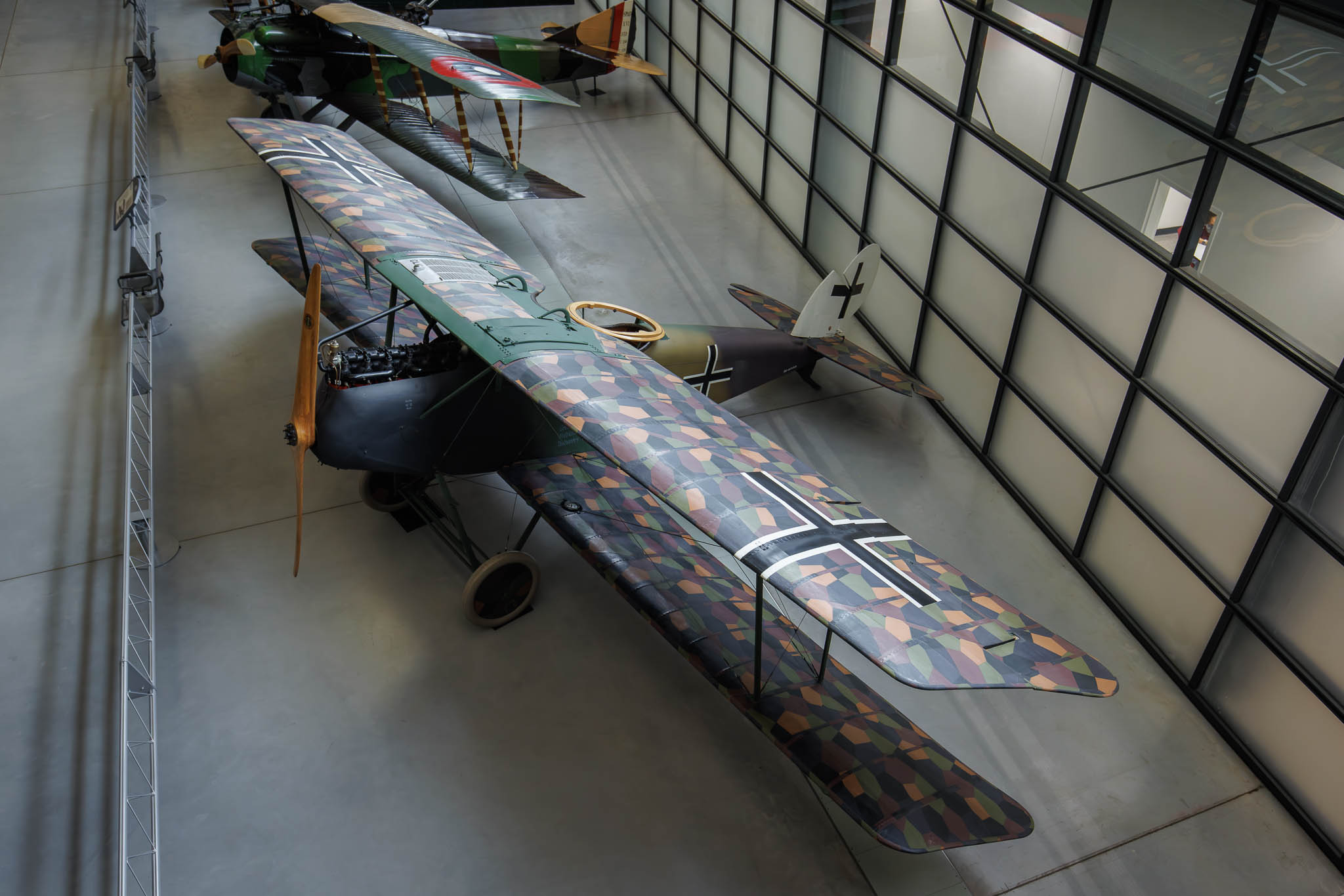
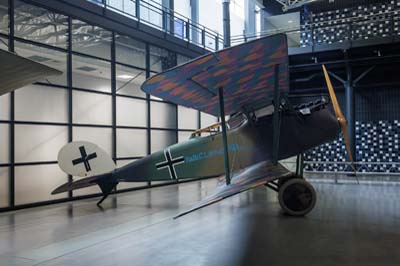
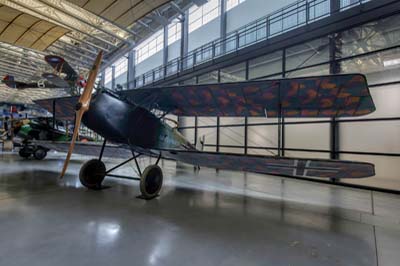
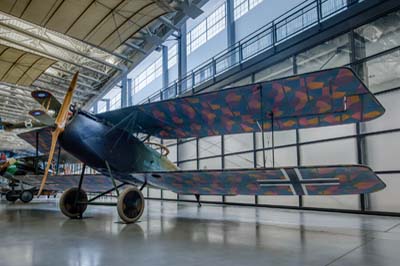
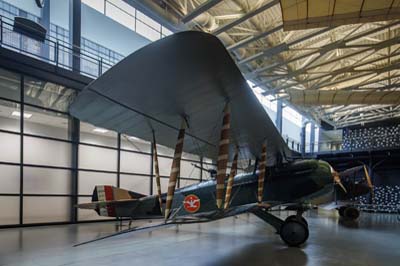
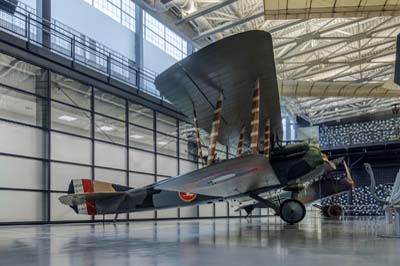
| Left to right: Halberstadt CL.IV (8103/18) ex Luftstreitkräfte (German Air Force). Following its service with the Imperial German Air Service in World War One it was one of three complete Halberstadt CL.IVs acquired from the Reparation Commission in 1920 by Paul Strähle (German aviation pioneer, fighter pilot and aerial photographer), it originally flew as a photo plane until September 25, 1938. Paul Strähle's archive of 40,000 aerial photos still exists today, along with the additional spare parts and three extra Halberstadt fuselages he saved that enabled four of these aircraft to survive, two in Berlin and two in the United States. |
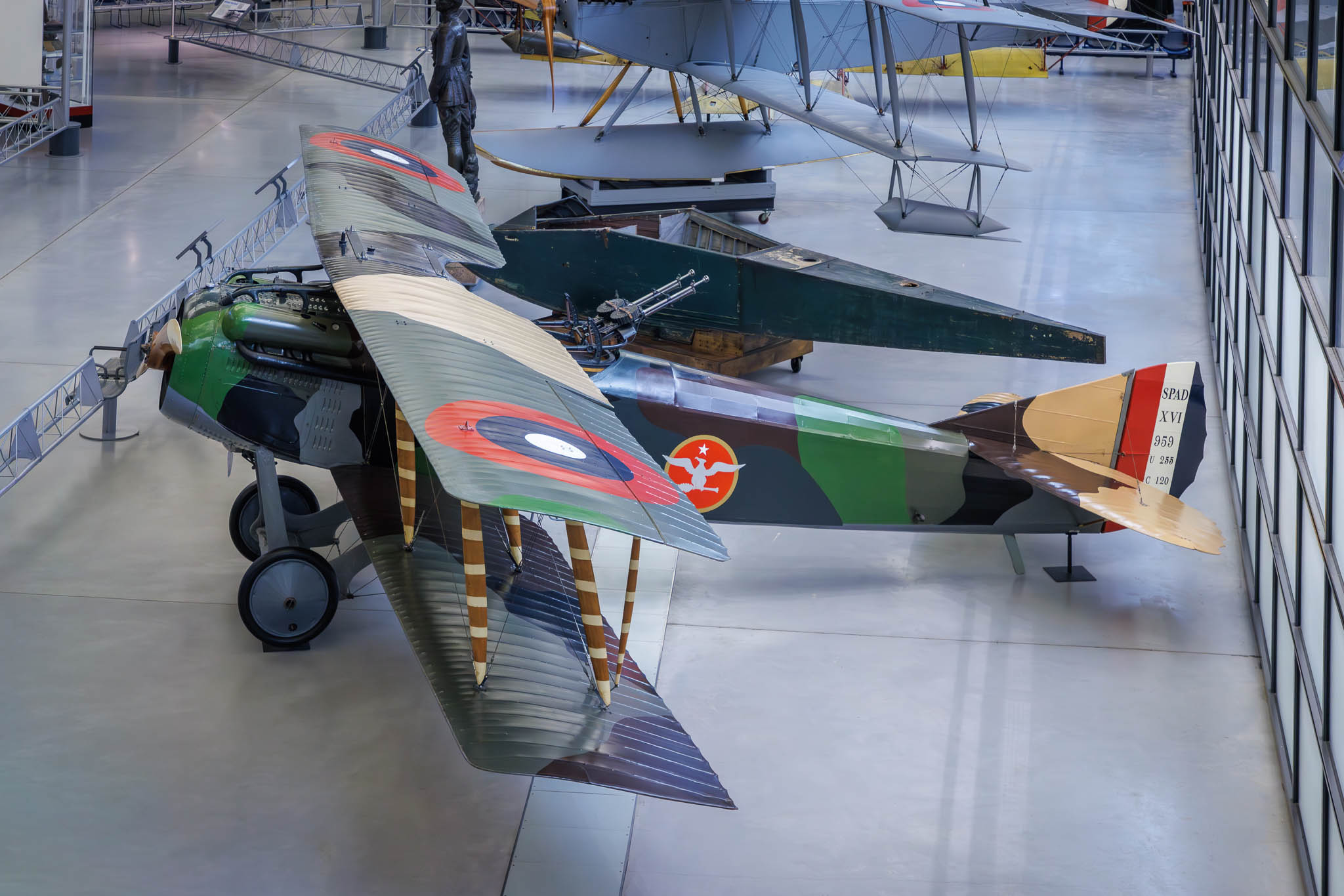
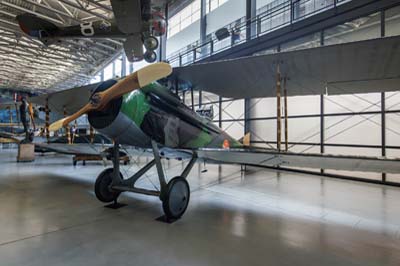
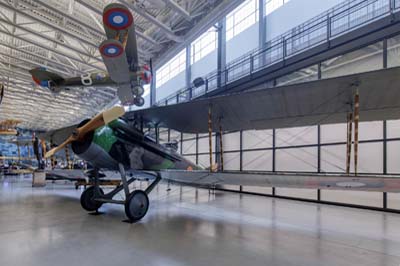
| Left to right: SPAD XVI (AS9392) ex US Army Air Service (USAAS). |
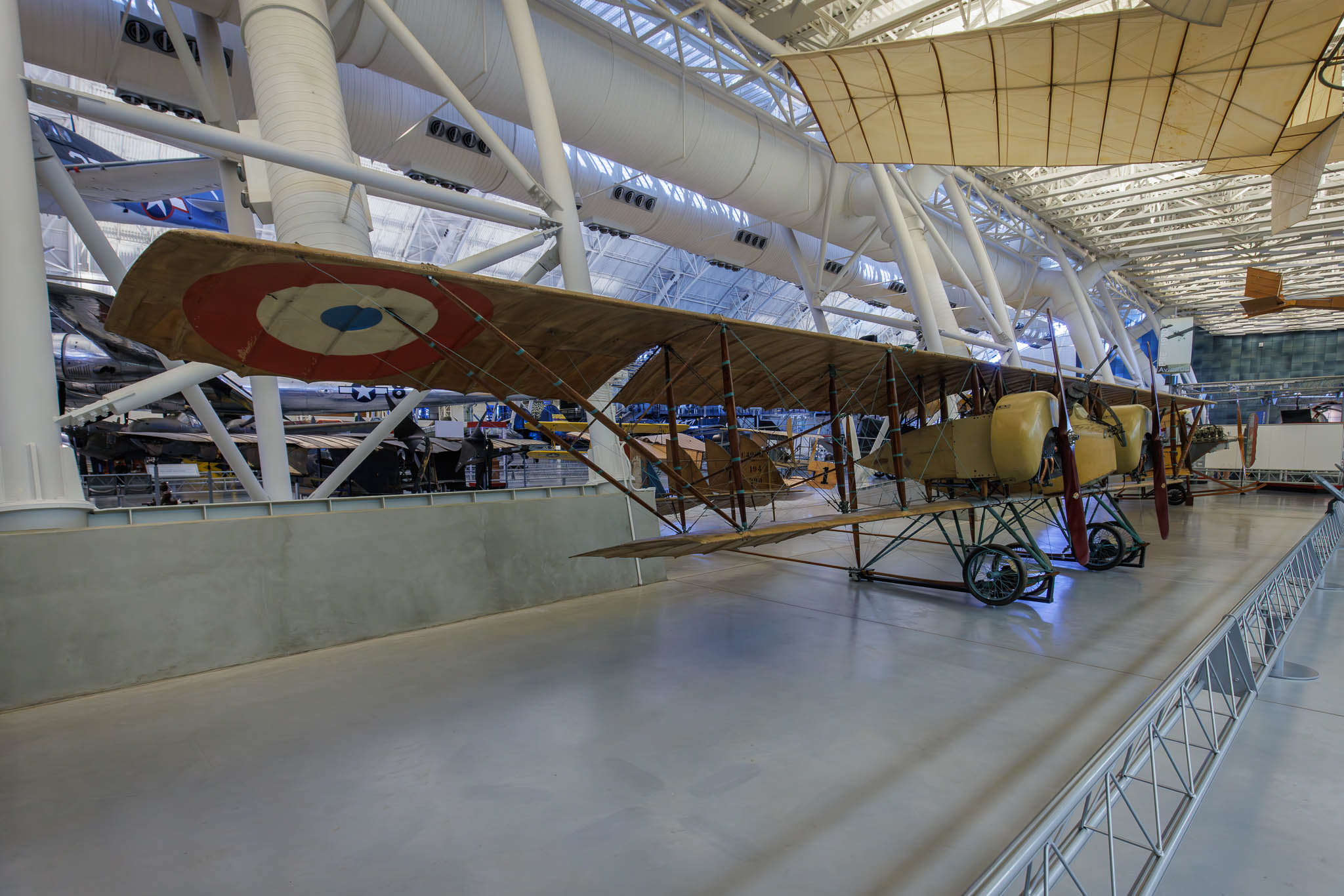
| Left to right: Caudron G.4 (C4263) ex US Army Air Service (USAAS). |
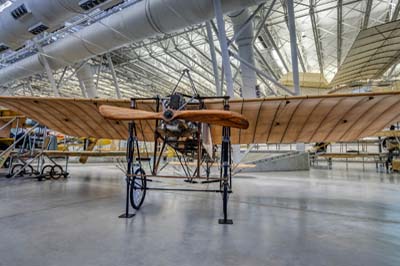
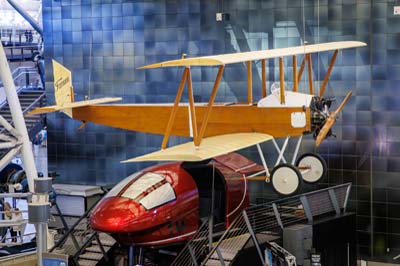
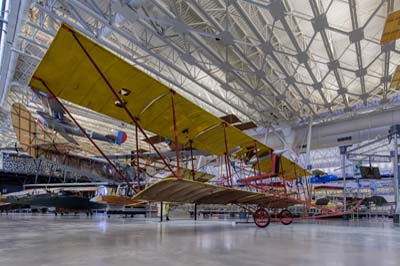
Left to right: VanDersarl Blériot ('1'). Following Louis Blériot's celebrated 1909 crossing of the English Channel and the rise in fame of his Type XI monoplane, teenage brothers Jules and Frank VanDersarl of Denver set out to build their own version, unable to afford a factory-made aircraft. From 1909 to 1911, they constructed the plane entirely by hand, fabricating every component—including the engine. In June 1911, without any flight instruction or prior experience, they flew their homemade aircraft successfully, an extraordinary feat for two self-taught young aviators. The original engine did not survive, and the plane now carries a modern, functioning reproduction in its place.
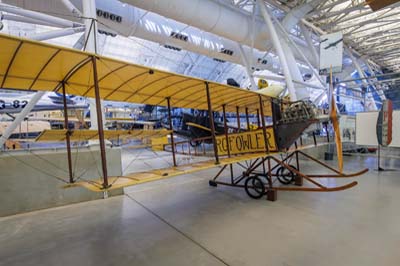
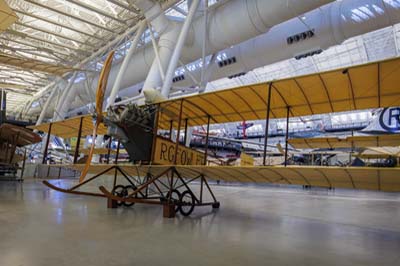
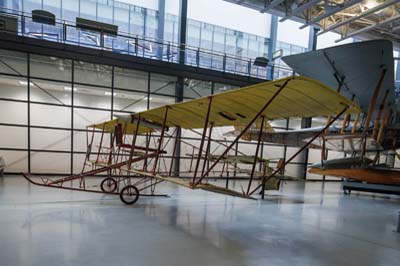
The Fowler-Gage Biplane was an early American aircraft developed by Robert G. Fowler and Jay Gage, best known for its role in Fowler's notable aviation achievements. Starting in October 1912, Fowler used the plane for numerous exhibition flights and passenger rides throughout California. In 1913, he further cemented its place in aviation history by completing the first flight across the Isthmus of Panama. |
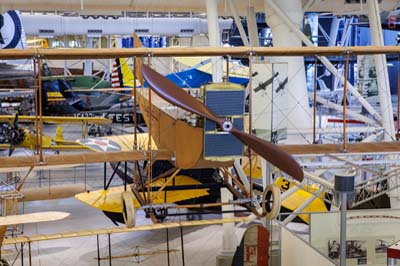
Left to right: Benoist-Korn Type XII (No.32). In 1912, Thomas Wesley Benoist introduced the Type XII, a two-seat tractor biplane powered by a 75-horsepower Roberts engine, notable as one of the first closed-fuselage tractor aircraft in the US. About five were built.
The museum's example, was constructed by Edward and Milton Korn in Benoist's St. Louis shop, completed in May 1912, and flown in Anna, Illinois. The Korns used it for exhibitions until a 1913 accident killed Milton. The aircraft was modified in 1917, donated to the Air and Space Museum in 1949, and restored in 1981.
The Farman FF 65 Sport is a French-built, single-engine light biplane with tandem seating, designed for sport and touring. First flown in 1919, it saw modest sales domestically and internationally during the early 1920s. Two notable variants included a biplane glider and a low-aspect-ratio parasol-wing model. A total of 34 production aircraft were built, with several exported. This particular example participated in the 1924 "On to Dayton" race and features a modified undercarriage with coupled wheels and skids.
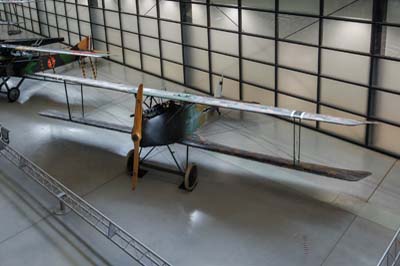
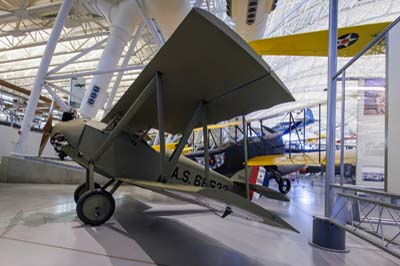
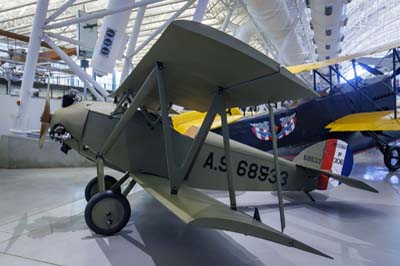
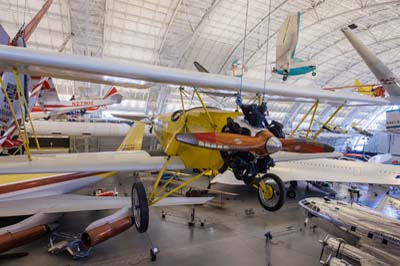
Verville-Sperry M-1 Messenger (AS68533 'P-306'). The Sperry Messenger is an American single-seat biplane designed by Alfred V. Verville for the US Army Air Service's Engineering Division and built under contract by Sperry Aircraft Company in Farmingdale, New York. The aircraft was initially designated the M-1, with 26 built, followed by 16 M-1A variants featuring increased fuel capacity. In 1922, Sperry converted a Messenger into a private sport plane, designed to be stored in a standard garage and easy to fly. Sperry also developed the apparatus for a Messenger to make the first successful airship hook on and release in December 1924.
This example is the last surviving Messenger. Originally a sport plane, it was later modified to represent the version used in the USAAS 1924 airship tests.
|
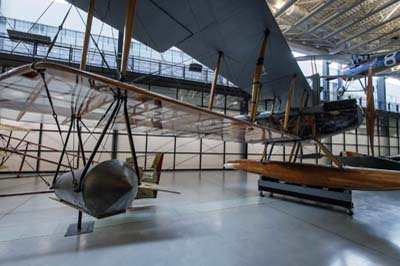
Left to right: The Baldwin Red Devil was a series of early pusher-type aircraft constructed with steel tubing and designed by Thomas Scott Baldwin. The 'Red Devil III' was test flown by Baldwin at Mineola Field, where its first flight ended in a crash into a telegraph pole, fortunately without serious injuries. The Baldwin School later offered flight lessons in the aircraft for $500, provided the student could demonstrate they had life insurance covering flight. Since no aviation-specific policies existed at the time, students were responsible for securing coverage through an insurance broker.
This particular example features a different configuration, lacking a forward-mounted elevator. In 1950, it was purchased by Paul E. Garber for $2,500 from a display at Roosevelt Field in Mineola, Long Island, New York, alongside a Bleriot XI and a Nieuport 10.
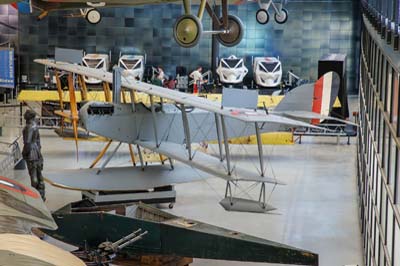
Curtiss N-9H 'Jenny' (A-4236). The N-9H was a seaplane adaptation of the well-known Curtiss JN-4D 'Jenny' trainer used by the US Army Air Service during World War One. To create the floatplane version, engineers installed a large central pontoon beneath the fuselage and added smaller stabilizing floats under each wingtip. During the war, the N-9H played a major role in naval aviation training—about 2,500 Navy pilots earned their wings on this aircraft.
A total of 560 N-9s were built during World War One, the majority being the 'H' variant. Only 100 were produced by Curtiss itself; most were manufactured under license by the Burgess Company of Marblehead, Massachusetts. Today, just one example of the type is known to survive. Formerly displayed at the Museum of Science and Industry in Chicago, it was fully restored in 1966 by the Naval Air Engineering Laboratory in Philadelphia, Pennsylvania. |
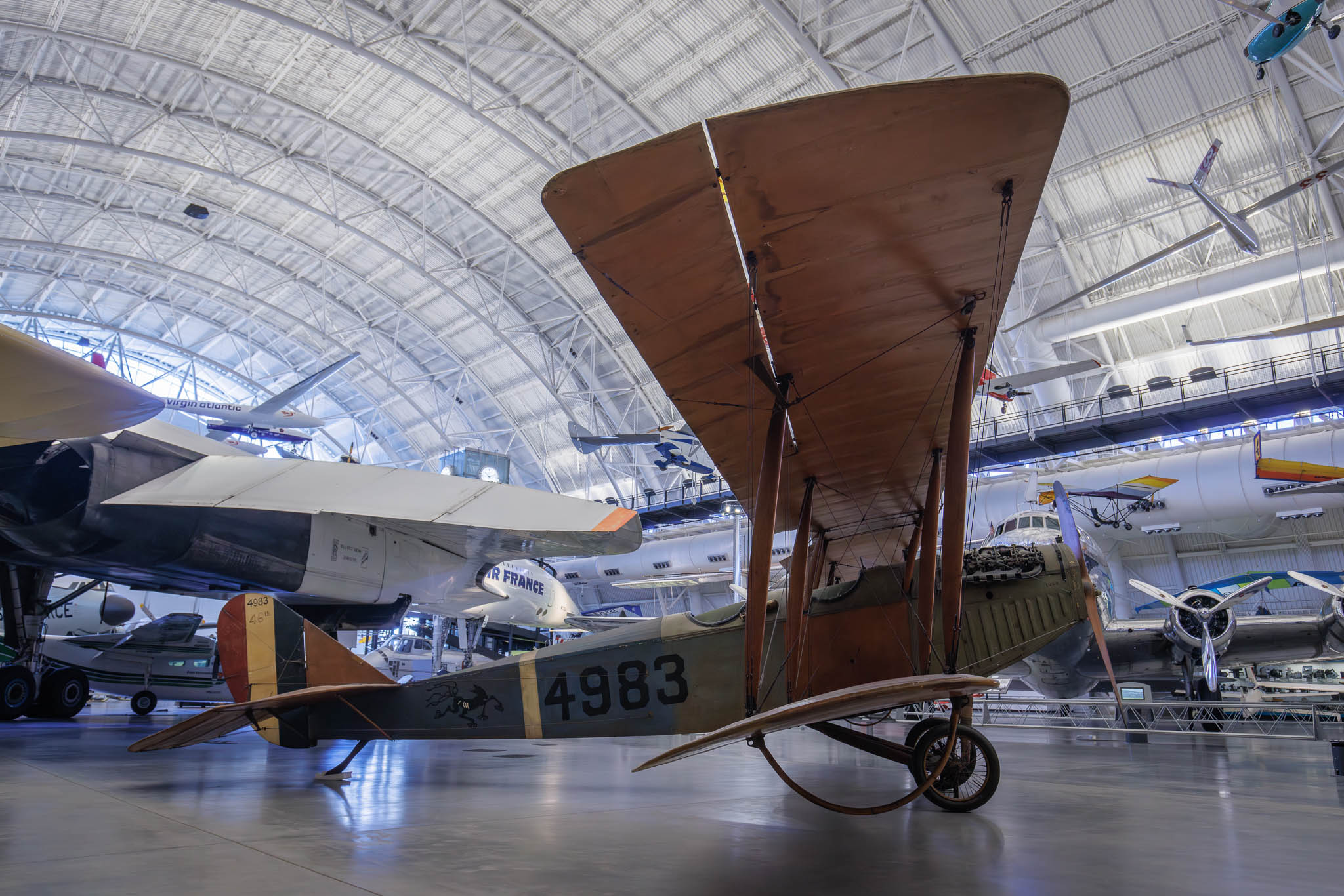 |
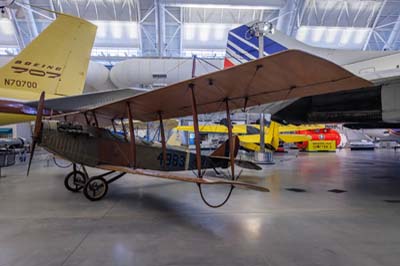
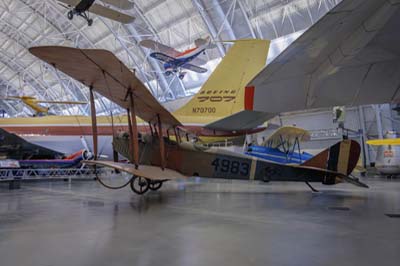
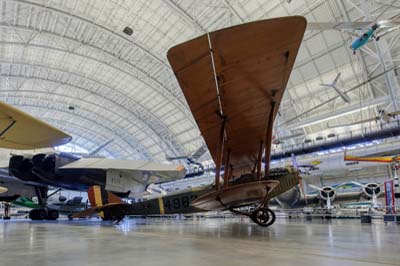
| Left to right: Curtiss JN-4D 'Jenny' (4983) ex USAAS. The Jenny series was the most widely produced United States aircraft from 1917 through the 1920s. While it served as a primary trainer for the US Army Air Service during World War One, the Jenny became even more popular in the 1920s for barnstorming and carrying airmail. The JN-4D model, on display, was the definitive version of the Curtiss JN series. Introduced in 1917, shortly after the United States entered World War One, it was one of several improvements Curtiss made to his aircraft design. Notably, the JN-4D replaced the earlier control wheel with a control stick to operate the ailerons, which were now located only on the upper wings. Around 35 Curtis Jennys survive today from a total of 6,813 built. |
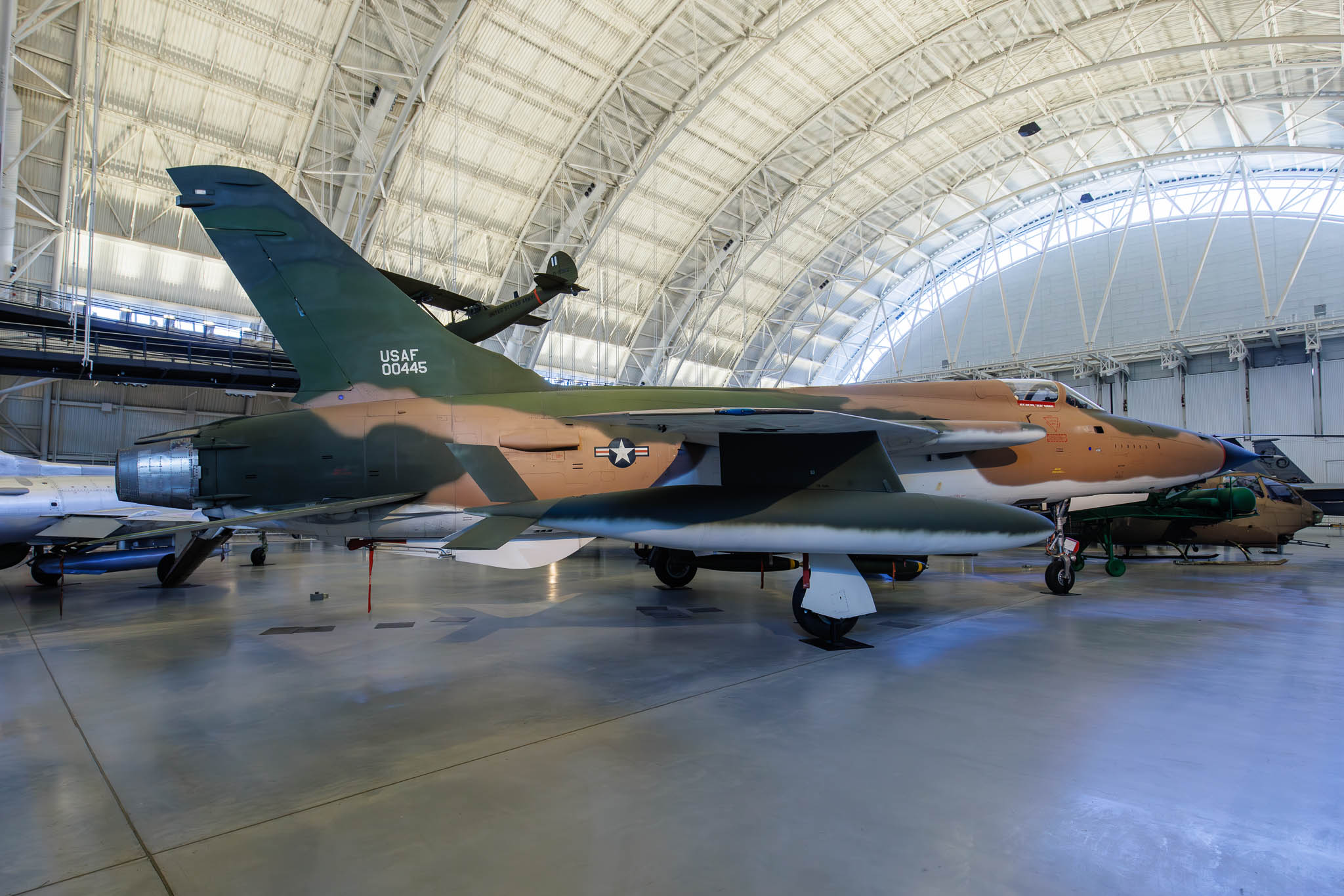
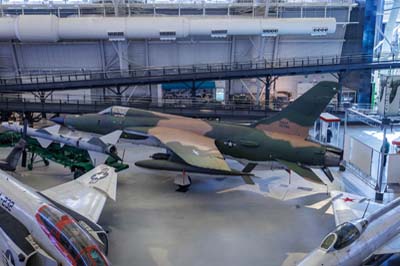
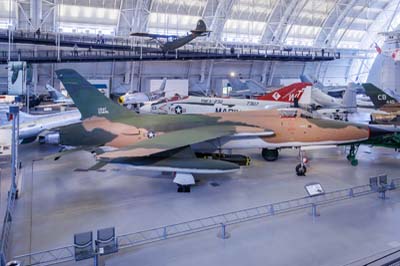
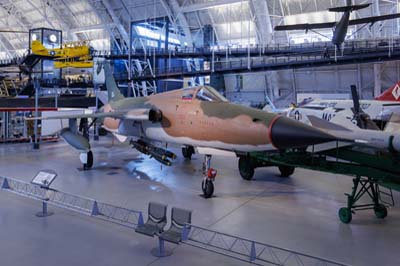
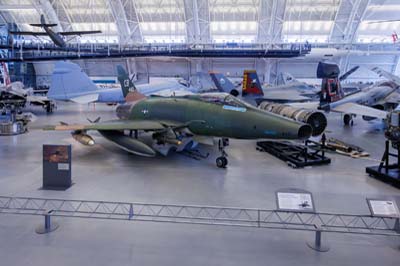
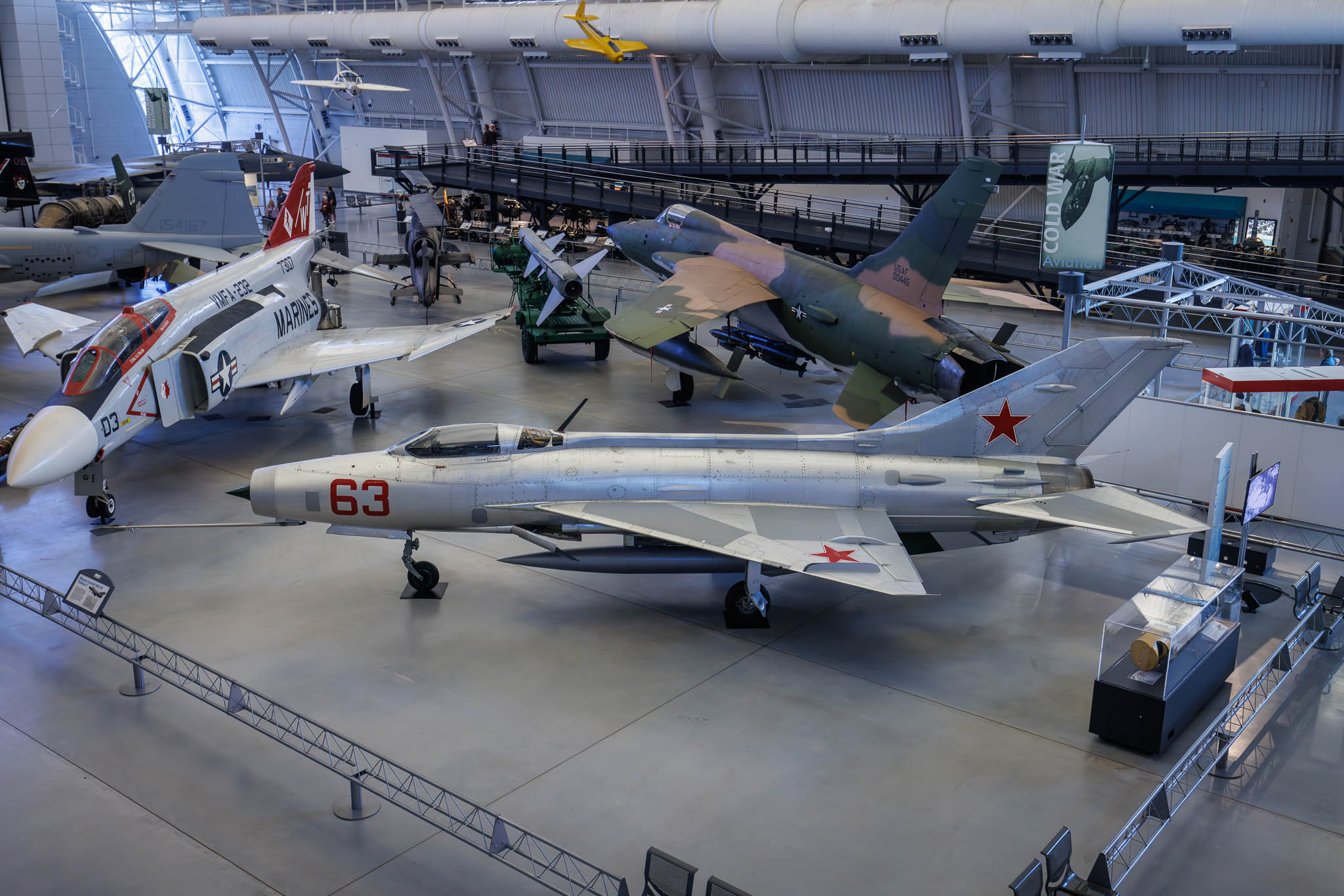
| Left to right: Republic F-105D Thunderchief (60-0445) ex USAF. |
Left to right: North American F-100D Super Sabre (56-3440 'CB') ex USAF.
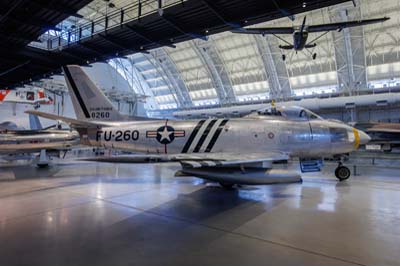
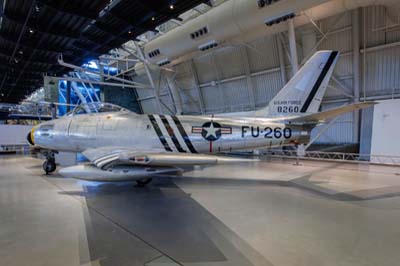
North American F-86A Sabre (48-0260 'FU-260') ex USAF. |
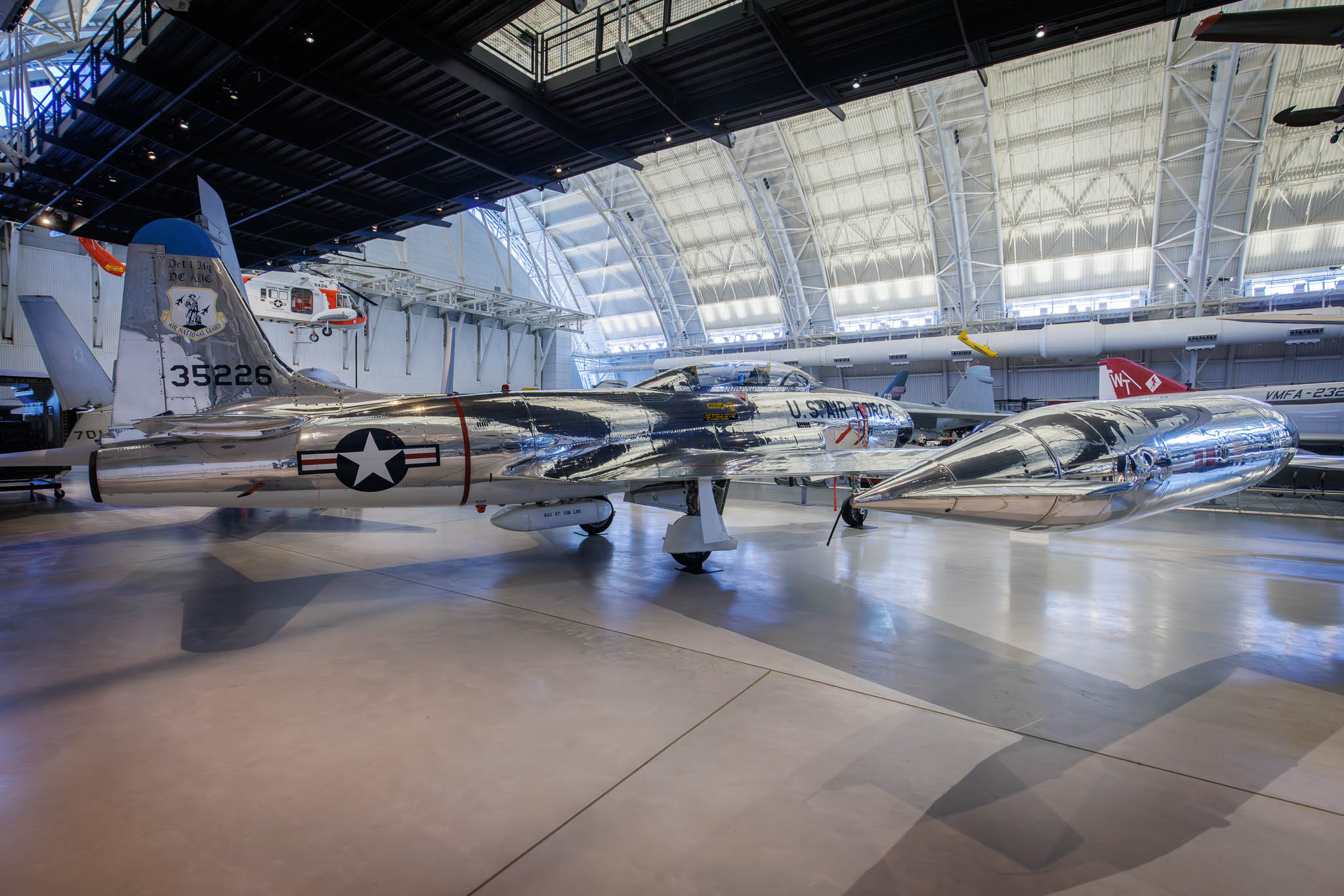
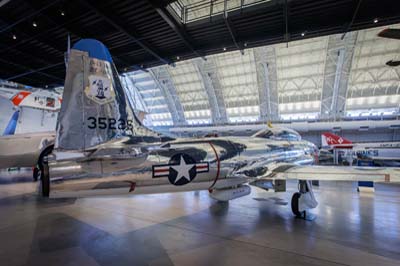
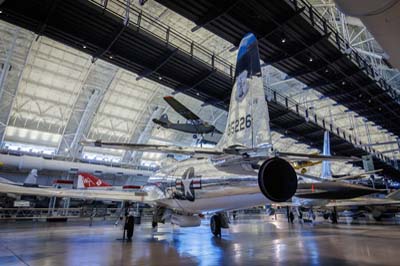
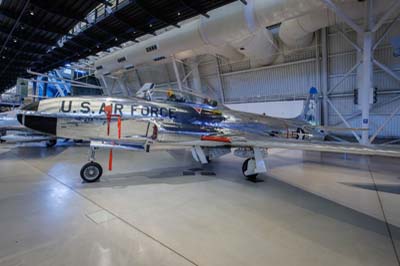
Left to right: Lockheed T-33A Shooting Star (53-5226) ex USAF.
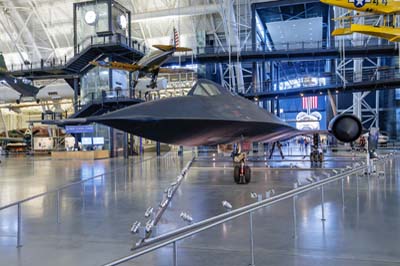
Lockheed SR-71A Blackbird (61-7972) ex USAF. |
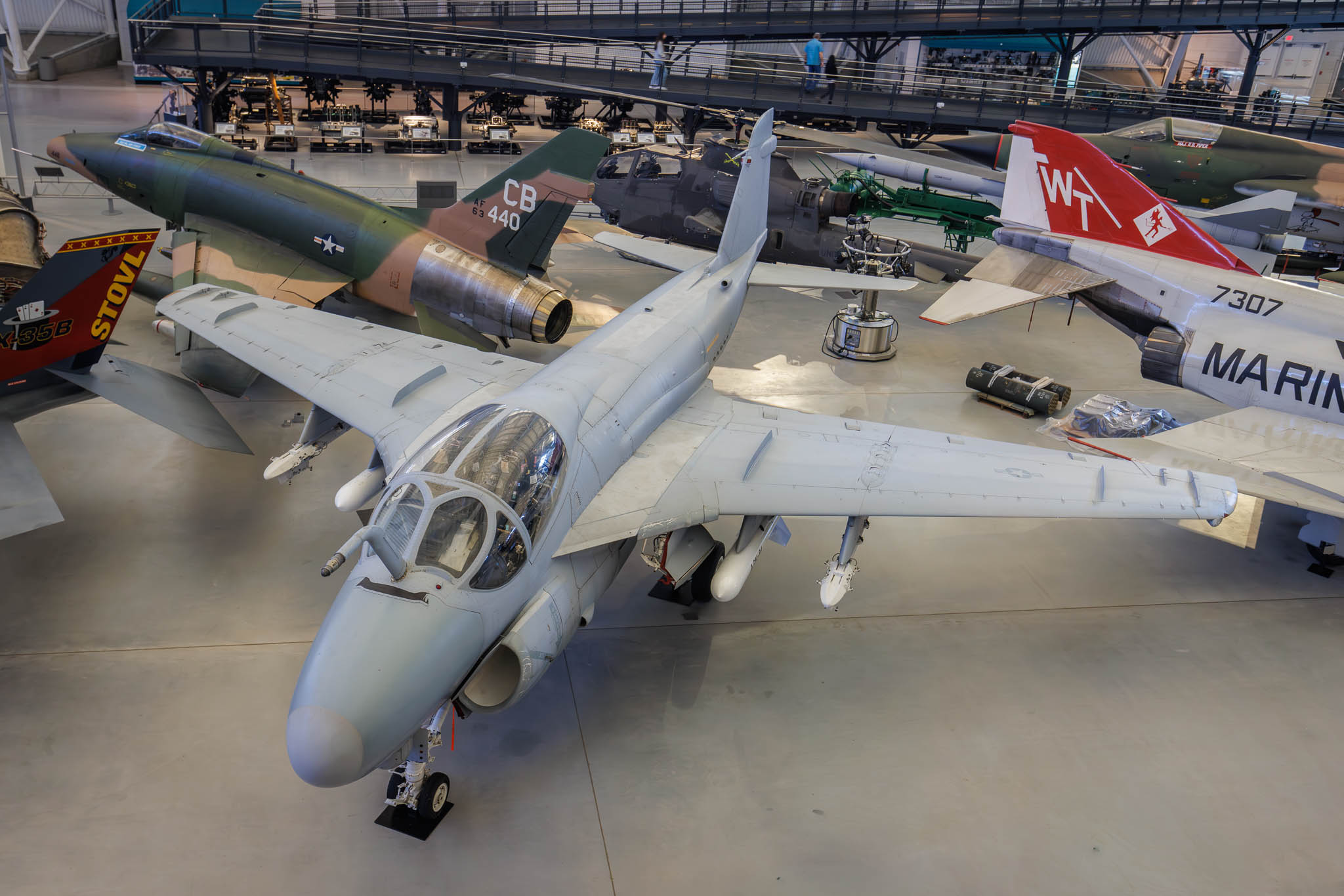
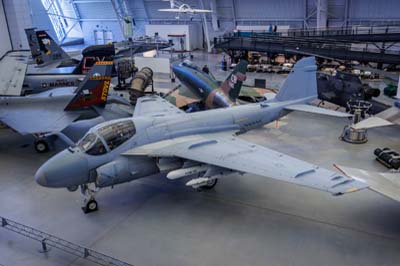
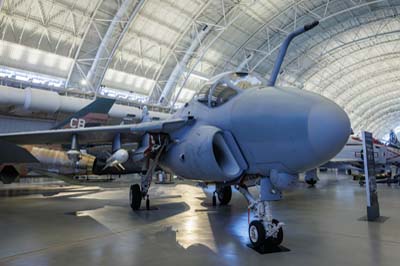
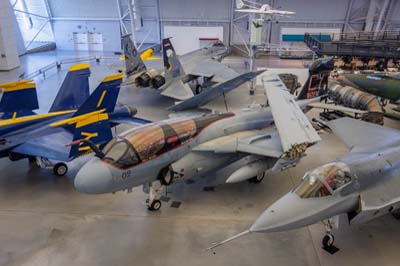
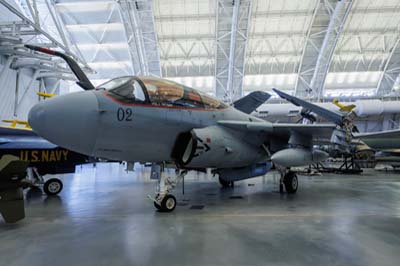
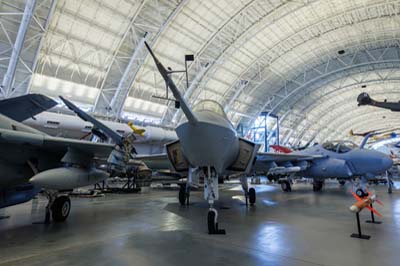
Left to right: Grumman A-6E Intruder (154167) ex US Navy.
Grumman EA-6B Prowler (162230 'CY-02') ex USMC, VMAQ-2 markings. |
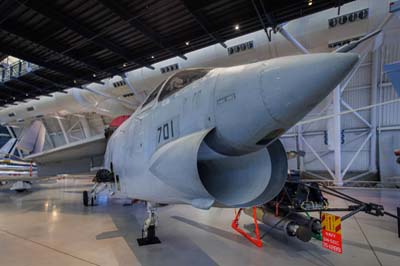
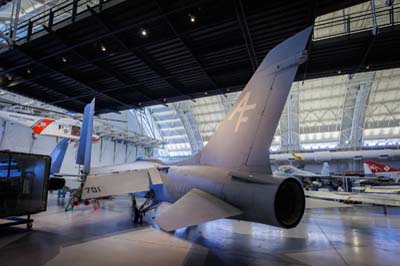
Left to right: LTV RF-8G Crusader (146860 'AF-701') ex US Navy, VFP-206 markings.
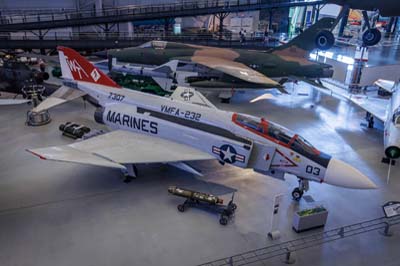
McDonnell Douglas F-4S Phantom (157307 'WT-03') ex USMC, VMFA-232 markings. |
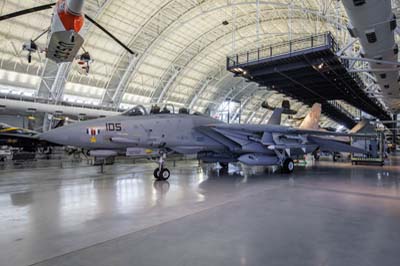
Left to right: Grumman F-14D Tomcat (159610 'NK-105') ex US Navy, VF-31 markings.
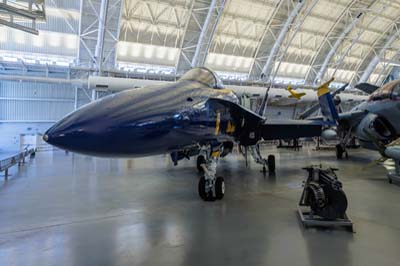
McDonnell Douglas F/A-18C Hornet (163439 '1' painted as Blue Angels '1', ex US Navy.
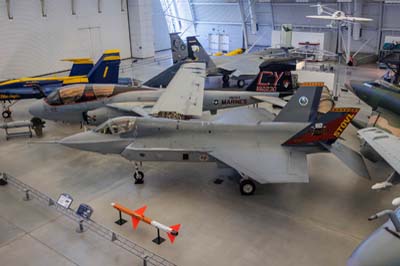
Lockheed Martin X-35B (301) ex Lockheed STOVL demonstrator. |
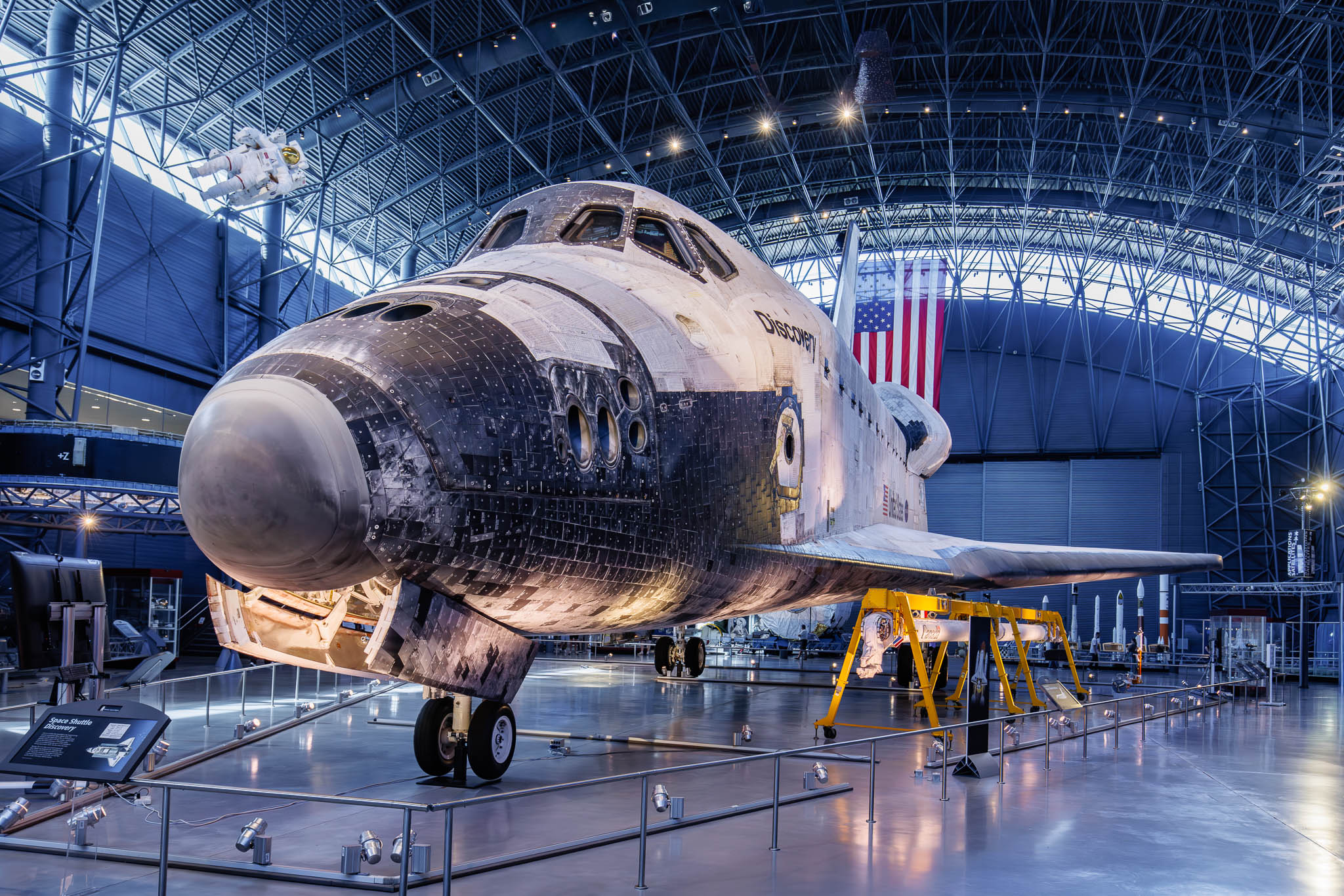
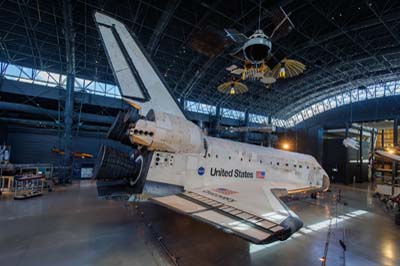
Left to right: Space Shuttle Discovery.
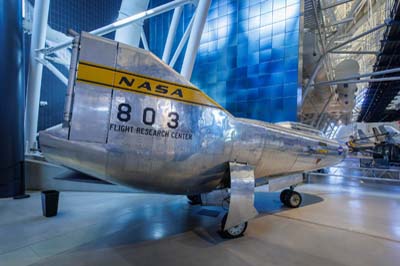
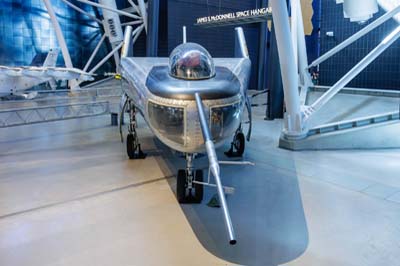
NASA/Northrop M2-F3 Lifting Body (N803NA).
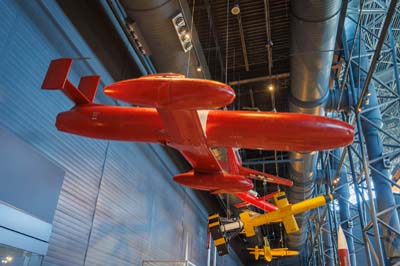
Curtiss-Wright KD2C-2 Skeet (0058) ex US Navy. |
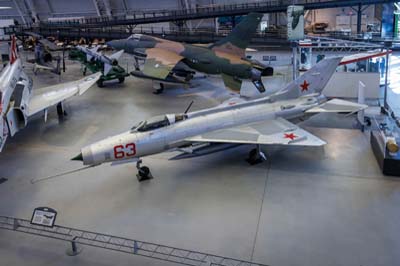
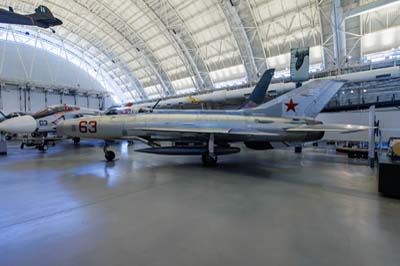
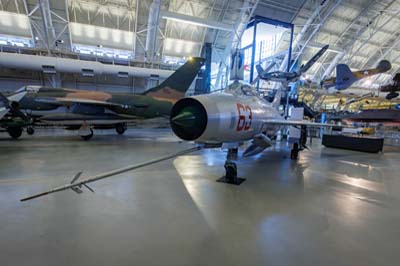
| Left to right: Mikoyan-Gurevich MiG-21F-13 (F-2163, marked as 'red 63') ex TNI-AU) ex USAF. |
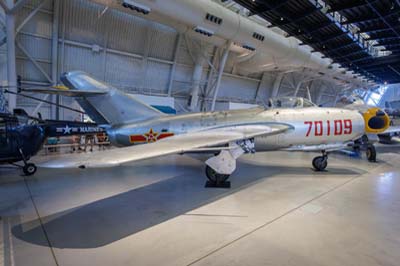
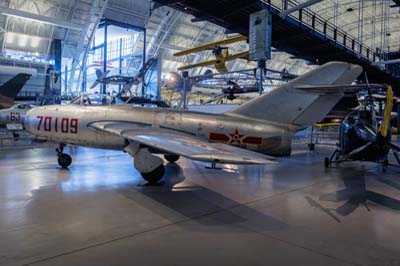
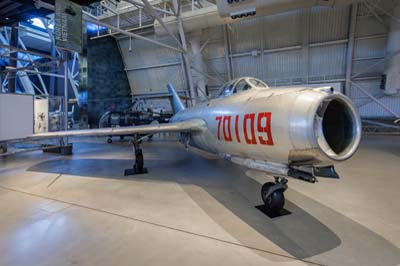
| Left to right: Mikoyan-Gurevich MiG-15bis (70109) ex Chinese. |
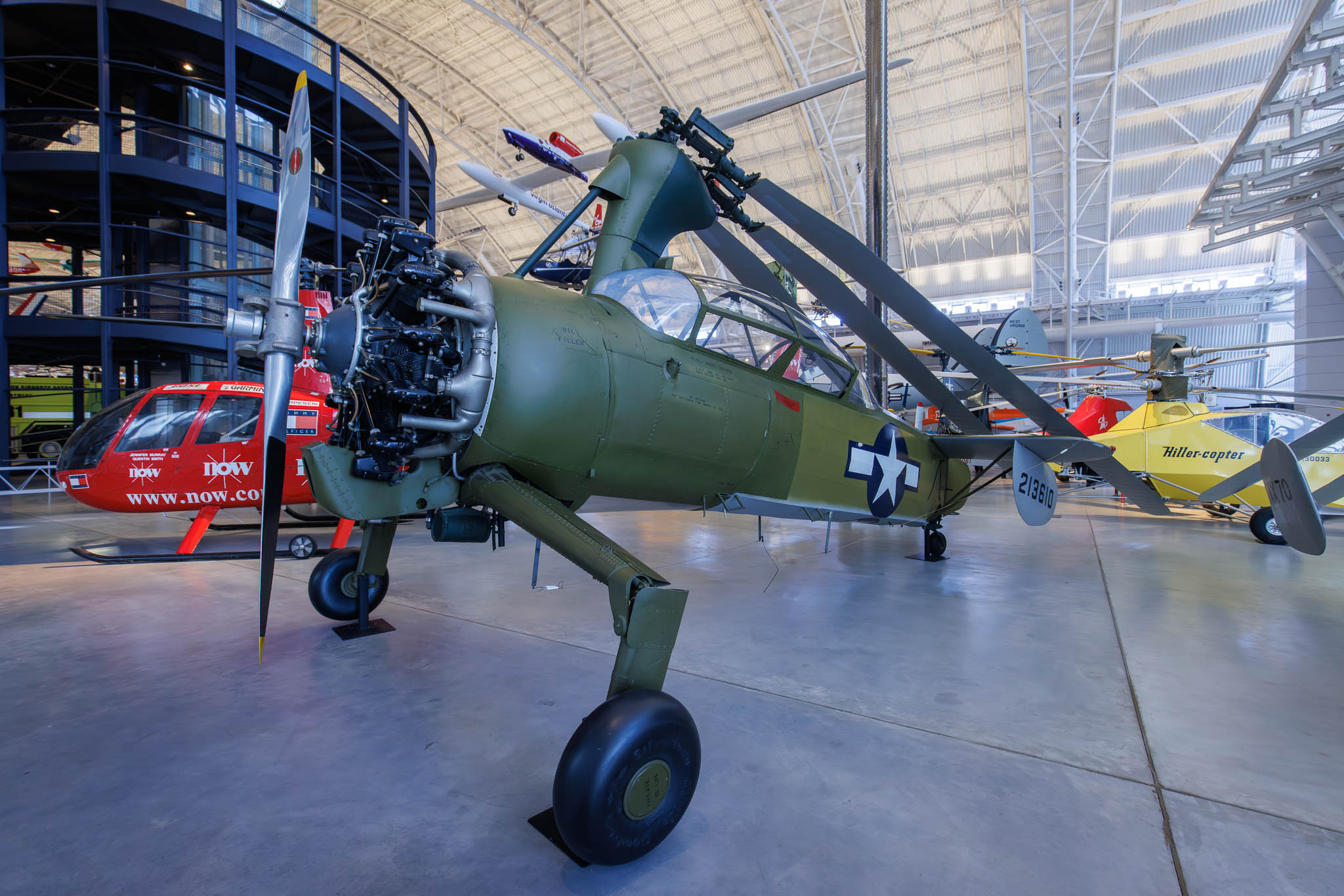
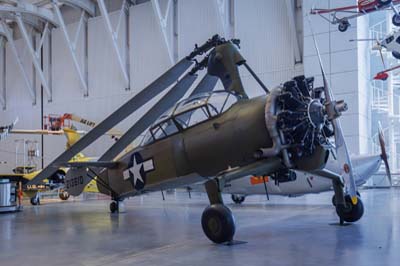
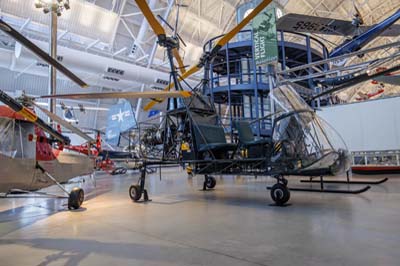
Left to right: Kellett XO-60 (42-13610) ex USAAF.
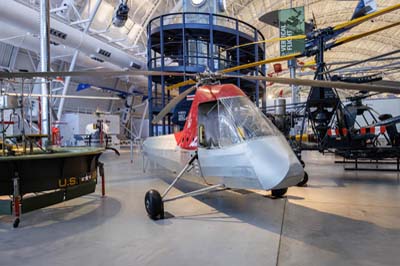
Piasecki-Venzie PV-2 (NX37061).
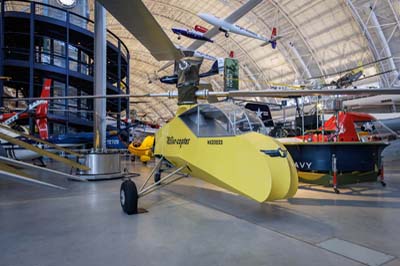
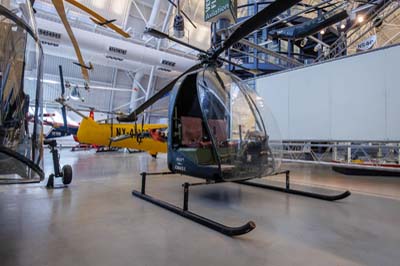
Hiller XH-44 'Hiller-Copter' (NX30033).
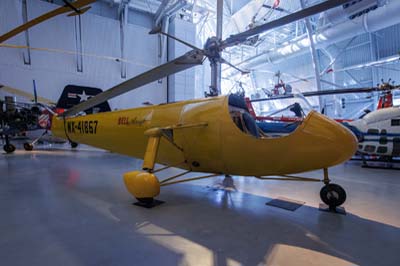
Bell Model 30 (NX41867). |
Left to right: Hiller Hornet XHOE-1 (138652 'FT-652') ex US Navy.
Kaman Huskie XHOK-1 (125477 'K-225') ex US Navy.
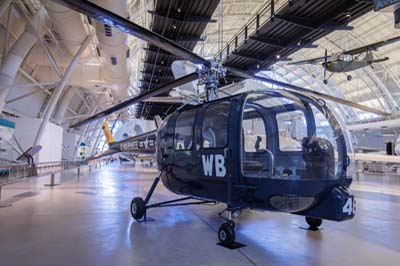
Sikorsky HO5S 1 (125517 'WB-46') ex USMC, VMO-6 markings.
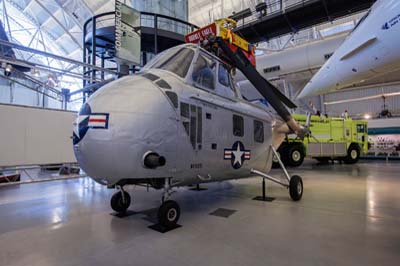
Sikorsky UH-19A Chickasaw (127799 wears '92012' registered N4782S) ex US Navy. |
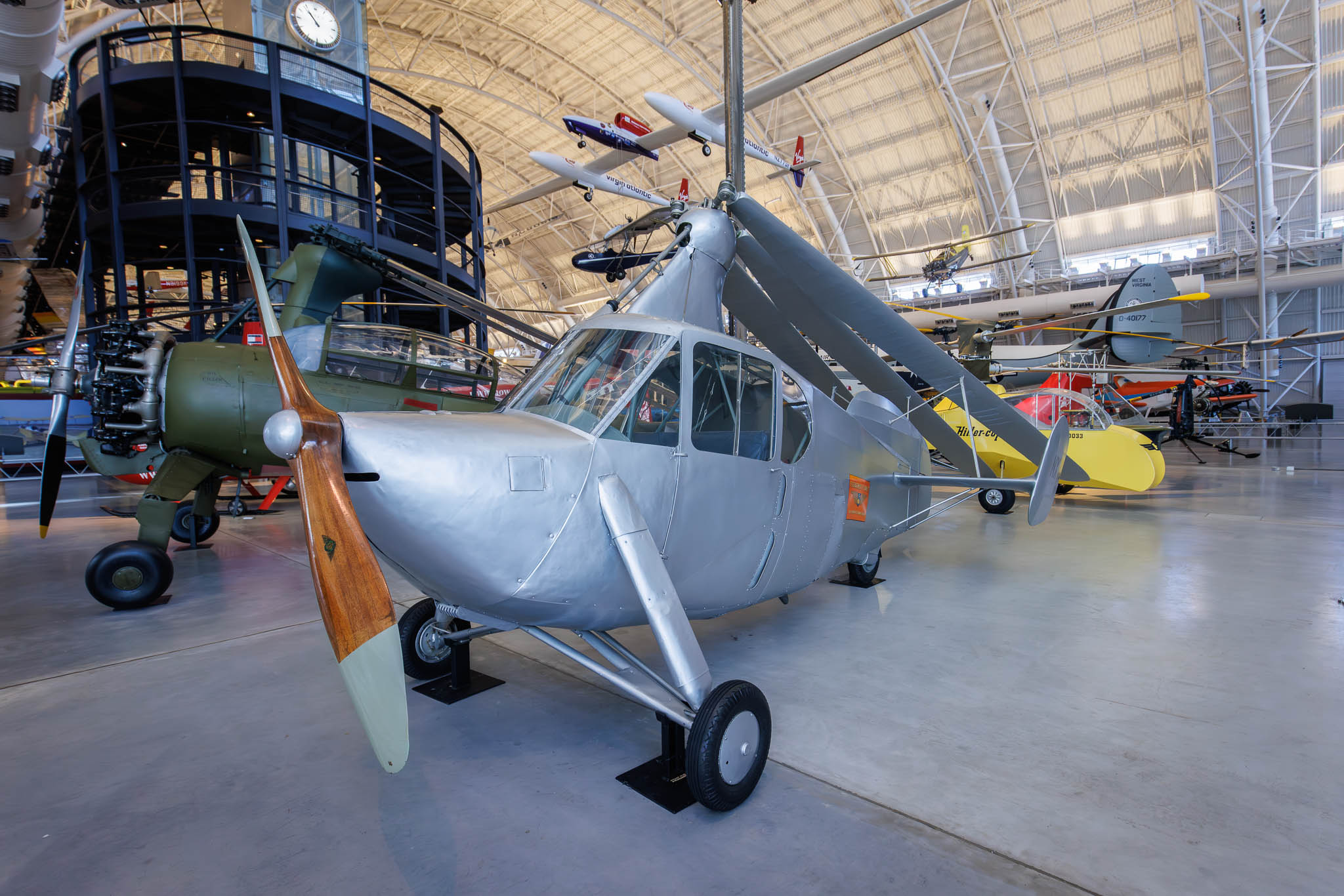 |
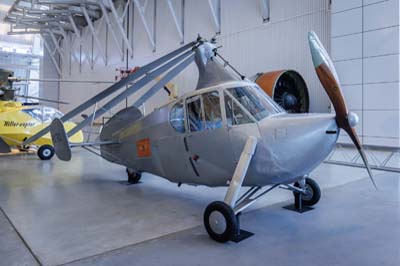
Left to right: autogyro Company of America AC-35 (NX70). ACA's parent company was Pitcairn autogyro Company. The AC-35 was landed by test pilot James G. Ray on October 2, 1936 in a downtown Washington, DC park, where it was subsequently placed on display. Later that month, the aircraft was reconfigured for ground operation: the rotor blades were folded back along the fuselage, the propeller was disengaged, the tailwheel was geared for drive, and steering was shifted to the front wheels. Ray then drove the vehicle through the streets of Washington to great public enthusiasm before delivering it to the Aeronautics Branch at the main entrance of the Commerce Building. It has a 'Department of Commerce' badge on the fuselage.
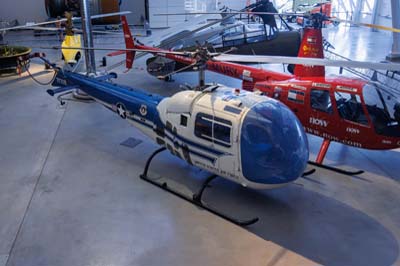
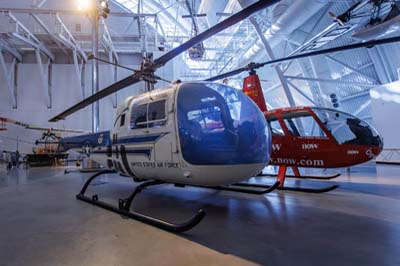
Bell UH-13J Sioux (57-2729) ex USAF. |
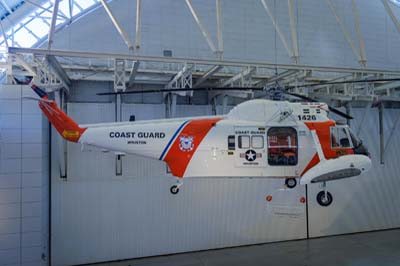
Left to right: Sikorsky HH-52A Seaguard (1426) ex USCG.
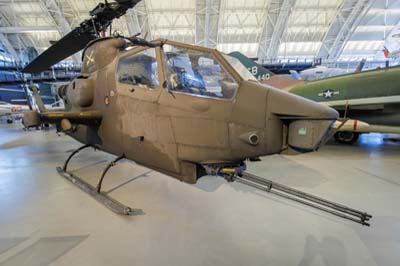
Bell AH-1F Cobra (67-15508) ex USAR. |
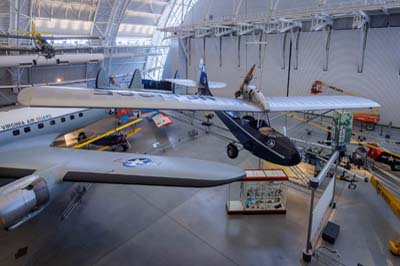
Left to right: CASA 352L (T.2B-255 marked as 'D-ADLH') ex Spanish Air Force (Ejército del Aire).
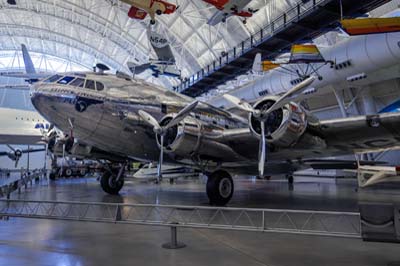
Boeing 307 Stratoliner (2003 registered NC19903) ex Haiti Air Force. Named 'Clipper Flying Cloud' with Pan American Airways. This is the last remaining Boeing 307.
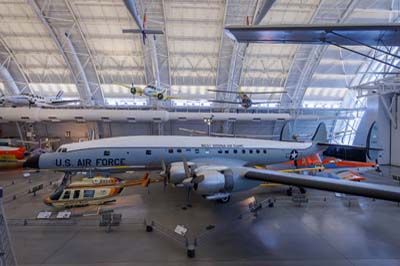
Lockheed C-121C Constellation (54-0177) ex USAF.
Concorde (F-BVFA) Air France, arrived after its final flight in 2003. |
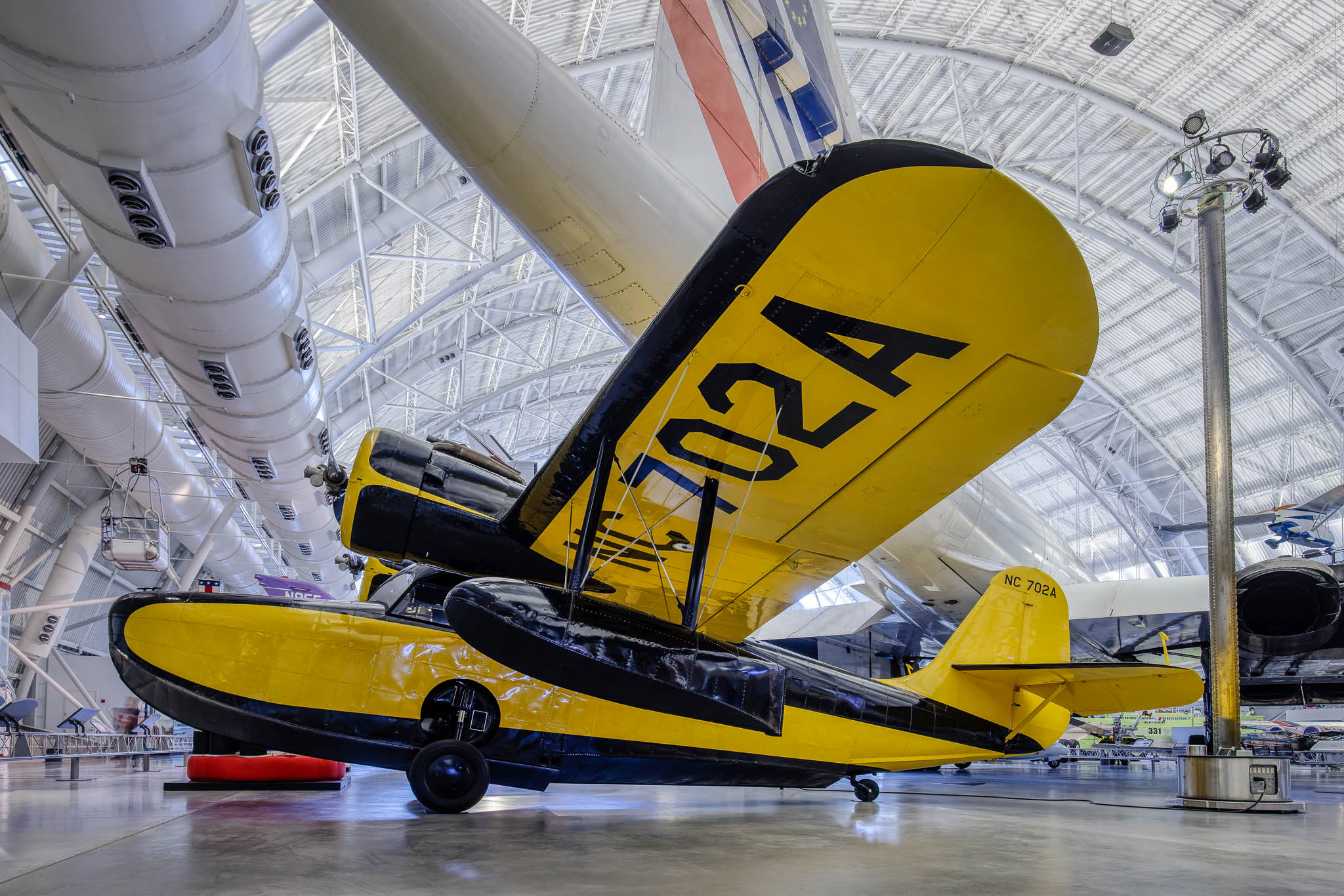 |
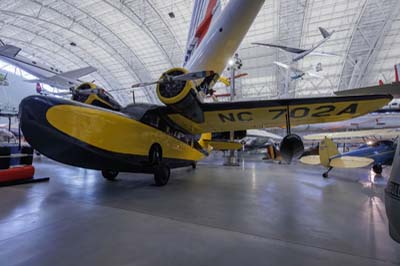
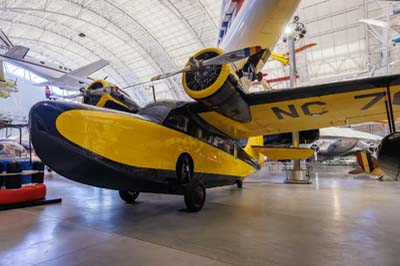
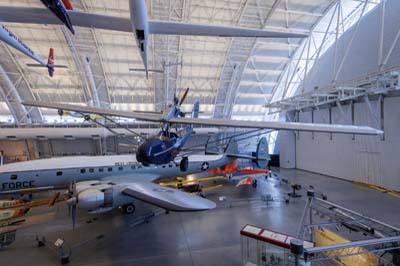
Left to right: Grumman G-21A Goose (NC702A).
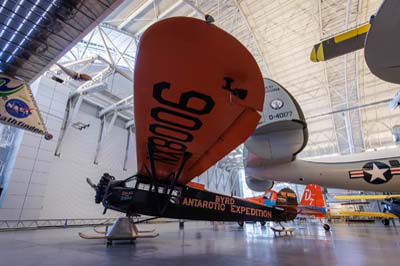
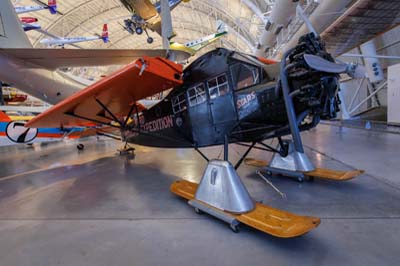
Fairchild (NX8006) named 'Stars and Stripes', Byrd Antarctic Expedition. Lt. Commander Richard E. Byrd flew the Fairchild FC-2W2 on pioneering aerial mapping and reconnaissance missions during the first and second Byrd Antarctic Expeditions (1928–1930, and again after the aircraft emerged from three years buried in snow, 1933–1935). A successor to Sherman Fairchild's FC-2, the FC-2W2 offered a stable platform for Fairchild cameras and was also used in rescue operations. In later years, the Fairchild Corporation employed the aircraft for photographic survey work throughout the United States and Guatemala.
The Museum acquired the aircraft's components in 1961 and loaned them to the Cradle of Aviation Museum on Long Island, New York, for restoration between 1982 and 1989. The restored aircraft was subsequently displayed at the Virginia Aviation Museum before returning to the National Air and Space Museum in 2016. |
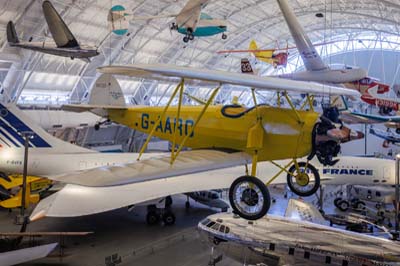
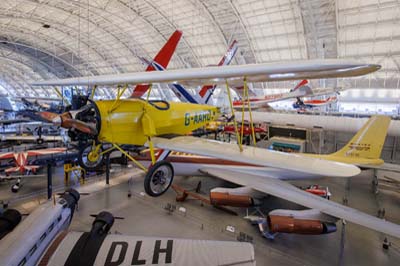
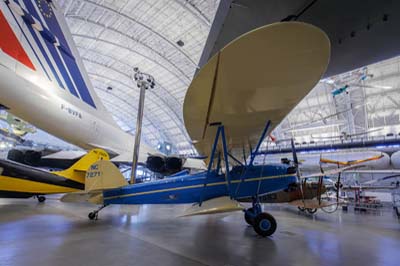
Left to right: Arrow Sport A2-60 (G-AARO registered N9325). This aircraft was built in Havelock, Nebraska, and completed on June 20, 1929, originally registered NC9325. After passing through several US owners, it was exported to the United Kingdom in the late 1970s, where it received the registration G-AARO. At the time, it was the only aircraft of its type operating outside the United States.
In 1987, the aircraft was transferred to the Smithsonian Institution and subsequently returned to the United States. |
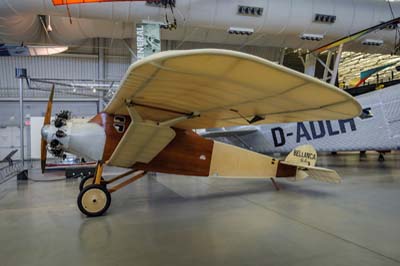
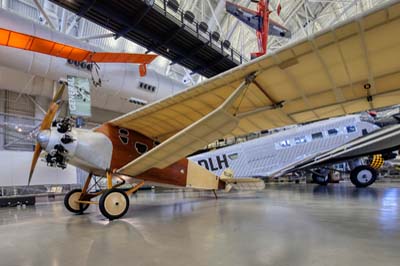
Left to right: Bellanca CF (N11036). Bellanca originally envisioned the CF as a commercial transport aircraft, before a viable market existed; as a result, only a single example was ever built. Despite this, the elegantly crafted monoplane—featuring high-lift struts and mahogany plywood panels—demonstrated impressive performance. It won races in 1922 and 1923 and even served as the setting for two aerial weddings.
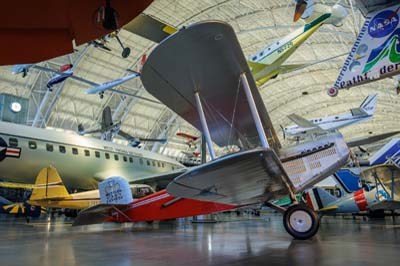
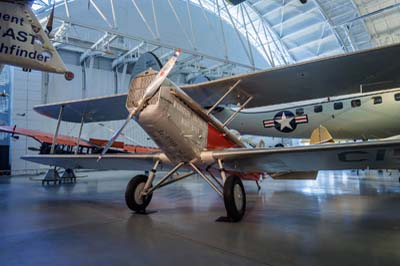
Douglas M-2 (N150) with 'Western Air Express'. Designed in the mid-1920s to replace de Havilland DH-4s for airmail delivery, the Douglas M-2 was a sturdy and reliable aircraft that quickly gained popularity with the newly established airlines.
This particular M-2 was flown by Western Air Express, the predecessor of Western Airlines, which inaugurated airmail service between Los Angeles and Salt Lake City via Las Vegas in April 1926. Originally delivered to the Post Office Department in 1926 as an M-4, with a longer wing than the M-2 and a price of $15,000, it was later reconfigured as an M-2. Western Air Express acquired the aircraft in June 1927 and operated it for nearly 914 hours before it crashed in January 1930. The airplane subsequently changed hands several times before being reacquired by Western Airlines in 1940 for display. |
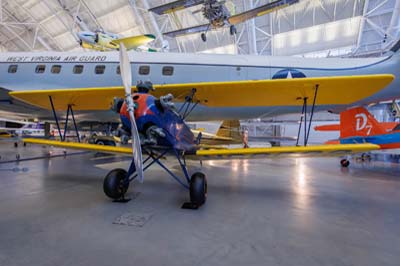
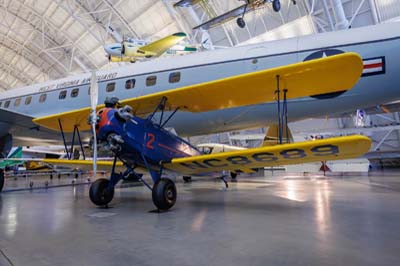
| Left to right: Fleet Model 2 (NC8689 '2') named 'Plane Jane'. Originally built in 1929, the aircraft served as a primary flight trainer at the Roosevelt Aviation School on Long Island, New York, throughout the 1930s. After being stored in a barn from 1950 to 1979, it was restored to flying condition by Eugene Breiner in 1985, subsequently winning eighteen airshow medals. The aircraft was later donated to the Smithsonian and made its final flight to the Udvar-Hazy Center in 2011. |
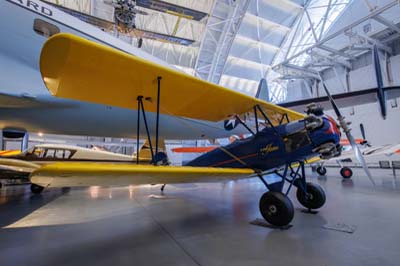
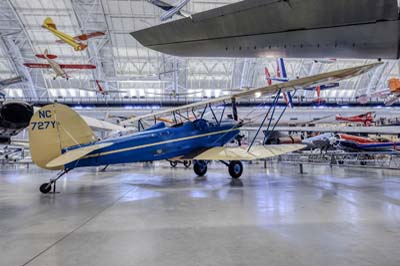
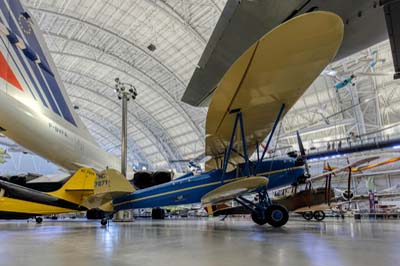
Left to right: Brunner-Winkle Bird BK (NC727Y). Built in 1931 in Brooklyn by the Bird Aircraft Corporation (formerly Brunner-Winkle), the CK series was the company's third-generation biplane, originally designed around the Curtiss OX-5 engine. It was designed for barnstorming and passenger rides. Accommodating a pilot and up to three passengers via a fold-out jumpseat, it stood out with an upper wing twice the size of the lower and impressive efficiency, carrying equal or greater loads than competitors on half the horsepower of its predecessors.
|
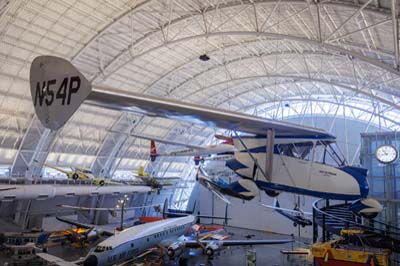
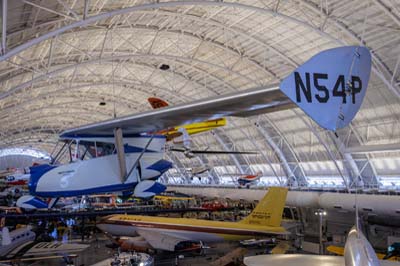
Left to right: Waterman Aerobile (N54P). The sixth and final Aerobile was conceived as an automobile–airplane hybrid, but no market for it ever materialised.
Kreider-Reisner C-4C Challenger (N30M). Amron Kreider and Lewis Reisner of Hagerstown, Maryland, built the C-4C Challenger, a light, efficient biplane designed to replace ageing Curtiss Jennys and Standards. Introduced in 1926, these three-seat, open-cockpit aircraft performed exceptionally, especially with a Wright J-6 engine. After Kreider-Reisner became a Fairchild subsidiary in 1929, the line was redesignated KR-34. This C-4C, built during the transition, flew with several owners and is restored to reflect its service with North Penn Airways. |
 |
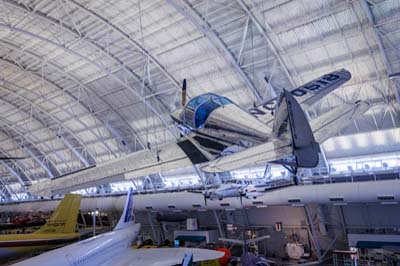 |
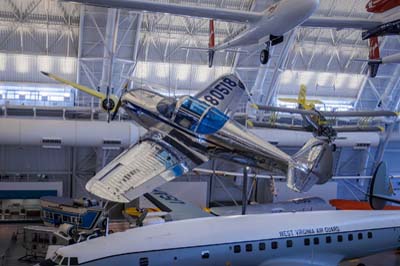
| Left to right: Globe GC-1A Swift (NC80518). A two-seat, all-metal monoplane designed in the 1940s. Two prototypes of the Globe Swift were built, followed by about 408 GC-1As. In 1947, the upgraded 125 hp GC-1B was produced, with 833 built in six months; overproduction led Globe into insolvency, and TEMCO acquired the type certificate, producing 260 more aircraft before ending production in 1951. Later, Univair and then the Swift Museum Foundation managed the certificate and spare parts, with production continuing until 1979. |
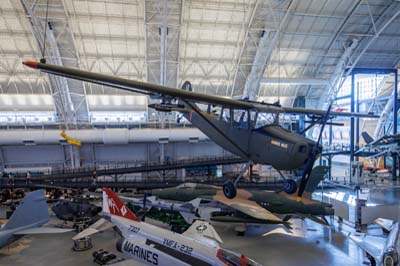
Left to right: Cessna O-1A Bird Dog (51-11963 '963' '11') named 'Mobile Miss' ex USAR.
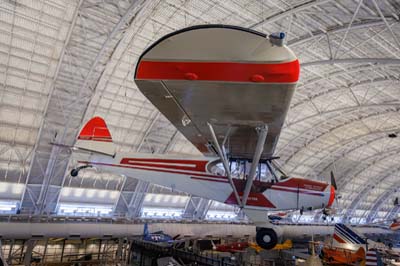
Piper PA-18 Super Cub (N1872P) with 'Atomic Energy Commission'. In the 1950s, the Atomic Energy Commission (AEC) employed this Super Cub in its uranium exploration program in the western United States. The region's rugged and often inaccessible terrain made aerial surveys a practical solution. The AEC's fleet of ten low-flying, slow, and cost-effective Super Cubs earned a strong reputation for safety and reliability. A scintillation counter, used to detect gamma radiation, was mounted in the rear of the aircraft.
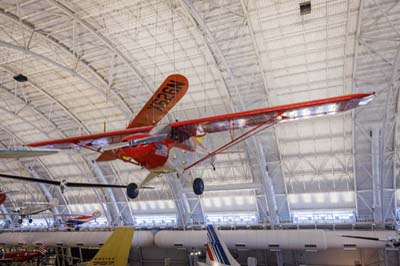
Piper PA-12 Super Cruiser (NX2365M) named 'City of Washington'. This aircraft, together with its sister ship City of the Angels (NX8671M), completed a pioneering round-the-world flight in 1947, marking the first time a light personal aircraft had achieved such a journey. |
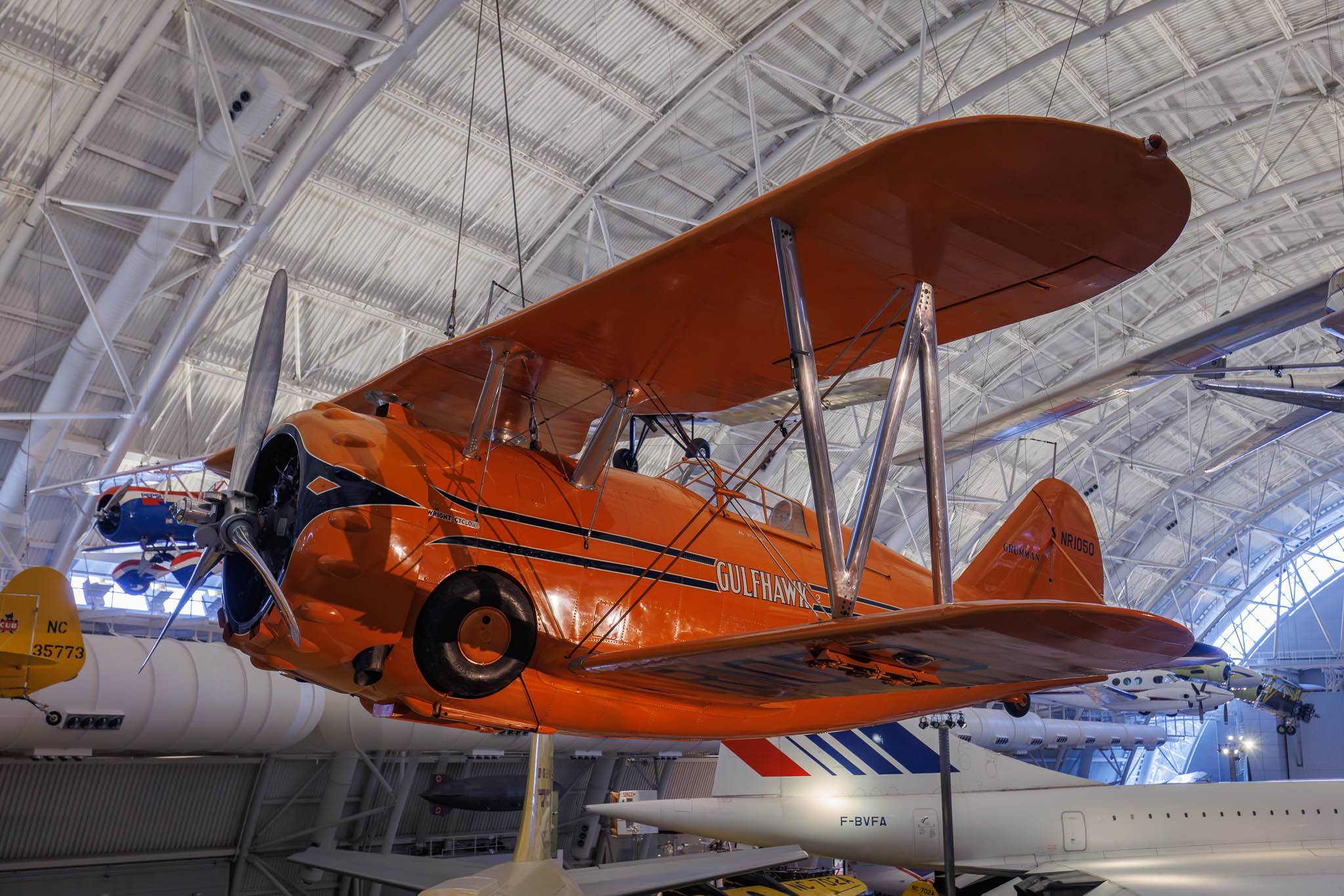
| Grumman GulfHawk (NR1050). An aerobatic biplane once flown by Major Alford Williams for the Gulf Oil Company. |
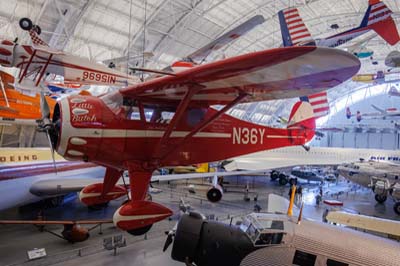
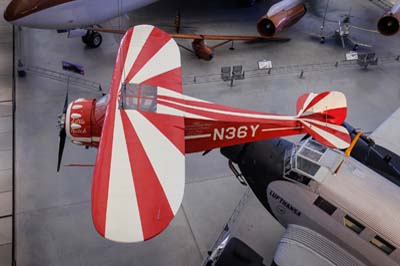
Left to right: Monocoupe 110 Special (N36Y). Built in 1941, the aircraft was acquired in 1944 by airshow pilot W. W. "Woody" Edmondson, who nicknamed it Little Butch for its bulldog-like appearance. Edmondson used the plane for aerobatic performances throughout the 1940s and flew it to victory in the inaugural International Aerobatic Championship in 1948.
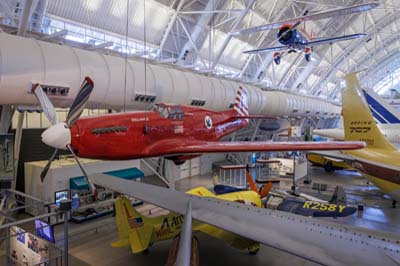
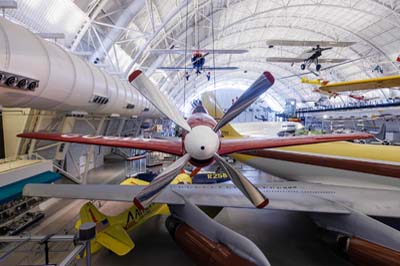
Hughes H-1 Racer (NR258Y). Designed and built by Howard Hughes in the 1930s, the H-1 set new standards in aviation performance. On September 13, 1935, Hughes flew the aircraft, then fitted with short wings, to a world speed record of 352.39 mph (567.12 km/h) near Santa Ana, California.
On January 19, 1937, with longer wings added for greater efficiency, he broke the US transcontinental speed record, flying from Los Angeles to Newark, New Jersey, in 7 hours, 28 minutes, and 25 seconds. |
Left to right: North American P-51C Mustang (44-10947 registered N1202) named 'Excalibur III' ex USAAF.
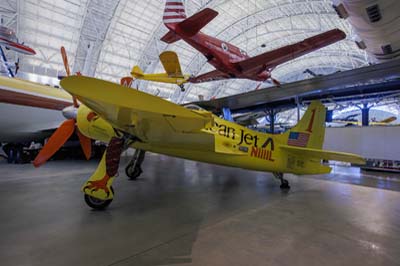
Grumman F8F-2 Bearcat (121646 '1' registered N1111L) named 'Conquest I' ex US Navy. |
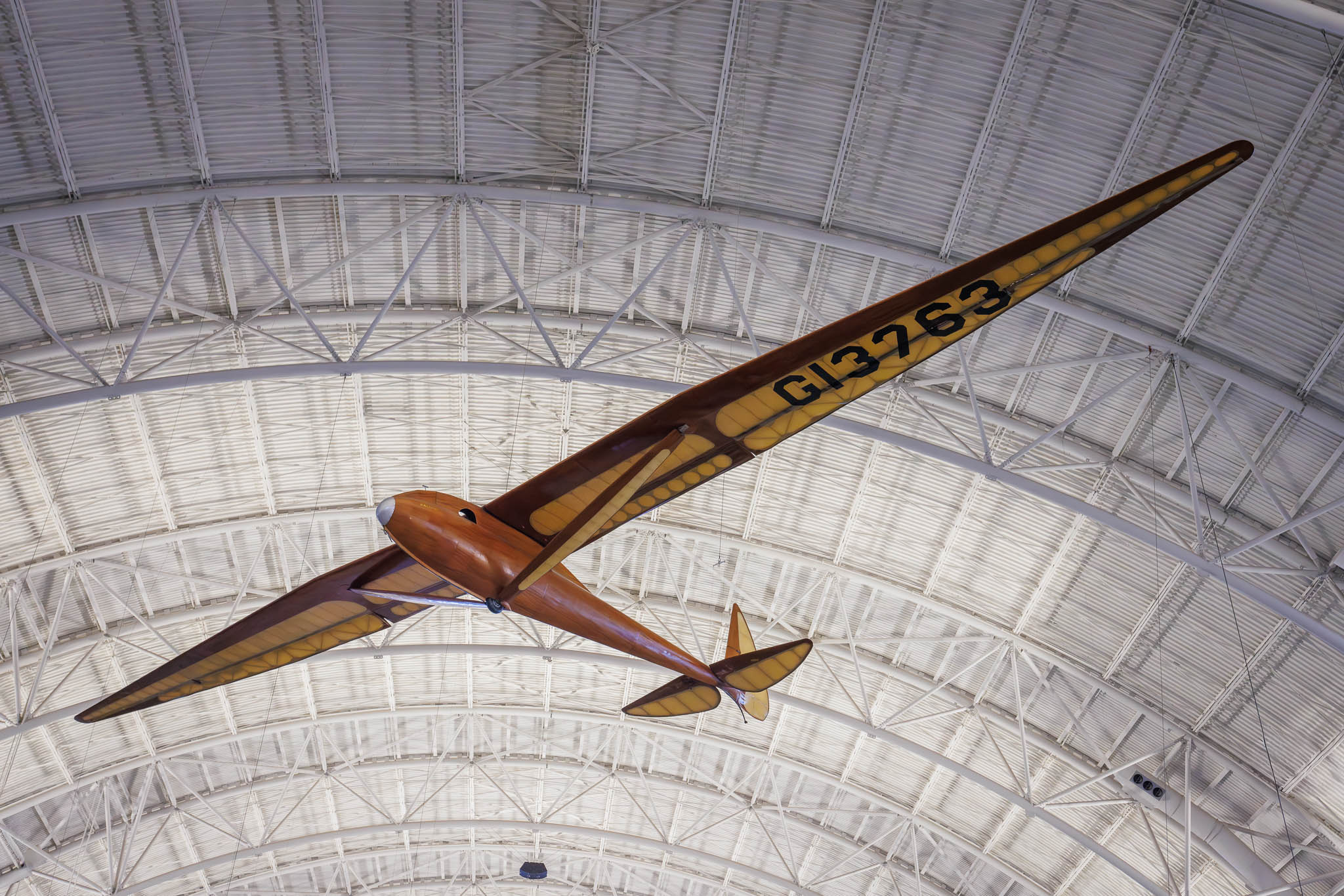
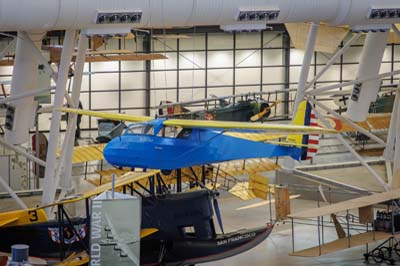
| Bowlus-du Pont 1-S-2100 Senior Albatross "Falcon" (G13763). A 1930s single-seat glider, it was designed by William Hawley Bowlus for the Bowlus Sailplane Company Ltd. Bowlus was an American designer, engineer, and builder of aircraft—particularly gliders—as well as recreational vehicles during the 1930s and 1940s. He is best known today for creating the world's first aluminium travel trailer, the Bowlus Road Chief, which inspired Airstream's Clipper in 1936. Earlier in his career, he also gained fame as Superintendent of Construction for Charles Lindbergh's Spirit of St. Louis. |
Left to right: Frankfort TG-1A (serial unknown, registered N53601) ex USAAF.
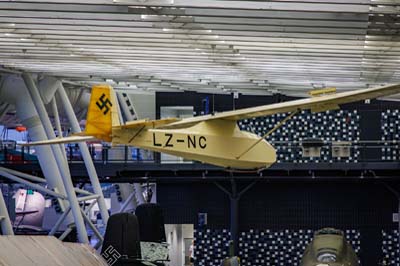
Grunau Baby 108-49 (31016 'LZ+NC') ex GAF.
Curtiss-Wright CW-1 Junior (NC10965). This aircraft, built in 1931, remained in service until 1959, frequently appearing at airshows. Throughout the mid-1930s and 1940s, it underwent extensive maintenance and rebuilding under the care of its successive owners. |
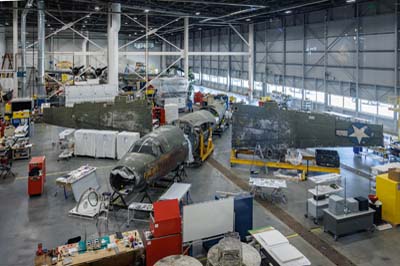
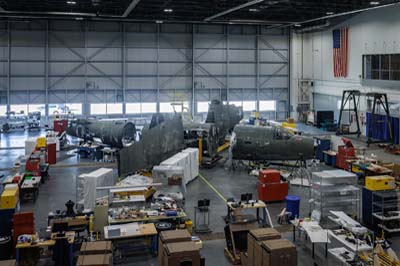
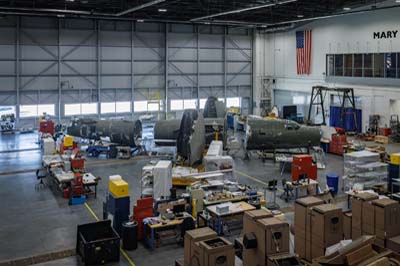
| The Mary Baker Engen Restoration Hangar |
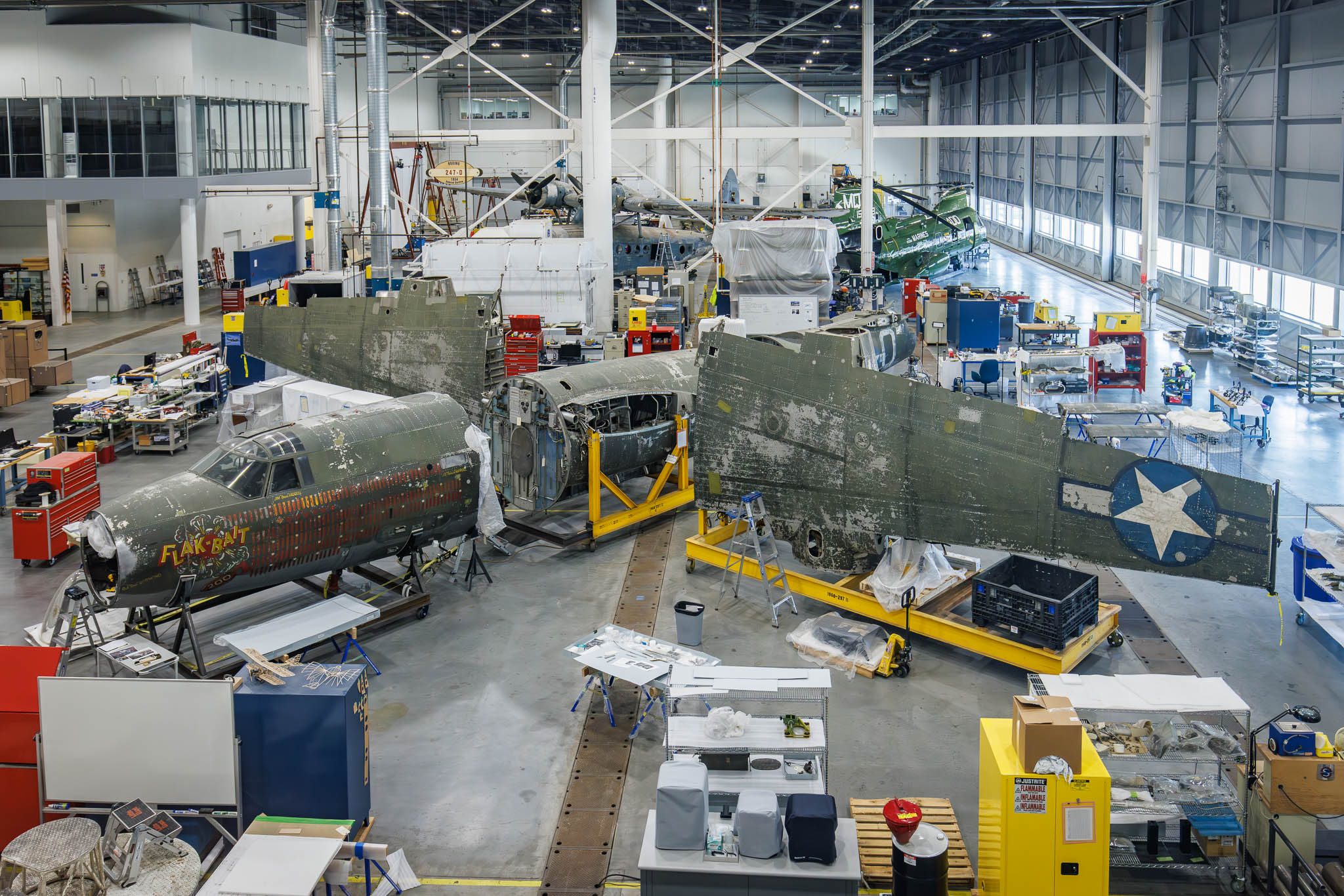 |
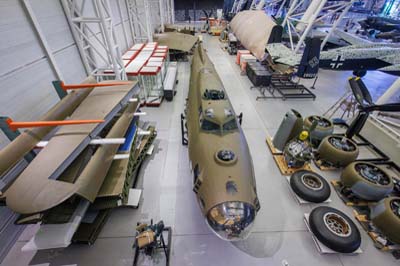
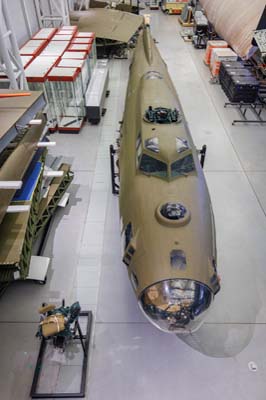
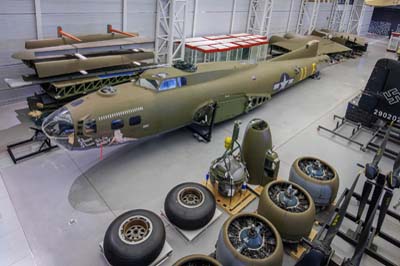
Left to right: Martin B-26B Marauder (41-31773 'PN-O') named 'Flak-Bait' ex USAAF. The Martin B 26 Marauder was a twin engine medium bomber that first flew on 25 November 1940 and saw extensive service during World War Two. Built by the Glenn L. Martin Company in Baltimore, Maryland, and Omaha, Nebraska, a total of 5,288 were produced between 1941 and 1945.
This aircraft flew an extraordinary 202 combat missions over Europe, more than any other American aircraft of the war. It repeatedly returned with severe battle damage, at one point carrying over 1,000 flak and bullet holes, yet never lost a crew member. Built in Baltimore and delivered in April 1943, it served with the 449th Bombardment Squadron of the 322nd Bombardment Group in England.
After the war, Flak Bait returned to the United States for a war bond tour before being transferred to the Smithsonian Institution in 1948. For many years, only the nose section was displayed at the National Air and Space Museum, while the rest remained in storage.
Today, the complete aircraft is undergoing careful conservation and reassembly at the Steven F Udvar Hazy Center, with efforts focused on preserving its original structure and visible battle damage. It is one of only seven surviving B 26 Marauders. |
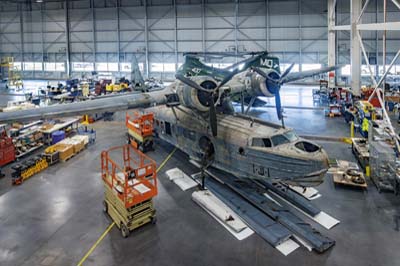
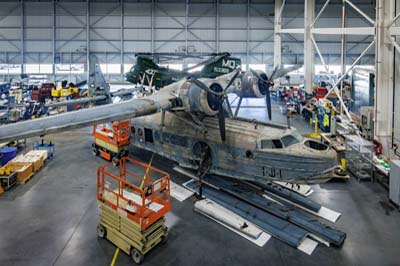
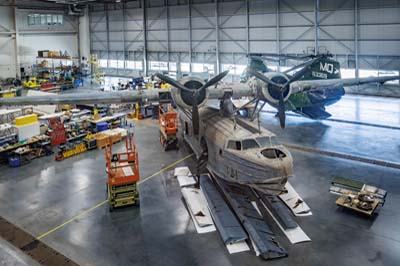
Left to right: Sikorsky JRS-1 (1063 '1-J-1'). This example of the amphibious seaplane was present at Pearl Harbor, on December 7, 1941. Ten JRS-1s were stationed at the US naval base when the Japanese launched their attack during World War Two. The JRS-1, in service from 1937 to 1944. At the time of the attack, painted in an overall silver finish, black underside, green tail surfaces, a red band around the rear fuselage. Within days, ground crews repainted the plane blue, but over time the topcoat has faded, revealing traces of the original colors. Years of outdoor storage have contributed to its weathered condition, and the Museum now plans to conserve and restore the aircraft.
In the background: Vertol CH-46E Seaknight (153369 'MQ-400') ex USMC, HMM-774 markings. |